Mansfield Sand’s Silica Shines

Mansfield Sand’s Silica Shines: Groundwork contractor Trefor Jones, has praised the quality of Mansfield Sand’s Equestrian Silica product after he recently completed the construction of an impressive Manege.

Trefor, based in Rutland, East Midlands, specialises in the construction of horse-riding arenas, and says that for the two last decades he has relied on one company.

Mansfield Sand’s Silica Shines

Mansfield Sand’s Silica Shines

“For the past 20 years we’ve used nobody but Mansfield Sand because they produce a product that is designed for the job,” he said. “They give the customer what they want, and it gives us the assurance and confidence that we know we are providing our customers with a quality product.”

Mansfield Sand Company has pioneered the development and production of premium quality silica sand-based products for over 170 years. It provides a wide range of innovative products for sports, landscaping, and equestrian uses. These include stadium and training ground facilities; championship golf courses and world class show jumping arenas.

Trefor’s most recent project saw him construct a 70m x 50m jumping Manege for his son Richard – an International 5* Event Rider. The project took 3 weeks from start to finish and he applied approximately 800 tonnes of Mansfield’s Equestrian Silica – a sub angular sand which is produced at the company’s state-of-the-art hydro classification plant at the Two Oaks Quarry.

Equestrian Silica Sand provides an excellent riding surface which is free draining with very sure footing. Ideally suited as a base sand, it is recommended that Equestrian Silica be incorporated into a fibre stabilising product to provide structure and further stability.

Trefor says he has seen excellent results after incorporating the silica sand with a stablishing fibre.To assist with the mixing process, he uses a BLECavator which is designed to cultivate and bury stones and debris, while levelling and raking in one pass.

Mansfield Sand’s Silica Shines

Mansfield Sand’s Silica Shines

Trefor’s recently built Manege follows another arena he built at the impressive Lowlands Farm site in which he used the company’s Fibresand Equestrian product.

“I’m a happy customer,” said Trefor. “The products are durable, provide sure-footing for the horses, drain well and are very cost-effective. I know exactly what I am getting, and I never have any problems.

“The people at Mansfield Sand are also great to deal with. Louise, (Mansfield Sand Technical Sales Representative) provides the best customer service.”

For more information visit www.mansfield-sand.co.uk

You can also follow Mansfield Sand on Twitter – @MansfieldSand

For the latest industry news visit turfmatters.co.uk/news

Get all of the big headlines, pictures, opinions and videos on stories that matter to you.

Follow us on Twitter and Instagram for fun, fresh and engaging content.

You can also find us on Facebook for more of your must-see news, features, videos and pictures from Turf Matters.

Nick Brown Joins Campey

Nick Brown Joins Campey: Campey Turf Care Systems has appointed well known industry figure, Nick Brown, as their new Export Sales Manager.

Nick has over 20-years of experience in golf, and sports turf and through his previous role at Ransomes Jacobsen has extensive knowledge of the international markets. His understanding of these areas doesn’t only come from work. Four generations of his family were born and worked in the Far East, and he has lived in Australia, Malaysia, Singapore and predominantly Indonesia across 25 years.

Nick Brown Joins Campey

Nick Brown Joins Campey

His experience in this part of the world, in particular his knowledge of local cultures, makes him exceptionally well suited to the role, and his decision to join the company is centred on Campey’s innovation and creativity as well as the core value of building and maintaining long lasting customer relationships.

Nick Explained: “Campey is a highly regarded company in the turf industry here in the United Kingdom and across the world. They have earned that reputation by providing innovative, reliable and robust machinery that meets the needs of customers through an excellent distribution base.

“In my new role, I want to build on the consistent and well-known message that Campey is always willing to go the extra mile to help. I have always worked on the basis of ‘making a customer, not a sale,’ and that matches perfectly with the common goals and message the Campey team has.

“By listening to customers and what they need, we can continue to make machines that solve common issues while thinking one step ahead and finding more creative solutions to improve turf quality. I think by putting these aspects together we can grow the Campey brand into new territories and I’m looking forward to working with everyone in the team.”

Nick joins Campey during a challenging time for global travel and distribution, but Campey chairman, Richard Campey, believes Nick’s knowledge and enthusiasm will bring a fresh approach to the situation.

“Nick is someone who comes with a lot of experience and will be a great asset to our company, and we’re delighted to welcome him to Campey,” Richard began. “He joins us at a time of constant change in terms of global travel, in particular the restrictions we have to work with while still providing the best service to our customers. With support from our Director Lee Morgado, who is already well-known to our dealer network and end users from the middle east to Australasia we hope to continue to grow in these established and new markets. That will require a different approach in terms of connecting with our export markets, and I’ve got no doubt that Nick will take that challenge on with enthusiasm.”

Campey currently has 53 distributors across Europe, Asia, North and South America and the Middle East. Their wide range of product lines has allowed them to assist turf professionals across the world in improving turf standards through innovations in fraise mowing, aeration, spreading and seeding.

For any international enquiries, contact Nick at nick@campeyturfcare.com or phone +44 7974 318 584.

For the latest industry news visit turfmatters.co.uk/news

Get all of the big headlines, pictures, opinions and videos on stories that matter to you.

Follow us on Twitter and Instagram for fun, fresh and engaging content.

You can also find us on Facebook for more of your must-see news, features, videos and pictures from Turf Matters.

Tributes paid to a first-class groundsman

Tributes paid to a first-class groundsman: Tributes have been paid to Durham Cricket’s former head groundsman, Tom Flintoft, who died on Tuesday, aged 86.

Mr Flintoft, who lived in Whitby, spent seven years at Emirates Riverside becoming the club’s first head groundsman in 1991.

He was born and brought up in the Whitby area on the family farm, where he helped out until he was called up for National Service.

During his few years in the Army he spent most of his time as a driver in Hong Kong, and was on the last ship through the Suez Canal before it closed.

He returned to North Yorkshire and farming, and was asked to help out at the playing fields in Nunthorpe.

Wife Kath said: “He was always keen to earn a bit of extra money, so he helped out with the playing fields. He was then asked if he could help out at Middlesbrough Cricket Club. He didn’t think he was up to the job, but he gave it a go.”

Mr Flintoft’s reputation as a first-class groundsman spread and he took up the role of head groundsman at Hampshire Cricket Club, winning many awards throughout his career.

He returned to his native North-East and became head groundsman at Durham. Durham Cricket Board Chairman, Bob Jackson said, in a statement on the club’s website: “There is no doubt that Tom Flintoft was one of the most popular recruits that Durham made nearly 30 years ago. His knowledge of many of the cricket clubs from Whitby to Whitburn, the people and grounds around them, proved to be invaluable as Durham had to bring several grounds up to speed for first-class cricket in the initial years.

“This was a big enough job without the incredible responsibility of creating a future test ground at Chester-le-Street. Not only was Tom needed to provide the scientific input to the pitches but all of the groundsmen were desperate to improve their own knowledge and Tom was the source of this. Not only did he support those clubs involved with hosting first-class and second team matches, he found the time to advise numerous club groundsmen.

“Durham is indebted to Tom for his magnificent part in their short history.”

Philip McCormick, head groundsman at the Northern Cricket Union’s main ground Stormont, Northern Ireland, also paid tribute to Mr Flintoft. He said: “Tom used to come over and see our grounds as an advisor. He was never shy about getting his hands dirty and helping where he could. Although he was there to advise, he was always keen to get involved. He was a great man, he wanted to help everyone. He was a rare find.”

When Mr Flintoft retired he moved back to Whitby and lived with wife, Kath, next to the cricket club.

Whitby Cricket Club secretary Pauline Russell said: “Tom spent his life in cricket and when he retired to Whitby he generously gave his time to work on our ground alongside our groundsman. His knowledge and dedication were greatly appreciated.

“Tom was greatly respected across the cricket community and we were grateful he was part of Whitby Cricket Club. He was a lovely man, down to earth and was always happy to help out.”

Mr Flintoft loved to travel and with Kath he enjoyed more than 60 holidays. She said: “One of the highlights was a trip to Kenya, it was a wonderful holiday. We also went to the Canadian Rockies, France, Las Vegas and enjoyed a honeymoon on the Queen Elizabeth sailing from Southampton to New York ,through the Panama Canal and on to San Francisco.”

The couple, who got engaged on Valentine’s Day 2011, were married in September of that year. They had known each other since school.

Friend Barbara Booth said: “Tom was such a friendly person, a real gentleman. He was very caring and we are going to miss him a great deal. There were six of us who go on holiday together and Tom used to call us his harem.”

Friend Dougie Raine, chairman of Sport Mulgrave, said: “Tom was an amazing man. He was always there to lend a hand. We will miss him very much.”

Mr Flintoft, who was one of ten siblings, leaves four sons, Nigel, Mark, Neville, Craig, from his first wife Mary.

A private celebration of Mr Flintoft’s life will be held at Kirkleatham Crematorium on July 9. The hearse will leave from Whitby Cricket Club at 9.45am and donations are being made to St Catherine’s Hospice.

Click here to read the original article

For the latest industry news visit turfmatters.co.uk/news

Get all of the big headlines, pictures, opinions and videos on stories that matter to you.

Follow us on Twitter and Instagram for fun, fresh and engaging content.

You can also find us on Facebook for more of your must-see news, features, videos and pictures from Turf Matters.

95 years of Fields in Trust

95 years of Fields in Trust: Through the COVID-19 lockdown we have realised just how valuable local parks and green spaces are to our health and wellbeing and as places to meet loved ones safely.

Green space charity Fields in Trust, who are celebrating their 95th anniversary this week, are calling for the revaluing of parks and green spaces to take account of what they contribute to communities – not just what they cost to maintain.

95 years of Fields in Trust

95 years of Fields in Trust

As the UK was rebuilding after World War I and a devastating influenza pandemic, the future King George VI convened the inaugural meeting of Fields in Trust (then known as the National Playing Fields Association) at London’s Royal Albert Hall on 8th July 1925. Since then, the charity has legally protected 2,852 parks and green spaces in perpetuity – ensuring they are available for play, sport or relaxation. However local green spaces remain at risk of loss to building development despite their health, wellbeing and community benefits.

The publication in May of Fields in Trust’s Green Space Index revealed that across Great Britain 2.7 million people already live more than a ten-minute walk from a public park and a further 170,000 people could be in the same position in the next five years as population increases. Earlier research from Fields in Trust, valued the physical health and mental wellbeing benefits for communities at more than £34 billion each year, They found regular users of parks have fewer visits to their GP resulting in a saving to the NHS alone of £111 million pa; the equivalent of 3,500 nurses salaries.[1]

Fields in Trust are each calling on the Government to ensure the protection and provision of parks and green spaces for community wellbeing.

Helen Griffiths, Chief Executive of Fields in Trust, said:

“Parks and green spaces play a vital role in people’s health and wellbeing, and these benefits have been shown even more starkly during the really difficult times our country has faced in recent months. Our local parks and green spaces have been crucial during the crisis and, just as they did 95 years ago, they will have a significant part to play in our recovery.

“Yet our research shows that over 2.7 million people don’t have a park within a short walk of home and this number is forecast to grow over the coming years. This doesn’t have to be the case and that’s why we’re calling for a national strategy to recognise their value by ensuring access to parks and green spaces is guaranteed both now and in the future in areas where they are most needed.”

The Green Space Index – Fields in Trust’s barometer of publicly accessible park and green space provision and distribution – found that, as a region, London has the lowest amount of green space per person, with just 18.96 square metres for each person. Figures recently released by the Office of National Statistics found that Londoners are also the least likely to have access to a garden.

In addition, the Green Space Index also ranks Britain’s regions and nations against a minimum standard of park and green space provision (data sheet attached). London, Yorkshire, and the North East fall well below the minimum score. Scotland continues provide more provision per person than both England and Wales. It is also likely that any future loss of parks and green spaces will disproportionately impact disadvantaged and underrepresented communities who ascribe a greater value to local parks and green spaces than average in the Fields in Trust research study.

The Green Space Index is an annual report from the charity Fields in Trust which analyses provision of park and green spaces. The report was first produced in 2019, and this year is the Index’s second edition. People can find out more about the green space provision close to home by using the interactive web apps on the Fields in Trust website.

For the latest industry news visit turfmatters.co.uk/news

Get all of the big headlines, pictures, opinions and videos on stories that matter to you.

Follow us on Twitter and Instagram for fun, fresh and engaging content.

You can also find us on Facebook for more of your must-see news, features, videos and pictures from Turf Matters.

Could seaweed help keep nematodes in turf grass in check?

Could seaweed help keep nematodes in turf grass in check?: More and more greenkeepers are talking about problems with parasitic nematodes affecting their turf. Seaweed could provide a sustainable, novel solution for reducing plant-parasitic nematodes in turf grass.

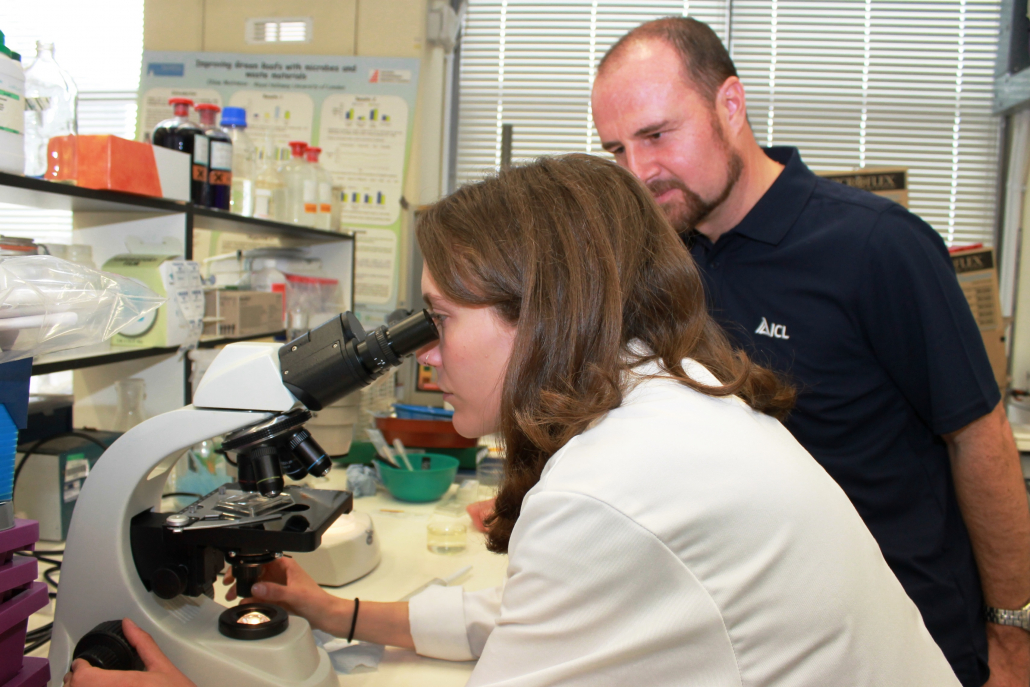
Without previous extended research into this subject, Royal Holloway (University of London) and ICL joined forces in 2018 for a four-year PhD research project thanks to funding from the BBSRC (Biotechnology and Biological Sciences Research Council) and ICL. Halfway through now, we spoke to Tamsin Williams, the PhD student working on the research project to find out how it is going.
Could seaweed help keep nematodes in turf grass in check?

Could seaweed help keep nematodes in turf grass in check?

Tamsin completed her undergraduate degree in Biology at Royal Holloway, University of London. The degree was broad, looking at everything from biomedical sciences to field ecology. After passing her undergraduate degree, Tamsin worked at CABI (Centre for Agriculture and Bioscience International) as a research assistant in the bio-pesticides division. CABI is primarily a non-profit organization working a lot with agriculture in developing countries, helping small subsistence farmers.

“We were trying to develop mainly fungal bio-pesticides to help improve crop yields, for example, but also many other projects. And to develop products that are environmentally friendly and sustainable and could be used by small-stakeholder farmers abroad, as well as in the UK. From that I went straight to my PhD. While I was at CABI, I was also doing a lot of pest pathology and a bit of Nematology (study of nematode worms). My PhD has an element of Nematology and nematode identification which is a direct link and this is a subject I find interesting and enjoy, which helps!”

An important research topic for the Turf industry

There are multiple reasons why Tamsin’s PhD research is important. “One is plant parasitic nematodes seem to be on the increase: this could be due to environmental factors, so as we get warmer temperatures we’ll get warmer soil temperatures, and when the soil temperature is warmer we generally get this faster cycling of the nematode life cycle. The time between laying their eggs and hatching will be shorter. When this occurs, you’ll get these big population booms in nematode numbers, because they’re hatching a lot quicker. Potentially we’re seeing greater numbers of nematode infections and turf damage, but also coinciding with that is that there are virtually no available chemicals (nematicides) for amenity turf. So, there are very few options available to control an increasing population. We’re trying to find something that people can use, that works, whilst not harming the environment and is sustainable.”

The problem with nematodes

Nematodes are tiny microscopic parasitic worms. “They pose a problem, because they parasitize the plants, some of them complete part of their lifecycles inside the plants themselves, they can hijack the plant’s machinery to make it work for them (…which is quite clever, really…).” When nematodes feed on the plant or when they move inside the plant, they cause a lot of cell death. This cell death will accumulate, which is when you get the visual symptoms that you might see on the playing surface, the pitch or golf green, where you get yellowing and turf wilting. Eventually the plant may even die.

Tamsin: “So that is not ideal when you’re trying to manage a turf surface (or a commercial crop). There will be nematodes in the soils of a golf green or sports field at all times, and not only plant parasitic nematodes, there are also scavenger nematodes that might feed on bacteria and fungi, as well as cannibalistic nematodes, so there’s a whole range of them. Plants can withstand a bit of nematode feeding from some of the nematodes, but it’s when the numbers are too high, that you start to see the visual symptoms. And the visual symptoms will only occur once the nematodes have started attacking, essentially. With few products available to use, an integrated approach utilizing cultural practices and maintaining soil and plant health is definitely the key.”

Seaweeds as part of sustainable integrated pest management

That is where seaweeds may come into play. Seaweeds are complex. They have evolved to survive in quite harsh and changing conditions, cold salty sea, being up on the beach, perhaps drying out as well. To deal with these completely different environments, seaweeds have a range of unique complex carbohydrates and proteins. It is thought that some of the compounds can ‘kick-start’ the plant’s own resistance to pest attack.

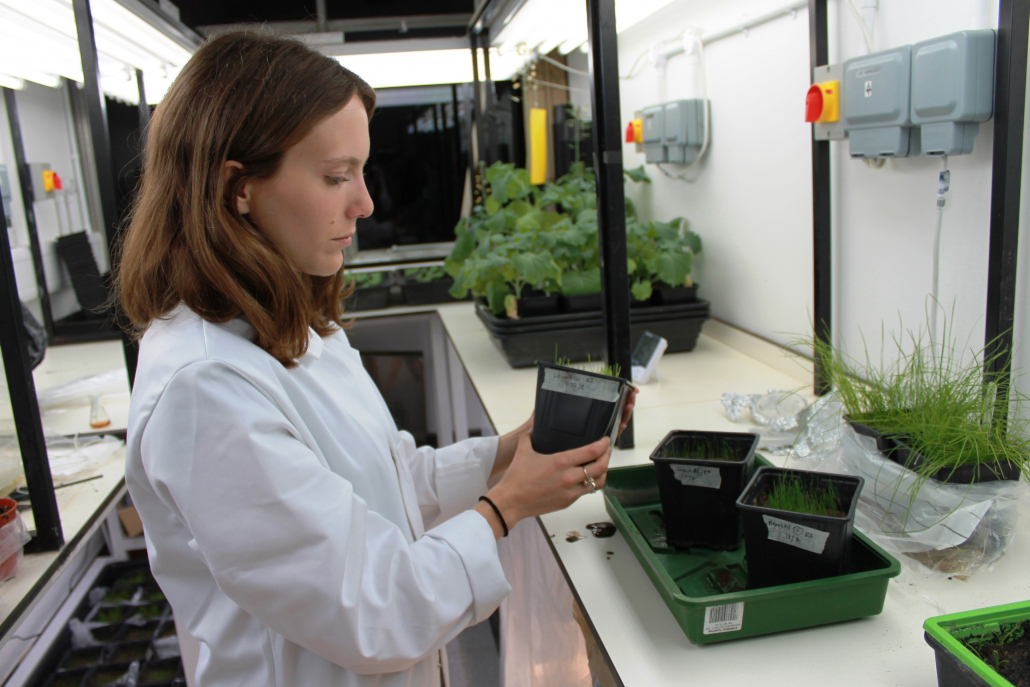
Different seaweeds extracted in different ways will contain different components, so expect the plant response to vary. Tamsin: “I am studying the ICL seaweed product SeaMax from Acadian. This is an alkaline extracted Ascophylum nososum seaweed, which has already got some impressive research published on its benefits to crops. Since the start of the PhD in 2018, we’ve seen from some controlled laboratory trials that this seaweed may be able to reduce abundances of one type of plant-parasitic nematode, which is the spiral nematode. But this is only when starting nematode population density is quite high, so good results depend on nematode density as well as nematode species.”

But even if the seaweed only potentially reduces those high numbers when there’s big population booms, that would still be valuable to the turf manager. Tamsin explains: “This effect has also been seen in field trials, which are at their early stage. The results are not due to any form of nematocidal effect, so the seaweed does not kill the nematode directly, we have done a series of lab assays checking this. So it must be affecting their populations indirectly through some sort of plant modulation or modulating the soil microbiology.”
Could seaweed help keep nematodes in turf grass in check?

Could seaweed help keep nematodes in turf grass in check?

Next, Tamsin will be looking for this underlying mode of action as well as fine tuning the field trials to try and get more dramatic results for more nematode species. “Basically, what the seaweed may be doing to the plant itself and the microbial ecology in the soil, as this is ultimately how it’s going to be affecting the nematode.”

Executing the field experiments is a laborious task that takes about two weeks to set up. That time is used to take initial samples to check nematode pressure and do counts from those samples. Then the trial itself will run for about three months. Tamsin: “Then at the end of three months I’ll take my final counts, that means taking the samples and literally counting them one by one under a microscope. Including everything else that I’ll be doing, it’ll take me a month until I have the final nematode counts and pop it in the statistics package so probably about four to five months. In a year you’re looking at maybe two field trials.”

At the end of her four-year project, Tamsin would like to be able to give a greenkeeper or groundsman tips when it comes to parasitic nematode management. “I’d like to get to the end of it and say, here’s some sort of sustainable and environmentally-friendly integrated pest management that you could use on your greens. That’s probably quite ambitious, but something along those lines!” The outcomes of Tamsin’s research will provide valuable scientific support for ICL’s further research and development in seaweed products.

Not a day is the same

With about half of the project to go, Tamsin still has lots to do. As the coronavirus outbreak has hit Europe in the past weeks and months, the university is currently closed and Tamsin works from home. “Most of my work is now on hold, with no experiments or field trials currently taking place, and I will not be able to continue until after lockdown. At home my focus is primarily on a meta analysis. Normally, my days are different all the time. Every experiment is different, so you can have days focused on reading published papers, days spent in the lab working on an experiment, time looking down a microscope identifying individual nematodes or counting mycorrhizal infection, and days in the field setting out and running field trials, perhaps all these in a single day! Then generally I’ll be looking after things like my nematode cultures, so constantly having to keep them in plants, refresh them, look after them. They’re like my nematode babies… As I progress, I will need to focus more on writing and analyzing the results which can be quite complex.”

A PhD is definitely not only laboratory work and Tamsin says it has given her the opportunity to learn new skills, invaluable to any researcher. “Firstly, how to come up with ideas and problem-solving. Developing presenting skills, which is an ongoing process, and also specific skills like statistics and field trial skills. I like the hands-on stuff, but the PhD has taught me how to actually get behind my computer, do the maths, and work with new programs that I hadn’t worked with before.”

Towards greener research

In the future, Tamsin would like to stay in science and perhaps even research in some way, whether that is academical or commercial. “It’s good how ICL are looking to support and fund research. As I’m aware not many other companies seem to do that. I think it’s very important to have trial work and science to back up product claims that you are making. This gives products credibility and an end-user confidence when selecting products to use.”

“ICL are looking to fund more green technologies, so PhDs that look at sustainable products or alternatives. There is another research project being funded that is looking at saving water on sports surfaces, and another that is looking at recycled phosphorus, which is very impressive: stripping nutrients from waste water and turning it into fertilizer. ICL is moving towards a greener research.”

Please contact ICL on 01473 237100 or visit www.icl-sf.co.uk or www.icl-sf.ie if you are in Ireland.

For more news and insightful views, you can follow ICL on Twitter @ICL_Turf

For the latest industry news visit turfmatters.co.uk/news

Get all of the big headlines, pictures, opinions and videos on stories that matter to you.

Follow us on Twitter and Instagram for fun, fresh and engaging content.

You can also find us on Facebook for more of your must-see news, features, videos and pictures from Turf Matters.