The time to make pitches perfect

The time to make pitches perfect: Croke Park pitch manager Stuart Wilson has revealed one positive from the break in GAA activity, a revitalised and reinvigorated pitch at GAA headquarters.

And Wilson, who has previously worked at the Aviva Stadium and Arsenal’’s Emirates Stadium, has insisted that club and country grounds nationwide can similarly benefit.

“I think you’d be disappointed to see any bad pitches this year because there’’s going to be lots of time without activity on them and if people are doing the right work, then it should be a very good year for GAA pitches,” said Wilson, who confirmed that Croke Park is currently thriving.

That is partly down to the absence of games since the All-Ireland club camogie finals on March 1 and partly to an overseeding process undertaken immediately after those games which was complemented by the use of germination sheets.

“The pitch has just got better and better week by week and to be honest with you I’ve never seen the Croke Park pitch look as good in April,” said Wilson.

That may sound like a waste given the likelihood of a total wipe-out of the summer schedule, due to the COVID-19 crisis, but there’’s still the possibility of the ground hosting games later in the year.

As such, plans to install a new Croke Park pitch in autumn have been put on hold.

“Obviously now work like that is going to be totally put on hold,” said Wilson. “We just don’t know what’’s going to happen. There still could be matches played later on in the year. It hadn’t been actually finalised but there was a potential pitch replacement at the back end of the year, at the end of the Championships. We obviously can’t go ahead with anything like that now because there’’s the potential for matches to be played throughout October, November and even December. I haven’t heard anything on it because I think there’’s obviously more important things going on but things like that will probably be postponed, yes.”

What it all means is a likely clear run of inactivity throughout most of 2020 for Croke Park and the rest of the GAA’’s club and county grounds.

While unexpected, Wilson said the break is badly needed after a ’’shockingly wet winter’’ that left many pitches around the country ’’badly beaten up’’ following heavy usage.

“I often compare the situation to a player, let’’s say a player is asked to play four or five matches a week with another training session or two thrown in, that player is going to be fatigued and won’t be able to continuously perform, they’ll simply need a rest,” he said. “Pitches are the exact same.

“You’’re dealing with something that’’s living, a grass plant is living, if you’ ’re constantly using it and beating it, eventually it’’s going to die.”

That’’s why most club grounds and plenty of county grounds too have sandy goalmouths or artificial surfaces in front of the goaline. Now after just weeks of inactivity, goalmouths are green again around the country.

Wilson’s advice to those who tend pitches is to mow them two to three times a week, to a height of ’’anything between 30mm and 50mm’’. For the record, Croke Park is cut to a 30mm height all year round. That much alone, he says, will be a big help.

“By doing that you’re promoting the density of the pitch because the grass will thicken up. Instead of growing up, it will start to grow sideways too, filling in all of those gaps. The problem is when people leave their pitches long and then go in and cut it and absolutely hack the grass down, that’’s really, really stressing a pitch. If you’’re cutting it consistently, just nipping it, just taking the top off, you will see an improvement in the quality of the pitch without a doubt.”

When restrictions ease, Wilson suggests broader renovation plans for club and county grounds that might include: over-seeding with 100 per cent ryegrass, an application of top-dressing, fertilising with a control release fertiliser, aeration works like tining, slitting or linear aeration ’’to open up the soil and let it breathe and let the roots go down’’, and weed control.

“From listening to John Horan, I think it’’s going to be a good while before GAA pitches see any activity,” said Wilson. “So I do believe that people will be able to work on pitches, once the current restriction on only essential maintenance is loosened obviously. I think the key is that people are ready to go, that they’ve got a plan in place to renovate their pitches.”

Back at Croke Park, Wilson and his three full-time staff are splitting their shifts and ghosting through the stadium.

“I don’t know how to describe it, it’’s bizarre to be honest with you,” said Wilson. “We’re fortunate that the pitch is in fantastic shape and whenever action starts back, we’ll be ready and raring to go.”

Click here to read the original article

For the latest industry news visit turfmatters.co.uk/news

Get all of the big headlines, pictures, opinions and videos on stories that matter to you.

Follow us on Twitter and Instagram for fun, fresh and engaging content.

You can also find us on Facebook for more of your must-see news, features, videos and pictures from Turf Matters.
Trust Toro genuine parts

Trust Toro genuine parts: Grounds teams across the nation are likely working at a reduced rate due to the focus on essential services, but grass growth stops for no one. When maintenance routines return to normal, make sure your cylinder mowers are ready for the challenge with genuine Toro bottom blades.

Toro parts UK distributor Reesink Turfcare has some advice for grounds teams preparing their machines for work – choose your bottom blades carefully. Michael Hampton, parts manager at Reesink, says: “Bottom blades can be an area where buyers decide to cut corners, choosing an inferior, spurious part in order to save money, but that doesn’t make long-term sense when you have a Toro machine and short-term that could be even worse.

Trust Toro genuine parts

Trust Toro genuine parts

“You need to be sure your machine can go out there and deal with potentially months of uncut grass effectively, with ease, delivering the best possible finish when there’s lots to do and you don’t want to be relying on ‘will fit’ parts for that.”

Well-maintained bottom blades are vital in producing a quality cut and genuine Toro bottom blades are the best there are, outperforming ‘will fit’ inferior quality parts. Research at Toro headquarters in America proves this point. In tests focused on many physical characteristics, in particular the flatness of the blade and positioning of the chamfered mounting holes, results showed that unbranded bottom blades failed in over 50 percent of Toro’s quality specification standards.

Michael continues: “Grounds fleets will be put through their paces when the time comes to start cutting more areas, or more frequently, again. Not only will it be high season but there’s likely a lot of backlog to deal with. The last thing the team needs are delays dealing with worn, damaged or blunted bottom blades or wasted time waiting for replacement parts.”

Reesink is still open for business and teams in our service centres, warehouses and across our supply chain are working tirelessly to deliver parts for our customers.

Drop them a line at info@reesinkturfcare.co.uk or call Spare Parts: 01480 226854

For the latest industry news visit turfmatters.co.uk/news

Get all of the big headlines, pictures, opinions and videos on stories that matter to you.

Follow us on Twitter and Instagram for fun, fresh and engaging content.

You can also find us on Facebook for more of your must-see news, features, videos and pictures from Turf Matters.

Give your mowers the edge

Give your mowers the edge: The hardened tool steel of Toro’s EdgeMax bedknives delivers edge retention that lasts up to three times longer for a sharper, cleaner cut, all season long.

And being the growing season, now’s the time to make sure your machines are in pole position to bring the best quality of cut to your greens and fairways mowers by replacing worn bedknives with Toro EdgeMax.

Give your mowers the edge

Give your mowers the edge

Brought to the UK by Reesink Turfcare, Michael Hampton, parts manager at Reesink, says: “Customers appreciate the precision engineering of Toro’s EdgeMax bedknives. They have a hardened tool steel insert for a cutting edge that exceeds industry standards to last three times longer than a standard fairway bedknife and twice as long for greens. Not only do they last longer, but the hardened steel results in 50 percent less time adjusting, backlapping, grinding and replacing, too.”

Blades that maintain their sharpness ensure a cleaner cut for optimum turf health and as the machine incurs less wear, it works more smoothly and more efficiently. What’s more, because EdgeMax bedknives last up to three times longer, parts costs are also reduced and Toro believes that this combination of longer life and reduced maintenance time can equate to long-term cost savings.

Michael continues: “With genuine Toro parts, you can be sure you’re getting first-rate parts built to fit perfectly with your cylinder mowers, with consistent hole alignment on every bedknife, steels coils and computer-controlled machining and finishing, thanks to Toro’s leading manufacturing process. With Toro EdgeMax bedknives you can be sure you’ll be replacing your bedknives quickly and without the hassle or stress of gambling on likely inferior ‘will fit’ parts.

“It’s not often that there’s a short cut to a longer, better performance, but with Toro EdgeMax bedknives there is, hence this product’s popularity with customers.”

Toro EdgeMax bedknives are available across Toro’s Greensmaster and Reelmaster ranges on models fitted with DPA (Dual Precision Adjustment) cutting units. EdgeMax bedknives bring a 9.5mm and above height-of-cut to fairways and a 1.59mm and above height-of-cut to greens.

Reesink is still open for business and teams in our service centres, warehouses and across our supply chain are working tirelessly to deliver parts for our customers.

Drop them a line at info@reesinkturfcare.co.uk or call Spare Parts: 01480 226854

For the latest industry news visit turfmatters.co.uk/news

Get all of the big headlines, pictures, opinions and videos on stories that matter to you.

Follow us on Twitter and Instagram for fun, fresh and engaging content.

You can also find us on Facebook for more of your must-see news, features, videos and pictures from Turf Matters.
MR SALTEX still gets butterflies

MR SALTEX still gets butterflies: SALTEX operations manager Derek Walder, provides an insight into his illustrious career, his passion for SALTEX and his adventurous days with the Crazy Gang…  

Derek Walder has rightfully earned the nickname Mr SALTEX. At 83 years old he has overseen the operations of the show for five decades and he is, unsurprisingly, the longest serving member of the SALTEX team.

MR SALTEX still gets butterflies

MR SALTEX still gets butterflies

During this difficult and uncertain period, Derek revealed that he is staying positive and is continuing to do what he does best – helping to organise the groundscare industry’s largest event.

“SALTEX 2020 will mean more than any other previous event that we’ve ever put on,” he said. “I am hugely confident that it will be the best one yet. In my mind it’s all about getting that show on the road because the trade will need it, the people in the profession will need it – everybody will need it. After this awful period, SALTEX 2020 will be a much-needed boost for everyone.”

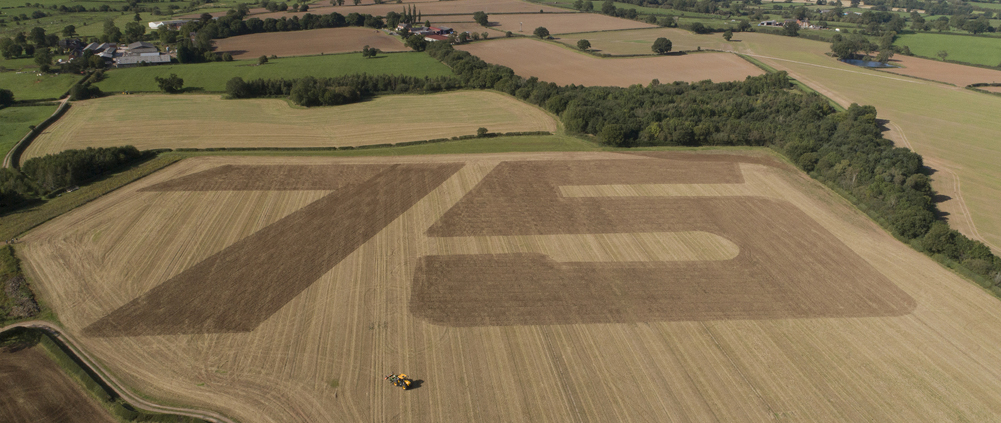
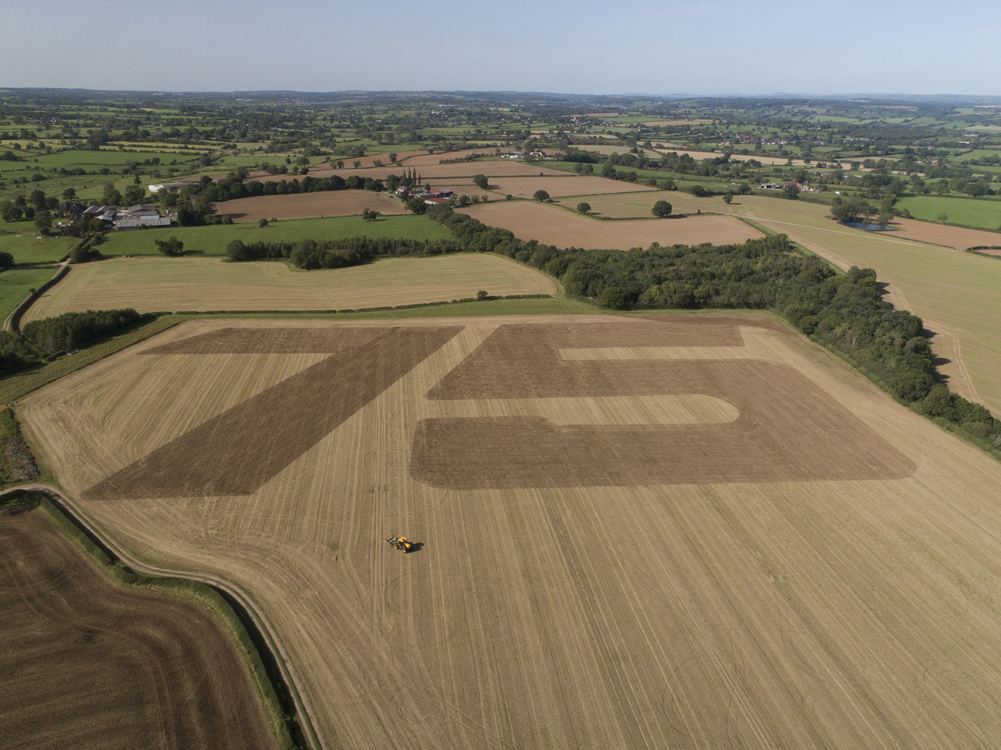
SALTEX 2020 will be the show’s 75th anniversary but it all started for Derek back in 1969 when he attended the show, which was held at Motspur Park in London, as a visitor. A year later Derek moved just 20 minutes away from Motspur Park and it was at this point that the aspiring young groundsman began working as a volunteer on the show.

“I felt at home straight away,” he said. “I found myself doing lots of things such as putting up marquees, helping both exhibitors and visitors and I was even parking cars. Back in the 60’s and early 70’s the show never had more than 30 trade stands but I can still remember the machinery that was on display, I remember the educational talks that took place and I remember the demonstrations on how to prepare cricket wickets.

“The show suddenly grew and grew over the years and it wasn’t long before approximately 8,000 visitors were attending. The formula then is still what it is now – to bring the industry together, to talk and to discuss, to educate and learn, and to see all of the latest products.”

After volunteering on the show for eight years he eventually took over the position of operations manager when the show moved from Motspur Park to Windsor Racecourse in 1979. 36 years later and SALTEX was relocated to the NEC, Birmingham, and it is safe to say that Derek was pleased with the new indoor venue.

“I remember the outdoor shows when we used to have bad weather – it was a nightmare,” he said. “There used to be lorries getting stuck and it was pouring down with rain. There was mud everywhere and exhibitors used to complain about puddles outside their stands. We used to have a ground crew permanently on stand-by to go and help the exhibitors. We also had to lay metal tracking across the racecourse – which was a huge job. If an exhibitor a mile across the racecourse wanted an electric socket, it had to be dug into the ground. However, since moving to the NEC, it is a totally different ball game.”

The build-up, which used to take eight days outdoors, now takes just two days at the NEC, and while Derek admits that the move indoors has made his life slightly easier, it is still not without its challenges.

“The major change was that we only had two days to build the show in what is a tighter area. It’s putting all the little things together which is difficult – like the furniture supply and the electrics for example. Fortunately, I’ve got a great team around me, with lots of experience, and everything has run incredibly smoothly to date. It’s important to remember that this team is largely made up of volunteers – GMA members who give up their own time because they are passionate about SALTEX and the industry.”

Derek and his team are religiously onsite at 1 am in the morning on build-up day and are also the last to leave in the evening. Their commitment to SALTEX is unquestionable. They know that this is a show which hugely benefits the industry. In fact, not many people know that any profits created by the running of the exhibition is reinvested back into the varied work GMA does to support the groundscare industry.

“As soon as the doors close to the exhibition we start again immediately,” he continued. “It really is a year-long project. We have 15 different contractors and suppliers to source – everything from carpet on the floor to electricity and accommodation. We draw up specifications, tenders go out for quotes, we agree on a budget and then identify the best partners to work with. On top of that there are things like signage, the design of the show entrance, health and safety forms – let’s just say that there is more than enough to keep me busy!”

Fortunately, Derek is accustomed to keeping active. As well as helping to organise SALTEX for an incredible 51 years, he still had his own career to focus on.

MR SALTEX still gets butterflies

MR SALTEX still gets butterflies

In the early 60’s he started his journey in horticulture by working as an under gardener at a large private estate. He quickly progressed, moving up to become head gardener, and it was then that he discovered that he really enjoyed looking after the lawns. From there he moved into golf, becoming a greenkeeper, before ending up at the playing fields at Wimbledon Common, which was the home of Wimbledon FC – aka the Crazy Gang.

The Crazy Gang was a nickname used by the English media to describe Wimbledon FC during the 1980s and 90s, due to the frequent cheeky and boisterously macho behaviour of the players. Derek spent 30 years there and was often witness to the outrageous practical jokes they would play on each other and on the club’s manager Dave Bassett. Those who know Derek best would have no doubt heard many of the side-splitting tales, including the famous night he found himself safeguarding the FA Cup trophy following Wimbledon’s astonishing victory over Liverpool FC in 1988.

“After the celebrations the kit man came back to the training ground and as well as all the kit – he had the FA Cup trophy with him. Nobody quite knows how the kit man had it, but the consensus was that most of the players and staff were slightly inebriated after the celebrations and they left the trophy behind. Anyway, the kit man was panicking about being in possession of one of the world’s most famous trophy’s and he handed it to me. I took it home with me to keep it overnight until it would be needed for the parade the next day. Admittedly I didn’t sleep well that night!

“I remember my son waking up in the morning and seeing the FA Cup just sitting there on top of the television. Well, shortly after that I had about 40 kids in my living room! It certainly was an experience and my family still trade on that story to this day.

“That bizarre experience summed up my time at Wimbledon – it was an adventure from start to finish. You never knew what was going to happen and to be honest I miss the days when Vinnie Jones used to come into my office in the morning, nick my newspaper, make himself a cup of tea and use my loo.”

Derek took early retirement in 2000 when the club disbanded but he was adamant he wanted to continue working on SALTEX. Throughout his long and illustrious career, he has witnessed phenomenal developments in groundscare – technology that a young Derek Walder could only have dreamed of when he first entered the industry.

“The machinery, the chemicals and the technical knowledge has changed beyond what someone my age could ever imagine. The profession has changed, and people have got to be more like technicians than ever before. They need to be more aware of biology and physics to keep these top stadiums going.

“I think the industry is in a strong position currently – which pleases me immensely. It is also great to see younger people coming into the industry although I would like to see even more. When you look around you will find that many people have been involved in the industry throughout their whole career and there is a good reason for that. Trust me – you will never look back.

“My only disappointment is the deterioration of public parks and local authority sports pitches. I think it’s quite simply because the money just isn’t there anymore. Unfortunately, people are more interested in bin collection and potholes.”

Derek is more than content when he reflects upon his successful career but make no qualms about it, he’s not planning on hanging his boots up just yet.

“I’ve got so much out of working in this industry,” he said. “I’ve gained many lifelong friends – so many great, genuine people that you don’t tend to meet outside of this industry.

“I’m looking forward to the future and my priority is to focus on the continuing success of SALTEX. It’s played a huge part in my life for so long.

“At nine o’clock when the show opens, and everyone comes streaming in I still get butterflies. That’s the buzz for me.”

SALTEX 2020 will take place at the NEC, Birmingham on 4 and 5 November.

For more information visit www.iogsaltex.com

Follow SALTEX on Twitter @IOG_SALTEX and Facebook – www.facebook.com/IOGSALTEX

For the latest industry news visit turfmatters.co.uk/news

Get all of the big headlines, pictures, opinions and videos on stories that matter to you.

Follow us on Twitter and Instagram for fun, fresh and engaging content.

You can also find us on Facebook for more of your must-see news, features, videos and pictures from Turf Matters.
Trimax From The Start

Trimax From The Start: Trimax founder and Managing Director Bob Sievwright talks to us about how far he’s brought the company from its origins in the 1980s, flail mowing the grass under kiwifruit vines in the Bay of Plenty.

Now with offices in the UK, US, Australia and New Zealand as well as distributors across Europe, Trimax has built an unparalleled reputation among turf maintenance professionals for cut quality and machine durability.

Trimax From The Start

Trimax From The Start

The Tractor Whisperer

“I’m a farmer’s son,” says Sievwright. “I grew up on a small back country cattle and sheep farm where the main challenge was converting rough scrubland into decent pasture for the animals. My siblings, my twin brother and I worked every hour available after school, weekends and holidays. Most of the pulling on the steep hills was done using horses, but it turned out I was useless on a horse; I kept falling off. So, from the age of about 12, I gravitated towards the tractor and farm machinery. The horses knew they were smarter than me but the tractor always did what I wanted!”

Always looking for a better way

That strong work ethic and an affinity with machinery were two things that would prove critical in Sievwright’s career, as well as the sudden death of his father in his last year of high school. “I realised at that point it was up to me to get going and see what I could do. I got myself an overseas scholarship as an Engineering Cadet with General Motors New Zealand and later in Flint MI, which is where I did my Engineering degree, and learned all about car manufacturing. I came back in 1974 and got the chance to start my own company.” Not Trimax. It would be another eight years before Sievwright moved into the machinery of grass cutting. Before then he would hone his business, sales, marketing and export skills making meat hooks for local abattoirs from hardened and tempered spring steel.

On one of his meat hook business trips in 1981, 33-year old Sievwright spotted a flail mower with a blade made from two steel pieces welded together. “I sat down and sketched a blade that I knew we could make from just one piece of steel and sent it to the manufacturer. He liked it and we got an order for a thousand blades: my first order for the Gamma flail!” That particular mower manufacturer bit the dust a couple of months later and Sievwright’s blade deal fell through, but he wasn’t fazed. He decided to up sticks, move his business and his young family to Tauranga, New Zealand to manufacture the mowers and the blades himself. He hired a mower engineer (Norm Miller, who still works at the company’s HQ today) and went into production. For Bob meat hooks were out and Trimax Mowing Systems was born.

Inspiring productivity

The first Trimax models on the market – Ezeemow, Mowcraft and Mulchmasta – were originally aimed at New Zealand’s booming kiwifruit farming industry. But demand soon grew from park groundsmen and reserve landscapers who had heard of the mowers’ reputation for durability, quality of cut and low maintenance. In 1985 Trimax diversified into rotary mowers and purchased a complimentary mower manufacturing business, owned by Jim McEwen. Sievwright says: “Jim had design skills that I can only describe as an art form. All his mowers looked great and mowed well, so I invited him on board; we worked well as a team and together we had easily the lion’s share of the local municipal market in New Zealand.”

Jim McEwen set up Trimax’s first Research & Development department. He explains the company’s success. “We have always challenged the status quo and offered a fresh approach to mower concept and design. We produce machines that are aesthetically pleasing, exceed the customers’ performance expectations and have a longer life.”

We see possibility

In 1985, Trimax started exporting their pioneering mowers, the Procut and the Stealth to Australia. All part of Sievwright’s vision: “I was determined we would export as I’ve spent almost half my life outside of NZ. Part of the design parameter was always that our mowers had to be internationally saleable, commercial quality products that delivered long-term value. Trimax has succeeded where others failed by offering premium products, premium service and always listening carefully to the end-customer. Jim and I have travelled overseas many times, trying to understand what users need in each market.” After rotary mower Stealth S1 set a new standard of grass cutting in Australia, it came as no surprise when Trimax started exporting to the UK. Brits loved the Stealth S1 too and by the end of the 1990s Trimax had opened their first UK office and warehouse in Northamptonshire. Trimax mowers were now being used in many prestigious locations including Windsor Castle and the ten perfect polo pitches at the nearby 130-acre Guards Polo Club.

 But not content with cutting the Queen of England’s lawns, Sievwright set his laser-sharp sights next on the USA. Trimax sold its first rotary roller mower there in 2001 and opened up a distribution warehouse in Georgia in 2005. Tinkering away with America’s grand scale in mind, the research and development team launched the X-WAM in 2009, a 10m-wide monster, like nothing else on the market. The scale, reliability and pristine cut of the X-WAM meets the needs and boosts the profits of the country’s mammoth turf farms. Just Google Trimax X-WAM and wonder at the size of it.

Marketing-led approach

Trimax had hired its first marketing executive in 2001. Before then the business attributed its two decades of growth to great salesmen. “We won a lot of customers throughout the 80s and 90s by demonstrating our products” recalls Sievwright. “When I started there were seven other mower manufacturers in NZ. We had to be different and we had to prove we were better. When you’re so sure you can outperform your competitors, you have no hesitation doing side-by-side battles. We won them all.” Sievwright’s proud of his products’ ability to perform but acknowledges that today’s business environment demands a more marketing-led approach: “We still need to demonstrate as much as possible but we do that while also sharing the Trimax story.”

Innovating with purpose

“Our approach to innovation has always been driven by customers. We listen to how they use their products and design purposeful innovations to help customers achieve their potential”. It was this approach which led to the development of one of the company’s most iconic mowers – the Snake! A fully dedicated sports turf mower, utilising 30 years of innovations and refined engineering practices all rolled into one incredible product. Released in 2014, “the Snake solved many challenges and transformed the lives of many groundsmen across the globe”.

“As a kid I always remembered our farm equipment needing lots of tedious maintenance and how frustrating and costly break downs would be”. His ability to relate and empathise with customers, coupled with his desire to push new boundaries, Sievwright says “the ultimate goal would be to produce a zero-maintenance mower”. With that in mind, Trimax went on to develop an array of innovations, such as; SteadFAST maintenance free spindles, auto-belt tensioners and the LocTEK stubless roller retention system, all focused on bringing Trimax one step closer to the ultimate goal.

Trimax From The Start

Trimax From The Start

Powering performance

With sales continuing to boom, in 2015 Trimax expanded their UK operation by purchasing a 16,279 sqft facility in Northamptonshire, and in 2019, a 25,000 sqft facility in Georgia, USA. With offices now around the world, employment numbers soring to 100, and an ever-expanding community of Trimax users – this was something Sievwright only dreamt of!

With Trimax still only scratching the surface of what the huge USA had to offer, Sievwright rooted himself in the market and made it his mission to better understand their needs. “Each market that we operate in is truly unique, as are the requirements of each individual. It’s important for us to acknowledge this so that when we are developing mowers, we can be sure they meet these requirements without compromise”. Needless to say, it wasn’t long before Sievwright identified an opportunity – an opportunity to build a new concept of a castor wheeled mower!

Not afraid to follow what the market required, Trimax and the team set about developing their first ever castor wheeled mower, later named – The Vulcan! Having only just been released in the USA market in 2019, this 7m wide mower is sure to impress!

Personal partnerships

Despite taking a step to the side and passing the reins over to the next generation (his son Michael), he still remains a very active salesman (as he describes himself) within the business. “I’m so proud when I see how much the whole Trimax team continue to fight for the customer. It’s what got Trimax this far, and it’s what will ensure we have a long and creative future”

What started out as a family-run business whose innovation was founded on culture and driven by community, is still very much that. A culture of partnerships which challenge the status quo, inspire productivity, and raise the bar on results.

Trimax is proof of what can be achieved when the right mix of culture, partnerships and innovations are put together! It’s only a matter of time before we see the next Trimax mowing innovation enter the market!!

For the latest industry news visit turfmatters.co.uk/news

Get all of the big headlines, pictures, opinions and videos on stories that matter to you.

Follow us on Twitter and Instagram for fun, fresh and engaging content.

You can also find us on Facebook for more of your must-see news, features, videos and pictures from Turf Matters.