Don’t hit your ball towards greenkeepers

Don’t hit your ball towards greenkeepers: After a course manager suffered a nasty head injury when struck by a ball, BIGGA explain their members often find themselves in the firing line.

The golf course is perhaps unique in sport as greenkeepers can often be seen carrying out work while the course is in play.

It’d be a little odd if a groundsman was marking out a penalty area on a football pitch or the boundaries of a tennis court while a match was in play. But with tee sheets filled to the brim and greenkeepers having a massive area to maintain, it’s inevitable that eventually the greenkeeper and the golfer will come into contact – often with dangerous consequences.

Portlethen Golf Club’s course manager, Neil Sadler, shared a gruesome image of himself after he was struck on the head by an errant golf ball at the weekend, which left him hospitalised and with a concussion…

The damage caused by a golf ball hitting you on the head is about a tenth of a head-on collision in a car crash and of the 12,000 golf-related injuries recorded each year in the UK, around 3,500 are head injuries caused by a golf ball.

The R&A’s Rules of Golf attempt to mitigate the potential dangers to both greenkeepers and other players. Within the ‘Etiquette’ Behaviour on the Course section, it is explained how golfers should always wait until the way ahead is clear before playing a shot. This applies to whether the person ahead is a greenkeeper going about his duties, another golfer or a member of the public.

Golfers have a duty of care not to put others at risk as result of their actions. Sadly, all too often greenkeepers find themselves in the firing line.

We got together three golf course managers to hear their thoughts on the matter and to discuss who should have priority out on the course – the greenkeeping team or the golfer?

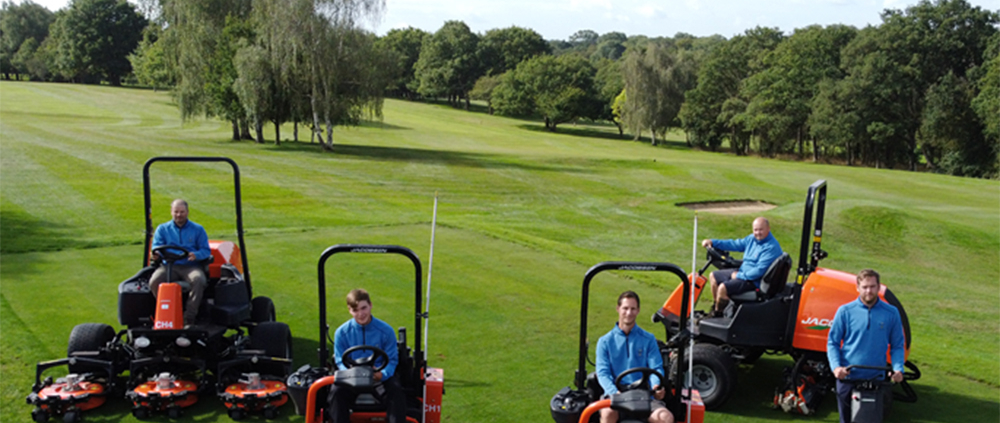
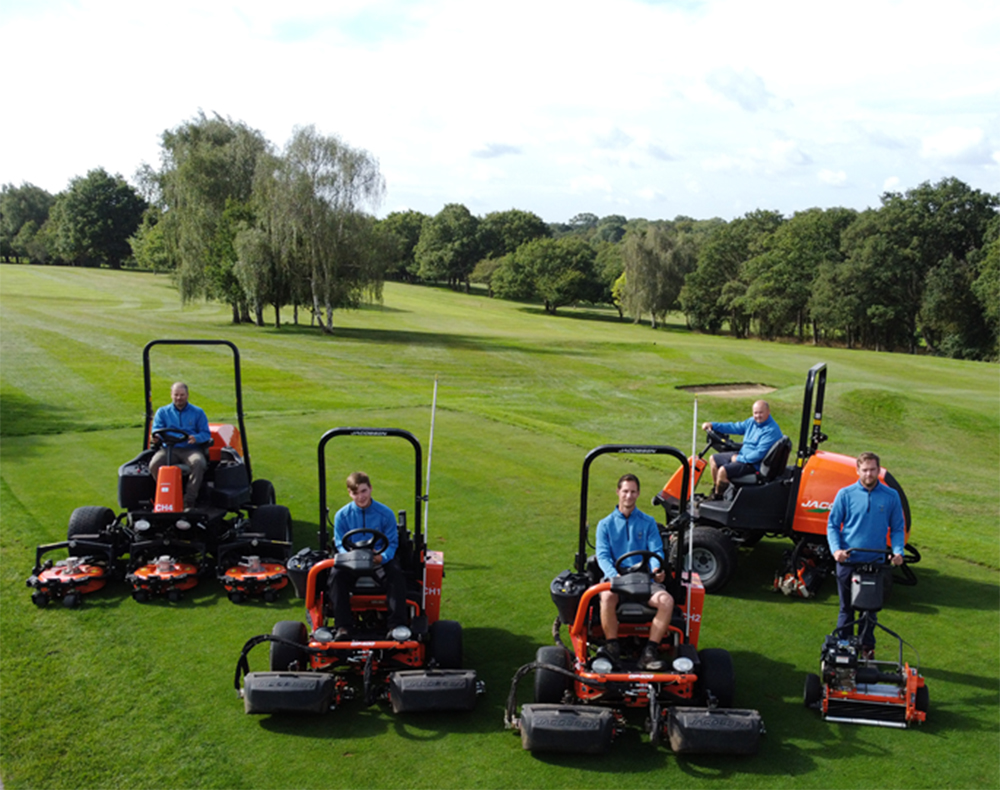
Chris Sheehan (left) is a former BIGGA president and head greenkeeper at West Derby Golf Club for over 30 years. James Parker (centre) was course manager at Pannal Golf Club in Harrogate and is now at Longniddry Golf Club near Edinburgh. Jack Hetherington is course manager at Boldon Golf Club in the North East after a spell as head greenkeeper at Alnwick Golf Club.

Here’s what they told us:

Chris Sheehan (head greenkeeper, West Derby): “Most golf clubs that I know, if not all of them, have a policy where the greens staff have priority at all times. But, despite this, greenkeepers sometimes find themselves in the firing line. This is the worst scenario and it not only hurts them from a mental point of view, but it also hurts them if the golf ball hits them. There have been many instances of balls hitting greenkeepers and causing serious injury. It has happened to me and when you go up to the golfer and say ‘did you not see me?’ They say ‘oh no, I didn’t’ or ‘I didn’t think I’d hit it that far’. When you are on a machine, you can’t hear them shouting ‘fore’. As far as I am concerned, don’t play while the greenkeeper is on the green.”

Jack Hetherington (course manager, Boldon): “Greenkeepers should have priority at all times. It’s easier for me to educate my three members of staff than it is to educate all of my members and say ‘right, you must give way at this time, but at this time we’ll give way’. It’s easier for golfers to give way at all times and for me to educate my staff on when it’s acceptable to make them wait and when it is not.

James Parker (head greenkeeper, Longniddry): “If you’ve got somebody cutting a green then golfers should wait. Conversely, if the greenkeeper feels the task is going to take too long and hold up play, then by all means move to the side and let people play through. The difficulty is that the more we squeeze our tee sheets, which every club is doing now as we want to cram in as much golf as we can, then the fourball who are stood in the middle of the fairway feel under the same pressure as the greenkeeper on the green. They’ve got people on the tee behind them wanting to play. But as long as the member and the greenkeeper can work together, I don’t really see that it should be a huge issue.

Chris: “I spoke to had a health and safety expert in and he said ‘I think all the greens staff should wear a helmet and hi-vis jackets when they work on the golf course, so the golfers can see them and they know it’s a member of the greens staff’. I said ‘don’t you think the same applies to visitors or any member?’ We’re all people out there and if that isn’t enough to stop people hit golf balls towards you, I’m not sure what will.”

James: “I spoke to a health and safety advisor who said completely the opposite. I mentioned about bump caps and hi-vis – I’m firmly against it – and he said he thinks it makes golfers more last if you give them bump caps and hi-vis and the beauty of not wearing them is that golfers should be on the lookout for greenkeepers. Safety gear doesn’t stop golfers from hitting their ball, because they just say ‘he’s got a bump cap on. I’m going to hit it anyway, he’ll be fine’.”

Chris: “You can literally kill somebody with a golf ball. There have been serious injuries that have been caused and our fear is that it won’t be long before somebody gets killed.”

Click here to read the original article

For the latest industry news visit turfmatters.co.uk/news

Get all of the big headlines, pictures, opinions and videos on stories that matter to you.

Follow us on Twitter and Instagram for fun, fresh and engaging content.

You can also find us on Facebook for more of your must-see news, features, videos and pictures from Turf Matters.

Maintaining a golf course alone

Maintaining a golf course alone: Meet the head greenkeeper who took on lockdown single-handedly and was overcome by the community at his club.

Ian Pemberton always joked his course at Cleveland Golf Club would be brilliant if golfers weren’t on it. Then they were gone – for nearly two months.

He was alone, his entire staff furloughed, with a sweeping 18-hole links to manage as coronavirus shut the country as well as the club.

‘Pembo’, as everyone at the club knows him, is part of the furniture. He’s been in the trade for nearly four decades and head greenkeeper at the Redcar course for just over 13 years.

You could say he’s seen a lot. But he’s never experienced anything like the pandemic that gripped the town.

“It was horrible,” he said. “It was a testing time. It was a character building time and it was a learning curve.”

When a pipe burst, he had to be on it. Whether it was tees, fairways or greens, he was the only one on a mower.

Pemberton’s never regarded greenkeeping as anything other than a vocation – “it’s not a 9 to 5 job” – but he knew the only way to get through what essential maintenance actually meant was with detailed planning.

Well, that and an April drought.

“I put together an Excel sheet and programmed timings for when something desperately needed cutting. The greens were every three days and the fairways didn’t take much because it was that dry.

“(Without that) I don’t think I would have coped. I would have had to get the lads back in.”

When he needed it most, in those moments when everything threatened to get overwhelming, there was assistance from volunteers who gave him more of a fillip than they could have known.

“They were tremendous. They need a huge ovation from the rest of the membership. They were limited in what they could do, because they couldn’t jump on machines.

“They were divoting and getting to areas I couldn’t. There were always offers of help and that’s what I needed at that time.”

And even though he’s coming through a torrid experience, as we all have in our own ways, Pemberton has found positives among the hardship.

He’s always had a love-in with the members – anyone who’s ever had a round at the course is bewitched by his infectious enthusiasm and easy way of going about his work.

But even he admitted to getting a little emotional when golfers returned to the course and showered him with praise for its condition.

“It was wonderful. I’d be in the shed and three or four members came in with crates of lager. One brought me some Corona. How good is that? There’s a little bit of Corona for you.

“I love it here. The course is my back garden. It’s just that my back garden got bigger overnight for six or seven weeks.”

Click here to read the original article

For the latest industry news visit turfmatters.co.uk/news

Get all of the big headlines, pictures, opinions and videos on stories that matter to you.

Follow us on Twitter and Instagram for fun, fresh and engaging content.

You can also find us on Facebook for more of your must-see news, features, videos and pictures from Turf Matters.

La Grande Mare gets relief with Foley

La Grande Mare gets relief with Foley: For La Grande Mare course manager, Rick Hamilton, relief grinding is what it’s all about when it comes to reel maintenance, so when he had his pick of grinders, he opted for the Foley Company Accu-Pro 633 with Accu-Touch 3 Control (ATC).

Rick first used a Foley grinder 30-years ago while working in Asia, and over the three decades that followed has used several manufacturers while a consultant. However, he has remained impressed by the principles Foley has stuck to and how they have developed their machines to make them user friendly and deliver consistent results.

La Grande Mare gets relief with Foley

La Grande Mare gets relief with Foley

“The main reason I stayed with Foley was to do with the principles of relief grinding. They have such excellent relief grinders, and although other manufacturers have good machines, but they don’t relief grind at the same level, and for me, that’s what it is all about,” he explained. Foley has always kept to the principles of that, and it’s something I believe is essential in maintaining a good quality reel and delivering and retaining the sharpest cut ; you have to relief grind.

“Because it’s an important part of maintaining the reel I wanted to make sure we could always grind when we needed to, and that’s what made the ATC so important. We don’t have a full-time mechanic, and I want all my guys to get involved. I’m a fully qualified engineer and greenkeeper, so I’ve done a lot of the maintenance work since I’ve joined here and I’m teaching the team. Having machines like this that are automated means once they’ve all been trained up, everything is programmed in and is easy for them to step in and grind.

“You get the same finish and quality every time because the machine is programmed to do that. The inputs are all the same, and the results will be the same, and we want consistency.”

The ATC system provides a step by step tutorial for new technicians, while more experienced operators can use the system straight away to tell the machine what they’re working on and it’ll do the rest. Automatic placement features, the Accu-Reel Selector and Cylinder Height Stop, automatically locate the reel for a fast and easy spin and relief grind in one set-up and work with the pre-set relief angles to provide hands-free relief grinding.

To get Rick and his team set up on the machine, Ian Robson from Foley Company’s UK distributor, ProSportUK Ltd, went to Guernsey to install the grinder and provide training for Rick’s team. Following the session, the entire team could use the grinder, with the results showing on the course.

La Grande Mare gets relief with Foley

La Grande Mare gets relief with Foley

“Ian from ProSportUK was amazing, the guy really knows his stuff, and the training was excellent,” Rick said. “My staff picked it up really quickly, and they were extremely impressed with the result, and they actually enjoyed grinding and doing the job, which is particularly important. Some guys who aren’t so mechanically inclined tend to shy away, and one of my guys who isn’t so mechanically minded found it very straight forward and easy to operate.

Now, they understand the machine, and they can see the result on the greens when they go out and see the mower cutting. Even to that point, when they came back in with the mower and re-checked the cut and reset all the settings, they couldn’t believe how good it was and how long the quality of the cut lasted.”

To experience the difference of the Accu-Pro 633 or other Foley Company models, contact ProSportUK Ltd at prosportukltd@gmail.com

For the latest industry news visit turfmatters.co.uk/news

Get all of the big headlines, pictures, opinions and videos on stories that matter to you.

Follow us on Twitter and Instagram for fun, fresh and engaging content.

You can also find us on Facebook for more of your must-see news, features, videos and pictures from Turf Matters.

Bionema secures Innovate UK grant

Bionema secures Innovate UK grant: Bionema Ltd, a leading UK-based biotechnology company, has received a grant from Innovate UK to support the company’s continual development of its bioinsecticide microencapsulation formulation, which delivers an effective alternative to chemical pesticides.

This additional £98,000 Continuity Grant complements a initial £1.0 million in funding support from Innovate UK, the national funding agency that investing in science and research in the UK, and from the Welsh Government’s SMART Cymru.

Bionema secures Innovate UK grant

Bionema secures Innovate UK grant

Dr Minshad Ansari, a world-leading biopesticide expert who leads Bionema’s research team, says: “The funding is helping the company to continue the development of its microencapsulation formulation and delivery systems, which is crucial to the development of effective biopesticide products.

Effective control of pests, such as western flower thrips, aphids, whitefly and spider mites, require a robust formulation for targeted delivery. Currently, these pests are controlled by conventional chemical insecticides but some of them have now developed product resistance, while other products have been removed from the market, due to their harmful impact on the environment and human health. Biopesticide formulation and its targeted delivery is a more stable and sustainable approach for controlling these pests that are causing billions of dollars of crop damage on a world-wide scale.”

The outcome of this Continuity Grant-funded project will be a unique manufacturing process of proven microencapsulation formulation technology for next-generation bioinsecticide control. The new microencapsulated products will be registered and distributed across Europe, the United States and Canada. Currently, trials are in place with several multi-national chemical companies and distributors to commercialise the technology.

We’ve been working for almost five years on biopesticide formulation development,” Dr Ansari says. “We’ve encapsulated a number of fungal spores in a capsule form that can be delivered to plant surfaces for targeting soft body insects. We just need to adapt that to work for this project.

The encapsulated formulations also control release mechanisms, which can last longer and retain moisture on the leaf surface for targeting small insects such as spider mites. The overall goal is to demonstrate the robustness and stability of this formulation to see positive results in different environments.”

The project team includes formulation experts from the School of Chemical Engineering at the University of Birmingham and at Bionema. In addition to Bionema’s research, development and commercial teams, Silsoe Spray Application Unit is also testing the product’s large-scale applicability and Applied Insect Science, regulatory service is involved for the registration of this product.

For the latest industry news visit turfmatters.co.uk/news

Get all of the big headlines, pictures, opinions and videos on stories that matter to you.

Follow us on Twitter and Instagram for fun, fresh and engaging content.

You can also find us on Facebook for more of your must-see news, features, videos and pictures from Turf Matters.

John Deere sells SABO to Mutares

John Deere sells SABO to Mutares: John Deere has announced that it has signed an agreement to sell SABO Maschinenfabrik to Mutares SE & Co. The transaction is contingent on regulatory approval by the Federal Cartel Office Bundeskartellamt, Germany’s national competition regulator.

SABO manufactures lawnmowers and other outdoor power products and markets them to homeowners, municipalities, and gardening and landscaping companies. The Gummersbach, Germany-based company was founded in 1932 and has been a subsidiary of Deere & Company since 1991. SABO has approximately 125 employees.

John Deere sells SABO to Mutares

John Deere sells SABO to Mutares

Mutares, based in Munich, is a private equity firm that currently owns 13 companies in the automotive and mobility, engineering and technology, and goods and services industries.

SABO will maintain ownership of its brand assets and its operations in Gummersbach. The company will continue to produce walk-behind lawnmowers and handheld outdoor power products, marketing those machines through its existing network of more than 1100 specialised dealers in Germany, Austria, Belgium, the Netherlands, Slovakia and Switzerland.

Employees, customers, suppliers, dealers and distributors should notice little change in daily operations, according to Deere and Mutares.

“SABO is a leading brand for high quality walk-behind mowers and handheld power products in Europe, and the company is well positioned for growth with its line of battery-powered machines,” said Tim Merrett, John Deere’s Vice President, Turf and Compact Utility Platform.

“However, Deere is shifting its focus to key production systems that will allow our machine technology to be a differentiator. Further investment in walk-behind lawnmowers was no longer a strategic fit for our global business.

“Deere is not exiting the turf care business. John Deere will continue to produce a wide range of lawn and grounds care equipment for residential, commercial and golf course maintenance use,” said Merrett.

For the latest industry news visit turfmatters.co.uk/news

Get all of the big headlines, pictures, opinions and videos on stories that matter to you.

Follow us on Twitter and Instagram for fun, fresh and engaging content.

You can also find us on Facebook for more of your must-see news, features, videos and pictures from Turf Matters.