Tag Archive for: A

A career built on turf, data and discovery

A career built on turf, data and discovery: When the new Research Director for STRI Group turned up for his first day at work, there was no need for a series of introductions with his colleagues.

Nor was there any need to spend time familiarising him with the industry or his goals for the coming years.

A career built on turf, data and discovery

A career built on turf, data and discovery

Glenn Kirby wasn’t starting from scratch. He has spent a lifetime working in the sports turf industry, first as a greenkeeper at some of the most prestigious golf clubs in the country, then as a Course Manager, before moving into a commercial role with one of the most innovative, research based companies in the sector.

Joining STRI has allowed Glenn to add the final piece to a professional journey that few can match, one that spans the end-user, commercial and now research sides of the industry.

So, what prompted this latest career move?

“STRI has its centenary coming up in 2029 and it’s got an immense legacy, possibly one of the greatest legacies there is in sports research,” said Glenn.

“The Group continues its longstanding commitment to sports turf and data-driven research, which is where I seem to have found my niche. This felt like a really good opportunity.

It was a difficult decision to leave my last role, but I asked myself, ‘if, in five years’ time, someone else had come in and done a great job, how would I feel?’ The answer made it easy. I’d be incredibly pleased and slightly jealous!”

While Glenn will undoubtedly help drive forward STRI’s world-renowned research programmes, it is also the opportunity to lead the organisation into a new era of connected, insightdriven science that excites him most.

“When I was at school in the 1990s, I was faced with two possible career paths,” Glenn explained.

“One was outdoors – practical, hands-on and physical. The other was in front of a computer and developing software. If I’m honest, I enjoyed being outside more, and I probably convinced myself that the more academic or technical route wasn’t for me.”

That decision set him on the path to a lifelong career in turf management. His greenkeeping journey began at Corhampton Golf Club, followed by roles across Europe and the USA, before returning to the UK as Head Greenkeeper at The London Club and later Course Manager at Hockley Golf Club in Winchester.

“But that digital mindset never really went away,” he added.

“When I moved into the commercial world, it started to come back to the fore. Joining Syngenta gave me a platform to see how technology could genuinely influence decisions and drive improvement.”

His seven-and-a-half years at Syngenta culminated in his role as Technical Services Manager for Turf across Europe, Africa and the Middle East.

“When AI first became available to the public through ChatGPT, I saw it as a huge opportunity and highlighted it to my line management. They were good enough to let me lead internal projects exploring how AI could drive efficiencies across the business. That experience helped me understand how digital tools, when applied with purpose, can make a real difference.”

“At STRI we’ve generated vast amounts of data over nearly a century, much of it in our green booklets or sitting, quite literally, on library shelves.

We now have the opportunity to use that knowledge in new ways,” Glenn said.

“For me, my goal within the research and development team at STRI is to turn that data and information into insights, and help people turn those insights into practical, actionable outcomes.”

“Data is only powerful if it leads to better decisions. Whether that’s understanding how weather patterns affect green speeds or customer satisfaction and then using that information to develop management strategies that help golf clubs and sports venues perform better.”

Glenn is quick to emphasise that his focus is not just on data, but on strengthening STRI’s Research division as the industry leader in sports turf research and product testing.

“Our reputation has been built on a long legacy of turf trials,” he said.

“We’ll continue to drive forward, delivering high-quality, independent trial work and producing data that is genuinely useful to the industry. That evidence base will help us navigate the challenges of climate change, shifting regulations and changing product availability.”

“Most importantly, I’m joining a great team of people and an organisation with a continued enthusiasm for the turfgrass market.

I’m looking forward to ensuring STRI remains at the forefront of leadership in sports turf, blending our history and our innovation to help shape the future.”

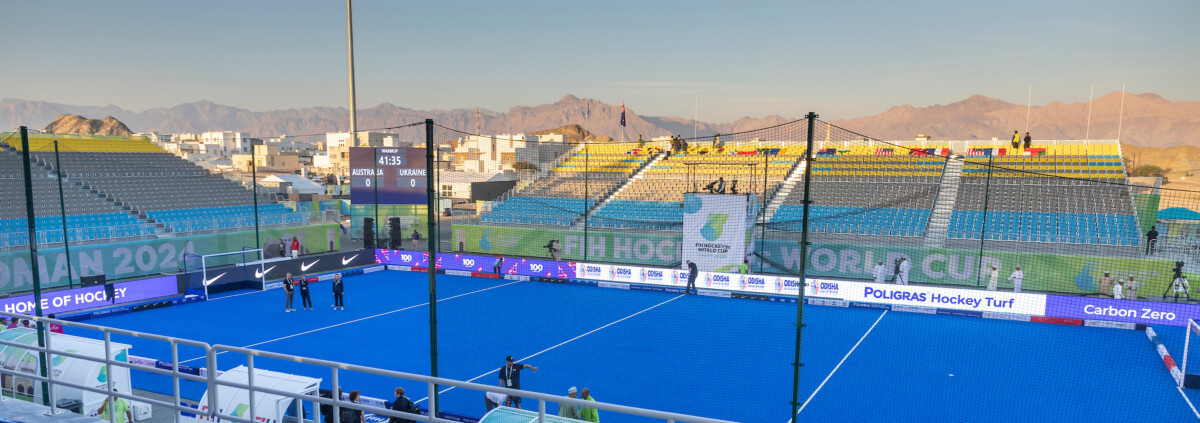
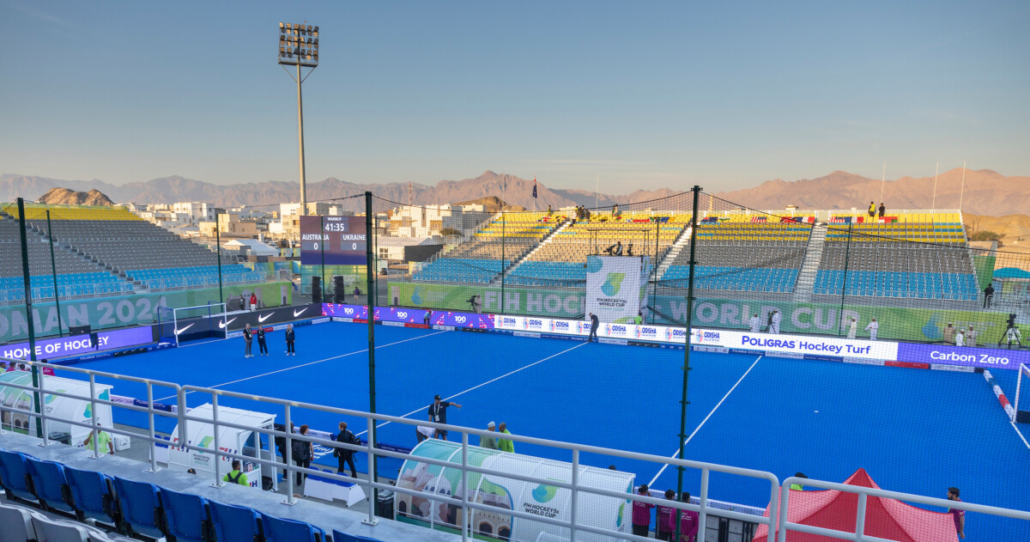
Hockey: A game reborn

Hockey: A game reborn: Scott MacCallum looks at the quantum leap taken by hockey and discusses the game’s development and future with Professor Alastair Cox, one of its leading authorities.

There can be few sports which are as influenced by the surface on which it is played than hockey – that’s field hockey, not the game Wayne Gretzky played on skates.

Hockey: A game reborn

Hockey: A game reborn

Did I hear someone at the back say “Tennis”? Well yes, it’s true that tennis is a different game depending upon which surface it’s played. The difference here, however, is that if you’re a top professional and a specialist in clay, grass or hard court there is always a point in the season when your game comes into its own.

Hockey, however, made a fundamental shift in the mid-1970s which altered the game to such an extent that the previous masters of the art were reduced to virtual also rans. Until that key change – which took place following the 1976 Olympic Games when the International Hockey Federation (FIH) made artificial pitches mandatory for all major competitions – until then natural turf had been playing surface of choice and India and Pakistan were its very best exponents.

From 1928 through to 1968 every Olympics was won by either India (seven times) or Pakistan (twice). The game was a bit more aerial in those days, taking bumpy natural grass surfaces out of the equation and these guys were good at it.

It was only on home turf, literally, in Munich in 1972 that West Germany defeated Pakistan to break the stranglehold. That was the last Olympics where hockey was played on a natural surface.

In fairness, since the introduction of synthetic surfaces at Montreal in 1976, India and Pakistan each achieved one more win, but neither has even made it to a final since 1984.

The new powerhouses are Germany (four times) and the Netherlands (three times). Great Britain, Belgium, New Zealand, Argentina and Australia have each been Olympic Champions once since 1976.

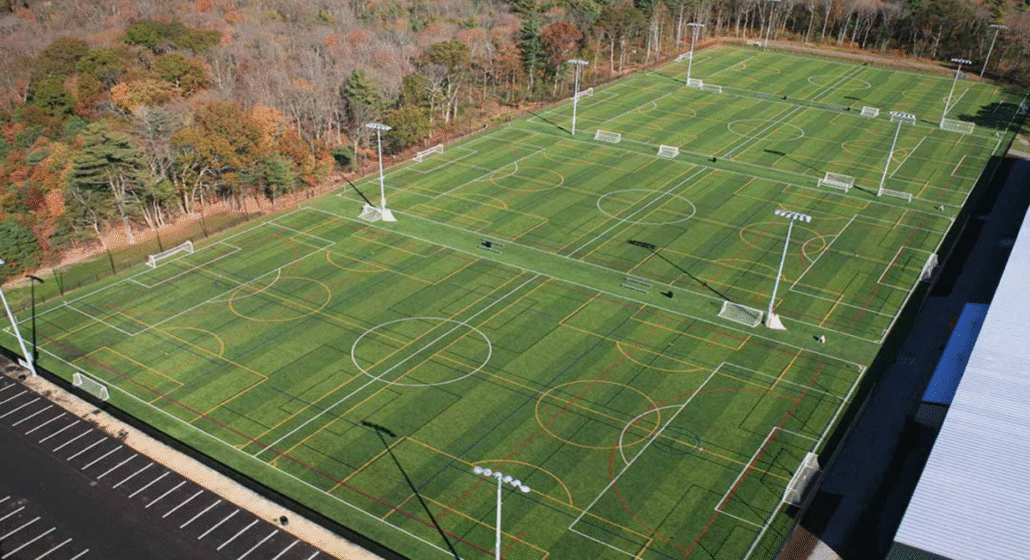
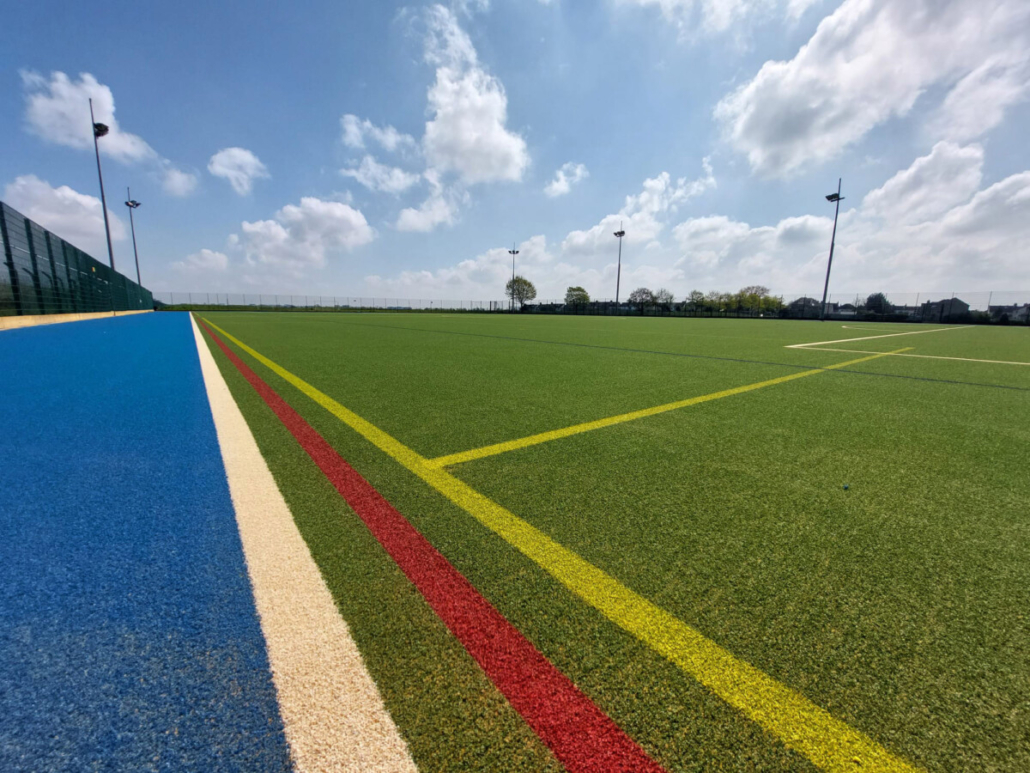
It should be noted that when it comes to playing surfaces we are, of course, talking about the elite. Around the world, about 50% of hockey is still played on grass, but that percentage is much lower in wealthier nations which can afford to install synthetic pitches.

In the UK, up until the 1950s, hockey could be played out on the outfield of the cricket field but given the increasing demands to produce high-quality surfaces cricket clubs became increasingly reluctant to share facilities and such arrangements are now much rarer.

Hockey: A game reborn

Hockey: A game reborn

One man well placed to look at the evolution of the hockey pitch is Professor Alistair Cox, Facilities & Quality Programme Manager for the International Hockey Federation and Technical Director for the European Synthetic Turf Council.

“The move to synthetic turf fundamentally changed the sport, making it a lot faster and more skillful. It’s now a totally different game to before,” said Alastair, who is also Visiting Professor – Sports Surface Innovation at Loughborough University.

“It did mean that India and Pakistan who had dominated the game through to the early 70s were negatively affected as they could not practice on the new surfaces so regularly and European nations, as well as Australia and New Zealand, have dominated.”

Fundamentally the technology within synthetic hockey pitches has evolved in terms of the materials employed and player comfort but the basic concept has not changed since those early days.

While football – soccer – has dipped its toe in the world of synthetic turf and has seen many refinements and improvements since the days of Queens Park Rangers at Loftus Road and Luton Town at Kenilworth Road back in the 1980s. Remember the giant unnatural bounces and propensity to crinkle? However, it hasn’t embraced synthetic surfaces to the same extent as its stick-wielding sporting cousins.

That said, you might have expected that hockey would have benefited from the resources and research that the biggest and most popular sport in the world could invest in pitch technology research.

That’s not exactly been the case, however.

Hockey: A game reborn

Hockey: A game reborn

“Hockey wants the ball to move as quickly as possible whereas football doesn’t want a football to roll too quickly on the surface,” explained Alastair.

“FIFA wants its synthetic surfaces to replicate natural turf, so if you have a football field that meets the FIFA quality standards, it’s not very good for hockey, as has all the limitations of playing on a grass pitch from a hockey point of view. That’s created challenges for hockey because instead of being able to share facilities, it’s had to have bespoke pitches,” he said.

“That works where there’s enough demand, enough money, enough interest, but in many parts of the world hockey is nothing like as popular as football and the money isn’t there to fund synthetic hockey pitches,” said Alistair, who is recognised as a world leading expert in the field.

However, behind the scenes things are happening which could have a major impact on the popularity and accessibility of hockey.

“We’ve been working with FIFA over the last 18 months and developed a joint standard for dual-use football and hockey surfaces. It’s still biased towards football with the length of fibre preventing the football from rolling too quickly on the surface, but it is still short enough for hockey to be played,” he revealed.

“The fact that it is now a FIFA publication and not one from the FIH makes it a lot better for us because it’s FIFA saying this is okay for community football and you can also play hockey. If it had come purely from the FIH, few would have listened. It offers so much potential for grassroots hockey.”

The cost of a bespoke synthetic hockey pitch is out of reach for many communities, given the number of hockey players who would use it, but a shared multi-use pitch capable of hosting a range of sports including hockey would be much more attainable for many more clubs and communities.

The other major issue surrounding the game at the elite level is that of wet pitches.

“Water is becoming a scarce commodity in many parts of the world and, environmentally, putting thousands of litres onto a plastic surface is now very difficult to justify, and it doesn’t look good.

“It’s has become a barrier to people wishing to invest in the sport in parts of the world where water is scarce. That means potentially we wouldn’t be considered a true global sport, so we have set a strategy to encourage the turf industry to develop better surfaces that can be used without water,” revealed Alastair.

“They’re probably not going to replicate fully a wet turf, but if they have enhanced performance compared to what they have been producing until now, the differences may be minimal.”

One of those issues is the ability to drag flick, some you see at penalty corners, and one of the most exciting elements of the game. “The water acts as a lubricant allowing the stick to glide across the surface. You cannot do that so well on current surfaces when they are fully dry.

“On the new surfaces, it’s sort of halfway between the two. The ball is not bobbling around on the surface as much as you see on a sand dressed or sand filled turf so that aids the control to play in a more technically skillful way. We are sure the game will develop and adapt,” he explained.

Hockey: A game reborn

Hockey: A game reborn

“As the environmental agenda becomes more relevant, players see the need, but it’s going to be challenging. If you’re an elite player and you have only played and trained on a wet turf for the last five ten years of your hockey career suddenly being told go and play on something very different will take time to adjust.”

A number of installations in the UK are embracing these new surfaces, including St Andrews University that has recently installed a dry turf pitch, with one of the reasons being the use of vast amounts of water on the pitch does not fit with their sustainability ethos. “I also would suggest that the number of dry days during the hockey season in St Andrews are going to be fairly limited and these new surfaces hold the water. So when it rains, it stays in the carpet.

“What we’re finding is some of the more elite clubs in Europe that have invested in these new surfaces, they will water the fields at the weekend for the first team and then not water them at all during the week for training, community and the juniors.

The other issue of dry pitches in hot climates is that the surface temperature of the pitches and heat stress. Major tournaments tend to be played during the summer when conditions are dry and often hot.

“That’s a dilemma. Do we do what is good for the environment and potentially compromise players welfare or do we say, actually, these are the most important events in hockey and we may think that wet turf is the solution for now?

“It’s a bit of a paradox that the countries that need the dry turf because they haven’t got the water are the countries that have the issues with the temperature.

“These are all the things that have been discussed within the FIH, while we also have to be mindful of the host committees’ environmental agendas,” he added.

Speaking with Alastair, and delving into the world of hockey pitch development, revealed a host of issues but more than that, an understanding that the work going on to ensure the best possible solution is well advanced.

A Day in the Life of a Female Arborist

A Day in the Life of a Female Arborist: The day starts early, often before the sun has even tipped above the horizon.

Tree work is not a nine-to-five desk job. It’s physical, unpredictable, and enriching.

A Day in the Life of a Female Arborist

A Day in the Life of a Female Arborist

It is also a male-dominated industry, which gives young female arborists, such as Jess Riches, a chance to carve themselves a trailblazing role, breaking down stereotypes and paving the way for others.

From Farm Work to Tree Work

Jess’s path to arboriculture wasn’t a straight line.

She’s worked on banana farms, driven buses, and spent years in the tough FIFO construction industry in Australia.

“I’ve always preferred manual labour roles,” she explains. “When I came back from Australia, I knew I wanted to continue doing a manual job.”

When she returned to the UK, she remembered her brother’s positive experience with Blake Tree Care. “It seemed perfect. I could learn new skills while using my previous experience in operating machinery.”

No Two Days the Same

Ask her what a typical day looks like, and she laughs… because there isn’t one.

If she’s with the ‘willows’ team, she might spend the day operating machines, using chainsaws, and handling large-scale clean-up. On domestic jobs, she could be hedge cutting in the morning, chipping in the afternoon, and chainsawing in between.

Her favourite part? “Definitely domestic work. It’s like being a kid again climbing trees, but this time you don’t get in trouble!”

The Best & The Toughest Parts

The joy of the job lies in the variety. Every tree is different, and every site is unique. Climbing and chainsawing bring an adrenaline rush and a childlike sense of freedom. And working outdoors in the Essex and Suffolk countryside is a privilege in itself.

But tree work isn’t always sunshine and fresh air. “The toughest part can be working in all weathers,” she admits. “There have been days in torrential rain that are mentally challenging. But it’s never been too bad, you just push through.”

Teamwork and Support

Tree surgery is rarely a solo job. The work is demanding, and safety relies on teamwork. For her, that’s one of the highlights: “The team all get on well and support me. As I’m new to the industry, they’ve been keen to teach me anything I don’t know.”

Being the only woman in the crew could feel daunting, but she’s never let it hold her back. “From day one, I’ve never said no to anything. I wanted to do everything the men can do – and I believe I have.”

Breaking Misconceptions

People are often surprised to see a woman in tree surgery. It’s still rare in the UK, but her experience has been overwhelmingly positive.

“Everyone has been very welcoming. The only challenge is the need to ‘prove yourself’ as a woman. Men are expected to be able to lift heavy equipment and logs. But with women, there’s sometimes doubt. I just got on with it.”

Her advice to other women? Simple: “Absolutely try it. It’s an amazing industry with so many skills to learn. Don’t be put off by it being male-dominated. If you put the work in, you’ll be just as valued as anyone else.”

And as for the public’s view of arborists: “One misconception is that we just cut down trees and ruin the environment. That couldn’t be further from the truth. Blake Tree Care plants thousands of trees to replace those that have to be removed. Arborists love trees more than most.”

Learning on the Job

A recent standout moment came when she was called to a golf course project. The task required her to operate 8- and 14-tonne diggers, which are much bigger than the ones she’d used in Australia.

“It was a great experience. I learned how to adapt my previous skills to tree work. I even got to drive two different types of tractors, which was a lot of fun.”

It’s a reminder that arboriculture isn’t just about climbing. It’s technical, it involves big machinery, and it demands constant learning.

Jess isn’t stopping here. She’s working towards gaining formal qualifications in tree climbing and felling. These skills will not only expand her role but also cement her long-term career in arboriculture.

Why She Loves the Work

At the heart of it all, simple things keep her going.

One of the things that stands out most for Jess is the culture at Blake Tree Care itself. “Everyone wants to help each other and watch each other gain skills. It’s something I haven’t experienced too much before.”

That sense of encouragement and teamwork is what makes the hard days in the rain worth it and the good days in the sunshine even better.

Working in the British countryside also comes with its quirks, according to Jess. “I love working in the amazing scenery that Essex and Suffolk have to offer. I never got to see it much in my previous jobs. But now I work in it every day, and it makes everything easier.”

As one of the few women in the field, she’s proving that anyone can find their place with resilience, curiosity, and passion.

What We Can All Learn from Jess

Jess’s story proves that arboriculture is about passion, grit, and teamwork. Not gender.

At Blake Tree Care, we’re proud to have a team that supports one another and values growth. If Jess’s journey has inspired you, why not learn more about what we do, or even explore a career in arboriculture with us?

If you’ve ever thought about a career in tree care, follow Jess’s lead. The industry needs more people who love trees and want to protect them for the future.

For the latest industry news visit turfmatters.co.uk/news

Get all of the big headlines, pictures, opinions and videos on stories that matter to you.

Follow us on Twitter and Instagram for fun, fresh and engaging content.

You can also find us on Facebook for more of your must-see news, features, videos and pictures from Turf Matters.

GroundsFest Academy Shines a Light on Irrigation

GroundsFest Academy Shines a Light on Irrigation: The latest free GroundsFest Academy event once again proved a huge success, this time focusing on Irrigation Maintenance in partnership with Origin Amenity Solutions (OAS).

Held at the impressive Throws Farm Research and Technology Centre in Great Dunmow, Essex – the heart of OAS’s research and development activity – attendees were treated to a day packed with hands-on learning, expert demonstrations, and practical advice. The facility, which boasts trial areas, greenhouses, and advanced turf analysis equipment, provided the perfect backdrop for a day dedicated to improving irrigation knowledge and techniques across the turf and amenity sectors.

GroundsFest Academy Shines a Light on Irrigation

GroundsFest Academy Shines a Light on Irrigation

The CPD-accredited event guided participants through the fundamentals of irrigation systems, installation best practices, troubleshooting, and the latest innovations in irrigation technology. Sessions were designed to be practical and interactive, allowing attendees to get hands-on experience and take away knowledge that could be directly applied at their own sites.

Peter Robin from Origin Amenity Solutions, who led several sessions, said: “My purpose today was to help people understand how to make their irrigation systems better. A lot of sites have old systems that aren’t performing as they should, leading to issues like dry patch and poor turf uniformity. With a better understanding of hydraulics, people can make small tweaks that make a big difference.”

The event attracted a wide range of attendees from across the UK — from schools and sports clubs to golf courses and local authorities — all eager to build their knowledge and share experiences.

Christian Bath, Grounds and Gardens Supervisor at Haileybury School, attended to build confidence in maintaining both new and ageing irrigation systems: “We’ve recently had a new system put in alongside an old one that’s not working so well. Today really helped me understand the troubleshooting side — how to identify problems at the source and resolve them without unnecessary disruption. These events are so valuable because they encourage networking and show that others are facing the same challenges.”

For Joshua Weir, Greenkeeper at Llantrisant & Pontyclun Golf Club, the accessibility of the

GroundsFest Academy stood out: “Being free opens it up to a much wider audience because not every club or individual can afford to travel or pay for events. I’ve got a book full of notes and once I explain how well the day went, I’m sure my boss will send me to more Academy events.”

The sentiment was echoed by Esteve Sanchez, Groundsperson at Fulham Football Club:

“Right now, at Fulham FC we have are having a massive extension of irrigation, and so it is good to enhance our irrigation knowledge. I think this is a brilliant initiative from GroundsFest – these Academy events help bring the industry together and build knowledge on several different topics.”

John Hall from Hertfordshire Bowls agreed: “Today was a fantastic learning curve. We’ve gained a much better understanding of the systems we use and how to eliminate problems. Networking with others has been educational in itself – it can even help you save money by understanding how to do things better.”

Reflecting on another successful event, Bradley Tennant, Director of Education at the GroundsFest Academy, said: “We’ve had a really good mix of people attend today, from football and golf clubs to bowls clubs and landscaping companies. It’s fantastic to see the diversity in the industry and the enthusiasm to keep learning. It’s been another brilliant day for the GroundsFest Academy – and we’ve got an exciting 12 months ahead, so watch this space!”

With each event continuing to attract strong numbers and positive feedback, the GroundsFest Academy is firmly establishing itself as one of the most valuable free learning resources in the grounds care and landscaping sectors — giving professionals and volunteers at every level the chance to expand their skills, share knowledge, and strengthen the future of the industry.

For more information, please visit www.groundsfestacademy.com

You can also follow GroundsFest on X, Facebook and Instagram @GroundsFestAcademy for much more news, reviews and insightful views

For the latest industry news visit turfmatters.co.uk/news

Get all of the big headlines, pictures, opinions and videos on stories that matter to you.

Follow us on Twitter and Instagram for fun, fresh and engaging content.

You can also find us on Facebook for more of your must-see news, features, videos and pictures from Turf Matters.

Laura Darlow a winner of 30 under 30 – The Next Generation

Laura Darlow a winner of 30 under 30 – The Next Generation: Green-tech is delighted to announce that Laura Darlow, Logistics Team Leader, has been named as one of Pro Landscaper’s 30 Under 30: The Next Generation winners for 2025.

28-year-old Laura was chosen for her contribution and rapid career progression within the landscape industry. Now in its tenth year, the 30 Under 30: The Next Generation initiative celebrates 30 rising stars across the arboriculture, garden design, horticulture, and landscaping sectors, aiming to showcase the diverse career opportunities available to young professionals.

Laura Darlow a winner of 30 under 30 – The Next Generation

Laura Darlow a winner of 30 under 30 – The Next Generation

Laura joined Green-tech in 2015 after completing a Diploma in Horticulture at Askham Bryan College. She began her career as a Despatch Assistant before moving into logistics, where she has thrived in a fast-paced and evolving environment. Within just a few years, she progressed to Logistics Team Leader, a role that sees her coordinate the daily movement of customer orders across both UK and international markets. Laura plays a pivotal role in ensuring Green-tech delivers on its promises to customers. She has been instrumental in process improvements that have reduced stock holding, cut freight costs, and ensured compliance with all export orders.

Her achievements were further recognised in 2025 when she completed Green-tech’s Management Development Programme, earning the title of ‘Outstanding Contributor’ from the course trainer.

Speaking about this award, Laura comments, “I’m thrilled to have been recognised as one of this year’s Pro Landscaper 30 Under 30 winners. Working in logistics is fast-paced and varied, and I take great pride in ensuring everything runs smoothly behind the scenes. To see my hard work acknowledged in this way is hugely rewarding, and I’m excited to continue developing my career in this fantastic industry.”

Green-tech’s Managing Director, Kris Nellist, added, “Laura is an outstanding member of the Green-tech team, and we are incredibly proud to see her recognised with this award. Her commitment, attention to detail and proactive approach make her a key part of our operations, and she embodies the high standards and ambition that Green-tech stands for.”

Laura will officially receive her award at the Pro Landscaper 30 Under 30 ceremony on Wednesday, 8 October at FutureScape, ExCeL London.

For the latest industry news visit turfmatters.co.uk/news

Get all of the big headlines, pictures, opinions and videos on stories that matter to you.

Follow us on Twitter and Instagram for fun, fresh and engaging content.

You can also find us on Facebook for more of your must-see news, features, videos and pictures from Turf Matters.