Tag Archive for: And

London Golf Club And Club Car Celebrate 20-Years

London Golf Club And Club Car Celebrate 20-Years: London Golf Club, host venue of the 2019 Staysure PGA Senior Championship and a European Tour Destination, has celebrated its 20-year relationship with Club Car by taking delivery of a new high-spec fleet of golf vehicles. 

The fleet of 50 Tempo golf cars supplied by Club Car, a brand of Ingersoll Rand and Official Supplier to The European Tour, features the market-leading connectivity solution, Visage, which formed an important part of London Golf Club’s decision to renew.

London Golf Club And Club Car Celebrate 20-Years

This ‘connected’ GPS Fleet Management platform boasts unique features that helps support maintenance of the club’s two pristine Jack Nicklaus designed courses, provides guests the greatest range of in-car services on the market, and offers specific options that support the venue’s valuable corporate golf revenue stream.

Stephen Follett, CEO of London Golf Club, commented: “We pride ourselves on our ability to offer both members and guests an unrivalled level of service and attention-to-detail, and we therefore need to work with suppliers that mirror these standards.

“Having partnered with Club Car for the past 20 years, we trust the brand and have every confidence in the performance and reliability of the golf cars.”

He continued: “London Golf Club hosts a substantial number of corporate and professional events, and the integrated Visage system enables us to tailor the in-car screens with company logos, contact details and so on, which further enhances the customer experience and supports this important branch of our business.”

The newly installed fleet of Club Car vehicles marks the sixth that local dealer, Bradshaw, has delivered to London Golf Club over the duration of the 20-year relationship.

Kevin Hart, Director of Golf Sales EMEA at Club Car, added: “London Golf Club is one of Europe’s leading golf destinations and is a fantastic example of a venue completely in tune with its customers’ wants and needs.“We are honoured to have been the chosen supplier for the past 20 years, and we look forward to continuing this long-term relationship.”

London Golf Club, the first club to feature within the European Tour Destination network of world class venues, has impeccable tournament credentials, having held European Tour events in the form of the 2008 and 2009 European Opens and most recently the Staysure PGA Seniors Championship in 2018 and 2019.

For more information about London Golf Club, visit: https://www.londongolf.co.uk

For more information about Club Car, visit: https://www.clubcar.com

For the latest industry news visit turfmatters.co.uk/news

Get all of the big headlines, pictures, opinions and videos on stories that matter to you.

Follow us on Twitter and Instagram for fun, fresh and engaging content.

You can also find us on Facebook for more of your must-see news, features, videos and pictures from Turf Matters.

DLF’s Wildflower And Winter Mixtures

DLF’s Wildflower And Winter Mixtures: Sports, Lawn and Wildflower seed will all be under the spotlight as DLF Seeds return to SALTEX.

The technical team will be on hand to provide mixture advice across the Johnsons Sports Seed and Masterline ranges, but also, visitors to stand J100 will have the chance to win innovative tools for effective on-the-spot overseeding, worth over £600!

DLF's Wildflower And Winter Mixtures

With sustainability and ecology still very much on the agenda for golf courses and those managing green spaces, the DLF Pro Flora wildflower range has been extended with the addition of 3 Colour Boost mixtures. Designed to deliver maximum colour, diversity and interest, the Colour Boost collection incorporates native wildflowers and garden flowering species to deliver a dazzling floral display throughout the year, whilst providing welcome food and shelter for a variety of wildlife.

With winter approaching, the importance of regular overseeding cannot be over-emphasised – essential for sward development, overseeding improves turf quality and can reduce maintenance costs over the long term. DLF’s new turf type tetraploids are ideal for winter overseeding, bred for rapid germination and establishment even under low soil temperatures. These 4Turf tetraploids develop a stronger and deeper rooting system which also improves the efficiency in which nutrients, including Nitrogen, are utilised. Incorporated into Johnsons Sports Seed mixtures including J 4Turf and J Rescue Stadia, the qualities of 4Turf make it suitable for autumn/winter programmes for football, rugby, golf tees, polo and racecourses.

To help make the overseeding process more efficient and effective, DLF have teamed up with ForthRoots to give visitors to SALTEX the chance to win both the new RyeSeeder and MultiTool. For precision overseeding, the RyeSeeder features interchangeable tine options that are designed to fit perfectly into the scars left following matches or training, to create the perfect bed for placement of recovery seeding. With double the tines, the ForthRoots MultiTool is ideal for larger areas – eliminating the need for tractor mounted-overseeding during the playing season.

For the latest industry news visit turfmatters.co.uk/news

Get all of the big headlines, pictures, opinions and videos on stories that matter to you.

Follow us on Twitter and Instagram for fun, fresh and engaging content.

You can also find us on Facebook for more of your must-see news, features, videos and pictures from Turf Matters.

Sustainability And Pollution Prevention

Sustainability And Pollution Prevention: Much has been said over recent years about the merits of water recycling wash systems to prevent pollution and conserve water. Here Bill Whittingham reports on recent developments.

Having visited many golf and sports facilities I’ve learned and seen how machinery wash-off is handled. I’ve also heard the thoughts of those responsible for wash-off. It is quite clear that virtually all know of the legislation relating to pollution prevention and the fines that can be imposed; much of which is regularly regurgitated in the trade press. All those I met are also aware of the growing need for water conservation and many have taken action to address both matters. What is apparent, and somewhat surprising however, is that despite this knowledge and concern, there are many establishments still with wash-off facilities that are, quite frankly illegal, causing pollution and wasting vast quantities of water.

Sustainability And Pollution Prevention

The Groundwater (England and Wales) Regulations 2009 and The Water Environment (Groundwater and Priority Substances) (Scotland) Regulations 2009 were enshrined in law in 2009 (10 years ago!) and, more recently the EU Water Framework Directive has been implemented. (Incidentally, whether or not Brexit is achieved matters not, as the requirements have been made law in the UK). So why the complacency and inaction? The ideal way to achieve legislative compliance and save water is to install an approved water recycling system. (i.e. WTL certified). Despite the best endeavours of the leading manufacturers, such a system is not considered cheap and, apart from the water savings, does not contribute to “the bottom line”! So, some take the attitude that they’ll take their chances and hope they are not inspected. To my mind this is not sensible thinking. Articles have appeared in the golf / turf maintenance press reporting just that; a golf club being visited by the EA and told they suspected pollution from the club’s washpad. The club in question responded rapidly, recognising its environmental responsibilities, and installed a below ground washpad water recycling system, satisfying all requirements.

If cost is an issue, there are options offered by the main suppliers of recycling wash systems to help; Spreading payments, retro-fitting or, in the case of ClearWater, carrying out a self-install with each and every UK made system delivered new, direct to site from the factory. One company, not offering self-install, does offer above ground refurbished units however.

So, which way do you go; above ground or below ground? The choice is yours but there are distinct differences between, what most consider to be, the two leading contenders. Both do the same job: treat contaminated water by biological treatment producing clean recycled water. One system offers simple, effective engineering with few moving parts (less to go wrong!) and gravity feed to the system. The other system relies on more elaborate engineering and the pumping of washwater into the system.

Press coverage of late appears to have focused on an above ground system, so it seems only reasonable, to redress the balance and look at the merits of a below ground one. One point that is raised frequently and that some, including myself, have difficulty understanding is the statement regarding a certain above ground system: “…..you can see what’s going on” The inference supposedly being that below ground is not to be preferred. Now, unless I’ve been missing something for many years, I understood that, in the main, waste water treatment is carried out below ground and is in surely the safest location? How many separators, septic tanks and sewage plants do you see above ground? However, if you really want to see “what’s going on” you can in a ClearWater system; simply open the turret covers and take a look. You can actually witness exactly what’s going on; effective treatment!

So what advantages does this particular system have? Being below ground means that it is unobtrusive; away from prying eyes and vandalism. It is also safe being encased in concrete (no worries about leaks!) and operating at a temperature of 14.5 – 16.5 °C. This is important as a stable operating environment means that the unique micro-organisms perform better and also allays fears of Legionella and other harmful bacteria forming. (The threshold for Legionella to form and survive is stated as 20°C. Above ground systems can endure much higher internal temperatures than this in the sun!). Below ground means water flows into the system by gravity via a simple grass trap, so no complicated sumps, pumps and chutes. Valuable washpad space is not required either to site a ClearWater system and a key decision maker seems to be that it’s not unsightly but looks good; with just four modest green turret tops sited at ground level, that’s all anyone sees; impressive!

Self-install certainly does seem to be popular (over 70% of ClearWater’s customers take this cost-effective route). Full and detailed installation instructions are issued and I’ve seen some splendid installations that installers are justifiably proud of. Take a recent installation of a ClearWater system at Brookmans Park Golf Club for example. Asset & Equipment Manager Nick Billington, not happy with the above ground system and repeated maintenance issues, removed that system and used the concrete plinth to good effect; he installed his diesel tank on it and created a pollution prevention area! Installing the ClearWater system was easy and straightforward he says and further cost savings were made by modifications to the existing washpad. Nick is pleased with the team’s work and the ClearWater system.

Buying a washpad water recycling system is a worthwhile investment and will ensure that the costly kit you have invested in will be washed so much more effectively. (A ClearWater system would cost less than 20% of the price of a typical fairway mower by the way!) However, to ensure you spend wisely, do research the systems thoroughly, see them in action and talk to users. To help you to make comparisons and reach an informed decision, here are a few questions to ask prospective suppliers:

  1. Is what is being offered a WTL approved full biological system as not all washpad solutions actually recycle and/or have biological treatment? (Incidentally, a WTL approved system means tax savings on the ECA scheme!)
  2. What is the cost of the system and installation? (Is the system brand new or refurbished?)
  3. What is the water capacity? (The larger the capacity, the greater the time for treatment)
  4. How much is a year’s supply of micro-organisms and are they general purpose or designed to treat turf machinery wash water and capable of handling small grass clippings? (ClearWater’s micro-organisms are bespoke; designed specifically for the job)
  5. What time do I need to spend on daily / weekly maintenance and what are maintenance costs?
  6. Does the system have an oil warning alarm and an auto shut-off valve to prevent an oil spill contaminating already treated water?
  7. Are there separate pumps for each hose and is a proper trigger wash gun provided with each?
  8. What pressure do the water hose pumps produce?
  9. What moving parts are fitted that may need replacing? Is this something I can do or is an engineer’s visit necessary? (Swapping the small compressor and water pumps of a ClearWater system can be carried out by users in minutes, saving costly call out fees and down time!)
  10. Would the system be exposed to the elements and, if so, not be affected by high temperatures and UV rays?

So, below ground or above? The choice is yours; make it an informed one!

We all need to take our environmental responsibilities seriously and ensure sustainability. Preserving valuable water by recycling on the washpad and preventing groundwater pollution is one definite way we can contribute.

For the latest industry news visit turfmatters.co.uk/news

Get all of the big headlines, pictures, opinions and videos on stories that matter to you.

Follow us on Twitter and Instagram for fun, fresh and engaging content.

You can also find us on Facebook for more of your must-see news, features, videos and pictures from Turf Matters.

Rid Slugs From Your Plot and Pots

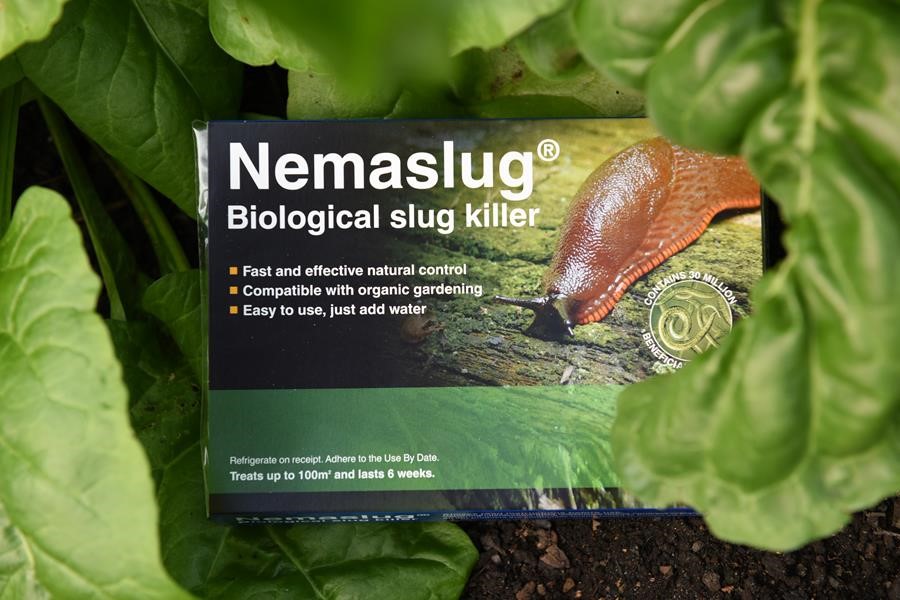
Rid Slugs From Your Plot and Pots: Slugs can be active throughout the year, but they cause the most damage when the weather is humid and wet.

The slimy gastropods will make a meal of a huge variety of vegetables, even when you think that your plants are large enough to have escaped the threat. They will munch through peas, beans, lettuce leaves and tomatoes, and are partial to underground potato tubers; so even plants that you think are safely buried underground are at risk from the hungry pests. This is because, at any one time, 95 percent of the slug population lives underground, feeding on plant roots and potatoes.

Rid Slugs From Your Plot and Pots

The answer to stopping further damage is easy as watering on a simple, environmentally sound, pest control product – Nemaslug. Not only are nematodes extremely effective when they come into contact with slugs, but they can also reach the places that other slug control methods simply can’t.

When nematodes are watered on, they don’t simply lay on the surface of the soil like pellets and other pest control options do, they travel down through the soil to the pest and attack them before they get a chance to damage your plants. Also, nematodes are naturally occurring worms already present in the soil, so using Nemaslug helps top them up!

Gavin Wood, business development and key account manager for nematodes, said: “Unlike pellets, Nemaslug can be used as a preventative pest control, so even if you are lucky enough to have not seen any damage caused by slugs, treating the garden to a dose of Nemaslug will keep the critters at bay before they become a real problem. All of our nematode products are organic, pet and child friendly and easy-to-use.”

The best time to target slugs is when they are newly hatched, so the period between March – October is ideal. A regular regime of using Nemaslug every six weeks is the most effective way to protect plants throughout the growing season and will help to ensure that your vegetables survive long enough for you to eat them!

For the latest industry news visit turfmatters.co.uk/news

Get all of the big headlines, pictures, opinions and videos on stories that matter to you.

Follow us on Twitter and Instagram for fun, fresh and engaging content.

You can also find us on Facebook for more of your must-see news, features, videos and pictures from Turf Matters.

Emergency Chafer Grub and Leatherjacket Summit

Emergency Chafer Grub and Leatherjacket Summit: An emergency summit is to be held with the aim of finding industry-led solutions to the threat of Chafer Grubs and Leatherjackets in the turf industry.

The Summit will take place on 9th May 2019 at Burton Albion Football, Staffordshire.

Emergency Chafer Grub and Leatherjacket Summit

Attendance at this industry summit is vital to those in the industry that want to develop a long-term preventative strategy for Chafer Grubs and Leatherjackets.

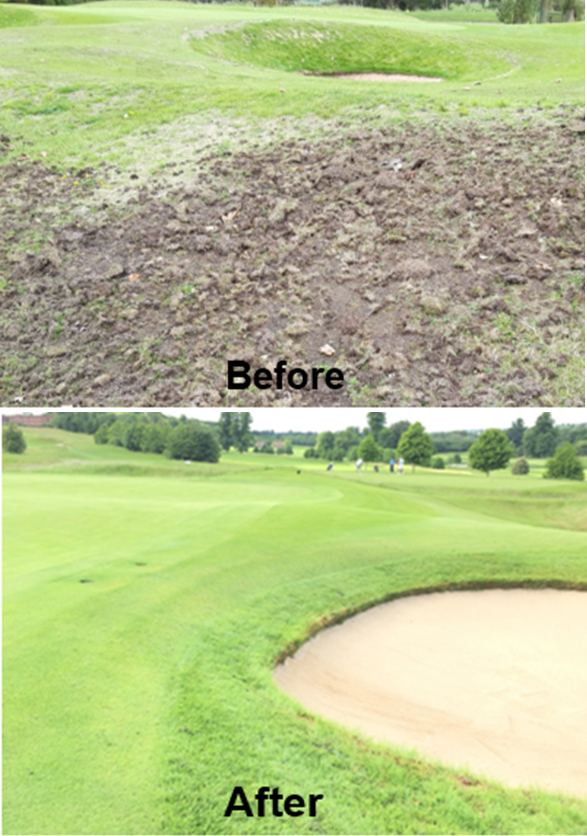
Now that many of the chemicals which were routinely used to keep golf courses and sports pitches free of pests have been withdrawn, we need to find alternatives. This Summit will explore the current challenges in sustaining turf quality in a chemical-free environment.

Without proper preparation and action prior to May this year, there is a high risk of increased attack by Chafer Grubs and Leatherjackets. Many grounds personnel are unaware of a problem until they see evidence – such as birds picking insect larvae by uprooting the dead grass.  However, prevention is better than a cure and scientifically-developed natural pest control solutions when applied in advance will help control the problem.

This event is supported by Bionema, Rigby Taylor, Maxstim, EcoSpray and E. Marker A/S and is held in association with the editors of BIGGA, IOG and Horticultural Week, leading industry magazines.

Dr Minshad A Ansari, Founder and CEO of Bionema, said:

“This summit is the first step in working together as an industry – pooling our knowledge and using all the tools we have in an integrated way to achieve control of these devastating pests”

This emergency Summit will include:

Welcome and Introduction Dr Minshad Ansari, CEO Bionema

Jim Croxton, CEO, BIGGA

Karen Maxwell, The Institute of Groundsmanship Sally Drury, Horticulture Week

Current pest and disease management in the UK: The push towards integrated approaches Professor John Moverley, Amenity Forum, UK
Major turf pests and diseases Dr Kate Entwistle, The Turf Disease Centre, UK
Rising threats of plant parasitic nematodes in turf Colin Fleming, Agri Food and Biosciences Institute
Biology of Chafers and Leatherjackets Dr Minshad Ansari, Bionema
The role of Biostimulants in turf management and root development Richard Salvage, Maxstim
The natural solution for pest and disease control Philip Charlton Smith, CEO, EcoSpray
Current products and their application: Do they interfere? Peter Corbett, Rigby Taylor
Natural solutions to control of Chafer Grubs and Leatherjackets: How do they work? Dr Minshad Ansari, Bionema
Chafer traps: A natural device to monitor Chafer Beetle populations Peter Corbett, Rigby Taylor
Synergy between Chemical & Biological solutions Carsten Marker, E. Marker, Denmark
Case study 1: Chafer Grub control at the Grove

Phillip Chiverton, Golf Course & Estate Manager at the Grove, UK

Case study 2: Leatherjacket control at Neath golf club

Mark Tucker, Head Greenkeeper, Neath Golf Club, UK

The event will establish the true extent of the problem faced by the turf and amenity sector, offer a better understanding of the pests and the current controls available. It will culminate in an interactive debate, chaired by BIGGA, IOG, Horticultural Week editors to help plan the next steps for the industry to take to combat the pest threat. The Summit will conclude with an insight into research and development into the control of Chafer Grubs and Leatherjackets in turf and amenity sector by Dr Minshad Ansari from Bionema.

Attendance is FREE, but spaces are limited so please book early
to avoid disappointment contact. Please contact Matt Rogers
m.rogers@bionema.com – +44 (0) 7786991146

For the latest industry news visit turfmatters.co.uk/news

Get all of the big headlines, pictures, opinions and videos on stories that matter to you.

Follow us on Twitter and Instagram for fun, fresh and engaging content.

You can also find us on Facebook for more of your must-see news, features, videos and pictures from Turf Matters.