Tag Archive for: By

Blown away by the PB-8010

Blown away by the PB-8010: ECHO has launched the most powerful backpack power blower in its class. Introduced in the UK at Saltex 2019, the PB-8010 is built for professionals and is part of the ECHO X Series “Best in Class” range, offering industry-leading power and performance.

The blower’s 79.9cc two-stroke engine produces an air volume of 1818m3/h, an airspeed of 94.5m/sec (211mph) and an industry-leading blowing force of 44N for better performance and increased productivity. Dry weight is just 11.2kg which is made possible by the use of an innovative lightweight carbon fibre frame and fan case. This amount of power combined with lighter weight make the PB-8010 ideal for professional use in quickly clearing greater quantities of wet leaves and debris across large areas.

Blown away by the PB-8010

In addition to the lightweight frame, the other key features to aid the operator and reduce fatigue include the cruise-control throttle, ventilated backpack pad, anti-vibration system and heavy-duty backstraps. These are ergonomically designed to give the user maximum control and all-day comfort.

To make the user’s job even easier there is a heavy-duty air filter which sits at the top of the unit, protecting the engine from dust and debris in the harshest conditions. It’s easily accessible without the need for tools, making it easy for in-field cleaning and maintenance. The metal wear ring at the end of the straight pipe will reduce the pipe’s general wear and tear for increased durability. There is also an intake cover to prevent airflow to the user’ back in the colder winter months.

ECHO products have long been promoted as being designed specifically for professionals who rely on their tools day in and day out, tested in the most extreme conditions to flawless operation and packed with the most advanced features to power easily through the work. The PB-8010 power blower is no exception and as part of the ECHO X Series range, it offers a superior and dependable tool. You can find out more from your local authorised ECHO dealer.

You can also visit www.echo-tools.co.uk or call 01844 278800 for more information.

For the latest industry news visit turfmatters.co.uk/news

Get all of the big headlines, pictures, opinions and videos on stories that matter to you.

Follow us on Twitter and Instagram for fun, fresh and engaging content.

You can also find us on Facebook for more of your must-see news, features, videos and pictures from Turf Matters.

Can Europe be pesticide-free by 2050?

Can Europe be pesticide-free by 2050?: With the ecological consequences of food production and agricultural practices coming under increased scrutiny, and being reassessed and remodelled, a leading biopesticide technology developer believes Europe can be free of its reliance upon toxic pesticides by 2050. 

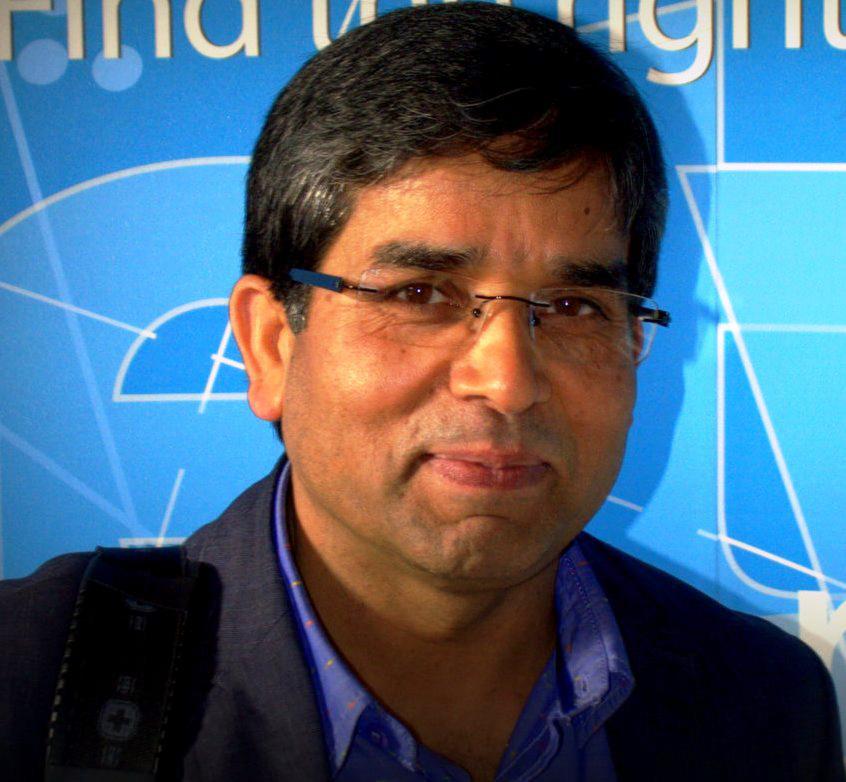
Emerging advances in biopesticides and biostimulants – eco-friendly, nature-based alternatives to the harsh, chemical pesticides we have used for many decades to control pests & diseases and increase yield – are transforming the industry. And they are ushering in a new era of cleaner agronomy that could see Europe being pesticide free in the next 30 years, envisions Dr Minshad Ansari Founder and CEO of Bionema Ltd, UK. Bionema Ltd, a Wales-based BioTech firm, develops natural products to protect crops from pests and diseases and reduce the use of synthetic pesticides.

Can Europe be pesticide-free by 2050?

Minshad chaired the Biopesticides Summit, which was held in July 2019, in Swansea. The Summit gathered hundreds of policy-makers and experts from industry and academia, to discuss the most pressing issues and threats facing crop production today and, crucially, the need to bring more sustainable alternatives to marketplace swiftly.

“We are living in very crucial times for food production and land management. Safe, responsible and sustainable food production is a cornerstone of the continued survival of life, and some of the most exciting solutions to the biggest problems facing food production are to be found within nature,” said Minshad.

“These biopesticides are, in many cases, already being developed or used successfully, and others are well within our grasp. In fact, I believe Europe can be free of its reliance upon toxic pesticides by 2050.

“We are at a point in time where the public is more aware of, or more vocal about their expectations, when it comes to the impact the practices of industry upon our environment. And public scrutiny is a very powerful driver of the practices of the biopesticide industry.

“It is very clear that we have reached a watershed moment. There is a growing acceptance among food producers that practices need to be modernised. There is a groundswell of public awareness that we cannot continue to lean upon traditional, damaging pesticides, some of which we have been using for many decades, to support production,” he said.

“The long-term negative effects of using chemical pesticides on the fertility of our land, and the threat this brings to our survival, is well documented. Also, health experts and scientists have been flagging up links between pesticide use and a host of diseases including Parkinson’s, Alzheimer’s, brain, prostate and kidney cancers, for many years.”

The World Health Organisation reports that pesticides are responsible for up to five million cases of poisoning each year, of which 20,000 are lethal. And, it says, pesticides affect children and infants disproportionately.
Can Europe be pesticide-free by 2050?

“The evidence to support wholesale change is there, credible science is there, the will is there, and, to some extent, the funding is increasingly there to ensure efficacious new products to fill the gap in the market created by the removal of pesticides. The remaining hurdles are largely around the slow pace of regulation and licencing these products for the marketplace,” he added.

Some of Europe’s largest growers are already reaping the benefits of using non-toxic alternatives to chemical pesticides. In Spain’s notorious ‘Sea of Plastic’, the 30,000 hectare corner of Almeria which produces most of the fruits and vegetables that are consumed throughout Europe, sachets of miniscule mites are used, which are draped from pepper, tomato and courgette plants, and attack the parasites that threaten these crops. In fact, the use of insecticides in Almeria has, according to local authorities, dropped by 40 percent since 2007.

Dr Ansari says: “The biopesticide movement has experienced a very interesting development arc over the past few decades. Our use of insecticides surged in the 1960s, at a time when, at least in the Western World, there was a public awakening to the fact that our chemical-laden environment was perhaps hostile to health and life.

“However, global population pressures have driven producers to increase their output and to find ever more efficient ways of meeting demand. Insecticides have done much to help meet those needs. But, they have done so at great cost to human health, to the environment and to the long-term viability of our soil. Growers are also having to meet the man-made challenge of crop resistance to those chemicals we have been using so liberally for years.”

Firms like Bionema, Ecolibrium Biologicals, Maxstim, Aphea.Bio and many others, often working in collaboration with researchers at key universities, represent a growing number of experts who are spearheading change.

“There is still work to be done to educate farmers, many of whom are in a holding pattern of disinfecting their land with fungicides, and using other chemical agents, simply because this is what they have always done, and because these chemicals are being recommended and sold to them by companies they have dealt with over many years and which they trust.

“However, the biopesticide market is expected to grow from $3 billion dollars in 2016 to almost $10 billion dollars by 2025. Around 30% of plant protection tools now available are biological, and more than 50% of new regulatory applications are biological products.

“But the regulatory barriers are complex, and they are consistent challenges. They require the efficacy of a biopesticide to be quantified and proved, they require the biopesticide to pose minimal or zero risk, toxicological and eco-toxicological evaluations, and other stringent tests. These tests have been put in place for chemical pesticides, but they are perhaps not appropriate for biopesticides. Meeting the current requirements can be prohibitively expensive for biopesticide developers, many of which are SMEs.”

Willingdon GC targeted by vandals

Willingdon GC targeted by vandals: Vandals took a spade to greens at Willingdon Golf Club in an ‘extreme’ and ‘premeditated’ attack this week.

Course manager Luke Turner described it as the “worst vandalism” he’d experienced in his decade at the club, and says it could take until spring to fully repair the damage.

Course manager Luke Turner described it as the “worst vandalism” he’d experienced in his decade at the club, and says it could take until spring to fully repair the damage.

He said, “We put in a lot of work and time and effort into creating excellent surfaces and some person decides to come along and vandalise and create damage.

“This is about the most severe I’ve seen in 10-11 years. It’s very extreme and premeditated.”

Luke said someone had cut a hole in a fence and taken a spade or shovel and dug up large areas of three greens, at about 4-5 square metres wide.

“They have come equipped to do it,” he said, “They have walked a considerable distance, almost a kilometre.

“It took about 25 hours to get the surfaces repaired enough to play on again. To get it back to the required high standard it will take most of the winter and into the spring.”

So far it has cost around £1,500 to repair the damage, and has put teams behind schedule.

Luke said, “It affects our visitors and members that come to play here. We work so the greens are in fantastic condition all year round. The amount of work that goes into repairing mindless vandalism…”

A post on social media has received a lot of support from the public, he said,

It said, “It really is difficult to understand some people. This morning we have been greeted by the worst vandalism I’ve experienced.

“Sorry for the disruption to the regular course… it is going to take time to fix this.”

The incident happened overnight on Wednesday, between the hours of 10pm and 5.30am.

If you have any information, contact police online or on 101.

Click here to read the original article

For the latest industry news visit turfmatters.co.uk/news

Get all of the big headlines, pictures, opinions and videos on stories that matter to you.

Follow us on Twitter and Instagram for fun, fresh and engaging content.

You can also find us on Facebook for more of your must-see news, features, videos and pictures from Turf Matters.

Wildflower Endorsed By Royal Botanic Gardens

Wildflower Endorsed By Royal Botanic Gardens: As of 1st September 2019, renowned UK wildflower specialists Wildflower Turf Ltd, have been endorsed by the Royal Botanic Gardens, Kew.⁠

The partnership is a fitting recognition of a family-run business that continues to lead the way in the creation of biodiverse wildflower environments.

Wildflower Endorsed By Royal Botanic Gardens

Based in Hampshire and with a second growing site in Yorkshire, Wildflower Turf Ltd originally began their association with Royal Botanic Gardens, Kew in 2016.

At the request of the Head of the Arboretum at Kew, Wildflower Turf Ltd grew and supplied a wildflower meadow that was installed alongside Kew Garden’s magnificent Hive installation. The wildflower meadow contributed to an immersive visitor experience and helped to highlight the importance of bees as pollinators for our food sources.

Wildflower Turf Ltd’s pioneering approach is driven by product innovation and the company has invested heavily in research and development, with an on-site research facility assisting the business to continually improve and widen its offering.

Alongside well-recognised brands such as Wildflower Turf® the business also develops bespoke wildflower mixes for a range of customers and was a key supplier to the London 2012 Olympics.

Managing Director of Wildflower Turf Ltd, James Hewetson -Brown said, “We are delighted to be aligned with the globally recognised institution that is the                     Royal Botanic Gardens, Kew. Both organisations strive to represent the best in environmental improvement, conservation, knowledge and aesthetics and we look forward to a long and continuing association.”

Tony Kirkham, Head of the Arboretum, Gardens, and Horticultural Services at Kew said: “It’s fantastic to be able to endorse Wildflower Turf. Our first collaboration on the lush and vibrant meadow around the Hive saw us partner together to bring to life a visual representation of the importance of pollinators. It was an outstanding success, and I am looking forward to a continuing relationship”.

For the latest industry news visit turfmatters.co.uk/news

Get all of the big headlines, pictures, opinions and videos on stories that matter to you.

Follow us on Twitter and Instagram for fun, fresh and engaging content.

You can also find us on Facebook for more of your must-see news, features, videos and pictures from Turf Matters.

GrassMaster Solutions By Tarkett Sports

GrassMaster Solutions By Tarkett Sports: GrassMaster Solutions, the hybrid grass division of Tarkett Sports, continues to lead the hybrid sports grass industry since 1989.

Their expertise has been used on more than 750 pitches worldwide of which 16 are football clubs within the English Premier League. During the 2019 FIFA Women’s World Cup in France, 5 out of the 9 pitches where supplied by GrassMaster Solutions.

GrassMaster Solutions By Tarkett Sports

The stitched hybrid grass system GrassMaster contains 100% natural grass, reinforced with 20 million in-house produced High Performance Polypropylene Fibers (HPF) with a proven lifespan of 15 years or more. The natural grassroots entwine with the fibers building a stronger and healthier rootzone, ensuring an always even and stable surface with a fast recovery.

PlayMaster, launched in 2016, is the flexible carpet-based hybrid technology that provides a horizontal reinforcement that offers fast installation and instant playability.

Both systems offer a tailor-made solution for the requirements of professional stadiums, training pitches and multifunctional venues. To help extend the lifespan of a hybrid pitch, GrassMaster Solutions employs in-house professional pitch consultants to offer product specific training, guidance and assistance with the aim of maintaining a perfect pitch, anytime and anywhere.

Visit our stand E190 and discover our hybrid grass systems and interesting references while meeting with our professional and dedicated team.

More information on www.grassmastersolutions.com or have a look at our social media channels

For the latest industry news visit turfmatters.co.uk/news

Get all of the big headlines, pictures, opinions and videos on stories that matter to you.

Follow us on Twitter and Instagram for fun, fresh and engaging content.

You can also find us on Facebook for more of your must-see news, features, videos and pictures from Turf Matters.