Tag Archive for: Changed

The Grass Seed That Changed the Game

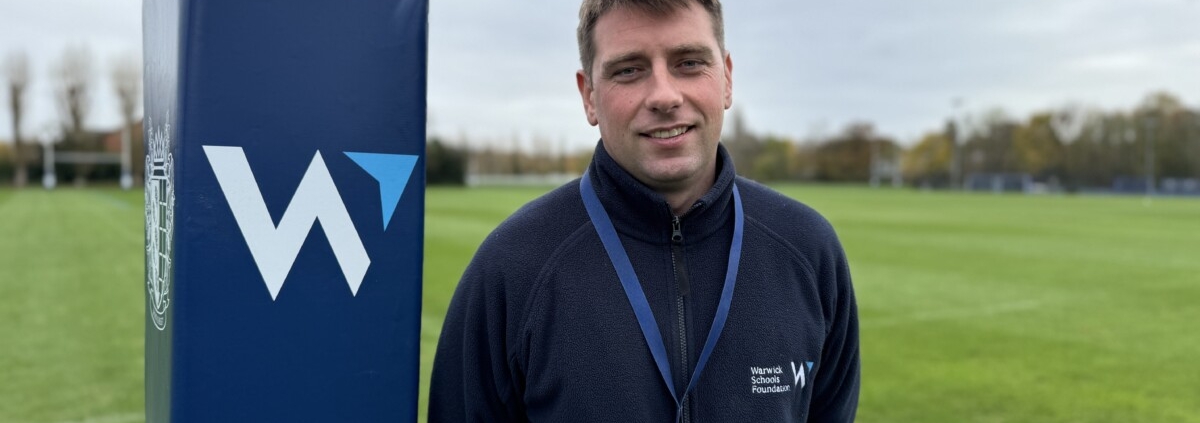
The Grass Seed That Changed the Game: Managing the expansive grounds of Warwick Schools Foundation requires precision and dedication, and Grounds Manager Duncan Toon relies on trusted solutions to meet these demands.

Recently, he found that MM Tetra Sport grass seed has become an essential part of his maintenance toolkit; ensuring top tier playing conditions for the schools’ varied sports facilities.

The Grass Seed That Changed the Game

The Grass Seed That Changed the Game

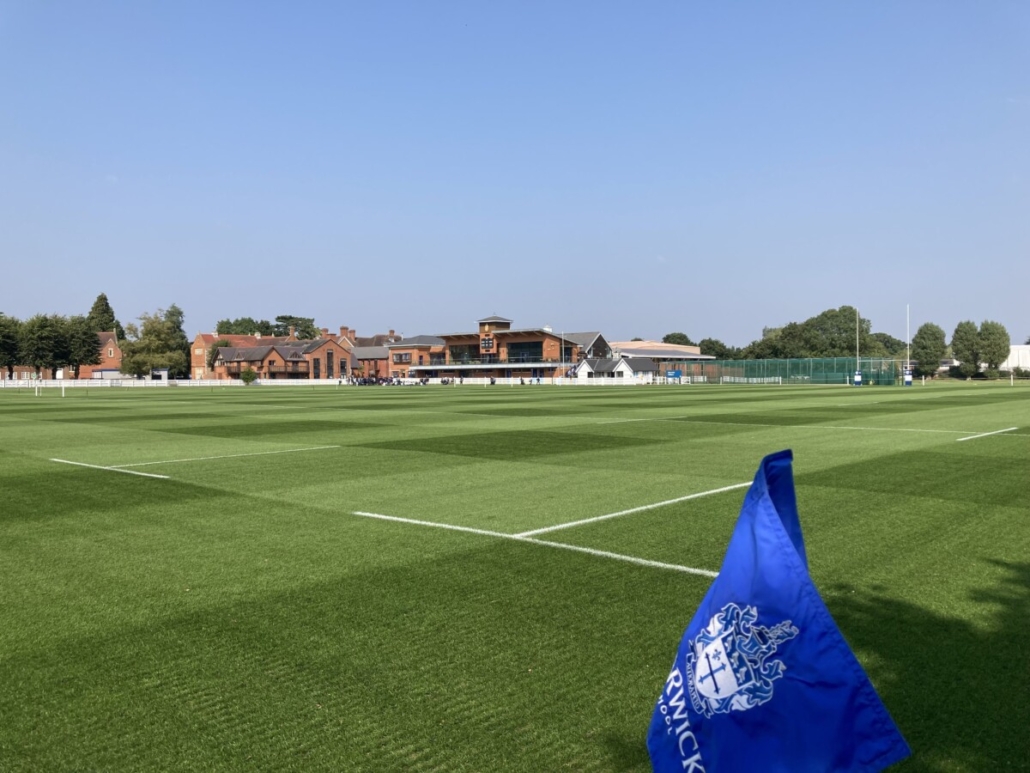
Duncan has overseen the grounds for just over six years, looking after Warwick Preparatory School, Warwick Junior School, The Kingsley School, King’s High School, and Warwick Senior School. These sites cover eight hectares of natural grass, a 3G pitch, two hockey pitches (with plans for a third), eight netball/tennis courts, three cricket squares, and various other sports surfaces.

He has long relied on high-quality grass seed mixes – particularly MM50 and MM60 – which he praises for their consistency and strong performance. However, a recent shift in his approach has led to the adoption of MM Tetra Sport – a mixture by MM Seed that has quickly become his go-to choice.

“I’ve always been a big fan and a long-term user of MM50 and MM60 grass seed”, Duncan shares. “However, more recently, I started using Tetra Sport by MM Seed because I was interested in the fact that tetraploids have deeper roots.” The MM Tetra Sport mixture, consisting of Tetraploid Ryegrasses, is designed for overseeding high-quality sports fields and caught Duncan’s attention for its many benefits – including strong root growth and enhanced drought tolerance.

Duncan first applied MM Tetra Sport to the main rugby pitches after an extensive renovation process: “We sprayed off the main rugby pitches, heavily fraise mowed, and removed most of the organic matter from the surface. We then seeded at 50g per square metre with the Tetra Sport”, he explains. “The seed germinated within four days, even though only one of the pitches had automated irrigation. On the pitch without automated irrigation, we used travelling sprinklers, but we still achieved the same germination.”

The results exceeded Duncan’s expectations: “I was really surprised because after about four weeks, we had a root down to about four inches, and I was really impressed with that. The vigour of the sward is incredible. Even when all the fixtures have taken place over the weekend, I come in on a Monday and the pitches still look immaculate.”

Duncan credits the success of MM Tetra Sport to recommendations from both Matt Gresty of MM Seed and Mark Allen of Agrovista Amenity. Reflecting on the qualities of the mixture, Duncan said “it became apparent that the Tetra Sport seed had everything I was looking for: good, deep rooting, drought tolerance, and a hardier look. It stands up very well to extreme weather conditions.”

He has since expanded the use of MM Tetra Sport across multiple pitches: “We’ve overseeded the middle of four heavily used pitches, and again, we had fast germination – even in colder temperatures. With the dry weather we’ve experienced recently, we still saw germination very quickly. The stand-up and vigour are impressive, and you can just see it standing strong.”
The Grass Seed That Changed the Game

The Grass Seed That Changed the Game

Maintaining a large and busy site means that time efficiency is critical for Duncan and his team. One of the key advantages of MM Tetra Sport is its drought tolerance, which reduces the need for frequent watering – an essential benefit for areas without automated irrigation systems. “Running travelling sprinklers takes a lot of time, and our schedule is very tight for watering,” Duncan explains. “If we can have a drought-tolerant plant that aligns with our schedule, it saves us a lot of time.”

Duncan now makes it a routine to overseed with MM Tetra Sport during half-term breaks. “MM50 and MM60 have always been reliable for me, but Tetra Sport has taken these particular sites to another level”, he adds.

His relationship with MM Seed and Agrovista Amenity has also played a crucial role: “I get very good support from both Matt Gresty and Mark Allen. Their guidance directs me in the right way, and it really helps,” he says.

For Duncan, the ultimate reward is more than just aesthetic appeal: “Presentation is key, but for me, it’s not just about how it looks; the best thing is to see a high-end game of sport played on a pitch performing to the best of its ability because we’ve produced a good surface.”

With MM Tetra Sport now firmly integrated into his maintenance regime, Duncan is confident that he has found the ideal solution for maintaining the exceptional standards of Warwick Schools Foundation.

For further information, please contact MM Sports Seed on 01386 791102 or visit the company’s website www.mm-seeds.co.uk.

You can also follow the company on Twitter/X: @MM_Seed.

For the latest industry news visit turfmatters.co.uk/news

Get all of the big headlines, pictures, opinions and videos on stories that matter to you.

Follow us on Twitter and Instagram for fun, fresh and engaging content.

You can also find us on Facebook for more of your must-see news, features, videos and pictures from Turf Matters.
How Turf Changed Tennis

How Turf Changed Tennis: The STRI’s Mark Ferguson explains how an improvement in the grass deployed on tennis courts changed the way in which the game was played, writes Scott MacCallum.

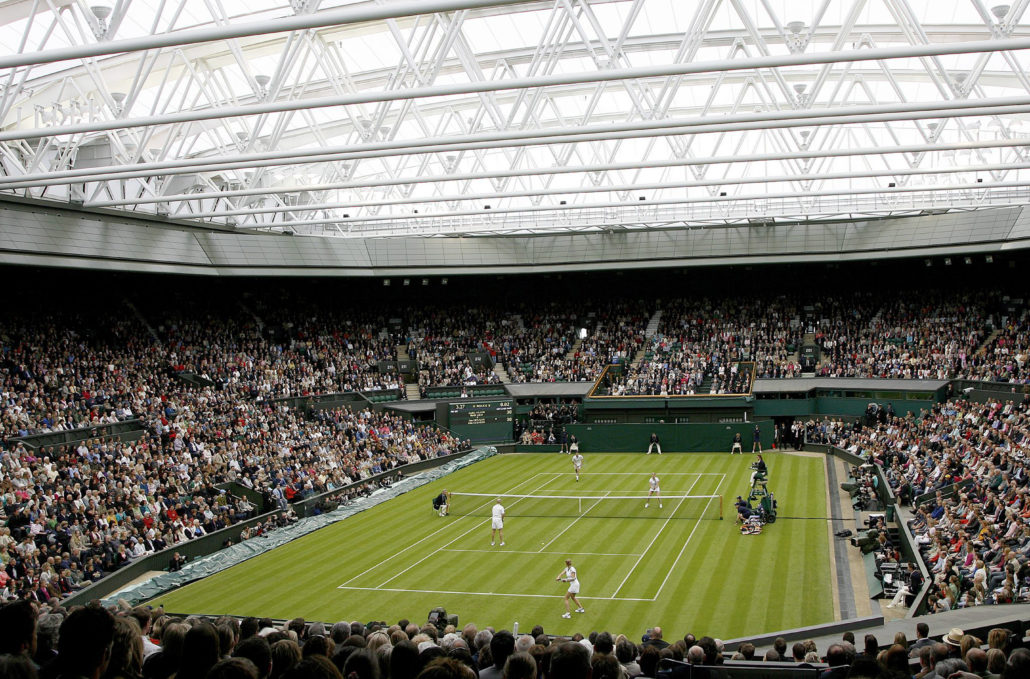
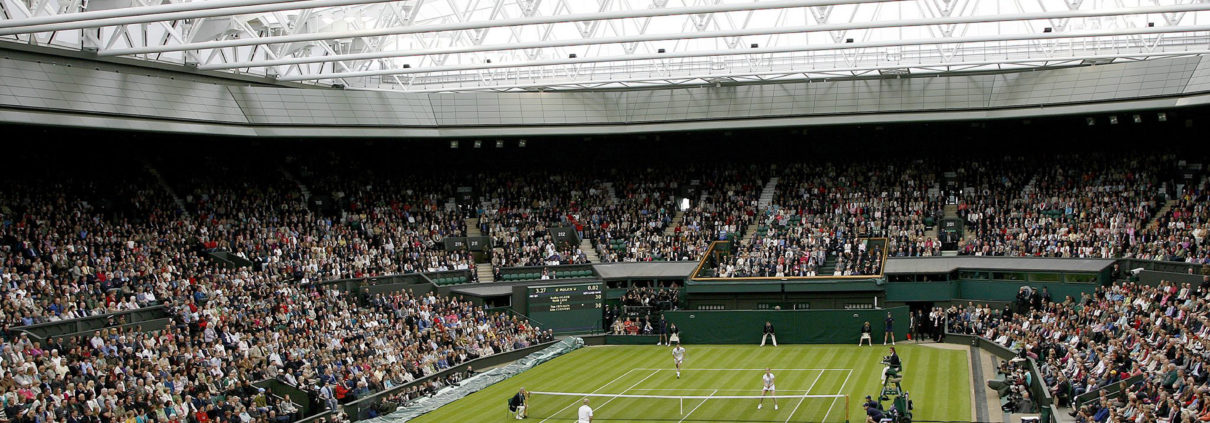
Remember back to the Wimbledons of the 70s and 80s. There was little British involvement beyond the second round; in the second week the courts looked like a yellow massive “T” surrounded by varying shades of green; and, for the men at least, a rally of over five shots was something of a novelty.

How Turf Changed Tennis

It was the days of Ilie Nastase, Bjorn Borg, Jimmy Connors, Roscoe Tanner, and the man with the best name in the sport – Vitas Gerulaitis. It was all white balls and wooden racquets. It was also the days of the “You cannot be serious!” and “Chalk dust blew up!” moments, and the bad bounce.

To a significant degree it was the bad bounces which forced players to adopt a serve and volley approach, rather than remain at the back of the court trying to work openings but risk a low bounce ruining all the great lead up work. Racquet technology improved dramatically in the 80s and led to the grass court game becoming dominated by big servers. This meant that the game was dominated by short rallies and became predictable.

That was all to change in the 90s.

The STRI had always been involved with Wimbledon on an advisory basis, but it was in the early 90s that they became more heavily involved with the All England Club and The Championships.

As part of that a whole raft of research, surveys and botanical assessments of the courts were carried out – a programme which continues to this day.

“The most important trial was the ‘Grasses for Tennis’ trial which was set up in 1993,” explained Mark Ferguson, the STRI’s Research Manager.

“What quickly became apparent was that there were better grasses out there which could be used on the courts.

That wasn’t the fault of anyone as no research had been done prior to that and new breeding technology had only recently brought in new varieties.”

The new cultivars of perennial ryegrass provided a much better surface. More consistent than the old seed mixtures that had been based on golf course grasses such as bent and fescues, which quickly became invaded with annual meadow-grass.

“At the start of The Championships, the surface had a low bounce due to the cushioning effect of the poa, but as it wore down (to avoid using out twice?) whole plants kicked out, leaving bare patches which led to unusually high bounces. This encouraged players to keep rallies short.

How Turf Changed Tennis

With the arrival of the new rye grasses the game changed, the courts became much more consistent and players were confident enough to play from the back of courts which performed a bit more like hard courts, albeit the ball came through much more quickly.” explained Mark, who has been STRI’s Mr Wimbledon for 13 years.

“The work that has been done on grasses has played a big part in the way the game has been played.”

The current Wimbledon mixture is supplied by Limagrain and has been used for the last 10 years. It comes from three cultivars – Melbourne, Malibu and Venice.

“Breeding has hit a bit of a ceiling, improvements are now more marginal. Ryegrasses have become so good now that it is difficult to genetically engineer something which is better. There are some coming through and there are some excellent companies out there which have had great success in trials and they are tested at Wimbledon as part of the trial work.”

As part of Mark’s wider role, he is involved with the Lawn Tennis Association, ensuring that all the venues used by the LTA receive support and advice.

This is important as a few years ago the future of grass court tennis was in some doubt particularly with the US Open moving away from grass courts in 1975 and the Australian Open following in 1988.

“Funnily enough I’ve just finished writing an article called the ‘The Rise and Fall and Rise Again of Grass Courts’.

When tennis became a sport everyone played on grass. Clay became an alternative in Europe and then in the 70s and 80s we got the hard courts as the game became much more fashionable. These courts were much more maintenance friendly, although I only recently learned that the US Open courts are resurfaced every year,” explained Mark, adding that the ITF now recognise 10 official surfaces but there are hundreds of variants within them.

Mark spends time visiting lawn tennis clubs up and down the country offering advice and support at places which don’t have large budgets – perhaps a one-man band looking after the courts. It is part of the LTA’s use of the revenue – £40 million a year is the latest quoted figure – which comes from The Championships.

“They can’t afford to do everything they would like, but they are doing their best to prepare a good surface and we can really help these people.

“There has to be a grass court legacy within the UK for Wimbledon to survive as a grass court tournament. There has to be a grass court season so that players can become accustomed to the grass each year and that Wimbledon doesn’t become a grass court tournament in isolation,” explained Mark.

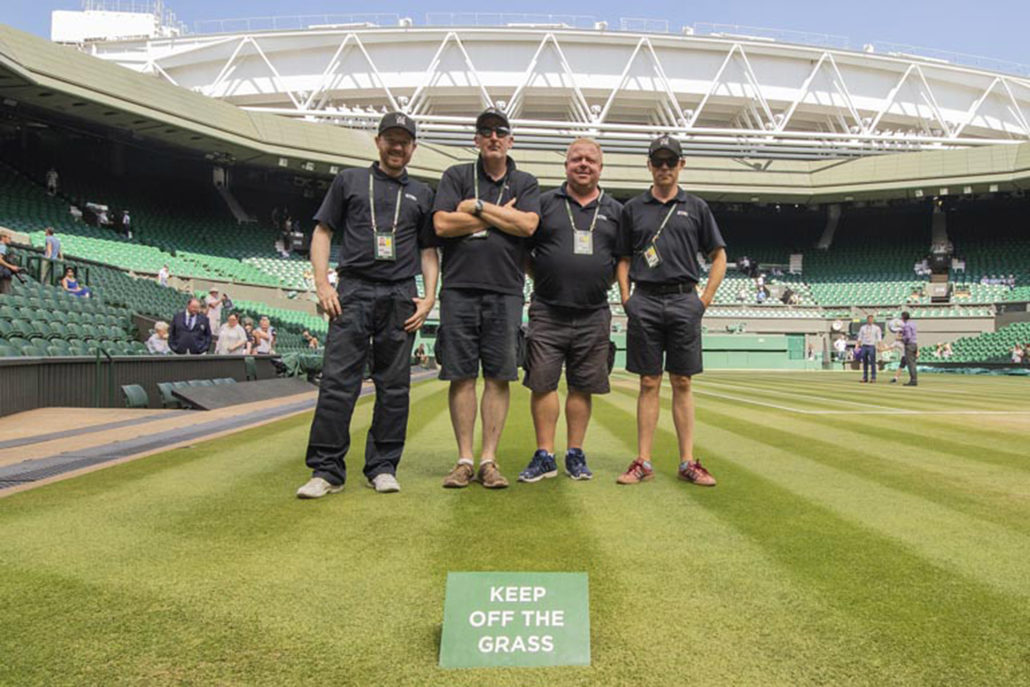
Today’s Wimbledon is a massive sporting event – Mark believes that it is the biggest annual sporting event in the world – and Mark and his four strong team attend from the week in advance of The Championships each year.

How Turf Changed Tennis

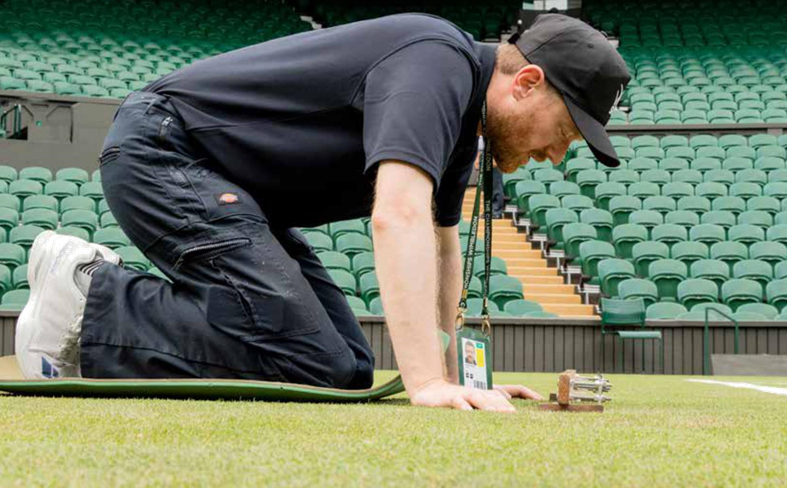
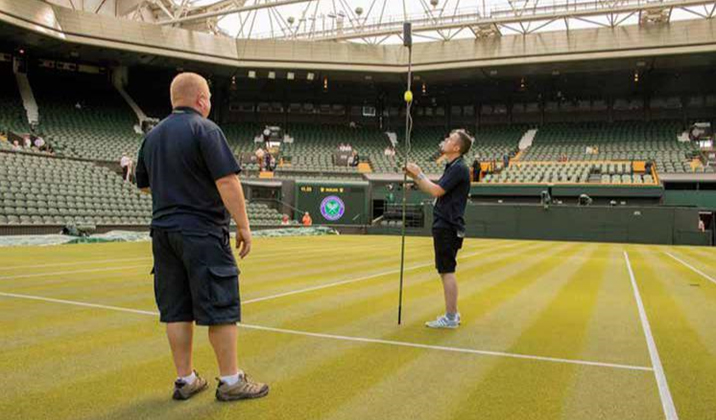
They take daily measurements on each court, including practice courts and the qualifying courts at the Bank of England Sports Club, using the famous old Clegg impact hammer, to measure surface hardness. Soil moisture readings, ball bounce, chlorophyll index and live grass cover is also measured.

“To measure live grass cover we go to the same eight areas on each court, every day and take a count of live grass, that’s 800 spot identifications per court, per day.”

All measurements are processed and made available to Neil Stubley to direct specific management on Championships and practice courts. If, for example, a player questions the playing quality of a court, the measurements can prove that surface characteristics are consistent with other courts and other Championships.

“We have readings for every court going back to the 1990s so we can demonstrate objectively how a court is performing compared to previous years.”

Mark is a friendly, interesting and open interviewee, but there was one question which elicited a more cautious response than the others.

“Can we say now that the courts are measurably better than they were a number of years ago?” That was the question.

“I hate to use the phrase ‘better than ever’ as it is a real hostage to fortune and can become a stick to beat you with. We aim for surface characteristics to fall within certain parameters, but there are a number of factors that can influence how courts play, the weather is an obvious one, also hours of play, type of play etc”.

“Last year for example the two men’s semi-finals went to five hours 15 minutes (Djokavic-Nadal) and six hours 36 minutes (Anderson-Isner) and that put so much wear into Centre Court for the final two days. A year before there were much shorter semis and the wear would have been much less. However, Centre Court still played great for the final weekend.”

By the same token the Centre Court roof has not had a real impact on the day-to-day condition of the surface, but in another way, it does make a difference.

How Turf Changed Tennis

“The roof on Centre Court is at the north end so it doesn’t impact in terms of shade but what the roof does bring is continuous play when the rain comes. Live TV want play all the time so there is a temptation to overuse the court, and it needs to still be in good condition on day 13. Other courts are brought out of play as the fortnight progresses and there are fewer matches to play.”

With the No.1 Court roof coming into use at this year’s Championships the Centre Court workload can be managed a little more easily.

Mark is seen very much as part of the Wimbledon team, travelling down from his base in Bingley once a month throughout the year and more regularly as The Championships approach and he works very closely with Neil and his team.

Mark is immersed in tennis and doing what he can to ensure that the traditions and beauty of the grass court game are maintained, but he certainly doesn’t see it as a chore.

“For me it’s not just another job. It is an absolute pleasure and a privilege to be involved with Wimbledon. It’s an honour to be down there each year and to have an input in a positive way on what goes on.”

It’s fair to say that with Mark’s expertise and the talents of Neil Stubley and his team the future of Wimbledon is secure for the long, long term.