Tag Archive for: Course

TM1000 Tackles Golf Course Thatch

TM1000 Tackles Golf Course Thatch: Normanby Hall Golf Club Head greenkeeper Michael Burgin has reported hugely successful results from using the SISIS TM1000 tractor mounted heavy duty scarifier to combat high levels of thatch on the greens.

This delightful golf course in Scunthorpe, North Lincolnshire, adjoins the picturesque Normanby Hall country park and is set in 117 stunning acres of mature woodland and parkland. The 18 hole, par 72 course is widely considered to be one of the toughest courses to play in the area, providing a challenge for players of all abilities.

TM1000 Tackles Golf Course Thatch

Michael, who has been in the greenkeeping industry throughout his entire career, has been at Normanby Hall for eleven years. Two years ago, he was promoted to the position of head greenkeeper and one of his first tasks in charge was to tackle an abundance of thatch which had occurred on the greens.

“We established that we had a large layer of thatch on the top of our greens; it was on all of them throughout the whole course. This resulted in some drainage problems and I knew that we desperately needed a new piece of equipment which could help us solve the problem.

“I did a lot of research and came across a number of videos online of greenkeepers using the TM1000. I then read an article about the course manager at Greetham Valley Golf Club using it and what he said about the machine pretty much persuaded me to buy it.”

The SISIS Rotorake TM1000 is a tractor mounted heavy duty scarifier and linear aerator and is un-rivalled when it comes to removing and controlling thatch. It includes a collector box and floating unit to follow ground contours and its contra-rotating reel throws debris forward ensuring a clean, consistent groove resulting in an excellent finish. The TM1000 also features interchangeable blades and a quick, simple depth setting without tools.

The fact that the TM1000 collects debris was a key factor in his decision and also something which was incredibly important to the greenkeeping team according to Michael.

“There were other machines on the market but the ones we looked at didn’t collect. This would mean that you would require two or three guys going behind the machine clearing up.

The hydraulics on the back of the TM1000 means that the operator doesn’t have to keep jumping in and out to empty the grass box – which would be very time consuming. For a small team, if you can get one man to do this job then it is a massive benefit.

TM1000 Tackles Golf Course Thatch

“I also like the fact that the TM1000 can go down to 50mm deep. The SISIS TM1000 runs straight through the turf – like a knife through butter.

“We have found that the time of year doesn’t really matter when it comes to using it. The first time we used the TM1000 was mid-February in winter conditions and we found that it did not phase the machine whatsoever.

“No matter what the weather you can’t even tell that the TM1000 has been across the greens and that has really impressed me. It’s a reliable machine with very little maintenance required.

“Overall it is just a fantastic piece of kit. There has been a big improvement in the greens and our soil samples have proved that the thatch levels have dropped dramatically since using the TM1000.”

For further information or a no obligation demonstration, please contact SISIS on 01332 824 777 or visit www.sisis.com

For more news, reviews and insightful views, you can follow SISIS on Twitter and Instagram @SISISMachinery and like the company’s Facebook page – www.facebook.com/SISISMachinery. You can also view the latest SISIS videos by visiting www.youtube.com/SISISMachinery

For the latest industry news visit turfmatters.co.uk/news

Get all of the big headlines, pictures, opinions and videos on stories that matter to you.

Follow us on Twitter and Instagram for fun, fresh and engaging content.

You can also find us on Facebook for more of your must-see news, features, videos and pictures from Turf Matters.

How Golf Course Can Save Bees

How Golf Course Can Save Bees: The putting greens are perfectly smooth, every blade of grass is polished and preened to perfection. No stray clumps of moss or random dandelion leaf to cause even the slightest bump.

Bunkers of fine sand dazzle under the Georgia sun. The crystal-clear water sparkles. Even Augusta National Golf Club’s fairways’ rough edges would put most ordinary folks’ gardens to shame.

The clock is ticking down to this year’s US Masters tournament, when the lovingly manicured Augusta course almost overshadows the golf and televised HD action leaves armchair players dreaming of putting on the smoothest of greens at one of the world’s most beautiful courses.

It is also when greenkeepers at Scotland’s 550-plus golf courses brace themselves for the annual Augusta fallout from golfers demanding to know why their course isn’t as perfectly polished.

“It’s the ‘Augusta effect’,” says Jonathan Smith, executive director of the Geo Foundation, which works with courses around the world to help them become more in tune in nature and more sustainable.

“Golfers watch the Masters and think their local golf course should look like that. And that can put pressure on greenkeepers to meet these aspirations and increased demands.”

At Augusta, the green staff often stress how the former indigo plantation’s smooth turf and the perfect blooms of the dogwoods and azaleas are largely thanks to good irrigation, perfect timing and Mother Nature.

However, golf has been in a long battle with environmentalists who argue pesticides, fertilisers, heavy use of water and intensive landscaping means golf courses are no more than overworked “green deserts”.

With water resources under pressure from climate change and rising populations, along with mounting concern over the loss of bees, butterflies and other pollinators and the impact on food production, golf is having to strike the balance between raising its environmental score and meeting players’ ever-rising expectations.

“Golf in Scotland is recognised as one of the most environmental and sustainable in the world,” insists Smith, whose organisation offers a certification scheme and green flags for courses which meet environmental and sustainability targets.

“One challenge is biodiversity and habitat, the use of water, fertilisers and pesticides. Another is achieving zero waste to landfill and avoiding or recycling waste.”

At St Andrews’ famous links courses, wildflowers nod in the breeze in fairway buffer zones to help attract pollinating insects, and bee hives have been introduced. Bird boxes and bird feeders are dotted around, and there are sheep grazing on the fringes of the Castle Course.

Last summer, a “bug hotel” for beetles, centipedes and spiders popped up near the seventh hole of the Old Course and at the Jubilee greenkeeping sheds. Golfers who had paid handsomely to play the Old Course even had to avoid the famous Hell Bunker when at least 20 sand martins moved in after struggling to find nesting space in the weed-clogged West Sands dunes.

A telegraph pole at the Castle Course became a nest for a pair of kestrels who obliged by producing a chick, and greenkeepers have worked with RSPB Scotland to encourage corn buntings by laying grain for them to eat and planting wildflowers for food and shelter.

Running alongside is a determined effort to minimise the use of pesticides, ease back on fertiliser and rethink water, energy and general waste.

All of which is particularly important in light of a troubling report from the Centre for Ecology and Hydrology in Oxfordshire, which warned climate change, habitat loss and pesticides had led to widespread losses of wild bees and hoverflies, posing a potential future threat to agriculture.

“Everything we do, we try to do it so we minimise any impact,” says Jon Wood, course manager at the Castle Course. “We’re not using as much pesticide or fertiliser, we’re looking at best practices for waste management.”

While St Andrews Links Trust has been working with agriculture company Syngenta to introduce its biodiversity programme Operation Pollinator, which encourages bee and butterfly-friendly measures at golf courses and farms, clubs around the country are taking steps to raise standards.

Royal Dornock Golf Club used spoil from old buildings as base material and recycled wood and timber for a new shed. Designed to absorb the heat of the sun, the building features self-sustainable LED lighting and solar-heated water, while electric vehicles have been introduced to the fleet.

Outside, a new water feature is home to waterlilies, bulrushes, cattail, heron, moorhen, dragonfly, frogs, newts and insects.

At Trump Turnberry’s Ailsa course, old sleepers have been used to rebuild the Ayrshire Coastal Path, while at Dundonald Links in Troon, environmental work has encouraged small blue butterflies to return to the area.

And in East Lothian, Gullane Golf Club’s green waste is collected for compost, and wetland habitats created to increase biodiversity.

At Fairmont St Andrews, head greenkeeper John Mitchell, has undertaken a beekeeping course and overseen the planting of a “bee lawn” the size of a football pitch in front of the hotel to attract more pollinators. “It helps make people more aware of what we’re doing here because it’s very visual,” he says. “Hopefully by the end of this year we will have our own honey.”

Caroline Hedley, Scottish Golf’s environment manager, says the costs of coping with climate change-related issues such as drainage, drought and water charges are on greenkeepers’ minds.

“Greenkeepers are very keen and very attracted to more sustainable courses,” she says. “That’s from Open venues to even small clubs. They are being more sustainable, frugal and efficient.”

Golf management lecturer Ian Butcher teaches the next generation of greenkeepers at Scotland’s Rural College’s Elmwood campus in Fife, where students recently used the college’s 18-hole golf course as a design template for a course of the future designed around ecological, environmental and sustainability issues.

He says: “We need to make sure that students are aware of water management, wildlife and habitat management, as well as aspects that can enhance the location rather than manicure it.

“Golf is in a process of evolution, not least in working with nature rather than against it.

“There’s a trend in golf industry to bring courses back to a more natural state,” he adds. “The millennial generation want golf to be sustainable and environmentally friendly.”

A crucial element, he adds, involves managing the expectations of golfers weaned on television championship courses, and reminding them that a more “hands off” approach means they may share their round with diseased turf, occasional weeds and more wildlife.

“Less or no pesticides means you will get some diseases,” adds Butcher. “There needs to be a threshold of tolerance. It’s natural and it’s not going to affect the game.

“Even Augusta can’t be in tournament condition all the time.”

The US Masters begins on Thursday with the final round a week today. British hopes rest with Rory McIlroy and Justin Rose. Patrick Reed defends.

Click here to read the original article

For the latest industry news visit turfmatters.co.uk/news

Get all of the big headlines, pictures, opinions and videos on stories that matter to you.

Follow us on Twitter and Instagram for fun, fresh and engaging content.

You can also find us on Facebook for more of your must-see news, features, videos and pictures from Turf Matters.

Denmark Course Wins BTME Draw

Denmark Course Wins BTME Draw: The winner of an Underhill AuditMaster Combo LT sprinkler performance test kit was announced at the recent BTME exhibition.

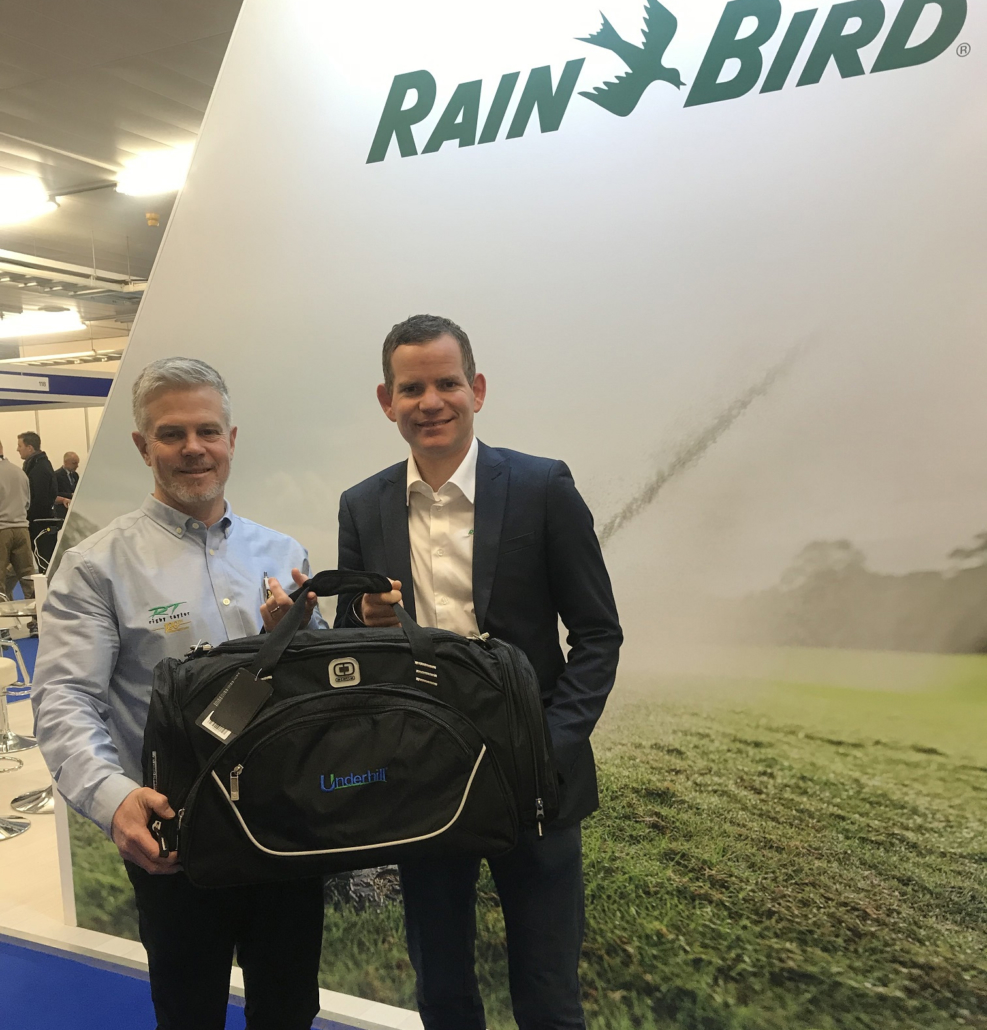
Entrants into a draw were the attendees at a Rain Bird irrigation workshop ‘Understanding the maintenance and management of your irrigation system’, attended by over 32 golf course greenkeepers, and the winner was Mads Lund Christiansen, head greenkeeper of the Randers Golf Klub in Denmark.

Denmark Course Wins BTME Draw

Receiving the award on his behalf (Mads was unable to stay for the draw) was Peter Robin, Rigby Taylor’s newly-appointed UK Irrigation Products Manager in the company of Alastair Higgs, Rain Bird’s UK Golf Course District Manager.

Details of the Underhill AuditMaster and other irrigation products in the Rain Bird range can be obtained from your Rigby Taylor area representative or via Freephone 0800 424 919.

For the latest industry news visit turfmatters.co.uk/news

Get all of the big headlines, pictures, opinions and videos on stories that matter to you.

Follow us on Twitter for fun, fresh and engaging content.

You can also find us on Facebook for more of your must-see news, features, videos and pictures from Turf Matters.


Vandals Cause Golf Course Closure

Vandals Cause Golf Course Closure: Golf course bosses have been left gutted after vandals went on a spree at the site, forcing the course to close.

Bishopswood Golf Course, in Tadley, had to be closed today after, overnight, vandals caused extensive damage to the course’s greens.

Rakes and flags were used to cause the damage before they were either broken or thrown into the water hazards at the course.

General manager at the course Kevin Pickett said: “We have greenkeepers here who work hard and give a lot of dedication and then they come into work to see this, it is just gutting for them and for everyone.

“It is just malicious vandalism.

“We have had to close for the day which means there are loss of earnings for us, but it is more the time it takes to repair all of the damage.

“It has happened before with damage done to the course, but this is a bit more.”

Police say the damage was believed to have been done from between 7.30pm on Wednesday and 7.15am today though the golf course staff believe it was more likely to have happened yesterday evening.

It is hoped the course will reopen on Friday.

Anyone who saw anything suspicious or who may have any information about this crime is asked to call 101, quoting reference 44190062690.

Alternatively, call Crimestoppers anonymously on 0800 555 111.

Click here to read the original article

For the latest industry news visit turfmatters.co.uk/news

Get all of the big headlines, pictures, opinions and videos on stories that matter to you.

Follow us on Twitter for fun, fresh and engaging content.

You can also find us on Facebook for more of your must-see news, features, videos and pictures from Turf Matters.

Toro Instrumental For Golf Course Reinvention

Toro Instrumental For Golf Course Reinvention: Toro machinery has been instrumental in the reinvention of two municipal golf clubs located in the South Liverpool and Merseyside areas.

Managed by golf operators Green Circles Estates, there has been a heavy investment in the vision to create two venues providing accessible, affordable golf for all. As a result, Allerton Manor Golf Club in South Liverpool and Sherdley Park Golf Course in St Helens, Merseyside have both undergone significant transformations in recent years.

Toro Instrumental For Golf Course Reinvention

When Green Circle Estates became the Operating Partner with Liverpool City Council in 2015 for Allerton Manor Golf Course, it was an easy decision to purchase a fleet of Toro machinery to maintain the greens. Confidence in Toro was confirmed when Green Circle Estates became the Operating Partner of St Helens Council in May 2018 for Sherdley Park Golf Course and additional Toro machinery was purchased.

Significant investment has gone into the leisure facilities at Allerton Manor Golf Club, there is The Old Stables Restaurant, The Hay Loft Function Room and Fletcher’s Bar. There are plans in place for a new clubhouse at Sherdley Park Golf Course and both have benefitted from substantial investment to the golf courses.

Bryan Joelson-Mulhall, director of golf says: “The investment and redevelopment of each is in a bid to provide an affordable and accessible golf offering true to the courses’ pay and play roots, but with the kind of facilities and standards expected at private members’ golf clubs. We support public access and welcome anyone to play and enjoy the facilities at either of these fantastic golfing locations.”

Allerton Manor Golf Club has benefitted from new Championship tees, bunkers and reshaped fairways, and Bryan says: “The investment in state-of-the-art Toro greenkeeping machinery will now improve the playability of the course, focusing on raising the standard and improving the quality of the turf across the site. Only Toro was ever considered for this role.”

Toro is used exclusively at both clubs and Richie Shields, as Allerton Manor’s new head greenkeeper explains: “I’ve used all the brands in my career and I always revert back to Toro thanks to its exceptional track record for performance and for, time and again, delivering a good result. It has been great to join Allerton Manor Golf Club at this exciting stage in its development, with investment being made, plans being realised and a brand-new fleet of machinery, to ensure we achieve the objectives for the course.”

The fleet deal includes the Reelmaster 3100-D, two Greensmaster 1600 and two Greensmaster 1000 pedestrian mowers, a Greensmaster TriFlex 3400, a Reelmaster 5510-D, Groundsmaster 3500-D and two Groundsmaster 4000-D machines. These are joined by two aerators in the ProCore 648 and SR48, the ProPass 200 topdresser, two Workman HDX utility vehicles, a debris blower 600 and a TYM T353 compact tractor, all supplied by dealer Cheshire Turf Machinery and Reesink Turfcare, a UK distributor of Toro and TYM Tractors.

It’s the pedestrian mowers Richie is so pleased to see arrive: “I’m very much in favour of hand-cutting the greens, there’s less disruption, you can get a faster pace on the greens and it improves presentation.”

Allerton Manor Golf Club is the first municipal pay and play golf course in the UK to undergo this kind of high-level refurbishment. Alongside the work being done to reinvent the Manor House and put the newly refurbished leisure and dining facilities on the South Liverpool map, are plans for lengthening the par 67 18-hole course to a par 72 Championship course.

The next course operated by Green Circle Estates to benefit from similar refurbishment is Sherdley Park Golf Course. Aiding the large-scale improvement works there are a new Reelmaster 6700-D fairway mower, Groundsmaster 4000-D for cutting roughs and surrounds, Greensmaster TriFlex 3400 for pristine tees and greens and the durable Workman HDX utility vehicle.

Partnering with Green Circle has enabled Liverpool City Council and St Helen’s Council to bring to an end to the uncertainty over the sites’ futures, breathing life back into the community surrounding each and creating leisure resorts and golfing facilities for all to access and enjoy.

There are exciting future plans for both clubs, both on and off the course and Toro will play a key part in on-course developments across the Green Circle Estates portfolio.

For more information, visit: reesinkturfcare.co.uk

For the latest industry news visit turfmatters.co.uk/news

Get all of the big headlines, pictures, opinions and videos on stories that matter to you.

Follow us on Twitter for fun, fresh and engaging content.

You can also find us on Facebook for more of your must-see news, features, videos and pictures from Turf Matters.