Tag Archive for: defence

ICL Turf Defence tank-mix supports ITM

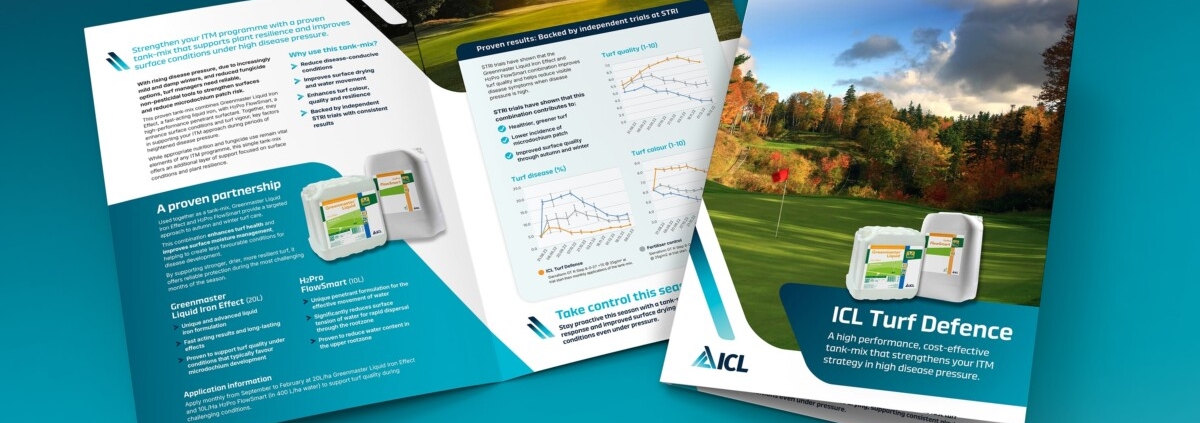
ICL Turf Defence tank-mix supports ITM: ICL’s proven Turf Defence tank-mix supports integrated turf management (ITM) strategies in reducing Microdochium patch risk ahead of the autumn and winter seasons.

Combining Greenmaster Liquid Iron Effect and H2Pro FlowSmart, this tank-mix enhances turf resilience and improves surface conditions, two key factors in minimising the risk of disease development.
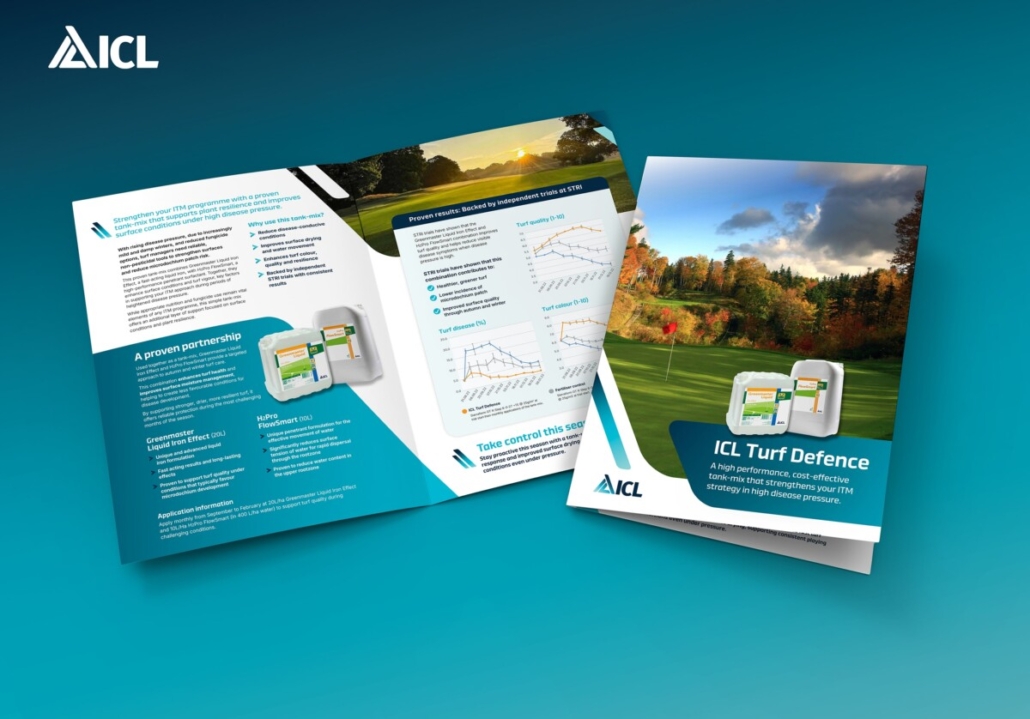
ICL Turf Defence tank-mix supports ITM

ICL Turf Defence tank-mix supports ITM

Independent STRI trials have shown that the Turf Defence tank-mix improves turf health, accelerates surface drying, and reduces conditions that favour Microdochium patch, resulting in cleaner surfaces and more consistent playing qualities.

Greenmaster Liquid Iron Effect delivers a fast-acting iron source to improve turf colour and resilience, helping turf withstand conditions conducive to disease development. H2Pro FlowSmart is a penetrant surfactant that improves water movement through the rootzone, accelerating surface drying and reducing moisture levels that encourage disease. Recommended applications for the tank-mix are monthly from September to February, applying Greenmaster Liquid Iron Effect at 20 L/ha and H2Pro FlowSmart at 10 L/ha in 400 L/ha of water.

“We understand the challenges that cool, damp weather brings to turf management,” said Henry Bechelet, Technical Manager at ICL. “This straightforward tank-mix provides a practical tool to help turf managers maintain consistent playing surfaces under high disease pressure.”

The Turf Defence tank-mix offers a reliable option for proactively strengthening ITM programmes during challenging autumn and winter conditions.

For further information on ICL Turf Defence and integrated turf management advice, turf managers can visit the Knowledge Hub at www.icl-growingsolutions.uk.

For the latest industry news visit turfmatters.co.uk/news

Get all of the big headlines, pictures, opinions and videos on stories that matter to you.

Follow us on Twitter and Instagram for fun, fresh and engaging content.

You can also find us on Facebook for more of your must-see news, features, videos and pictures from Turf Matters.

Case for the defence

Case for the defence: The Christmas and New Year festivities are now just a lingering memory but though the days are starting to lengthen, there’s a long way to go before the onset of warmer weather.

With the turf suffering from prolonged periods of wet weather, waterlogged and weakened roots, the grass will be stressed and more open to disease attack. Deciding on which fungicide to defend your turf territory is key to ensuring a successful outcome. For winter applications, the requirement is to identify fungicides that contain ‘actives’ which work well under cool and cold conditions and, where possible, provide added physiological benefits.

Case for the defence

Particularly effective under cool, cold conditions is the broad spectrum turf fungicide Eland and applications now will provide disease protection for up to 50 days.

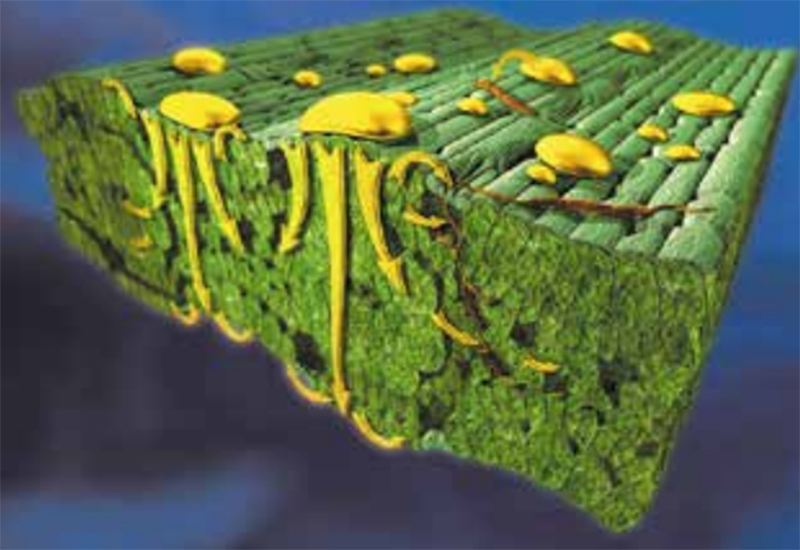
This long term protection is achieved through the spray deposit being held on the leaf long enough to penetrate and be held within the leaf tissue, which serves as a fungicide reservoir constantly releasing its active ingredient, pyraclostrobin, to provide long term protection.

Eland is specially suited to being applied as a preventative treatment, especially when disease pressure is high. It is very effective against all stages of the fungus within minutes of being applied and can restrain mycelial growth to provide additional curative activity.

Case for the defence

In addition to its proven abilities as a turf fungicide, research has shown Eland to have a number of additional physiological benefits.

Such benefits include improving plant health in the form of stress management under cold conditions and during aerification. This has the effect of helping the plant and root system to endure a stressful event and overcome stress through root system retention.

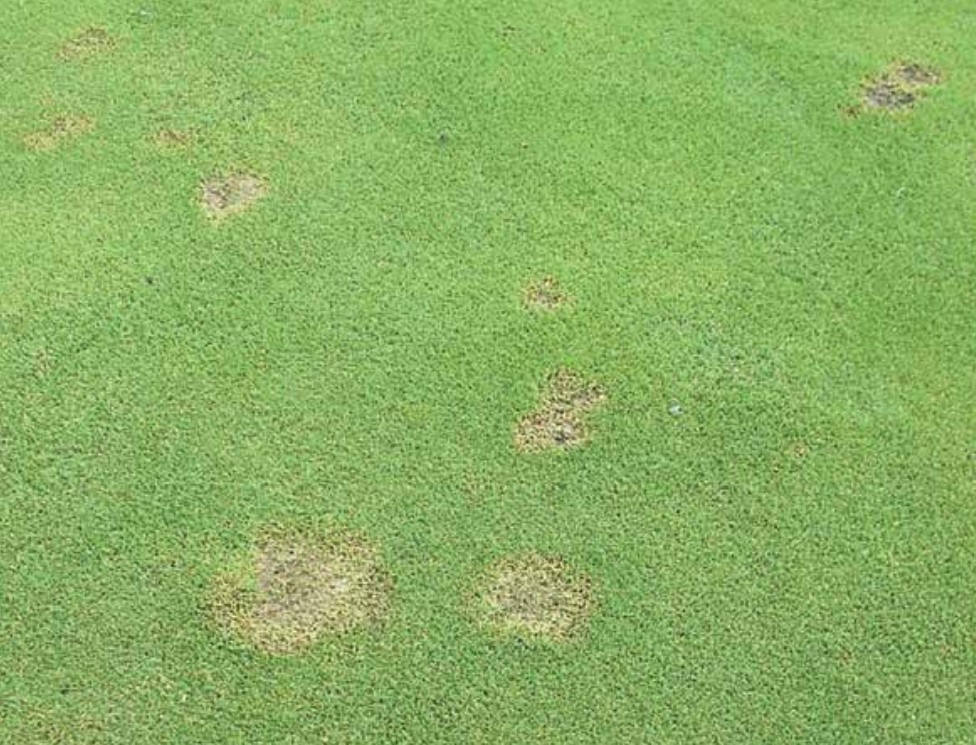
In addition to combating Microdochium Patch attack, a major benefit during early winter months is that applications of pyraclostrobin allows a plant to recover more quickly from root damage or surface foliar damage caused by ball mark injury.

Of course, prevention is always preferable and more effective than reacting after the event. STRI research trials prove that preventative disease control programmes outperform curative options when analysed for turf quality, colour and presence of Microdochium Patch (right).

The eight months trial compared nine preventative and three curative programmes, as well as one untreated plot. The first three programmes used purely preventative fungicides from Bayer. The rest of the preventative plots used a combination of Rigby Taylor fungicides, together as tank mixes with plant health products to reflect a more realistic approach. See bar chart, below right.

Case for the defence

In general, preventative programmes five to seven (see graph RT prog’s 1, 2 and 3) showed the most consistent results across turf colour, quality and Microdochium Patch presence by using an integrated approach with both fungicides and plant health products. The fungicides within the curative programmes (11 -13) were applied as and when disease developed to an unacceptable level, mimicking traditional control strategies. It is important to note that none of the trial plots had any cultural controls or biological practices applied prior to or during the trial, other than mowing and switching, which was carried out when necessary.

Pre-planning and control are essential requirements as it may be necessary to integrate some of the aforementioned products into the winter programme, which will enable the plant to resist or repel disease attack and be in an ideal state to advance into the spring in a healthy state.