
Tag Archive for: Dollar

Stopping Dollar Spot in Its Tracks

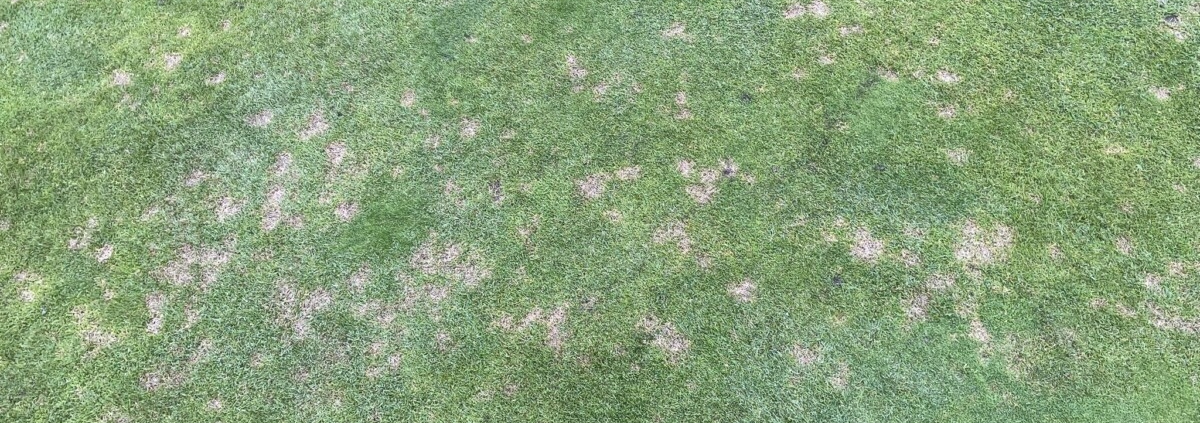
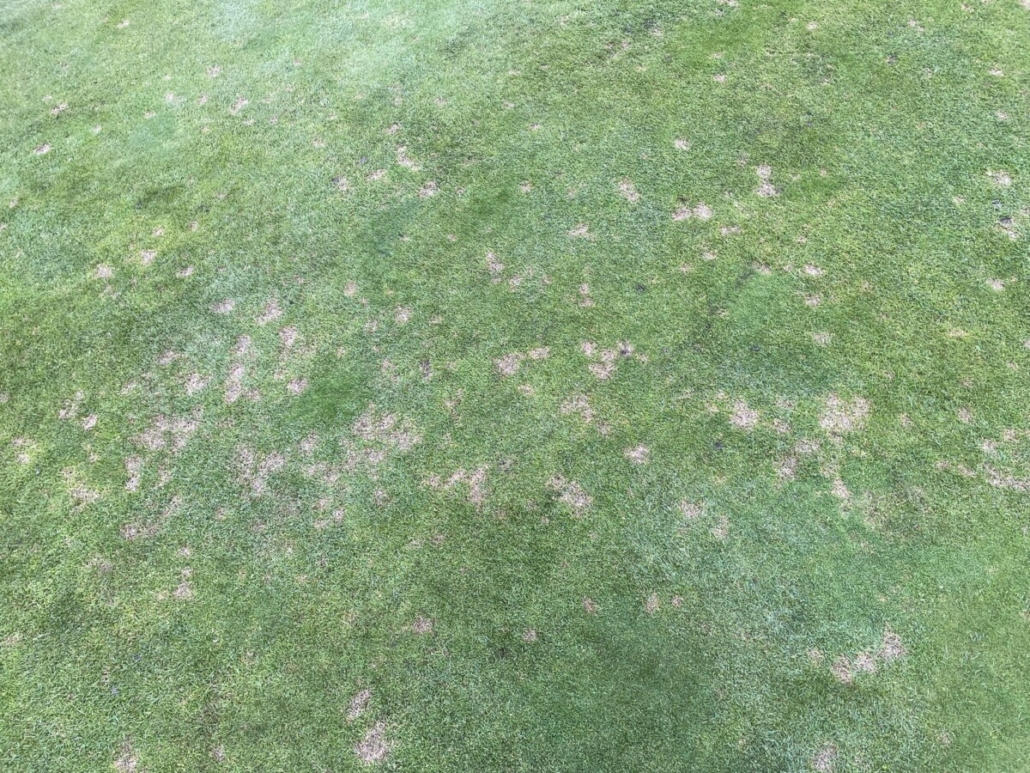
Stopping Dollar Spot in Its Tracks: With disease pressure on the rise and traditional turf strategies being tested by unpredictable weather patterns, Southerndown Golf Club has found a reliable solution in Maxtima fungicide – introduced and supported by Agrovista Amenity.

Under the guidance of Agrovista Amenity’s Ray Hunt, Course Manager Andrew Mannion has successfully brought a persistent Dollar Spot issue under control, safeguarding turf health and playability at one of Wales’s most renowned golf courses.

Stopping Dollar Spot in Its Tracks

Stopping Dollar Spot in Its Tracks

Southerndown Golf Club, perched high above the South Wales coast, is celebrated for its natural beauty and challenging links-style layout. The course sits on free-draining limestone, exposed to persistent coastal winds, and is managed using a lean nutrient input strategy. These conditions have historically made disease a minor concern – until recently.

However, like many course managers across the UK, Andrew has seen Dollar Spot increase year on year – something he attributes to climatic changes. “Warmer, wetter conditions seem to be the trigger,” he says. “It started with small flare-ups, but built momentum quickly. Once it was in, it kept coming back.”

In search of an effective solution, Andrew turned to Agrovista Amenity, a longstanding agronomy partner to Southerndown. “We looked at a few products, but Ray recommended Maxtima straight away. He’s very knowledgeable, and I trust his judgement. We initially trialled it on just two or three affected greens – and it worked.”

Developed by BASF and supplied exclusively through Agrovista Amenity, Maxtima is a next-generation DMI fungicide that offers outstanding control of Dollar Spot and other key turfgrass diseases. What sets Maxtima apart is its targeted performance and ability to integrate seamlessly into a regular maintenance programme.

“We were impressed straight away,” says Andrew. “You can actually see it stop disease development within 24 hours. Last year, because it was during the growing season, we even saw full recovery on affected areas. Lesions healed over and with some overseeding, it disappeared completely.”

Since that initial success, Andrew and the team have incorporated Maxtima into their preventative strategy. “We now use it at specific times of year based on weather trends. Last season, we did two applications—up from one—because the Dollar Spot flared up earlier. It was the second wettest year we’ve recorded in over two decades, so we knew we needed to act.”

Andrew emphasises the importance of accurate timing and close monitoring, because Maxtima is most effective when applied preventatively. “We’ve got a couple of ‘indicator greens’ that show signs first. Once we spot the tiniest speck, we get Maxtima on straight away. That’s when it does its best work.”

Stopping Dollar Spot in Its Tracks

Stopping Dollar Spot in Its Tracks

He adds, “Agrovista Amenity’s support is always there in the background. Whether it’s product knowledge, application guidance or adjusting strategies as conditions change – they’ve been really helpful.”

Looking back, Andrew sees the adoption of Maxtima – and the advice from Agrovista Amenity – as a turning point in how the club manages disease.

“We’re definitely more in control now,” he says. “Maxtima is a great product and I’d absolutely recommend it to other course managers. If you catch Dollar Spot early, it’ll stop it in its tracks.”

For more information about Agrovista UK, visit www.agrovista.co.uk/amenity

For the latest industry news visit turfmatters.co.uk/news

Get all of the big headlines, pictures, opinions and videos on stories that matter to you.

Follow us on Twitter and Instagram for fun, fresh and engaging content.

You can also find us on Facebook for more of your must-see news, features, videos and pictures from Turf Matters.
Prepare to prevent dollar spot attacks

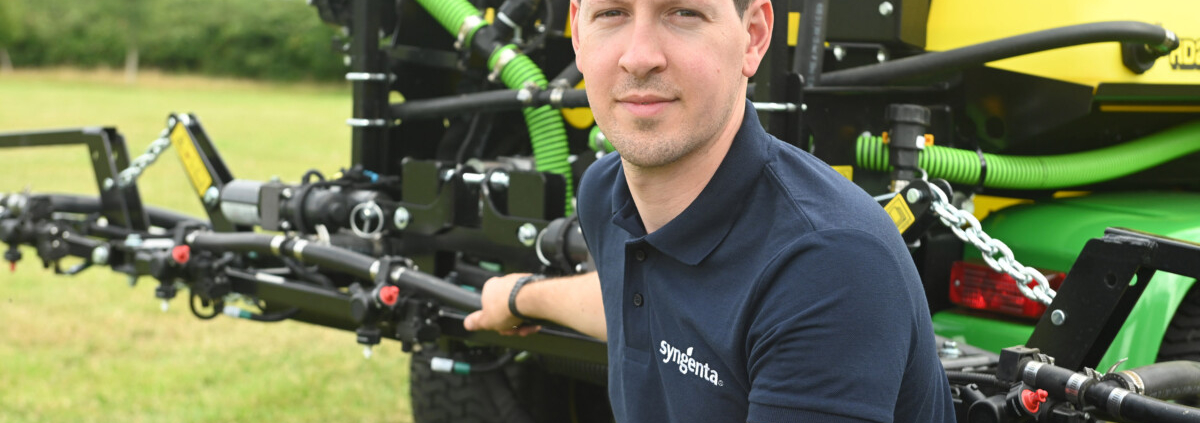
Prepare to prevent dollar spot attacks: Dollar spot disease pressure is now increasing, as temperature and humidity rise resulting in prolonged periods of leaf wetness, warns Syngenta Technical Manager, Sean Loakes.

Speaking to course managers with ICL at the prestigious 72-hole championship Melbourne Club, on the Brocket Hall Estate in Hertfordshire this week (3 June 2025), he highlighted that although overall dollar spot pressure has been relatively low so far this season with the dry spring, early symptoms are beginning to be seen in disease hot spots.

Prepare to prevent dollar spot attacks

Prepare to prevent dollar spot attacks

“Turf management actions now, with cultural controls and Ascernity fungicide treatments, can reduce the risk and prevent damaging loss of grass cover or surface quality,” he advised.

Sean highlighted the danger of dollar spot is becoming more severe, since the pathogen appears to be developing at lower temperatures and with shorter periods of leaf wetness.

“Researchers who designed the original forecasting model now report the evolving pathogen appears to be developing with shorter periods of suitable leaf wetness and temperature,” he said.

The effect would be a double whammy of more frequent conditions for the disease occurring, and the capability for the disease to go through its lifecycle faster.

“For courses in high pressure situations that find they have been consistently hit earlier by dollar spot, it may be necessary to target treatments at a lower pressure threshold, for example,” he advocated.

“Tracking the Smith Kerns model on Turf Advisor gives advance warning of pressure periods,” he said. “But be aware of localised risks on your course, as irrigation and microclimates will increase periods of leaf wetness that pushes up pressure – and can leave turf open to attack.”

Preventative Ascernity fungicide applications can crucially protect turf through high-risk periods. Available as part of the AIM pack, it could cost-effectively cover the whole season strategy.

Golf course trials in Cambridgeshire last season proved how the Syngenta fungicide programme, including Ascernity followed by Instrata Elite, effectively halved any signs of disease damage on the surface – resulting in less than 4% infection in the treated area, compared to over 16% in untreated at the end of the reported assessments.

“Used in an Integrated Turf Management programme, along with the biostimulant boost of a Turf Health Plan, it puts you in the best place to stop dollar spot damage occurring,” he added.

For the latest industry news visit turfmatters.co.uk/news

Get all of the big headlines, pictures, opinions and videos on stories that matter to you.

Follow us on Twitter and Instagram for fun, fresh and engaging content.

You can also find us on Facebook for more of your must-see news, features, videos and pictures from Turf Matters.
Dollar spot survey reveals infection pressures and actions

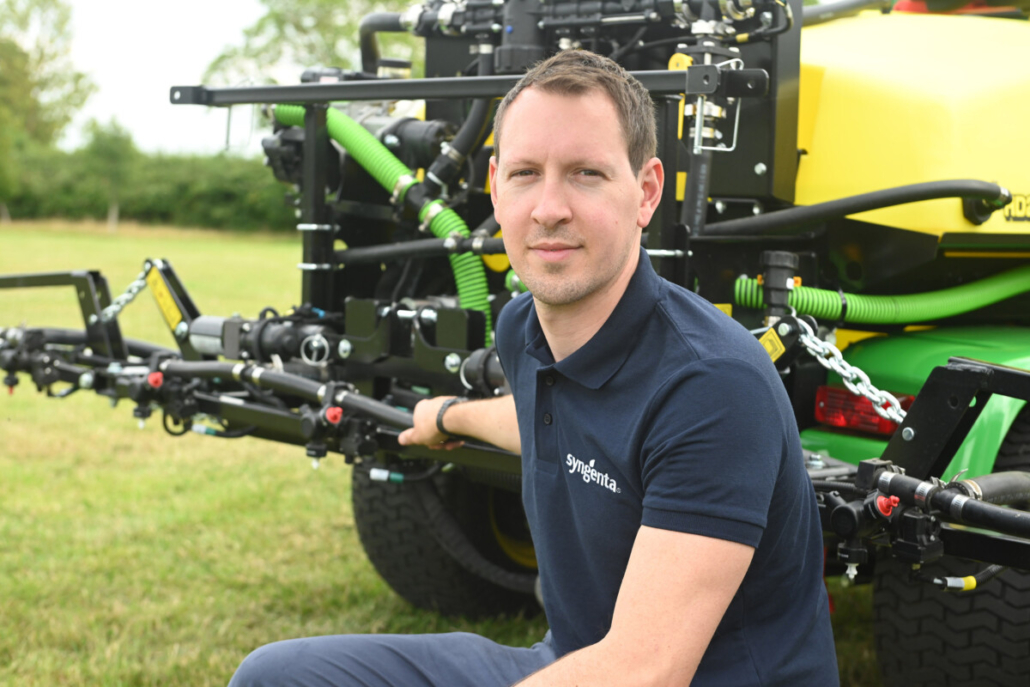
Dollar spot survey reveals infection pressures and actions: Syngenta has published the findings of the Dollar Spot State of the Nation Survey 2024. Key findings of the report highlight the role for Integrated Turf Management actions to reduce disease outbreaks, including nutrition, rolling, moisture management and fungicide timings.

Assessing responses from over 100 golf course managers, Syngenta Technical Managers, Glenn Kirby and Sean Loakes, reported the scale of issues with dollar spot have become far more widespread – affecting all areas of the course and for a far extended part of the season.

Dollar spot survey reveals infection pressures and actions

Dollar spot survey reveals infection pressures and actions

“Dollar spot had typically been attributed as a summer disease, but the reports have shown it can occur throughout the year, with significant numbers of outbreaks reported from March right through to October,” commented Sean Loakes.

“Furthermore, while it has frequently been associated with less intensively managed tees, fairways and approaches, the report highlighted that greens were actually the most frequently affected surfaces.”

He added that all grass species would appear to be affected, with the management actions on turf a more influential factor of disease outbreak, over the species composition of the sward. Dollar spot outbreaks were reported on 81% of instances of fescue dominant greens, compared to 58% of bent blends and 57% poa dominant surfaces.

Linking the postcode of survey responses to local records of Smith-Kerns pressure, of weather conditions that would be associated with dollar spot outbreaks, revealed that high pressure would indicate more disease.

“However, it is not a clear-cut correlation,” said Sean. “Some courses under prolonged high pressure reported no dollar spot incidences, which indicates that the disease can be effectively managed by other turf management actions.

“Equally, some courses with relatively low weather related pressure did report dollar spot infections. This has highlighted that the Smith-Kerns model is a useful guide for risk, but that the numbers must be interpreted along with all other actions in making decisions.”

For effective ITM strategies, frequent rolling, maintaining higher soil moisture content and providing higher levels of nutrition were all associated with lower levels of dollar spot being reported, Sean added.

“The survey responses showed a clear trend of a higher incidence of disease reported where turf was being managed at lower rates of nutrition.

“However, it was not exclusively so, indicating that dollar spot could still be contained on lower nutrient management strategies, providing other ITM actions were taken to avoid outbreaks,” he advised.

“Furthermore, while fewer outbreaks were reported on turf managed with higher nutrient inputs, it could still occur if turf management practices and conditions were conducive to disease.”

Responses to the Dollar Spot State of the Nation Survey also showed the link between management to target lower levels of soil volumetric moisture content (VMC) and the reported incidence of dollar spot.

Surfaces targeted to manage VMC below 15% reported the highest levels of infection outbreaks, at over 70% of instances. When responses for surfaces managed at a higher target VMC of 21 to 25% were assessed, over 60% of courses reported no outbreaks dollar spot.

“The survey responses showed a clear pattern that the greater use of turf iron for rolling surfaces resulted in a reduced incidence of dollar spot reports,” Sean pointed out.

“On courses where greens were never rolled dollar spot was reported in 75% of cases, with a trend declining to 50% of courses rolling surface five times a week. Most courses (61%) were reported to be rolling surfaces two or three times a week.”

For courses that were rolling almost daily, there was no incidence of dollar spot reported. However, this was a very small proportion of the survey responses (3%).

The survey identified no link between organic matter levels and dollar spot outbreaks, however there was some indication that lower cutting height could be associated with reduced levels of infection. “This is an element of the ITM strategy requires further investigation,” he suggested.

Analysis of the Dollar Spot State of the Nation Survey indicate that where greenkeepers are managing to promote fescue dominant surfaces, they are lowering the target moisture levels, reducing the nitrogen applied and raising the height of cut, compared to predominantly poa and bent greens.

Greens containing fescue receive, on average, 40% less nitrogen compered to poa or bent greens. Fescue greens are also managed at a target VMC 4-5% lower and with a height of cut at an average 3.9mm, which is 0.4-0.5mm higher than poa or bent greens.

“From the findings of the report these management practices may also be playing into the hands of dollar spot.

“Whilst the feeling is that fescue species are slightly more tolerant to dollar spot, the management practices needed to maintain them can lead to fescue dominant surfaces being more vulnerable to the disease,” he warned.

The report identified that most greenkeepers – nearly 70% – have used fungicides as part of their strategy to manage dollar spot.

“While in some situations managers may consider that dollar spot doesn’t warrant fungicidal control on all areas of the course, as the climate changes we need to consider how we keep damage at an acceptable level,” added Sean.

“New fungicide technology, good disease modelling to help improve timings and good application techniques will help turf managers get the best out of them as part of their Integrated Turf Management strategy.”

Responses to the survey have provided guidance on a number of actions that turf managers could consider to reduce risks and minimise impact of this increasingly challenging disease.

Sean’s Top Tips to reduce dollar spot pressure and better manage disease:

  • Adequate nutrition
  • Maintain moisture levels
  • Regular rolling
  • Lower cutting heights
  • Monitor weather conditions conducive to disease
  • Timely and accurate fungicide application
  • Year-round management

“A better understanding of the implications of certain management practices on the risk of dollar spot, could help to instigate counter measures to reduce pressure in the future,” he concluded.

Following on from the dollar spot survey, a new Microdochium Patch State of the Nation Survey will seek to identify and share experiences of management practices to help all turf managers effectively tackle the most widespread turf disease. Complete the survey here.

The full Dollar Spot State of the Nation Survey 2024 report is available to download from the Syngenta Turf & Landscape website.

For the latest industry news visit turfmatters.co.uk/news

Get all of the big headlines, pictures, opinions and videos on stories that matter to you.

Follow us on Twitter and Instagram for fun, fresh and engaging content.

You can also find us on Facebook for more of your must-see news, features, videos and pictures from Turf Matters.