Tag Archive for: Engines

How EFI and ETC engines are redefining performance

How EFI and ETC engines are redefining performance: Across agriculture, forestry and landscaping, equipment performance depends upon an optimal power-to-weight ratio and portability. In addition, high performance in different terrain, easy maintenance and sustainability are crucial factors for all equipment in these industries.

Electronic Fuel Injection (EFI) and Electronic Throttle Control (ETC) engines are two distinct technologies that help to deliver these equipment requirements. The EFI engine features a computer-controlled system that delivers fuel into engines rather than a traditional carburettor. The ETC engine uses electronic signals to control the engine’s throttle.
How EFI and ETC engines are redefining performance

How EFI and ETC engines are redefining performance

Engines that feature EFI and ETC technology at the same time, offer an attractive alternative solution thanks to their smart and efficient capabilities that also maintain high performance power.

EFI and ETC – unmatched power to weight ratio 

Landscaping and garden machinery often need to be both lightweight and transportable, especially when navigating uneven terrains in parks and forests. EFI and ETC can be deployed independently or together and deliver more effective power-to-weight ratios.

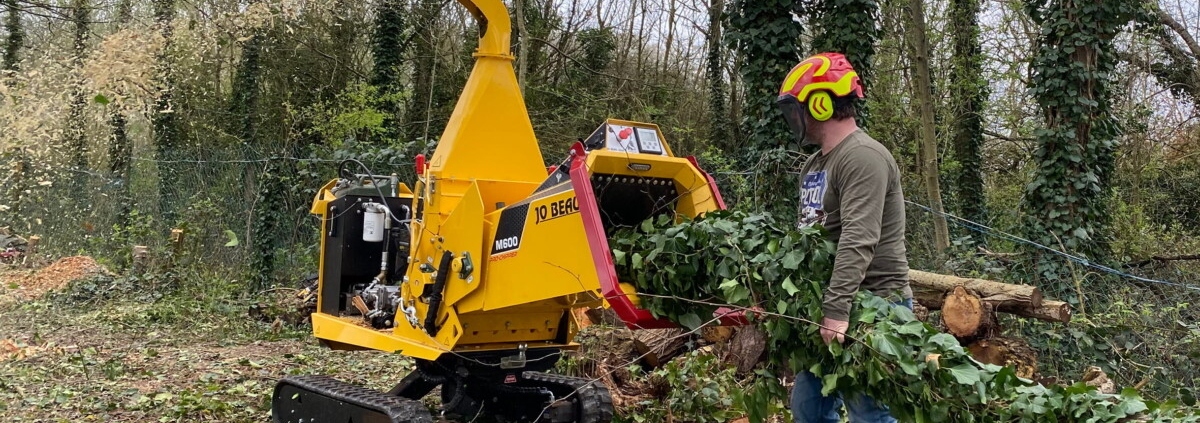
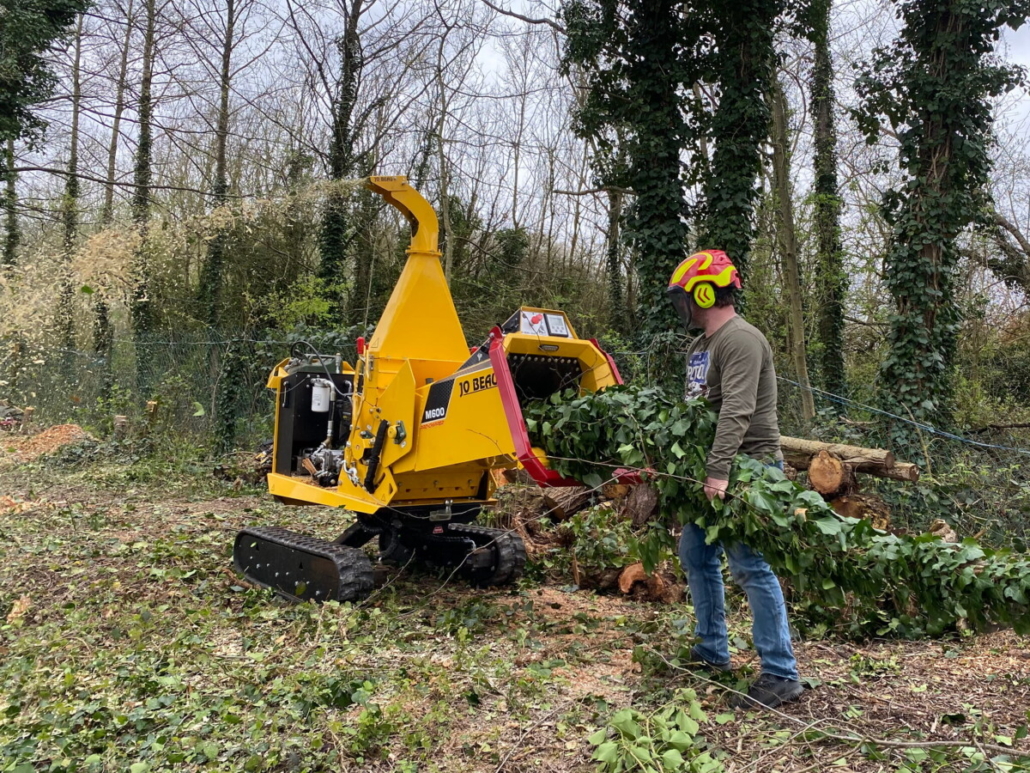
The Jo Beau® GORILLA™ M600 woodchipper is a perfect example of this, using Briggs & Stratton’s Vanguard® 29.9 kW (40 HP) BIG BLOCK™ V-Twin EFI/ETC engine that deploys both technologies, to process branches up to 18 cm in diameter whilst being small enough to fit through a doorway. The petrol engine ensures that the chipper remains steady and efficient even when processing large irregular branches.

This combination of size and reliability makes this sort of equipment invaluable to workers operating in tight areas, without sacrificing performance.

EFI/ETC reduces the total cost of ownership

Both EFI and ETC technology contribute to increased uptime and reduced total cost of ownership of equipment. This is due to the ability of real-time fuel control provided by EFI technology, which is optimised based on load and conditions. This ensures that fuel isn’t wasted during partial-loading operations, which can be a common theme in the gardening industry.

Stale fuel in seasonal equipment like leaf blowers and woodchippers is also not an issue with EFI due to its tolerance for it. This means it faces fewer problems after being stored for long periods over winter months, whilst ETC helps reduce mechanical wear and reduces long-term maintenance needs.

High performance in every environment 

Outdoor equipment faces some of the most extreme conditions including heat, cold, elevation and humidity. Engines equipped with EFI and ETC technology are designed specifically to operate in conditions like these. EFI provides smooth starting while ETC helps engines adjust to changes in terrain to improve control.

EFI and ETC reduce environmental impact  

Lower emissions are a growing requirement in many industries, especially for those working outdoors with nature. Engines equipped with EFI and ETC technology offer cleaner combustion, which in turn reduces harmful emissions without the need for diesel treatments.

EFI engines meet stringent environmental regulations by precisely controlling fuel delivery, leading to a more efficient combustion and reduced emissions, thereby helping manufacturers and operators to stay compliant with professional performance. This is vital when working in forests and parks, providing cleaner and more efficient solutions.

As mentioned before, the Vanguard BIG BLOCK engine powers the Jo Beau GORILLA M600, deploying electronic fuel injection technology that utilises the Engine Control Module (ECM) to tune every single operating point unique to the engine. It takes in all signals from the engine sensors to make cycle-by-cycle decisions on how much fuel and spark to provide and when. This means improved starting at all temperatures, smooth performance at all elevations, quick load acceptance and reduced fuel consumption, which makes the Vanguard BIG BLOCK the perfect fit for this powerful but compact application.

EFI can integrate  

EFI engines have been designed to integrate both physically and digitally. With CAN-bus capabilities, they seamlessly communicate with the rest of the machine’s systems. This means the operator can see real-time diagnostics and troubleshoot remotely.

Making the smart choice  

The forestry and gardening sector is a turbulent one, due to increasing regulations and demands from the industry. By switching to petrol engines equipped with EFI and ETC, operators can meet these demands, allowing for an increased power-to-weight ratio, reducing the environmental impact, and increasing performance in multiple environments. This is all while integrating easily with equipment and reducing the TCO.

Machines equipped with engines that feature both, EFI and ETC technology are providing not just an alternative solution but a powerful solution.

For more information on Vanguard, visit https://www.vanguardpower.com/emea/en_gb/home.html

And for more information on Jo Beau, visit https://www.jobeau.eu/en/

For the latest industry news visit turfmatters.co.uk/news

Get all of the big headlines, pictures, opinions and videos on stories that matter to you.

Follow us on Twitter and Instagram for fun, fresh and engaging content.

You can also find us on Facebook for more of your must-see news, features, videos and pictures from Turf Matters

JCB hydrogen engines gets £100 injection

JCB hydrogen engines gets £100 injection: JCB is investing £100 million on a project to produce super-efficient hydrogen engines, the company announced today.

A team of 100 engineers is already working on the exciting development with the recruitment of up to 50 more engineers under way as JCB targets the end of 2022 for the first machines to be available for sale to customers.

JCB hydrogen engines gets £100 injection

JCB hydrogen engines gets £100 injection

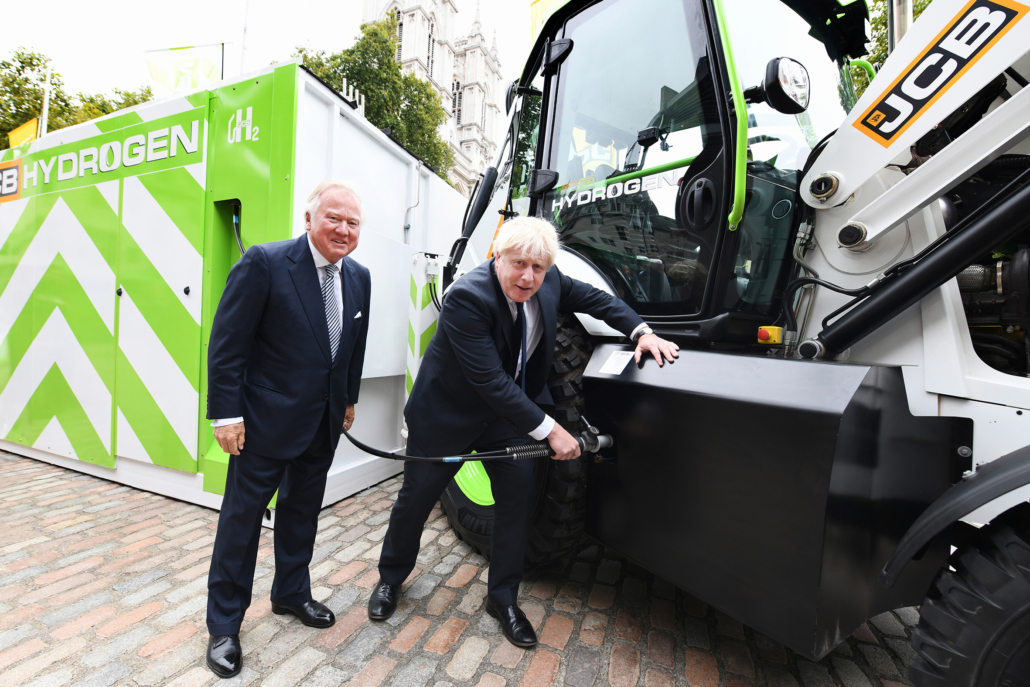
The wraps have already come off a prototype hydrogen powered JCB backhoe loader and a second JCB machine – a Loadall telescopic handler – was today unveiled at a central London event attended by Prime Minister Boris Johnson. JCB is world market leader for both backhoe loaders and telescopic handlers.

JCB’s hydrogen technology will be next on show in the Green Zone at COP26 in Glasgow as world leaders debate measures to drastically reduce greenhouse emissions. JCB’s emergence as a leader in zero-emission hydrogen technology comes as governments around the world unveil strategies to develop the infrastructure needed to support the use of hydrogen to drive down CO2 emissions.

Prime Minister Boris Johnson said: “Great British manufacturers like JCB are developing innovative solutions to slash greenhouse emissions and advance the UK’s green industrial revolution.  It was fantastic to see JCB’s super-efficient hydrogen engines, which could overhaul UK manufacturing, help us to rapidly reach our climate targets and ramp up the UK’s hydrogen economy – an exciting area that will be essential to tackling climate change, creating new jobs and attracting investment.”

JCB Chairman Lord Bamford said: “Our sort of machinery will need to be powered by something other than fossil fuels. We make machines which are powered by diesel so we have to find a solution and we are doing something about it now.  We are investing in hydrogen as we don’t see electric being the all-round solution, particularly not for our industry because it can only be used to power smaller machines. It does mean we will carry on making engines, but they will be super-efficient, affordable, high-tech hydrogen motors with zero CO2 emissions, which can be brought to market quickly using our existing supply base. These will be our industry’s first hydrogen engines, developed in Great Britain by British engineers. Hydrogen motors have the potential to help the UK reach CO2 emissions targets more quickly.”
JCB has manufactured engines since 2004, producing them at plants in Derbyshire and in Delhi, India. This year JCB will celebrate a major milestone: the production of its 750,000th engine.

For the latest industry news visit turfmatters.co.uk/news

Get all of the big headlines, pictures, opinions and videos on stories that matter to you.

Follow us on Twitter and Instagram for fun, fresh and engaging content.

You can also find us on Facebook for more of your must-see news, features, videos and pictures from Turf Matters.

Cub Cadet’s EFI Engines

Cub Cadet’s EFI Engines: Cub Cadet’s new fuel-injected engine boasts serious strength, offering the kind of high-performance power you’d expect from Cub Cadet.

EFI uses up to 25% less fuel, which means fewer emissions and fewer fill-ups. Less time needs to be spent on maintenance as it has no carburettor and requires fewer oil changes.

Cub Cadet's EFI Engines

To become Cub Cadet certified, engines are evaluated using a rigorous process to ensure they have been built to uphold our standards of strength, high performance and premium quality. Going to extremes, Cub Cadet engines are field tested in the most challenging environments to ensure dependable all-temperature starting.

EFI FREQUENTLY ASKED QUESTIONS

WHAT IS EFI?

Electronic Fuel Injection (EFI) is a high-pressure fuel management system. Just like on today’s cars, EFI uses an onboard computer, injector nozzle, and multiple sensors to reliably deliver exactly the right amount of fuel to get the most performance and efficiency out of your engine. Cub Cadet EFI engine is an advanced electronically controlled “Closed Loop” system that uses real time feedback to sense the usage conditions and instantly optimize combustion to give you smooth running, and exceptional starting you can count on… no matter what.

HOW DO EFI ENGINES WORK?

EFI, or any Fuel Injection system, utilizes a special high-pressure fuel delivery nozzle to inject an ultra-fine mist of fuel into the engine. An electronic control unit uses sensors around the engine to deliver the precise amount of fuel the engine needs, improving response, efficiency and starting. Cub EFI adjusts the fuel metering on-the-fly to compensate for variations in load, speed, fuels, temps, and pressures to always feed your engine the perfect charge that it needs for maximum performance at any task.

DO EFI ENGINES REQUIRE LESS MAINTENANCE?

Yes. EFI systems produce cleaner combustion resulting in a cleaner engine. Clean engines can go longer between regular oil changes and required major maintenances. We do still recommend a fuel stabilizer for long term storage to make sure the fuel in the tank stays fresh and you’ll be ready to mow with a push of button next spring.

ARE EFI ENGINES EASIER TO START?

A major benefit of EFI systems is the greatly improved cold and hot starting performance. Even after a long period of no use, during Winter for example, the EFI engine is much more likely to start first time.

ARE EFI ENGINES MORE RESISTANT TO FUEL SYSTEM CORROSION AND “ETHANOL DAMAGE” SO OFTEN SEEN TODAY?

The fuel system is ethanol resistant and compatible with ethanol fuel blends.

For the latest industry news visit turfmatters.co.uk/news

Get all of the big headlines, pictures, opinions and videos on stories that matter to you.

Follow us on Twitter for fun, fresh and engaging content.

You can also find us on Facebook for more of your must-see news, features, videos and pictures from Turf Matters.