Tag Archive for: Flood

Flood relief at Caersws Football Club

Flood relief at Caersws Football Club: Caersws Football Club, founded in the late 19th century, adopted its present name in 1974 when it relinquished its amateur status. The club’s first successes came in the nineteen sixties, winning the Mid-Wales League and the Welsh Amateur Cup.

In 1992 they became founder members of the League of Wales and subsequently won the League Cup twice. The team plays at the Recreation Ground, Caersws, which accommodates up to 4000 spectators.

Flood relief at Caersws Football Club

Flood relief at Caersws Football Club

Situated close to the River Severn, the ground floods regularly when the river bursts its banks in winter months. But once the flood water subsided, the pitch would not be playable for up to 2 weeks due standing water on the pitch not draining away. This resulted in the club having to move matches to another club’s ground, which had a 3G pitch, to meet the demands of the league schedule. In the 2023/24 season, they managed only one game across three winter months (Nov-Jan). Playing elsewhere also meant supporters would not travel to games, so the issues mounted. Investigations into the causes revealed the pitch to be sitting on 0.7 metres depth of clay and constant rolling over the years had compacted the surface even further. Normal aeration would have no impact on the problem.

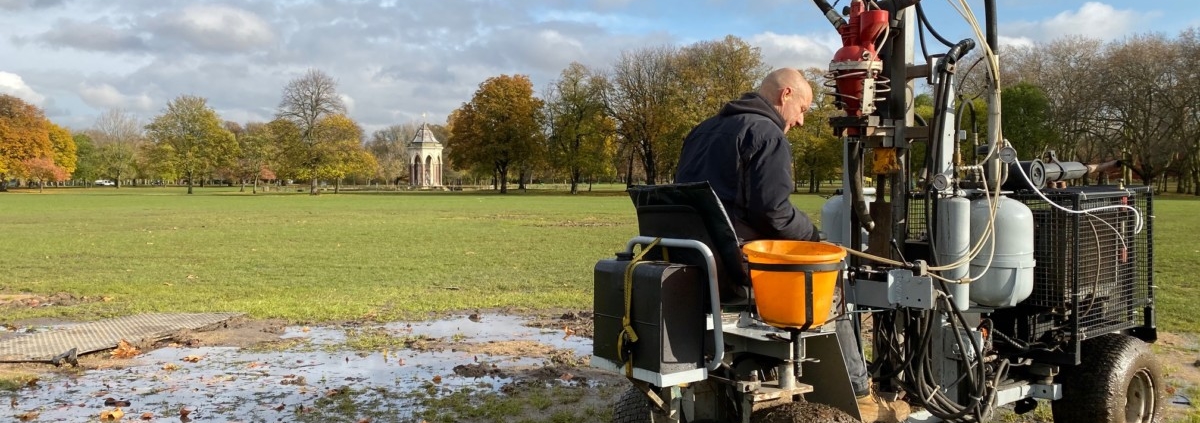
Caersws Club chair, Neil Lewis, had heard of the work by Terrain Aeration at other pitches and called them in to see if they could resolve the issue. Terrain has a unique system used for over thirty years with their Terralift machines. The Terralift features a JCB road hammer and probe, which reaches a depth of one metre where it releases a blast of compressed air. This fractures the soil, creating fissures to allow drainage, and as the probe is withdrawn, dried seaweed is injected. This has the effect of expanding and contracting with moisture and, in simple terms, keeps the holes open. The process is repeated on a grid system, usually at two-metre intervals, to interlink the fracturing. The probe holes are backfilled with an aggregate and the surface is almost immediately playable.

“This season we had only one first team and a second team game postponed,” says Neil Lewis. “We had the Ground Management Association come and take a core sample. They found even though the topsoil was wet, the soil at depth was dry. We have also had the pitch scarified to remove thatch, so next season will see it drain even better. The difference since Terrain Aeration did their work is incredible and we will promote them to other club and associations looking for a drainage solution. It saved money, there was no digging and being non-invasive, we were able to play a pre-season friendly the same night as the work was done. Why would you not do it?”

Terrain Aeration 01449 673783 www.terrainaeration.co.uk

For the latest industry news visit turfmatters.co.uk/news

Get all of the big headlines, pictures, opinions and videos on stories that matter to you.

Follow us on Twitter and Instagram for fun, fresh and engaging content.

You can also find us on Facebook for more of your must-see news, features, videos and pictures from Turf Matters.

Hanley Castle property flood relief

Hanley Castle property flood relief: Worcestershire Homeowner Allan Bradford’s cottage is in the picturesque village of Hanley Castle, situated between the towns of Malvern and Upton upon Severn and near the River Severn.

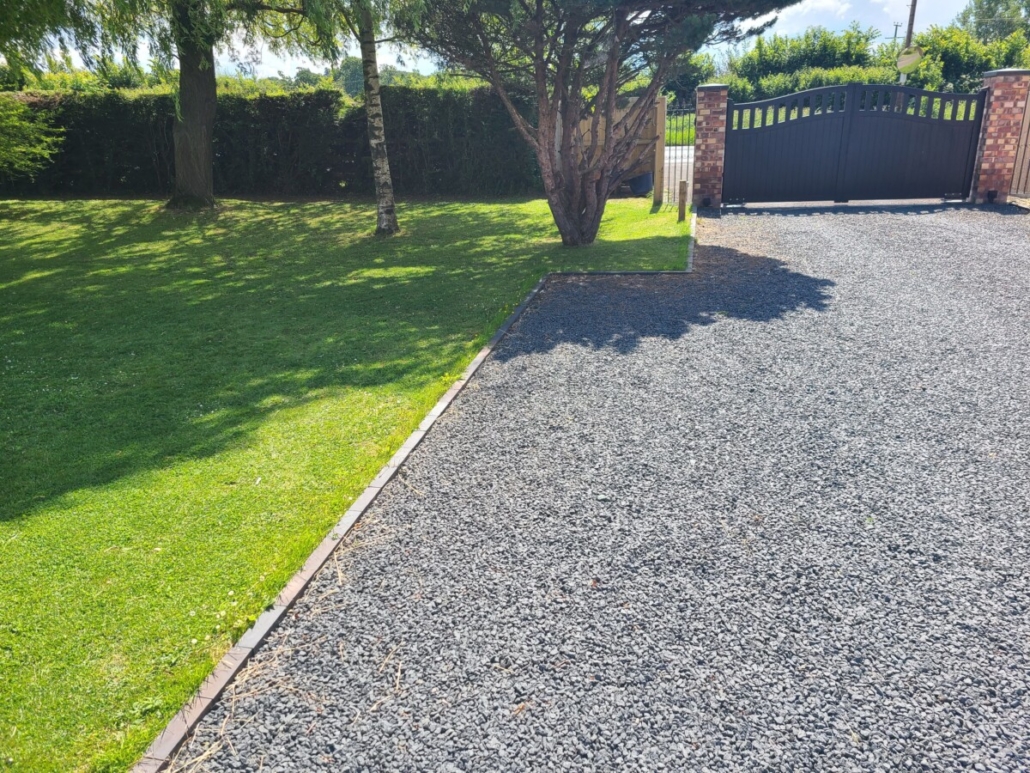
The garden of his property was subject to flooding after heavy rain, with standing water remaining for as long as two or three weeks. The cause was not the river flooding as you might expect, but the grounds being situated at the end of a slope with a substrate of heavy clay soil. Grassed areas either side and close to the gates and the drive were the worst affected areas. Allan did have a pit dug and gravelled on one side and that copes to a degree, but he says it was an expensive solution. Drains outside the property were also cleared but to no avail.

Hanley Castle property flood relief

Hanley Castle property flood relief

“Then I saw the work done by Terrain Aeration on the Clarkson’s Farm programme,” says Allan, “so I decided to get a quote from them. I am in the building trade and friends who are developers couldn’t be more skeptical, saying what the clay needed was tanks installing. That would have been three times the cost of Terrain Aeration. We went ahead with them.”

The Terrain Aeration Terralift system uses a JCB road hammer and probe to bore down a metre in depth. A release of compressed air fractures the compacted soil, creating fissures. The process is repeated in intervals on a grid so the fissures are interlinked. Dried seaweed is injected as the probe withdraws and this swells with the rain to keep the fractured areas open and allow drainage.

“We had the work done,” says Allan, “and then there was no rain. We went on holiday and during this time my father stayed in the house to be woken one night by horrendous rain storms. He called me and because we have cameras on the property covering the area, we were able to watch from Thailand on our phones as the flood developed.”

Following the storms, the deluge had filled everywhere, with a nearby stream and ditches flooded and yet, in the area at the bottom of the slope injected by Terrain Aeration’s Terralift, the water had all but gone. “The two lads who came from Terrain Aeration were great,” says Allan, “and I am so pleased with the work and result I would recommend them to anyone.”

Terrain Aeration www.terrainaeration.co.uk  01449 673783

For the latest industry news visit turfmatters.co.uk/news

Get all of the big headlines, pictures, opinions and videos on stories that matter to you.

Follow us on Twitter and Instagram for fun, fresh and engaging content.

You can also find us on Facebook for more of your must-see news, features, videos and pictures from Turf Matters.
Flood Re Unveils the Flood Resilient Garden

Flood Re Unveils the Flood Resilient Garden: Today at the RHS Chelsea Flower Show, Flood Re, in collaboration with Dr. Ed Barsley and Naomi Slade, unveils the pioneering Flood Resilient Garden. 

Today, 1 in 4 homes in the UK are at risk of flooding – not just by the coast and rivers, but in urban areas too. Flooding doesn’t just damage homes and gardens; it devastates lives, causing lasting financial and emotional strain. In total, 5.4 million (1 in 8) UK adults with gardens have experienced the devastating impact of flooding on their green spaces.

Flood Re Unveils the Flood Resilient Garden

Flood Re Unveils the Flood Resilient Garden

From Roots to Resilience

The Flood Resilient Garden is designed to inspire and educate homeowners about the critical role their garden can play in flood defence. Incorporating sustainable drainage systems (SuDS), native flood-tolerant plant species, and innovative water management techniques, the garden is a model for future landscaping under the threat of increasing extreme weather events due to climate change.

In a groundbreaking display at the RHS Chelsea Flower Show, the Flood Resilient Garden will intentionally flood to demonstrate its unique capabilities. This never-seen-before feature will illustrate how the garden adapts to changing water levels. Visitors will witness firsthand how the central swale becomes a lively stream, channelling rainwater into a feature pond where it can gradually soak away, while large water tanks double as ornamental ponds which store water for later use.

Leading weather & climate change expert Laura Tobin Joins the Cause

Adding to the excitement, leading weather & climate change expert Laura Tobin will be on hand to discuss the garden’s role in mitigating flood risks.

Laura Tobin Said:  “The Flood Resilient Garden shows that adapting to climate change can still be beautiful and homeowners don’t have to give up having a lovely garden to make it work hard against extreme weather. It’s about blending smart, sustainable choices with thoughtful design to protect our homes and communities”.

A Nation at Risk

The unveiling also shines a light on the latest insights from Flood Re, revealing a concerning lack of flood awareness amongst UK citizens.

Flood Re’s research shows that only 5% of people living in areas at high-risk of flooding could correctly identify their flood risk. Concerningly, 68% of people in high-risk flood areas incorrectly think their flood risk is low.

The research shows that despite Brits spending an average of £402 on their gardens over the past year, they are not taking the crucial steps they need to protect their homes and gardens from flooding.

Indeed, 90% of homeowners, rising to 93% in high and mid flood risk areas, haven’t taken any steps to make their homes and gardens more flood resilient. Despite the extreme weather conditions, this doesn’t look to be changing, with only 9% of homeowners planning to add flood resilience measures to their homes and gardens in the next year

Build Back Better

In the event of a flood, Flood Re’s Build Back Better scheme allows eligible customers with specific home insurers to receive up to £10,000 as part of a claim.

The amount is meant for home and garden improvements that go beyond basic repairs, focusing on enhancing the property’s resilience against future floods

The Flood Resilient Garden is not just a temporary exhibit. After the show, it will find a permanent home at Howbery Business Park, allowing the public to explore its features and learn about flood resilience year-round.

Flood Re is on hand to help you invest wisely in your garden to make it beautiful and resilient. Check out all the best tips and tricks to make your garden both beautiful and resilient here.

Flood Re CEO Andy Bord, said: “Gardens bring joy to so many of us but they also provide an important first line of defence to flooding. With this garden we’re hoping to inspire more people to think about their flood risk and get smart with their spending by considering the plants and garden features that will both endure a flood and could also help reduce the physical destruction and psychological distress when a flood strikes. If flood resilient features and water storage capacity were to become a feature of most gardens in a neighbourhood, the positive combined effect would be enormous!”

Naomi Slade, Garden Designer, said: “People spend a huge amount of time and money on their gardens and floods can wreak havoc and cause a huge amount of disruption, heartache and expense. The principles showcased within our Flood Resilient Garden are impactful, practical and transferable, but crucially we’ve shown that making a garden more climate and flood-resilient does not have to be a compromise on either its form or function.”

Ed Barsley, The Environmental Design Studio, said: “With the increase in extreme weather events, heavy rainfall and flooding as well as drought, and even wildfires, many people are anxious. As individuals they can feel powerless to make a difference. But gardens are hugely powerful tools and the Flood Re: The Flood Resilient Garden sends a positive message of agency and hope, and it is packed with practical, achievable ideas and solutions to enable people, as we adapt to the climate crisis.”

For more information, interviews, or a guided tour of the Flood Resilient Garden at the RHS Chelsea Flower Show, please contact:

Headland Consultancy: Beth Kelly – bkelly@headlandconsultancy.com

For the latest industry news visit turfmatters.co.uk/news

Get all of the big headlines, pictures, opinions and videos on stories that matter to you.

Follow us on Twitter and Instagram for fun, fresh and engaging content.

You can also find us on Facebook for more of your must-see news, features, videos and pictures from Turf Matters.

After the flood

After the flood: The long, hot summer of 2022 made the year the second warmest on record in the UK and led to drought in many areas. With the ground dried out and continued heavy footfall, amenity areas, sports fields, parks, other tree lined spaces and even domestic back gardens suffer heavy soil compaction.

When the rains come, water is unable to penetrate the soil and sports grounds in particular turn into quagmires, stopping play and resulting for many in lost revenue. Exceptionally heavy rainfall leading to flooding has a number of other knock-on effects for turf and trees. Flood waters are heavy enough to force the oxygen out of the soil structure, leading to dead or dying turf and trees showing signs of severe stress, leaf fall and rotting roots. No amount of normal aeration, spiking or decompaction of the topsoil is going to solve a problem that goes much deeper. That is where deep aeration specialists are called for and one company, Terrain Aeration, has been solving these problems for well over thirty years.

After the flood

After the flood

Take some typical examples. A bowling green in Wales that has seen over ninety years of play. Built on shale, like so many, even with regular Vertidraining, the ground had become compacted at depth. The club treasurer remembers well the day in 2018.

“The green was filling with water before my very eyes,” he says, “and after the heavy showers it remained quite sodden and unplayable. It seemed no amount of work could get it back into shape.” This left fifty or so members without playing facilities until it dried out. One contractor working with London councils has among the sites under their watchful eye many of the city’s sports pitches, of which there are ninety-five football pitches, ten cricket squares, bowling greens and running tracks.

“A lot of the sites are on made up ground and experience major problems with drainage,” says their parks officer. “We have carried out aeration down to 300mm, but it’s not enough to get to the pans.”

So what’s the answer? Terrain Aeration has a range of machines with the ability to send a probe to a depth of one metre. It penetrates the ground with the help of its built-in JCB road breaker, reaching the pan. Here it injects compressed air, working on a grid system and fragmenting the ground into fissures. These interlink to help restructure the soil and let in vital oxygen. Turf roots will grow stronger and uniquely the soil structure is kept open by Terrain Aeration’s Terralift machine process, which has proven itself over the past 30 years. With the Terralift’s probe reaching 1m depth, it’s also the perfect way to help move excess water away from stagnating around tree roots. By going deeper than the growing roots, excess water can percolate away and save the roots from rotting. Again, vital oxygen is injected into the soil along with other products to help with the root system in re-establishing itself. The results being a healthier and stronger root growth, a visibly stronger canopy and even more fruit on the trees. Diseases such as Phytophthora (water borne problems for Yew trees) can be stopped as opening the soil structure and injecting oxygen back into the soil is beneficial to the health of the tree. In the above examples Terrain Aeration’s system has come to the rescue after the flood for sports grounds, parks and even new-build gardens for major housebuilders’ developments.

Terrain Aeration www.terrainaeration.co.uk  01449 673783

For the latest industry news visit turfmatters.co.uk/news

Get all of the big headlines, pictures, opinions and videos on stories that matter to you.

Follow us on Twitter and Instagram for fun, fresh and engaging content.

You can also find us on Facebook for more of your must-see news, features, videos and pictures from Turf Matters.

Flood Water Just A “Big Puddle”

Flood Water Just A “Big Puddle”: Tim Packwood, head groundsman at Worcestershire CCC, has seen plenty of floods during his 29 years on the club’s staff. This one, he says, is just a “big puddle”.

With the county’s first home game of the Championship season just three short weeks away, New Road’s location on a floodplain has come back to haunt the Pears again, with the overflow feeding back across the ground to leave 95 per cent of the outfield lying beneath floodwater up to four feet deep.

While the sight of his square completely underwater may be familiar to Packwood, to the outside world it remains inconceivable that first-class cricket will be played on one of those very wickets when Nottinghamshire visit in Division One on April 27.

However, the man in charge of getting the ground fit for competitive action is defiant.

“It is a flood but you look at it and as a groundsman you just think of it as a big puddle,” he told The Cricketer on Friday, as he looked out on the flooded outfield.

“That’s how I’d see this compared to most floods.

“The worst ones have had the roads closed and it’s been up over the roof of the marquee.”

The Worcestershire groundstaff need a minimum of two weeks to get the playing surface ready for that opening game, leaving seven days for the outfield to dry up.

Providing there is not an abundance of sediment left on the square, the mop-up job should be fairly routine.

If that is not possible, the match will be relocated to the Worcester Royal Grammar School nearby.

Packwood’s biggest irritation seems to be the hokey-cokey of machinery, which had only emerged from storage earlier in the week before having to be packed up again days later.

“Most of the lads have been on the groundstaff for quite a long time now and they know the floods are one of those things. You can’t do anything about it; if we could stop it we would,” he said.

“You don’t want it at this time of year but I’ve seen many a flood. You build a cricket ground on a floodplain, you take the rough with the smooth.

“As soon as it does start to go up, we’ll be doing our best to make sure we have something ready for April 27. Everybody would still like to make sure the game is still on here.

“It’s entirely down to Mother Nature now. We don’t flood directly from the river, being on the floodplain all the water backs up over the fields and we are the last stop.

“Although the river is starting to drop, it’s got to drop enough for all the ditchwater to go off. It could be done by Sunday, it could even linger around for another week.”

Provided the water subsides, the flood could even benefit Packwood’s preparations, as ridiculous as it sounds, with the weight of water compressing the wicket and aiding in the rolling process.

Still, the clean-up is hardly ideal so close to the new campaign.

Packwood points out, however, that he is not the only one battling the elements in the wake of a winter full of heavy rain and snow.

“Every county groundsman at the moment is working against it. Hats off to every groundsman,” he said.

Click here to read the original article

For the latest industry news visit turfmatters.co.uk/news

Get all of the big headlines, pictures, opinions and videos on stories that matter to you.

Follow us on Twitter for fun, fresh and engaging content.

You can also find us on Facebook for more of your must-see news, features, videos and pictures from Turf Matters.