Tag Archive for: For

Gold standard for the white cliffs

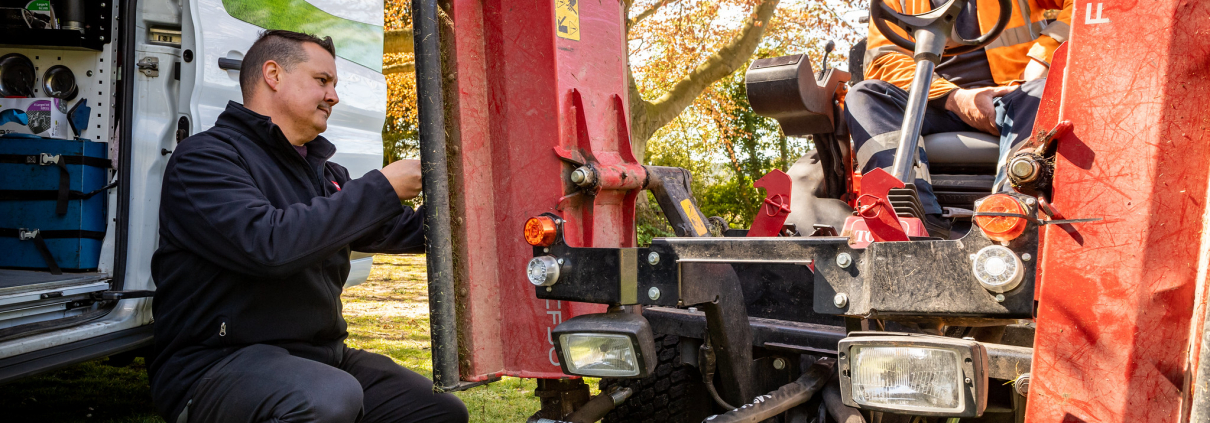
Gold standard for the white cliffs: With a patch that covers 123 square miles, it’s no surprise that Dover District Council opted for Reesink Turfcare’s ReeAssure maintenance scheme for ultimate peace of mind.

Dave Terry, supervisor at Dover District Council, simply couldn’t afford to have his Toro fleet out of action – especially since each mower was required to be in operation for 25-30 hours each week.

Gold standard for the white cliffs

Gold standard for the white cliffs

Having Gold cover meant that Dave could expect routine maintenance and servicing along with unlimited call outs for vehicle breakdowns or repairs.

Dave explains: “When you’re working with machinery it’s inevitable that from time to time you’ll experience glitches or need to make repairs – it happens. Yet whenever I need assistance, I know I’ll have a Reesink representative on the doorstep the next day.

“We probably rely on them a couple of times each month and the security of having dependable, high-quality support more than pays for itself.

“If you don’t opt for cover then you could be subjected to hundreds of pounds of maintenance on a totally ad-hoc basis and we can’t take that risk or threaten having machines out of action for long periods of time.”

This is why the Reesink maintenance plan is so integral to large grounds teams or estate management organisations, as Peter Clarke, service manager at Reesink’s Sheffield Park branch, explains: “A monthly fixed-cost means there’s no hidden extras and with three packages to choose from – gold, silver and bronze – there is something to suit all budgets.”

Dave and his team at Dover District Council opted for the Gold maintenance plan and they continue to value the relationship they have with Reesink more than four years on.

Dave continues: “Reesink is a proper dealer. They don’t cut corners and they’re reliable and professional. When you have lots of public space to take care of, be it green spaces around housing estates or parks in the district, it’s important for us to partner with an operator we can trust.”

Thanks to Dave’s relationship with both Peter Clarke and Peter Biddlecombe, aftersales manager at Reesink’s Sheffield Park, he has peace of mind that his teams are able to do their job as efficiently as possible.

Reesink take care of everything from winter servicing, replacement parts or general upkeep. Knowing that components such as labour and parts to consumables and disposal fees are all covered within the cost of the Gold package provides straightforward cost managing and budget control.

With Reesink’s ReeAssure plans there’s the option for warranty programmes and the guarantee that buying Toro comes with buying into a support network like no other. The parts backup is second-to-none and as a Toro customer you are never more than a maximum 72-hours away from the part you need, for minimum downtime and maximum productivity.

Call 01480 226800 or go online at reesinkturfcare.co.uk to find out more.

For the latest industry news visit turfmatters.co.uk/news

Get all of the big headlines, pictures, opinions and videos on stories that matter to you.

Follow us on Twitter and Instagram for fun, fresh and engaging content.

You can also find us on Facebook for more of your must-see news, features, videos and pictures from Turf Matters.
Top questions for FIFA Football Certification

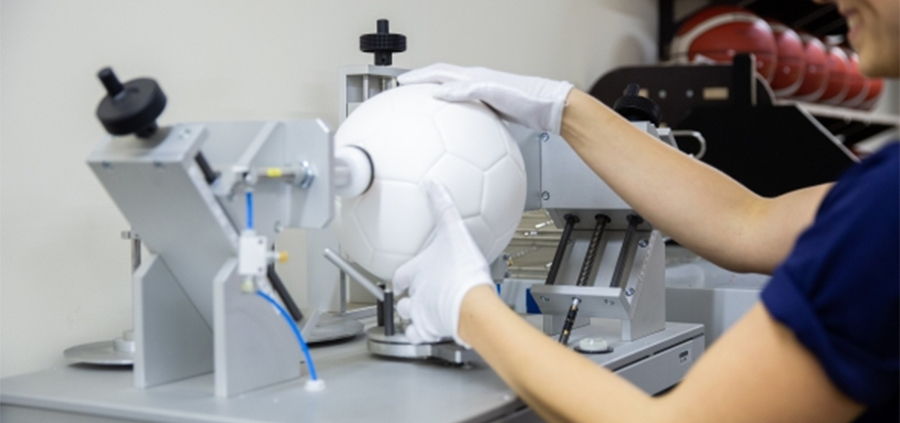
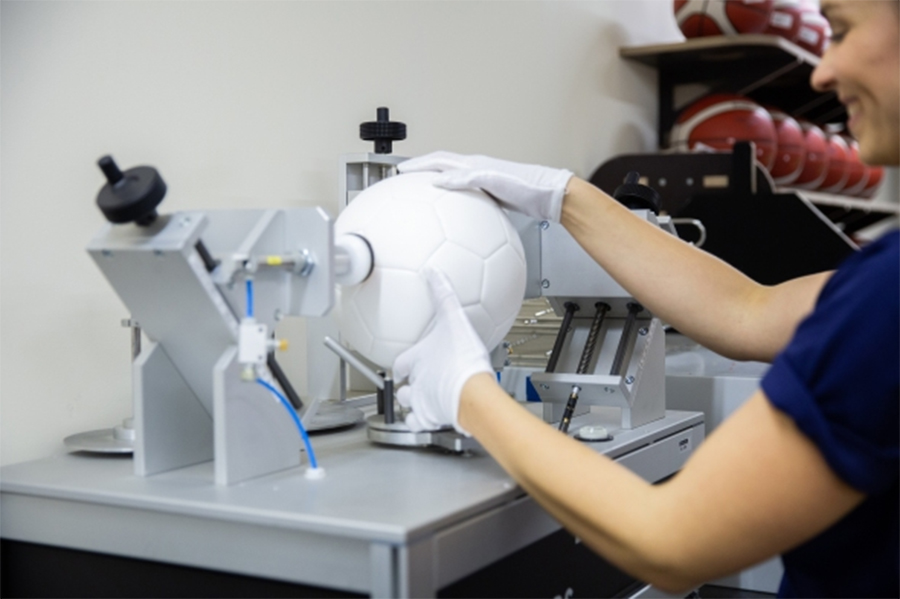
Top questions for FIFA Football Certification: Here are the answers to the most common questions I receive regarding FIFA certification of Footballs.

  1. How much will it cost?

Maybe less than you thought, depending on the certification level you want to achieve. The lowest cost option is FIFA’s International Match Standard (IMS) with its administrative fee of 500CHF plus a lab testing fee that is competitively priced. That is it as far as cost goes for a 2-year certification.

Top questions for FIFA Football Certification

Top questions for FIFA Football Certification

FIFA’s Quality and Quality Pro certifications can be more expensive but equally good value for those targeting top level leagues. FIFA Quality and FIFA Quality Pro incur fees (inclusive of admin and testing) of 3,300CHF to 4,400CHF — this certifies a ball for 4 years. Both Quality and Quality Pro certifications are subject to royalties per ball sold of 0.75CHF and 1.5CHF, with a minimum annual sum of 5,00CHF.

  1. How long does it take?

The application does not take long, but it depends on whether you or your manufacturer hold a valid WFSGI certificate and suitable Product Liability Insurance. At Sports Labs, we aim to have all testing completed and results submitted to FIFA for review within two weeks from the receipt of your samples at our UK laboratory.

  1. I don’t manufacture my own footballs; can I still get them certified?

Yes. You do not need to be a football manufacturer in to become a licensee and certify footballs.

  1. What paperwork do I need?

The paperwork required is the same for all certification levels and it is minimal. You will need to provide the following details:

  • Company Details
  • Contact details
  • Football brand and manufacturer
  • WFSGI Pledge. This is passed directly from WFSGI to FIFA on your behalf.
  • Your Product Liability Insurance certificate showing FIFA as a co-insured party
  • Details of the Football you want to certify

Once the above list is complete, fees are paid and test results are all in check, FIFA will provide a licensee agreement that you need to sign and return. That is it, all of your IMS logos and licence number will be send from FIFA directly to you.

  1. What is the difference between commercial and non-commercial licences?

Not much, is the short answer. But only FIFA’s IMS certifications can be obtained on a non-commercial licence. FIFA Quality and Quality Pro certifications require a commercial licence and will incur royalty fees.

  1. Are FIFA Quality Pro footballs better than FIFA IMS balls?

No, not as a rule. Many manufacturers and resellers choose to certify to IMS rather than Quality or Quality Pro certifications not because the balls are not good enough, but because IMS is sufficient for the target market and it is more cost effective. Many of the IMS balls on the market could easily achieve Quality and Quality Pro status. Of course, there are some that would not.

  1. How long does the certification last?

The certification for all non-commercial licence agreements (most IMS balls) is for 2 years, after which the football model will need to be re-tested. A new fee will be collected and a new agreement signed. A commercial licence agreement works much the but is good for 4 years.

  1. I’m a purchaser and just want to check the quality of the balls I’m buying, can you help?

We are asked this a lot and it should probably be further up on this list. Yes, absolutely. We can conduct stand alone quality testing at any stage, whether it be to check a model that your looking to bulk purchase, assess samples from varying manufacturers or simply as part of your development R&D. We tailor tests and test suites to match your needs, including single tests to more involved research.

  1. I’m having difficulty getting FIFA named as a co-insured party on our Product Liability Insurance, can you help?

Nope, unfortunately it is not our area of expertise. Our advice is to contact a reputable broker. Naturally, we have heard of companies struggling to get FIFA noted as the co-insured party, but with a bit of perseverance, we have never seen it block becoming a FIFA Licensee.

  1. Is there any real benefit to achieving FIFA Certification?

I strongly believe so, the testing conducted at Sports Labs is rigorous and assesses a range of key quality indicators that should give your end buyers confidence in the quality and performance of a product. Put your marketing team to work and display your FIFA IMS, Quality or Quality Pro achievement on your website, tradeshows, and social media. This is a proof of quality stamp, not just an association to FIFA.

You will find more articles like this in our Field Notes directory

For the latest industry news visit turfmatters.co.uk/news

Get all of the big headlines, pictures, opinions and videos on stories that matter to you.

Follow us on Twitter and Instagram for fun, fresh and engaging content.

You can also find us on Facebook for more of your must-see news, features, videos and pictures from Turf Matters.
Recognition for Carlisle grounds team

Recognition for Carlisle grounds team: Carlisle United’s grounds team – led by David Mitchell – have been recognised for their work in the 2020/21 season.

Read the full article from News and Star here

Recognition for Carlisle grounds team

Recognition for Carlisle grounds team

For the latest industry news visit turfmatters.co.uk/news

Get all of the big headlines, pictures, opinions and videos on stories that matter to you.

Follow us on Twitter and Instagram for fun, fresh and engaging content.

You can also find us on Facebook for more of your must-see news, features, videos and pictures from Turf Matters.

Busiest spring for Capillary Bunkers

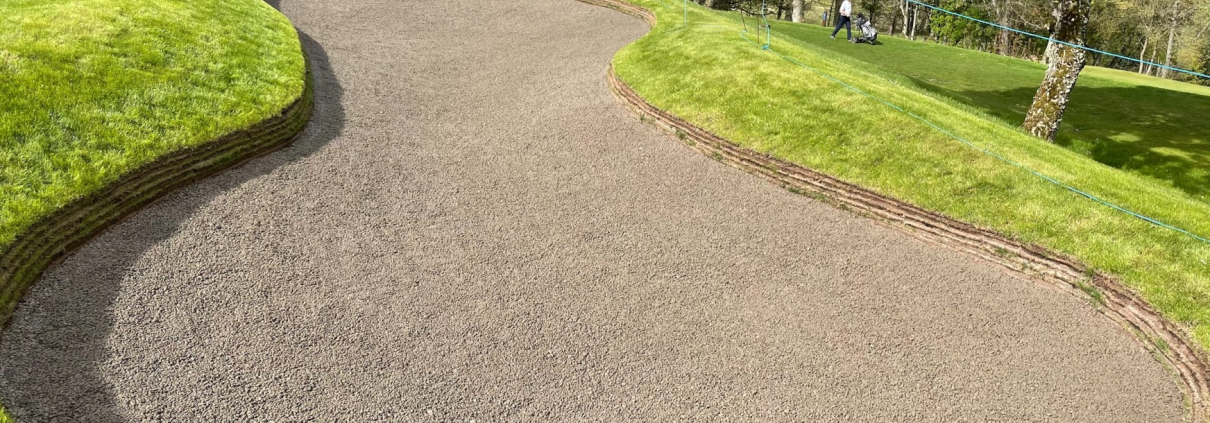
Busiest spring for Capillary Bunkers: Bunker liner specialist Capillary Bunkers is in the midst of the busiest period in its history, since its foundation in 2010. April and May have seen the firm working on more than sixty projects around the world, and the rest of the year looks set to be just as busy.

Courses involved include Tom Doak’s much-acclaimed Rock Creek Cattle Company in Montana, the Tom Fazio-designed Contraband Bayou course in Louisiana, and RainDance National in Colorado, designed by architect Harrison Minchew with PGA Tour player Fred Funk. In Asia, Capillary Bunkers are being installed at the Discovery Bay course in Hong Kong, while in Europe, Golf Nazionale in Rome, Djursholm in Stockholm and Murrayshall in Perthshire, Scotland. And Africa is not being left out, as the Royal Golf de Marrakech in Morocco is also installing the product.

Busiest spring for Capillary Bunkers

Busiest spring for Capillary Bunkers

“Everyone in golf is aware that the industry is very lively as we emerge from the Covid-19 pandemic, with rounds up significantly across the world,” says Capillary Bunkers founder and CEO Martin Sternberg, CGCS. “That growth is being reflected in golf construction, as courses seek to improve their facilities and differentiate themselves from the competition. Because our product reduces bunker maintenance while simultaneously improving their condition, and because it is very easy to install in most weather conditions, it is ideal for busy courses – bunkers can be renovated and be back in play very quickly, to minimise disturbance to golfers.”

For the latest industry news visit turfmatters.co.uk/news

Get all of the big headlines, pictures, opinions and videos on stories that matter to you.

Follow us on Twitter and Instagram for fun, fresh and engaging content.

You can also find us on Facebook for more of your must-see news, features, videos and pictures from Turf Matters.
Maintaining outside space for emotional wellbeing

Maintaining outside space for emotional wellbeing: Mental Health Awareness Week, organised by the Mental Health Foundation, runs each year from the 10th to 16th of May. This year’s theme of ‘Nature’ is particularly poignant with lockdown restrictions easing and people once again allowed to socialise at both indoor and outdoor locations.

The emotional wellbeing benefits of nature have been researched extensively over the years and, as Paul Bean from grounds maintenance specialist Nurture Landscapes Group explains, it is important to keep these in mind all-year-round, especially as the world looks to recover from Covid-19.

Maintaining outside space for emotional wellbeing

Maintaining outside space for emotional wellbeing

Research[1] commissioned by the Mental Health Foundation and the UK World Wildlife Fund (WWF-UK) published ahead of Mental Health Awareness Week found that 62% of people felt that taking a walk helped improve their mental wellbeing during the pandemic.

Now that we are starting to look ahead to the post-Covid world, outside spaces will continue to be areas of comfort. That, of course, means caring for these areas so that they can provide the respite people are looking for.

‘Caring’, in this context, includes small individual actions that each person can take in their day-to-day lives, such as taking litter home, to carrying out more extensive grounds maintenance and improving sustainability practices, such as using energy-efficient equipment when tending to a park’s upkeep.

There is also a lot to be said for creating a space that the local community feel proud to have on their doorstep, achieved by hosting events around biodiversity and environmental awareness.

Urbanised areas in particular can see the benefits of opening up more natural spaces in these ways, especially as the various lockdown measures highlighted the need for improved access. According to figures from the Office of National Statistics, only 13% of residents across urban areas in England and the three most populous cities in Wales lived within a ten minute walk of a local park, and of those who did have good access, nearly a quarter (24%) suggested the park was at risk of becoming too overcrowded.[2] Yet before the first lockdown in March 2020, 93% of respondents had visited a green space in the year leading up to movement restrictions being implemented.

Improving natural areas to create a quiet haven in an otherwise stressful and at times, overwhelming setting, doesn’t happen overnight. However, choosing the right plants, flowers, and even the positioning of benches, are good first steps. Then, of course, there is the ongoing TLC which keeps the park looking at its best.

The message of taking care of the natural environment for our own emotional wellbeing is a key one for Mental Health Awareness Week this year, and something we at Nurture Landscapes take great pride in being able to facilitate. While we may not be experts in mental health, we do understand and appreciate how important it is for people to have a space where they can take some time to care for themselves.

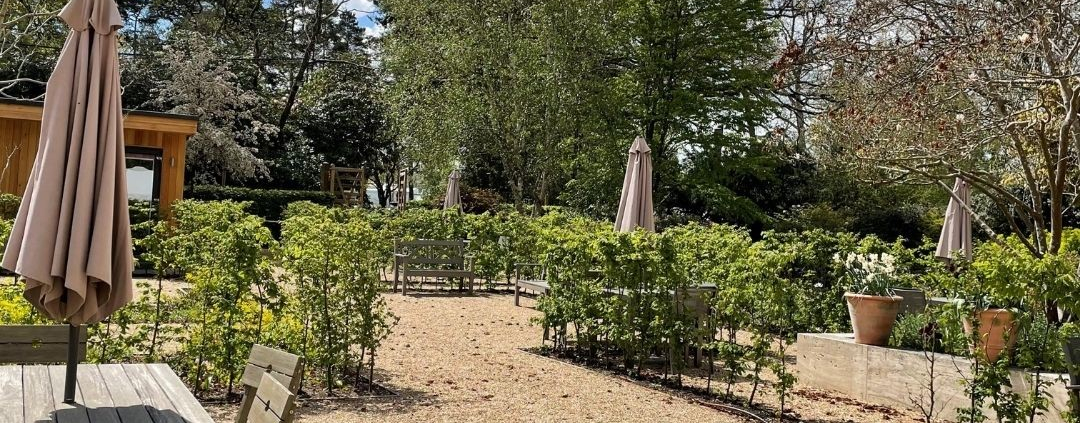
And the signs that this will continue to be the case are there already, with offices looking to utilise outdoor meeting areas, such as the one we use ourselves at our head office in Surrey (pictured), and nature charities reporting greater interest in their respective activities, according to ONS data.[3]

The same data reveals that during the summer of 2020, the use of #m_2362510770876043122__ftn3outdoor spaces surged when compared to Natural England’s baseline figures from the period 2010 to 2018, peaking at a 100% increase in August of last year. Good weather and the temporary lifting of restrictions will certainly have been key factors for this dramatic increase, but the understanding and awareness of nature that people developed in the months spent in lockdown will have also contributed.

Before the virus outbreak, when long commutes and crowded urban areas were considered ‘the norm’, going for a walk to clear the mind or get some fresh air out of a busy office provided a welcome respite from the constant pressures of modern living. Covid-19 showed us just how important those five minutes out in the fresh air truly are.

As Mental Health Foundation’s Thriving in Nature report states, “nature is for everyone [and] it is essential that everyone can access nature whatever their circumstances”.[4] To fulfil this vision, and ensure that the post-pandemic era has a strong focus on taking care of our own individual mental health needs, opening up natural spaces and maintaining them to create green oases in what can be an overwhelming world needs to be a priority, especially with nearly half of people in the UK noticing the increasing benefits of nature on their overall mental wellbeing.

For the latest industry news visit turfmatters.co.uk/news

Get all of the big headlines, pictures, opinions and videos on stories that matter to you.

Follow us on Twitter and Instagram for fun, fresh and engaging content.

You can also find us on Facebook for more of your must-see news, features, videos and pictures from Turf Matters.