
Tag Archive for: Going

Pinehurst Cuts Water Use By 50% By Going Back in Time

Pinehurst Cuts Water Use By 50% By Going Back in Time: Pinehurst No.2’s dramatic renovation in 2010 could prove to be a blueprint for future golf course sustainability, a new episode of Syngenta’s Green Report YouTube documentary series reveals.

Returning the four-time U.S. Open venue to its natural and historic characteristics, as envisaged by original designer Donald Ross, has yielded remarkable sustainability benefits, including a 50% reduction in water consumption.

Pinehurst Cuts Water Use By 50% By Going Back in Time

Pinehurst Cuts Water Use By 50% By Going Back in Time

And while the return to sandy waste areas and native wiregrass by renowned golf course architects Bill Coore and Ben Crenshaw wasn’t universally popular at first, the renovation is now being seen as a visionary ‘back to the future’ sustainability success story.

“The idea behind the renovation was to present the golf course the way Donald Ross intended it to be,” John Jeffreys, Course Superintendent, tells presenter Gary Firkins.

“It had lost its character by Bermuda grass encroaching out and becoming the predominant rough species.

“We restored and replanted 200,000 wiregrass plants and allowed the sand to present itself again outside the fairway edges. We removed 35 acres of irrigated Bermuda grass rough and restored the center-line irrigation that was present in a 1943 aerial photograph, which allowed us to reduce the number of irrigation heads from 1,500 to 500.”

Joining John on the course walk is Danesha Carley, Professor of Horticultural Science at North Carolina State University, who was advisor on the 2010 restoration.

Prof. Carley said: “Golf courses can be ecologically rich, biodiverse areas. They can be places where endangered species live, support pollinator habitats and are wonderful places for resource use such as reclaimed water, which a lot of golf courses have moved to.”

Mark Birchmore, Global Head of Marketing, Turf & Landscape for Syngenta, said: “In many ways, Pinehurst is re-pioneering golf course sustainability.

“Blending innovation and new technology with an approach that learns from natural and historical precedents creates opportunities that, in the case of Pinehurst No.2, demonstrably delivers clear sustainability benefits.”

The new episode will be released at 12PM ET / 5PM CET today, and will be free-to-watch for all golf industry professionals and stakeholders on YouTube.

To watch all episodes of The Green Report and for more news, features, videos and case studies on sustainable golf, as well as links to the Changing the Business of Golf podcast, visit Syngenta Golf.

For the latest industry news visit turfmatters.co.uk/news

Get all of the big headlines, pictures, opinions and videos on stories that matter to you.

Follow us on Twitter and Instagram for fun, fresh and engaging content.

You can also find us on Facebook for more of your must-see news, features, videos and pictures from Turf Matters

Foamstream driving the rise in Councils going chemical-free

Foamstream driving the rise in Councils going chemical-free: As tighter controls come into force on the use of Glyphosate-based products around Europe, it is perhaps unsurprising that a recent study has found increasing numbers of councils in the UK have voluntarily turned to chemical-free weed control solutions.

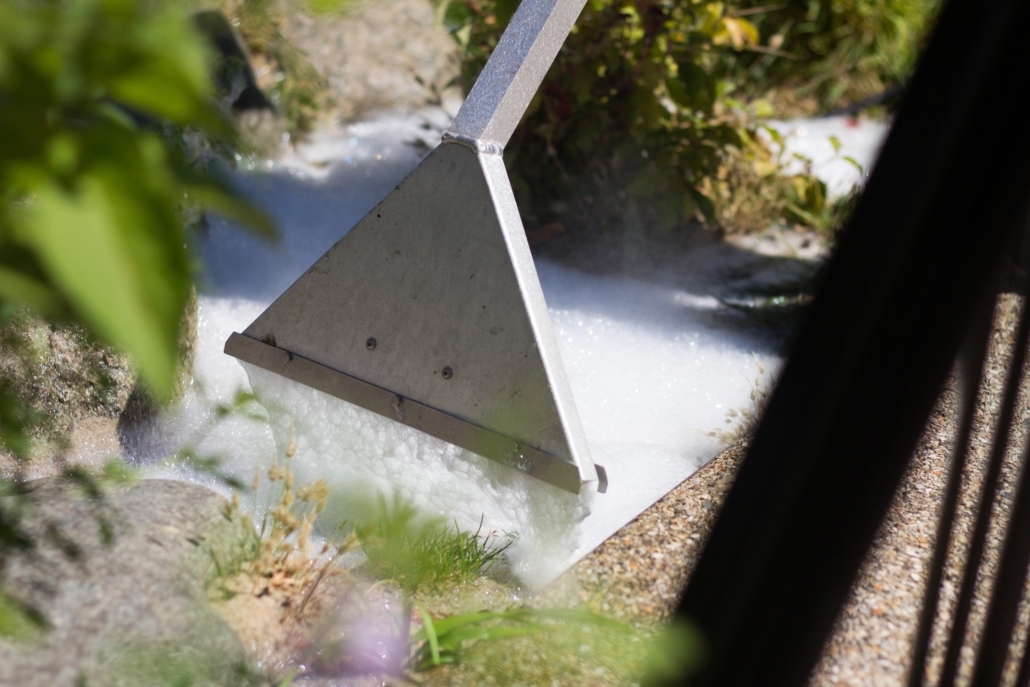
One of the driving factors for this could be the improvement in the effectiveness of non-herbicidal methods available, with Foamstream from Weedingtech proven to deliver vegetation control comparable to that of Glyphosate in independent trials.

Foamstream driving the rise in Councils going chemical-free

Foamstream driving the rise in Councils going chemical-free

Effective from 1st July, rules regarding the application of Glyphosate have been extended in France – banning its use not just in municipality settings, but now in all public and private areas including residential properties. However, despite its known toxicity and negative impact on both the operator and environment, its use is still permitted in all situations in the UK.

The good news is that recent reports published in The Guardian demonstrate that the number of councils, from parish to county level, turning to natural alternatives is on the rise – with an estimated 80 councils around the UK now proudly chemical-free. “This rise is brilliant news and indicates the increasing concern that councils and the wider public now have about Glyphosate” comments Thomas Hamilton, Co-Founder of Weedingtech. “But for this positive growth to continue, Councils needs to be assured that the non-chemical alternatives available are effective and viable – from both a commercial and financial perspective.”

Since its launch in 2011, Foamstream has proved a successful solution to users from all corners of grounds and green space management. The active ingredient is hot water, insulated by a biodegradable, organic foam derived from natural plant oils and sugars which keeps the water in the ‘kill zone’ of 57oC and above for longer. As well as killing the plant, Foamstream also sterilises surrounding seeds and spores, preventing future weed growth and resulting in half the number of treatment cycles required when compared to other non-chemical options.

In four separate trials conducted by the University of Athens, the overall efficacy of hot foam used to treat a wide range of broadleaf weeds – including species that can be difficult to control by conventional methods – was found to be comparable to that of glyphosate. It was concluded that Foamstream provided an environmentally friendly and effective alternative, outperforming other non-chemical methods which only provided a moderate level of weed control.

One of the many councils now using Foamstream is Glastonbury Town Council, having previously used traditional herbicides to treat spaces in the town centre, residential areas and school perimeters. “A lot of our residents, myself included, are concerned at the use of chemical herbicides around the places where our children play” explains Councillor Emma George. “One of the greatest things about Foamstream is its complete non-toxicity, backed up by its Soil Association stamp of approval, and its viability on all types of weeds and all types of surfaces.”

For the latest industry news visit turfmatters.co.uk/news

Get all of the big headlines, pictures, opinions and videos on stories that matter to you.

Follow us on Twitter and Instagram for fun, fresh and engaging content.

You can also find us on Facebook for more of your must-see news, features, videos and pictures from Turf Matters.

Abbots Bromley Sports Association keep progress going

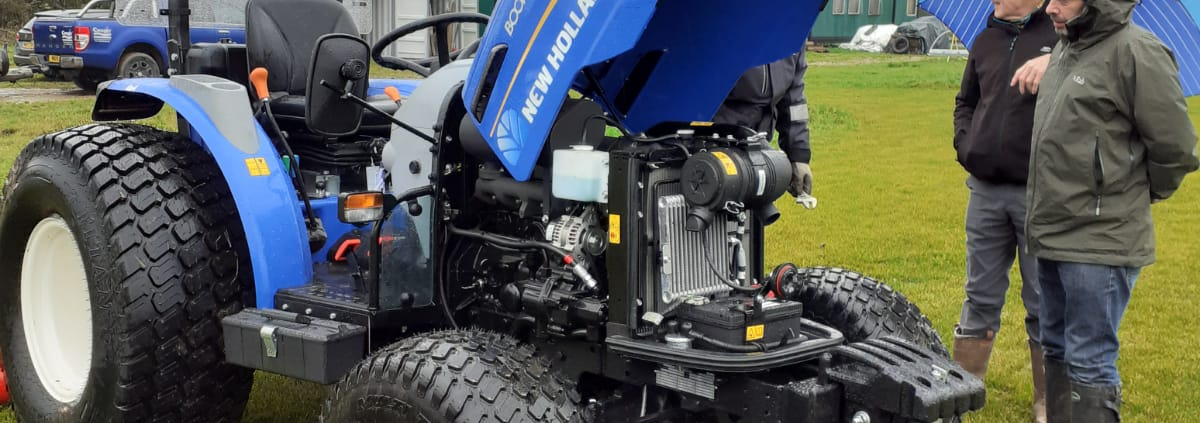
Abbots Bromley Sports Association keep progress going: Abbots Bromley Sports Association (ABSA) has continued progress on their £1.2million multi-sport facility with the addition of a New Holland tractor, Trimax Striker and quality training from Campey Turf Care Systems.

Plans for the ambitious project began many years ago when Abbots Bromley Cricket Club started looking for a new home, but when in 2013, after finding a 14-and-a-half-acre site, ABSA was created and the vision expanded to encompass multiple sports.

Abbots Bromley Sports Association keep progress going

Abbots Bromley Sports Association keep progress going

When completed the site will be home to the villages cricket, football, netball and tennis enthusiasts as well as being a community hub for other sports. The completion of the second phase of work means senior, and junior football pitches are now ready for play along with the cricket pitch, which is in its third year. Due to Covid-19, both sports are currently on hold at an amateur level, but it is hoped the pitches will be used at some point during 2021.

To continue the progress already made on the project, ABSA needed new equipment to maintain the ground, which led the trustees, chaired by Chris Wood, to Campey.

Chris explains: “We’re very grateful to be able to partner with such a clearly well established and very professional organisation as Campey. We can’t speak highly enough about their input all the way through this process.

“Our Trustee who looks after the ground, Andrew Kirkland, found out about the offer from Staffordshire FA and Campey and brought it back to the trustees and fortunately we were able to take that forwards. It’s true to say we work very well with Staffordshire FA, and their contribution and the funding from The Football Foundation have been significant. Their introduction to Campey has been nothing short of fantastic.

“Prior to the equipment arriving, Andrew and two volunteers were trained on the new equipment. It is important that we have that level of interaction and support so we are able to get the best results for our facility, and from an insurance point of view, it is absolutely fundamental.

“We’re very fortunate that we have a lot of volunteers in our project and we rely on them, alongside a groundsman to provide the best pitches we can create, and it is imperative that we have the equipment that can deliver that outcome as well. And once we’re fully open and have fixtures at the weekend, we can make sure they are all on by having the pitches in good condition.”

Bringing multiple sports under one roof has made this a truly community led project with people in the local area raising over £110,000. ABSA has also utilised funding from Staffordshire Borough Council, their own Parish Council, Sport England, the ECB, the Premier League and The Football Foundation as well as the help and advice of Staffordshire FA.

The next phase of the project will see an all-weather court for tennis, netball and five-a-side football put down, and the development of car parking and the new clubhouse.

For the latest industry news visit turfmatters.co.uk/news

Get all of the big headlines, pictures, opinions and videos on stories that matter to you.

Follow us on Twitter and Instagram for fun, fresh and engaging content.

You can also find us on Facebook for more of your must-see news, features, videos and pictures from Turf Matters.