
Tag Archive for: grounds

Vermorel knapsacks put grounds team in comfort zone

Vermorel knapsacks put grounds team in comfort zone: Head groundsman Jason O’Keele and his six-strong Epsom College team are all dab hands with knapsack sprayers.

“Everyone has their PA6 certificate so they can use them whenever we need to weed and feed,” says Jason.


Vermorel knapsacks put grounds team in comfort zone

Vermorel knapsacks put grounds team in comfort zone

The team manage an 85-acre estate, 12 hectares devoted to sport, including five cricket squares, 12 turf pitches, two synthetics and plenty of planted-up borders lining college staff and pupil accommodation at the 1,200-head co-educational independent school, so there’s plenty of opportunity for them to hone their spray skills.

Part of Commercial Groundscare Services’ team of professionals who tend school sports facilities throughout Surrey, the Epsom College contingent are based permanently on site.

“Being here full time means we can really take pride in looking after what are fantastic facilities,” Jason says. And as pupil numbers rise under the  College’s expansion programme, so does the sporting calendar.

“We can have as many as 10 cricket fixtures here on a Saturday for example,” he adds, “while local and league football clubs also train here.”

That all means the pressure’s on to deliver perfectly manicured grounds that reflect the prestige and prowess of the College academically and across a sporting spectrum that includes, football, rugby, hockey, tennis and athletics.

“I like to give team members different jobs to tackle as that creates more interest for them, rather than doing the same thing all the time,” explains Jason, whose allegiance to Hozelock Exel knapsack brands dates back some years.

“Our Cooper Pegler professional sprayer has always run without any trouble but I wanted a couple more knapsacks so that we could speed up the efficiency of our spraying programme,” he says.

“I trialled the 16l capacity Pro Comfort 2000 sprayer in the Berthoud Vermorel range, liked it, and have just bought another one. What impressed me were the chest and back strap supports. Ergonomically designed, they make spraying comfortable, and that’s important if you are out there for a day non stop.

“Also helpful is the zip bag of spare nozzles and accessories and the extendable lance, which lets us reach into corners and the back of borders.”

Jason keeps the weed and feed programmes separate, using each Vermorel knapsack for discrete duties. “In spring and summer we’re out every fortnight for a couple of days, applying liquid iron across the ornamental lawns with one of the knapsacks while using a mix of systemic herbicide and liquid nitrogen with the other.

“Growth retardant applied to banks reduces the need for strimming, and we can use it in the same knapsack as that for feed.”

Winter sees the team applying moss and algae treatment liquid monthly to the two synthetic pitches. “They thrive over the colder weather so we need to tackle growth regularly as playing surfaces can become slippery.”

Jason knows the value of regular maintenance in keeping knapsacks primed. “We run pre-start checks before every outing and in the two years since I bought the first Vermorel knapsack, I haven’t replaced anything.

“They are certainly robust and the piston and pump operation really works well, delivering a consistent, continuous spray.”

Variety is the spice of life they say and Jason puts theory into practice. “Everybody takes turns in spraying as they are all trained up to use knapsacks, complete with white suits, wellies and appropriate PPE kit.

“It helps keep everyone engaged, which means we have the best chance of delivering the finest results across the grounds.”

Each of the three premium grade knapsacks – Vermorel 1800, Pro Comfort 2000 and top-range 3000 Electric – come with ergonomically contoured, sturdy backframe as standard.

Safety harnesses provide rising levels of support progressing through the line – from padded shoulder straps on the `1800`, to padded shoulder, waist and chest strapping on the `2000` and fully specified `3000`.

All Vermorel knapsacks are easy to use and dismantle for servicing and repair.  They are also suitable for applying sanitisers and disinfectants and are available with a host of spares and accessories such as spray shields, seal and nozzle kits and multi-nozzle spray booms to give operators even greater flexibility.

www.cooper-pegler.com

www.berthoud.fr/en/

For the latest industry news visit turfmatters.co.uk/news

Get all of the big headlines, pictures, opinions and videos on stories that matter to you.

Follow us on Twitter and Instagram for fun, fresh and engaging content.

You can also find us on Facebook for more of your must-see news, features, videos and pictures from Turf Matters.
GKB infiller heads to South Wales Sports Grounds

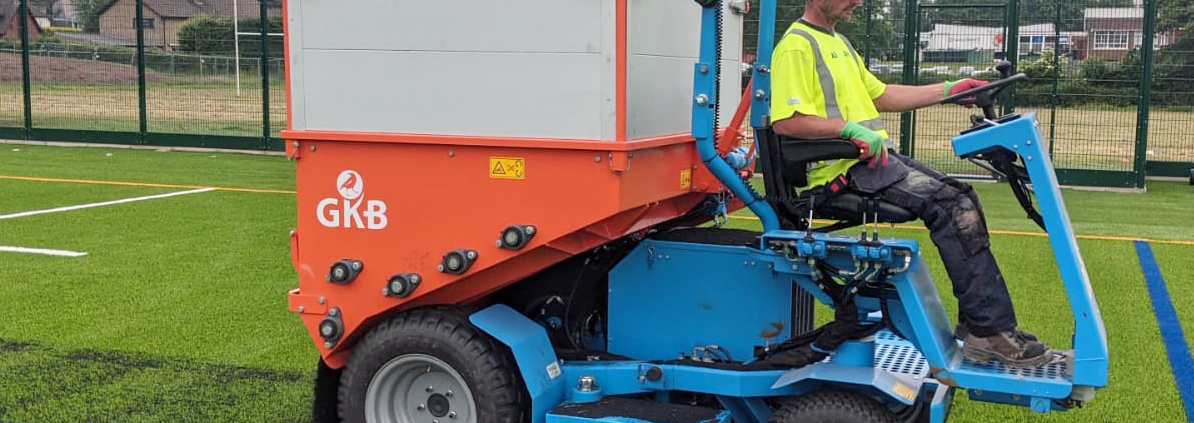
GKB infiller heads to South Wales Sports Grounds: After seeing the machine at SALTEX 2021, South Wales Sports Grounds organised for a demonstration model of the Infiller to be shipped over from GKB HQ on the basis that if they were impressed with it, they’d keep it… and they did!

Adding to a vast and varied fleet of equipment for the construction and maintenance of both natural and artificial surfaces, the GKB Infiller has dramatically improved the speed of infill spreading, whilst retaining the quality of finish.

GKB infiller heads to South Wales Sports Grounds

GKB infiller heads to South Wales Sports Grounds

South Wales Sports Grounds (SWSG) undertake contracts for a range of clients from local authorities to schools and independent sports clubs, everywhere between West Wales and Gloucester. Maintenance Manager Matt Dennison explains how they decided to take a look at the GKB Infiller, after noticing their previous machine was slowing down the process of dispensing and topping-up infill.

“We’re very particular about how we install an artificial/3G pitch, using the best tools and techniques to produce the best results” explains Matt. “We wanted a machine that was simpler to use and that would ultimately make the job quicker and more efficient. As soon as we received the Infiller in December, from our local dealer Hopkins Machinery, it was evident straight away that it ticked all the boxes.”

Suited to all types of infill material, the Infiller provides a quick and accurate spreading solution. The metering valve can be adjusted manually or hydraulically to suit the depth and type of infill required. The specification is completed by a large 3m3 hopper. “One big key point for us is that you can rotate the seat to spread the sand in front of the wheels of travel, ensuring the infill gets down into the fibres before they’re flattened.”

Along with sand, Matt intends to use rubber in the Infiller and indicates that the machine and the team have a busy synthetic season ahead. “So far, it’s done two artificial constructions and is now about to do another.” He concludes, “Because it’s so easy to operate, we’ve now got a number of our operatives trained up with it, who all can’t wait to benefit from the speed and accuracy we can now achieve in getting the job done.”

For the latest industry news visit turfmatters.co.uk/news

Get all of the big headlines, pictures, opinions and videos on stories that matter to you.

Follow us on Twitter and Instagram for fun, fresh and engaging content.

You can also find us on Facebook for more of your must-see news, features, videos and pictures from Turf Matters.

Kubota partnership benefits charity grounds

Kubota partnership benefits charity grounds: The great outdoors brings together disabled and non-disabled children and adults to develop life skills and fulfil their potential at Thomley, a special place in rural Oxfordshire.

Founded in 1997 by parents of children with autism and other complex needs and registered as charity in 2001, Thomley’s eight-acre site near Thame delivers a programme of activities throughout the year from sports and outdoor play to creative pursuits and life skills.

Kubota partnership benefits charity grounds

Kubota partnership benefits charity grounds

In the grounds there’s a football pitch, playground equipment designed for the needs of disabled users, and one kilometre cycle track suitable for bicycles, tricycles and go karts. A new sensory garden has been created, and there are plans for a woodland area.

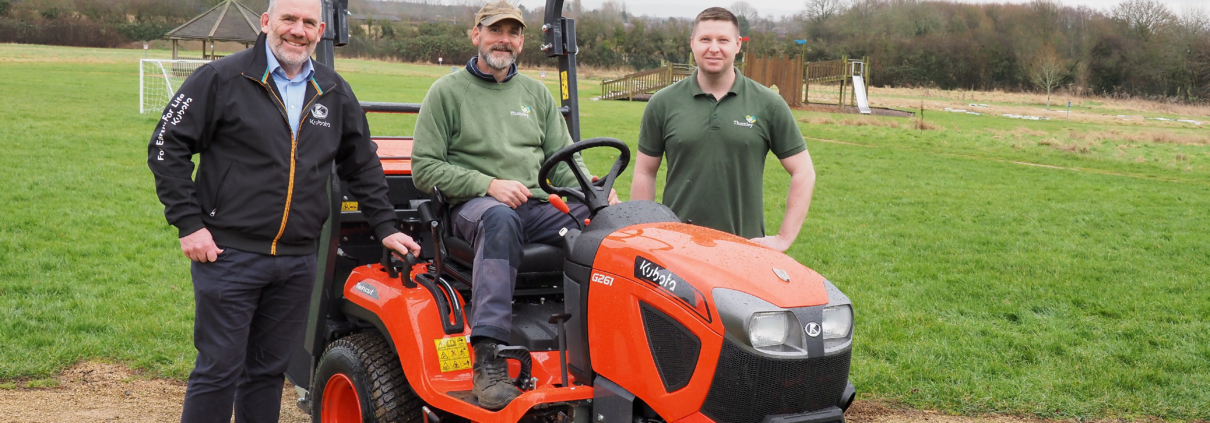
Kubota has a long term partnership with Thomley, and has recently installed its latest G261 ride-on rotary mower to help the three-man maintenance team keep this green and pleasant space pristine.

“Grounds maintenance is just one of our tasks, so having the Kubota mower makes a big difference,” explains David Francis, who heads up the team. “It takes about 10 hours to cut the whole grassed area, and there are different requirements according to its use.”

The football pitch, mini football and golf course fairways require the high level of presentation offered by the three-blade rotary deck, he points out.

“I tend to cut those areas first and then it’s a quick job to raise the deck and top some of the longer areas. We also like to cut paths through long grass for the children to enjoy exploring, or produce a tidy area for camping, so the choice of cut heights is very useful.”

David adds that the compact size of the G261 is handy to work in restricted areas around play equipment and other obstacles in the grounds. It also makes for easy secure storage in a container.

Revised and updated for improved transmission of power and smoother grass flow, the mower replaces the previous G series used at Thomley, and he comments:

“We can see that the mower has been improved with features such as the single joystick to control the cutting deck and collector and new pto clutch and we’re looking forward to getting to know it this spring. Our Kubota mowers have always been really reliable, and it’s so straightforward to do the daily checks. You can’t fault it.”

“We have supported the Thomley Hall Centre for several years now,” says Kubota Tractor Business Unit marketing manager Rob Edwards. “Thomley was identified though the employee forum several years ago as a deserving community organisation to support, and

continues to be a key partner in the programme of Kubota community support activities undertaken in the surrounding area to our Thame head office. We are very pleased to continue our association with the loan of the very latest G261 ride on mower.”

Operations manager Joe Kitchen, who co-ordinates the activities, running of the site and the work of staff and volunteers adds:

“We’re so happy to have our new Kubota mower. It’s a great resource and we take a lot of pleasure from how lovely the grounds look when they have been cut.”

For the latest industry news visit turfmatters.co.uk/news

Get all of the big headlines, pictures, opinions and videos on stories that matter to you.

Follow us on Twitter and Instagram for fun, fresh and engaging content.

You can also find us on Facebook for more of your must-see news, features, videos and pictures from Turf Matters.
Recognition for Carlisle grounds team

Recognition for Carlisle grounds team: Carlisle United’s grounds team – led by David Mitchell – have been recognised for their work in the 2020/21 season.

Read the full article from News and Star here

Recognition for Carlisle grounds team

Recognition for Carlisle grounds team

For the latest industry news visit turfmatters.co.uk/news

Get all of the big headlines, pictures, opinions and videos on stories that matter to you.

Follow us on Twitter and Instagram for fun, fresh and engaging content.

You can also find us on Facebook for more of your must-see news, features, videos and pictures from Turf Matters.
Grounds never looking better

Grounds never looking better: Grass roots sports, at least in name, have a dependence on the surface on which they’re played.

That’s why grounds maintenance across the Province has been deemed essential during lockdown – so that our golf courses, cricket squares and sports pitches are fit to play on again when it is deemed safe to do so.

One person with a bigger task than most is James Devoy, head greenkeeper at Donaghadee Golf Club where there is nearly 100 acres to maintain.

The 38-year-old, who lives in Glastry on the Ards Peninsula, makes a daily 28-mile round trip to maintain the golf course.

He said: “It’s essential. If this wasn’t being done the course would become overrun and unplayable. It would turn to pasture very, very quickly. It would be difficult to recover.

“Normally there’s a team of five greenkeepers in total and a part-time guy, but three of them are furloughed at the minute and our part-time guy is off until we’re back to normal … if there is such a thing.

“There’s two of us in to do it. It’s a big undertaking. We’ve just under 100 acres here.

“We’re doing reduced hours at the minute. We’re in every day from seven in the morning and finishing about two.

“Normally the tees and aprons would be cut twice a week, the rough would be cut once a week and the greens would be cut every day. All that is getting done just once and the rough is getting cut every other week.”

Asked if he was ever tempted to play the course given that he’s the only one there, he said: “I’m not actually. We’re being pretty strict at the minute, no golf at all.

“There’s nobody allowed to play the course, there’s people walking it every day, but there’s no golf and there’s no dogs.

“It’s been more than four weeks since anyone has played the course.

“It could be ready to go as soon as the lockdown is lifted. We’re maintaining the course to a high standard.

“The amount of people who have commented on the condition of the course being very good.

“We could open tomorrow if necessary. The only thing would be the greens mightn’t be up to speed. A week would bring them back up to standard.”

He continued: “It certainly makes it easier to maintain with there being no play on it.

“We don’t have a morning routine, we don’t have to set the course up for play. We’re not changing the holes every day, we’re not moving the markers, we don’t have to cut the greens every day.

“The height of the greens are up. Our greens are at five mill, whereas normally at this time of year they’d be down to three.

“That saves the greens, it keeps them healthier because the grass is longer.”

Asked if the dry weather has posed problems, he said: “It has a bit. It’s good in the sense it’s still a bit cold so the growth has slowed down a bit. But yes, the dry weather means we’re watering greens several times a week.

“It just means we have to manage the greens a bit better, keep an eye on them.”

James said the job of a greenkeeper was not normally an isolated pursuit but it has taken on a more eerie feel recently: “When the course is busy with golfers you’re seeing people all the time.

“You have guys who go out every morning at eight o’clock religiously. We know they’re going to be on the course and we adjust our work to keep ahead of them.

“At the minute, it’s just the two of us. It definitely is strange, you’re not having to plan your day around golf. You can do what you want when it suits you.

“It allows us to cut the rough a bit later. As any keen gardener knows it’s better to cut your grass when it’s dry and not first thing in the morning when there’s dew on it.”

Up until very recently Dean Simpson was one of the only people allowed into Wallace Park.

The Lisburn Cricket Club groundsman was permitted into the park to carry out work on the cricket pitch while others were locked out, a situation that has since changed with parks being allowed to reopen across Northern Ireland.

Dean said: “It’s a very, very eerie place when you’re on your own. Normally it’s very, very busy, there’s a lot of footfall around the park.”

Of the work being carried out he said: “We’re really just keeping a lid on things. We’re cutting the outfield and keeping the square at bay. If it gets away from you, you’ll never play whenever the doors open.

“Therein lies a problem because we have very little income. Senior members still pay their subs but we’ve 150 youth members and it’s difficult to charge the wee boys subs when you’ve nothing to offer them.

“We’ve lost income there, there’s no bar revenue, it’s hard to go and ask sponsors for money given that they’ve their own difficulties.

“There’s reduced income so you’re just trying to do the basics to keep on top of things until, maybe, hopefully, this thing will lift in July and maybe allow a few friendlies.

“The danger you have too is if you lose the full season you might lose those youth members.

“You could also lose older ones coming to the end of their careers, who think it is a good time to retire.

“All in all it’s not going to be good for the sport if we have to go a season without playing.”

He said conditions are perfect for the start of the season: “Despite the wettest February on record we’re now having the best build-up to a cricket season in terms of weather that I can remember.

“The grounds would be perfect for the start of the season. Normally you’re running about trying to get covers on.

“From a personal point of view, the way things are going it’s hard to see much cricket.

“I think whenever this lockdown is lifted it’s not just going to be an open house where everybody is going to go back to doing what they were doing before.”

Normally at this time of year Pollock Park in Lurgan would have been transformed from a rugby ground to a cricket one.

However, this year it’s been a matter of playing it by ear for groundsman Kyle Geddis.

He explained that he was simply keeping things ticking over rather than carrying out any major work at the ground: “There’s been no rugby played since the start of March, there’s not going to be any cricket played for a good while, so the powers-that-be have decided there’s no point spending six or seven grand if the pitches are going to be alright for the next season anyway. It could be September before they’re played on again. We don’t know.”

Kyle, one of three groundsmen, said: “The work we’re doing is fairly straightforward. We fertilised the pitches last week and the grass would be cut once a week just to keep it down.

“It is a lot easier to maintain when there’s no one playing on it. You don’t have to mark the pitches every week, you don’t have to repair divots or ruts.”

He added: “The one consolation if there’s no cricket season would be that we don’t have to take the lights and the posts down.

“Though if it needed to be turned around it would only take a day to do it. The square is in good nick. It was reseeded at the end of last season.”

The club is one of a number of sporting organisations in the Lurgan area, who as part of Lurgan Aid Group, are putting together care packages every week to be delivered to those who need them in their communities.

Davy Wilson is one of the volunteers helping to keep Larne Rugby Club in pristine condition.

He said: “We’ve about 18 acres here. There’s four or five of us who do it all voluntarily.

“They come out different days and if they’re ever out together they’re more than two metres apart. They’re able to work away isolated.

“We’re totally self-sufficient looking after the grounds. We don’t get any financial help from the council or other bodies.

“We always have them pristine. There’s three pitches and two training areas plus all the surrounding areas plus the clubhouse. There’s a lovely setting here by the lough.”

He added: “I remember my first season here there was a silage harvester going round and the grass was about three foot tall when you were doing pre-season training. Times have moved on.

“I wouldn’t say it’s helped or hindered having no play on the pitches. There wasn’t long to go in the season. We’ve always worked at them rain, hail or shine so whether or not there’s play on it doesn’t make a difference to what we do.”

Hubert Watson has been president and chairman of Dollingstown FC, but that doesn’t mean he’s shy when it comes to tasks like watering the goalmouth.

He’s been busy at Planter’s Park during lockdown maintaining the pitch for the Premier Intermediate League club.

He said: “Once I knew that it was going into lockdown in mid-March, I contacted Clive Richardson who does all our ground works during the close season.

“We’d already scheduled him for the end of May to do the work, which gives us June and July to allow the grass to grow.

“I gambled and I went ahead and did it in March.

“If football comes back, which I think it probably will at the end of June, one season will roll into another, you might have a three-week gap or something. It wouldn’t be long enough to do what needs to be done.

“So I got Clive in the next week. I got it vertidrained, I got 50 tonne of sand on it and I got it completely reseeded.

“They did all that in a couple of days then I put eight bags of fertiliser on it to help it green up, although it would need a bit of rain.

“We were lucky we got that work done in March.

“Whether clubs would still be allowed to do that I don’t know.”

Explaining what is being done on a weekly basis to look after the ground, Hubert said: “All I do is go down every other day and water the goalmouth because that’s as far as the hose will reach. There’s taps at each end of the pitch.

“The goalmouth is the hardest part to get the grass to grow.

“I’m going out on my own, so no one is getting hurt.”

Dollingtown were in third place in the Intermediate League when the season was suspended: “It’s the highest position we’ve ever been in our 40-year history.

“We were in a great place mentally, physically. We’re in the semi-final of the Intermediate cup, one step away from the National Stadium.

“I never would have dreamt 21 years ago when I came to Dollingstown we could see a team running out at the National Stadium.”

He said: “The players are desperate to get back, it’s hard for them.

“They can’t meet together and do their training together. They’re all out doing their own exercise but it’s not the same intensity.

“I’ve been at this 45 years. I eat, drink and sleep it, but as the man says ‘there’s bigger issues out there’.”

He added: “I don’t think the Premier Intermediate teams are too badly affected with expenses, there’s very few pros in this league. The crowds aren’t bringing in that much of a revenue.

“Our biggest income would come from advertising around the ground. We’d normally invoice our sponsors in March or April, I didn’t do it because that’s the last thing businesses need to see now.”

Click here to read the original article

For the latest industry news visit turfmatters.co.uk/news

Get all of the big headlines, pictures, opinions and videos on stories that matter to you.

Follow us on Twitter and Instagram for fun, fresh and engaging content.

You can also find us on Facebook for more of your must-see news, features, videos and pictures from Turf Matters.