Hockey: A game reborn
Hockey: A game reborn: Scott MacCallum looks at the quantum leap taken by hockey and discusses the game’s development and future with Professor Alastair Cox, one of its leading authorities.
There can be few sports which are as influenced by the surface on which it is played than hockey – that’s field hockey, not the game Wayne Gretzky played on skates.
Hockey: A game reborn
Did I hear someone at the back say “Tennis”? Well yes, it’s true that tennis is a different game depending upon which surface it’s played. The difference here, however, is that if you’re a top professional and a specialist in clay, grass or hard court there is always a point in the season when your game comes into its own.
Hockey, however, made a fundamental shift in the mid-1970s which altered the game to such an extent that the previous masters of the art were reduced to virtual also rans. Until that key change – which took place following the 1976 Olympic Games when the International Hockey Federation (FIH) made artificial pitches mandatory for all major competitions – until then natural turf had been playing surface of choice and India and Pakistan were its very best exponents.
From 1928 through to 1968 every Olympics was won by either India (seven times) or Pakistan (twice). The game was a bit more aerial in those days, taking bumpy natural grass surfaces out of the equation and these guys were good at it.
It was only on home turf, literally, in Munich in 1972 that West Germany defeated Pakistan to break the stranglehold. That was the last Olympics where hockey was played on a natural surface.
In fairness, since the introduction of synthetic surfaces at Montreal in 1976, India and Pakistan each achieved one more win, but neither has even made it to a final since 1984.
The new powerhouses are Germany (four times) and the Netherlands (three times). Great Britain, Belgium, New Zealand, Argentina and Australia have each been Olympic Champions once since 1976.
It should be noted that when it comes to playing surfaces we are, of course, talking about the elite. Around the world, about 50% of hockey is still played on grass, but that percentage is much lower in wealthier nations which can afford to install synthetic pitches.
In the UK, up until the 1950s, hockey could be played out on the outfield of the cricket field but given the increasing demands to produce high-quality surfaces cricket clubs became increasingly reluctant to share facilities and such arrangements are now much rarer.

Hockey: A game reborn
One man well placed to look at the evolution of the hockey pitch is Professor Alistair Cox, Facilities & Quality Programme Manager for the International Hockey Federation and Technical Director for the European Synthetic Turf Council.
“The move to synthetic turf fundamentally changed the sport, making it a lot faster and more skillful. It’s now a totally different game to before,” said Alastair, who is also Visiting Professor – Sports Surface Innovation at Loughborough University.
“It did mean that India and Pakistan who had dominated the game through to the early 70s were negatively affected as they could not practice on the new surfaces so regularly and European nations, as well as Australia and New Zealand, have dominated.”
Fundamentally the technology within synthetic hockey pitches has evolved in terms of the materials employed and player comfort but the basic concept has not changed since those early days.
While football – soccer – has dipped its toe in the world of synthetic turf and has seen many refinements and improvements since the days of Queens Park Rangers at Loftus Road and Luton Town at Kenilworth Road back in the 1980s. Remember the giant unnatural bounces and propensity to crinkle? However, it hasn’t embraced synthetic surfaces to the same extent as its stick-wielding sporting cousins.
That said, you might have expected that hockey would have benefited from the resources and research that the biggest and most popular sport in the world could invest in pitch technology research.
That’s not exactly been the case, however.
Hockey: A game reborn
“Hockey wants the ball to move as quickly as possible whereas football doesn’t want a football to roll too quickly on the surface,” explained Alastair.
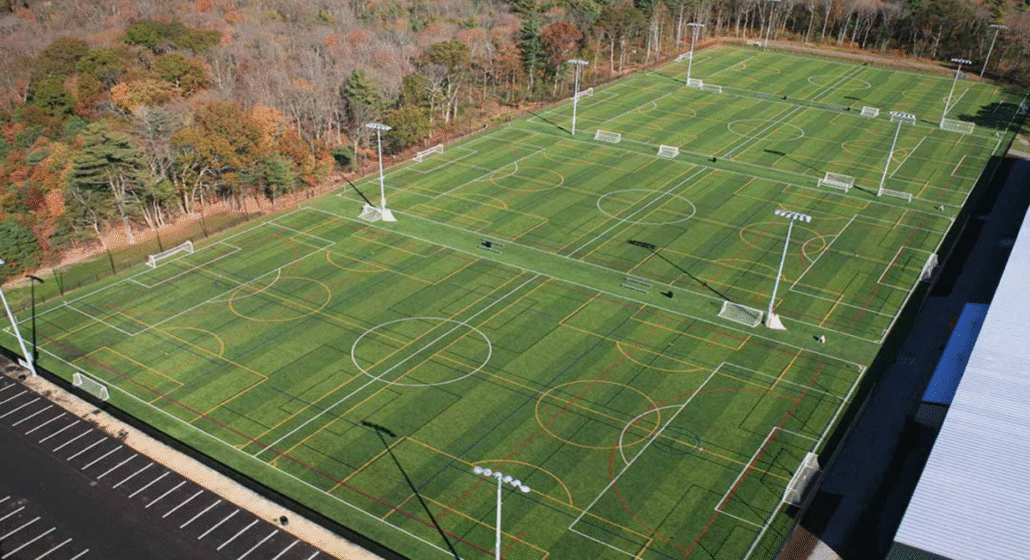
“FIFA wants its synthetic surfaces to replicate natural turf, so if you have a football field that meets the FIFA quality standards, it’s not very good for hockey, as has all the limitations of playing on a grass pitch from a hockey point of view. That’s created challenges for hockey because instead of being able to share facilities, it’s had to have bespoke pitches,” he said.
“That works where there’s enough demand, enough money, enough interest, but in many parts of the world hockey is nothing like as popular as football and the money isn’t there to fund synthetic hockey pitches,” said Alistair, who is recognised as a world leading expert in the field.
However, behind the scenes things are happening which could have a major impact on the popularity and accessibility of hockey.
“We’ve been working with FIFA over the last 18 months and developed a joint standard for dual-use football and hockey surfaces. It’s still biased towards football with the length of fibre preventing the football from rolling too quickly on the surface, but it is still short enough for hockey to be played,” he revealed.
“The fact that it is now a FIFA publication and not one from the FIH makes it a lot better for us because it’s FIFA saying this is okay for community football and you can also play hockey. If it had come purely from the FIH, few would have listened. It offers so much potential for grassroots hockey.”
The cost of a bespoke synthetic hockey pitch is out of reach for many communities, given the number of hockey players who would use it, but a shared multi-use pitch capable of hosting a range of sports including hockey would be much more attainable for many more clubs and communities.
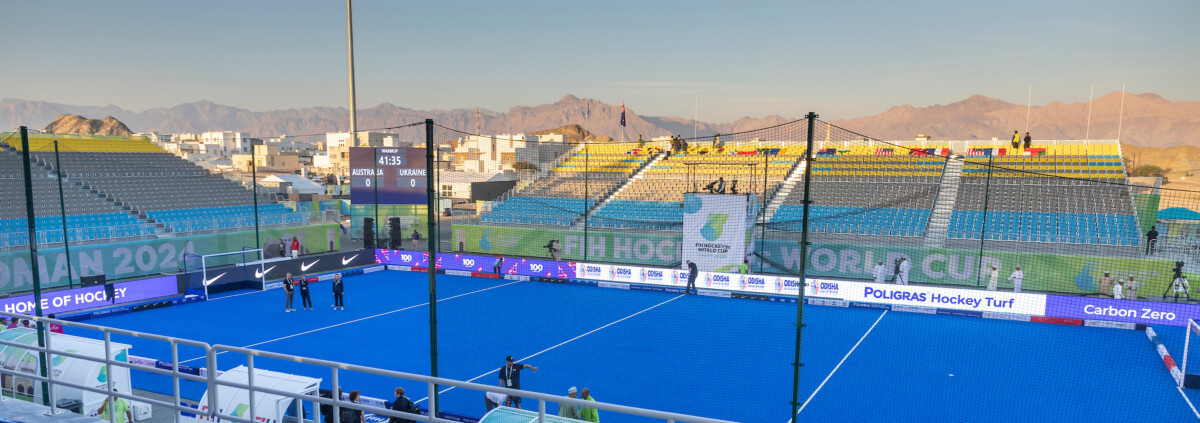
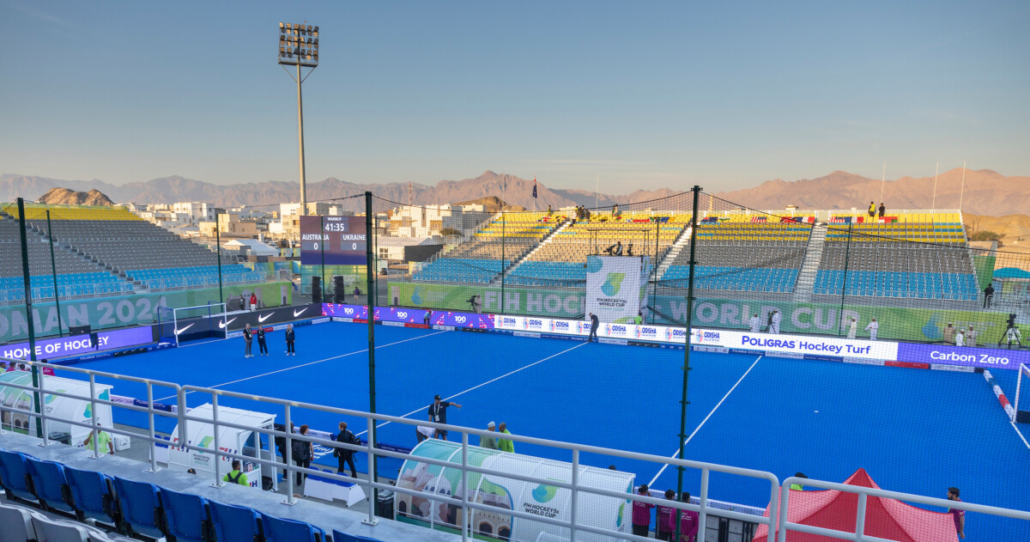
The other major issue surrounding the game at the elite level is that of wet pitches.
“Water is becoming a scarce commodity in many parts of the world and, environmentally, putting thousands of litres onto a plastic surface is now very difficult to justify, and it doesn’t look good.
“It’s has become a barrier to people wishing to invest in the sport in parts of the world where water is scarce. That means potentially we wouldn’t be considered a true global sport, so we have set a strategy to encourage the turf industry to develop better surfaces that can be used without water,” revealed Alastair.
“They’re probably not going to replicate fully a wet turf, but if they have enhanced performance compared to what they have been producing until now, the differences may be minimal.”
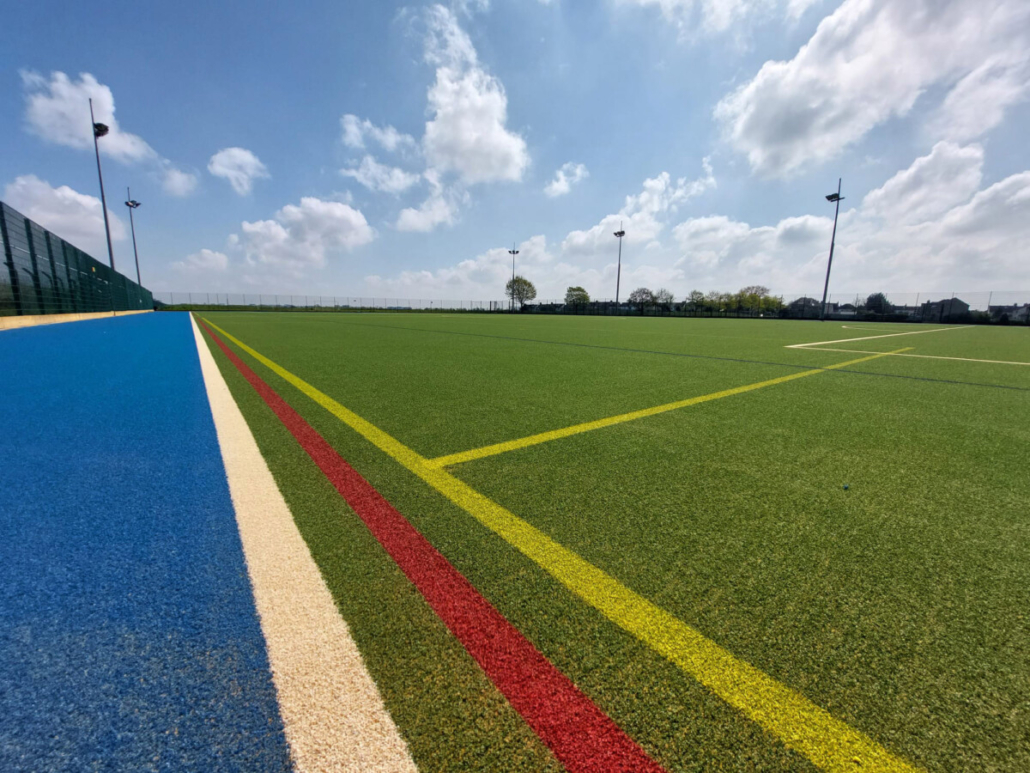
One of those issues is the ability to drag flick, some you see at penalty corners, and one of the most exciting elements of the game. “The water acts as a lubricant allowing the stick to glide across the surface. You cannot do that so well on current surfaces when they are fully dry.
“On the new surfaces, it’s sort of halfway between the two. The ball is not bobbling around on the surface as much as you see on a sand dressed or sand filled turf so that aids the control to play in a more technically skillful way. We are sure the game will develop and adapt,” he explained.
Hockey: A game reborn
“As the environmental agenda becomes more relevant, players see the need, but it’s going to be challenging. If you’re an elite player and you have only played and trained on a wet turf for the last five ten years of your hockey career suddenly being told go and play on something very different will take time to adjust.”
A number of installations in the UK are embracing these new surfaces, including St Andrews University that has recently installed a dry turf pitch, with one of the reasons being the use of vast amounts of water on the pitch does not fit with their sustainability ethos. “I also would suggest that the number of dry days during the hockey season in St Andrews are going to be fairly limited and these new surfaces hold the water. So when it rains, it stays in the carpet.
“What we’re finding is some of the more elite clubs in Europe that have invested in these new surfaces, they will water the fields at the weekend for the first team and then not water them at all during the week for training, community and the juniors.
The other issue of dry pitches in hot climates is that the surface temperature of the pitches and heat stress. Major tournaments tend to be played during the summer when conditions are dry and often hot.
“That’s a dilemma. Do we do what is good for the environment and potentially compromise players welfare or do we say, actually, these are the most important events in hockey and we may think that wet turf is the solution for now?
“It’s a bit of a paradox that the countries that need the dry turf because they haven’t got the water are the countries that have the issues with the temperature.
“These are all the things that have been discussed within the FIH, while we also have to be mindful of the host committees’ environmental agendas,” he added.
Speaking with Alastair, and delving into the world of hockey pitch development, revealed a host of issues but more than that, an understanding that the work going on to ensure the best possible solution is well advanced.