Tag Archive for: No

FSI B31-980 proves ‘no lightweight’

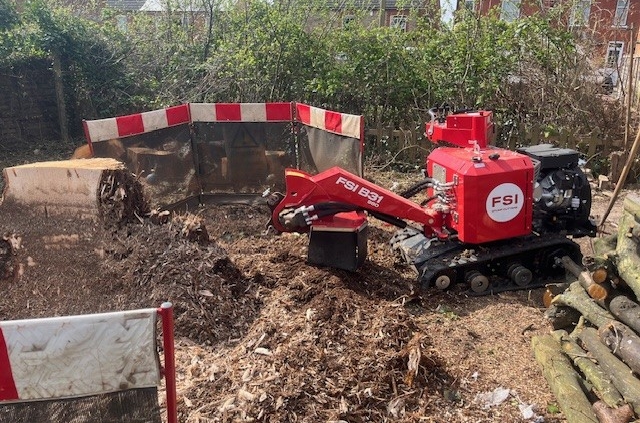
FSI B31-980 proves ‘no lightweight’: Over 300kg lighter than his previous machine, and with no compromise on build quality or powerful performance, an FSI B31-980 is proving itself to be ‘no lightweight’ for Dave Williams of Tree Stump Solutions.

A big fan of the FSI equipment, Dave was looking to replace the largest stump grinder on his fleet when FSI introduced the higher horsepower model to the range – and he wasted no time in getting his hands on one!

FSI B31-980 proves ‘no lightweight’

FSI B31-980 proves ‘no lightweight’

Offering stump removal services to domestic customers from Northamptonshire to Cambridgeshire, owner Dave Williams established Tree Stump Solutions in 2011. Over that time, he’s used various makes and models of stump grinder – but admits that the FSI machines have always been his firm favourite. “I’ve been using a pedestrian FSI B20 stump grinder for over five years now and the build quality of that is outstanding – I’ve never had to repair or replace anything, not even the bearings” Dave explains.

With the FSI B20 catering for tasks at the smaller end of the spectrum, the need arose to replace his largest machine and he knew just where to look. “I’d seen the FSI B31 with the 26hp engine which was an ideal size operationally, and when FSI combined this same narrow design and build quality with a 38hp engine I knew it was exactly what I wanted!”

Dave took delivery of his FSI B31-980 from DJB Machinery in March 2025 and it is already exceeding expectations. “The machine this replaced weighed close to 1000kg. This FSI B31-980 comes in at 680kg which makes a huge difference to transporting it to site and, also, exerts a lot less downward pressure when manoeuvring the unit over customer patios and gardens.” He continues, “It’s a very well-balanced machine, with a lot of processing power for a stump grinder of its size.”

“Not only am I a big fan of the machines themselves, the team at FSI and DJB Machinery are a pleasure to deal with” Dave adds. “I enjoy a stop on the FSI stand at trade shows and feel like my thoughts and feedback are really valued by the team – they’re clearly professionals who genuinely care about their equipment and the requirements of their customers. With FSI, it’s the full package.”

For the latest industry news visit turfmatters.co.uk/news

Get all of the big headlines, pictures, opinions and videos on stories that matter to you.

Follow us on Twitter and Instagram for fun, fresh and engaging content.

You can also find us on Facebook for more of your must-see news, features, videos and pictures from Turf Matters.

More cricket? No problem for Durham

More cricket? No problem for Durham: As the old saying goes ‘if it ain’t broke, don’t fix it’ – exactly the motto of Durham County Cricket Club’s Head Groundsman Vic Demain when it comes to his usage of Johnsons J Premier Wicket.

Now into his seventh season with the 100% perennial ryegrass mixture, he cites the early season establishment, wear tolerance and visual merit as the reasons he’s never considered changing as the club gets set for one of the longest and most intense seasons of cricket to date!

More cricket? No problem for Durham

More cricket? No problem for Durham

It’s not just the number of years clocking up for Vic at the Bank Homes Riverside Stadium, as are the demands on the playing surface – with the season extending at both ends and fixtures starting earlier every year. “The windows we have to get onto the ground have reduced significantly due to the quantity of games and training sessions meaning we rely heavily on having a well established and strong sward going into the season” he explains. “Theoretically this is not too much of a problem, except that we also have to battle the cold and dry northeastern climate!”

“Typically we won’t see consistent growth until the end of May, by which point we can be halfway through our county championship season. This makes speed of germination crucial for our autumn renovation work, achieving that germination before we lose the temperature to ensure we go into the following season with good coverage.”

Not just renowned for rapid establishment, the four top-rated cultivars in J Premier Wicket ensure outstanding wear tolerance, high disease resistance and fineness of leaf for aesthetic and play quality across squares and outfields. “It’s the only seed we use, both for renovations and in-season repairs if and when needed” Vic adds.

“Besides germination, fineness of leaf is also incredibly important to us for both play and presentation purposes. The team and I take incredible pride in how the ground looks from the stands and with J Premier Wicket we get it looking its best from every angle.” He continues, “This is assisted by the fact that we see very little in the way of disease.”

On the topic of assistance, Vic also rates the back up technical support from Martin Stephenson of Aitkens and, more recently, DLF’s Ben Morgan. “I have always had nothing but quality advice from Martin and the DLF technical team, many of whom I’ve known for a good number of years. It’s a great product, at a great price, which performs year after year. Why would I consider using anything else?!”

For the latest industry news visit turfmatters.co.uk/news

Get all of the big headlines, pictures, opinions and videos on stories that matter to you.

Follow us on Twitter and Instagram for fun, fresh and engaging content.

You can also find us on Facebook for more of your must-see news, features, videos and pictures from Turf Matters.

No Mow May? Or mix up the monocrop lawn?

No Mow May? Or mix up the monocrop lawn?: The popularity of the environmental movement ‘No Mow May’ is growing like a damp lawn in the summer sun.

According to organisers Plantlife, the annual movement is aimed at providing a feast for pollinators, tackling pollution, reducing urban heat extremes, and sequestering atmospheric carbon in the soil.

No Mow May? Or mix up the monocrop lawn?

No Mow May? Or mix up the monocrop lawn?

As well as those vital pollinators, the campaign attracts its fair share of supporters, celebrity and otherwise.

Chris Packham recently took to social media to encourage his followers to buy his No Mow May t-shirts, and councils the length and breadth of Britain are clamouring to highlight their involvement with the initiative to bolster their environmental credentials with an easy win.

But does the annual campaign actually do any good for the environment and encourage an increase in pollinator numbers? Or is it just another example of greenwashing, something that makes people think they are doing good but in reality, has little real impact?

What’s in a lawn?

As someone who has specialised in growing turf for almost 40 years, grass is something of an obsession for me.

What I have learned in that time is that just letting a lawn grow out for a few weeks in spring rarely, if ever, leads to the ‘wildflower’ effect Plantlife seems to suggest in the images on its website.

So, what actually happens if you don’t cut your grass during May? The answer to this depends largely on what’s in your lawn to begin with.

If it’s been there a very long time and has not been treated to remove ‘weeds’, there is a chance that other species will emerge as a result of reduced mowing, leading to an increase in biodiversity in your lawn.

This, in turn, may well increase the number of insects that visit your garden during May, including those all-important pollinators.

However, even if this is the case, do not expect the emergence of a bright, multi-coloured, wildflower meadow effect, as so much of the marketing material appears to imply.

A few dandelions and daisies might come through, adding a welcome splash of colour, as well as some clovers, but anything beyond this is unlikely to materialise simply by leaving your grass alone.

This scenario also doesn’t represent the majority of lawns in the UK. Most are established by laying a modern cultivated turf that contains a dense mixture of dwarf perennial ryegrasses and fescues. Left to grow out, they simply get longer and stragglier while trying to put up seed heads.

Not a pretty sight and no biodiversity increase at all. After all, these turf mixtures are designed to be mown regularly and look neat and pristine with perfect stripes, not to increase insect numbers.

Raising awareness?

Of course, many might argue that despite creating few tangible benefits for wildlife, No Mow May drives awareness of biodiversity loss and that has to be a good thing.

Well, perhaps, but by positioning it as the solution, it may well do the opposite of what it is trying to achieve.

After all, those taking part will get to the end of May thinking they have done their bit for wildlife when in fact nothing significant has been achieved. Worse still, they then cut the lawn, immediately undoing any benefits that were achieved.

Improve biodiversity by improving biodiversity

So, if it’s time to say no to No Mow May, what can people do to improve biodiversity in their gardens and provide a home for wildlife?

The answer is in the question. If you want to increase the variety of creatures attracted to your garden, start by increasing the variety of plants in your garden.

Use the margins of your lawn to produce a full wildflower effect, which can be achieved via a wildflower turf or by sowing wildflower seeds. Or, for those who want to go a step further, replacing your lawn with a species-rich turf that includes a blend of hardy grasses and wildflowers to create a truly biodiverse area.

Not only will this be great for pollinators, but it will still stand up to the daily rigours of being walked on and having children ride bikes and play on it.

Time to mix up the monocrop lawn?

So, while no more No Mow May might be a good first step, perhaps a better one would be to mix up the monocrop lawn and replace parts of it with a richer variety of species. You can still have your strips, but giving over part of your garden to an area rich in plants will attract pollinators throughout the whole of the summer.

If everyone with a garden were to do this, perhaps we might truly start to reverse the worsening biodiversity crisis and turn our outdoor spaces into the wildlife havens they have every potential to be.

But that will never be achieved within the tight confines of a single month.

For the latest industry news visit turfmatters.co.uk/news

Get all of the big headlines, pictures, opinions and videos on stories that matter to you.

Follow us on Twitter and Instagram for fun, fresh and engaging content.

You can also find us on Facebook for more of your must-see news, features, videos and pictures from Turf Matters.
No sleepless nights with MM50

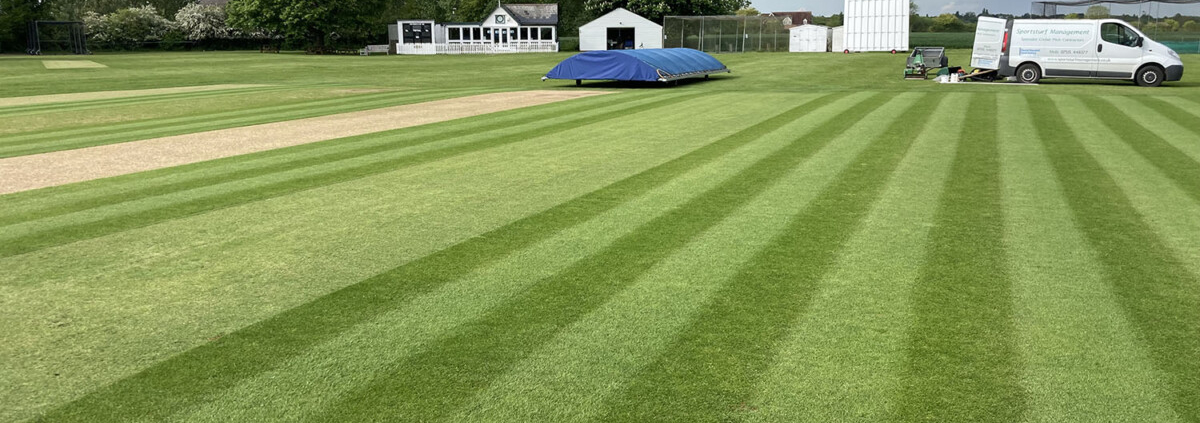
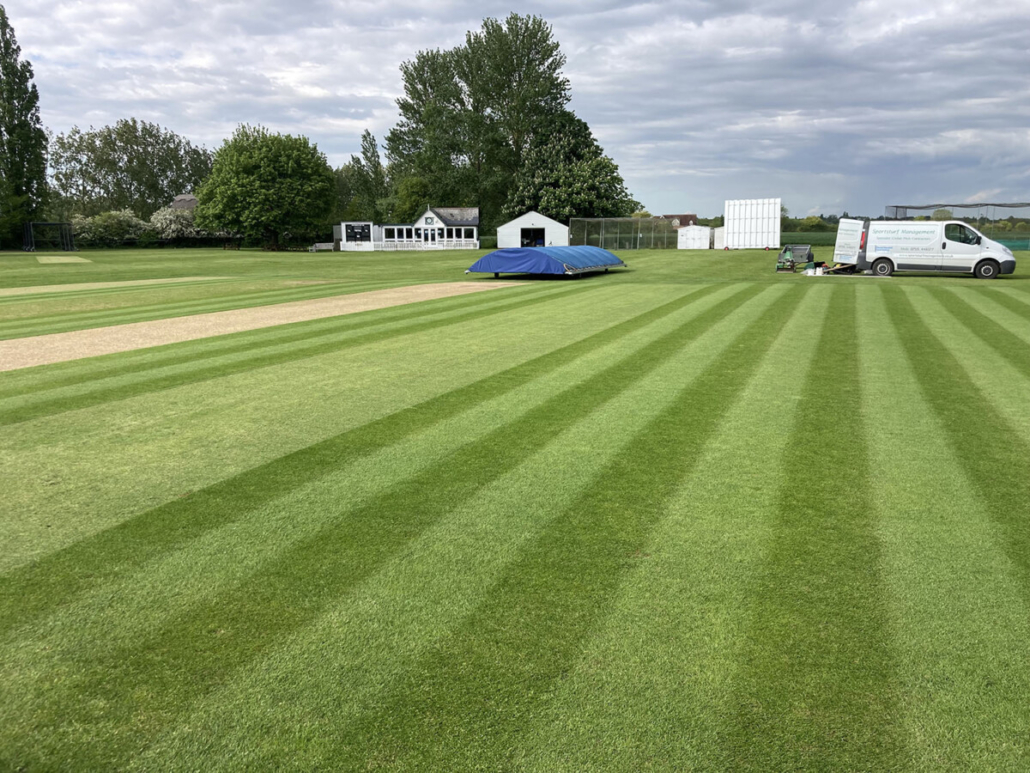
No sleepless nights with MM50: Jamie Foyster, owner of Sportsturf Management, has revealed that he has been sleeping that little bit easier since using MM50 grass seed.

Jamie began maintaining cricket pitches at the age of fifteen and has done so his whole life. In the early years it started as a hobby but in 2012 he acquired Sportsturf Management and has worked full-time on cricket pitches ever since.

No sleepless nights with MM50

No sleepless nights with MM50

Sportsturf Management currently provides all year-round pitch management for four clubs as well as carrying out end of season renovations for approximately twelve more. When Jamie is not providing first class management, installation, and repair of cricket pitches, he somehow finds time to be the Chairman of the Essex County Groundsman Association.

Jamie first turned to MM50 ten years ago after trialling various brands of seed. It was the seed which impressed him the most and he has used it ever since.

MM50 possesses exceptional shoot density along with tolerance to close mowing making it particularly suitable for cricket squares. This superior mix contains the perennial ryegrass cultivars, Singapore, Venice, Alison and Malibu, which are renowned for providing a great sward for cricket use. Singapore is a fantastic cultivar for cricket partly due to its ability to recover from play and wear very quickly meaning that wickets can be back in play quicker after use.

“We use MM50 across all of the grounds we look after,” said Jamie. “For the end of season work we will generally overseed every square – and then during the season, there might be a few ends which need topping up a little bit just to thicken them out. We might also use it later in the season to get the grass back in the foot holes to repair them and level them off.

“In terms of the grass plant the MM50 produces, you get very good root depth and density, which gives it its brilliant wear tolerance. I have one pitch where they had six days of cricket and between the five-foot markers, the important bit in the middle of the pitch, it was still good grass coverage. This shows you how strong the plant is and that’s what you want, because sometimes the weather dictates that you must use a pitch more than you want to.”

MM50 is also treated with HEADSTART® GOLD – a unique seaweed-based seed treatment which helps to ensure rapid and even germination. This tried and tested grass seed treatment helps the seed get off to the best possible start – making it ideal to use in the less than favourable conditions that can sometimes be found on cricket pitches during renovations.

“When there is rain, I can get MM seed up to about an inch within a week and that is without a germination sheet or a pre-seed fertiliser,” continued Jamie. “MM50 germinates really quickly, and you don’t have any sleepless nights.

“We also get great customer service which helps, and Matt Gresty (MM Sales and Brand Manager) is so down to earth. I’m a small customer that doesn’t compare with some of the massive sites that use MM seed, but Matt often calls me to find out how everything is going and is always quick to offer his advice.”

For further information, please contact MM Sports Seed on 01386 791102 or visit the company’s website www.mm-seeds.co.uk.

You can also follow the company on Twitter: @MM_Seed.

For the latest industry news visit turfmatters.co.uk/news

Get all of the big headlines, pictures, opinions and videos on stories that matter to you.

Follow us on Twitter and Instagram for fun, fresh and engaging content.

You can also find us on Facebook for more of your must-see news, features, videos and pictures from Turf Matters.

No job impossible for Can-Am Traxter

No job impossible for Can-Am Traxter: BRP is expanding its Can-Am off-road side by side vehicle (SSV) line-up with the addition of the new Can-Am Traxter 6×6 DPS HD10. This new unit delivers the functionality of a six-wheel drive vehicle to a workhorse SSV and will present new job opportunities in multiple sectors including farming, estate management, and facilities maintenance.

This combination ensures the Traxter 6×6 DPS HD10 can handle everything from hauling machinery to transporting workers and equipment to job sites, while providing owners with the comfort, power and performance that is expected from a Can-Am Traxter.

No job impossible for Can-Am Traxter

No job impossible for Can-Am Traxter

The new SSV enhances the comfort and control of the original Can-Am Traxter with the help of its longer wheelbase and triple axel design, which spreads the weight of the vehicle so that it treads carefully across multiple terrains. This ability is complemented by the performance of the 82hp V-twin liquid cooled engine from Rotax® and ensures that no destination is out of reach.

The Can-Am Traxter 6×6 DPS HD10 also provides owners with class leading towing, payload and cargo capacity that come in at 1,360kg, 771kg and 454kg respectively. These capacities are aided by the extended cargo box, which allows it to carry more goods and equipment. The integrated design elements include the LinQ quick-attach system, built-in anchors, tie-down points and recesses for easy box separator solutions, which make it easy to customise the vehicle for the job at hand.

In addition, its 40-litre fuel tank makes it a work-ready vehicle that can spend hours performing without the need to come in to refuel.

When it comes to the interior, the SSV’s roomy and intuitive cockpit has been designed by Can-Am’s R&D team with functionality and comfort in mind. This is highlighted by the cab pillars being pushed forward, an open-dash configuration, and a truck-inspired VERSA-PRO bench seat that accommodates up to three adults and flips up for additional space in the cab.

James Dalke, BRP commercial manager UK and Ireland, says, “The Can-Am Traxter 6×6 DPS HD10 has been designed to be used across multiple industries and terrains, which means it will never be out of work. In addition, we believe this SSV will instantly improve job productivity and efficiency through its ability to carry and tow more and access hard to reach areas that other SSVs might not be able to reach. It is also the next logical addition to our innovative utility SSV line-up and we look forward to it helping open up new sales opportunities for our growing dealer network, which, in turn, will help us grow our share of the utility market.”

For the latest industry news visit turfmatters.co.uk/news

Get all of the big headlines, pictures, opinions and videos on stories that matter to you.

Follow us on Twitter and Instagram for fun, fresh and engaging content.

You can also find us on Facebook for more of your must-see news, features, videos and pictures from Turf Matters.