Tag Archive for: Number

Battery power becomes number one equipment choice

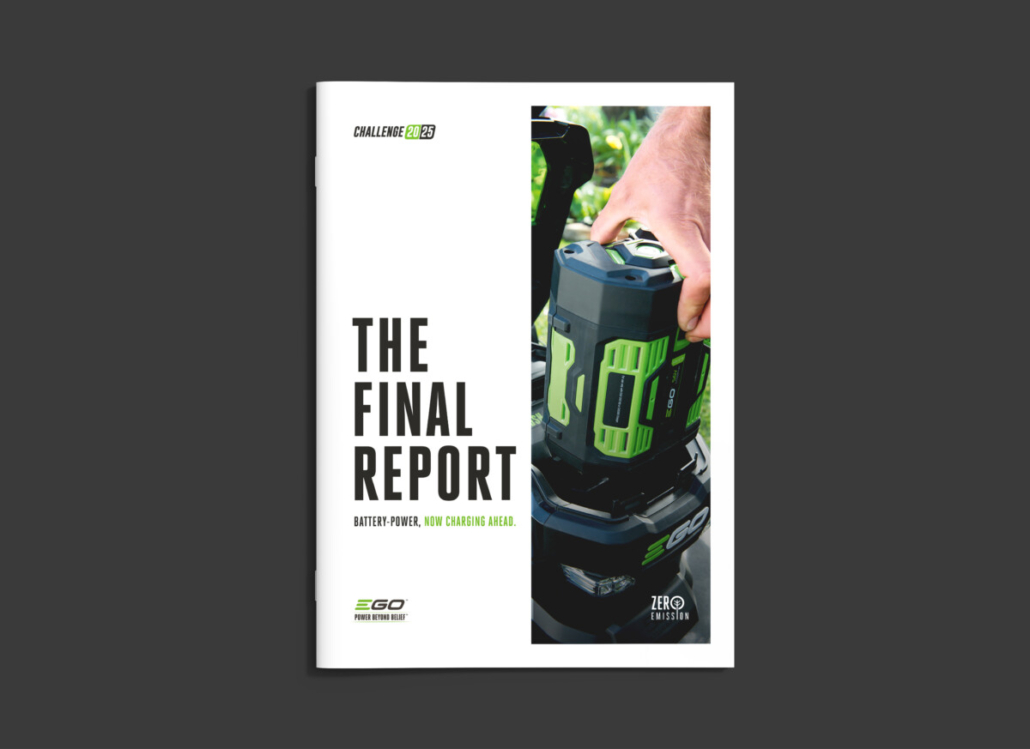
Battery power becomes number one equipment choice: After five years of educating domestic and professional users on the environmental, health and performance benefits of battery-powered outdoor power equipment, EGO has now concluded its Challenge 2025 campaign with the release of a new whitepaper.  

Summarising years of research and awareness activity from EGO, the whitepaper also includes research from industry trade body, the European Garden Machinery Federation (EGMF). The data shows that between 2019 and 2024, the percentage of petrol-powered equipment in use across Europe fell from 36% to 24%. In sharp contrast, electric cordless equipment almost doubled in use, rising from 28% to 48%.

Battery power becomes number one equipment choice

Battery power becomes number one equipment choice

This is mirrored exactly in sales of new equipment, with electric cordless rising from 33% to 58%, and petrol falling from 40% to 26%.

Drawing on five years of campaign insights, field data, and market research, the whitepaper also explores results from emissions, noise and vibration testing from independent testing specialists, and evaluates whether EGO’s vision to establish battery power as the principal power source for outdoor power equipment, was reached.

Vince Brauns, Group Product Director, for EGO, said: “Our latest whitepaper shows clearly that our Challenge 2025 vision for battery power had a clear and significant impact on the industry. When we began the campaign, battery power was seen as a compromise. Users who had used petrol for decades; could not believe that this new technology could give them the power, performance or runtime that they were accustomed to, and all without the strong fumes, loud noise or high vibrations. With misconceptions at their highest, we decided that it was time to show users the impact that using petrol tools was having on themselves and the environment around them.”

Challenge 2025 was launched in 2020 with one goal in mind: to educate and empower change in domestic and professional outdoor power equipment users to make battery the principal power source and leave petrol in the past. The hope was that by educating users about the advantages of using battery-powered outdoor power equipment, EGO could dispel misconceptions, reduce emissions and noise pollution, and increase user comfort and safety.

All these things were achievable with the technology available in 2020; however, a lack of awareness about the harmful nature of petrol, combined with uninformed perceptions of battery power, meant that mindset was a barrier to change. But now, as technology continues to advance, and with calls from industry bodies such as the Climate Change Committee to reduce greenhouse gas emissions, it is clear the market is shifting in favour of cleaner, quieter and safer equipment.

Vince Brauns continues: “The campaign has enabled us to advocate for battery power in both the UK and European markets and has ultimately helped to reposition battery-powered tools from a niche alternative to a staple choice. While there is still a minority who will choose petrol-power over battery-power, due to the data-backed information we have shared over the past five years, the conversation has fundamentally changed.”

Working with specialist partners, this powerful and thought-provoking campaign commissioned market research to understand the attitudes and perceptions of over 1,200 outdoor power equipment users, evaluated the performance of petrol and battery-powered tools against noise, vibration and emissions, made Freedom of Information requests to understand the use of petrol tools by local authorities in Clean Air Zones and generated extensive press and social media coverage to heighten awareness.

While Challenge 2025 was successful in bringing battery power to the forefront of the industry, as the principal power source for outdoor power equipment, this is only the beginning of securing a cleaner future for generations to come.

The whitepaper, The Final Report: Battery-power, now charging ahead, is available to download at: https://egopowerplus.co.uk/about-ego/environmental-ethos/challenge-2025-final-report

For the latest industry news visit turfmatters.co.uk/news

Get all of the big headlines, pictures, opinions and videos on stories that matter to you.

Follow us on Twitter and Instagram for fun, fresh and engaging content.

You can also find us on Facebook for more of your must-see news, features, videos and pictures from Turf Matters

Increase in Number of Tree Shelters Collected and Recycled

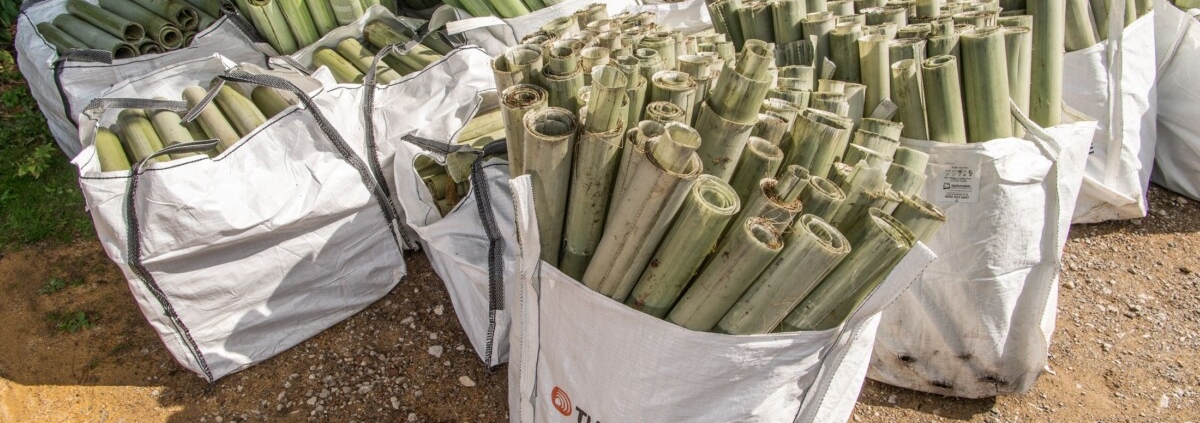
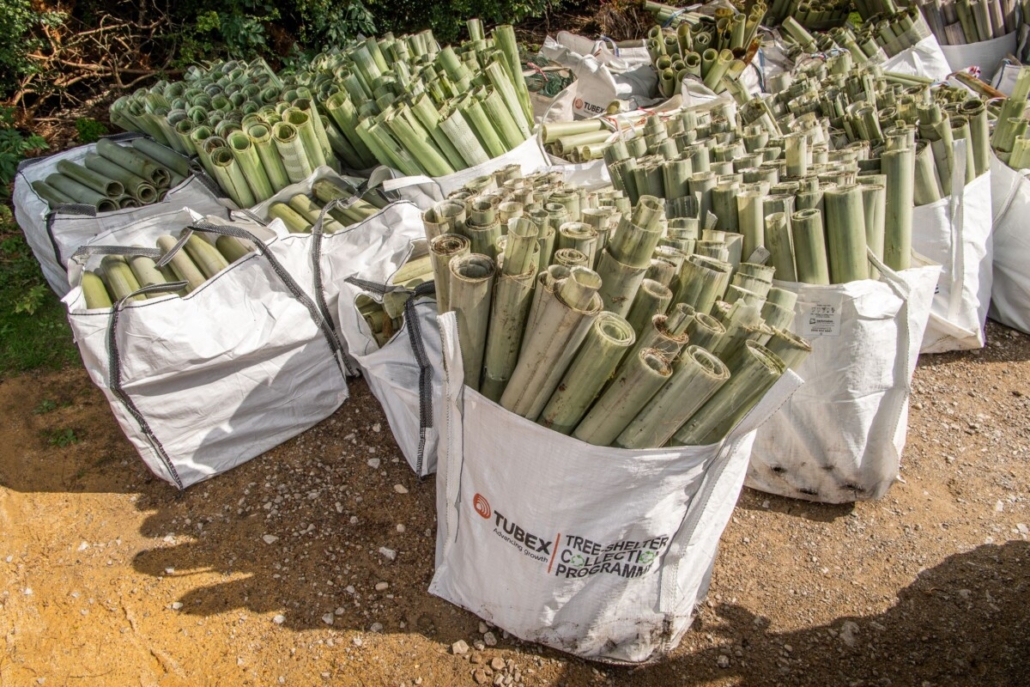
Increase in Number of Tree Shelters Collected and Recycled: Tubex®, a Magnera brand, has announced a significant growth in the use of its Tree Shelter Collection & Recycling Programme. The first of its kind scheme saw a 39 percent increase in the number of shelters returned and recycled in 2025 compared to previous year, with the Programme now close to a milestone of two million shelters collected and recycled.

At the end of the 2025, 1,982 dumpy sacks of collected tree guards had been returned to Tubex®, up from 1,421 in 2024.

Increase in Number of Tree Shelters Collected and Recycled

Increase in Number of Tree Shelters Collected and Recycled

Once collected, the tree shelters are sorted, washed and reprocessed back into raw material, at an impressive yield of 95.6 percent – meaning that 95.6 percent of the collected shelter material can be used to manufacture new product.

For Pete Stevens, Business Development Manager at Tubex®, the 2025 figures reinforce the long-term success of the Programme and its national hub network.

“Last year, we announced that since the start of the Collection & Recycling Programme in 2022, we had recycled more than 1 million tree shelters.  With these figures, we are now approaching the 2 million milestone – a testament to the collective endeavour of the forestry sector to collect used shelters at end of life.”

Polypropylene (PP) shelters containing recycled material that are recycled at end of use are still the lowest environmental impact option (Independent LCA study here: https://discovery.ucl.ac.uk/id/eprint/10130156/) and represent a circular use of materials which is a key pillar of sustainability.

With a growing network of 24 recycling hubs nationwide, Tubex® has collaborated with its distributors and various forestry organisations to create accessible and convenient free drop-off points for legacy tree shelters.

Hub partners include Yorkshire Dales Millenium Trust, Forest Working Plastics Group, Tilhill, Maydencroft, British Hardwood Tree Nursery, Ashlea Landscaping and Green-Tech among others.

For more information visit – https://tubex.com/sustainability/tree-shelter-collection-recycling-programme/

For the latest industry news visit turfmatters.co.uk/news

Get all of the big headlines, pictures, opinions and videos on stories that matter to you.

Follow us on Twitter and Instagram for fun, fresh and engaging content.

You can also find us on Facebook for more of your must-see news, features, videos and pictures from Turf Matters

Metrac H75 is number 15

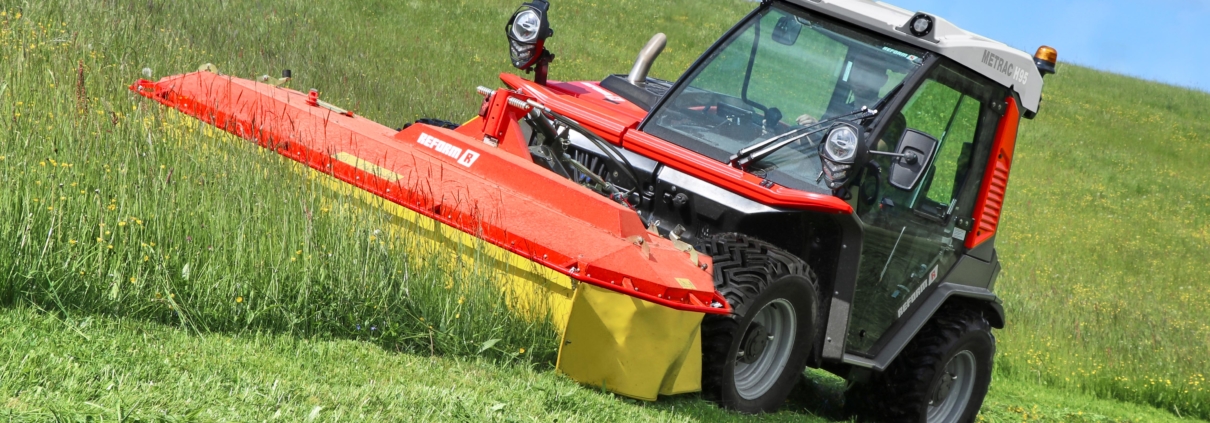
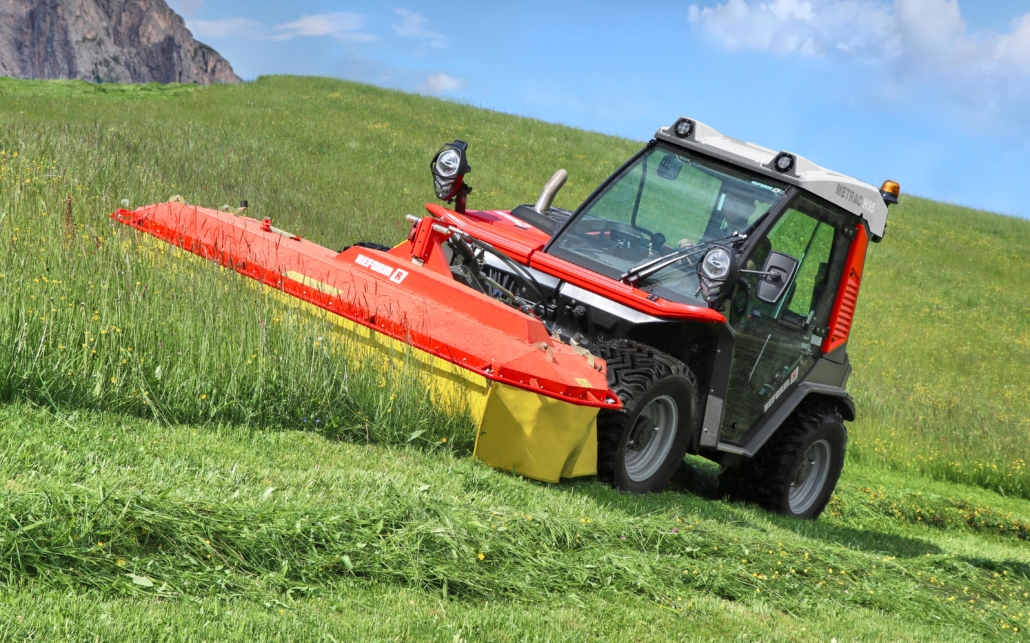
Metrac H75 is number 15: The Stuart Taylor International dealership has recently supplied an additional compact, hydrostatic drive, Reform Metrac H75 pro to Cheshire based contractor Ray Britland. 

For Stuart Taylor International, Tom Taylor said, “the Reform H75 Pro model was voted tractor of the year at EIMA 2021 and is proving to be a real hit with customers for a wide range of tasks” Ray Britland added, “we currently have fifteen Reform Metracs on our fleet. A large percentage of our work is on sloping terrain and the muti functional H75 pro delivers both perormance and operator safety”

Metrac H75 is number 15

Metrac H75 is number 15

Simon Richard, UK Agent for the Reform range says, “the H75 model meets all end user requirements, including versatillity and environmental friendliness. Hydrostatic drive with electronic control offers two speed ranges, two terrain gear reductions and foot and hand drive modes. When four-wheel steering is active, the front and rear wheels run exactly in the same line, ensuring tension-free traction on more difficult terrain. Front, rear, four wheel and crab steering as well as offset four-wheel steering can easily be switched at the push of a button. The system is completed by the electro-hydraulic spring brake with an auto hold function which allows smooth and judder-free setting off on slopes.

The new H75 also offers powerful working front and rear hydraulics with 1500kg lifting force and standard weight compensation and the high efficiency of the electro-hydraulic power shift PTO provides power precisely when needed. Operator comfort is catered for with a newly designed cab which has been completely decoupled from other vehicle components. This results in a major reduction in noise level and significantly lowered vibrations. The ergonomic armrest with it’s central controls forms the basis for easy operation of the new Metrac H75. It is attached to the driver’s seat, allowing fatigue-free working on any terrain, without interference from vibrations or slopes. The multi-function joystick combines all functions for driving and controlling attachments.” For more information visit www.slopemower.co.uk

For the latest industry news visit turfmatters.co.uk/news

Get all of the big headlines, pictures, opinions and videos on stories that matter to you.

Follow us on Twitter and Instagram for fun, fresh and engaging content.

You can also find us on Facebook for more of your must-see news, features, videos and pictures from Turf Matters.

Nitrogen… more than a number on a bag

Nitrogen… more than a number on a bag: I recently asked someone what they would do if they wanted to feed their turf for a long period of time from one application of fertiliser? The answer given was that the higher the number of N on the analysis, the longer it will last…

So will the analysis, 21.0.0 last longer (longevity) than an 18.0.0? I’m afraid if you answered yes then, well… you aren’t right or wrong, you just don’t have enough information yet. Let’s explore the rationale behind that and why it is important.

I’m sure everyone reading this understands the cost of turf nutrition has significantly increased in the last twelve months! For that reason, I wanted to take this opportunity to bring us back to basics. I want to refresh everyone on the importance of correct selection when it comes to Nitrogen Sources (N), where we find this information and why it really is the most important thing to understand to get the maximum value and performance out of your fertiliser.

The Main Nitrogen Sources for Turfgrass

Nitrogen is, by a long way, the most important and influential input we provide to our turf. It provides the building blocks of plant growth and development. Due to surface usage and necessary but stressful maintenance practices, we often must supplement our soils with Nitrogen based fertilisers to help our turf grow and perform. These fertilisers come in many shapes and sizes. I have set out below, the basics and what to expect if we apply them. However, if you are interested in more detail, I encourage everyone to research it, in particular, the Nitrogen Cycle, and how each form of nitrogen behaves in respect to it.

Disclaimer: I have selected what I believe are the most common sources of Nitrogen used in turf. I fully accept there are others but to keep it short and simple I have chosen the majority.

  1. Soluble Plant Available Nitrogen (Synthetic/Mineral)

These are water soluble forms of nitrogen that, when applied to the turf, are immediately (or almost immediately) available to the plant. Typically, this source is most useful when soil temperatures are low as microbial activity is required for other N sources to be broken down to available forms for the plant. Nitrate, (and when conditions allow, Ammonium) are the forms of Nitrogen taken up by plants and can come in many substances such as Ammonium Sulphate or Calcium Nitrate. Each have additional affects due to their components. i.e., ammonium sulphate also contains 24% sulphur and has an acidifying effect on the soil. Nitrate won’t last long though, due to its solubility and negative charge, it quickly leaches through the profile. Expect these forms to last 2-4 weeks depending on conditions and soil type.

Urea in its pure form, is a water-soluble form of N that, in warmer conditions, is very quickly made plant available as it requires the activity of soil microbes to convert it to plant available ammonium N. For this reason, it can be unpredictable in spring, and it is commonly used in summer/autumn fertilisers. Therefore, although volatilisation (loss of nitrogen as ammonium gas to the atmosphere) is slower in cold temperatures, if urea cannot be quickly converted to ammonium carbonate a significant portion can be lost to the atmosphere, an expensive mistake in the current economic climate. Urea is also popular as it makes a fantastic tank mix partner due to its extensive hydrogen bonding (highly soluble). Expect 4-6 weeks longevity from urea (depending on conditions) with it taking slightly longer to show a turf response than say, ammonium sulphate. It is rarely applied to turf in uncoated granular form due to its high salt index increasing the likelihood of scorch/salt stress.

The problem occurs on labels (if detailed), where any urea, regardless of the form, is referred to as “UREIC”. As we will find out, this can mean many different things.

  1. Synthetic Nitrogen (Slow Release)

Methylene Urea. A similar story to regular urea by which it requires the action of soil microorganisms. However, the production process creates a variety of longer chain molecules. This provides a predictable, slow, longer-term conversion to plant available N thus giving an even growth pattern. This makes them very popular in turfgrass environments where predictable growth patterns are important for performance, such as golf greens and sports pitches. Depending on the formulation and amount of MU, expect anywhere between 4-12 weeks longevity from these fertilisers. It is a very safe, low salt N source, available in both liquid and granular forms.

Thanks to its advanced production process, AGS Growth Products Smart Nitrogen™ contains more longer carbon chain molecules than other methylene urea molecules meaning it provides superior growth predictability and longevity (figure 1). Growth Products also pride themselves on providing end users with every piece of information they need by producing some of the most detailed labels on the market. This helps to ensure turf managers achieve the desired outcome with their fertiliser application (figure 2). Labels are not always this clear, they can be very vague, only stating the analysis. If this is the case, speak to your supplier and find out exactly what is in your fertiliser, be it granular or liquid.

Figure 1: The release curve of Growth Products Smart MU vs standard Urea based products. It provides a longer, more predictable release of N than regular Urea.
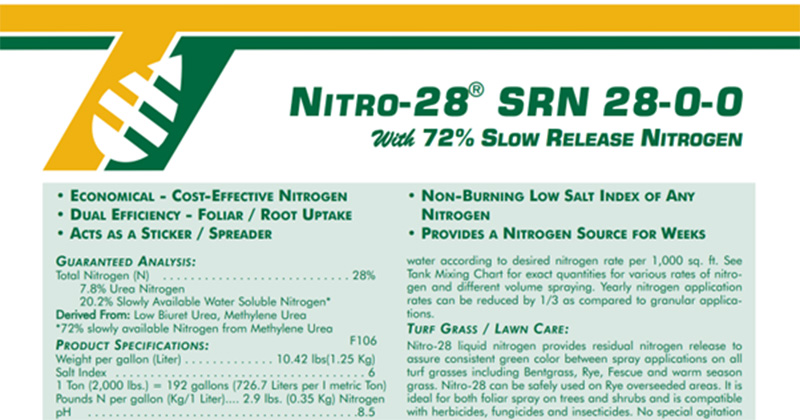
Figure 1: The release curve of Growth Products Smart MU vs standard Urea based products. It provides a longer, more predictable release of N than regular Urea.

Figure 2: An excerpt from Growth Products Nitro-28. This is just a small amount of the detail printed on our labels. Many other products will not provide this information, but it is important you know it.

Figure 2: An excerpt from Growth Products Nitro-28. This is just a small amount of the detail printed on our labels. Many other products will not provide this information, but it is important you know it.

  1. Organic Nitrogen (Slow Release)

In a fairway situation, where clippings are not removed, organic matter provides most of the nitrogen for turf growth. Mineralisation takes care of excess organic matter, converting it to plant available N. However, in managed turf, particularly where clippings are removed, we may wish to provide supplemental organic nitrogen.

Organic fertilisers should be from materials derived from a living (or previously living) source, such as plants and animals. Be careful, this is a common place where cheaper mineral fertilisers can be passed on as more expensive organics by including small amounts of organic nutrients. The E.U. has some fairly lose rules when it comes to classification of organics. For example, to be classified as an Organic Solid, the product must contain a minimum of 15% Organic Carbon. To be classified as Organo-Mineral Fertilisers, Organic Carbon should be a minimum of 7.5% and Organic Nitrogen greater than 0.5%. Very easy to see how many so-called “organics” are not what they seem on the surface.

Granular organic nitrogen sources, such as Sustane, generally take between 4-8 weeks to breakdown leaving behind valuable soil building organic materials among other benefits that are extensively documented. They are also available in liquid forms. However, organic liquids are water soluble nutrients derived from organic sources (such as animal waste), therefore you extract the nutrients and leave the other valuable organic materials behind. They do not require the level of breakdown via microbial activity and have less beneficial effects on soil health.

When it comes to organic fertiliser, make sure you read your labels, with any luck they will clearly state the percentage of Water Insoluble Nitrogen (WIN: This is your true organic part) and provide the organic source. For example, Sustane, contains mainly anaerobically composted turkey litter to supply the organic nutrition to the turf. The percentage of these are always clearly stated on our labels (Figure 3). Don’t be fooled here. Read your label and make sure you are happy with the amount of actual organic you are applying. If it’s not on the label, ask your supplier.
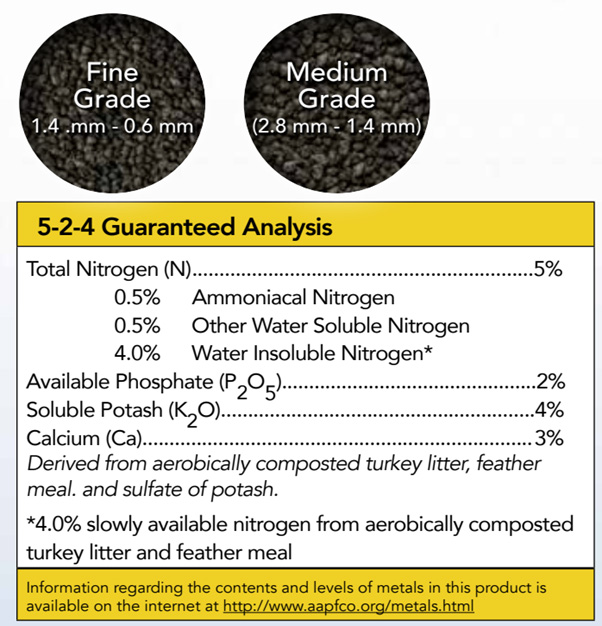
Figure 3: Guaranteed Analysis of Sustane 5-2-4. Detailed information is so important when it comes to Organic Fertiliser.

Figure 3: Guaranteed Analysis of Sustane 5-2-4. Detailed information is so important when it comes to Organic Fertiliser.

  1. Controlled Release Nitrogen

There is then a whole host of controlled release Nitrogen sources. Only available in granular form, meaning they are usually not feasible for fine turf, they consist of materials such as resin or polymer coated urea prills which rely on moisture, temperature and/or microbial activity for release. The most useful characteristic of these fertilisers is that release patterns can be long-term and predictable depending on the type and thickness of coating used. This is a popular choice for areas of turf that need regular nutrition without the ability/necessity to be applying regularly. Products range from 2-6 months in longevity and should come with a guide from your supplier on how long you can expect it last. Again, with urea-based products, the label is unlikely to help as it may all be stated as “UREIC”. This does not give us an accurate picture, there should be multiple grades of coated urea that help provide a smooth nitrogen release curve over the specified time. This is where supplier information is essential, make sure to ask them how the controlled release urea is formulated, as often a timescale in a catalogue can be misleading. This will ensure you meet your goals when it comes to long term, minimal application, turf nutrition.

Summary

I hope you can all see the importance of knowing your nitrogen source. Depending on your turf nutrition goals, we quickly start to see where proper selection fits in. Understanding how the source of nitrogen used will interact with the soil and therefore, the plant, is extremely important. If you are looking for a fertiliser that will last 2-3 months, then understanding that a product containing mainly ammonium sulphate won’t do the job. Similarly, if you are looking to give your turf a kick in spring then it would be a good idea to avoid anything containing too much urea or organic nitrogen. Whilst we can normally rely on suppliers to guide us, it is an essential piece of information that all turf managers should be aware of and regularly reviewing. Keep in mind that most fertilisers contain a blend, or formulation, of multiple N sources depending on the desired outcome.

A little on the underlying agronomics

I could go on about the intricacies of turf nutrition all day! I won’t. However, I would like to leave you with a parting piece of advice when it comes to your soils and nutrition. Get your pH tested! pH, or the acidity or alkalinity of your soil, plays a huge part the efficacy/availability of your nutrition and in turn the grass species that will grow favourably. Because of the way we maintain turf (particularly the use of fertilisers containing ammonium salts), we slowly (sometimes quickly) lower our pH. If acidity increases too much, availability of nitrogen, phosphorus, calcium, potassium and magnesium decreases. This also increases availability of toxic elements such as aluminium and manganese. Below pH 5-5.5, our desired grass species may start to show increased levels of stress. pH monitoring is important to all turf surfaces but is particularly important in sandy rootzones where pH changes quickly due to low CEC. Low pH also has a negative effect on our soil microbial activity thus further decreasing the efficacy of our nutrients that rely on them to breakdown nitrogen sources not immediately available to the plant.

So, absolutely, study your fertiliser labels/information and make sure that what you are buying matches your required outcome. But ultimately, if pH is not in the correct range, you could be missing a big piece of the puzzle. AGS believe in providing the very best customer service. We are happy to provide soil samples, including pH, free of charge. Contact us today if you would like a visit from our in-field technical team.

In conclusion, to go back to the question I asked at the start, we still don’t know if a 21-0-0 will last longer than a 18-0-0. The analysis (N-P-K) is a necessary piece of information when it comes to calculating the number of units applied, still an important exercise, but not the full picture. What we should be doing is reading our labels and asking our suppliers for more information. Then we can sit down and work out exactly what we want, and expect, from our Nitrogen inputs. This will help us make informed, agronomic, and economical decisions about the nutrition we apply to our turf, and hopefully squeezing every penny (Unit of N) as far as it will go.

For the latest industry news visit turfmatters.co.uk/news

Get all of the big headlines, pictures, opinions and videos on stories that matter to you.

Follow us on Twitter and Instagram for fun, fresh and engaging content.

You can also find us on Facebook for more of your must-see news, features, videos and pictures from Turf Matters.

Green speed more than a number

Green speed more than a number: At The Open this year the green speeds measured at 10’1”, 10’2”, 10’3” and, with the threat of rain on the horizon, were slowed to 9’11” for the final day, with all 18 greens stimping within just 4 inches of each other. With that in mind, Golf Magic teamed up with BIGGA to learn more about green speeds…

BIGGA remains obsessed with the speed of our greens, with the implication for the golfer being that faster greens are saved for special occasions, such as club championships. As such, if you’re able to achieve those high speeds in everyday life, then yours must be a high-quality course, right?

Green speed more than a number

But how important are green speeds? Do they matter?

One of the most important innovations in golf course preparation since the 1970s was the stimpmeter. A stimpmeter is a simple device consisting of a long, narrow metal tray that enables greenkeepers to consistently replicate the roll of a ball across a green. It was introduced by the agronomy department of the USGA and is commonly quoted as an effective means of measuring speeds – you may have heard commentators at events discussing how fast the greens were “stimping” at.

However, measuring speed isn’t actually the stimpmeter’s true purpose. Tellingly, the device’s instruction manual reads: “the variations in speed, whether from one green to the next or on different parts of the same green, can do more to negate a player’s skill than ragged fairways or unkempt bunkers”.

That’s the leading authority for golf in the United States saying that consistent greens are more important than fairways, bunkers and even ‘fast’ greens. In fact, the pursuit of faster speeds by lower cutting heights often leads to the detriment of the putting surface, reducing consistency and “negating a players’ skill”.

The enjoyment of the average golfer also reduces as green speeds increase as nobody wants to keep three or four putting as their ball skids past the hole. In terms of pace of play, as little as a one-foot increase in speed can slow the pace of play by more than seven minutes per foursome.

If speed isn’t important, and consistency is, then what’s a ‘good’ standard of consistency across a golf course?

Well, like most things, that depends on the resources available to the greenkeeping team.

Dr Micah Woods is chief scientist at the Asian Turfgrass Center and he has undertaken a study to discover what the average differentiation is across golf courses. Taking 961 measurements at clubs in East Asia and America, he brought together a database of stimpmeter readings. He made three measurements on at least three different greens to come up with a ‘standard deviation’ of golf speed across each course.

Dr Woods said: “The ideal would be a standard deviation of zero, but that is only going to happen by accident because green speed will always vary, even slightly. But I wanted to find out what difference in speed was reasonable to expect? I discovered that 0.3 was the average, meaning that half of the data I gathered was below 0.3 and half was above it.”

He came up with a magic number of 0.3 feet or 3.6 inches. This means that if a greenkeeper reports a speed of 9 feet, the average speed on the course will actually be between 8.7 feet and 9.3 feet. And that’s just an average number for all 18 holes, so the actual spread will be wider than that.

And half of the golf courses Dr Woods measured had a standard deviation of more than 3.6 inches, with one measuring up to 1.5 feet. Consistency, it seems, takes incredible skill to achieve.

At the Ryder Cup in 2016 at Hazeltine, the green speeds for the three days of play were 12.4, 12.4 and 13.4. These are extreme tournament conditions at an American golf course prepared for one of the most televised sporting events in the world and as such there are an army of greenkeepers and volunteers working to get the course to incredibly high standards.

And yet as the green speed increased, Dr Woods discovered that the variability of speed across the greens also increased and the putting surfaces became less consistent. On the final day, with a reported speed of 13.4 feet, one green was even recorded as having an actual speed of 15 feet. That’s a difference of more than 19 inches!

So faster greens are also less consistent greens.

It was a trend that is echoed across every golf course, no matter the budget or resource. For consistency to be achieved, it’s Dr Woods’ opinion – and an opinion shared by the turf management industry – that we should stop obsessing with green speeds.

Rather than making a demand of your greenkeeper that you’d like to see greens ‘stimping’ at a certain amount ahead of the club championship, wouldn’t you rather see them concentrate on achieving greater consistency across the course?

“In visiting hundreds of golf courses, I’ve observed that green speeds are always given as a single number and I’m actually not going to advocate that we change that,” explained Dr Woods. “For the members and the guests who are coming to play a facility, it’s useful just to report a single number, that’s all they need to know.

“But I believe that turf managers should secretly keep the additional information to themselves. By making an explicit measurement of variability across their greens, they can identify problems and opportunities to improve that uniformity.”

If we’re to look at golfer enjoyment, what level of consistency can players actually perceive out on the course? A study by American professors Thomas Nikolai, Douglas Karcher and Ron Calhoun in 2001 concluded that the average golfer is unable to detect a six-inch variation in speed from one green to another and therefore that is “probably a fair definition of consistency on a golf course”. Anything less than six inches and your regular amateur golfer won’t be able to perceive the difference.

So which was the most important measurement at The Open? Was it the slower speed on the final day? In truth, the most important figure quoted is the 4” differentiation as it highlights an incredible degree of consistency. Across 18 holes on a links venue in changeable weather conditions, the greenkeeping team was able to achieve a margin of error of just four inches.

The greenkeepers at your course almost certainly won’t be able to achieve that level of consistency, and it’s unreasonable to even ask them to strive towards such levels. But the important thing to know is that they’ll have more chance of achieving consistency – and you’ll enjoy your round more – if unrealistic demands for ‘faster greens’ aren’t made.

Click here to read the original article

For the latest industry news visit turfmatters.co.uk/news

Get all of the big headlines, pictures, opinions and videos on stories that matter to you.

Follow us on Twitter and Instagram for fun, fresh and engaging content.

You can also find us on Facebook for more of your must-see news, features, videos and pictures from Turf Matters.