Tag Archive for: Perfect

Fulford Heath’s Path to Perfect Turf with MM Seed

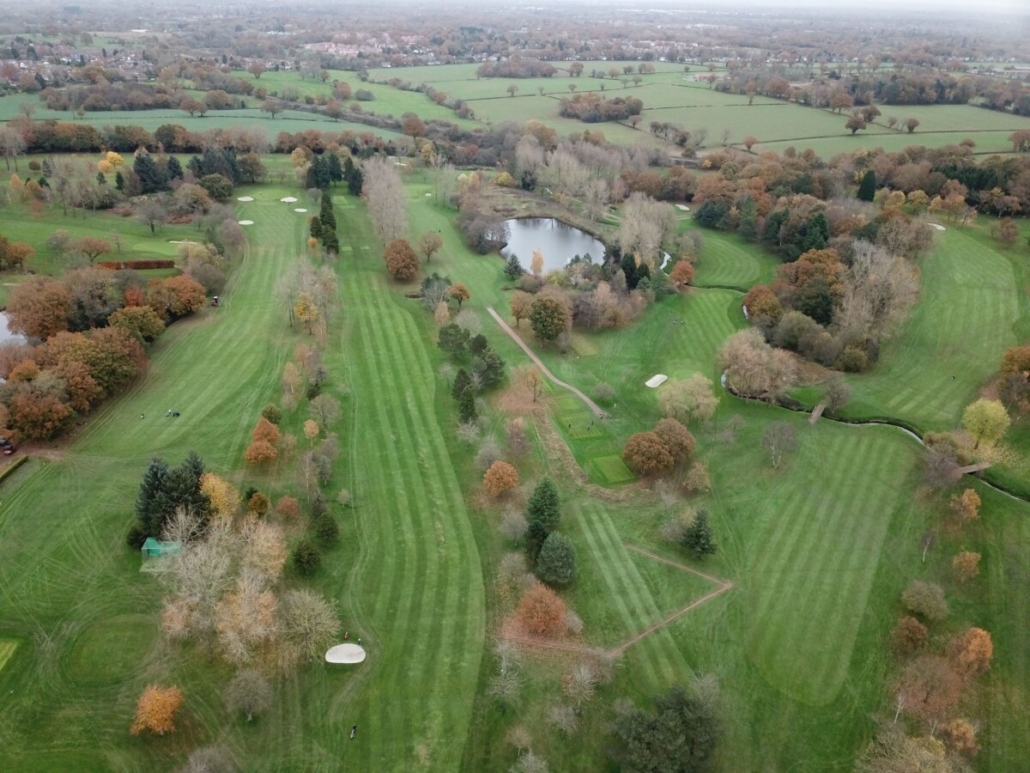
Fulford Heath’s Path to Perfect Turf with MM Seed: Kim Blake, Course Manager at Fulford Heath Golf Club in Birmingham, has been at the forefront of maintaining and enhancing the club’s renowned parkland course for the past 36 years.

Kim’s dedication to innovation has helped the club thrive and stay competitive. A key component of his maintenance programme? The consistent success of MM seed products.

Fulford Heath’s Path to Perfect Turf with MM Seed

Fulford Heath’s Path to Perfect Turf with MM Seed

Fulford Heath, designed by James Braid, spans just over 6,200 yards with a par of 70. Its strategic layout features the River Cole, mature trees, and lakes, presenting golfers with challenges that reward skill and strategy. Maintaining such a course requires precision and quality, and Kim has found these attributes in MM seed.

“I started using MM9 15 years ago because of the HEADSTART® GOLD treatment,” says Kim. This revolutionary coating ensures rapid germination, which was a game-changer for Kim. “I wanted to shift our greens from 100% Poa annua to a 60/40 mix of bentgrass and Poa annua, so I began integrating MM9 with top dressing,” he added.

Kim’s approach evolved as he experimented with mixing MM9 with sand, then using a Graden machine. “One thing I found is that sowing the seed deeper—between 6mm and 10mm—yields better results. It’s a theory from my agricultural days: deeper sowing protects the seed from frost lift, preventing root break,” Kim explains. This technique, combined with MM9’s superior quality, produced impressive results.

Kim conducted multiple trials to test MM9 against various creeping bent mixtures. “We did half a green with MM9 and the other half with creeping bent and repeated this on different greens. MM9 consistently germinated a day quicker, thanks to the HEADSTART® GOLD coating,” Kim notes.

“An advantage of MM9 is cost-effectiveness. It’s more economical than creeping bent, allowing us to apply more seed per square metre, leading to a better strike and building a stronger seed bank in the soil. After 12 months, MM9 proved to hold its own better than other mixtures.”

For Kim, the right seed choice extends beyond greens. “We recently switched to MM50 on our tees because modern golfers take larger divots, and a pure rye mix stands up to this better,” he explains. MM50’s blend of fine-leaved ryegrasses creates a dense, resilient surface that recovers quickly.

On the fairways, Kim relies on MM22 for its durability and reliability. “It’s great for overseeding, renovation, and construction—areas that endure high wear,” Kim adds.

Fulford Heath’s Path to Perfect Turf with MM Seed

Fulford Heath’s Path to Perfect Turf with MM Seed

Kim has also modified his approach to sand usage and overseeding schedules. “We’ve reduced sand use from 120 tonnes to 40 tonnes annually and plan to reduce it further next year. Instead, we focus on biology to control thatch and organic matter. This makes the greens work harder, enhancing the bent seed’s performance,” says Kim.

He overseeds in February/March at 40 kg per hectare, using a Graden sand injection machine or a disc seeder. “We’ll do more renovation work in October but won’t overseed, as temperatures are too cold. Since prioritising biology over intense aeration and sand, the bents have improved,” Kim shares.

Kim’s approach balances simplicity, cost-effectiveness, and long-term benefits. “My goal is to make the job straightforward for the staff and cost-effective for the club. If it’s too complex or costly, nobody is happy. Continuous tweaking and adaptation are key,” he concludes.

With MM seed products at the heart of his programme, Kim has transformed the maintenance strategy at Fulford Heath, setting a benchmark for highly efficient course management.

For further information, please contact MM Sports Seed on 01386 791102 or visit the company’s website www.mm-seeds.co.uk.

You can also follow the company on X: @MM_Seed.

For the latest industry news visit turfmatters.co.uk/news

Get all of the big headlines, pictures, opinions and videos on stories that matter to you.

Follow us on Twitter and Instagram for fun, fresh and engaging content.

You can also find us on Facebook for more of your must-see news, features, videos and pictures from Turf Matters.

The with man perfect pitch

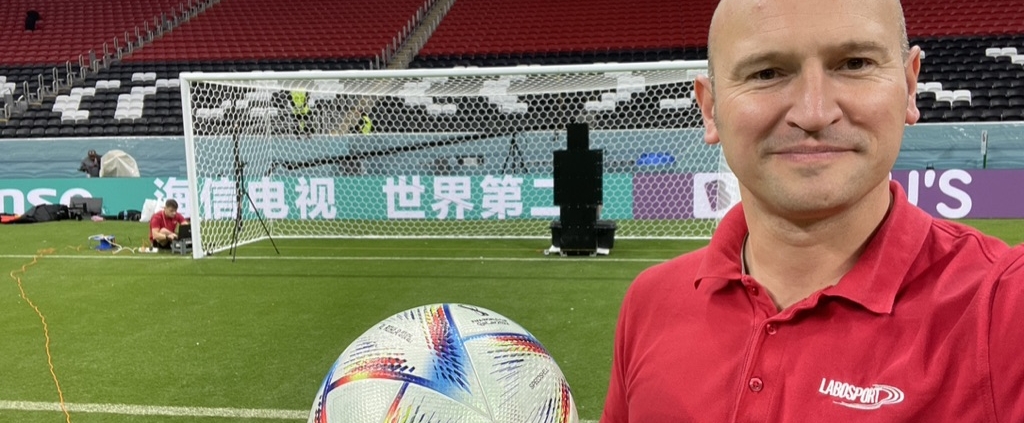
The with man perfect pitch: Scott MacCallum met up with CEO of Labosport, Professor David James, the man at the forefront of sports pitch development.

If we think back to sport in the 1970s there are two images that spring to mind. There was Ronnie Radford scoring a remarkable goal for Hereford United to defeat Newcastle in the FA Cup in 1972 and then England prop Fran Cotton playing for the British Lions, in Melbourne, in 1977, looking like the muddiest man you’ve ever seen in your life.

The with man perfect pitch

The with man perfect pitch

Both iconic sporting images, neither of which would ever be replicated today. Ronnie’s goal was incredible as he more or less shovelled the heavy leather ball out of the boggy pitch from 30 yards and into the top corner. John Motson’s commentary and Ronnie’s celebration are part of English football’s folklore, but do you really think that the game would have gone ahead in 2025?

And Fran. Same thing. Would a game that resulted in Fran turning into a monster from a B-movie horror ever have got past a modern day pitch inspection?

Different times and different standards, but I do think it is fair to say that most people forget just how far we have come in the construction, maintenance and preparation of modern day sports pitches. It is now rare for a pitch to become a game-defining issue and it would take a highly trained eye to identify whether a pitch was at the beginning or end of its particular season.

And alongside the development of natural turf surfaces is the quite extraordinary progress of synthetic pitches.

At the sharp end of much of natural and synthetic pitch development is Labosport, the international company which is a the forefront of testing, certification and consultancy on all aspects of sports surfaces. Since 1993 they have spearheaded the development of testing methods to raise the quality of sports surfaces and provide guidance on the design and construction of sports facilities.

And the man who is Labosport’s worldwide CEO is Professor David James. As you might imagine David is a busy guy. When I caught up with him, at Labosport’s unassuming UK Headquarters on an industrial estate on the outskirts of Nottingham, he had just returned from viewing some test pitches at Sheffield Hallam University and was about to head off to New Zealand. Air miles are not something for which he is short!

I first bumped into David at the Syn-Pro Seminar held at Loughborough University early last year where he started by saying that the very first synthetic sports surface was at the Houston Astrodome, in Texas, and had been installed in 1966 – the same year as some people ran onto a natural pitch in North London, thinking it was all over!

Given that David is a man with whom you could talk for hours and hours I decided to limit the bulk of the time to the subject he talked on at Loughborough – synthetics.

As a starting point I asked him that, if that Houston pitch were an Amstrad computer, where were we at now?

“I would say the Apple Mac Pro. However it’s still not a finished development. Looking at synthetic surfaces, they’ve really come on huge amounts in terms of playability, athlete welfare, skin injury risks and other injuries,” said David, adding that as with most industries sustainability is now very much the driving consideration.

As for a Eureka moment for the synthetic turf industry along that path from 1966 to 2024..

“I think the Eureka moment has to be the arrival of the so-called 3G. “The two key components of a 3G pitch are a longer pile. Rather than something that’s 25mm, it’s up at 50mm or 60mm.

“And then having an infill, which does a number of things. First of all, it keeps the fibres standing upright which allows players to wear studded footwear, because the infill allows the penetration of the studs. So it gives traction which is much more similar to natural turf and the ball bounce is more comparable to natural turf. You’ve got much more energy distribution so you don’t get very high bounce or very long roll.

“It really simulates natural turf much more closely than those early generations of pitch,” said David, adding that the original 1966 Astrodome pitch was much better suited to American football than it would have been for our more global version of the game.

And indeed those early pitches were still perfectly suited to a sport that has thrived since the introduction of synthetic surfaces – hockey.

But as development continued the understanding of the benefits of a high quality artificial pitch grew.

The key argument for synthetic turf is that that it can withstand up to ten times more playing hours than a natural turf field.

“That’s really important, as you can then look at the availability of land.

Among the reasons why synthetic turf took off so much is that you’ve got this all-weather playability. We don’t get fixtures being cancelled in February. It’s a sobering statistic that up to 50% of all football matches are cancelled in February in recreational football,” revealed David.

“Added to that rather than having ten football pitches you can have as many games on just one pitch. That literally frees up land. You can sell off your playing fields, perhaps for housing developments, and keep the one synthetic field because it can withstand the amount of use.”

But now having had 20 years when 3G pitches were the gold standard new heights are being reached and new quality levels achieved.

“We’re now looking at the next generation of pitch. What we’re looking at is having a shorter pile system, perhaps 40mm using less infill material and having a shock pad under the turf.

“Using less infill on the top and incorporating a shockpad underneath, you get synthetic surfaces which are more consistent than natural turf,” said David, adding that upwards of 35% of all the recycled tyres in the world get recycled into sport fields.

The EU have made a decision to effectively have a ban on the sale of granulated tyres for this use from 2031. The UK has yet to decide what they are going to do.

“There is a lot of work looking at alternative infill materials and there are many options including coconut husks, olive pips, ground walnuts, shells, corn on the cob, cork, wood chip.”

The with man perfect pitch

The with man perfect pitch

For a system to work everything has to gel – the shock pad, the carpet, the density of the pile, the amount of stabilising infill, the sand and how much performance infill there is.

“We’re now in a period where there’s going to be huge diversity in the market with these different infill materials, different shock pads, different pile lengths.

They’ve got different characteristics. They’ve got different price points. They’ve got different maintenance issues, different longevity. Some of the materials are very robust while others are more prone to deterioration over time.”

One previous area of concern was the level of injury which can be caused by playing on a synthetic pitch.

“I recently gave a speech at the SAPCA conference on the latest research into the injury risk to players from different playing surfaces. There are very strong perceptions among elite football players that synthetic turf has a highest higher injury risk.

“I don’t discount the player experience but, at the same time, I want to look at the data and there have been something like a 120 peer-reviewed scientific publications that have compared inury risk between synthetic turf and natural turf.

“Indeed here has been a recent systematic review, which took 53 of the highest quality studies from all over the world. It showed that there is no elevated injury risk on synthetic turf to natural turf for football. It did, however, show a slight elevation of risk in American football.”

Around about 10 years ago there were newspaper headlines, and some anecdotal evidence, that rubber crumb in synthetic pitches was causing cancer. However all research has since revealed that the level of potentially carcinogenic chemicals in recycled tyres is so low that it is deemed to be of no risk to humans.

Having taken on the global CEO role at Labosport 18 months ago, how did David find himself in such a key role within the sporting world?

“I actually trained as a mechanical engineer at the University of Sheffield, so for me it’s all about materials and how balls and athletes interact with the surface. That’s still my fundamental passion and I view a lot of these topics through the prism of engineering.

I’m not an agronomist, but I did my engineering degree and then a PhD that was funded by the England and Wales Cricket Board. I got to work with Bill Adams, who sadly recently died, He was a huge leading light in agronomy, and worked for the ECB, looking at cricket pitches.

“He was taking soil cores and looking at clay content while I was coming from an engineering perspective, looking at how balls bounced. It’s impact mechanics.

“I was using high-speed video to film balls bouncing and then characterising things such as the pace of the bounce. That got me going on the engineering of sports surfaces, The surface is fundamentally an engineered product, whether it’s natural or synthetic. Amazingly, my PhD actually became an important reference document on cricket pitches and the science of cricket pitches.”

David remained in academia for the next 15 years, focusing on how balls and humans interact with surfaces in all sorts of different ways.

“I was looking at footwear and worked with companies like Adidas, while working for the University of Sheffield and then Sheffield Hallam University.

“I ended up running the Research Centre. We had a great time during London 2012 as well, and did a lot of work with our Olympic teams, taking this engineering perspective around sports performance and understanding the sports environment. But my personal passion has always been the surface, always been understanding the playing surface or the running shoe.”

David joined Labosport six years ago and ran the UK side of Labosport. Then, a year and a half ago, he became CEO of the whole group.

Labosport has 16 laboratories in 11 countries but also has companies, such as PSD, Professional Sports Turf Design, TGMS. Outside of Europe there is Labosport China, Labosport India and Labosport Australia.

“We also have the New Zealand Sports Turf Institute. In the Americas, we’ve got Labosport Canada and in Texas, Labosport USA, which really focuses on golf and the golf industry.”

The company is there to assist anyone wishing to develop sports facilities.

“It could be that we produce a feasibility study. Maybe you’ve got an old facility, you’ve got a piece of empty land, and want to build an athletics’ track. We would look at the ground conditions and then provide options and potential designs and then perhaps assist with the writing of a specification and then assist it through planning. We’re an independent consultant, so we stand aside from construction. However we might be involved in monitoring the quality of the construction and carry out the certification. We would then monitor the pitch throughout its life, carrying out recertifications and ultimately look at the end-of-life options.”

Having been immersed the subject for so many years it would be remiss not to ask David for his thoughts on the future and where he would like to see stadiums and pitches in the next decade or so.

“I would like to see the industry moving away from the model where you have a massive stadium in a city where you play one game every two weeks. It’s a huge facility so why not have four or five games a week there shared by different clubs – men and women, rugby and football, hockey whatever.

“From a sustainability perspective, it just makes so much sense.”

Even if that means we won’t be seeing any modern day images of the likes of Ronnie Radford and Fran Cotton!

Etesia Hydro 100 is the Perfect Solution

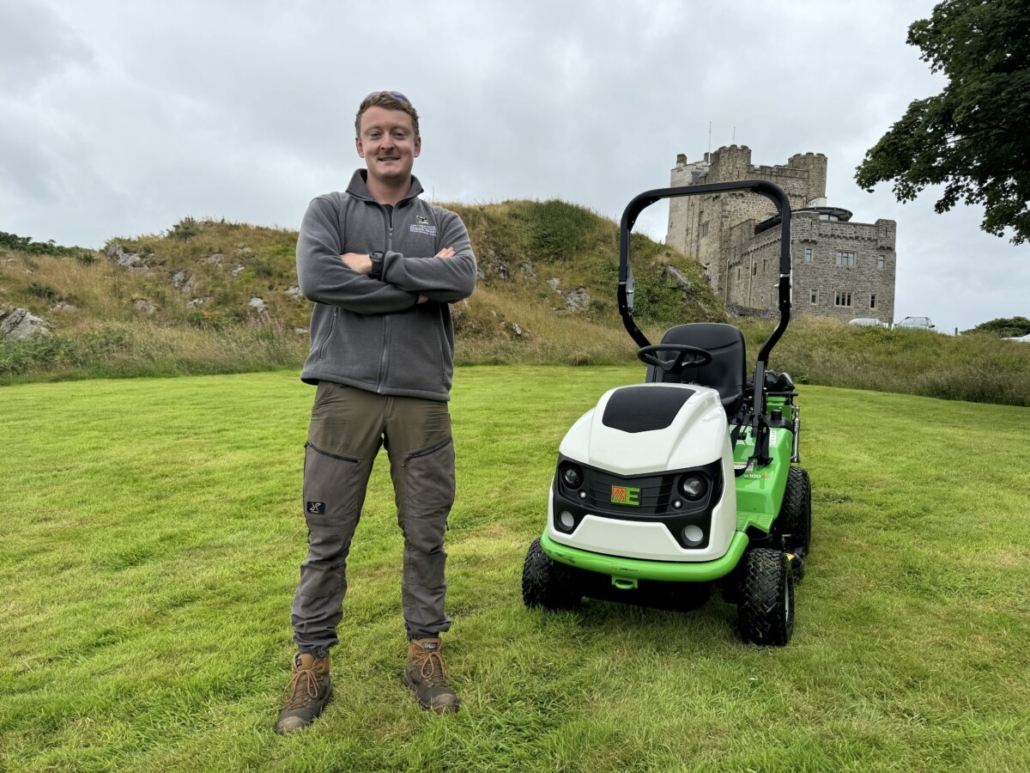
Etesia Hydro 100 is the Perfect Solution: The Retreats Group, which encompasses three of the leading luxury hotels in Wales—Twr y Felin Hotel, Roch Castle, and Penrhiw Priory—has always been dedicated to maintaining immaculate grounds that reflect the beauty of its locations.

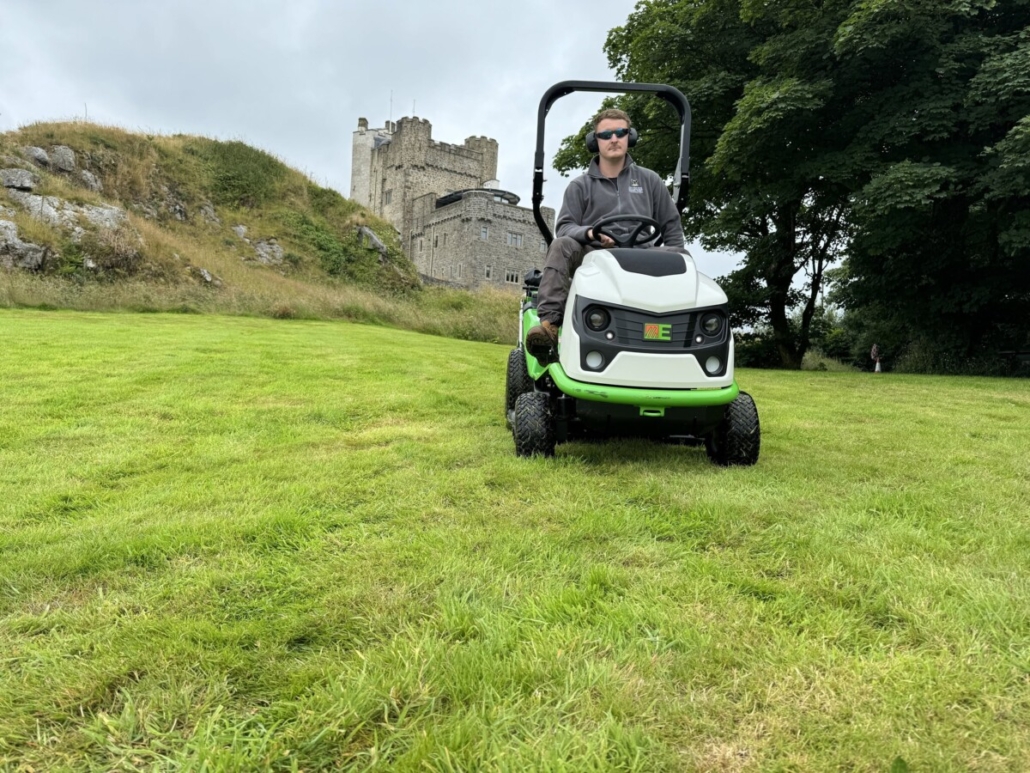
For Ollie Davies, the groundskeeper and supervisor for The Retreats Group, maintaining these stunning landscapes has become significantly easier since the purchase of a Etesia Hydro 100 ride-on mower.

Etesia Hydro 100 is the Perfect Solution

Etesia Hydro 100 is the Perfect Solution

“The properties are undulating and steep in places,” says Ollie. “My brother used to help me look after the grounds, and when he left, we decided that instead of employing someone else full-time, we would invest in one of these machines and see how it would benefit me.”

Before the Hydro 100, Ollie managed the extensive lawns using pedestrian mowers—a task that was both time-consuming and physically demanding. “Prior to the Etesia machine, I would cut them all with a pedestrian mower. It was a lot of hard work. This Etesia saves so much time and money. It is a great bit of kit.”

The Etesia Hydro 100 III ride-on mower is designed for professional users who require top-quality mowing and collection performance in all weather conditions. Powered by an 18 HP twin-cylinder Kawasaki engine, it features a modern hydraulic drive transmission with differential lock, a large 500-litre grass box, and a cutting deck with rear central ejection for efficient grass collection.

Ollie initially considered the Etesia Buffalo ride-on mower, having seen impressive footage of its performance on social media. However, after careful evaluation, he realised that the Buffalo was too large for the more intricate formal gardens within the properties. “We wanted to get a demo of a Buffalo because it looks great, but we figured out it was a bit too big for the formal gardens. We wouldn’t have got it around some of the benches and flower beds.”

Given the uneven terrain of the properties, Ollie decided on the Hydro 100, known for its differential lock and sturdy design. “With the grounds being so uneven, we went for the Hydro 100 because it has a diff lock and it seemed very sturdy.”

Ollie’s decision was reinforced during a particularly wet demo session. “We got one on demo to start with—it was really wet—but these pick up the grass in wet conditions, even when it is long. It worked a treat on our demo; it picked up the grass and didn’t leave a mess, so we were really impressed with it, and we just went from there.”

The Hydro 100’s differential lock has proven invaluable on the steep, slippery slopes of the properties. “It is quite undulating and steep, and especially when it is wet, the diff lock comes in handy. As soon as you start feeling it slip a bit, you just engage the diff lock and it doesn’t leave a mess or wheel spin.”

Etesia Hydro 100 is the Perfect Solution

Etesia Hydro 100 is the Perfect Solution

During the peak growing season, Ollie faces the challenge of keeping up with rapidly growing grass. The Hydro 100 has made this task much more manageable. “If I was on my own and I only had my walk-behind mower, I would be completely swamped with grass and I would just be chasing my tail all the time. So having the Hydro 100 means I can stay on top of things. I’m no longer physically tired all the time from having to use my little walk-behind mower when I can use this instead.”

Ollie also appreciates the Hydro 100’s ability to cut and collect grass on formal lawns, ensuring that the grounds remain pristine for guests. “We cut and collect on the formal lawns because we don’t want guests to get their shoes clogged with grass and walk it into the castle—it wouldn’t be very popular with the housekeeping staff.”

The ease of adjusting the cutting height is another feature Ollie values. “To change the height of cut, you have something that looks like a handbrake. You just push the thumb button in and set the height using the lever. I tend to use a medium setting because we want to take the top third off the grass to keep it green.”

Ollie has also been impressed by the mower’s reliability, even in less-than-ideal conditions. “Considering how wet it has been over the past year I have never experienced any form of blocking, even if the grass is long and wet.”

For Ollie Davies and The Retreats Group, the Hydro 100 has proven to be an essential tool in maintaining the high standards of their luxury properties, ensuring that the grounds are always perfectly presented, no matter the conditions.

A video review with Ollie Davies can be found by visiting:  https://youtu.be/Uq4WoC4rPMo?si=o0iz9J20uf5OiPnX

For further information, please contact Etesia UK on 01295 680120 or visit www.etesia.co.uk.

For more news, reviews and insightful views, you can follow Etesia UK on Twitter @EtesiaUK and like the company’s Facebook page – www.facebook.com/EtesiaUK. You can also view the latest Etesia videos by visiting www.youtube.com/EtesiaUK

For the latest industry news visit turfmatters.co.uk/news

Get all of the big headlines, pictures, opinions and videos on stories that matter to you.

Follow us on Twitter and Instagram for fun, fresh and engaging content.

You can also find us on Facebook for more of your must-see news, features, videos and pictures from Turf Matters.

Perfect Playing Surfaces Start with Mansfield Sand

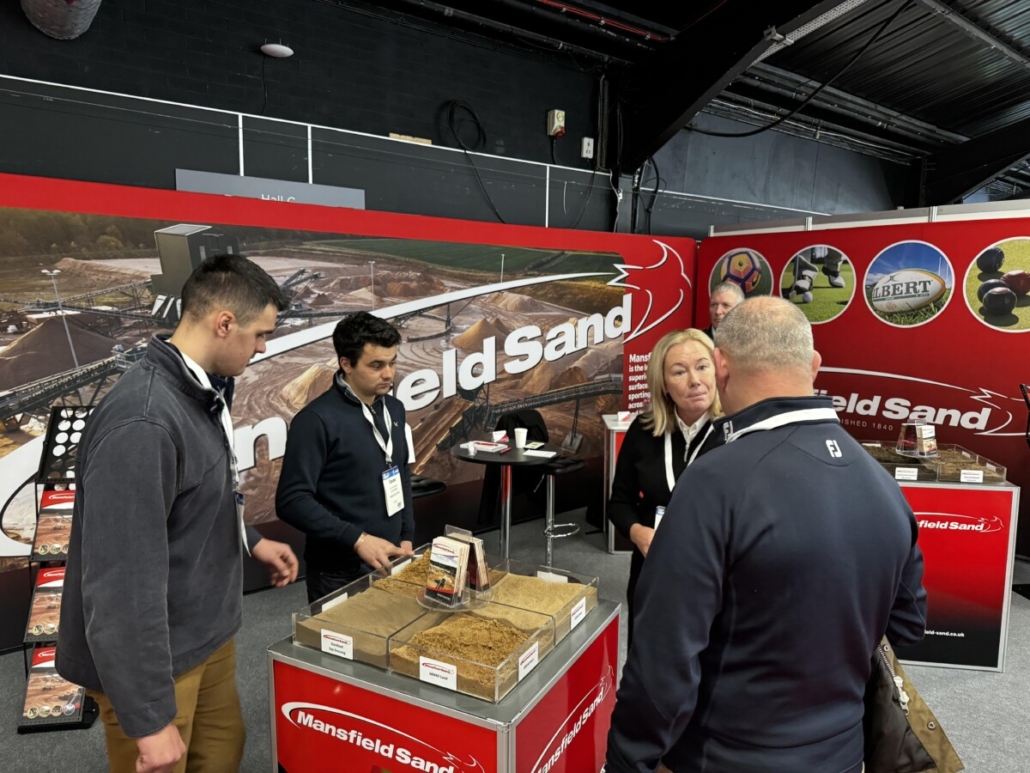
Perfect Playing Surfaces Start with Mansfield Sand: Visitors to Mansfield Sand’s stand (242) at BTME 2025, taking place from 23 to 25 January at the Harrogate Convention Centre, will have the chance to explore an exceptional range of sand-based products designed to elevate the performance and health of sports pitches.

With over 170 years of industry expertise, Mansfield Sand leads the way in premium silica sand solutions. Their products cater to diverse applications in sports, landscaping, and equestrian industries, including professional stadiums, championship golf courses, and world-class equestrian arenas.

Perfect Playing Surfaces Start with Mansfield Sand

Perfect Playing Surfaces Start with Mansfield Sand

At BTME, Mansfield Sand’s knowledgeable team will be on hand to discuss how their innovative range can transform your turf projects. Featured products will include:

Reinforced Rootzone

Mansfield Sand’s Reinforced Rootzones are crafted to enhance natural turf surfaces while meeting the high demands of today’s sports industry. These products offer superior stability, drainage, and durability, ensuring consistency across surfaces.

The range includes:

Fibre Reinforced Rootzone – reinforced with polypropylene fibres for added strength.

Fibrelastic Rootzone – combines polypropylene and flexible Elastane fibres for enhanced surface resilience.

Fibresand – perfect for maintaining surface integrity during periods of heavy use or winter wear.

Sand Soil Rootzones

Ideal for renovation or new construction, Mansfield Sand’s Sand Soil Rootzones blend high-quality Mansil 40 Silica Sand with screened topsoil to create an optimal foundation for healthy turf growth.

Sand Compost Rootzones

For surfaces requiring organic-rich foundations, Mansfield Sand’s Sand Compost Rootzones provide a premium blend that retains nutrients and enhances drought resistance, ensuring robust and healthy turf.

Top Dressing

Mansfield Sand’s Soil Top Dressing, tailored for fine turf surfaces, combines superior silica sands with sterilised and screened top-quality soils for a smooth, stone-free finish. Custom blends are available to meet specific turf management requirements.

Mansil Silica Sand Sports Range

Sourced from Mansfield Sand’s renowned Two Oaks Quarry, the Mansil range of silica sands is essential for constructing and maintaining sports surfaces, including golf courses, bowling greens, and winter sports pitches.

Visit Mansfield Sand at Stand 242 to see how their expertise and product range can help you achieve a perfect playing surface.

For more information visit www.mansfield-sand.co.uk

You can also follow the company on Twitter – @MansfieldSand and Facebook – https://www.facebook.com/MansfieldSandSportSurfaces/

For the latest industry news visit turfmatters.co.uk/news

Get all of the big headlines, pictures, opinions and videos on stories that matter to you.

Follow us on Twitter and Instagram for fun, fresh and engaging content.

You can also find us on Facebook for more of your must-see news, features, videos and pictures from Turf Matters.

Avant 225 is the Perfect Workhorse

Avant 225 is the Perfect Workhorse: For Jeff Clark, maintaining his acre-and-a-half property in rural North Wales has become significantly easier thanks to the Avant 225 compact loader.

Jeff, who has some woodland, and a main field to maintain, has found the perfect solution in this versatile machine.

Jeff has extensive experience with various types of equipment, often testing new machinery for manufacturers. Initially, he sought a ride-on mower but soon realised he needed something more versatile. “I went to Clwyd Agricultural looking for a flail mower to attach to my ride-on, but I saw the Avant and thought it looked interesting,” Jeff says. After some consideration and a test drive, Jeff traded his ride-on mower for the Avant 225, along with various attachments for it.

“I needed a machine that could mow, tow a trailer, and help me move things around the garden,” Jeff explains. “I’m 76, not getting any younger, and not as strong as I used to be. The Avant seemed to be the perfect machine to help me. It’s invaluable and well worth the money we invested. The bucket on the front is large and versatile; you can even mix cement in it, which I’ve found very useful.”

One of the standout features for Jeff is the quick-release coupling for changing attachments. “The changeover of attachments is very quick. A quick flick of a lever and there’s no effort involved,” he says.

The Avant 225’s versatility shines through in various tasks. “I’ve planted apple trees with the mini digger attachment. Rather than spending hours digging a hole, it’s done in five minutes,” Jeff explains. “The 1500 out-front mower attachment does an extremely good job, and the adjustable height of cut is perfect for the different areas we have here.”

Jeff also utilised the Avant 225 for a significant project on his driveway. “The front drive was covered in pebbles, and I didn’t want to lose them when I had it tarmacked. The Avant picked up 8 tonnes of pebbles, which I’ve since used around raised beds and paths. The machine has probably paid for itself already.”

For Jeff, the best feature of the Avant 225 is its versatility. “It does everything I want – it carries weights, pulls the trailer, and carries most things in the bucket up and down the garden. I even use it to pull trees from the woodland area with a rope. It’s a muscle saver and works really well. I don’t think I could do without it.”

“The joystick is easy to use, and the seat warmer is fantastic in the winter,” he adds.

The Avant 225’s impressive capabilities include a 1.4m lift height, 350kg lift capacity, 10 km/h speed, and 42 L/min auxiliary hydraulics. Easy to transport with a car trailer, it’s a powerful and versatile compact loader despite its small size. The articulated design and hydraulic 4×4 transmission are similar to larger Avant models, ensuring efficient operation with excellent visibility and easy-to-use controls.

As well as being impressed with the machine Jeff praised Clwyd Agricultural, the local dealer, for their excellent service and support. “They are lovely people, easy to deal with, and very helpful,” he notes.

Overall, the Avant 225 compact loader has proven to be the ideal workhorse for Jeff Clark, providing the versatility and efficiency needed to maintain his land with ease.

For more information, please visit www.avant.co.uk

For the latest industry news visit turfmatters.co.uk/news

Get all of the big headlines, pictures, opinions and videos on stories that matter to you.

Follow us on Twitter and Instagram for fun, fresh and engaging content.

You can also find us on Facebook for more of your must-see news, features, videos and pictures from Turf Matters.