
Tag Archive for: problems

Atlas Turf bermudas solve problems

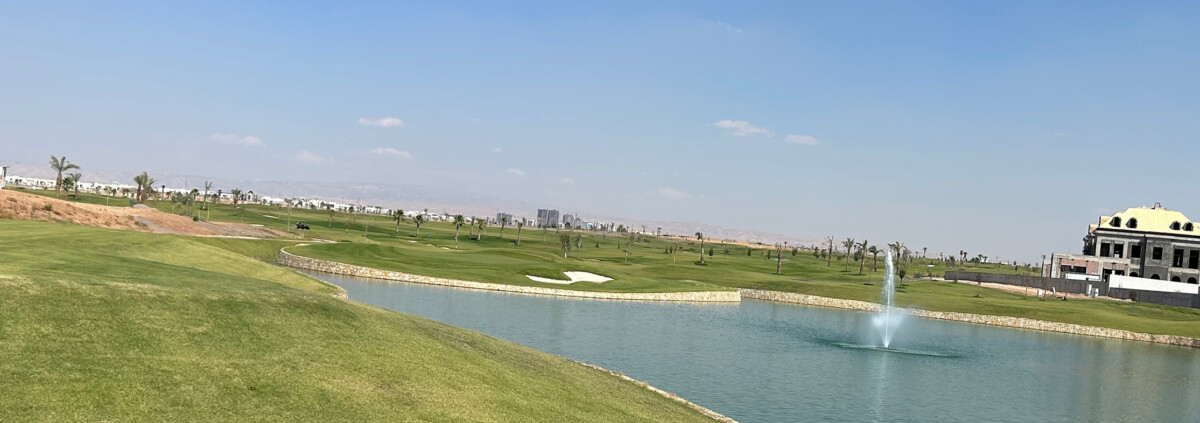
Atlas Turf bermudas solve problems: The Erbil Hills course in Erbil, the capital of Iraq’s Kurdistan region, is the first grass golf course in the country. Designed by architect Cynthia Dye of Dye Designs Group, and managed by IMG, it was largely constructed during the Covid-19 pandemic and will open later this year.

The autonomous Kurdistan Region is currently experiencing some of the fastest economic growth in the world and Erbil, as its capital, is at the heart of that. “Erbil Hills came about because the developers saw what we had done at Dreamland in Baku, Azerbaijan and wanted something similar,” says Cynthia Dye. “The two projects have a lot in common, though they aren’t affiliated.”

Atlas Turf bermudas solve problems

Atlas Turf bermudas solve problems

The Erbil area has a hot summer Mediterranean climate, with mild winters and temperatures often above 40C (104F) in the summer months. There is almost no rain between June and September, but winters are fairly wet. As such, choosing the grasses for the golf course was a tricky problem for architect Dye and her team. “The client wanted the course to be green grass wall-to-wall,” she says. “In Baku, we were able to grow cool season grasses everywhere, but that was obviously not going to work in Erbil. I have a friend who was construction manager for the Ashgabat course in Turkmenistan, which has a similar climate to Erbil and they used Atlas Turf’s Latitude 36 bermudagrass there, with great success.”

Dye therefore specified Latitude 36 for fairways and close roughs. “The contractor was in favor of a different bermudagrass, which would have come from Turkey, but I was not keen, because I wasn’t certain of the quality we would get, whereas I know that Atlas is always reliable,” she says. “With Latitude 36, I knew that we would get through the winters well and that we would have good color in the spring and fall seasons, which are going to be the key golfing months in Erbil. It starts to go off in November and is just greening up now. This gap should close as the grass matures. They will paint it while dormant, but the color will be great in the prime golfing months.”

For outer roughs, Dye specified North Shore SLT seeded bermudagrass, also from Atlas Turf and its partner Pure Seed. “I wanted the roughs to be a different color and texture for definition and, given the client’s desire for wall-to-wall grass, it was obvious that the rough areas were going to be large – there are 22 hectares (54 acres) of outer rough,” she says. “Choosing a seeded bermuda was important for budgetary reasons – if we had tried to use stolons across the entire course it would have been too expensive. But at the same time, it was important that whatever grass we planted was drought tolerant. We have well water, but we don’t have an infinite amount, and putting a lot of irrigation on areas that aren’t in play very much just isn’t feasible.”
For greens, Dye specified Pure Distinction creeping bentgrass, developed by Pure-Seed Testing. “I knew that I wanted bentgrass greens and I have used Pure Distinction quite a bit, including in Baku. I really like it,” she says.

“Obviously, given the climate, if we were going to have cool season greens, we needed a grass with good heat tolerance that also coped well with drought. With Pure Distinction, I am very confident that the greens will be excellent year-round.”

Erbil Hills should open its first nine holes in the near future, with the second nine following fairly shortly.

For the latest industry news visit turfmatters.co.uk/news

Get all of the big headlines, pictures, opinions and videos on stories that matter to you.

Follow us on Twitter and Instagram for fun, fresh and engaging content.

You can also find us on Facebook for more of your must-see news, features, videos and pictures from Turf Matters.

RHS disease ranking highlights top 10 gardening problems

RHS disease ranking highlights top 10 gardening problems: The Royal Horticultural Society (RHS) has published its annual disease ranking, revealing the top ten problems for gardeners in 2023.

Damp conditions in spring and summer were the driving influence in the prevalence of certain diseases, with the following four new entrants to the top ten list: blossom wilt of fruit trees, pocket plum, tulip fire and slime flux. Fruit trees continued to be under threat from disease, with apples, pears, and Prunus among the top five hosts and collectively resulting in over 1,000 enquiries to the RHS advisory service, a 50% increase on the previous year.

RHS disease ranking highlights top 10 gardening problems

RHS disease ranking highlights top 10 gardening problems

The top diseases for 2023 are:

1. Honey fungus
2. Apple and pear scab
3. Rose black spot
4. Pear rust
5. = Blossom wilt of fruit trees
= Bacterial leaf spot and canker of Prunus
7. Phytophthora root rots
8. Pocket plum – Taphrina pruni
9. Tulip fire
10. Slime flux

Wet weather last spring provided perfect conditions for tulip fire – which produces brown spots and twisted, withered leaves – to take hold, seeing the disease make a return to the top 10 for the first time in several years. The damp spring conditions are also likely to blame for high cases of pocket plum, which causes elongated, hollow fruits with no stone on plums and damsons, as well as some ornamental Prunus, rendering the fruit inedible.

Slime flux, which affects a wide range of trees and shrubs, was another new entrant to the list. It is thought that the bacteria colonises trees via their roots, so the increase in cases may be a result of the wet winter in 2022/ 2023 and associated waterlogged soils. In addition, there was a rise in reports of rose black spot and pear rust, which can both likely be attributed to the warm and wet weather conditions during the summer.

Honey fungus topped the list for the 28th year running, having held the top spot since the list was first published in 1995. The fungus has a large host range of more than 140 garden plants, with the most common hosts in 2023 being privet, rose and viburnum, and results in dramatic symptoms, including death, cracked and bleeding bark and failure to flower.

To minimise plant disease this year gardeners are advised to apply mulch to improve drainage, while ground that has been laid sodden should be lightly pricked with a fork and spread with an organic mulch such as well-rotted manure, so plants grow with improved health and disease is less likely. Now is also a good time to prune out any diseased and damaged material before it can spread spores when the temperature is warmer.

Liz Beal, RHS Plant Pathologist, said: “Unusually wet weather in 2023 had a significant effect on plant health across the UK, with the prevalence of tulip fire and pocket plum demonstrating the impact of prolonged damp conditions. Following the extreme drought of the previous year, many gardeners are left wondering how to prepare for unpredictable weather patterns. Understanding the conditions of your garden is key in deciding which plants will thrive where; the right plant in the right place will always have a better chance of fighting off infection. Additionally, gardeners can help combat many of the most common diseases in our ranking by practising good hygiene, keeping tools clean and removing – and safely disposing of – diseased plant material from their gardens.”

The RHS Plant Health team uses the disease ranking to inform their research and advice. Current research at RHS Wisley’s Hilltop: Home of Gardening Science includes investigating the effective management of Phytophthora in gardens, examination of different methods for managing rose black spot and characterising the dispersal mechanisms and variation of honey fungus populations.

RHS members get free access to the charity’s Gardening Advice Service, available by phone or email. Find out more about becoming a member at: www.rhs.org.uk/join

RHS advice pages are available for everyone, for further information, visit: www.rhs.org.uk/advice

For the latest industry news visit turfmatters.co.uk/news

Get all of the big headlines, pictures, opinions and videos on stories that matter to you.

Follow us on Twitter and Instagram for fun, fresh and engaging content.

You can also find us on Facebook for more of your must-see news, features, videos and pictures from Turf Matters.

Bizarre golf-course problems

Bizarre golf-course problems: If you think taking care of grass is as uneventful as watching it grow, you haven’t spent much time with a superintendent.

Read the full article from Golf.com here

Groundsman to play on his 'sacred' pitch

Groundsman to play on his ‘sacred’ pitch

For the latest industry news visit turfmatters.co.uk/news

Get all of the big headlines, pictures, opinions and videos on stories that matter to you.

Follow us on Twitter and Instagram for fun, fresh and engaging content.

You can also find us on Facebook for more of your must-see news, features, videos and pictures from Turf Matters.

Liner upgrade solves problems at CordeValle

Liner upgrade solves problems at CordeValle: Designed by the Robert Trent Jones II firm (and actually the firm’s home course), CordeValle GC in California’s Santa Clara Valley, has some of the largest and most imposing bunkers to be found anywhere in golf.

There may be only 63 bunkers on the golf course, but the total area of sand is a breathtaking 188,000 square feet (17,500 square metres). And, according to superintendent Brett Thornsbury, the playing consistency of the bunkers was becoming his biggest challenge..

Liner upgrade solves problems at CordeValle

Liner upgrade solves problems at CordeValle

“We have large, very elaborate bunkers with steep faces,” he said. “Over the years, as with all aging bunker sand, it had lost its original color, the consistency to move water, and the playability was negatively affected, especially during the dry summer months or excessive rain events. With this project, we wanted to restore the sand to its original color, ensure the health of the drainage system, and most importantly, install a bunker liner that was going to last for many years to come.”

CordeValle’s bunkers were originally lined with a geotextile, but its performance had deteriorated since the course’s opening in 1999. When Thornsbury became superintendent four years ago, he quickly realized the bunkers would need to be addressed in the near future to maintain a high-quality of playability and consistency.

In 2019, led by RTJII president Bruce Charlton, the course’s greens and approaches were renovated and regrassed.. The completion of this project left the bunkers as the next major issue to be improved , and last year, Thornsbury was able to start the work.

“We knew the bunkers needed to be relined, and we wanted a liner that could perform at the highest level, no matter the season. he said. “When we researched the options, it became clear to us that Capillary Concrete had a superior bunker product, and was the one we wanted to use.”

The bunker project began early in October of 2020, and was completed in the middle of March 2021. “We tried to have the lowest possible impact on play, using temporary greens where necessary, and always keeping eighteen holes open,” said Thornsbury. “Fortunately for us, we had a pretty dry winter allowing the project to work mostly uninterrupted. However just a few weeks ago we had our first major rain event of the season, producing six inches of rain in less than three days, which for us in Central California, is welcomed and unusual. Not one speck of sand moved in our newly completed bunkers. The team was relieved to see they didn’t require any repairs after such a heavy rain event and kept the sand shovels in the shop that morning. It’s a testimony to the Capillary Bunkers product.”

For the latest industry news visit turfmatters.co.uk/news

Get all of the big headlines, pictures, opinions and videos on stories that matter to you.

Follow us on Twitter and Instagram for fun, fresh and engaging content.

You can also find us on Facebook for more of your must-see news, features, videos and pictures from Turf Matters.

Capillary Concrete solving bunker problems

Capillary Concrete solving bunker problems: The exclusive Loch Lomond Golf Club in Scotland is coming to the end of a huge four year renovation project – at a total cost of £7.5 million, probably the most costly in the history of British golf – in which 85 per cent of the golf course has been sand-capped (apart from the USGA greens), its drainage infrastructure rebuilt, its irrigation system completely renewed and its bunkers reconstructed using the Capillary Bunkers lining system.

Surrounded by mountains and next to Britain’s largest freshwater lake, Loch Lomond has always faced huge problems caused by its environment. “We have a lot of bunkers – and a lot of rain,” says David Cole MG, the club’s director of golf course and estates. “We average around 2000mm (79 inches of rain a year), and our bunker design has some steep faces in places. As a result, we have always suffered badly from washouts and contamination. Bunker maintenance is our second largest consumer of greenkeeping resources, second to greens – due to the design, the size (8500m2), the amount, the player expectations and the environment, it takes a lot of resources to prepare the bunkers internally and externally for play on a daily basis, and it was frustrating not being able to produce a consistently good product from this valuable resource due to the ageing infrastructure and the uncontrollable element of frequent rainfall.

Capillary Concrete solving bunker problems

Capillary Concrete solving bunker problems

Cole and his team, along with contractor Esie O’Mahony of GolfLink Evolve, have rebuilt the course from the bottom up. The new drainage pipes are laid in trenches lined with geotextile to reduce the ingress of fine particles, and the pipes themselves have been resized to deal with the volume of water. The project was planned to be completed over the winter of 2019/20, but the Covid-19 pandemic meant that two holes were left unfinished. Those have been dealt with over this winter.

In among this huge quantity of construction, Cole was determined to improve the consistency of the bunker presentation and reduce the internal bunker maintenance challenge. “We wanted to try to eliminate sand contamination and washouts and ensure we give our members a quality product no matter the weather, he says. “After reviewing and trialling the options available, we selected Capillary Concrete throughout the project to line the bunkers. The product gives a lot of confidence. It’s concrete, so you know it is going to last, and the fact that you can install in wet weather situations is a huge plus for us as the renovation and installations took place throughout the wettest period of the year. The cost is obviously important – we are spending a lot of money on this project, but we are conscious that it is our members’ money, and we want to get good value for them – and Capillary Bunkers was very competitive.”

Cole says he is already seeing the benefits. “The simple fact is that we aren’t spending hours pushing sand back up bunker faces after rain. Ultimately since the liner has been installed the sand does not slip off the face after heavy rain events and daily preparations to present a good product for our members and guests is less labour intensive than previous. This allows us to focus more time on the detail work of internal bunker maintenance, and/or redirect resources to other priority areas that been neglected prior to this undertaking. Most days, three guys can deal with the internal bunker preparation, when previously it was five or six. Quantifying that isn’t easy and COVID-19 has not helped, but I think we may see a forty-fifty per cent reduction in resources we use preparing the internals of bunkers yet still producing a superior product.”

For the latest industry news visit turfmatters.co.uk/news

Get all of the big headlines, pictures, opinions and videos on stories that matter to you.

Follow us on Twitter and Instagram for fun, fresh and engaging content.

You can also find us on Facebook for more of your must-see news, features, videos and pictures from Turf Matters.