Tag Archive for: Project

ICL’s Four-Year Seaweed Project

ICL’s Four-Year Seaweed Project: ICL has teamed up with Royal Holloway, University of London to embark on a unique four-year research project which will look in depth at the effects of seaweed products on turfgrass plant parasitic nematodes.  The project is funded by the Biotechnology and Biological Sciences Research Council (BBSRC) and ICL.

“It came about following a discussion with Andy Owen (ICL International Technical Manager) at a greenkeeper meeting a couple of years ago,” says Alan Gange, Professor of Microbial Ecology at Royal Holloway. “We started talking about the need for turfgrass research, particularly focused on nematodes because we had noticed that in the last ten years greenkeepers and groundsmen have become much more aware of these and they appeared to be becoming a real problem.”
ICL's Four-Year Seaweed Project

Alan believes that the rise of nematodes could potentially be attributed to the loss of certain chemicals and the effects of climate change. As it stands, there are few options available for the turf manager who has a nematode problem but Alan feels that seaweed could well offer a sustainable solution.

“There are scattered reports that some seaweed products or extracts, contain various chemicals which can protect plants against pests and diseases. We think that when the right seaweed is applied to a grass plant it could change the resistance of the plant to disease and insect attack. Nematode infection could then be reduced when the seaweed product is applied. So that is the essence of what we are trying to do here in sports turf.” Someone asked me a while ago if we are creating antibiotics for plants and in a way that is indeed what we are trying to do – we are trying to harness the plant’s natural resistance mechanism and improve it.

ICL’s SeaMax product, which is used as a bio-stimulant and fertilizer, has been a huge success in the sports turf industry. It contains a premium high concentration of Atlantic Ascophyllum nodosum seaweed extract, sustainably harvested from renewable resources by Acadian Seaplants. We have already shown many turf benefits through using Seamax says Andy Owen, and we wanted to explore its capabilities further, with a more detailed research project with Royal Holloway.

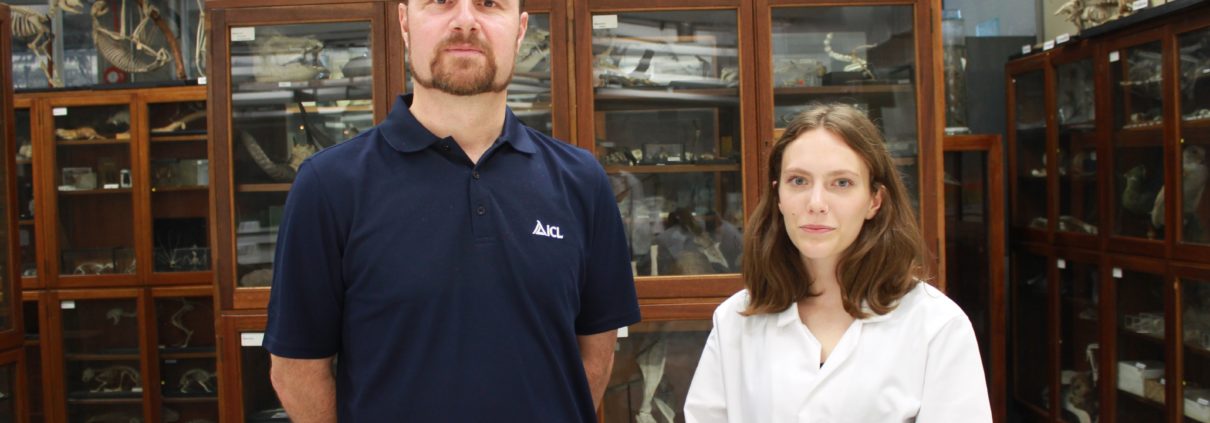
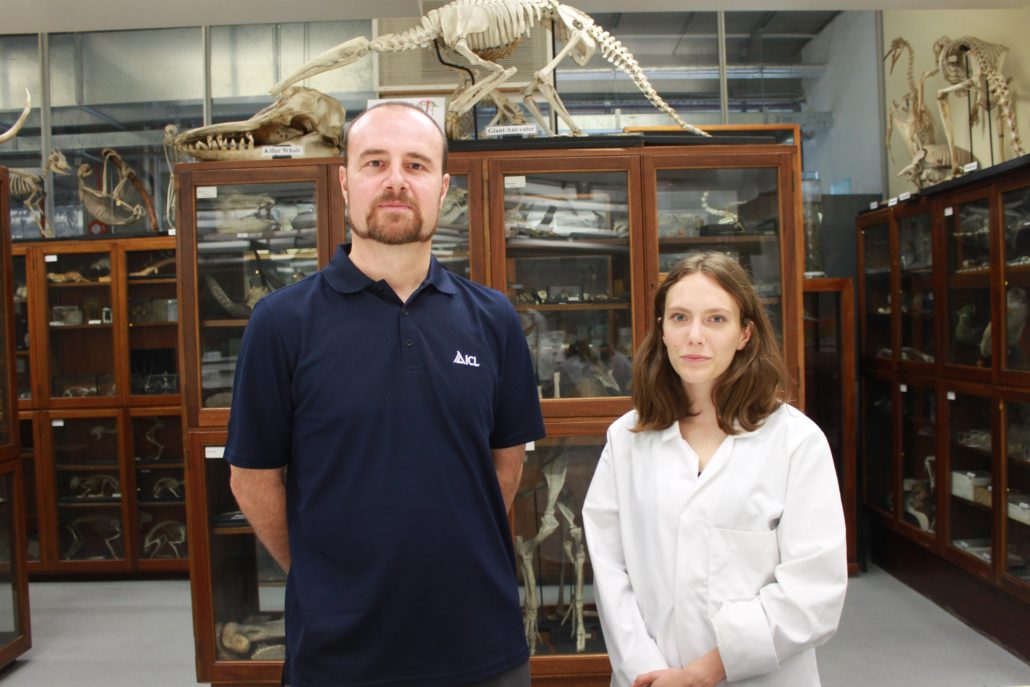
Integral to the research project is student Tamsin Williams, who was successfully appointed following a rigorous interview process. Tamsin, who throughout the four-year project will be working with ICL to better understand how the commercial side of the sports turf industry works, believes that this studentship was a perfect fit for her ambitions to develop a career in research.

“In my previous role I was working on pathogen and insect bio-control using fungal bio-pesticides. I had also worked with plant parasitic nematodes before, so when I heard this was a bio-control project for nematodes I felt that it was perfect and it made so much sense to apply. Nematology is one of my main interests, but it’s also the fact that seaweed products are sustainable – we could be finding an environmentally friendly solution for a serious turf problem, which potentially could transfer to other crops as well. This makes it a really valuable research topic.

ICL's Four-Year Seaweed Project

Tamsin has already begun her experiments looking at how plants and the soil microbiota respond to SeaMax seaweed application, before she will add plant parasitic nematodes into the study. However, these are just the first steps in an ever-evolving project according to Andy Owen.

“We will start with a proof of concept to gather further evidence that it does indeed work. In subsequent years there will be a focus on investigating the modes of action that are occurring, and then optimising applications in terms of rates, timings and frequency, so that we can provide the right advise to the end-user.

“Hopefully this project will generate the research to show turfgrass managers that certain approaches can help support and develop a plant’s resistance to pests and diseases and that you might require fewer synthetic chemical applications,” adds Alan. “Ultimately providing a sustainable and integrated management approach to keep surfaces healthy.

“As an ecologist it concerns me that many biological products, which contain microbes, are being sold in the turf marketplace with little or no supporting research behind them whatsoever. It is never published in reviewed journals and therefore with most of the products, one has suspicions about them because you just don’t know what independent research has been conducted. However, ICL genuinely want to find out more about their own products and they are committed to research.”

In re-iterating Alan’s sentiments, Andy confirmed that ICL will look to publish this work where possible and intend to present the data openly at a number of events. The industry will be able to gain a greater insight into the project in January 2019 when Alan’s research group will speak at BTME’s Continue to Learn education programme.

“What we want to do is support our products with robust research, and ensure that any claims we are making can be fully substantiated,” he says If anyone would like to find out more then come along to BTME in Harrogate next year.

“From our point of view, we are really excited to be working with Royal Holloway on this project. We are always looking to do independent research on our products and you don’t see very much of this happening in the turf industry. I can’t wait to see how it develops.”

Please contact ICL on +44 (0)1473 237100 or visit www.icl-sf.co.uk or www.icl-sf.ie.

For the latest industry news visit turfmatters.co.uk/news

Get all of the big headlines, pictures, opinions and videos on stories that matter to you.

Follow us on Twitter for fun, fresh and engaging content.

You can also find us on Facebook for more of your must-see news, features, videos and pictures from Turf Matters.

Cornwall Project For Wildflower Turf

Cornwall Project For Wildflower Turf: Wildflower Turf Ltd have recently been nominated as a key supplier by Cornwall Council as part of the council’s Green Infrastructure for Growth (GI4G) project.

The Hampshire-based wildflower experts are assisting Cornwall Council and their incumbent contractors Cormac with the delivery of a far-reaching programme that will see £3.5 million invested in public recreational areas, roadside verges and old churchyards to make them better places for people and wildlife.

Cornwall Project For Wildflower Turf

Seven Cornish towns have been identified to receive investment through GI4G, with the environmental funding focus creating a nature-rich habitat across an area equivalent to 35 rugby pitches.

In consultation with environmental specialists from Exeter University and with guidance supplied by the team from Wildflower Turf Ltd, Cornwall Council established a number of wildflower trial sites during late Summer/Autumn 2017.

The germination and growth results were very convincing and both Wildflower Turf and Wildflower Earth™ products are now being used across the various sites nominated by the Council, who have worked in close consultation with local communities to identify areas to benefit from this urban green space investment.

James Hewetson-Brown, Managing Director at Wildflower Turf Ltd said, “It is heartening to see the commitment of Cornwall Council to developing biodiversity and wildflower spaces in the South West.” Hewetson-Brown continued, “We are delighted to be involved with this exciting project and have enjoyed watching the speed with which these habitats have established and are now benefitting wildlife.”

The Green Infrastructure for Growth Project is supported by funding from the European Regional Development Fund, Cornwall Council, and the University of Exeter.

For the latest industry news visit turfmatters.co.uk/news

Get all of the big headlines, pictures, opinions and videos on stories that matter to you.

Follow us on Twitter for fun, fresh and engaging content.

You can also find us on Facebook for more of your must-see news, features, videos and pictures from Turf Matters.

Wildflower Project Makes The Grade

Wildflower Project Makes The Grade: Brunel House in Bristol has recently undergone an ecologically friendly landscaping project, with urban biodiversity at the forefront of the project.

Formally offices and now a new Unite Students property, Brunel House in Bristol will house 246 students who will enjoy a landscape that offers an urban habitat for insects, bats, swifts and other wildlife.

Wildflower Project Makes The Grade

Key to the central landscaping design of this new development is the incorporation of a wildflower meadow, supplied by Wildflower Turf Ltd at the request of construction specialists the RG Group.

Following the RG Group’s winning submission at the 2017 CIRIA BIG Biodiversity Challenge Awards, award sponsors Wildflower Turf Ltd were contacted by Sustainability Consultant Colorado Goldwyn with a view of utilising the RG Group’s prize to enhance the Brunel House project.

As well as donating 200m² of Wildflower Turf Landscape Turf, the Hampshire-based wildflower experts also assisted the project with specialist consultancy, recommended and supplied additional turf to meet the project’s requirements, and provided Accredited Partner training to the project team.

Colorado Goldwyn of EQ Consultancy said, “The combination of Wildflower Turf Landscape Turf and Species Rich Lawn Turf has pulled the landscaping scheme together beautifully and allowed for a flow of biodiversity throughout the differing levels of the landscape design.”

The wildflower-led landscaping initiative has focussed on assisting rare invertebrates such as the rare Carrot Mining Bee and Small Blue Butterfly. Additionally, and in collaboration with the RSPB, a number of other recommended ecological initiatives were also defined and adopted as part of the landscaping design.

Wildflower Project Makes The Grade

As well as providing an aesthetically pleasing landscape for the incoming student population, local wildlife habitats have been protected, with the project on track to receive an ‘Excellent’ BREEAM rating.

James Hewetson-Brown, Managing Director at Wildflower Turf Ltd said “The ecological prosperity that a wildflower meadow can bring cannot be understated, and urban biodiversity projects such as this stretch widely to encompass both social and health benefits.”

Hewetson-Brown continued, “It is anticipated that the local student population will benefit, not only from the beautifully landscaped areas that will promote wellbeing and social interaction, but by gaining a sense of responsibility as they become interested in, and involved with, the protection of local wildlife.”

For the latest industry news visit turfmatters.co.uk/news

Get all of the big headlines, pictures, opinions and videos on stories that matter to you.

Follow us on Twitter for fun, fresh and engaging content.

You can also find us on Facebook for more of your must-see news, features, videos and pictures from Turf Matters.
STRI Awarded Stowe Golf Project

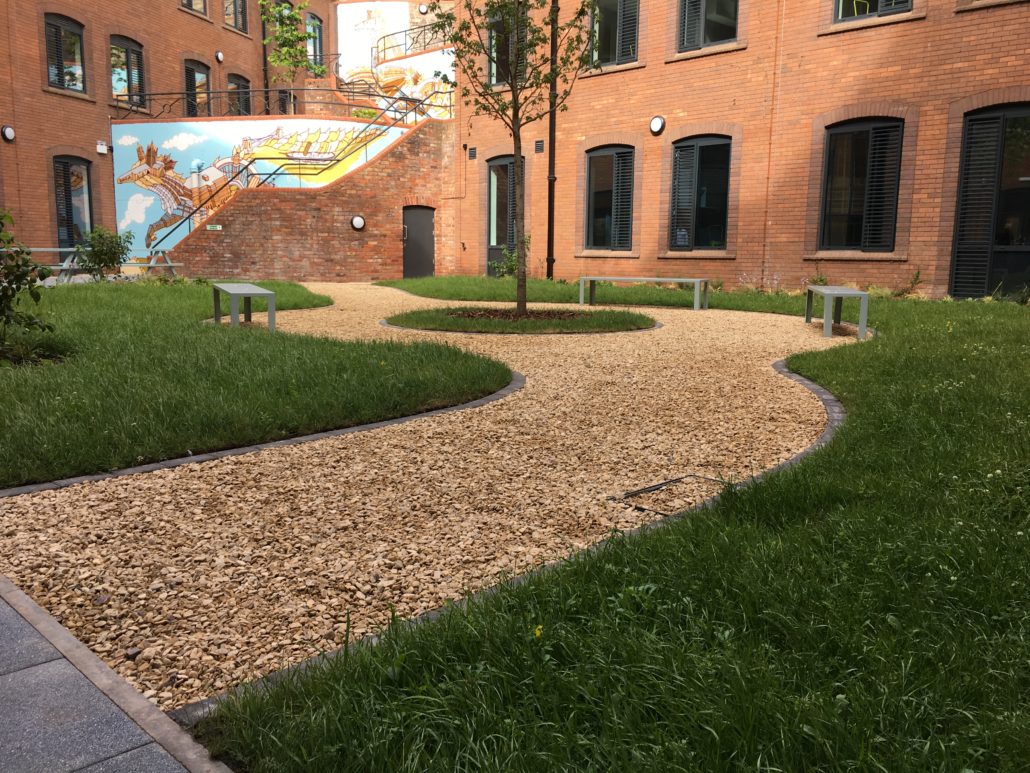
STRI Awarded Stowe Golf Project: Top independent school Stowe has appointed STRI Group to design and build its new flagship nine-hole golf course in Buckinghamshire.

STRI has worked closely with Stowe School, over recent years, to create and develop the golf course layout and undertake ecological and environmental surveys for the planning process.

STRI Awarded Stowe Golf Project

Golf has been played at Stowe School since 1923, and their current course sits within an historic deer park. Working closely with the National Trust the opportunity arose for the school to close the existing golf course and reinstate the land to its former condition.

This also presented the opportunity to create a new golf course in a larger, more open landscape, which would provide a more challenging course with a less compact feel.

The location of the new golf course is on a very special site.  The rolling landscape provides superb natural features for golf and the land lies adjacent to the earthwork remains of Lamport Village. It also sits among other historic features including Lord Cobham and Gibbs’s Bourbon Tower (c1740) and Bridgeman’s 1720’s Bycell Riding which lies to the south of the site, adjacent to Gibbs’s Stowe Castle (c1740).

The design process was extensive and intricate, with STRI’s golf course architect, Jonathan Tucker, creating a course that avoided areas of historic value, and the many ecological and environmental sensitivities on the site.

The course development gives the opportunity to recreate historic features on the site, including a c.650m deer fence, positioned in a manner which matches historic records, and several bespoke tree plantations.

Andrew Hancox, Head of Golf and PGA Professional at Stowe School, said: “Stowe really is synonymous with the game of golf and with such a fine and distinguished golfing history, it is only right that we embark upon a new and exciting journey by opening our new golf course and launching the Stowe Golf Academy.

“With significantly longer and more challenging holes, along with greens constructed in accordance with USGA guidelines, I genuinely believe that our new golf course will present itself as one of the finest school golf facilities in the country.”

Project Director for STRI, Richard Stuttard, said: “This is an exciting opportunity to create an exceptional golf course within beautiful surroundings. STRI’s teams have relished the challenge of creating and implementing a design that is sympathetic to this unique environment and I’m confident that the end result will be something very special.”

For the latest industry news visit turfmatters.co.uk/news

Get all of the big headlines, pictures, opinions and videos on stories that matter to you.

Follow us on Twitter for fun, fresh and engaging content.

You can also find us on Facebook for more of your must-see news, features, videos and pictures from Turf Matters.
Rigby Taylor Launches Project Pollin-8

Rigby Taylor Launches Project Pollin-8: Rigby Taylor has launched Project Pollin-8, a major initiative aimed at reversing the national decline in pollinating insects, by introducing the new Euroflor Banquet urban flower seed mixture containing the best species for pollinators while also delivering high visual impact.

A key factor in the continual reduction of pollinators is likely to be loss of habitat, and the use of urban flower mixtures for landscaping projects will prove vitally important in arresting the decline.

Rigby Taylor Launches Project Pollin-8

The introduction of the Banquet mixture is the result of information obtained from independent research by the Urban Pollinators Group (UPG), a national research programme run by Bristol, Edinburgh, Leeds and Reading Universities (2010-2013).

The research revealed that no one mix would meet the complex ecological demands of the diverse pollinator groups throughout the different stages in their life cycles – from early to late flowering, native and horticultural species, plants for egg laying, nectar for energy and pollen for protein.

With this in mind, nine other Euroflor mixtures (as well as Banquet) have been identified as meeting the demand for a longer seasonal supply of nectar and pollen, as well as a more diverse range of habitats, while also providing incredible flower displays.

The nine other Euroflor mixtures are Flora Britannica, Fragrant Lawn, Green Roof, Honey, Native Pollinator, Rainbow Annuals, Rainbow Perennials, Spring Flower and Super Blue Bee.

These are all detailed in the 2018 Euroflor brochure available from a Rigby Taylor representative or via Freephone 0800 424 919.

For more information, visit: www.rigbytaylor.com

For the latest industry news visit turfmatters.co.uk/news

Get all of the big headlines, pictures, opinions and videos on stories that matter to you.

Follow us on Twitter for fun, fresh and engaging content.

You can also find us on Facebook for more of your must-see news, features, videos and pictures from Turf Matters.