Tag Archive for: Racecourse

Limagrain Key At York Racecourse

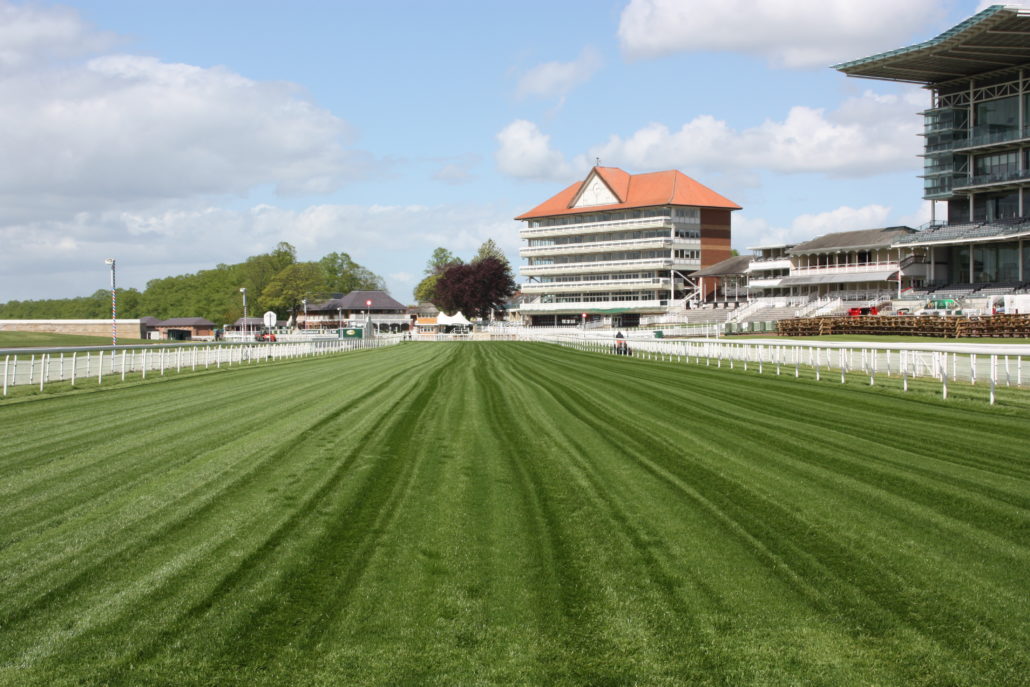
Limagrain Key At York Racecourse: Having been a long-term user of Limagrain grass seed, Adrian Kay, head groundsman at York Racecourse, believes that an improvised MM25 mixture gives him the confidence to keep the course to an exceptionally high standard all year long.

Adrian, the man in charge of keeping York Racecourse ahead of the pack, has been the head groundsman for twelve years. He joined York from Aintree Racecourse in 2006 and two years later was instrumental in a huge £2.6 million track development project.

Limagrain Key At York Racecourse

As part of the project, significant drainage works were carried out in order to remove and keep water at bay from the surface, which is situated on an old river bed and flood plain. Although that project was undertaken over nine years ago, Adrian and his team still continue to focus their attention on maintaining and improving the surface and primary drainage.

It could be argued that Adrian is somewhat of an industry pioneer as he continues to adopt new methods, particularly in his decision to embrace the Koro process in order to strip the top of the surface and remove all vegetation and rootzone – something which is practically unheard of in horse racing turf maintenance. As a result, Adrian admits that whichever grass seed he uses, he must have full confidence that it is going to provide him with exceptional results and guarantee a fast return to usability.

“I’ve been using Limagrain seed for about 16 years now and I’ve got every confidence in the seed. I used MM25 when I was at Aintree and then we played around with the mixture here at York to suit our renovations.

“The mixture we use consists of 50% Tetraploid Perennial Rye, 30% Diploid and 20% Slender Creeping Red Fescue – and it’s treated with HEADSTART® GOLD. It’s a perfect mixture here for what we are trying to achieve and occasionally we use 100% Tetraploid when we are carrying out our renovations.”

With the race season at York finishing in mid-October, Adrian typically uses this period to start his renovations. Although renovating this late in the year can present certain challenges, Adrian believes that his Limagrain mixture ensures a smooth process.
Limagrain Key At York Racecourse

“We normally begin our renovations in October after the race season, which is sometimes not ideal, but we have full confidence in the Limagrain mixture that it will begin to germinate.

“This year renovations were very late with the seed being sown in early November. Unfortunately for us, we then had an extreme winter with Beast from the East followed by a very wet start to the spring.  However, the track couldn’t have looked better with a very good coverage of new grass ready for the first meeting of the on the 16th May – this really is testament to the quality of the seed.”

Racecourses have to withstand a high degree of damage from horses over a whole season which means that selecting the right mixture for renovation and divot repair is vitally important. Adrian’s tailored mixture provides him with a dense hard wearing surface which offers quick germination and provides cushioning in the bottom of the sward.

Adrian says, the mixture which is treated with HEADSTART® GOLD – Limagrain’s unique seaweed based seed treatment helps to ensure rapid and even germination. This tried and tested grass seed treatment helps the seed get off to the best possible start – something which Adrian has been quick to notice.

“I use Limagrain because of the attributes of germination, establishment and the quality of leaf. If I put the seed down two weeks before we are racing, I absolutely know that in ideal conditions we are going to get the germination and establishment that is required.

“For me, it’s a year round product that I use. We use the same mix for repairs on the track as well which we apply after every race meeting. It really is the full package.”

For further information, please contact Limagrain UK on 01472 371471 or visit the company’s website www.lgseeds.co.uk/mm.

For the latest industry news visit turfmatters.co.uk/news

Get all of the big headlines, pictures, opinions and videos on stories that matter to you.

Follow us on Twitter for fun, fresh and engaging content.

You can also find us on Facebook for more of your must-see news, features, videos and pictures from Turf Matters.
Rigby Taylor At Brighton Racecourse

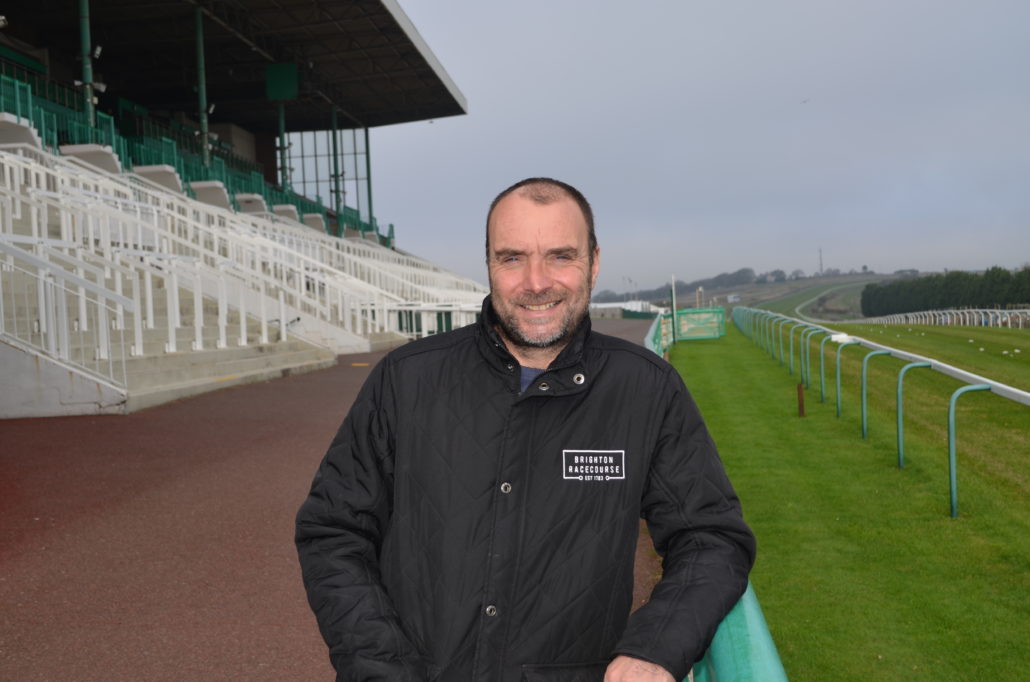
Rigby Taylor At Brighton Racecourse: If Richard Langley has any secrets to his success as head groundsman at Brighton Racecourse “then it must be the benefits of continually feeding the track all year-round”, he says.

As Richard now looks forward to “really ramping up” track maintenance in March, in preparation for the 2019 flat season that starts in April and will see the south coast venue host around 20 meetings, Richard says that his non-stop use of fertilisers (and lots of other products from Rigby Taylor) will ensure the sward “is always strong as we move towards another new season”.

Rigby Taylor At Brighton Racecourse

He continues: “I will feed once a month from October through to February, alternating between the various Microflow-CXS slow-release fertilisers – which contain chelated trace elements including copper, iron, magnesium, manganese and zinc. Plus I will use microstimulants such as Amino-Form LX, an amino acid-based supplement that improves stress resistance and enhances recovery from drought, heat, cold and wear, for instance.

“Then in March I’ll start to increase the levels of nitrogen, to give the track a real boost, and feed every three weeks for the remaining months.

“I’ve found that liquid feeding is the most cost-effective way to use fertilisers and lots of other treatments; it is more accurate and targets the plant more effectively, meaning that, for example, it reduces the amount of strimming needed under the rails because we are not ‘throwing’ products on haphazardly.

“In addition to enabling the plant to quickly absorb the feed, spraying also allows me to mix other treatments including wetting agents (like Breaker) and iron products (Magnet) in the same tank, so again reducing workloads.

“The racecourse is located within the South Downs National Park and we therefore have a responsibility to protect the environment. We continually try to reduce our impact and improve our environmental performance through our operating methods, and part of this is to use suppliers and products that fit within this strategy.”

With a background in farming before entering racecourse groundsmanship as a full-time job in 1996 at Wolverhampton Racecourse – followed by a period at Kempton Park before joining Brighton in 2010 – Richard reflects that his transition from agriculture to race track maintenance wasn’t daunting:

“With my experience at growing crops such as sugar beet, potatoes, wheat and barley, I found growing grass a very similar regime – even though Wolverhampton is now an all-weather track, I was lucky enough to maintain the turf for the last few National Hunt races staged there”.

Rigby Taylor At Brighton Racecourse

Upon his move to the south coast, to a 1.5 mile ‘horse shoe’ track that sits on the edge of the South Downs and 400 feet above sea level, Richard’s experience with Rigby Taylor’s range of sports turf products at Kempton Park was immediately applied at Brighton, where he and a team of three grounds staff maintain the base sward of meadow and downland grass.

“I have been lucky in that the management here have allowed me to do whatever is needed to improve the racing surface and I employ a host of Rigby Taylor products to achieve that. I’ve used other companies’ products in the past but haven’t received the same excellent level of support that I receive from Rigby Taylor’s technical representative Corin Beeney.

“We overseed with Rigby Taylor’s R25 100 per cent perennial rye that features creeping and tetraploid rye. This not only germinates and shows root recovery at temperatures from 5 degC but it also offers great wear tolerance and excellent resistance to drought and disease.

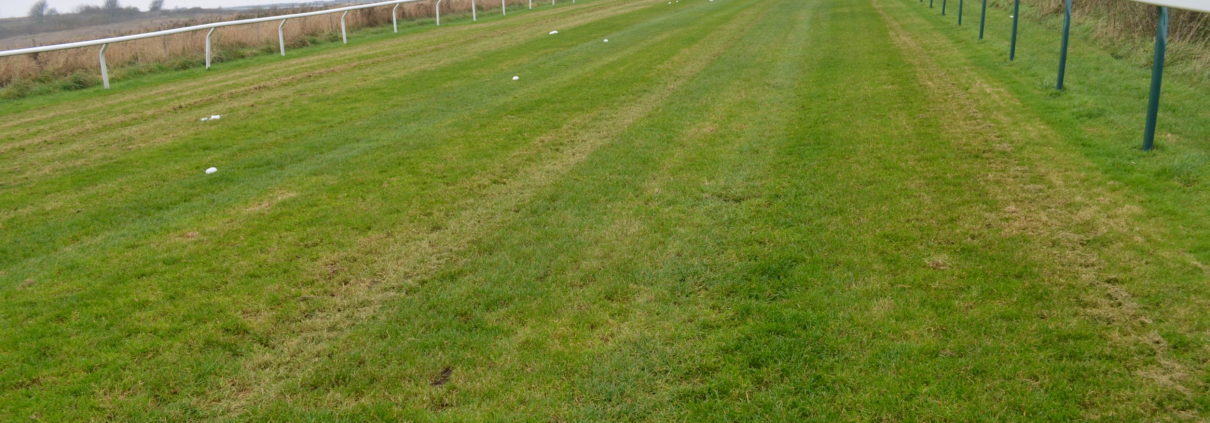
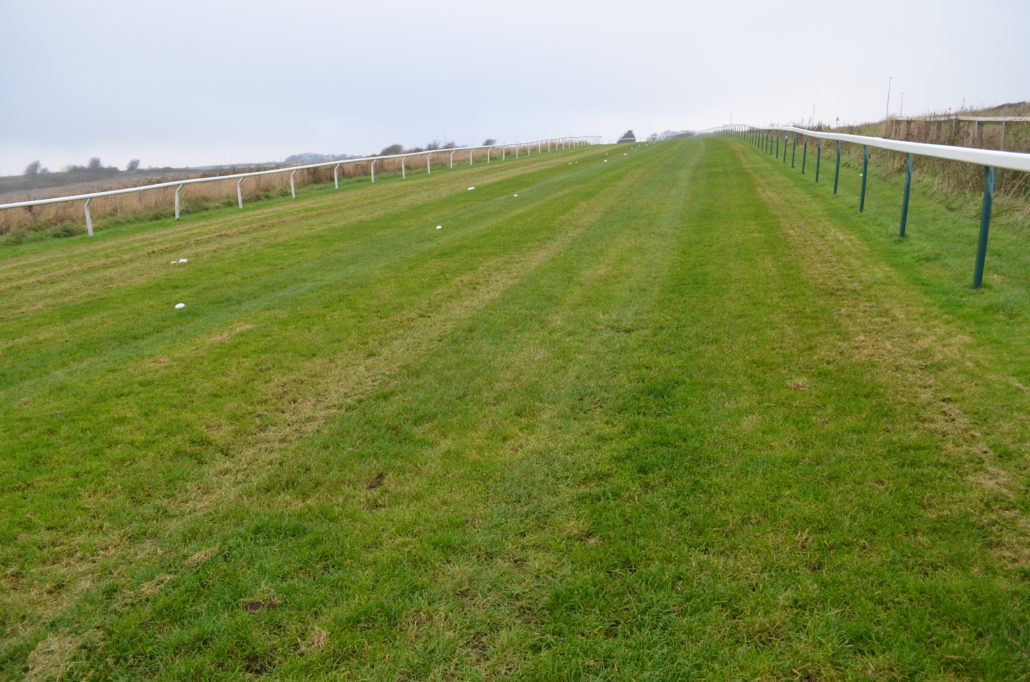
“I’d say the track is now predominantly rye. We normally keep it at 2 inches high in the off season and 3.5 to 4 inches for racing, though for last summer (2018) it was at 4.5 inches in an attempt to keep the moisture in during those weeks of very high temperatures. At that time we also used a divot mix with less sand content – again to try and hold in as much moisture as we could and, in turn, reduce the need for watering.

“That said, the sward stayed healthy all year [helped, no doubt, by the feeding regime] and we didn’t really struggle to maintain a good racing surface during the summer. I think the challenges we faced here last year did not compare to a lot of other venues simply because the sward was well-prepared over the winter and going into the spring.”

While being in such an elevated position and open to the wind means spraying has to be performed at selected times, Richard also highlights chafer grubs and leatherjackets as perhaps two threats that are always in his mind. “But I’m confident that our past applications of treatments have done enough to disrupt the lifecycles of the grubs for the foreseeable future”, he says, and the indigenous birdlife is always encouraged to help themselves to the crane flies!

For race meetings, Richard says the long hours – a 5am start through ‘till when the required remedial works are complete, some of which can lead into the following day – can be onerous, as well as his team’s involvement in non-racing events such as music concerts.  “But we love it”.

For more information, visit: www.rigbytaylor.com

For the latest industry news visit turfmatters.co.uk/news

Get all of the big headlines, pictures, opinions and videos on stories that matter to you.

Follow us on Twitter for fun, fresh and engaging content.

You can also find us on Facebook for more of your must-see news, features, videos and pictures from Turf Matters.
Racecourse Groundstaff Recognised By National Award

Racecourse Groundstaff Recognised By Receiving National Award: Groundstaff at Warwick Racecourse are celebrating after winning the Jumps category in the Racecourse Association’s (RCA) Racecourse Groundstaff Awards 2017.

The judges, made up of an industry-wide panel including representatives from the RCA, Professional Jockeys Association (PJA), British Horseracing Authority (BHA) and National Trainers Federation (NTF), recognised the outstanding achievements of the groundstaff throughout the 2016/17 season.

The Jockey Club racecourse became an all-jumps track in 2014 with a five-year plan to become one of the UK’s leading small jumps courses.

Judges said: “The effort and expertise required to integrate the flat course into the chase course at Warwick helps them stand out in this category and this outstanding achievement will benefit the course hugely in years to come.

“As well as investment in equipment through the replacement of six furlongs of running rail, they have shown a commitment to people which is above and beyond what is required.”

Meanwhile Jane Hadley, clerk of the course at Warwick, said she is proud of the achievements of Warwick’s groundstaff this year.

She said: “Led by head groundsman Guy Woodward, the team managed an ambitious drainage and levelling project last summer, and then coped with the resulting reduced track width through the 2016/17 season, without losing a fixture.

“They produced the racing surface in such good condition that we were even able to accommodate a transferred fixture in the spring.

“Through this year they have worked further on the integration of the old flat track, and can now provide a surface with three running lines over fences and up to eight running lines over hurdles, ensuring that we provide optimum conditions throughout the season.

“Their efforts have been appreciated and applauded by our trainers and jockeys, and this recognition from the RCA is very well-deserved.”

Warwick Racecourse was also a finalist for the Community and Corporate and Social Responsibility Award at the RCA Showcase Awards 2017 for its work on the St Mary’s Lands Masterplan.

It was in recognition of being at the forefront of developing a plan to manage, enhance and promote the common land that is home to Warwick Racecourse and other community assets.

A new entrance to Warwick Racecourse and the common land is currently being created, marking the first step of the masterplan.

Click here to read the original article

For the latest industry news visit turfnews.co.uk

Get all of the big headlines, pictures, opinions and videos on stories that matter to you.

Follow us on Twitter for fun, fresh and engaging content.

You can also find us on Facebook for more of your must-see news, features, videos and pictures from Turf Matters.