Tag Archive for: Speed

High speed, high productivity with GKB DTA models

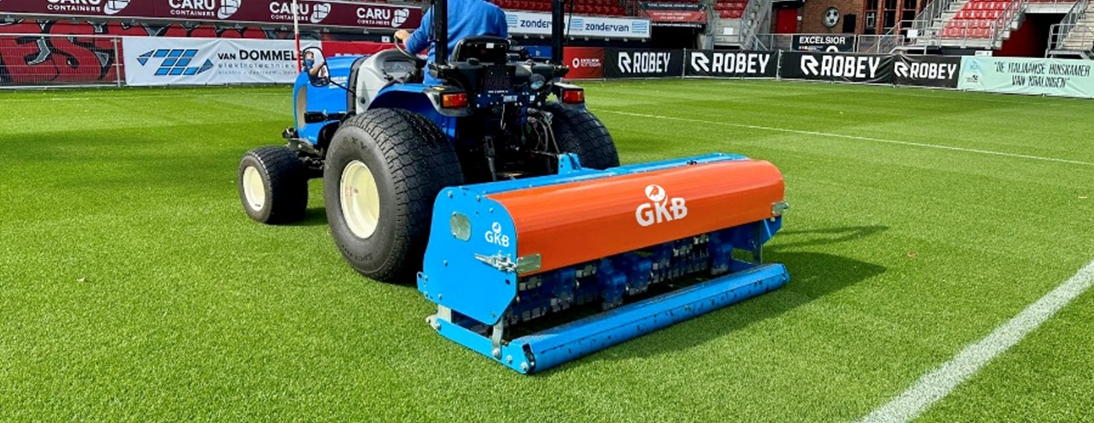
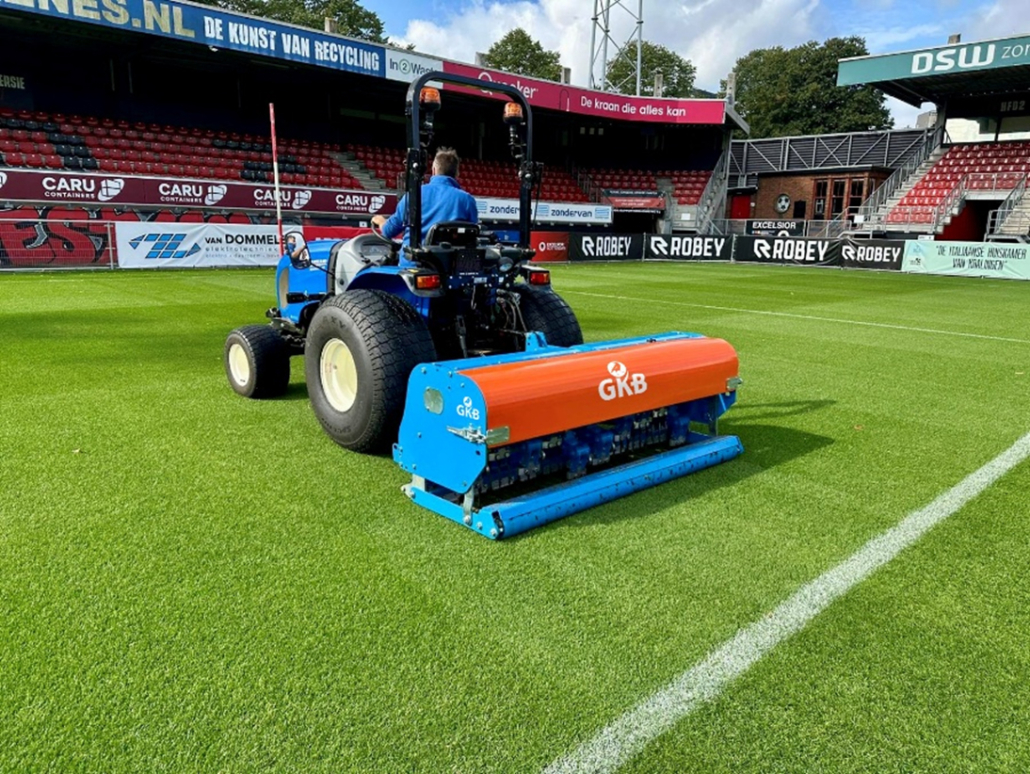
High speed, high productivity with GKB DTA models: If you’re looking for greater productivity in golf course aeration, then a stop by the GKB Machines stand at BTME 2026 is a must with the launch of the new Deep Tine Aerator High Speed (DTA HS) range. Available in three working widths, the DTA HS combines GKB’s precision engineering with significantly enhanced speed of operation helping greens teams to achieve optimal soil decompaction while reducing disruption time.  

Designed for superior output without compromising aeration depth or quality, the DTA HS models allow greenkeepers to cover more ground in less time – an ideal solution for today’s increasingly time-sensitive maintenance schedules. With 1.2m, 1.6m and 1.8m working widths available, whether you’re tackling compaction on tight tees and greens or larger, undulating fairways, there’s a DTA HS model to meet your needs.

High speed, high productivity with GKB DTA models

High speed, high productivity with GKB DTA models

Productivity is also assured with the Sandspreader range, which will also be on show at Harrogate Convention Centre in January. Positioned at the entrance to the show, the SP100 mounted model will set the tone for precision turfcare – compact, reliable and engineered for accurate sand distribution, the Sandspreader is the perfect partner to the new DTA HS for those upcoming spring renovations.

On the topic of renovations, the GKB technical team will be on hand across the duration of the show to discuss the full fine turf maintenance portfolio – whether it’s aeration, topdressing, scarification or seeding on the cards. For the latter, the GKB Combiseeder utilises the tried and trusted combination of two spiked rollers and two brushes to accurately deliver seed into the surface and optimise conditions for germination. Suitable for seeding and routine overseeding work, the Combiseeder is available in four working widths to suit greenkeepers, sports turf managers and contractors alike.

All of this and more can be found on stand 644 when BTME returns on 20th to 22nd January 2026.

For the latest industry news visit turfmatters.co.uk/news

Get all of the big headlines, pictures, opinions and videos on stories that matter to you.

Follow us on Twitter and Instagram for fun, fresh and engaging content.

You can also find us on Facebook for more of your must-see news, features, videos and pictures from Turf Matters.

Using Attraxor for Poa reduction & speed of growth regulation

Using Attraxor for Poa reduction & speed of growth regulation: Founded in 1896, the course at Shipley Golf Club is neatly tucked away in the beautiful wooded valley of Beckfoot, just outside of Bingley in West Yorkshire. The grounds were designed by renowned architect Dr Alistair Mackenzie and present a testing but scenic 18-hole game. 

Chris Wood, Course Manager for Shipley Golf Club, heard about Attraxor’s ability to reduce Poa seedheads through fellow course managers and decided to try it on his greens on a trial basis. Having just completed his first full year of treatment with the plant growth regulator (PGR), he believes it has had a high-quality impact on the greens at Shipley.

Using Attraxor for Poa reduction & speed of growth regulation

Using Attraxor for Poa reduction & speed of growth regulation

Chris said: “I mix 375 grams of Attraxor® with 2 kilograms of nitrogen on the greens every 21 days, a routine which has resulted in reduced Poa seedheads and increased growth regulation. I was very impressed with the speed in which it gets working!”

Attraxor® is formulated for rapid foliar uptake, as the active PGR ingredient, prohexadione, can get to work in as quickly as four hours post-application. The active substance inhibits the gibberellic acid pathway, resulting in a reduction of turf height and turf biomass. Although it can still be applied in cooler soil conditions of around seven degrees centigrade, the key time to treat turf is March through to September for best results.  Chris has been using Attraxor during this main season to support turf growth.

Chris said: “Alongside the decreased Poa, I have also noticed that the grass sward is smoother, resulting in a truer ball roll and increased playability – which is a bonus!”
Attraxor® can also decrease time and money spent on turf maintenance due to its ability to regulate longitudinal turf growth, lessening the frequency of mowing and clipping volumes.

Chris said that he had noticed the need to mow less: “We have been able to skip cutting days due to Attraxor’s growth regulating abilities, which has meant my time can be spent doing other key maintenance jobs around the grounds.

“Overall, I believe that Attraxor® has increased the quality, regulation and playability of the greens at Shipley, although after some applications the turf did lighten slightly – but this doesn’t last and soon wears off.”

For the latest industry news visit turfmatters.co.uk/news

Get all of the big headlines, pictures, opinions and videos on stories that matter to you.

Follow us on Twitter and Instagram for fun, fresh and engaging content.

You can also find us on Facebook for more of your must-see news, features, videos and pictures from Turf Matters.

UltraGroomer™ cassettes satisfy need for speed

UltraGroomer™ cassettes satisfy need for speed: Recording in the region of 4000 rounds played every month, Southport’s Hillside Golf Club is a very busy course!

Tasked with balancing the expectations of the players with the sustainability of the Course is Links Manager Chris Ball – who is now conducting weekly passes with a set of UltraGroomer™ cassettes from the TMSystem™ to satisfy the golfers ‘need for speed’ without reducing heights of cut.

UltraGroomer™ cassettes satisfy need for speed

UltraGroomer™ cassettes satisfy need for speed

Chris has been in charge of the 18-hole links venue since his return to the club in 2018 and together with his greenkeeping team of eight has to manage not only the challenges of their exposed coastal location, but the demand for pace on the greens. “While simply lowering heights of cut may work for some clubs, because of factors such as the wind, this is not sustainable for us without detriment to the overall health and condition of the plant” Chris explains.

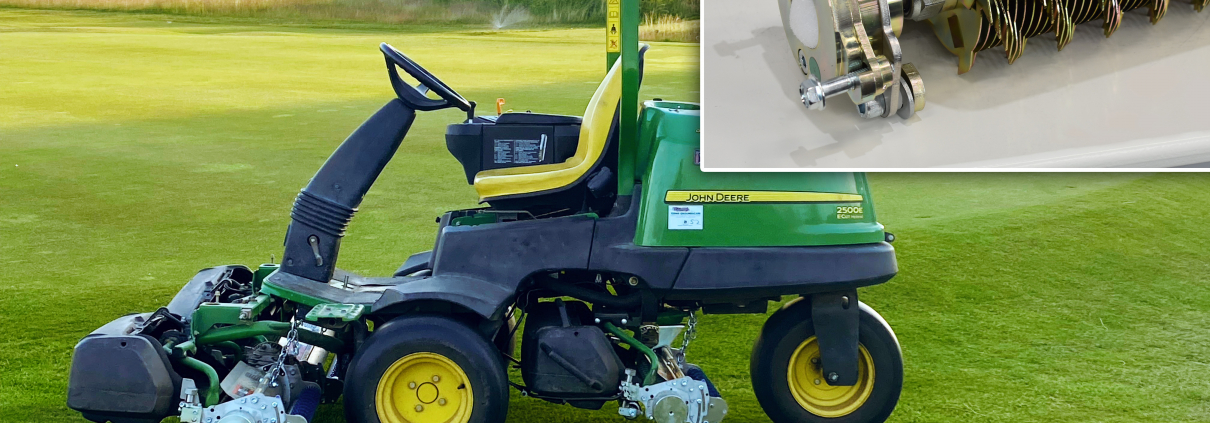
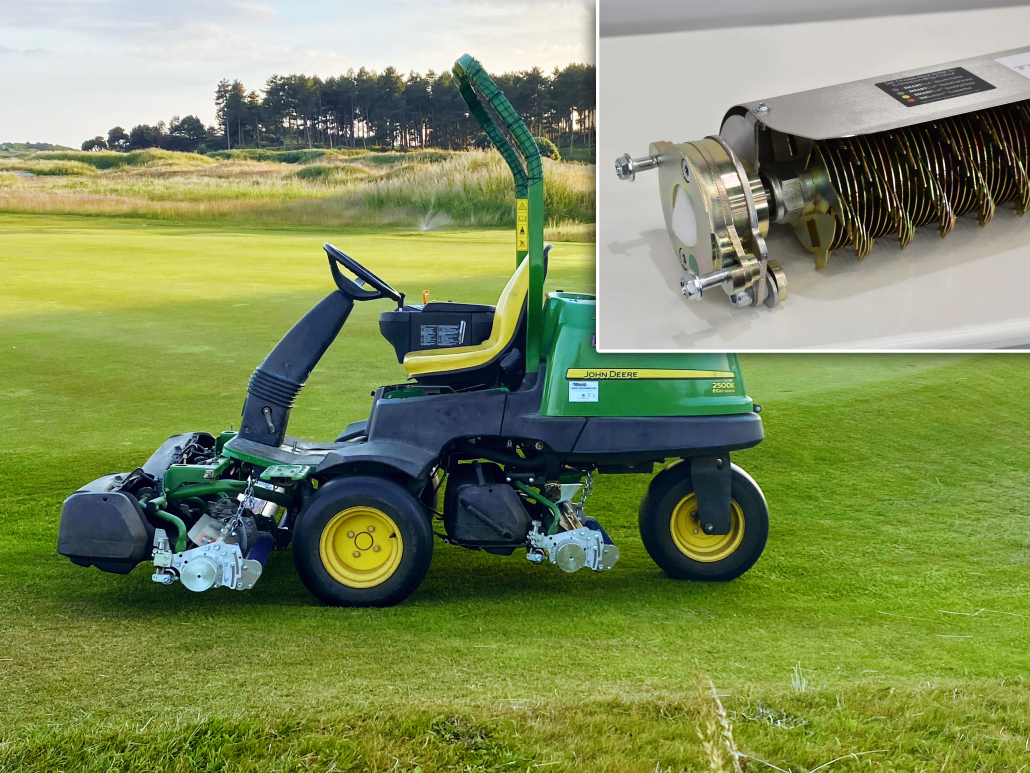
“Our previous verti-cut setup was no longer fit for purpose, so we spoke to our local dealer Turner Groundscare who introduced us to the UltraGroomer™ cassette.”  One of 12 maintenance cassettes from the TMSystem™, the UltraGroomer™ features over 80 1.3mm tungsten tipped blades, spaced 5mm apart, to remove Poa, lateral growth and organic matter – enhancing the downward movement of oxygen, nutrients and moisture and making it more difficult for disease pathogens to take hold.

“We trialled the cassette, fitted in the pedestrian INFINICUT® unit, on a couple of greens and it did a fantastic job of removing the coarser leaves without disturbing the finer species we’re trying to encourage, and without leaving lines in the ground. Although we hadn’t seen them operating on a triple, we were all impressed straight away and promptly purchased a set for our JD 2500 triple.”

Through the main growing season, the Hillside team are running the UltraGroomers™ over the greens once a week to remove any lateral growth, refine and reduce ingress of unwanted species and stand the plant upright – all without causing undue stress. “Having proudly hosted some pro events in recent years, and by being in regular contact with bodies such as the R&A, we know what pace we’re ideally trying to achieve and the best methods to attain that. We are delighted to be maintaining ours, with relative ease, using the UltraGroomer™ cassettes and are very pleased with the results we’re seeing so far.”

For the latest industry news visit turfmatters.co.uk/news

Get all of the big headlines, pictures, opinions and videos on stories that matter to you.

Follow us on Twitter and Instagram for fun, fresh and engaging content.

You can also find us on Facebook for more of your must-see news, features, videos and pictures from Turf Matters.

BLECavator improves speed and accuracy

BLECavator improves speed and accuracy: Dales Sports Surfaces are the world’s leading suppliers of indoor and outdoor bowling surfaces.

With an increasing number of clubs looking to convert over to artificial greens, recent investment in the required equipment has seen them take delivery of a BLECavator from Charterhouse Turf Machinery. Their new BV145 works hand-in-hand with other equipment from the BLEC stable to speed up and improve the accuracy of installing the foundation layers.

BLECavator improves speed and accuracy

BLECavator improves speed and accuracy

“We’re getting an ever-growing number of enquiries from clubs who are wanting to install artificial turf because of the costs involved with maintaining natural turf, and a lack of skilled greenkeepers to look after them” explains Managing Director of Dales Sports Surfaces, Richard Steadman. “Knowing we needed to invest in a couple of pieces of machinery to make this work easier and more efficient, I spoke with Charterhouse Turf Machinery who suggested we look at the BLECavator.”

The BLECavator is a one-pass ground preparator – levelling, raking and rolling simultaneously. The BV145 model has a 1.5m working width and cultivates the ground to depths of up to 18cm, using adjustable tines to lift and screen stones and debris. Burying the undesirable material and raking the ground level, the soil is then compacted by the rear-mounted roller ready for the next stage of preparations.

Richard purchased the BLECavator, together with a Redexim Turf Stripper, in June 2019 through their local dealer, FG Adamson & Son. The pair of new machines were recently put to use on a conversion project at Malmesbury Bowls Club in Wiltshire. “The first thing we did was remove the existing surface with the Turf Stripper before we installed the new drainage system. We then used a BLEC Laser Grader to grade the base level and followed up with the BLECavator to apply a stone/cement layer. Finally, we re-graded the base to a level tolerance ready for installation of the green.”

“The BLECavator is a well-built multifunctional tool that is nice and easy to set up and does a fantastic job of stabilising the soil and stone.” Richard concludes, “With the increase in conversion projects we’re seeing, we now have a fleet of machines that work really well together to speed up the process and improve the accuracy and quality of the finish.”

For the latest industry news visit turfmatters.co.uk/news

Get all of the big headlines, pictures, opinions and videos on stories that matter to you.

Follow us on Twitter and Instagram for fun, fresh and engaging content.

You can also find us on Facebook for more of your must-see news, features, videos and pictures from Turf Matters.

Green speed more than a number

Green speed more than a number: At The Open this year the green speeds measured at 10’1”, 10’2”, 10’3” and, with the threat of rain on the horizon, were slowed to 9’11” for the final day, with all 18 greens stimping within just 4 inches of each other. With that in mind, Golf Magic teamed up with BIGGA to learn more about green speeds…

BIGGA remains obsessed with the speed of our greens, with the implication for the golfer being that faster greens are saved for special occasions, such as club championships. As such, if you’re able to achieve those high speeds in everyday life, then yours must be a high-quality course, right?

Green speed more than a number

But how important are green speeds? Do they matter?

One of the most important innovations in golf course preparation since the 1970s was the stimpmeter. A stimpmeter is a simple device consisting of a long, narrow metal tray that enables greenkeepers to consistently replicate the roll of a ball across a green. It was introduced by the agronomy department of the USGA and is commonly quoted as an effective means of measuring speeds – you may have heard commentators at events discussing how fast the greens were “stimping” at.

However, measuring speed isn’t actually the stimpmeter’s true purpose. Tellingly, the device’s instruction manual reads: “the variations in speed, whether from one green to the next or on different parts of the same green, can do more to negate a player’s skill than ragged fairways or unkempt bunkers”.

That’s the leading authority for golf in the United States saying that consistent greens are more important than fairways, bunkers and even ‘fast’ greens. In fact, the pursuit of faster speeds by lower cutting heights often leads to the detriment of the putting surface, reducing consistency and “negating a players’ skill”.

The enjoyment of the average golfer also reduces as green speeds increase as nobody wants to keep three or four putting as their ball skids past the hole. In terms of pace of play, as little as a one-foot increase in speed can slow the pace of play by more than seven minutes per foursome.

If speed isn’t important, and consistency is, then what’s a ‘good’ standard of consistency across a golf course?

Well, like most things, that depends on the resources available to the greenkeeping team.

Dr Micah Woods is chief scientist at the Asian Turfgrass Center and he has undertaken a study to discover what the average differentiation is across golf courses. Taking 961 measurements at clubs in East Asia and America, he brought together a database of stimpmeter readings. He made three measurements on at least three different greens to come up with a ‘standard deviation’ of golf speed across each course.

Dr Woods said: “The ideal would be a standard deviation of zero, but that is only going to happen by accident because green speed will always vary, even slightly. But I wanted to find out what difference in speed was reasonable to expect? I discovered that 0.3 was the average, meaning that half of the data I gathered was below 0.3 and half was above it.”

He came up with a magic number of 0.3 feet or 3.6 inches. This means that if a greenkeeper reports a speed of 9 feet, the average speed on the course will actually be between 8.7 feet and 9.3 feet. And that’s just an average number for all 18 holes, so the actual spread will be wider than that.

And half of the golf courses Dr Woods measured had a standard deviation of more than 3.6 inches, with one measuring up to 1.5 feet. Consistency, it seems, takes incredible skill to achieve.

At the Ryder Cup in 2016 at Hazeltine, the green speeds for the three days of play were 12.4, 12.4 and 13.4. These are extreme tournament conditions at an American golf course prepared for one of the most televised sporting events in the world and as such there are an army of greenkeepers and volunteers working to get the course to incredibly high standards.

And yet as the green speed increased, Dr Woods discovered that the variability of speed across the greens also increased and the putting surfaces became less consistent. On the final day, with a reported speed of 13.4 feet, one green was even recorded as having an actual speed of 15 feet. That’s a difference of more than 19 inches!

So faster greens are also less consistent greens.

It was a trend that is echoed across every golf course, no matter the budget or resource. For consistency to be achieved, it’s Dr Woods’ opinion – and an opinion shared by the turf management industry – that we should stop obsessing with green speeds.

Rather than making a demand of your greenkeeper that you’d like to see greens ‘stimping’ at a certain amount ahead of the club championship, wouldn’t you rather see them concentrate on achieving greater consistency across the course?

“In visiting hundreds of golf courses, I’ve observed that green speeds are always given as a single number and I’m actually not going to advocate that we change that,” explained Dr Woods. “For the members and the guests who are coming to play a facility, it’s useful just to report a single number, that’s all they need to know.

“But I believe that turf managers should secretly keep the additional information to themselves. By making an explicit measurement of variability across their greens, they can identify problems and opportunities to improve that uniformity.”

If we’re to look at golfer enjoyment, what level of consistency can players actually perceive out on the course? A study by American professors Thomas Nikolai, Douglas Karcher and Ron Calhoun in 2001 concluded that the average golfer is unable to detect a six-inch variation in speed from one green to another and therefore that is “probably a fair definition of consistency on a golf course”. Anything less than six inches and your regular amateur golfer won’t be able to perceive the difference.

So which was the most important measurement at The Open? Was it the slower speed on the final day? In truth, the most important figure quoted is the 4” differentiation as it highlights an incredible degree of consistency. Across 18 holes on a links venue in changeable weather conditions, the greenkeeping team was able to achieve a margin of error of just four inches.

The greenkeepers at your course almost certainly won’t be able to achieve that level of consistency, and it’s unreasonable to even ask them to strive towards such levels. But the important thing to know is that they’ll have more chance of achieving consistency – and you’ll enjoy your round more – if unrealistic demands for ‘faster greens’ aren’t made.

Click here to read the original article

For the latest industry news visit turfmatters.co.uk/news

Get all of the big headlines, pictures, opinions and videos on stories that matter to you.

Follow us on Twitter and Instagram for fun, fresh and engaging content.

You can also find us on Facebook for more of your must-see news, features, videos and pictures from Turf Matters.