
Tag Archive for: Sustainability

BGL commits to sustainability with renewed GEO Certifications

BGL commits to sustainability with renewed GEO Certifications: Burhill Group Limited (BGL) is proud to announce that its entire portfolio of golf clubs has been successfully reaccredited as GEO Certified®.

This news highlights the group’s continued commitment to environmental progression and solidifies its place as the only major multi-course operator to have GEO Certified status across all sites. Each club will hold the renewed certification for the next five years.

BGL commits to sustainability with renewed GEO Certifications

BGL commits to sustainability with renewed GEO Certifications

The GEO certification encompasses environmental success in the areas of golf facility operations, golf development and renovation, and golf tournaments. This status demonstrates a commitment to continuous improvement around nature, resources, climate, and the community.

The announcement comes following the recent recertification of Wycombe Heights Golf Centre in Buckinghamshire, Aldwickbury Park Golf Club in Hertfordshire, and The Shropshire Golf Centre in Shropshire. Sustainability projects undertaken both on and off the course have contributed to the recognitions, including the planting of trees, water retention and recycling, tracking of carbon footprints, use of ultra-efficient LED lighting, and a reduction in the use of cling film and takeaway cups, among others.

Commenting on the achievement, BGL CEO Colin Mayes, said: “Sustainability is more important than ever, so we are continually striving to operate our clubs in the most environmentally sensitive ways possible. For our entire golf portfolio to have been reaccredited with GEO certified status is a testament to the fantastic work ethic and vision of team members at BGL.

“Each club has developed bespoke maintenance programmes designed to incorporate more sustainable and efficient practices, while simultaneously continuing to make improvements to the courses and club facilities that are enjoyed by our members and visitors every day.”

BGL Golf is one of the largest owners and operators of golf courses and facilities in the UK. The company currently operates 22 golf courses at 10 venues across the country, each providing a different style and character while offering a high-quality, friendly, and professional service.

Kelli Jerome, Executive Director, GEO Foundation For Sustainable Golf, added: “BGL’s commitment to sustainability is unwavering, and testament to their progressive nature as a group. They are the first multi-course operator to have all their facilities GEO Certified and all of them have continued to renew and track their progress year-on-year. They have also been setting new ambitious targets and engaging people across the organisation. This leadership shows they are taking the sustainable golf responsibility and opportunity seriously, and GEO Foundation has been very pleased to support, recognise, and share their commitment and results over nearly 10 years.”

For the latest industry news visit turfmatters.co.uk/news

Get all of the big headlines, pictures, opinions and videos on stories that matter to you.

Follow us on Twitter and Instagram for fun, fresh and engaging content.

You can also find us on Facebook for more of your must-see news, features, videos and pictures from Turf Matters.

Sustainability at the forefront from DLF

Sustainability at the forefront from DLF: DLF Seeds pride themselves on consistently improving and setting the standard for grass seed excellence, and their mixtures for 2022 will be no different.

A stop by stand 270 in the Red Zone at BTME, will give visitors the first chance to hear about the new sustainable and environmental solutions that will change the way that professional turf managers will tackle some of today’s biggest challenges.

Sustainability at the forefront from DLF

Sustainability at the forefront from DLF

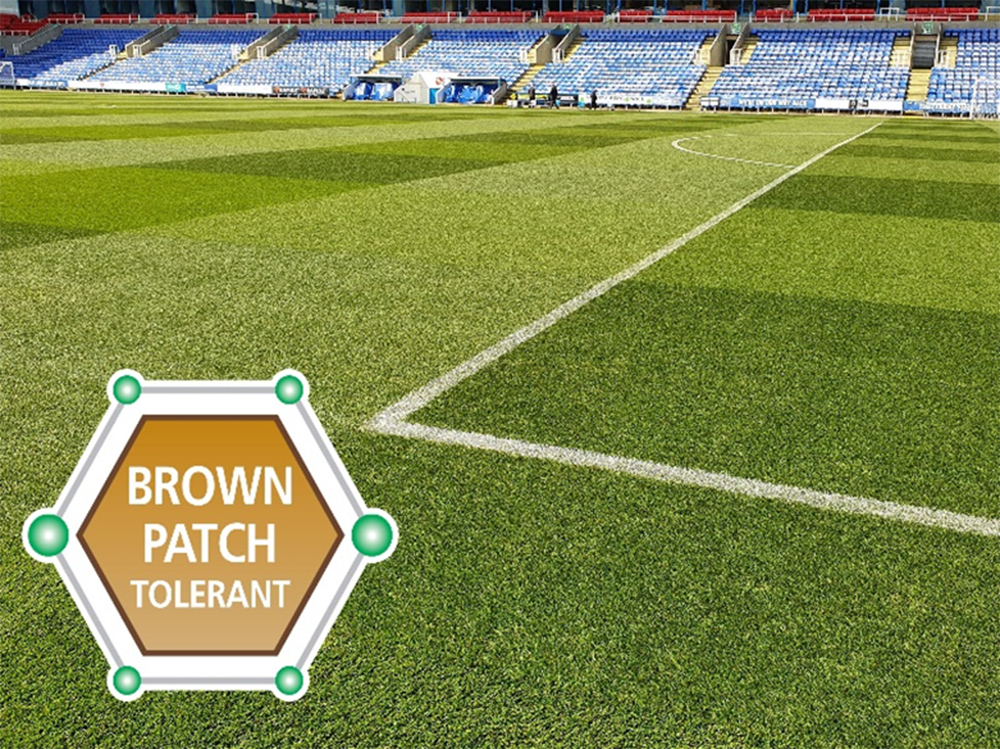
The shift in weather patterns combined with changing management models of maintenance and plant nutrition are largely believed to be the triggers for an increase in the occurrence of some turf diseases, particularly the rise in reported instances of Brown Patch. Over the last two years, and utilising their global research network, DLF have been leading the field with a screening programme for Brown Patch which has identified the tolerance of DLF’s 4Turf® varieties.

The results of the study have therefore formed the foundation of a number of new formulations across the Johnsons Sports Seed fine turf and sports turf ranges – including J Premier 4Turf – a brand new mixture for 2022 which will be the first of its kind to offer proven Brown Patch tolerance for winter sports pitches. For golf, a number of popular mixtures have been reformulated including J Fairway which features the new salt tolerant Esparina chewings fescue and J Rye Fairway which has been updated to include the new highly rated, perennial ryegrass Aniston.

All of the changes will be outlined in the brand-new Johnsons Sports Seed brochure, which can be found on the stand alongside two new brochures dedicated to the recently expanded DLF Wildflower collections. In order to meet with the increasing demand for sustainability and conservation areas, a number of mixtures have been added to both the ProFlora native wildflower and Colour Boost high impact wildflower ranges.

For the latest industry news visit turfmatters.co.uk/news

Get all of the big headlines, pictures, opinions and videos on stories that matter to you.

Follow us on Twitter and Instagram for fun, fresh and engaging content.

You can also find us on Facebook for more of your must-see news, features, videos and pictures from Turf Matters.
Getting to the roots of sustainability

Getting to the roots of sustainability: Back in April, users of ‘turf Twitter’ bore witness to the effect extreme weather has on the sports turf industry.

A combination of 22 days of ground frost, record levels of sunshine and the fourth driest April on record made the preparing playing surfaces exceptionally challenging. Predictably, May was a washout with relentless heavy rain falling across most of the country.

Getting to the roots of sustainability

Getting to the roots of sustainability

Weather extremes add additional pressures and keep sustainability and climate change issues high on the industry’s agenda. The most commonly described approach to sustainability in turfgrass management is a reduction in inputs, such as fertiliser, fungicides and water, but grass breeders at Barenbrug have given turf managers the ability to underpin their sustainability strategy with Sustainable Grass Technology.

The result of years of specialist breeding, significant investment from the global leader in turfgrass seed production, and numerous independent and in-house trials, grasses in SGT blends have been bred to excel in one or more of four key areas of research;

  • nitrogen use efficiency to reduce fertiliser use and cost
  • drought tolerance to increase survival and reduce the need for irrigation in stress periods
  • increased disease tolerance to reduce fungicide use
  • lower clippings yield to reduce mowing frequency, labour and fuel consumption

“Our breeders had the foresight to anticipate the industry’s needs. These grasses have, in some instances, been decades in the making,” explained Dr David Greenshields, Barenbrug UK’s Amenity Commercial Manager.

“Our aim is to give turf managers all the desirable characteristics that help them meet the demands of the modern game, with minimal inputs, and for surfaces to retain their health, vibrancy and resilience under extreme conditions, such as drought or heavy wear. For turf managers looking to reduce their inputs and all the associated costs without compromising turf quality, using grasses specifically bred for that purpose and proven through independent testing is the ideal starting point.”

SGT’s breeding objectives led to the development of Barprium, a perennial ryegrass cultivar that has set a new benchmark for nitrogen efficiency.

Trials conducted at the STRI from 2016 to 2018 focused on identifying which perennial ryegrass varieties use lower levels of nitrogen most efficiently to deliver acceptable turf quality.

It compared the performance of seven of Barenbrug’s existing high performing perennial ryegrass cultivars against the new cultivar.

When low levels of nitrogen were applied to all cultivars, all performed to a good standard throughout the trials, but Barprium showed greater quality and coverage, even with a 50% nitrogen input. The other seven cultivars all ranked highly in the BSPB Turfgrass Seed Listings, making Barprium’s performance even more impressive.

Strong summer colour in Barprium has also proved an asset to the blend for low input golf fairways.

“SGT Rye Fairway is a great example of our global breeding and trials resource delivering excellent regional solutions. The fi ne fescue cultivars in the mix were selected for their sustainable performance characteristics,” explained David.

“Hardtop hard fescue and Barjessica strong creeping red fescue performed particularly well in periods of heat and drought.

Data from fi ne fescue performance trials conducted in 2018 showed that turf quality of hard fescue was unrivalled during the intense heat and drought of a memorable summer, and the recovery capacity of Barjessica was exceptional. The selected cultivars also provide excellent resistance to Red Thread – perfect for low nutrition fairways.”

David is urging Course Managers to consider the significant benefits of hard fescue on fairways.

“The summer of 2018 bought into sharp focus the situation turf managers face during lengthy periods without rainfall. Hard fescue has been used successfully on the continent, in the US and in Australia where summers are hotter and drier than ‘typical’ ones in the UK.

“It is the default species where there is no irrigation, which demonstrates its natural drought tolerance. It is also resilient and more nitrogen efficient than red fescue, and modern cultivars produce high quality turf.

“It currently makes up 50% and 20% of our two SGT mixtures, and I believe it will play a greater role in the long-term management of medium-fi ne turf with low maintenance requirements.

For new constructions and full renovations, sustainability starts with sowing the right cultivars. For established turf, overseeding with these new cultivars can enable the sward to adapt over time to provide additional resilience when and where it’s needed most.”

For sustainability, meet the EPG

For sustainability, meet the EPG: Senior Environmental Consultant Dr Tom Young introduces the newest member of the STRI family, The Environmental Protection Group (EPG), and takes a closer look as to how the new partnership can help manage water at sports facilities.

The Environmental Protection Group (EPG), established in 1998, is a leading independent geo-environmental engineering design consultancy delivering cost-effective, sustainable designs focused in the areas of contaminated land remediation and gas protection, sustainable water management, flood risk assessment and structural waterproofing.

For sustainability, meet the EPG

For sustainability, meet the EPG

STRI and EPG have been working closely with one another since 2010 when the two companies worked together on a number of London 2012 Olympics projects. It was formally announced in August 2020 that STRI and EPG had joined forces and EPG is now part of the STRI Group.

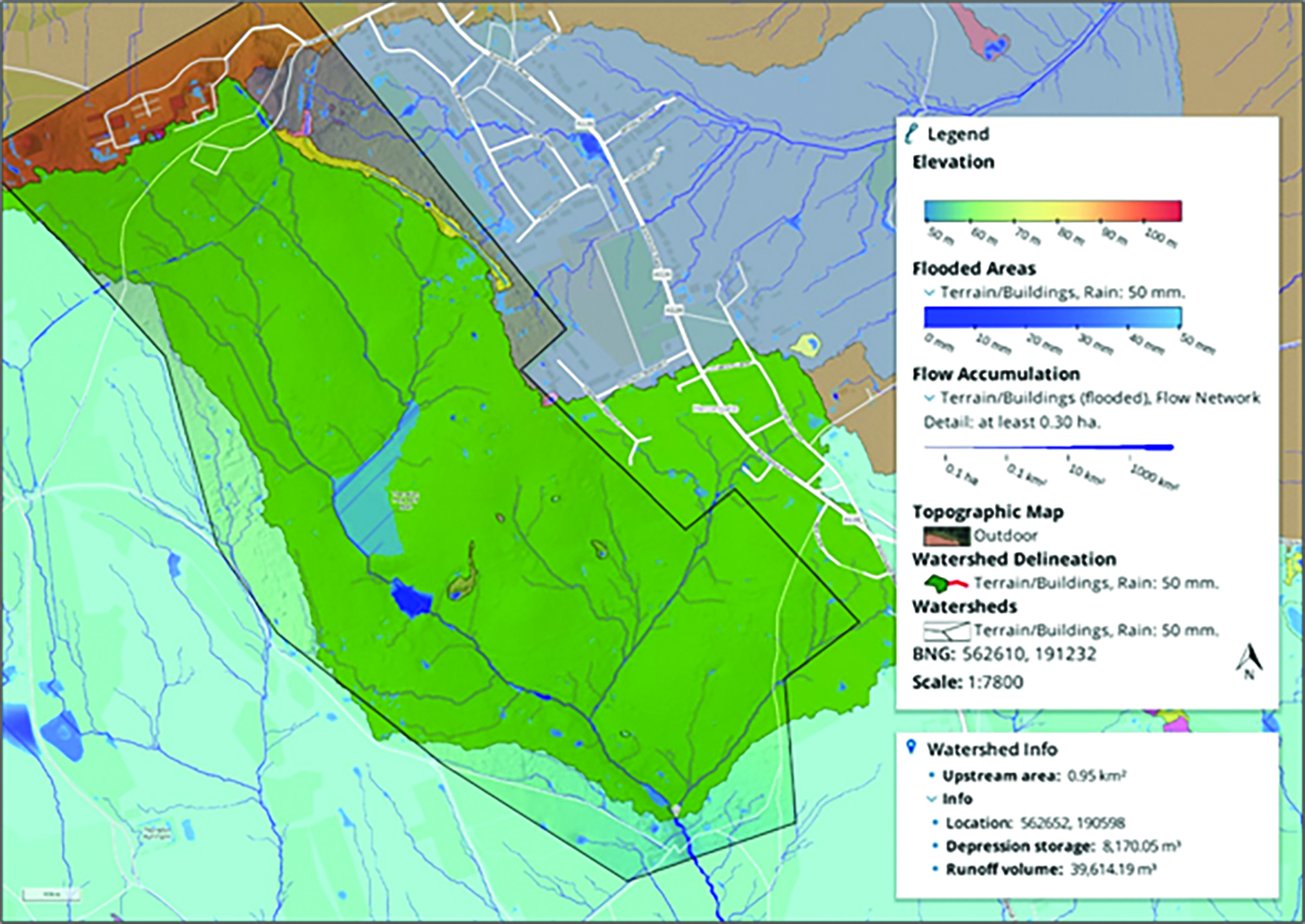
Figure 1

Figure 1

EPG has a huge amount of experience in water management plans, site-wide drainage schemes and sustainable water harvesting. Coupled with STRI’s agronomic, research and design capabilities, the Group now has the ability to further assist sports facilities. In particular, EPG has vast experience in designing Sustainable Drainage Systems (SuDS), which are now more commonplace and often required as part of any planning conditions. EPG was actually co-author of the CIRIA SuDS Manual, a key piece of industry guidance, which is the go-to document for any SuDS engineer.

Harvesting water from buildings

  • STRI and EPG can accurately model and predict volumes of water that can be collected from buildings, which can be easily collected and stored for later reuse
  • This solution can be ideal for small sports facilities that currently rely on mains water
  • Water collected can easily be incorporated into a small-scale irrigation system with the pump station preferentially using collected rainwater before mains water
  • In the example in
    Figure 2

    Figure 2

    Figure 1, a small cricket club in London could potentially harvest nearly 270m3 a year from their clubhouse roof and 400m3 a year from the club car park. This could potentially reduce the club’s mains water requirements by 20-50%. The design of the storage tank is critical in these situations; in order to provide a cost effect solution, but to also be large enough to take advantage of large storm events

Harvesting water from whole sites

  • STRI and EPG can also produce much larger water models for whole sites. This allows us to predict:
    a) how much water falls across an whole site and when
    b) where this water ends up
    c) how much of this water can be transported and stored for later reuse
  • This detailed approach is very much cutting edge, with STRI and EPG optimising hydraulic models based on experience from other sectors and making them appropriate for sports turf situations
  • Key issues to consider include detailed analysis of site drainage systems, rootzone composition, = effect of vegetation on runoff and effect of climate change on future rainfall events
  • In the case study shown in Figure 2, STRI and EPG were able to accurately model the entire drainage network of an 18-hole golf course
Figure 3

Figure 3

  • It was found that an average volume of 3750m3 a month was potentially available for the club once local topographical issues, losses in ground infiltration and inherent water capture by
    vegetation were taken into account
  • With a current demand of 10,000m3 a month, water harvested from the course easily accommodates all the club’s irrigation demand, and also allows the club to seriously look into the addition of fairway irrigation
  • Runoff from the winter when demand is low can be stored to create a surplus of water for the summer when the irrigation demands are at their peak. Therefore, the club would require a reservoir largeenough to not only meet demand throughout the year but also to build up surpluses during the winter
  • The club is now looking into the concept in more detail, with STRI and EPG supporting with detailed designs, reservoir sizing and help with Environment Agency permission

Flood risk Assessments/ mitigating effects of flooding

  • In some situations, flooding of certain areas of buildings is problematic and STRI and EPG are required to design sites to accommodate water from elsewhere
  • EPG is very experienced in running detailed Flood Risk Assessments (FRA) for sites and then designing solutions if flooding is predicted
  • In Figure 3, a site was predicted to undergo serious flooding on a regular basis. EPG was able to mitigate against this by designing the site to accommodate water elsewhere. This was achieved by a simple depression across the site that could accommodate additional flood water (Figure 4)
Figure 4a & 4b

Figure 4a & 4b

Green/Blue roofs

  • The runoff from most new buildings needs to be slowed down in order to reduce the amount and speed of runoff from the building. This can be achieved via the use of rainwater storage tanks as shown in Figure 1. However, sometimes it is more appropriate to store the water on the roofs of buildings (for example in more built up areas or when excavation for tanks is expensive). This can also be combined with vegetation of a roof. Known as Blue (storage of water), Green (vegetation) or Blue-Green (water storage with vegetation) roofs, this method can really improve the look as well as environmental credentials of most buildings
  • In the example given in Figure 5, STRI and EPG were tasked with reducing the runoff from the roof of a new building, whilst storing the water for later reuse in irrigating large planters placed on the roof to provide screening for the building
  • The innovative design stored water across the entire roof level in a shallow modular tank (85mmdeep) which was located across the entire roof slab removing the need to have a large storage tank located in the development boundary. Each roof on the building is connected so once one tank is full, it cascades into the one below
Figure 5

Figure 5

  • Underneath the planters, subsurface irrigation ‘wicks’ were installed to passively wick water from the shallow storage area into the rootzone above. This provides sufficient water for the plants to survive, whilst reducing the need for potable water across the site
  • The design allowed the site engineers to save significant amounts of money by removing an entire large soakaway tank (50m x 4m x 2m)

These examples only demonstrate a small amount of the joint expertise that the two companies have now combined. If you are interested in any of the problem-solving methods discussed, please get in contact with Tom Young at tom.young@strigroup.com

Reproduced from the STRI Bulletin, September 2020, with thanks.

Golf’s ‘Sustainability Champions’ recognised

Golf’s ‘Sustainability Champions’ recognised: GEO Foundation has announced an exciting new initiative to recognise and celebrate individuals who have made an exceptional contribution to advancing sustainability in golf.

These ‘Sustainability Champions’ are honoured for their significant and measurable achievements in club and course management, and in the future, this will extend to course design, tournament staging and advocacy.

Golf’s ‘Sustainability Champions’ recognised

Jonathan Smith, Executive Director, GEO Foundation said: “Golf’s positive contributions to the environment and communities come from the commitments, actions and results generated by real people across the sport, around the world. It is their voluntary leadership that is helping deliver stronger and more sustainable businesses; changing the image of the game; and delivering even more value to society. This is our way of recognising and rewarding them, as individuals, and will hopefully inspire many others to step forward and follow suit.”

See the eligibility criteria and inaugural list of Sustainability Champions

One of the first Sustainability Champions is Richard Mullen, Course Manager at Banchory Golf Club. Richard said: “Always within our professional industry we try to create the best surfaces we can, we should not however create these surfaces to any detrimental measures. We must work day-to-day with a sustainable approach to ensure not just the future of our game but the environment we live in. No bigger reason to change the way we think.”

New individuals will always be welcomed as Sustainability Champions, as they meet the criteria, to create a recognisable, public listing of sustainable golf leaders around the world.

Steve Isaac, Director – Sustainability, The R&A said: “Addressing sustainability often requires behavioural change and investment in infrastructure. It takes courage for individuals at golf facilities to take the lead in promoting such activities to their managers and employers. Those that succeed have to be truly committed and persuasive. ‘Sustainability Champions’ recognises these individuals who not only follow their conscience and do what is right, but who take action that reflects favourably on the golf business and on the sport itself.”

Each Champion is provided with a recognition mark and supporting materials to represent their important roles in the workplace, on their CV and in their communities.

For the latest industry news visit turfmatters.co.uk/news

Get all of the big headlines, pictures, opinions and videos on stories that matter to you.

Follow us on Twitter and Instagram for fun, fresh and engaging content.

You can also find us on Facebook for more of your must-see news, features, videos and pictures from Turf Matters.