Tag Archive for: Than

Nitrogen… more than a number on a bag

Nitrogen… more than a number on a bag: I recently asked someone what they would do if they wanted to feed their turf for a long period of time from one application of fertiliser? The answer given was that the higher the number of N on the analysis, the longer it will last…

So will the analysis, 21.0.0 last longer (longevity) than an 18.0.0? I’m afraid if you answered yes then, well… you aren’t right or wrong, you just don’t have enough information yet. Let’s explore the rationale behind that and why it is important.

I’m sure everyone reading this understands the cost of turf nutrition has significantly increased in the last twelve months! For that reason, I wanted to take this opportunity to bring us back to basics. I want to refresh everyone on the importance of correct selection when it comes to Nitrogen Sources (N), where we find this information and why it really is the most important thing to understand to get the maximum value and performance out of your fertiliser.

The Main Nitrogen Sources for Turfgrass

Nitrogen is, by a long way, the most important and influential input we provide to our turf. It provides the building blocks of plant growth and development. Due to surface usage and necessary but stressful maintenance practices, we often must supplement our soils with Nitrogen based fertilisers to help our turf grow and perform. These fertilisers come in many shapes and sizes. I have set out below, the basics and what to expect if we apply them. However, if you are interested in more detail, I encourage everyone to research it, in particular, the Nitrogen Cycle, and how each form of nitrogen behaves in respect to it.

Disclaimer: I have selected what I believe are the most common sources of Nitrogen used in turf. I fully accept there are others but to keep it short and simple I have chosen the majority.

  1. Soluble Plant Available Nitrogen (Synthetic/Mineral)

These are water soluble forms of nitrogen that, when applied to the turf, are immediately (or almost immediately) available to the plant. Typically, this source is most useful when soil temperatures are low as microbial activity is required for other N sources to be broken down to available forms for the plant. Nitrate, (and when conditions allow, Ammonium) are the forms of Nitrogen taken up by plants and can come in many substances such as Ammonium Sulphate or Calcium Nitrate. Each have additional affects due to their components. i.e., ammonium sulphate also contains 24% sulphur and has an acidifying effect on the soil. Nitrate won’t last long though, due to its solubility and negative charge, it quickly leaches through the profile. Expect these forms to last 2-4 weeks depending on conditions and soil type.

Urea in its pure form, is a water-soluble form of N that, in warmer conditions, is very quickly made plant available as it requires the activity of soil microbes to convert it to plant available ammonium N. For this reason, it can be unpredictable in spring, and it is commonly used in summer/autumn fertilisers. Therefore, although volatilisation (loss of nitrogen as ammonium gas to the atmosphere) is slower in cold temperatures, if urea cannot be quickly converted to ammonium carbonate a significant portion can be lost to the atmosphere, an expensive mistake in the current economic climate. Urea is also popular as it makes a fantastic tank mix partner due to its extensive hydrogen bonding (highly soluble). Expect 4-6 weeks longevity from urea (depending on conditions) with it taking slightly longer to show a turf response than say, ammonium sulphate. It is rarely applied to turf in uncoated granular form due to its high salt index increasing the likelihood of scorch/salt stress.

The problem occurs on labels (if detailed), where any urea, regardless of the form, is referred to as “UREIC”. As we will find out, this can mean many different things.

  1. Synthetic Nitrogen (Slow Release)

Methylene Urea. A similar story to regular urea by which it requires the action of soil microorganisms. However, the production process creates a variety of longer chain molecules. This provides a predictable, slow, longer-term conversion to plant available N thus giving an even growth pattern. This makes them very popular in turfgrass environments where predictable growth patterns are important for performance, such as golf greens and sports pitches. Depending on the formulation and amount of MU, expect anywhere between 4-12 weeks longevity from these fertilisers. It is a very safe, low salt N source, available in both liquid and granular forms.

Thanks to its advanced production process, AGS Growth Products Smart Nitrogen™ contains more longer carbon chain molecules than other methylene urea molecules meaning it provides superior growth predictability and longevity (figure 1). Growth Products also pride themselves on providing end users with every piece of information they need by producing some of the most detailed labels on the market. This helps to ensure turf managers achieve the desired outcome with their fertiliser application (figure 2). Labels are not always this clear, they can be very vague, only stating the analysis. If this is the case, speak to your supplier and find out exactly what is in your fertiliser, be it granular or liquid.

Figure 1: The release curve of Growth Products Smart MU vs standard Urea based products. It provides a longer, more predictable release of N than regular Urea.
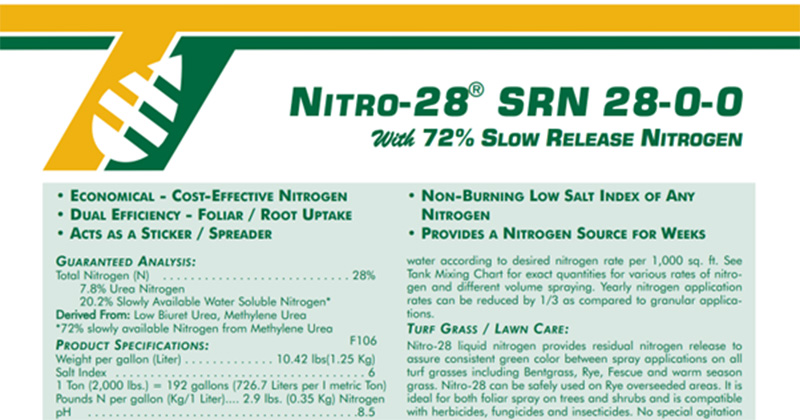
Figure 1: The release curve of Growth Products Smart MU vs standard Urea based products. It provides a longer, more predictable release of N than regular Urea.

Figure 2: An excerpt from Growth Products Nitro-28. This is just a small amount of the detail printed on our labels. Many other products will not provide this information, but it is important you know it.

Figure 2: An excerpt from Growth Products Nitro-28. This is just a small amount of the detail printed on our labels. Many other products will not provide this information, but it is important you know it.

  1. Organic Nitrogen (Slow Release)

In a fairway situation, where clippings are not removed, organic matter provides most of the nitrogen for turf growth. Mineralisation takes care of excess organic matter, converting it to plant available N. However, in managed turf, particularly where clippings are removed, we may wish to provide supplemental organic nitrogen.

Organic fertilisers should be from materials derived from a living (or previously living) source, such as plants and animals. Be careful, this is a common place where cheaper mineral fertilisers can be passed on as more expensive organics by including small amounts of organic nutrients. The E.U. has some fairly lose rules when it comes to classification of organics. For example, to be classified as an Organic Solid, the product must contain a minimum of 15% Organic Carbon. To be classified as Organo-Mineral Fertilisers, Organic Carbon should be a minimum of 7.5% and Organic Nitrogen greater than 0.5%. Very easy to see how many so-called “organics” are not what they seem on the surface.

Granular organic nitrogen sources, such as Sustane, generally take between 4-8 weeks to breakdown leaving behind valuable soil building organic materials among other benefits that are extensively documented. They are also available in liquid forms. However, organic liquids are water soluble nutrients derived from organic sources (such as animal waste), therefore you extract the nutrients and leave the other valuable organic materials behind. They do not require the level of breakdown via microbial activity and have less beneficial effects on soil health.

When it comes to organic fertiliser, make sure you read your labels, with any luck they will clearly state the percentage of Water Insoluble Nitrogen (WIN: This is your true organic part) and provide the organic source. For example, Sustane, contains mainly anaerobically composted turkey litter to supply the organic nutrition to the turf. The percentage of these are always clearly stated on our labels (Figure 3). Don’t be fooled here. Read your label and make sure you are happy with the amount of actual organic you are applying. If it’s not on the label, ask your supplier.
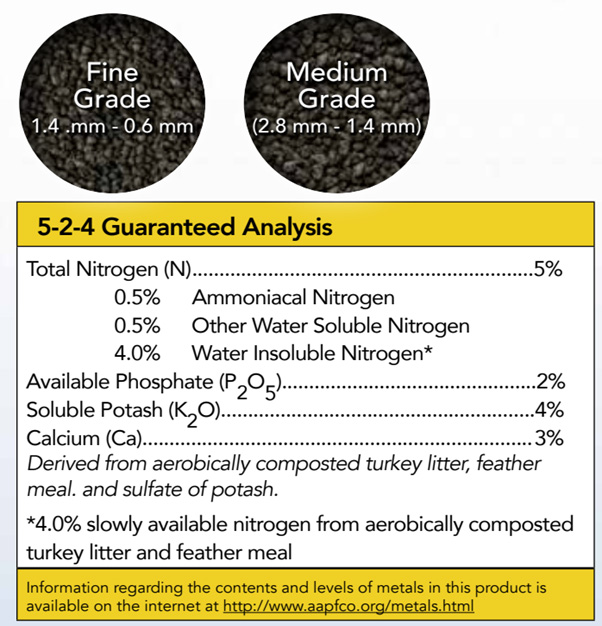
Figure 3: Guaranteed Analysis of Sustane 5-2-4. Detailed information is so important when it comes to Organic Fertiliser.

Figure 3: Guaranteed Analysis of Sustane 5-2-4. Detailed information is so important when it comes to Organic Fertiliser.

  1. Controlled Release Nitrogen

There is then a whole host of controlled release Nitrogen sources. Only available in granular form, meaning they are usually not feasible for fine turf, they consist of materials such as resin or polymer coated urea prills which rely on moisture, temperature and/or microbial activity for release. The most useful characteristic of these fertilisers is that release patterns can be long-term and predictable depending on the type and thickness of coating used. This is a popular choice for areas of turf that need regular nutrition without the ability/necessity to be applying regularly. Products range from 2-6 months in longevity and should come with a guide from your supplier on how long you can expect it last. Again, with urea-based products, the label is unlikely to help as it may all be stated as “UREIC”. This does not give us an accurate picture, there should be multiple grades of coated urea that help provide a smooth nitrogen release curve over the specified time. This is where supplier information is essential, make sure to ask them how the controlled release urea is formulated, as often a timescale in a catalogue can be misleading. This will ensure you meet your goals when it comes to long term, minimal application, turf nutrition.

Summary

I hope you can all see the importance of knowing your nitrogen source. Depending on your turf nutrition goals, we quickly start to see where proper selection fits in. Understanding how the source of nitrogen used will interact with the soil and therefore, the plant, is extremely important. If you are looking for a fertiliser that will last 2-3 months, then understanding that a product containing mainly ammonium sulphate won’t do the job. Similarly, if you are looking to give your turf a kick in spring then it would be a good idea to avoid anything containing too much urea or organic nitrogen. Whilst we can normally rely on suppliers to guide us, it is an essential piece of information that all turf managers should be aware of and regularly reviewing. Keep in mind that most fertilisers contain a blend, or formulation, of multiple N sources depending on the desired outcome.

A little on the underlying agronomics

I could go on about the intricacies of turf nutrition all day! I won’t. However, I would like to leave you with a parting piece of advice when it comes to your soils and nutrition. Get your pH tested! pH, or the acidity or alkalinity of your soil, plays a huge part the efficacy/availability of your nutrition and in turn the grass species that will grow favourably. Because of the way we maintain turf (particularly the use of fertilisers containing ammonium salts), we slowly (sometimes quickly) lower our pH. If acidity increases too much, availability of nitrogen, phosphorus, calcium, potassium and magnesium decreases. This also increases availability of toxic elements such as aluminium and manganese. Below pH 5-5.5, our desired grass species may start to show increased levels of stress. pH monitoring is important to all turf surfaces but is particularly important in sandy rootzones where pH changes quickly due to low CEC. Low pH also has a negative effect on our soil microbial activity thus further decreasing the efficacy of our nutrients that rely on them to breakdown nitrogen sources not immediately available to the plant.

So, absolutely, study your fertiliser labels/information and make sure that what you are buying matches your required outcome. But ultimately, if pH is not in the correct range, you could be missing a big piece of the puzzle. AGS believe in providing the very best customer service. We are happy to provide soil samples, including pH, free of charge. Contact us today if you would like a visit from our in-field technical team.

In conclusion, to go back to the question I asked at the start, we still don’t know if a 21-0-0 will last longer than a 18-0-0. The analysis (N-P-K) is a necessary piece of information when it comes to calculating the number of units applied, still an important exercise, but not the full picture. What we should be doing is reading our labels and asking our suppliers for more information. Then we can sit down and work out exactly what we want, and expect, from our Nitrogen inputs. This will help us make informed, agronomic, and economical decisions about the nutrition we apply to our turf, and hopefully squeezing every penny (Unit of N) as far as it will go.

For the latest industry news visit turfmatters.co.uk/news

Get all of the big headlines, pictures, opinions and videos on stories that matter to you.

Follow us on Twitter and Instagram for fun, fresh and engaging content.

You can also find us on Facebook for more of your must-see news, features, videos and pictures from Turf Matters.

No better finish than a Dennis

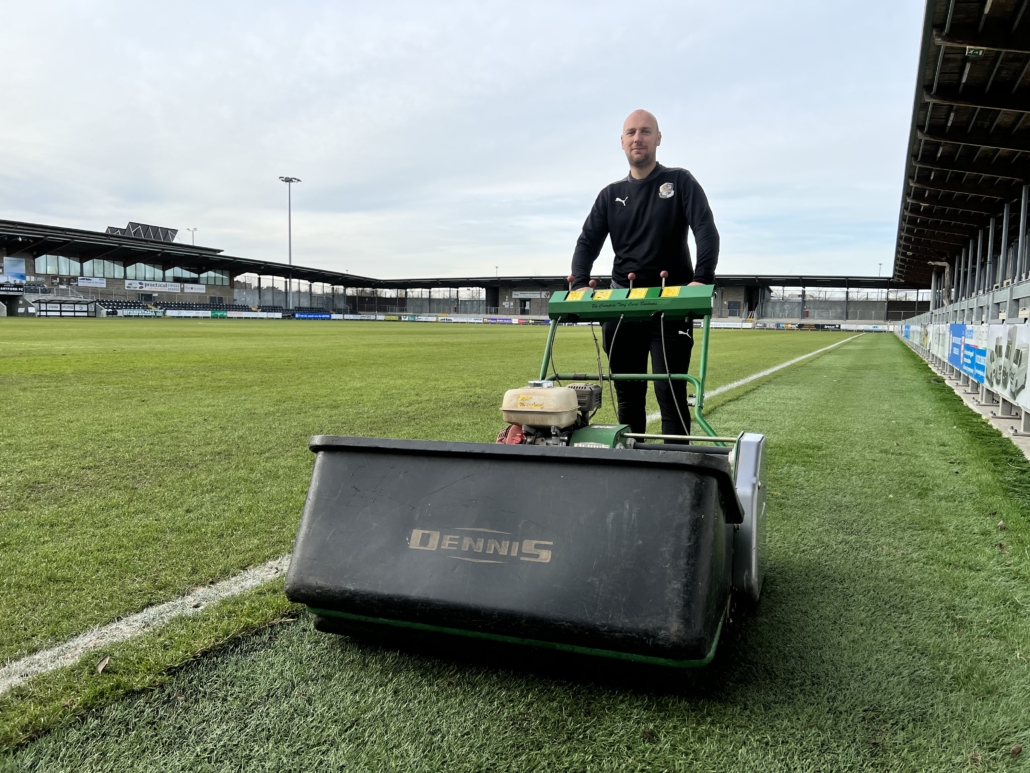
No better finish than a Dennis: Jay Berkhauer, Head Groundsman for Dartford FC, says that the Dennis G860 cylinder mower is hugely versatile and offers an unrivalled finish.

Jay, who is employed by Jordans Sports Ground Solutions, has been working at Dartford FC’s Princes Park Stadium for three seasons. As an experienced grounds manager, Jay has worked on many sports surfaces including football, rugby and cricket.

No better finish than a Dennis

No better finish than a Dennis

It’s safe to say that he knows his mowers and there’s one that he has used regularly throughout his career.

“I first started using Dennis G860’s when I worked at Crystal Palace FC – and I absolutely love them,” he said. “From all the mowers I have used in my career I am of the opinion that you just can’t get a better finish than a Dennis.”

Therefore, when Jay started working for Jordans Sports Grounds Solutions, he was pleased to be given a Dennis G860 to use at Dartford FC: “Everyone who works on the maintenance side for the company has a G860,” he added.

Relied upon at world class stadia and major tournaments, the Dennis G860 is one of the most renowned cylinder mowers in the grounds management industry. Lightweight at just 166kg it is incredibly easy to manoeuvre and comfortable to operate. The handlebar console houses the controls for the throttle, parking brake, roller drive and cutting cylinder drive.

The mower features a large diameter front roller with an adjustable scraper which has been designed for a precise height of cut control, giving an excellent finish on every occasion. The Dennis G860 also features an interchangeable cassette system to assist with a wide range of tasks such as including scarifying, verticutting, brushing, spiking, and slitting.

Jay claims that this versatility is one of the G860’s best features.

“We have the verticutting cassette, the brush and the cutting cylinder,” he said. “In the summer months when the grass needs thinning out, I’ll use the verticutting cassette. I’ll also use it during renovations, just to give it a thorough clean and to remove any thatch.

“In winter, I’ll use the brush cassette after a game to give the pitch a tidy-up and to remove any debris. If I used a small rotary mower to do this after a game, I would be doing it all night, so the brush has certainly helped me to save time.

“Then of course, we have the cutting cylinder which provides an excellent finish every time.

“For clubs at all levels, including grass roots level, there is no better machine,” continued Jay. “The G860 has everything you need in one mower. It is a 3-in-1 for me and therefore works out to be very cost-effective.

“It’s also very light and easy to operate. It never breaks down and reliability is so important for me.”

For further information or a no obligation demonstration, please contact Dennis 01332 824 777 or visit www.dennisuk.com

For more news, reviews and insightful views, you can follow Dennis on Twitter and Instagram @DennisMowers and like the company’s Facebook page – www.facebook.com/DennisMowersUK.You can also view the latest Dennis videos by visiting www.youtube.com/DennisMowers

For the latest industry news visit turfmatters.co.uk/news

Get all of the big headlines, pictures, opinions and videos on stories that matter to you.

Follow us on Twitter and Instagram for fun, fresh and engaging content.

You can also find us on Facebook for more of your must-see news, features, videos and pictures from Turf Matters.
When 3 cylinders are better than 4

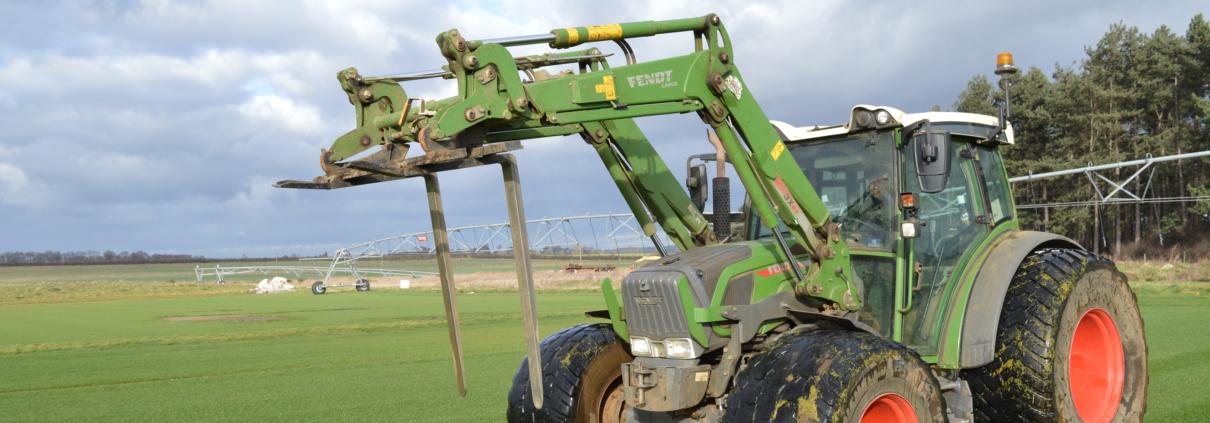
When 3 cylinders are better than 4: Specialist turf growers, County Turf, farm in Yorkshire and Lincolnshire with a fleet of 24 tractors. A strong relationship with local dealer Peacock & Binnington saw the company introduce a Fendt 211 to the fleet in 2020. The Fendt has since done over 3000 hours and has helped director Chris Medley reduce fuel costs and improve the efficiency of loading work.

“We run four-cylinder tractors for most of our general production work. I was advised that the three-cylinder Fendt would manage the work well whilst offering a significant fuel saving. It has been an eye-opener because we have reduced our fuel consumption by at least 25 percent and yet the tractor has performed admirably,” he explains.

When 3 cylinders are better than 4

When 3 cylinders are better than 4

There are five models in the 200 range: the 207, 208, 209, 210 and top of the range 211. Power outputs start at 79 horsepower and extend to 124 horsepower. All models are available as Power, Profi and Profi+ with AGCO’s three-cylinder 3.3 litre engine.

The latest model 211 benefits from a power boost called ‘Dynamic Performance’ which releases an additional ten horsepower on demand. The system detects when components such as the PTO, hydraulics, engine fan and air-con need more power, and then provides that added power through smart control. “If I had one criticism of our 211 it is that it is a little short of power for some applications. The new model may be an option for us in the future if the boost function provides the extra power that we need,” says Mr Medley.

The 69 plate 211 at County Turf has been used mostly for loading. With a Fendt loader on the front and pallet tines on the three-point linkage it has become a popular choice for loading work and Mr Medley suggests it is more useful than a telehandler. “It has very sensitive controls for loading work and the joystick is ergonomic to use, so operators prefer it to a telehandler. It also has the advantage of carrying at the front and rear so it can move more in a day.”

Being a light tractor, it is also easier to transport. The Fendt is regularly deployed to sports grounds where it loads fresh turf and moves sand. “When we install pitches, we need lighter machines to reduce any potential damage to the turf. The Fendt is perfect for this because it has sufficient power without the greater weight that four-cylinder tractors carry.”

The cab is typically Fendt. Quiet, comfortable, and ergonomic. It is spacious and more akin to the larger models in the range. The high seating position offers the operator better vision over the loader and gives an overall feeling of space. “The view from the Fendt is great for our operators when they are moving turf. Operators also enjoy the comfort, especially when they are using it for long shifts.”

The land used to grow turf is dry and coarse which makes establishment tricky at times, especially with the high winds experienced in the area. The 211 is regularly used for mowing and irrigation work but is also versatile enough to work with a harvester, loading lorries. “We can move the Fendt from one job to another really easily. It has enough power to pull mowers and transport irrigation equipment whilst also having the loading capability to move turf.”

Comfort has always been a distinguishing part of the Fendt brand and the 200 series is no exception. Despite being a compact machine with a turning circle of just 4.2 metres, the cabin feels every bit like that of one of the larger models. The seat offers excellent cushioning and support which will help those intending to do long stints behind the wheel. “Our operators really appreciate the Fendt for its comfort and prefer to use the 211 if they can.”

County Turf has a constant churn of tractors, choosing to replace each tractor in the fleet within three years to keep within the warranty period. With excellent support from Peacock & Binnington, Mr Medley is never left without a machine and servicing has been completed quickly and efficiently. “It is vital that we avoid downtime. The Fendt has not let us down in over 3000 hours, so we are really pleased with the reliability and the service we have had from P&B.”

For the latest industry news visit turfmatters.co.uk/news

Get all of the big headlines, pictures, opinions and videos on stories that matter to you.

Follow us on Twitter and Instagram for fun, fresh and engaging content.

You can also find us on Facebook for more of your must-see news, features, videos and pictures from Turf Matters.
Prevention is better than cure

Prevention is better than cure: At a recent meeting of the Amenity Forum, Chris Faulkner of Kersten (UK) Limited spoke about the need for all involved in weed management in the sector to further increase the focus on weed prevention.

He said ‘’A common theme of the conversations we have with customers centre around removing, killing or controlling a weed that already exists. Prevention requires us to think about the causes of weeds on a particular surface and how we can make the environment as inhospitable for weeds as possible’’

Prevention is better than cure

Prevention is better than cure

In a recent presentation at a conference in Wales, the Independent Forum Chairman John Moverley, said ‘’prevention certainly on hard surfaces begins with the design of our environment. For example, designing the corner of a kerb with a nice wide radius, rather than a sharp corner allows a sweeper to easily follow the edge of the kerb and collect any detritus trapped there’’

Also at the conference, a representative from Newport Council commented about their success with improved preventative maintenance work. He said ‘’we have been using mechanical weed removal to minimise the soil build-up over winter and the team has seen a big reduction in the amount of weeds coming up in the spring. This has resulted in the diminished use of plant protection products around Newport’’

The amenity sector has been at the fore front of the development of integrated weed management and produces comprehensive guidance notes for the sector. It is important to recognise that integrated means choosing the right approach and choice of methods for weed management including plant protection products. The increased emphasis on moving to carbon zero also will significant impact on future approaches.

A new guidance note on weed prevention will shortly be available on the Amenity Forum website www.amenityforum.co.uk  and it will be just one of the topics to be addressed in Updating events across the UK organised by the Forum in early 2022. For more information contact admin@amenityforum.net

For the latest industry news visit turfmatters.co.uk/news

Get all of the big headlines, pictures, opinions and videos on stories that matter to you.

Follow us on Twitter and Instagram for fun, fresh and engaging content.

You can also find us on Facebook for more of your must-see news, features, videos and pictures from Turf Matters.

More than a Premier Wicket

More than a Premier Wicket: A break in play caused by the first COVID lockdown provided Ageas Bowl Head Groundsman Simon Lee with a window of opportunity to conduct a full renovation of the club’s nursery ground.

While the events of last year certainly kept everyone on their toes, Simon’s knowledge and experience of using Johnsons Sports Seed mixtures for the last 10 years, meant the results of the renovation – completed with J Intense – came as no surprise!

More than a Premier Wicket

More than a Premier Wicket

Simon took over at the home of Hampshire CCC in January 2020, on the back of nine years as Head Groundsman at Somerset CCC where he’d used both J Intense and J Premier Wicket. “You know what you’re going to get with Johnsons in terms of germination and quality of sward. We had just under seven weeks to get the project complete, before a number of international teams used the ground as a base for three months of training. The speed with which the seed established allowed us to get the ground back in play rapidly and I strongly believe that without that, we would have really struggled for coverage with the high levels of sustained play.”

The 100% perennial ryegrass J Intense mixture was sown on the nursery ground outfields in May – providing exceptional disease resistance and high wear tolerance and recovery, even under close mown conditions. On the main ground it was the proven Johnsons J Premier Wicket mixture, sown at relatively high rates, to recover some bare areas from the previous season and set the stage for a condensed season of matches – albeit behind closed doors.

“I have always had fantastic results with J Premier Wicket mixture in the past but coming to a new ground with different conditions you’re never sure how a product will adapt. My team and I couldn’t be happier with the strength and robustness we have achieved on our squares and now with matches every two weeks, we’re relying on its rapid germination to not only improve presentation, but to provide enough resilience to host matches later in the year.”

Simon concludes, “Despite the cold and challenging conditions we’ve had to start this year, the Johnsons mixtures are hardy enough and we can see the fruits of our labour with some germination already, and only more to come when conditions allow.”

Johnsons J Premier Wicket is also available with DLF’s ProNitro® seed coat technology – making it a great overseeding option for upcoming autumn renovations. Now including hydroactive water management technology, ProNitro® contains both fast and slow-release nitrogen to improve nutrient utilisation through the early stages of plant growth leading to stronger germination, quick uniform growth and improved root & shoot density.

For the latest industry news visit turfmatters.co.uk/news

Get all of the big headlines, pictures, opinions and videos on stories that matter to you.

Follow us on Twitter and Instagram for fun, fresh and engaging content.

You can also find us on Facebook for more of your must-see news, features, videos and pictures from Turf Matters.