Tag Archive for: The

George Browns delivers the full package

George Browns delivers the full package: A package of Baroness and Kubota equipment, supplied by George Browns Ltd, is playing its part in the ongoing investment and development across 11 courses that make up Mytime Active.

More than just supplying first-class machinery, Regional Grounds Manager for the midlands Dave Cole emphasises the importance of the ‘outstanding’ back up support and service they’ve received from all George Browns departments which has helped to keep their ambitious maintenance plans on track.

George Browns delivers the full package

George Browns delivers the full package

Mytime Active comprises of 11 sites – offering nine and 18-hole rounds together with footgolf at locations throughout Birmingham, Bromley and Hampshire. Specifically in the midlands under the remit of Dave and his team of 20 are six courses, three of which are the beneficiaries of the latest batch of machinery upgrades. “In taking our greenkeeping practices to new heights, we’ve completely re-kitted out three courses with the expert help of George Browns” he explains.

“Our experience with them as a dealer has always been second to none; whether that’s William Montgomerie giving us the tailored, expert advice when it comes to machine specification and on-site training, or James Bailey in their Daventry service department who is phenomenal at technical support. As we all know, the grass doesn’t stop growing if your equipment goes down! George Browns understand the pressure of time and the importance of getting fast answers, resolving any issues quickly and going above and beyond to get us up and running.”

The new fleet of equipment installed in September 2024 consists of a Baroness GM2810, LM331 and two LM311 all-hydraulic triplex mowers along with an RTV-X1110 from Kubota. “We’ve run Baroness mowers for years and find them to be bulletproof.” Dave continues, “The cutting cylinders are industry-leading and we’ve definitely witnessed a reduction in disease occurrence on our greens because of the outstanding sharpness and cut quality.”

“The Baroness machines alone give us fantastic versatility on our fleet. They’re capable of working on all ground conditions, and by adjusting the height of cut we can mow multiple areas on our multiple sites to a very high level.”

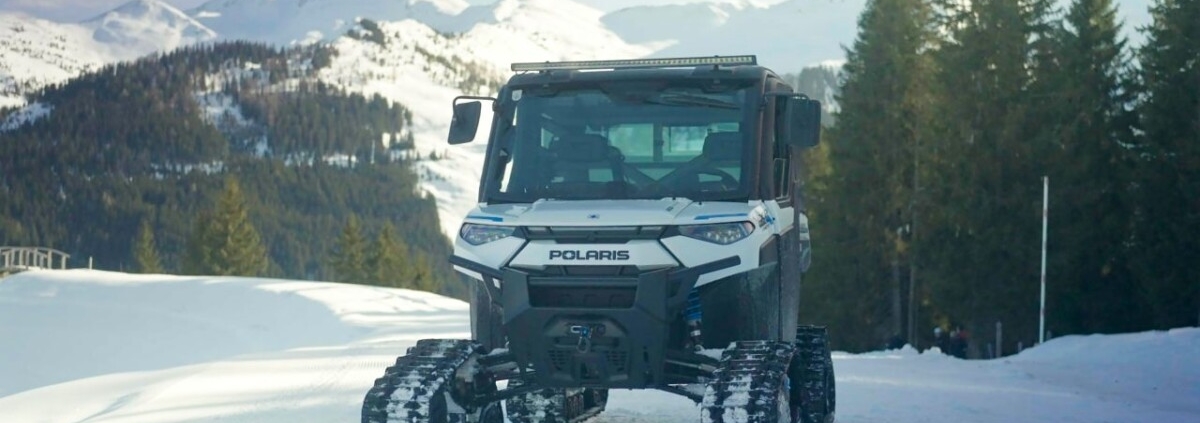
On his Kubota RTV-X1110, Dave describes it as a fantastic all-rounder! “Like the Baroness machines, the RTV is incredibly comfortable and easy to operate, and it’s become our main method of transporting people and materials around the course. It was thoroughly put through its paces over the wet autumn and winter months and it never let us down, no matter how wet it was.”

He summarises, “As we continue to develop our sites around the country, we’re delighted to have the right equipment and support around us thanks to George Browns, helping us to achieve our goals both on and off the course.”

For the latest industry news visit turfmatters.co.uk/news

Get all of the big headlines, pictures, opinions and videos on stories that matter to you.

Follow us on Twitter and Instagram for fun, fresh and engaging content.

You can also find us on Facebook for more of your must-see news, features, videos and pictures from Turf Matters.
Mansfield Sand the Unsung Hero

Mansfield Sand the Unsung Hero: At Warwick Schools Foundation, where sports and recreation are integral to student life, maintaining high-quality pitches and grounds is essential.

This responsibility falls to Grounds Manager Duncan Toon and his dedicated team of seven, who oversee the upkeep of the expansive sports facilities across each of Foundation schools – Warwick Preparatory School, Warwick Junior School, The Kingsley School, King’s High School, and Warwick Senior School.

Mansfield Sand the Unsung Hero

Mansfield Sand the Unsung Hero

Central to their maintenance strategy is the use of Mansfield Sand’s MM40 sand.

MM40 Sport, sourced directly from the renowned Two Oaks Quarry in Mansfield, is renowned for its superior quality and consistent performance. This medium sand – part of Mansfield Sand’s esteemed Mansil range – is designed for the maintenance and renovation of sports surfaces.

Its fine texture and exceptional drainage properties make it the preferred choice for elite sports venues across the country, including at Warwick Schools Foundation.

“I’ve always used Mansfield Sand, even when I was in my previous job at Birmingham City FC, and it has always performed well,” says Duncan.

The Foundation’s maintenance schedule relies heavily on sand application: “We have 400 tonnes delivered in the summer across the site, 120 tonnes in October, and depending on wear, another 120 to 200 tonnes in April”, Duncan outlines. “We do have a good profile here, but the more sand we can incorporate into our maintenance, the better.”

The importance of sand goes beyond general maintenance: “The biggest problem we have at the moment, even with the schedule that we have, is worm casts”, Duncan notes.

“Incorporating more sand into the profile helps with worms because if we can get a sandier top layer, it disperses the worm casts a lot more effectively when brushing. It also aids with drainage and deters birds when overseeding by covering the seed better.”

Duncan relies on MM40 on the majority of the Foundation’s sites, including on their cricket outfields, rugby pitches, and football pitches.

“The thing with sand”, Duncan reflects, “is that it might not be the most talked about product, but it is a vital part of maintenance programmes – and it certainly helps us to prepare for so many fixtures. The more games we put on, the happier people are.”

With its proven reliability, high-quality, and effective results, Mansfield Sand continues to be an indispensable partner for Duncan Toon and his team; ensuring that the grounds at Warwick Schools Foundation remain in top condition year-round.

For more information visit www.mansfield-sand.co.uk

You can also follow the company on Twitter/X – @MansfieldSand and Facebook – https://www.facebook.com/MansfieldSandSportSurfaces/

For the latest industry news visit turfmatters.co.uk/news

Get all of the big headlines, pictures, opinions and videos on stories that matter to you.

Follow us on Twitter and Instagram for fun, fresh and engaging content.

You can also find us on Facebook for more of your must-see news, features, videos and pictures from Turf Matters.

In the Medals!

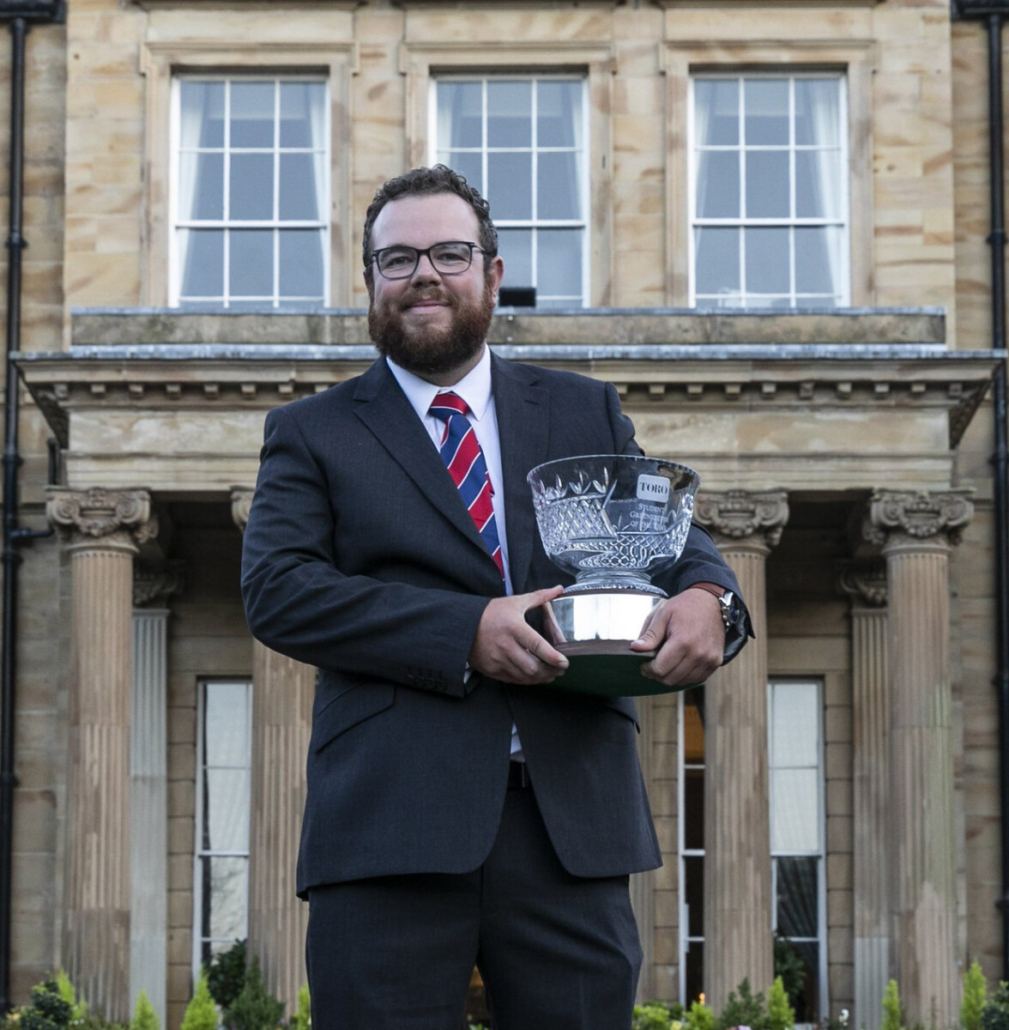
In the Medals: Turf Matters was delighted to learn that a panel of international judges had placed us third best Turf Magazine on the web.

The listing comes from FeedSpot, an Indian-based agency which discovers, categorises and ranks blogs, podcasts and influencers in several niche categories and which has been producing listings since 2012.

In the Medals!

In the Medals!

This latest recognition comes on the back of a series of writing and design awards that the magazine has won over the last five years.

  1. Stadia Magazine
  2. Turf & Rec Magazine
  3. Turf Matters
  4. Turf Magazine
  5. Lawn & Landscape
  6. The Landscaper
  7. Landscape Management
  8. Total Landscape Care

For more information visit www.feedspot.com

For the latest industry news visit turfmatters.co.uk/news

Get all of the big headlines, pictures, opinions and videos on stories that matter to you.

Follow us on Twitter and Instagram for fun, fresh and engaging content.

You can also find us on Facebook for more of your must-see news, features, videos and pictures from Turf Matters.
The with man perfect pitch

The with man perfect pitch: Scott MacCallum met up with CEO of Labosport, Professor David James, the man at the forefront of sports pitch development.

If we think back to sport in the 1970s there are two images that spring to mind. There was Ronnie Radford scoring a remarkable goal for Hereford United to defeat Newcastle in the FA Cup in 1972 and then England prop Fran Cotton playing for the British Lions, in Melbourne, in 1977, looking like the muddiest man you’ve ever seen in your life.

The with man perfect pitch

The with man perfect pitch

Both iconic sporting images, neither of which would ever be replicated today. Ronnie’s goal was incredible as he more or less shovelled the heavy leather ball out of the boggy pitch from 30 yards and into the top corner. John Motson’s commentary and Ronnie’s celebration are part of English football’s folklore, but do you really think that the game would have gone ahead in 2025?

And Fran. Same thing. Would a game that resulted in Fran turning into a monster from a B-movie horror ever have got past a modern day pitch inspection?

Different times and different standards, but I do think it is fair to say that most people forget just how far we have come in the construction, maintenance and preparation of modern day sports pitches. It is now rare for a pitch to become a game-defining issue and it would take a highly trained eye to identify whether a pitch was at the beginning or end of its particular season.

And alongside the development of natural turf surfaces is the quite extraordinary progress of synthetic pitches.

At the sharp end of much of natural and synthetic pitch development is Labosport, the international company which is a the forefront of testing, certification and consultancy on all aspects of sports surfaces. Since 1993 they have spearheaded the development of testing methods to raise the quality of sports surfaces and provide guidance on the design and construction of sports facilities.

And the man who is Labosport’s worldwide CEO is Professor David James. As you might imagine David is a busy guy. When I caught up with him, at Labosport’s unassuming UK Headquarters on an industrial estate on the outskirts of Nottingham, he had just returned from viewing some test pitches at Sheffield Hallam University and was about to head off to New Zealand. Air miles are not something for which he is short!

I first bumped into David at the Syn-Pro Seminar held at Loughborough University early last year where he started by saying that the very first synthetic sports surface was at the Houston Astrodome, in Texas, and had been installed in 1966 – the same year as some people ran onto a natural pitch in North London, thinking it was all over!

Given that David is a man with whom you could talk for hours and hours I decided to limit the bulk of the time to the subject he talked on at Loughborough – synthetics.

As a starting point I asked him that, if that Houston pitch were an Amstrad computer, where were we at now?

“I would say the Apple Mac Pro. However it’s still not a finished development. Looking at synthetic surfaces, they’ve really come on huge amounts in terms of playability, athlete welfare, skin injury risks and other injuries,” said David, adding that as with most industries sustainability is now very much the driving consideration.

As for a Eureka moment for the synthetic turf industry along that path from 1966 to 2024..

“I think the Eureka moment has to be the arrival of the so-called 3G. “The two key components of a 3G pitch are a longer pile. Rather than something that’s 25mm, it’s up at 50mm or 60mm.

“And then having an infill, which does a number of things. First of all, it keeps the fibres standing upright which allows players to wear studded footwear, because the infill allows the penetration of the studs. So it gives traction which is much more similar to natural turf and the ball bounce is more comparable to natural turf. You’ve got much more energy distribution so you don’t get very high bounce or very long roll.

“It really simulates natural turf much more closely than those early generations of pitch,” said David, adding that the original 1966 Astrodome pitch was much better suited to American football than it would have been for our more global version of the game.

And indeed those early pitches were still perfectly suited to a sport that has thrived since the introduction of synthetic surfaces – hockey.

But as development continued the understanding of the benefits of a high quality artificial pitch grew.

The key argument for synthetic turf is that that it can withstand up to ten times more playing hours than a natural turf field.

“That’s really important, as you can then look at the availability of land.

Among the reasons why synthetic turf took off so much is that you’ve got this all-weather playability. We don’t get fixtures being cancelled in February. It’s a sobering statistic that up to 50% of all football matches are cancelled in February in recreational football,” revealed David.

“Added to that rather than having ten football pitches you can have as many games on just one pitch. That literally frees up land. You can sell off your playing fields, perhaps for housing developments, and keep the one synthetic field because it can withstand the amount of use.”

But now having had 20 years when 3G pitches were the gold standard new heights are being reached and new quality levels achieved.

“We’re now looking at the next generation of pitch. What we’re looking at is having a shorter pile system, perhaps 40mm using less infill material and having a shock pad under the turf.

“Using less infill on the top and incorporating a shockpad underneath, you get synthetic surfaces which are more consistent than natural turf,” said David, adding that upwards of 35% of all the recycled tyres in the world get recycled into sport fields.

The EU have made a decision to effectively have a ban on the sale of granulated tyres for this use from 2031. The UK has yet to decide what they are going to do.

“There is a lot of work looking at alternative infill materials and there are many options including coconut husks, olive pips, ground walnuts, shells, corn on the cob, cork, wood chip.”

The with man perfect pitch

The with man perfect pitch

For a system to work everything has to gel – the shock pad, the carpet, the density of the pile, the amount of stabilising infill, the sand and how much performance infill there is.

“We’re now in a period where there’s going to be huge diversity in the market with these different infill materials, different shock pads, different pile lengths.

They’ve got different characteristics. They’ve got different price points. They’ve got different maintenance issues, different longevity. Some of the materials are very robust while others are more prone to deterioration over time.”

One previous area of concern was the level of injury which can be caused by playing on a synthetic pitch.

“I recently gave a speech at the SAPCA conference on the latest research into the injury risk to players from different playing surfaces. There are very strong perceptions among elite football players that synthetic turf has a highest higher injury risk.

“I don’t discount the player experience but, at the same time, I want to look at the data and there have been something like a 120 peer-reviewed scientific publications that have compared inury risk between synthetic turf and natural turf.

“Indeed here has been a recent systematic review, which took 53 of the highest quality studies from all over the world. It showed that there is no elevated injury risk on synthetic turf to natural turf for football. It did, however, show a slight elevation of risk in American football.”

Around about 10 years ago there were newspaper headlines, and some anecdotal evidence, that rubber crumb in synthetic pitches was causing cancer. However all research has since revealed that the level of potentially carcinogenic chemicals in recycled tyres is so low that it is deemed to be of no risk to humans.

Having taken on the global CEO role at Labosport 18 months ago, how did David find himself in such a key role within the sporting world?

“I actually trained as a mechanical engineer at the University of Sheffield, so for me it’s all about materials and how balls and athletes interact with the surface. That’s still my fundamental passion and I view a lot of these topics through the prism of engineering.

I’m not an agronomist, but I did my engineering degree and then a PhD that was funded by the England and Wales Cricket Board. I got to work with Bill Adams, who sadly recently died, He was a huge leading light in agronomy, and worked for the ECB, looking at cricket pitches.

“He was taking soil cores and looking at clay content while I was coming from an engineering perspective, looking at how balls bounced. It’s impact mechanics.

“I was using high-speed video to film balls bouncing and then characterising things such as the pace of the bounce. That got me going on the engineering of sports surfaces, The surface is fundamentally an engineered product, whether it’s natural or synthetic. Amazingly, my PhD actually became an important reference document on cricket pitches and the science of cricket pitches.”

David remained in academia for the next 15 years, focusing on how balls and humans interact with surfaces in all sorts of different ways.

“I was looking at footwear and worked with companies like Adidas, while working for the University of Sheffield and then Sheffield Hallam University.

“I ended up running the Research Centre. We had a great time during London 2012 as well, and did a lot of work with our Olympic teams, taking this engineering perspective around sports performance and understanding the sports environment. But my personal passion has always been the surface, always been understanding the playing surface or the running shoe.”

David joined Labosport six years ago and ran the UK side of Labosport. Then, a year and a half ago, he became CEO of the whole group.

Labosport has 16 laboratories in 11 countries but also has companies, such as PSD, Professional Sports Turf Design, TGMS. Outside of Europe there is Labosport China, Labosport India and Labosport Australia.

“We also have the New Zealand Sports Turf Institute. In the Americas, we’ve got Labosport Canada and in Texas, Labosport USA, which really focuses on golf and the golf industry.”

The company is there to assist anyone wishing to develop sports facilities.

“It could be that we produce a feasibility study. Maybe you’ve got an old facility, you’ve got a piece of empty land, and want to build an athletics’ track. We would look at the ground conditions and then provide options and potential designs and then perhaps assist with the writing of a specification and then assist it through planning. We’re an independent consultant, so we stand aside from construction. However we might be involved in monitoring the quality of the construction and carry out the certification. We would then monitor the pitch throughout its life, carrying out recertifications and ultimately look at the end-of-life options.”

Having been immersed the subject for so many years it would be remiss not to ask David for his thoughts on the future and where he would like to see stadiums and pitches in the next decade or so.

“I would like to see the industry moving away from the model where you have a massive stadium in a city where you play one game every two weeks. It’s a huge facility so why not have four or five games a week there shared by different clubs – men and women, rugby and football, hockey whatever.

“From a sustainability perspective, it just makes so much sense.”

Even if that means we won’t be seeing any modern day images of the likes of Ronnie Radford and Fran Cotton!

Toro, the only choice

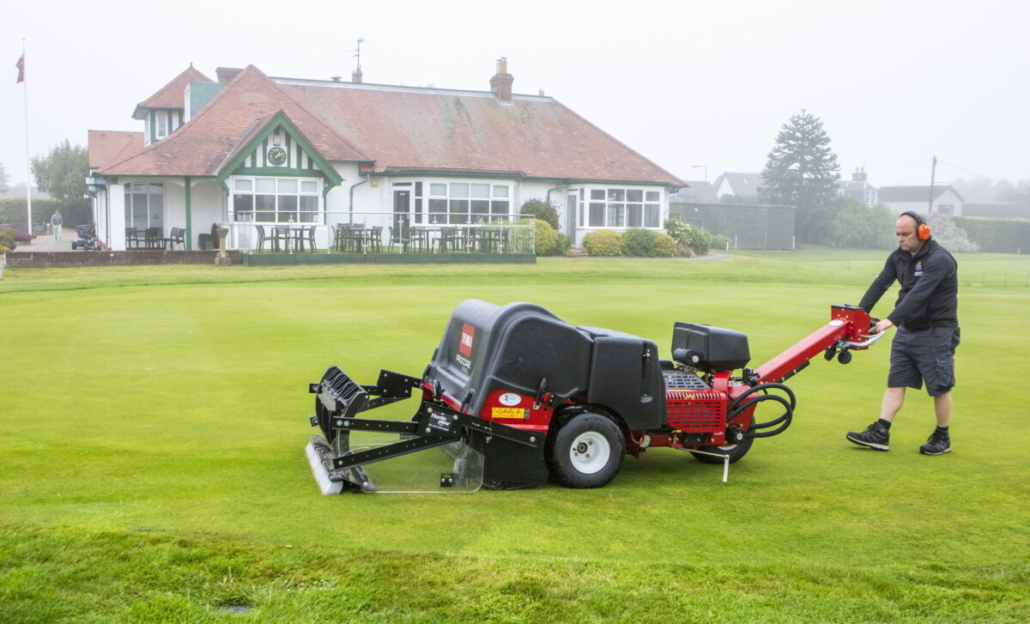
Toro, the only choice: Dullatur Golf Club is moving towards a more sustainable future for turfcare – and the club, which is situated near Glasgow, saw Toro machinery as the only choice when it came to trusted quality.

At the helm of the move is experienced Course Manager Richard Bell. Richard has worked at Dullatur for 23 years, beginning his career as an apprentice at 16 – and was even a junior member of the club prior. Golf has nearly always been a central part of Richard’s life, and with a team that combined has several decades of experience at the club, their turfcare expertise is second to none. 

Toro, the only choice

Toro, the only choice

Managing an expansive club like Dullatur, with two 18-hole courses, demands a constantly evolving, proactive approach. With a year-round team of seven, supplemented with four seasonals, Richard understands the importance of efficiency – and reliable equipment.

“With a total of 36 holes, the sheer volume of greens, tees, fairways and rough is a lot of ground to cover for the team and the machinery, and we have to maintain the highest standards for our club members,” he says. “We’ve worked predominantly with Toro machinery to deliver the quality of cut we need – I trust Toro equipment to perform at the highest level.”

Richard has added to his fleet three new pieces of equipment: the all-electric Toro Greensmaster eTriFlex 3370, Reelmaster 5010-H hybrid fairway mower and Reelmaster 3100 sidewinder. 

Richard was particularly impressed with the eTriFlex 3370, as his first all-electric mower: “I had read about the 3370, and I had the chance to operate one while volunteering at the British Open at Royal Troon. I spent the entire week cutting greens with it, which was an amazing experience. It gave me the best hands-on demonstration I could ask for.

“The quality of the cut was phenomenal – it rivalled hand-cutting, which is considered the best quality of cut achievable. Even after greens were double-cut by hand, the eTriFlex was still removing clippings. It’s rare to find a machine that delivers results comparable to hand-cutting, but this one did.” 

Richard emphasised the importance of sustainability and local community to Dullatur Golf Club, and how the new machinery benefits both: “We’re looking to be better for the planet. It’s our first all-electric piece of equipment, and we already know how good the hybrid 5010 is, as we have one in our fleet. Now that performance is at such a high level, we see this as a start of the long-term plan. 

“With electric equipment, you’re more sustainable, there’s no need to worry about oil spills, and we aren’t concerned with noise pollution – so we’re not bothering golfers playing or our neighbours in the morning!”

Ross Neil, Area Sales Reesink Scotland West, has supported Dullatur Golf Club with the acquisitions. Richard commented on the service: “They provide a great service; I’m always able to get them on the end of the phone, and they’re happy to answer any questions I’ve got whenever I need it”. 

Ultimately, Richard trusts the future, more sustainable outlook of Dullatur Golf Club with Toro. “For the new electric machinery, I expect we’ll see the same longevity you get with every other Toro mower. It’s just trust in the brand. It’s strongly my belief that Toro is the best – the best longevity, the best value for money. I can’t see us looking at any other brand in future.” 

For the latest industry news visit turfmatters.co.uk/news

Get all of the big headlines, pictures, opinions and videos on stories that matter to you.

Follow us on Twitter and Instagram for fun, fresh and engaging content.

You can also find us on Facebook for more of your must-see news, features, videos and pictures from Turf Matters.