Tag Archive for: Well-Being

Well-Being and Recruitment Day a success

Well-Being and Recruitment Day a success: On Tuesday 28th February 2023, Carnoustie Golf Links and The Rookery played host to its very first Recruitment Open Day, in parallel with a Health and Well-Being Open Day – another first of its kind at the Links.

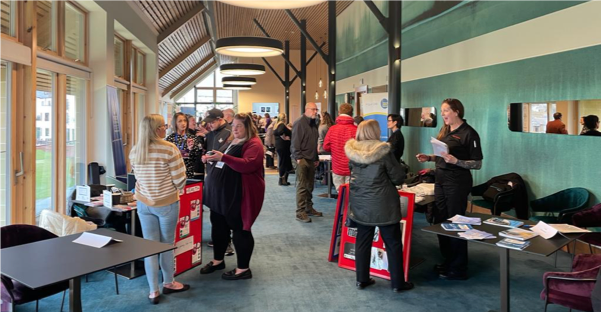
Between 11am and 3pm residents from the local area were welcomed to Links House to explore the recruitment opportunities available at the Links, including roles in Guest Relations, Merchandise, Golf Operations and Restaurant Waiting Staff. The informal day was designed to give everyone a chance to meet some of the senior management team, explore the facilities and learn more about the roles.

Well-Being and Recruitment Day a success

Well-Being and Recruitment Day a success

Furthermore, over 32 local mental health and well-being services and charities were on site in The Rookery to share a wealth of information with everyone in attendance.

The day was deemed highly successful with over 130 guests in attendance. This event is one of the many outreach initiatives that Carnoustie Golf Links run. The most notable being its Community Benefits Programme which has donated over £250k+ to local good causes to date.

Services & Charities that attended on the day:

Alzheimer Scotland;
Andy’s Man Club;
Angus Health and Social Care Partnership;
Angus Independent Advocacy;
Angus Voice;
ANGUSalive;
Carnoustie Medical Group Patient Representative Group (provisional);
Change Mental Health;
Citizens Advice Bureau;
Communities Team (Carnoustie, Monifieth & Sidlaw) Angus Council;
Community Action Team Angus; Scottish Fire and Rescue Service;
Cruse Scotland Bereavement Support;
Department for Work and Pensions;
Dundee & Angus College;
Flourishing Well;
Golf Memories/Cycle Without Age;
Hear Me;
Macmillan (ANGUSalive);
Manna Project, Carnoustie Baptist Church;
Mental Health & Wellbeing and Substance Use, Public Health Directorate NHA Tayside;
Nature Prescribing;
New Solutions;
Penumbra;
Police Scotland;
REACH Across;
Re-Engage;
Royal British Legion Scotland;
Skills Team, Angus Council;
Skilz;
Suicide Prevention / MH &WB;
Tayside Council on Alcohol;
Voluntary Action Angus;

For the latest industry news visit turfmatters.co.uk/news

Get all of the big headlines, pictures, opinions and videos on stories that matter to you.

Follow us on Twitter and Instagram for fun, fresh and engaging content.

You can also find us on Facebook for more of your must-see news, features, videos and pictures from Turf Matters.

Well-being Wednesday: what is stress?

Well-being Wednesday: what is stress?: We all know what it’s like to feel stressed, but it’s not easy to pin down exactly what stress means. When we say things like “this is stressful” or “I’m stressed”, we might be talking about:

  • Situations or events that put pressure on us – for example, times where we have lots to do and think about, or don’t have much control over what happens.
  • Our reaction to being placed under pressure – the feelings we get when we have demands placed on us that we find difficult to cope with.
Well-being Wednesday: what is stress?

Well-being Wednesday: what is stress?

There’s no medical definition of stress, and health care professionals often disagree over whether stress is the cause of problems or the result of them. This can make it difficult for you to work out what causes your feelings of stress, or how to deal with them. But whatever your personal definition of stress is, it’s likely that you can learn to manage your stress better by:

  • managing external pressures, so stressful situations don’t seem to happen to you quite so often
  • developing your emotional resilience, so you’re better at coping with tough situations when they do happen and don’t feel quite so stressed

Is stress a mental health problem?

Being under pressure is a normal part of life. It can help you take action, feel more energised and get results. But if you often become overwhelmed by stress, these feelings could start to be a problem for you.

Stress isn’t a psychiatric diagnosis, but it’s closely linked to your mental health in two important ways:

  • Stress can cause mental health problems, and make existing problems worse. For example, if you often struggle to manage feelings of stress, you might develop a mental health problem like anxiety or depression.
  • Mental health problems can cause stress. You might find coping with the day-to-day symptoms of your mental health problem, as well as potentially needing to manage medication, heath care appointments or treatments, can become extra sources of stress.

This can start to feel like a vicious circle, and it might be hard to see where stress ends and your mental health problem begins.

Why does stress affect me physically?

You might find that your first clues about being stressed are physical signs, such as tiredness, headaches or an upset stomach.

There could be many reasons for this, as when we feel stressed we often find it hard to sleep or eat well, and poor diet and lack of sleep can both affect our physical health. This in turn can make us feel more stressed emotionally.

Also, when we feel anxious, our bodies release hormones called cortisol and adrenaline. (This is the body’s automatic way of preparing to respond to a threat, sometimes called the ‘fight, flight or freeze’ response). If you’re often stressed then you’re probably producing high levels of these hormones, which can make you feel physically unwell and could affect your health in the longer term.

www.mind.org.uk

For the latest industry news visit turfmatters.co.uk/news

Get all of the big headlines, pictures, opinions and videos on stories that matter to you.

Follow us on Twitter and Instagram for fun, fresh and engaging content.

You can also find us on Facebook for more of your must-see news, features, videos and pictures from Turf Matters.
Well-Being Wednesday

Well-Being Wednesday: Activity and exercise

Activity and exercise are essential in maintaining good mental health. Being active not only gives you a sense of achievement, but it boosts the chemicals in your brain that help put you in a good mood. Exercising can help eliminate low mood, anxiety, stress and feeling tired and lazy. It is also linked to living a longer life.

Well-Being Wednesday

Well-Being Wednesday

You don’t need to run a marathon or play 90 minutes of football; a short walk or some another gentle activity might do the trick.

Take a look at our Exercise and sport section, or go to our Events calendar, for ideas and information on what is going on in your area.

Do something you enjoy

Try to make time for doing the fun things you enjoy. If you like going for a walk, painting or a specific TV show, try to set aside time to enjoy yourself. If we don’t spend any time doing things we enjoy, we can become irritable and unhappy.

Whether you need help to get out and about or not take a look at our Things To Do section, or go to our Events calendar, for ideas and information on what is going on in your area.

Connect with others and be sociable

Make an effort to maintain good relationships and talk to people whenever you get the chance. Having friends is important not just for your self-esteem, but also for providing support when you’re not feeling too great. Research has found that talking to others for just ten minutes can improve memory and test scores!

Whether or not you find going out and meeting people difficult you can have a look at our Social Activities pages or our Events calendar for inspiration.

Do things for others

Helping others isn’t just good for the people you’re helping; it’s good for you too. Helping someone can help with your self-esteem and make you feel good about your place in the world. Feeling as though you’re part of a community is a really important part of your mental health. You could try volunteering for a local charity, or just being neighbourly.

Ask for help

One of the most important ways to keep yourself mentally healthy is to recognise when you’re not feeling good, and to know when to ask for help. There’s no shame in asking someone for support if you’re feeling low or stressed. Everyone goes through patches where they don’t feel as good as they should. You can try speaking to your friends or family, or if you think your mental health is getting on top of you then you can speak to your GP.

Other information and advice

Please see the Other information and Advice page for organisations and services that support people with experience of mental health issues.

Thanks to The Sleep Foundation for providing the tips on how to sleep well, and to overcome problems with sleeping.

For the latest industry news visit turfmatters.co.uk/news

Get all of the big headlines, pictures, opinions and videos on stories that matter to you.

Follow us on Twitter and Instagram for fun, fresh and engaging content.

You can also find us on Facebook for more of your must-see news, features, videos and pictures from Turf Matters.

Well-Being Wednesday

Well-Being Wednesday: An important part of keeping fit and healthy is to take care of your own mental health. There are plenty of things you can do to help make sure you keep yourself mentally healthy.

Get plenty of sleep

Sleep is really important for our physical and mental health. Sleep helps to regulate the chemicals in our brain that transmit information. These chemicals are important in managing our moods and emotions. If we don’t get enough sleep, we can start to feel depressed or anxious.

Well-Being Wednesday

Well-Being Wednesday

Eat well

Eating well isn’t just important for our bodies, but it’s also important for our minds. Certain mineral deficiencies, such as iron and vitamin B12 deficiencies, can give us a low mood. Try to eat a balanced diet. If you find you’re a particularly stressed or anxious person, you should try limiting or cutting out caffeine as this can make you feel jittery and anxious.

Avoid alcohol, smoking and drugs

Drinking and smoking aren’t things which we always associate with withdrawal symptoms, but they can cause some which impact on your mental health. When you’ve had a few drinks you can feel more depressed and anxious the next day, and it can be harder to concentrate. Excessive drinking for prolonged periods can leave you with a thiamine deficiency.

Thiamine is important for our brain function and a deficiency can lead to severe memory problems, motor (coordination) problems, confusion and eye problems.  If you smoke, between cigarettes your body and brain go into withdrawal which makes you irritable and anxious.

Other drugs will often leave you in withdrawal and can often cause very low moods and anxiety. More severe effects of drugs include paranoia and delusions. There is some research that suggests drug use is related to developing mental disorders like schizophrenia.

Get plenty of sunlight

Sunlight is a great source of vitamin D. Vitamin D is a really important vitamin for our bodies and our brains. It helps our brains to release chemicals which improve our mood, like endorphins and serotonin. Try to go out in the sun when you can, but make sure you keep your skin and eyes safe. 30 minutes to two hours a day of sunlight is ideal.

During the winter, some people become depressed because they aren’t getting enough sunlight – this is known as Seasonal Affective Disorder (SAD). Some people find using a special light-therapy lamp helps to alleviate the symptoms.

Manage stress

Stress is often unavoidable, but knowing what triggers your stress and knowing how to cope is key in maintaining good mental health. Try to manage your responsibilities and worries by making a list or a schedule of when you can resolve each issue. Often if you break down your worries and stresses and write them down, you realise that they are manageable. Try to avoid burying your head in the sand, and tackle problems face on.

If you find you are having trouble sleeping, or are waking up thinking about all of the things that are stressing you out, write them down and reassure yourself that you can deal with them in the morning.

Thanks to The Sleep Foundation for providing the tips on how to sleep well, and to overcome problems with sleeping.

For the latest industry news visit turfmatters.co.uk/news

Get all of the big headlines, pictures, opinions and videos on stories that matter to you.

Follow us on Twitter and Instagram for fun, fresh and engaging content.

You can also find us on Facebook for more of your must-see news, features, videos and pictures from Turf Matters.