STRIving for success

STRIving for success: Scott MacCallum returned to an old haunt to learn about the phenomenal transformation that has taken place at the STRI.

You invariably get a nice warm feeling when you return somewhere that you haven’t been to in some time. It might be a holiday destination, a pub in one of your old haunts, or just the town where you grew up.

STRIving for success

For me, the most recent example of this, and forgive me if this sounds a little geeky, was the STRI in Bingley, West Yorkshire. It must have been at least 15 years since I last visited, but driving up through the country park and seeing those unassuming looking offices set behind a wall brought back some lovely memories.

That there was a specially-reserved parking space for Turf Matters made it all the more special.

Once I was inside, however, it became apparent that while everything appeared to be extremely similar to what I’d seen a decade and a half before the STRI is now a very different animal.

What was once the go-to body for commercial testing of grass varieties, chemicals and the like; the body, which boasted state-of-theart research laboratories producing ground-breaking innovation, and whose agronomists where to goto guys for golf clubs and sports facilities throughout the land, now has so many more strings to its bow.

Indeed, what was once a hardearned reputation which opened doors UK-wide is now a body with a worldwide reputation, and one which has contributed to the success of some of the biggest sporting events on the planet.

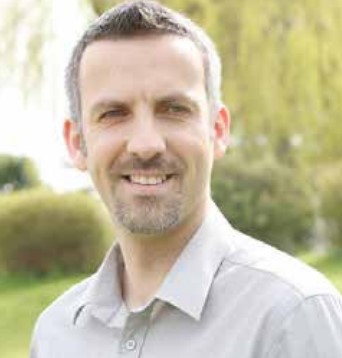
One man who has been with the Institute throughout this remarkable metamorphosis is Richard Stuttart, who joined the STRI in 2003 as a Pesticide Trials Controller straight from university and rose to his current position as Head of Consultancy.
STRIving for success

“You can track the change back to not long before the end of the 2000s, when we were approached by FIFA to assist them with the World Cup
in South Africa. It’s not something which we had done before, but we were brought in because the pitches due to be used for the World Cup were struggling and not at the level they should have been. It was a serious problem,” explained Richard, who also sits on the Institute’s Executive Management Team.

The STRI was brought in with a mere 100 days to go before the start of what proved to be a vibrant and exciting World Cup. If you remember, the assault on the eardrums from the vuluzelas was a constant reminder that this particular World Cup was the first to be held on the African continent.

However, had the STRI not become involved, it may not have been the ringing in our ears for which the 2010 World Cup would have been remembered, but the less than satisfactory playing surfaces.

“Standards are massively variable all over the world so that’s why FIFA engaged us. We assessed all the venues and put management strategies in place to bring them up to speed,” said Richard, adding that it was not just for all for all the main pitches but all the training pitches as well.

It was a mighty task, made all the more so by the fact that in some instances there was only a matter of weeks in which to affect an improvement, but making a success of what was perhaps not Mission Impossible but more Mission Extremely Difficult was what put the STRI on the world map.

“A door had been opened and it was just the kind of big step which allowed us to become involved with other worldwide sporting bodies.”

And there is none larger that the Olympics, and with London 2012 just around the corner it was another huge opportunity for the STRI to strut its stuff on the world stage.

“It was another big turning point for us as we were engaged by the London Organising Committee to design and build the Equestrian track in Greenwich Park. This was a massive change for us as it meant we were also involved in the planning of the project.”

Managed by another man in Lee Penrose, who has risen through the ranks at the STRI, from work experience placement to become Group Director, the Institute was the principle contractor in building the track, then running it through the Olympics themselves, and then spent three years reinstating the park for its post-Olympic life.
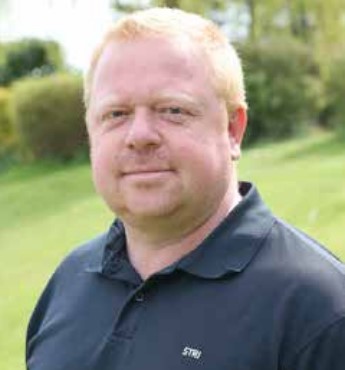
“The park ended up in better condition than it started, which was a big scoop for us,” recalled Richard.

“Being involved in events like the World Cup and the Olympics have brought it to where we are right now and it is thanks to people like Lee, who thought outside the box with regard to the Greenwich Park project, which has got us to the stage where we now have an organisation and people with the skill sets to make these big steps forward.”

The portfolio of services and skills available through the STRI now is truly extensive – Research & Development, Sports Surfaces Design & Construction, Product Testing & Material Analysis, Stadia Pitch Design and Management, Agronomy & Ecology, Sportsturf Consultancy, Planning, Drainage & Irrigation, Aviation, Environment, Green Spaces and Training.

It is so much wider than the previous incarnation of the Institute and not only has the offering to the client become much greater the global reach has developed as well.

The STRI now has bases in Brisbane and Melbourne in Australia as well as Qatar, China and Hong Kong and the name Sports Turf Research Institute is known and
revered everywhere sport is played.

Indeed there are no real equivalents anywhere else.

“There are a number of smaller organisations, and some US universitybased Institutes but they don’t tend to have the range of staff under one roof which we have here. Having been established since 1929 the experts we have gathered under one roof is quite exceptional. Some of those staff have been here for a long time,” said Richard.
STRIving for success

As the man who leads the consultancy department, which offers an A-Z, start to finish service, of Plan – Design – Build – Operate Richard is well place to talk about current requirements for any new or renovation projects and what is being worked on at present.

“I’ve got a staff of five. We have just appointed a higher level Planning Environment Manager and the team has the capability of producing Environmental Impact Assessments, within which we have associates we can bring in to assess the archaeological, cultural heritage, traffic and transport elements of an EIA.

“The fact that we can provide the whole package, that plan, design, build and operate, is where we have our USP and we are able to achieve planning permissions for golf courses and sporting facilities, in challenging environments which is extremely valuable as golf courses are often planned for designated or protected land sites,” said Richard.

The build side has become more significant to the STRI since they established the construction company Carrick Sport, based out of Cumbernauld in Scotland. The company was founded in 2018 and has already been responsible or the recently built pitch at Tynecastle, home of Hearts.

One of the most exciting projects currently underway is in Saudi Arabia for the Riyahd Equestrian Club. The world’s richest horse racing event is being held there on February 29, 2020, and the STRI have been commissioned to covert the allweather track into a grass track.

“We have had staff working over there for some time and, as it is the Saudi winter, the track is being sown out with cool weather grasses. It is another very exciting project for us.”

While the STRI’s worldwide reputation grows at apace the traditional work in the laboratories and on the testing plots continues to be carried out. Indeed, the annual STRI seed booklet remains a must read for everyone in the industry.

Mark Ferguson is one of STRI’s Research Managers and also the Institute’s Mr Wimbledon, spending
time at the All England Club offering agronomic advice and taking court performance measurements to ensure that Neil Stubley has all the data he requires to produce pristine surfaces for the most important tennis event of the year.
STRIving for success

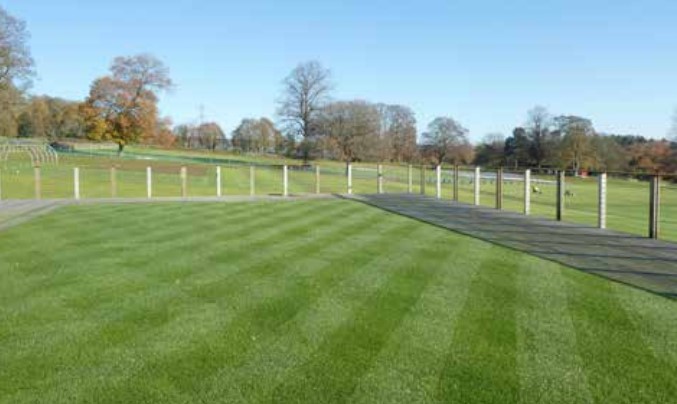
Mark was keen to show me some of the innovative work that is being carried out in addition to the regular patchwork of testing plots for varieties and grass species.

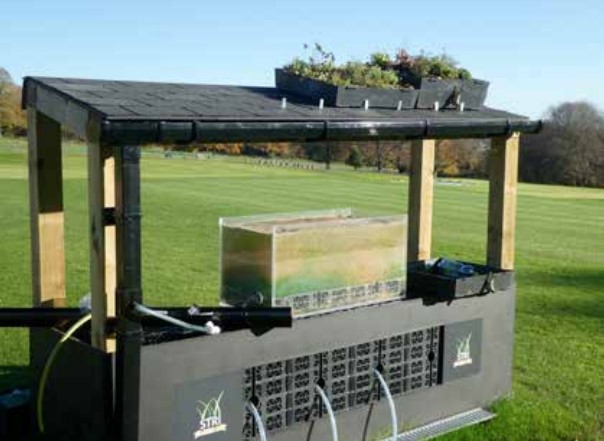
Green roof technology is being trialled which obviously has potential environmental benefits which stretch far beyond the sports’ brief more
associated with the Institute.

“There are a lot of green roofs now within urban landscape developments as they are required to meet certain requirements. What we are doing here helps them meet those requirements. They look good and tick an awful lot of boxes,” explained Mark.

Another product being tested on the extensive site is Permavoid, a product which interested the STRI so much that they took an interest in the company.

“Permavoid is a plastic layer which can replace the gravel banding within a rootzone. It is a really good product and can be placed under any construction whatsoever. It’s been in Holland for years and we think that most water directives or regulations for the building of new sports surfaces will be required to use this to hold water or take water away. You can also put a wick in it to draw moisture up and act as sub surface irrigation,” explained Mark.

It goes to show that while the STRI’s horizons are wider than ever, research is still at the core of the company and continues to produce great results.

I certainly hope that it won’t be 15 years until I return to Bingley but I am sure that however short the break is between this and my next visit there will be more change and more exciting work to discuss.

I just hope that there will still be my reserved Turf Matters parking space.

Prince’s GC chooses innovation

Prince’s GC chooses innovation: Prince’s Golf Club recently underwent an extensive renovation process to all three nines on the 27-hole property, which saw developments made to bunkers, teeing grounds and a number of greens, with plans in place to make further improvements in 2020.

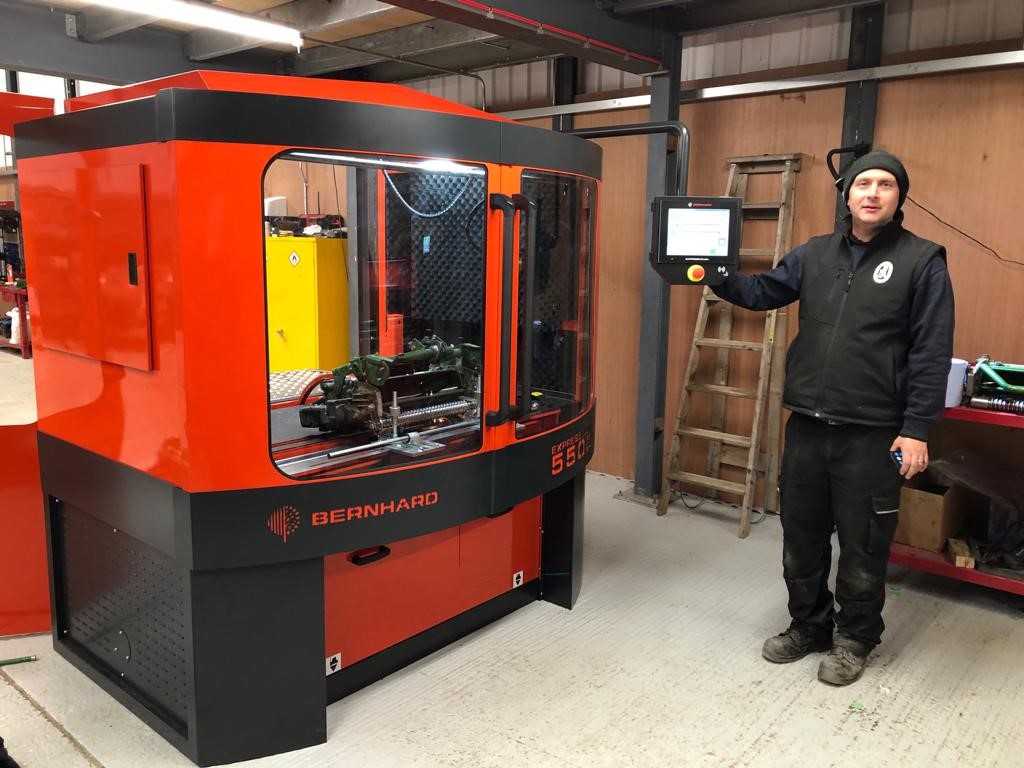
In order to produce work of the highest quality and keep the fine links turf as healthy as possible, the club made significant investment into to the latest Bernhard grinding systems.

Prince’s GC chooses innovation

The specialist grinders are designed to keep the mowers as sharp as they can be, allowing Course Manager, Sean McLean and his team to prepare the golf courses in perfect condition all year round.

Machinery Manager at Prince’s Jon Bartlett was keen to achieve more efficient accuracy and speed of work. The Express Dual 5500 and the Anglemaster 4500 provided Jon with versatility and uncompromised performance upon testing and were installed in the club’s new facilities in November.

The automated reel surveying on the Express Dual 5500 allows for maximum precision and helps to determine wear and assist with the resolution of “coned” and “barrelled” reels. With a host of features, this innovative piece of equipment allows the user to achieve the highest precision grind in the industry.

Commenting on the new Bernhard grinders, Course Manager, Sean McLean said: “We are delighted with the new set of grinders. We are always striving to achieve greater accuracy and consistency on our courses and particularly the greens.

“Being able to maintain a precise quality of cut through the automated fleet set up is saving us time and will be financially beneficial for us in the long run.”

Machinery Manager, Jon Bartlett added: “Working with such precision machines makes my job even more enjoyable. We now know that we can keep our machines updated through the remote assistance at the press of a button, which is extremely reassuring when dealing with a large fleet of machinery.”

For the latest industry news visit turfmatters.co.uk/news

Get all of the big headlines, pictures, opinions and videos on stories that matter to you.

Follow us on Twitter and Instagram for fun, fresh and engaging content.

You can also find us on Facebook for more of your must-see news, features, videos and pictures from Turf Matters.

Razor Ultra Demain mower at Durham

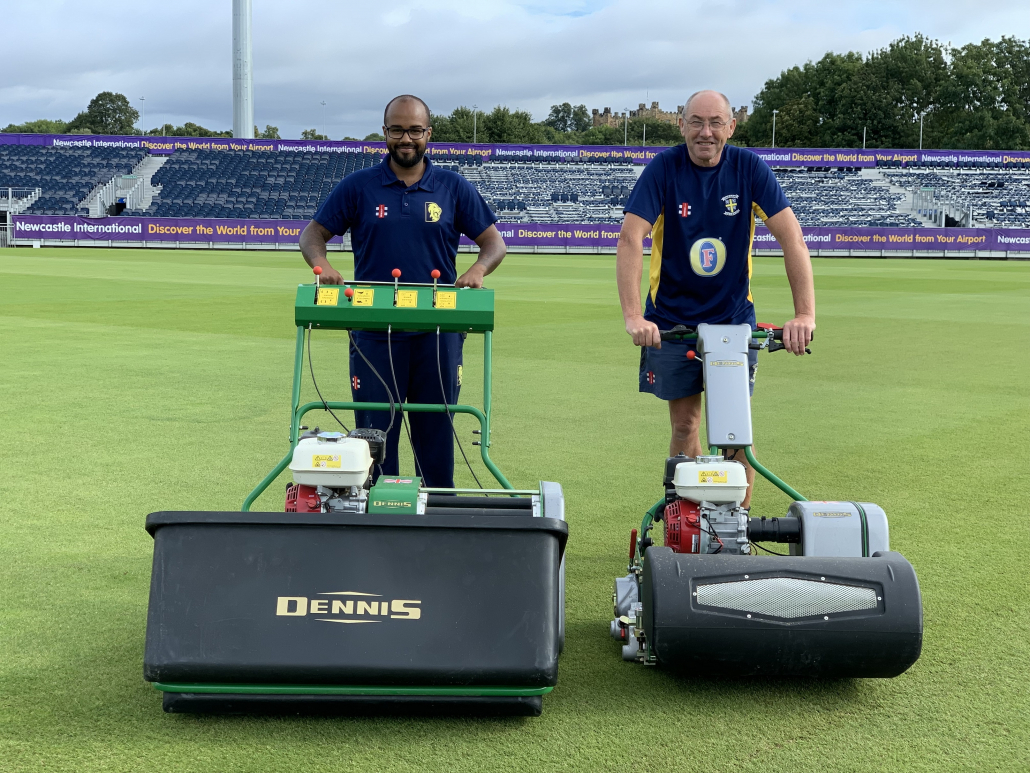
Razor Ultra Demain mower at Durham: Vic Demain, Durham CCC head groundsman, says that the Dennis Razor Ultra 560 fine turf mower has made a significant improvement to the pitch at the Emirates Riverside stadium and in particular has praised the groomer reel attachment.  

Vic was appointed head groundsman at Durham County Cricket Club in 2015, following two years as deputy head groundsman at Trent Bridge and before that seven years as head groundsman at Uxbridge CC.

Razor Ultra Demain mower at Durham

He was the first ever cricket groundsman to win the Professional Groundsman of the Year in 2017 and just last year his team was named Professional Cricket Grounds Team of the Year. It is without doubt testament to the incredible job he is doing at the Emirates Riverside. To say that Vic is constantly striving for improvement is an understatement.

“I’m someone who constantly needs to be challenging himself,” he says and candidly admits to facing a number of trials throughout his five-year tenure at Durham.

“When I first came here a lot of the equipment was aging and money hasn’t particularly been forthcoming so we soldiered on with what we had,” he said.

However, Vic claims that his most recent addition of the Dennis Razor Ultra 560 fine turf mower has made a significant difference to his pitch preparations.

Before purchase, the mower was demonstrated at the Emirates Riverside and there was something in particular which caught Vic’s eye.

“The Razor Ultra has a tungsten tipped groomer reel and I’ve never really used one of these for cricket before. However, at the time I had a very good friend of mine with me who had come over from Australia to help out with the World Cup preparations. He is in golf now and told me that he uses groomer reels all the time. Needless to say, he was really impressed and so I decided to give it a go.

“It takes a lot of rubbish off the pitches such as creeping grasses and all the stuff that is lying down flat. This groomer simply flicks them all out and carries out a more thorough job than a cutting reel.”

Razor Ultra Demain mower at Durham

Superbly balanced and ideal for cricket pitches and other fine turf surfaces, the Razor Ultra features a 560mm (22in), 11 blade cutting cylinder for a perfect finish. An ultra-short wheelbase ensures easy manoeuvrability and excellent performance, even on undulating surfaces. The Dennis Razor Ultra encompasses the simple ‘no tools required’ click height adjusters for quick and easy operation, a feature which Vic is particularly impressed with.

“It is so easy to adjust the height of cut with the simple click adjustor – half a mm here or half a mm there, depending on requirements, and it is not a question of running for the spanners or any other tools.

“I’ve been working with Dennis for as long as I’ve been in the industry and they have never once let me down.”

For further information or a no obligation demonstration, please contact Dennis 01332 824 777 or visit www.dennisuk.com

For more news, reviews and insightful views, you can follow Dennis on Twitter @DennisMowers and like the company’s Facebook page – www.facebook.com/DennisMowersUK. You can also view the latest Dennis videos by visiting www.youtube.com/DennisMowers

For the latest industry news visit turfmatters.co.uk/news

Get all of the big headlines, pictures, opinions and videos on stories that matter to you.

Follow us on Twitter and Instagram for fun, fresh and engaging content.

You can also find us on Facebook for more of your must-see news, features, videos and pictures from Turf Matters.

Campey bring sustainability to BTME

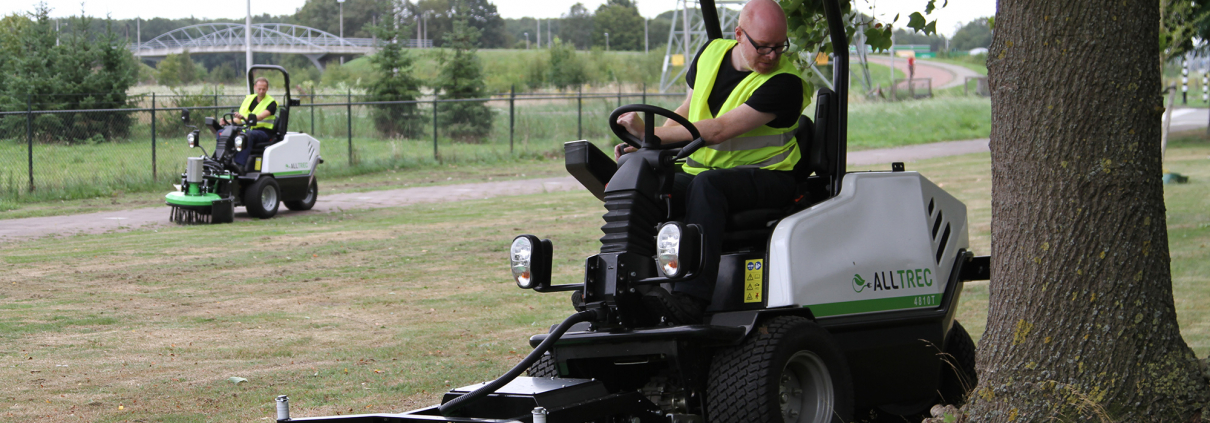
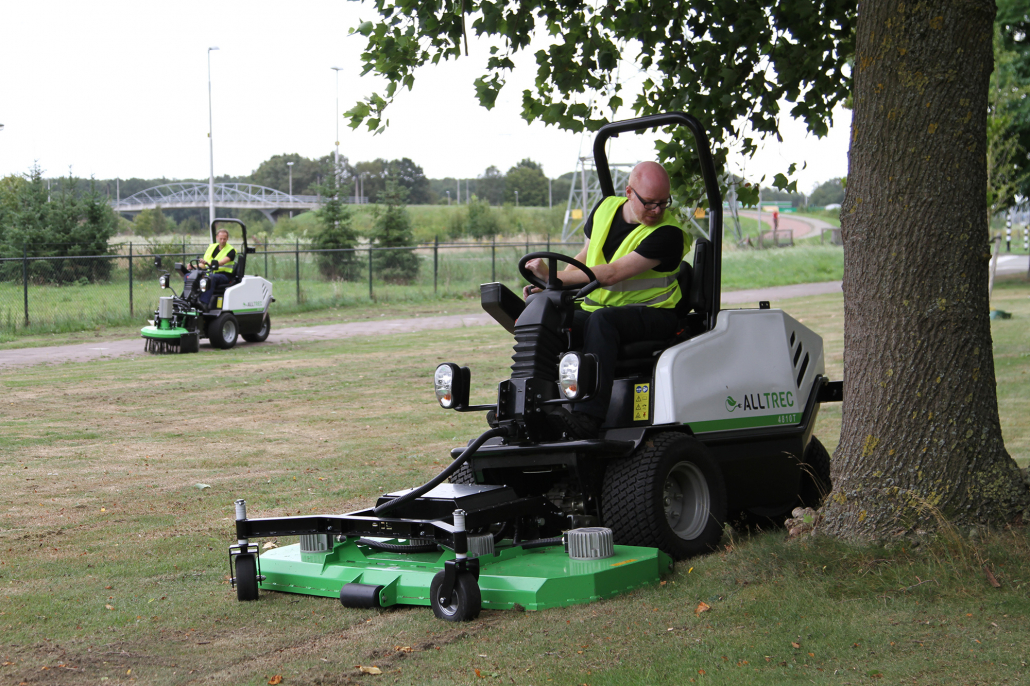
Campey bring sustainability to BTME: Campey Turf Care Systems is bringing the 100% electric AllTrec Tool Carrier to BTME 2020 to introduce the future of zero CO2-emissions golf course maintenance.

The Tool Carrier will be in Red Hall North, Stand 276 along with other popular turf care machinery including Vredo Compact Seeders, Dakota Turf Tenders and the Air 2G2 Air Inject. The machine, designed by Dutch manufacturer, WeedControl B.V., is the latest in a long line of products that Campey has introduced to meet industry trends, and has already been exceptionally well received in The Netherlands.

Campey bring sustainability to BTME

The electrically driven hedge cutter can be fully operated using a joystick, making it easy to operate for a day of work, while the LPG tanks used for the E-Variator Weed Burner can be mounted to the back of the AllTrec, with a connection for the automatic tank heater to prevent them from freezing. Weeds can also be tackled using the Weedbrush, which can be hydraulically adjusted to any angle, and used for a full day without any worry of batteries running out.

A large-action radius and highly efficient attachments combined with low operation and maintenance costs make the AllTrec perfect for use in urban environments, sports complexes, holiday resorts and parks by contractors, local authorities and landscapers.

With its zero turning capabilities, it is agile enough to work in small enclosed spaces while also having been designed to work on large areas with a long-lasting battery to match its versatility. The running time is entirely dependent on the circumstances, but when cutting with the four-blade 180cm deck, the battery will typically last for 6-8 hours and 7-9 hours using the three-blade 130cm deck. Both decks feature rear ejection and allow height of cut adjustments from 30mm-110mm.

All batteries come with a three-year warranty and have a lifetime of + – 2500 charge discharge cycles. The 48VDC battery uses LifePO4 technology with a capacity of 20kwh or an optional 30kwh, with onboard charging taking 4-8 hours.

As always, Campey’s team of product specialists will be on hand to give advice on turf care issues and information on machinery over a coffee in Red Hall North, Stand 276.

For the latest industry news visit turfmatters.co.uk/news

Get all of the big headlines, pictures, opinions and videos on stories that matter to you.

Follow us on Twitter and Instagram for fun, fresh and engaging content.

You can also find us on Facebook for more of your must-see news, features, videos and pictures from Turf Matters.

Win at winter maintenance

Win at winter maintenance: With the winter season upon us, it’s important to keep golf course machinery up to scratch and capable of dealing with the challenges colder weather brings.

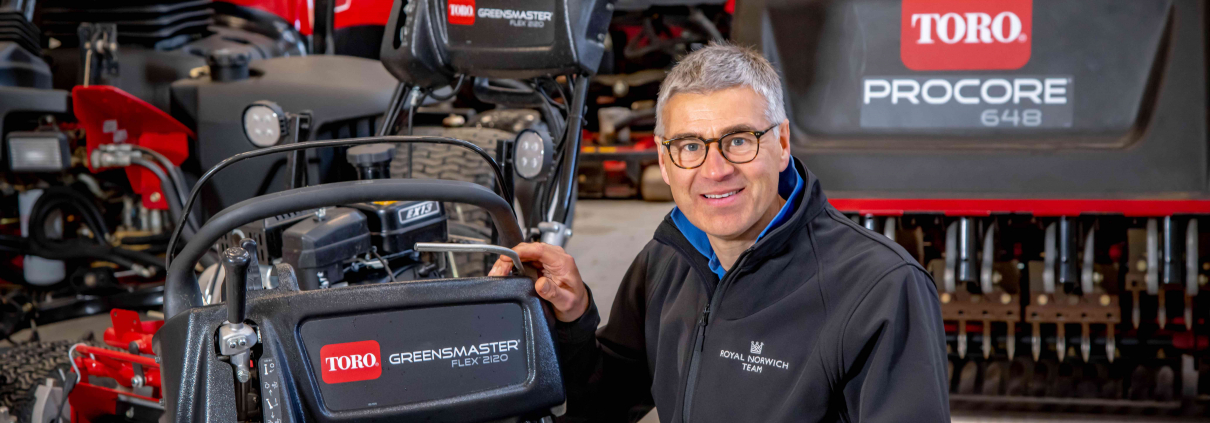
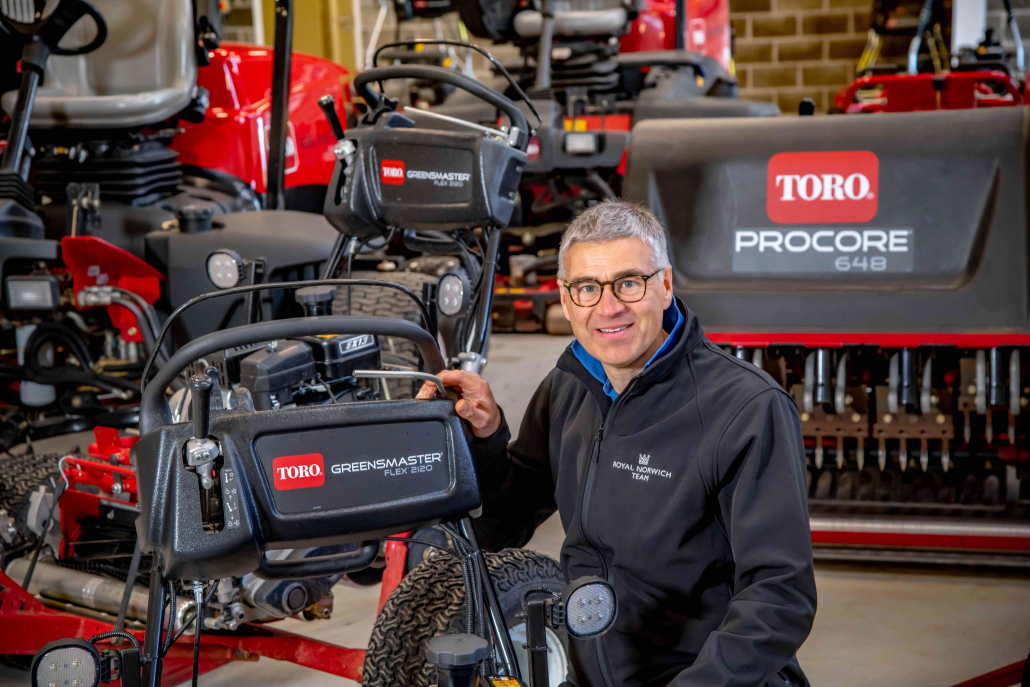
With Royal Norwich Golf Club’s new course in its first winter, estates manager Peter Todd, with 30 years of experience in the industry, explains why winter maintenance is so important.

Win at winter maintenance

“Golf is now very much a sport which is played 365 days a year,” he says. “It used to be that winter would signal a break in the level of activity, but more and more golfers want to enjoy golfing throughout the year and make the most of their membership. And their expectations of the course don’t change just because the weather has.

“In order to keep standards high, you have to keep your machinery in top notch condition and paying attention to parts maintenance is your first point of call in order to do that.”

It’s well known that the winter season provides many challenges for greenkeepers. For one, cutting turf in wet conditions makes it more difficult to get a perfect finish. So, sharpening cutting unit blades in winter is essential, says Peter.

“With wet grass and the increase in earthworm castings in the autumn and winter, it becomes more difficult to keep blades sharp,” he says. “Although you need to make sure your blades are sharp throughout the year to keep quality consistent, the winter season brings that more into focus. Plus, not cutting cleanly will increase the risk and spread of disease in your turf – so that’s an added reason to ensure the proper maintenance of your machinery parts in the winter.”

With a blade for all seasons, choosing Toro guarantees not only a perfect fit but one carefully crafted to suit specific turf needs. For example, the ‘Atomic’ blades are what’s best later in winter, perfect for mulching up leaves or for use with a recycling deck to mulch the grass.

The cold weather can also have an effect on machinery starting systems, says Peter. “Engines will take longer to start up in the cold and checking batteries and electrics, changing the oil and cleaning blocked air filters will save you time in the long run. Switching to new tyres to ensure you have improved grip in the face of unforgiving ground conditions as well as keeping a stock of replacement parts will ensure productivity remains high.”

However, just as preparing the turf for winter is a year-round endeavour similarly so is machinery maintenance says Peter. “There is a tendency to push the majority of machinery maintenance into the off season when there are fewer jobs to do around the course and cutting frequency has decreased, and while it does provide the time to do the machine’s ‘MOT’ if you like and a full service and deep clean, you’ll never regret paying attention to your machinery and parts maintenance throughout the year.”

Peter concludes: “Keeping on top of general maintenance ensures your machines are in the best possible condition. It can be tempting to cut corners when it comes to preventative service work, but breakdowns and downtime are more expensive and well-maintained kit tends to be trouble-free. In an ideal world maintenance should always be done as per the machinery manufacturer’s instructions in order to keep standards high.”

To stock up on Toro Parts or for winter machinery maintenance advice, customers can get in touch with their local genuine Toro parts dealer or service centre or contact Reesink via reesinkturfcare.co.uk

For the latest industry news visit turfmatters.co.uk/news

Get all of the big headlines, pictures, opinions and videos on stories that matter to you.

Follow us on Twitter and Instagram for fun, fresh and engaging content.

You can also find us on Facebook for more of your must-see news, features, videos and pictures from Turf Matters.