Dennis & SISIS Launch New Seminar

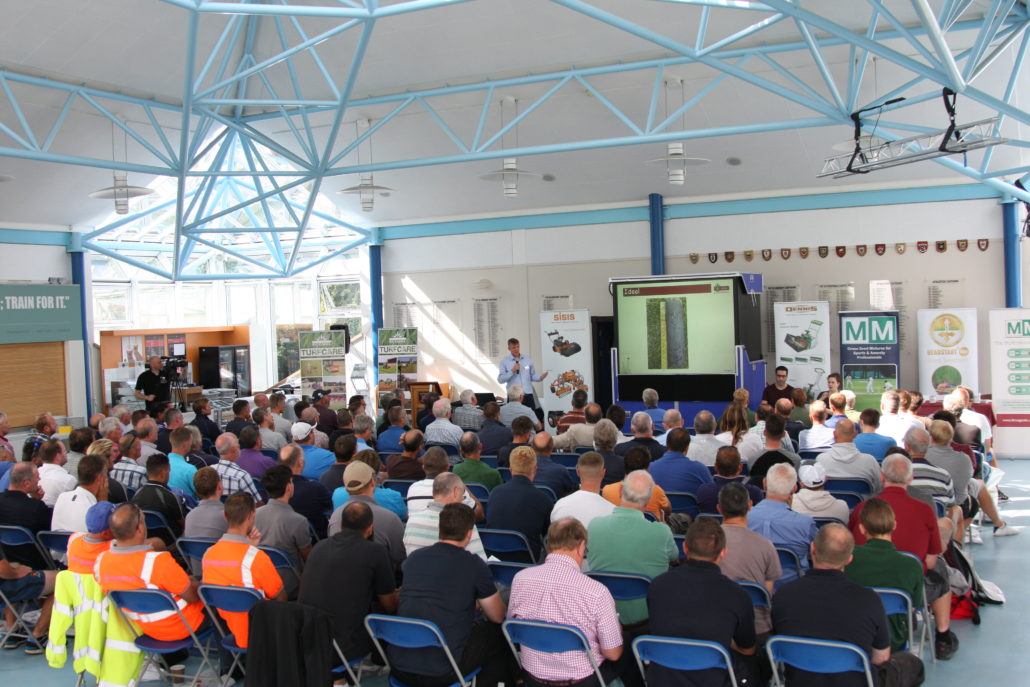
Dennis & SISIS Launch New Seminar: Dennis & SISIS have confirmed the launch of an exciting new free-to-attend Groundcare Seminar, focusing on education for those involved in groundcare on a variety of sports turf topics.

The seminar, which will take place at St. Albans School, Woollam Trust Playing Fields on Tuesday 19 February, is expected to attract grounds staff from all over the UK including volunteers and professionals representing schools, sports clubs, local authorities and contractors.

Dennis & SISIS Launch New Seminar

With a variety of high quality speakers and insightful topics, the seminar aims to connect like-minded people where they can learn new skills and techniques as well as offer fantastic networking opportunities.

Registration will start at 9am in which delegates will get the chance to meet their fellow colleagues before Robert Jack from Dennis and SISIS provides an introduction at 9.45am.

The following seminars will then take place:

  • Renovate & Rejuvenate a surfaceRob Kendle (ATB Sports Solutions)
  • Getting the most out of a sportsground construction projectDr Iain James (TGMS Ltd)
  • Drainage – Managing sports fieldsAlex Vickers (IOG Consultant)

A complimentary lunch will signal the halfway point at 12:30pm and attendees will be able to network and meet with event sponsors.

After lunch the following seminars will commence:

  • Winter sports pitches to cricket outfields – what do we do next?Keith Kent (RFU Head Groundsman – Twickenham)
  • 50 years in cricket – Looking to the futureChris Wood (ECB Pitch Advisor)

Following presentations, informal discussions will commence where all delegates will get the opportunity to ask any questions they may have to a host of industry professionals including the seminar’s guest speakers.

To register your interest please contact Roger Moore at Dennis & SISIS on 01332 824777 or email Roger on roger.moore@dennisuk.com.

Further information about the range of maintenance products available can be found by visiting www.dennisuk.com / www.sisis.com.

Campey To Attend GIS 2019

Campey To Attend GIS 2019: Campey Turf Care Systems will be attending the Golf Industry Show (GIS) 2019 in San Diego with Dakota and Air 2G2 GT Air Inject.

The GIS is one of golf’s premier learning and networking events and representatives from Campey, Richard Campey, Ben Taylor and Dave Harrison, will be joining colleagues from Air 2G2, booth 3817-3816, and Dakota, booth 3552, to provide expert insight into the machines and their use on Europe’s most prestigious golf courses.

Campey To Attend GIS 2019

Campey sells the Air2G2 Air Inject GT around the globe and since introducing it into the United Kingdom and Europe, it has become incredibly popular and is now in operation at a majority of leading golf venues.

It has long been a saying of Air 2G2 that ‘air is everything to anything that lives,’ and the machine provides that air in the least disruptive way possible. The ability to aerate greens when needed and not just when conditions allow is one of the top reasons it has been so successful, and why its popularity continues to grow.

The three Campey representatives will also be at the Dakota booth. The companies range of Turf Tenders have led the way in spreading for some time now with Dakota routinely fine-tuning their spreaders to make them even more accurate.

The company has also listened to the needs of the golf industry and introduced the pedestrian 310 SP model alongside the 410 towed model. This pair of spreaders can be used to reach difficult to access areas of the course and put the turf under a fraction of the weight stress. The Dakota range of spreaders are sold within the Campey International trading areas and have become a mainstay in the UK and European professional sports turf markets while being recognised as the top option for top dressing.

For any advice or information speak to a member of the Campey team at Air2G2 booth 3817-3816 or Dakota booth 3552.

For more information, visit: www.campeyturfcare.com

For the latest industry news visit turfmatters.co.uk/news

Get all of the big headlines, pictures, opinions and videos on stories that matter to you.

Follow us on Twitter for fun, fresh and engaging content.

You can also find us on Facebook for more of your must-see news, features, videos and pictures from Turf Matters.

Invasives Science Live A Success

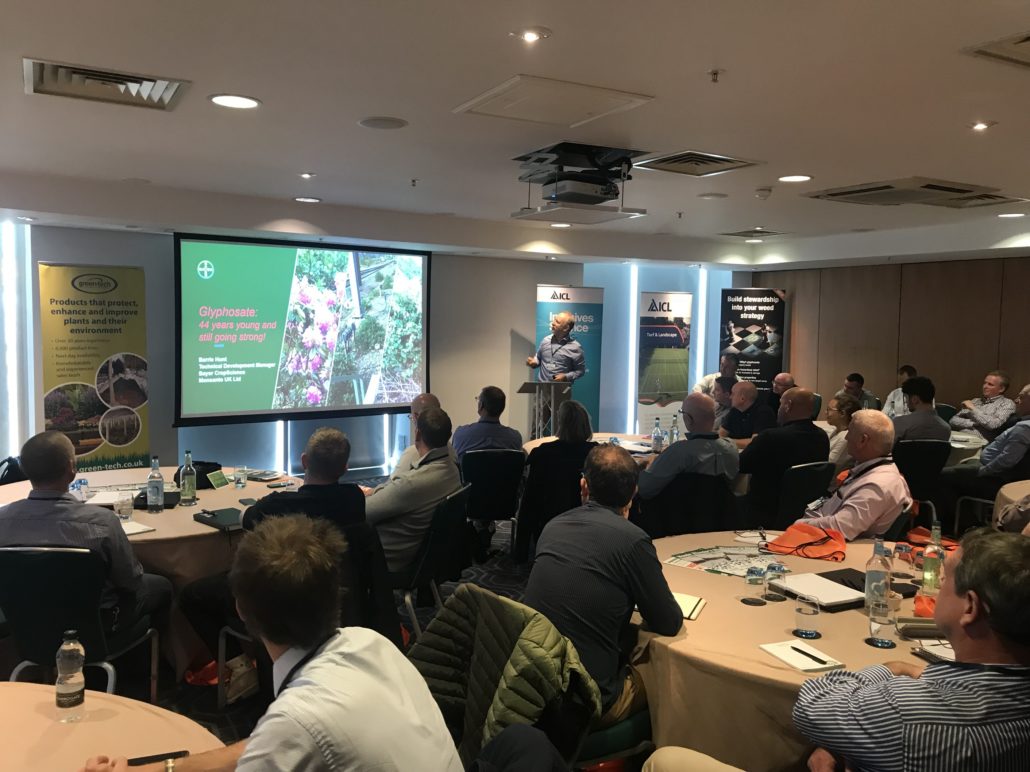
Invasives Science Live A Success: Invasives Science Live was recently attended by over 60 contractors and invasive weed eradication specialists, with the unique event showcasing the latest research and technological innovations in invasive weed control.

The event, held in Cardiff, was hosted by ICL, Complete Weed Control and Green-tech in association with Advanced Invasives and provided education for delegates to gain a better understanding of chemical performance and various control methods, focussing primarily on Japanese Knotweed and Himalayan Balsam.
Invasives Science Live A Success

Complete Weed Control Managing Director Ian Graham introduced the event by offering an insight into the recent trial work with Advanced Invasives – something which the delegates would later explore in more detail at the impressive private trial facility.

Roundup Technical Development Manager Barrie Hunt from Bayer was the first speaker to provide an update on legal and best practice information of glyphosate to help plan ahead of their 2019 weed control programmes.

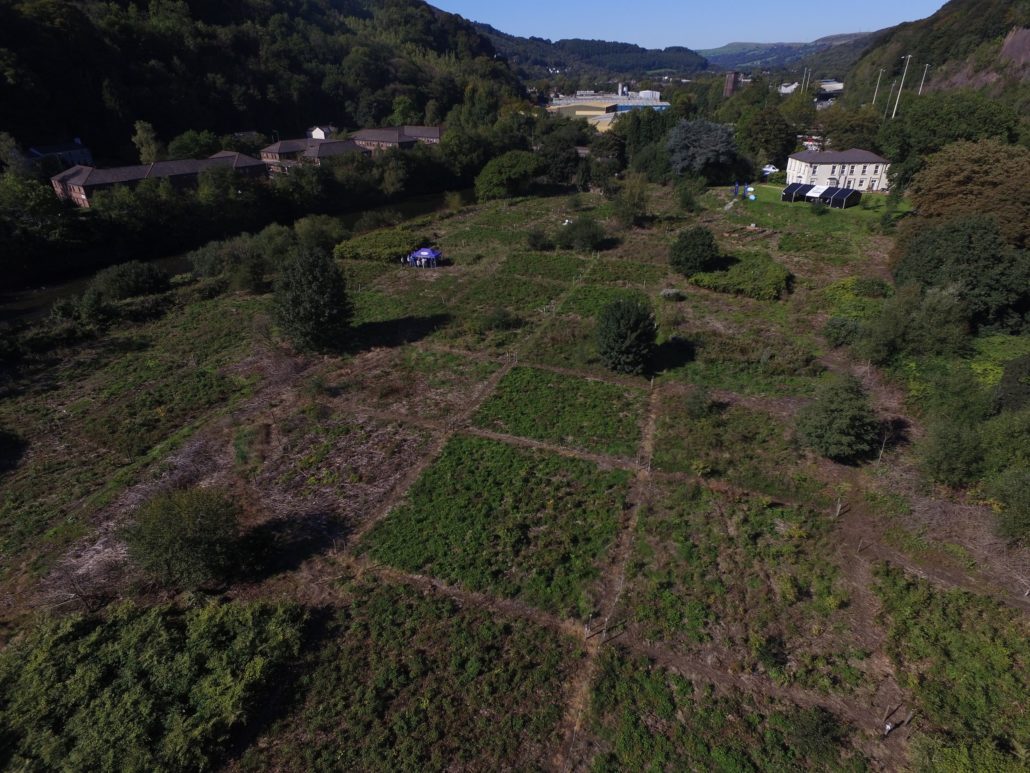
Next was Dr Dan Jones, Managing Director of Advanced Invasives, to give an insight into their seven year-long field trial on Japanese Knotweed control – the largest in the world. The ai:LAB is the company’s 12 acre field-testing site in South Wales where research has been undertaken into how to best tackle invasive plants in real-world conditions. The research tested 19 methods over 3 years of treatment and sets a new standard for evidence-led research.

Following Dr Dan Jones was Business Director Dan Clugston to explain the dangers of Japanese Knotweed, how it is best dealt with, and the impact it can have on property.

After lunch, delegates were transported to the nearby trial site where they were separated into three smaller groups in which they visited three specific work stations.

Invasives Science Live A Success

Station One

Beyond Balsam Bashing

Physical and herbicide control of Himalayan Balsam

Iván Martin from Advanced Invasives explained how a number of land managers are reluctant to use herbicides to control this plant, and that ‘Balsam Bashing’ - physical control, is a popular treatment for many conservationist groups. He went onto reveal research which consisted of benchmarking the four most commonly used balsam treatments in 5×5 m (25 m2) commercial field trial plots.

Of the treatments tested, herbicide spraying was not only fastest but also was the only treatment that does not create plant waste - and Iván claimed it is an advantage that needs to be considered when weighing the environmental benefits of treatment options.

Station Two

Life After Knotweed

Using plant functional traits to enhance recovery of invader-dominated habitats

Sophie Hocking from Swansea University and Complete Weed Control’s Ian Graham were on hand to explain how re-invasion by knotweed and secondary invasion by other plant species can often hinder future development. Sophie and Ian stated the necessity of a shift from a single, target species approach to a whole ecosystem view of recovery. This station highlighted the ongoing research which investigates the role of the functional traits of plants in habitat restoration, and the broader, long-term dynamics of Japanese knotweed invasion in field conditions.

Sophie and Ian concluded by claiming that the work will create a better, more scientifically informed framework for habitat restoration and give a clearer picture of Japanese knotweed dynamics and the habitat legacy effects of invasive species dominance.

Station Three

From Crown to Underground

Bayer Stump Treatment Trial

ICL’s Henry Bechelet and Dr Gareth Bruce from Advanced Invasives firstly discussed how stump treatment can be extremely effective as the distance the herbicide has to travel to reach the underground rhizome — the target of all herbicide treatments — is dramatically shortened.

They went on to reveal research in which three stump treatments were tested against Japanese knotweed, in triplicate 5 x 5 metre (25 m2) plots, with a control plot and also a single out-group comparison to stem injection treatment. All of the stump treatments tested were statistically comparable in effectiveness to stem injection. Results concluded that Ecoplug Max® treatment is by far the safest of the stump treatment application methods.
Invasives Science Live A Success

Commenting at the event, Ian Graham said: “We feel that this is one of the first steps in what will be a very long process in establishing facts relating to invasive weeds and we look forward to inviting guests back to the site and ensuring the work started continues.”

Professor John Moverley OBE, Chairman of the Amenity Forum commented: “Today has been very interesting. The control of Japanese Knotweed is a major issue. It’s been a great opportunity to see first-hand different approaches and some of the complexities that are involved in this level of control.”

Tony Saunders, Area Manager for JSD Rail, said: “I found the day very insightful. It introduced some new ideas that we don’t necessarily come across on the railway as we are not looking at remediating the land; we are looking at removing Japanese Knotweed. There are a number of processes that are being trialled here which added to the knowledge we have learned we are able to take back with us.”

Please contact ICL on 01473 237100 or visit www.icl-sf.co.uk or www.icl-sf.ie if you are in Ireland.

For the latest industry news visit turfmatters.co.uk/news

Get all of the big headlines, pictures, opinions and videos on stories that matter to you.

Follow us on Twitter for fun, fresh and engaging content.

You can also find us on Facebook for more of your must-see news, features, videos and pictures from Turf Matters.

Barenbrug At BTME 2019

Barenbrug At BTME 2019: Barenbrug, the UK’s biggest and most innovative grass seed producer, will be showcasing its range of industry-leading products and cultivars at BTME 2019. Barenbrug’s new stand will be located in the Green Hall; Stand 330.
 
The Barenbrug Sport range will feature #1 varieties Barolympic perennial ryegrass, Barlineus Chewings fescue and Charles browntop bentgrass in popular products such as ULTRAFINE, MEDAL, FESCUE and ALL BENT.

Barenbrug At BTME 2019

Two brand new cultivars make their debut in the Sport Range. Barrisse strong creeping red fescue is introduced into FAIRWAY and Baromario is a component of a new ground-breaking perennial ryegrass blend MULTI SPORT.

MULTI SPORT is a four-way mix of 100% UK seed production, supporting British farmers and offering a more sustainable product choice for the UK turf industry. Baromario (and the other cultivars in MULTI SPORT) are highly-ranked in BSPB/STRI Turfgrass Seed as both winter sports and lawn ryegrasses, allowing this blend to be adopted in areas with high traffic and variable heights of cut.

Visitors to the stand will also get the chance to learn about Yellow Jacket Water Manager, a game-changing seed enhancement product that improves germination and seedling survival in tough environments. The patented surfactant technology is the result of extensive research by Barenbrug and Aquatrols and has been independently tested by the STRI.

In addition to Sport, the Essential Range of landscape products has been improved following a hugely successful market introduction in 2018. Products within the range have been enhanced further by Barenbrug-bred innovations such as RPR and Mowsaver technology.

For the latest industry news visit turfmatters.co.uk/news

Get all of the big headlines, pictures, opinions and videos on stories that matter to you.

Follow us on Twitter for fun, fresh and engaging content.

You can also find us on Facebook for more of your must-see news, features, videos and pictures from Turf Matters.

Syngenta To Exhibit At BTME

Syngenta To Exhibit At BTME: Syngenta will be giving turf managers the opportunity to win a professional PAR light meter every day at BTME 2019 – to scientifically measure useable light reaching their surfaces, and to manage turf more effectively.

To enter, turf managers simply need to register on the Syngenta stand – Purple Hall, 428 – pick up a Ryder brochure and follow @syngentaturfuk on Twitter to find out the lucky winner on each day of the event.

Syngenta To Exhibit At BTME

Furthermore, all turf managers can now benefit from a new GreenCast weather service showing forecast light intensity levels for the coming five days, displayed as light intensity in µmol per m² per second, for their specific site.

Syngenta Technical Manager, Glenn Kirby, advocated that understanding the levels of light are hitting the surface, where and when during the day, is extremely important in making decisions to make light work more efficiently using Ryder applications.

“Only a relatively small spectrum of sunlight can be physiologically absorbed and utilised by turf plants – the PAR light,” he pointed out. “Light waves at either end of the spectrum can be potentially damaging to plant tissue.

“Furthermore, the amount of PAR light reaching open turf surfaces can be far in excess of the plants’ ability to photosynthesise and turn it into energy,” he advised.

“This over saturation of light can induce stress within the plant, particularly when it occurs in combination with other stress factors, such as moisture, nutrient deficiency or temperature extremes, for example.”

Glenn warned that the short leaves of tight mown turf surfaces offer limited buffer for stress effects and makes plants more susceptible to other issues, including Anthracnose outbreaks that have been increasingly prevalent in recent seasons.

“Managing light levels impacting on plants is now recognised as a crucial part of an Integrated Turf Management programme,” he advocated. “Ryder turf pigment has shown to enhance the naturalistic green colour of turf surfaces throughout the season, and also offers the chance to manage and mitigate against harmful levels of light affecting plants.”

The sun radiates a broad spectrum of light, typically measured from 300-1100 nanometers (nm). But it is only the Photosynthetically Active Radiation – from 400 to 700 nm – that is of real benefit for plants, according to Glenn.

“Now we can start measuring the amount of PAR light getting to the plant we can begin to gauge what’s happening in the plant and monitor it’s impact, The light intensity measured by the Field Scout shows how intense the PAR light can be.

“Turf plants’ ability to photosynthesise plateaus at around 400 µmol per m² per second; but light levels during the summer in the UK can easily hit 2000 µmol per m² per second. Once you begin to understand good levels of light and excessive light, you will begin to understand and adjust your maintenance programs to cope with this little understood stress,” he advised.

To help turf managers get a more accurate picture of light levels on their turf, Syngenta will be giving away a Field Scout Quantum Meter, worth over £200, on each day of the BTME event, organised by BIGGA and held in Harrogate from 22 – 24 January 2019.

For the latest industry news visit turfmatters.co.uk/news

Get all of the big headlines, pictures, opinions and videos on stories that matter to you.

Follow us on Twitter for fun, fresh and engaging content.

You can also find us on Facebook for more of your must-see news, features, videos and pictures from Turf Matters.