BIGGA and R&A’s updated advice

BIGGA and R&A’s updated advice: The British and International Golf Greenkeepers Association and R&A have updated their guidance after the lockdown for coronavirus was extended

Greenkeepers have been given updated advice on what counts as essential maintenance during the coronavirus pandemic.
BIGGA and R&A's updated advice

BIGGA and R&A’s updated advice

The British and International Golf Greenkeepers Association (BIGGA) and R&A have issued new guidance after the Government extended the lockdown period, aimed at stemming the spread of the virus, for at least another three weeks.

Their new position was put together in order to take into account the “changing seasonal climactic condition and the need to utilise the time of reduced greenkeeping teams most effectively”.

The association were clear that the directions were not a justification to increase staffing numbers at clubs.

Here is their new statement in full…

Essential Maintenance update – 17 April

The following update (Version 2) to the Essential Maintenance Statement for Golf Courses is published in view of the extension of the UK Government regulations, the changing seasonal climatic conditions and the need to utilise the time of reduced greenkeeping teams most effectively.

These updates are not a justification to increase staff numbers beyond those currently utilised. Any substantive updates from Version 1 are highlighted by an asterisk * in the text below.

Essential Maintenance Statement for Golf Courses during COVID-19 Outbreak

The following industry statement, produced in association with BIGGA, sets out a reduced, essential maintenance regime for greenkeeping that limits activity on the golf course while protecting workers, jobs and securing the playing surfaces at golfing facilities. When a resumption in play is allowed, this will be vital to get the millions of golfers back onto our courses, benefiting their physical and mental wellbeing.

The UK’s £2bn GVA golf industry is only sustainable if greenkeepers continue to work, but it is paramount that this is done in a safe and secure environment.

Our industry statement outlines those treatments considered essential for the safe maintenance of a golf course during the current government restrictions. It is accepted that golf courses exist in many different forms, on many different soil types and in differing landscapes and that this guidance may require adaptation.

Working Practices

The primary consideration must be the health and wellbeing of greenkeeping staff. All golf facilities should implement stringent measures to ensure staff members are not at risk. The number of greenkeeping staff and the amount of time they are at work should be kept to a minimum and be tailored to fit with the agreed essential maintenance programme.

Measures should include but are not limited to:

  • Focus on hygiene and social distancing
  • Ensure staff members work separately
  • Allocate individual machinery to one worker only
  • If multiple staff are on site, then stagger working hours and break times
  • Limit or prohibit use of communal areas
  • Regularly disinfect any surface that is contacted e.g. door handles, fuel pumps, communal machinery
  • Ensure there is a robust lone working policy

Mowing

Greens should be mown according to the rate of growth to a maximum of three times per week. Dew removal should be considered on non-mowing days as required to prevent disease spread.

Tees and green surrounds should be mown according to the rate of growth to a maximum of twice per week.*

Fairways should be mown according to the rate of growth to a maximum of once per week.

Managed roughs and grass paths should be mown according to need to a maximum of once per week.*

Only roughs considered to be in direct play should be mown allowing for naturalisation to areas largely out of play.

The height of cut adopted for all these areas is site specific but the elevation of the cutting height on fine turf areas is advised to minimise unnecessary stress on the turf. The application of plant growth regulators during periods of excessive growth is acceptable.* The aim of the above operations is to maintain uniformity, density, texture and health to allow surfaces to be quickly brought back to an appropriate playing standard once play resumes.

Irrigation and Nutrition

Irrigation and nutrition should be carried out as necessary but with the objectives of keeping the turf alive, maintaining a full sward and preventing turf thinning. Avoid excesses of either input, which will only serve to promote unnecessary growth and necessitate more maintenance.  Utilise best practice methods where available, such as wetting agent application, use of moisture probes and surface aeration, to optimise efficiency of water use on key playing surfaces.*

Construction and Renovation

Starting construction or renovation projects is not considered essential at this time. The completion of unfinished winter projects that are already underway is permissible but only if this can be done safely by greenkeeping staff, and without increasing staffing numbers.*

Machinery and Equipment Maintenance

This should be carried out as required to ensure that essential equipment is kept safe and operational.

Other Maintenance

Operations such as maintaining bunkers, penalty areas and wider practice facilities and aerating, top dressing and spraying on a routine basis are not considered essential at this time. However, it is conceivable that occasional spraying or the application of a cultural practice, such as aerating, top dressing and overseeding, may be considered essential at certain times and in some circumstances (for example, to control or manage acute pest, weed or disease issues or other localised disorders).*

Updates

Given the fluidity of the current situation there may be a requirement to update and re-issue this guidance in respect of future government advice.

Click here to read the original article

For the latest industry news visit turfmatters.co.uk/news

Get all of the big headlines, pictures, opinions and videos on stories that matter to you.

Follow us on Twitter and Instagram for fun, fresh and engaging content.

You can also find us on Facebook for more of your must-see news, features, videos and pictures from Turf Matters.

Bionema release white papers

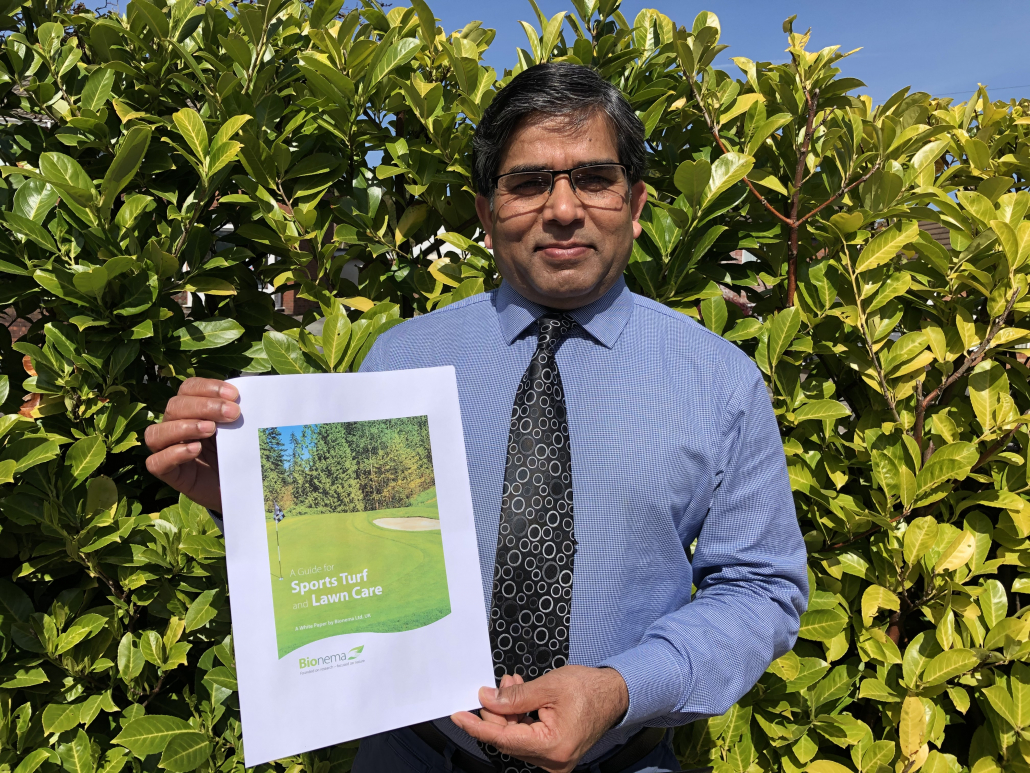
Bionema release white papers: Bionema Ltd, a leading biopesticide technology developer, has released its first of a series of white papers explaining how biopesticides can control turf pests that are currently causing widespread devastation due to the recent banning of chemical pesticides. This first paper offers helpful advice to those that work in the turf and amenities sector.

Insect pests such as leatherjackets and chafer grubs have been known to destroy turf on golf courses, sports fields, racecourses and landscape, causing millions of pounds of damage annually. Until recently, turf and amenity managers were able to control these pests with chemical pesticides, but those products are no longer on the market due to concerns over toxicity. Thankfully, biopesticides offer an effective alternative solution.

Bionema release white papers

Bionema release white papers

The new white paper, released today by Bionema, explains how certain species of beneficial nematodes (roundworms) actively search for insect larvae in the soil. They enter the insects through natural openings and release lethal bacteria that kill them within 24-72 hours. This is a natural process, as it forms part of these nematodes’ life cycle.

The new guidance document provides invaluable advice on choosing the right approach for the management of turf pests and explains that – when mixed, stored and applied correctly – biopesticides containing these beneficial nematodes can offer an effective, sustainable and cost-effective solution.

The white paper author Dr Minshad Ansari, Founder & CEO of Bionema, said: “When using any biopesticides, it is important to remember that you are dealing with living organisms, which tend to have optimal windows for performance. For example, factors like temperature, pH or humidity can have a significant impact on the performance of most of the biocontrol agents. Nematodes are particularly susceptible to ultra-violet light and desiccation, so biopesticides containing nematodes should only be applied early in the morning or late in the evening when there is less direct sunlight.”

By adhering to the application advice contained within the white paper, enhanced nematode performance can be built into a successful application regime by grounds managers, greenkeepers and landscapers to ensure effective pest control – without the use of harmful chemicals.

The white paper also includes information on the effective use of Bionema’s NemaTrident® biopesticide programme, which comprises three standard components: the beneficial nematodes; the NemaSpreader®- a biocompatible wetting agent that helps the nematodes to spread and reach the target; and the specialist training and advice to help customers optimise the effectiveness of the programme.

Dr Ansari concluded: “By using all three parts of the programme – beneficial nematodes, wetting agent and expert advice – you’ll get great results from controlling your turf pests with nematodes. The new white paper explains these steps in detail and provides easy-to-understand information on the science behind this biopesticide.

The new white paper can be downloaded for free at https://bionema.com/white-paper/. If you would like to speak to one of Bionema’s technical experts about the management of turf pests, please contact info@bionema.com.

For the latest industry news visit turfmatters.co.uk/news

Get all of the big headlines, pictures, opinions and videos on stories that matter to you.

Follow us on Twitter and Instagram for fun, fresh and engaging content.

You can also find us on Facebook for more of your must-see news, features, videos and pictures from Turf Matters.
GKB launch innovative DTA

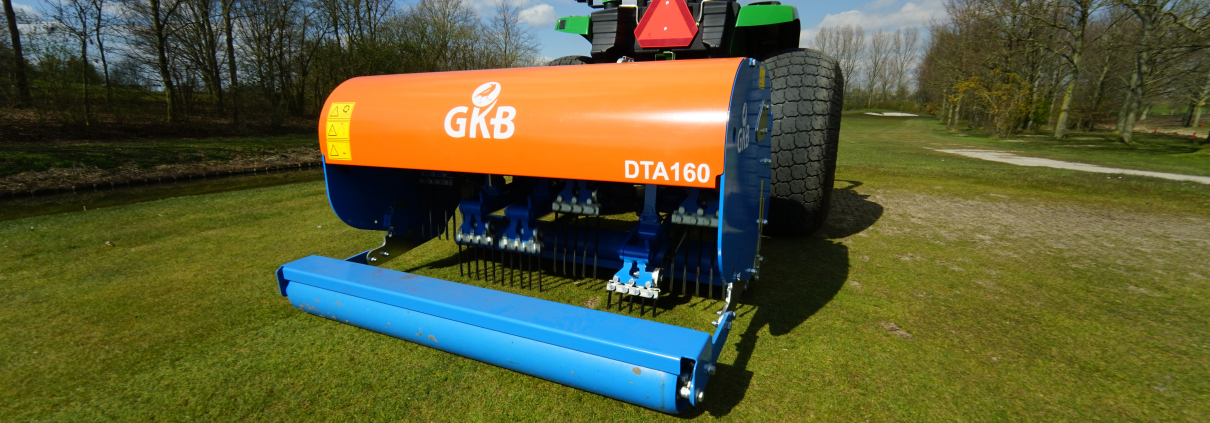
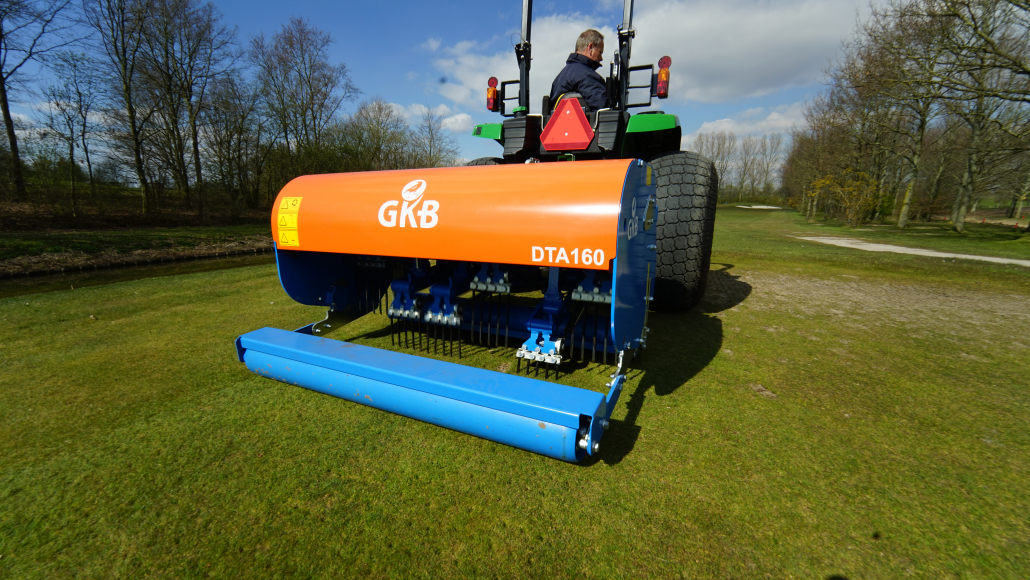
GKB launch innovative DTA: GKB Machines, the company behind sustainable, reliable and robust maintenance machinery for natural, synthetic and hybrid turf are providing the solution to ground compaction with the launch of the revolutionary GKB Deep Tine Aerator (DTA).

From the use of heavy-duty machinery to a footfall of thousands on sports pitches over time, many grounds staff do not comprehend how bad compaction really is and can be. Compaction is considered one of the major causes of poor sward density, root development and water logging. Designed to relieve compaction, the GKB DTA works on natural sports pitches to relieve the surface, compaction enabling water to travel through and for stronger roots to develop.

GKB launch innovative DTA

GKB launch innovative DTA

Consistently developing their product range through innovative research and expert engineering, Tom Shinkins, Operation Manager said, “We’re really pleased to have this machine added to our range, it now enables us to offer golf clubs and sport pitches the full maintenance package.” He continues, “it was the missing piece to our catalogue and now being able to offer customers the full range of reliable and robust machinery will allow us to truly stand out from the crowd.”

With an adjustable 25-degree heave angle, the GKB DTA’s tine holding system allows you to take control on removing compaction. From varying depths up to 16 inches. Featuring a 3-speed heavy duty gearbox, you can adjust the speed on the tines to create the required hole pattern in the turf, and with its unique tine mounting system, quick changeover for different size tines has never been easier.  In addition, built on the understanding that ‘the worker is king’, GKB Machines ensure that the GKB DTA requires minimal maintenance as it’s fitted with a heavy-duty sealed bearings on the crank shaft, ensuring focus is always on improving the ground and less on maintaining the machine.

Launching to market early April, the GKB DTA will be out for demos from now. If you’re interested in learning more or booking a demo, please contact Tom Shinkins on 07495883617.

For more on GKB Machines and their reliable and robust range of machinery for natural, hybrid and synthetic turf, please visit www.gkbmachines.com.

For the latest industry news visit turfmatters.co.uk/news

Get all of the big headlines, pictures, opinions and videos on stories that matter to you.

Follow us on Twitter and Instagram for fun, fresh and engaging content.

You can also find us on Facebook for more of your must-see news, features, videos and pictures from Turf Matters.
Turf management under lockdown

Turf management under lockdown: A new research project is set to provide vital answers to the pressing questions of ‘Managing turf under lockdown.’ Crucially, the results will be reported as the trial progresses to enable greenkeepers to make decisions over the coming weeks.

Sponsored by Syngenta, in association with ICL and the STRI, the initiative will give an insight into the implications of lower intensity mowing regimes on fine turf surfaces, along with some of the techniques to more effectively manage growth.

Turf management under lockdown

Turf management under lockdown

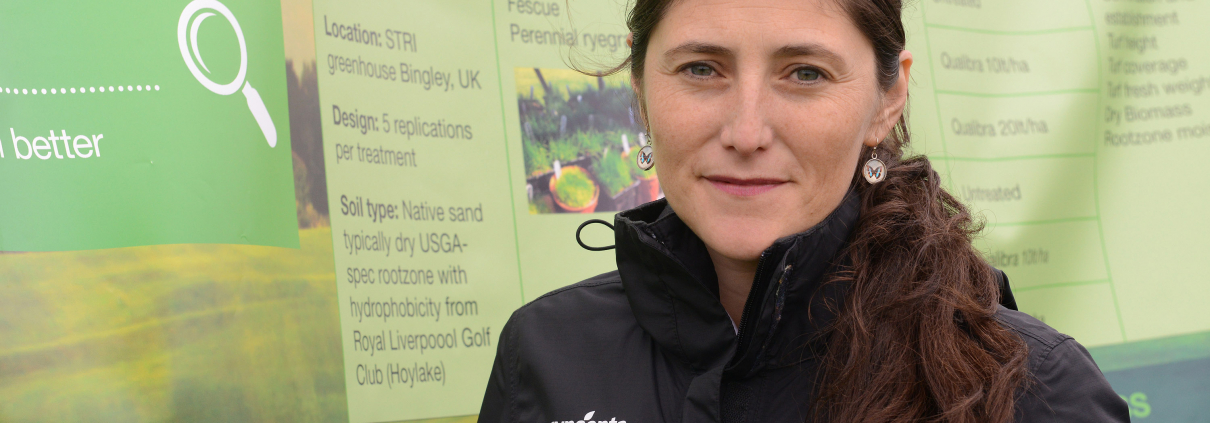
The trial at Bingley in Yorkshire, led by STRI’s Dr Christian Spring, will deliver up to the minute results of the effects on turf quality, along with suggested actions to help maintain playing surfaces for when normal service can resume.

Syngenta Technical Manager, Marcela Munoz, commented: “At a time when many courses have been forced into actions to reduce mowing frequency, turf managers need answers to what the effects will be on turf quality for the future.

“Rapid reporting of the findings from the trial as they happen could help to make better decisions to maintain turf more efficiently and effectively through this period,” she added.

Assessed weekly, the STRI team will provide a weekly trial update and advice of suggested actions from observations of sward height, uniformity, clipping yield, colour and overall turf health.

Managing turf under lockdown will investigate the results of different mowing regimes on a poa/bentgrass green, with five, three or one cut per week. Further treatments will assess the effects of Primo Maxx II growth regulator applications, at various intervals. It will indicate opportunities to reduce mowing requirement and better maintain turf quality under lower intensity regimes.

The research is also set to validate a new Growing Degree Day calculator, developed by Syngenta to tailor Primo Maxx II application intervals more precisely. For the first time, there will be scientifically assessed GDD data for cool season grasses under UK growing conditions, to enable turf managers to better interpret existing turf growth models for their own individual situations.

Marcela Munoz added the height of cut for all of the treatments would be raised to five mm, to reflect current practice to ease off intensity and to enable turf to optimise use of water and nutrient resources, as well as reduce stress related disease pressure.

“It recognises that most courses are in a holding position to maintain turf without long-term loss of quality. It will enable them to return to previous levels of playability as quickly as possible – without recourse to expensive and time consuming remedial actions.”

She highlighted the information and generated by the research will be applicable for all sports turf surfaces.

Weekly reports and videos from the Managing turf under lockdown initiative will be available on a dedicated webpage of the GreenCast website: www.greencast.co.uk and with further practical advice and commentary on the GreenCast Advisory blog and Twitter @syngentaturfuk

For the latest industry news visit turfmatters.co.uk/news

Get all of the big headlines, pictures, opinions and videos on stories that matter to you.

Follow us on Twitter and Instagram for fun, fresh and engaging content.

You can also find us on Facebook for more of your must-see news, features, videos and pictures from Turf Matters.
Iseki launch virtual demonstrations

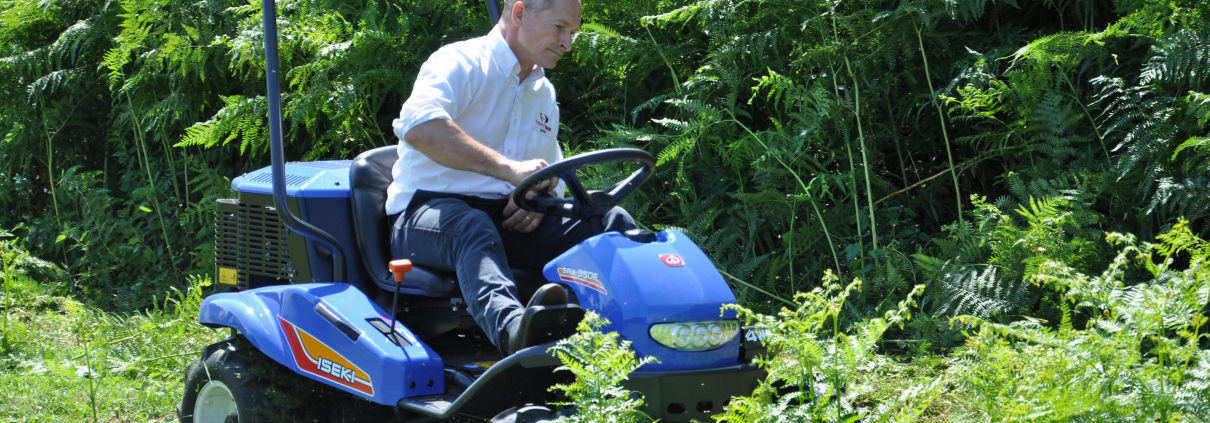
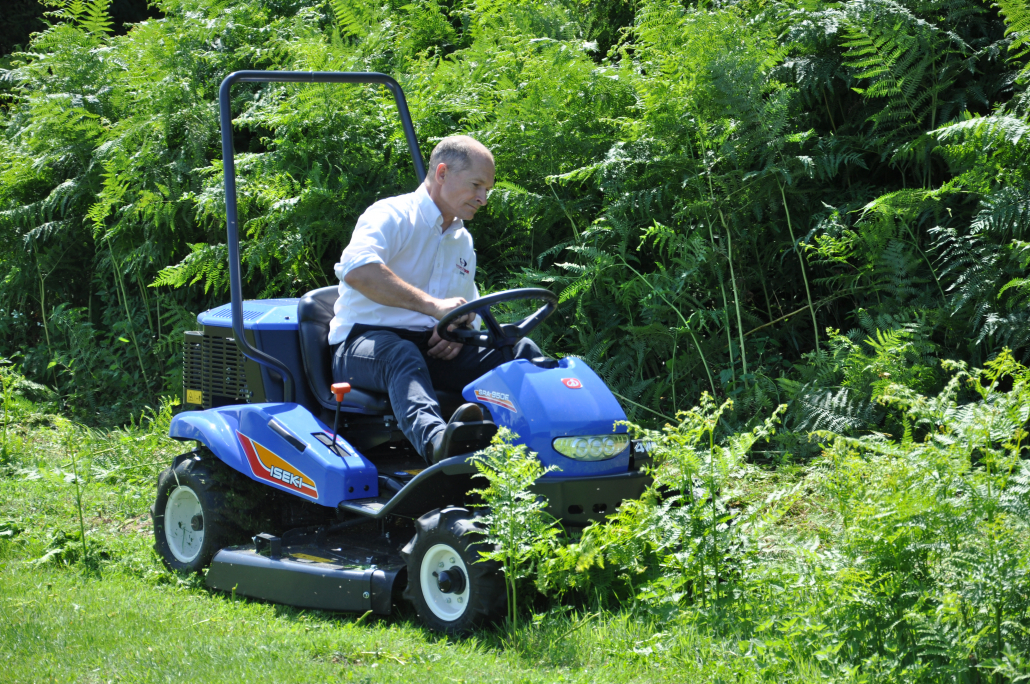
Iseki launch virtual demonstrations: The day after the UK Government announced a further lockdown of “at least three weeks”, David Withers, Managing Director of Iseki UK has produced the first in a series of virtual demonstrations showcasing the benefits of ISEKI ownership.

With turf care workers mainly unaffected by the lockdown and with grass continuing to grow as spring blossoms, Withers was looking for a way in which he could keep in contact with his customer base, ensuring that when the UK finally comes out of lockdown, grounds care professionals up-and-down the country are fully prepared.

“Demos are an important aspects of our sales process,” explained Withers, “so given the current restrictions concerning COVID-19, I thought that if customers can’t come to us, we’ll try to come to them, albeit even if it’s only in a virtual sense.”

The video, which was filmed by a member of Withers’ immediate family, was shot using an iPhone in a nearby paddock close to their family home in Suffolk, and as Withers explains, helps demonstrate an Iseki SXG323+ mower.

“Over the past few weeks, I’ve received a number of calls from prospective customers as well as our dealer network, saying that they’ve had a number of demos that have needed to be postponed due to the lockdown, so I thought that it made sense to try and answer as many questions about the SXG323+ as possible. ”

“I’m not sure we will win any awards for the narrative or the production quality of the video, but I felt that it was important to try to connect with as many of our community as possible in a light-hearted and informative manner.”

“We wanted to try and pretend that you were here with us in person rather than watching ‘virtually’ and hopefully we’ve been able to achieve that aim. These are challenging times for everyone working within the turf care sector, and I genuinely look forward to the time – hopefully, next month – when I’ll be able to demonstrate our range personally, rather than virtually.”

The video can be viewed on YouTube, the link is:  https://youtu.be/GVvM4Kbvi8Q

For the latest industry news visit turfmatters.co.uk/news

Get all of the big headlines, pictures, opinions and videos on stories that matter to you.

Follow us on Twitter and Instagram for fun, fresh and engaging content.

You can also find us on Facebook for more of your must-see news, features, videos and pictures from Turf Matters.