Tag Archive for: A

Local Heroes For An Event That Produced A Local Hero…

Local Heroes For An Event That Produced A Local Hero…: Scott MacCallum catches up with Royal Portrush Course Manager, Graeme Beatt, following the magnificent return of the Open Championship to the island of Ireland.

Graeme Beatt arrived home from work and poured himself a gin and tonic before settling into a chair to reflect on the events of the previous, days, weeks and months. It’s not often that you have been charged with preparing a golf course for the biggest event on the planet, and, in the case of Royal Portrush Golf Club, it was the first time in 68 years that an Open Championship had come to call.

Local Heroes For An Event That Produced A Local Hero…

Graeme smiled as he thought about the great work of his own greenkeeping team, always going that little bit beyond; how the volunteers, who had given up their time, unpaid, to contribute towards a stupendous Open venue; and how the entire club, town and island of Ireland had embraced the occasion.

The fact that the event had produced a local hero winner – if not exactly the one who had been expected to lift the Claret Jug – made the whole occasion so much more of a fairy tale.

Like most well written stories, however, the week and the lead up, had produced so many twists and turns that by the time that drink was poured Graeme was worn out.

“I had been invited to a drinks’ reception with the winner by the Championship Committee but after the trophy presentation on the 18th green I’d gone back to thank our own staff and the volunteers. I then went to lock up the sheds, got into my pick-up and drove back through the course. It was a struggle as it was still full of spectators.

“When I got to the gate I spotte my wife, Katriona, and our kids, Charlotte and Emily, walking home in the pouring rain so I picked them up. By then the plan of returning for a formal reception wasn’t too appealing so I poured a drink before we went to friends for a little while and then bed.”

Local Heroes For An Event That Produced A Local Hero…

Who could blame him? The hours he and his team were clocking up by Championship week, never mind the months leading up to it, would have had anyone tasked with implementing the Working Hours Directive applying for overtime just to log all the infractions.

“I was arriving at the course at 3.30am for a 4am start and we weren’t getting back home until half ten or a quarter to eleven at night. It was an amazing experience but at the same time we were absolutely shattered,” revealed Graeme.

All the work paid off. The course looked incredible and played superbly with weather conditions testing the players in a manner that is always hoped. The fact that Shane Lowry is a links specialist play, and, if not one of Ireland’s Major winner club members before he arrived, was regarded as a top class player. The course did identify a true champion and a true local hero.

To the question “On a scale of one to ten how happy were you with the course on the Monday of the Championship?” Graeme pondered for a moment and then said: “I’d say eight and a half.”

Top Course Managers are never satisfied, hence the missing point and a half, but Graeme had a vision of how he had wanted his Open course.

“I had a picture in my head of how I wanted the course to look, and that was to be a little bit browned off. We would have needed a few weeks of dry weather to be able to do that. The course was stunning but quite green and that wasn’t down to fertiliser, it was purely the rainfall and the warm weather. Everything greened up and stayed like that for the entire Championship.

“I was pleased with the condition of the course. I was pleased with the turf. Pleased with everything had come up and how the course played. It was just the colour really. As the Championship went on it just continued to rain and we had to do more and more to get green speed, which was the opposite if what we thought we would be doing,” said Graeme, who had to deal with 35 mil of rain in an hour just the Wednesday before Championship week. That is excessive even by Portrush standards.

“It absolutely bucketed down and we were shovelling bunker sand back and pumping water out of bunkers at eight o’clock at night. We’d been working on the bunkers for weeks taking sand out of them and reshaping them. We’d got them just right so it was really frustrating. It’s unusual to have washouts in bunkers here, but hey…”

Graeme was working closely with Alistair Beggs, Richard Windows and Adam Newton throughout the Championship, as part of the testing programme which aids course consistency.
Local Heroes For An Event That Produced A Local Hero…

“I was out with Alistair every morning while the other guys, helped by two R&A Scholars, were doing the testing. They would radio green speeds to us after a single cut and we’d decide between ourselves and Grant Moir (the R&A’s Director of Rules) if we should do another cut. It worked really well as it gave us an idea of how much extra speed you’d get from another cut, how much the green speed would drop off in the evening and how much they would drop off again by the following morning.

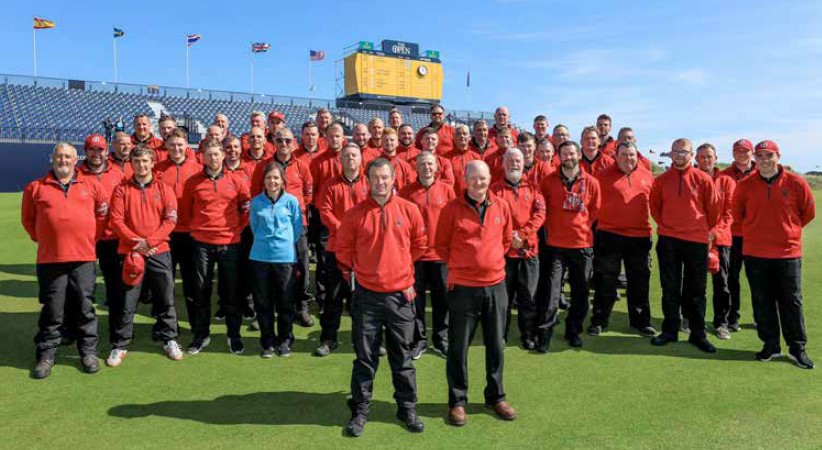
“The weather being the way it was meant that we were doing quite a bit of cutting – the greens were being triple cut,” revealed Graeme, keeping his staff of 60 – 54 greenkeepers  plus six part-timers who filled divots – busy for the entire week.

The aforementioned bunkers also required more than their fair share of TLC.

“The bunkers were highlighted in the years leading up to the Open as a potential issue. Our bunker sand is our own and it tends to become a bit soft when dry. Even though we were getting rain we were out in the evenings to water them down with hoses just to ensure that they were firm enough and that the ball wouldn’t plug.

“The other thing was the shape of our bunkers. The fairways are designed so that the ball rolls into the bunkers and we didn’t want the ball to roll into the sand and not stop short, so we were fly mowing every day – some of them were being done morning and night. Bit of a difference to the normal once a week!”

Graeme has been Course Manager at the club since 2014, taking over from the retiring Joe Findlay, having been Course Manager at County Sligo prior to that but he is actually from Fife. He was originally from Scotscraig, near St Andrews, and attended the rival school to your Editor, albeit Graeme was quite a number of years later!

He worked at Scotscraig Golf Club before going to the still under construction Kingsbarns. He then spent time at Royal Melbourne Golf Club, in Australia before returning to Kingbarns in 2005 before moving to Ireland the following year.

Local Heroes For An Event That Produced A Local Hero…

“I was a member at Scotscraig, which was an Open qualifier, and I had to take a young Justin Rose around the course when he was attempting to qualify in 1995. I had lunch with him and his family and I did think about saying to him here but felt that he would have so many people saying ‘Remember me?’ to him, that I decided not to in the end.”

While the Open hadn’t been confirmed during the interview process Graeme met with R&A officials as part of his selection, so was aware that the return of the Open was imminent and has been grateful to have had five years to get to grips with the course itself and the enormity of what an Open Championship brings.

The build up to this year’s Championship was more intense than any recent Open, partly due to that great gap between Northern Irish Opens and partly due to the wonderful “Dream Team” of Irish golfers produced over the last few years.

Three time Major winner, Padraig Harrington; Darren Clarke, 2011 Open Champion and Royal Portrush member (Darren struck the first shot of the Championship); Graeme McDowall, 2010 US Open Champion and another homer towner, whose brother is on the Royal Portrush greenkeeping staff, and four time Major winner and pre-Championship favourite, Rory McIlroy, who had broken the Royal Portrush course record as a 17-year-old.

So much expectation was riding on Rory’s slim shoulders that the pressure when he stood on the 1st tee was immense so perhaps it wasn’t too unexpected that his tee shot wasn’t his best. That coupled with the course’s ability to maximise any error, resulted in an opening quadruple bogey eight. That, added to a double bogey at the 16th and a triple bogey at the last, holed his chances below the waterline, and while he heroically shot a second round 65, a 14 shot improvement on his first, he missed the final two rounds by a solitary shot.

Was Graeme aware of what was happening to Rory on the first day?

Aware! He was very nearly part of the action.

“When Rory hit his first tee shot out of bounds it actually went over our heads. I’d nipped down to see him tee off and I was standing left of the fairway with my wife and kids.

Local Heroes For An Event That Produced A Local Hero…

We heard the thud of the ball as it hit the spectator and then his second tee shot landed right beside where we were. We watched him play his fourth into the rough beside the green and just groaned. You could see Rory’s nerves and if he’d played his first round the way he played his second he’d have been a factor.”

As for the other huge fans’ favourite, Tiger Woods? He too missed the cut, much to the dismay of the giant galleries.

The disappointment of losing the two biggest names, turned to elation on the Saturday, however, when Shane Lowry produced a spectacular third round 63 to give himself a handsome lead going into Sunday.

“Shane played north of Ireland golf for years and knows the course like the back of his hand. He can play in any conditions and is a links golfer with all the shots,” said Graeme.

With no-one able to mount a serious challenge on the final day Shane enjoyed a triumphant march around the links, cheered to the rafters from all corners, before holing out for a six shot victory.

One of Graeme’s most memorable moments was standing with the presentation party on the 18th green, but watching his team form a guard of honour for Shane as he marched out to collect the Claret Jug.

“I was so proud of our staff. They had done such an amazing job and pulled it out of the bag. A lot of them were local guys who had played and worked here all their lives and it was just great for everyone.”

While he was at home enjoying that celebratory gin and tonic, the team was at nearby Rathmore Golf Club, Graeme McDowall’s home club, where there was a full blown party underway and an opportunity for the everyone to let their hair down.

For Graeme, though, his work was done and he could think back with satisfaction about what had been achieved and how, after a wait of 62 years, Royal Portrush was very much back on the map and, more importantly, the Open rota.
RTC A Hit At St Mirren

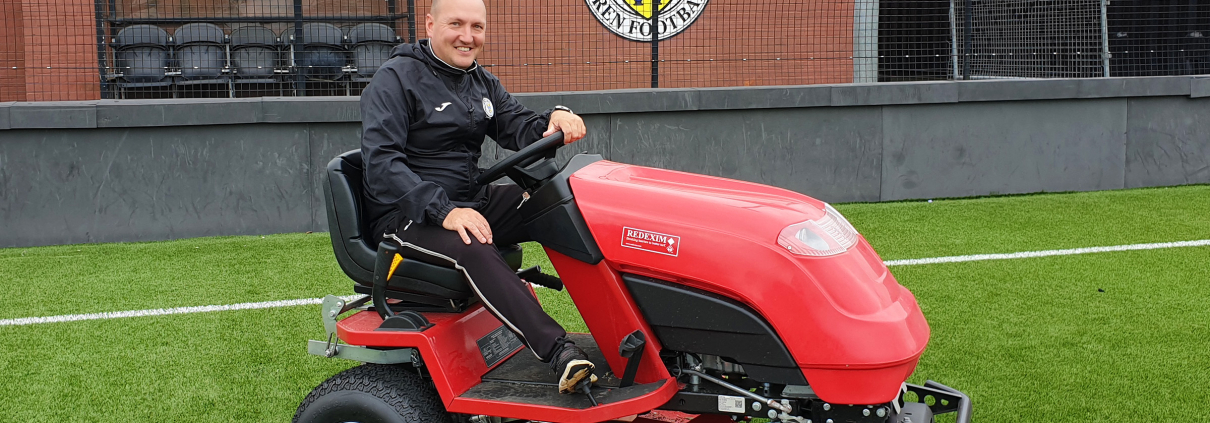
RTC A Hit At St Mirren: To keep on top of the maintenance of a newly-laid 4G astro surface at their Ralston Training Complex, St Mirren FC have purchased an RTC unit from Charterhouse Turf Machinery.

For the facility’s sole Groundsman, Alan Michie, it has improved both the efficiency and speed of regular surface brushing.

RTC A Hit At St Mirren

Forming part of the 3.7 hectare site, the artificial pitch is home to first team and academy training throughout the week, and matches at the weekend. “Just before the 4G pitch was open for play in September, I was very pleased to find a new RTC brush unit from Charterhouse land at my door” explains Alan, who has been running the training ground for the last two and a half years. “We had previously used a tractor and brush combination which wasn’t the most practical – timely to set up and, being in one of the wettest areas in the country, often meant I was unable to get out at all.”

“The Chairman and Head Groundsman at the stadium had been in talks with Ian Lauder of Charterhouse and decided the versatility and simplicity of the RTC was a perfect fit to keep on top of the regular maintenance. Ian came in to do some training with me, but it’s so simple to use, it’s fantastic. If I’m struggling for time, the guy who looks after our youth department will go out and brush for me. He finds it therapeutic!”

The convenience of a self-contained unit means Alan can easily keep up with the regular maintenance on the high-wear surface, brushing on average five or six times a week. The RTC brushes fold to allow storage and access through gaps as narrow as 90cm, although when deployed, the unit will cover an impressive 200cm in one-pass. “I can also use the tow bar on the back to take other tools out with me that I use for work on the natural grass pitches. It pulls a small trailer no problem.”

Proving itself to be a real multi-purpose machine, Alan adds, “it does a fantastic job of levelling off the pitch, spreading the rubber well to prevent compaction. The ongoing maintenance of the unit is also very simple. For me, it’s crucial that the maintenance is simple, but effective. For this, the RTC is ideal.”

For the latest industry news visit turfmatters.co.uk/news

Get all of the big headlines, pictures, opinions and videos on stories that matter to you.

Follow us on Twitter and Instagram for fun, fresh and engaging content.

You can also find us on Facebook for more of your must-see news, features, videos and pictures from Turf Matters.

ICL School Seminar A Success

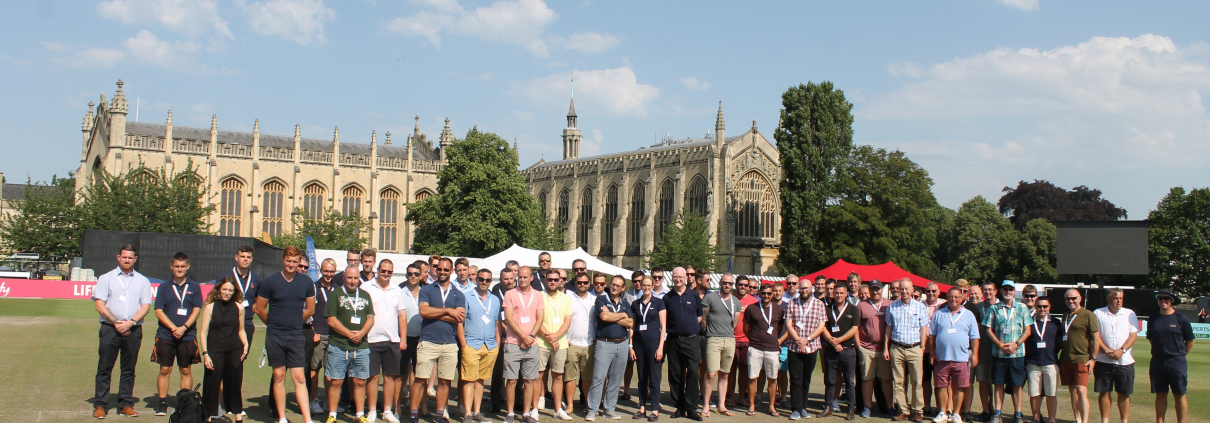
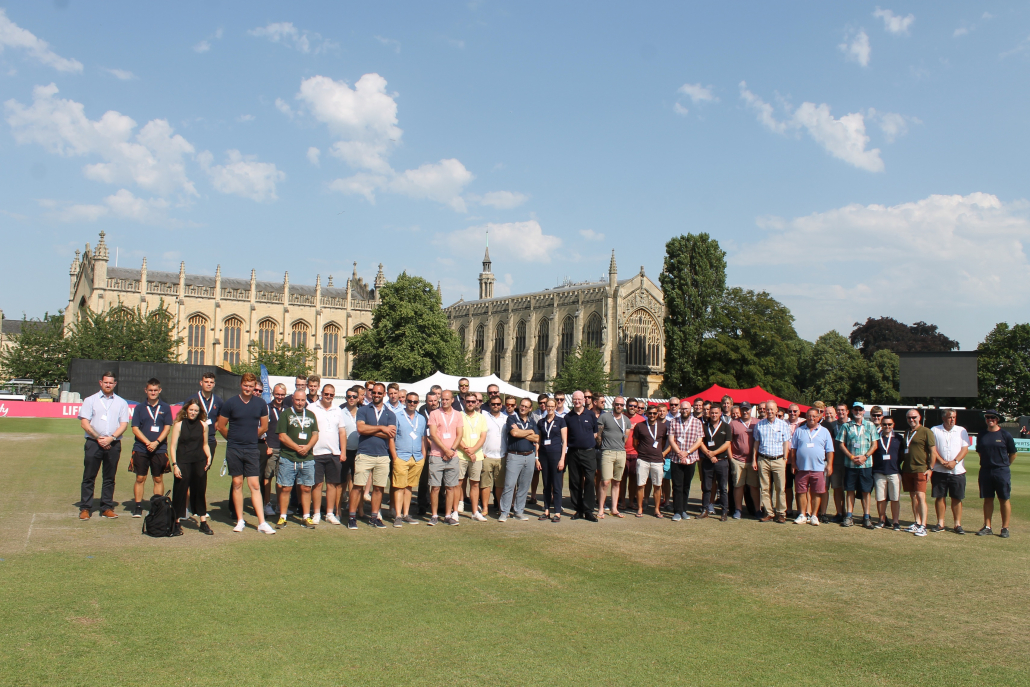
ICL School Seminar A Success: In what proved to be the hottest day of the year, the 2019 ICL Independent School Seminar, hosted at the illustrious Cheltenham College, saw a record-breaking number of attendees soak up a memorable day of knowledge, networking and first-class cricket.

Over 70 turf professionals made their way to the historic spa town of Cheltenham to network and enhance their education on a variety of different turf management topics in a seminar tailor-made for those working within the Independent Schools sector.

ICL School Seminar A Success

The seminar was held in the College’s Thirlestaine House, which over the years has housed some of Cheltenham’s most creative and forward-thinking students. It was therefore an appropriate setting to discuss the future of turf care and explore new and innovative methods.

Christian Brain, Head of Grounds at Cheltenham College, was the first to take to the stage and proceeded to offer a wonderful glimpse into the College’s rich history in which he reflected on the years, the great changes that have taken place, and the significant marks that history has carved in its life.

It was then down to business as Henry Bechelet, ICL Technical Sales Manager UK & Ireland, delivered his thoughts on The Future of Fertilizer. After nearly two years of negotiations the European Parliament have agreed on a new regulation for fertilizers. Set to commence in 2022, many questions have been raised as to how the new regulations might affect the industry and Henry was on hand to clarify the situation.

“The whole point about the regulations is to protect the end user,” he said. “The other key aim of the legislation is to bring into play added transparency and more sustainable and circular economy ingredients. At ICL we view the new regulations as being progressive because we can always demonstrate the performance of our products, but they are going to have a big impact on how some companies sell their products. No longer will companies be able to falsely market their products – which is a step in the right direction because hopefully it will take out of the marketplace those companies that don’t have the evidence to support their product claims.”

After addressing the new forthcoming fertilizer regulations, Henry discussed the use of the new Pearl granules that ICL is incorporating into the renovator grades in the SierrablenPlus range.

“These are slow release forms of nitrogen but mainly phosphorus which have been proven in trial work to really encourage root development. We are very excited about these new materials because we feel that they will massively enhance renovations and encourage better rooted plants,” he said.

Attendees then got the opportunity to receive a tour of the grounds and Christian explained how he and his team prepare for the Cheltenham Cricket Festival. At over 140 years of age, Cheltenham is the world’s oldest cricket festival and has, over the years, witnessed some legends of the game such as Wally Hammond, Allan Border and WG Grace. Taking place every July, over a two-week period, the festival now features a selection of T20 Blast games – something which the delegates would later enjoy.

As everyone gathered back in Thirlestaine House and re-took their seats, student Tamsin Williams captivated the audience with an insight into ICL’s unique four-year research project which is exploring the effects of seaweed products on turfgrass plant parasitic nematodes.

The project, which is taking place at Royal Holloway, University of London, was founded due to the apparent rise of nematodes. As it stands, there are few options available for the turf manager who has a nematode problem but ICL is currently researching whether seaweed could offer a solution. Tamsin is of the opinion that when the right seaweed is applied to a grass plant it could change the resistance of the plant to disease and insect attack and she revealed her current findings.

“The research into the nematodes and how seaweed can be used as a preventative was very interesting,” said Matt Wharton, Grounds Manager at Reading Blue Coat School. “The technical detail was outstanding – Tamsin is working on something really special that will increase our knowledge and benefit the whole industry.”

At the 2018 ICL Independent School Seminar held at Edgbaston Stadium, Andy Richards, Grounds Manager at Shrewsbury School revealed how he uses data recorded from his weather station and moisture metres to improve playing conditions and to identify what equipment he needs in order to continue to make improvements. Inspired by Andy’s seminar, Glenn Kirby, Syngenta’s Technical Manager for UK Turf & Landscape unveiled a year’s worth of recorded data which undoubtedly piqued the delegates’ curiosity.

“The talk from Andy last year ignited my excitement to get out there and have a look for myself,” said Glenn. “It was an opportunity to talk to the delegates about the limitations I have found within some of the data and how I feel it could help people manage their turf moving forwards.

“Weather conditions are changing all the time and due to this turf managers are becoming under increasing pressure so having a really firm hand on exactly what is going on in the soil can only help them. It is going to be very challenging and will be very different to what they have seen before.”

Glenn’s presentation seemed to strike a chord with attendee Carl Reeves, who is enjoying his first role in a Head Groundsman position at Bradfield College. “I think the last seminar about climate change and how it’s continuing to adjust was a real eye opener because we have obviously affected the planet quite badly. Yes, we have some huge challenges ahead but this seminar demonstrated how to use certain technology to ensure that we are always that one step ahead.”

As the delegates reflected on yet another insightful ICL seminar, keeping on top of turf management and looking to the future in an ever-changing industry seemed to be the general consensus.

“I think that a lot of the research and the projects ICL are working on are key to how we change turf management in the next ten years,” said Charlie Seager, a Groundsman at Warwick Independent Schools Foundation. “You have got to be ahead of the times because of the way technology is changing so it is very beneficial to come to events like these.”

Charlie was one of four grounds staff from Warwick who attended and Duncan Toon, Grounds Manager, explained why it was so important to make the seminar a team outing.

“These seminars are essential because it isn’t just all about what we learn in the seminars – it’s also about networking and what you get from chatting to other groundsmen. I can guarantee that we will be sitting round the table on Monday and I’ll have twenty new ideas from everyone who attended and that is why I like to bring the whole team.”

Gary Austin, Deputy Head Groundsman at Radley College, praised the event for simplifying what can potentially be some incredibly overwhelming topics.

“What I like about these seminars are that you can tell that ICL are genuinely trying to help groundsmen like us – they are on our side. I also think ICL present all of their data and research in a non-scientific manner which general groundsmen can understand. They break the research data down really nicely for you, in an easy to understand way and you can then go ahead and put it into practice.”

The day was rounded off in style as the delegates joined a sell-out 5,000 strong attendance to watch Gloucestershire inflict a first defeat on Middlesex in this season’s Vitality Blast.

Organiser of the event, ICL’s Emma Kilby, first launched the Independent School Seminar back in 2011 and is pleased to see just how far it has come over the years.

“This is a huge sector and consists of a very particular group of people that look after schools which have a multitude of different surfaces – all of which require very different approaches.

When I first joined ICL eight years ago I just felt that they were not receiving the kind of support they needed. It was at that point I started discussing the idea of an event with various school groundsmen and we launched the first seminar in 2011 at Radley College.

“The event has run every year since at different venues and the bar is raised each time. These guys are real experts in lots of different disciplines and their requirements are quite individual so to actually focus on them and to get them along to an event where all the seminars are aimed at topics they are interested in is one thing but also the opportunity to get them all together so they can talk with one another and network is invaluable.”

Please contact ICL on 01473 237100 or visit www.icl-sf.co.uk or www.icl-sf.ie if you are in Ireland.

For more news and insightful views, you can follow ICL on Twitter @ICL_Turf

For the latest industry news visit turfmatters.co.uk/news

Get all of the big headlines, pictures, opinions and videos on stories that matter to you.

Follow us on Twitter and Instagram for fun, fresh and engaging content.

You can also find us on Facebook for more of your must-see news, features, videos and pictures from Turf Matters.

Limagrain A Success At Glamorgan

Limagrain A Success At Glamorgan: Glamorgan County Cricket Club head groundsman Robin Saxton believes that a range of Limagrain UK grass seed is helping the venue stand up to the demands of modern day sport and the constant scrutiny that pitches are under.

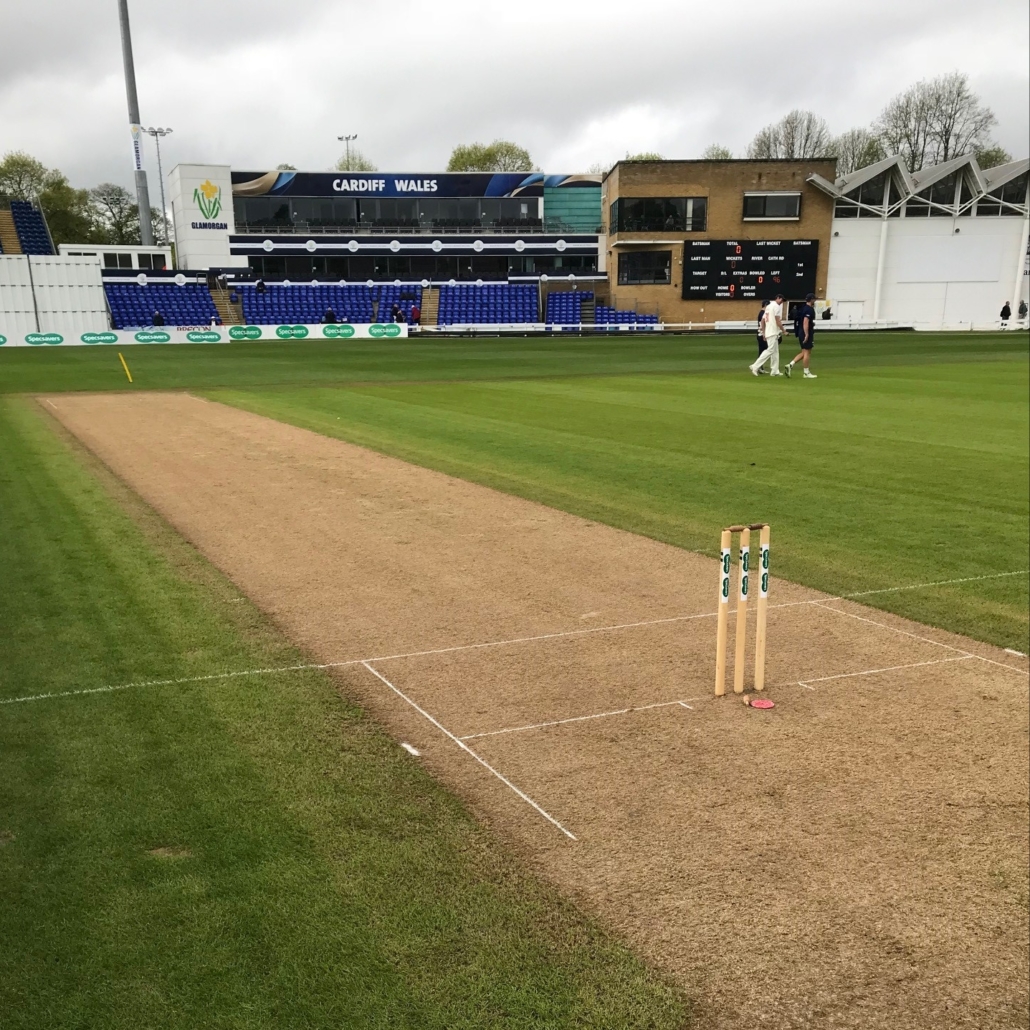
Sophia Gardens Cardiff, a 16,000-seater stadium, is the home of Glamorgan Cricket and an established venue for international cricket. In an average season, the venue will host four day championship games, T20 games, international and domestic fixtures and a mixture of local and corporate games. Robin estimates that there are approximately between 45-50 days of cricket played at the venue each year and this is in addition to pre-season concerts and events.

Limagrain A Success At Glamorgan

It is safe to say that Robin, who has been at Sophia Gardens since 2013, has his work cut out and that is without the increasing pressure grounds personnel are under, as he explains.

“Due to the demands of modern day sport and because of the TV cameras, pitches are always under scrutiny and it needs to be at its best at all times.

“Even the outfields used to be the square’s poor cousin not so long ago but that has all changed now. What you don’t want is a square that looks great and an outfield that looks patchy because it will be quickly noticed.”

For his outfields, Robin overseeded with Limagrain’s Action Replay which is a 100% Ryegrass hard-wearing mixture.

“The Action Replay is a winter sports mix, designed for the likes of football and rugby so we thought that this mixture would be ideal for the outfield,” he said. “It is wear and disease tolerant because it is a broad, robust seed.

“We first applied it last year and we had a fantastic take with it which excelled during a particularly hot summer. Since using Action Replay we have seen a lot less burn off and a lot less dry out on the outfield.”

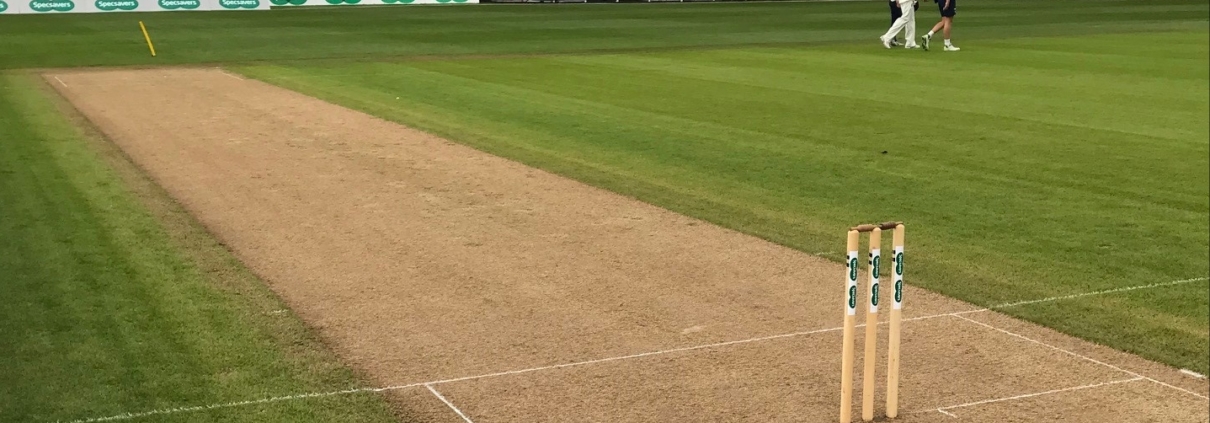
When it comes to the 15 wickets and practice pitches on the square, MM50 has stood the test of time and has been used at Sophia Gardens for as long as Robin can remember.

“I’ve been here since 2013 and even before I arrived MM50 was being used,” he said. “It shows that myself and others before me have always had faith in the seed and deservedly so because we have tried other seeds against it in side-by-side trials. MM50 has always come up better, nothing has ever beaten it.”

MM50 is the ideal seed for cricket squares. This hard-wearing mix has rapid germination, a very fine leaved appearance, high shoot density and is tolerant to very close mowing, along with high disease resistance. All these attributes together produce a fantastic sward that has great colour all year round. It is also widely praised for its rapid recovery – something which Robin quickly noticed.

“MM50 is by far the best seed in terms of recovery. When trialled against the others, it has proven to be stronger, it has come through thicker and it is more wear tolerant. It has consistently outperformed other seeds we have trailed.

“You are left with a stronger plant that is going to take the activity across the square better than a slightly finer plant – which with a full calendar of cricket is a big bonus. With MM50 you just have the confidence in knowing that it will handle the stresses of four-day cricket where we can’t really water the square as much as we would like to.

“There has never been any reason to change the seed,” continued Robin. “In fact it has probably been the one constant product we have stuck with over the years – we may have changed the fertilisers, the chemistry and the biology but not the actual grass plant because it has always been a great base to work from.

“For me, the consistency of MM50 is the best feature. I don’t remember one year where we have had a batch that has not performed how we would like it to. It has got to the point that if something isn’t right then we look at things we might have done incorrectly because it is no doubt a mistake on our part rather than the seed because we know how good the MM50 is.”

For further information, please contact Limagrain UK on 01472 371471 or visit the company’s website www.lgseeds.co.uk/mm. You can also follow the company on Twitter: @MM_Seed

For the latest industry news visit turfmatters.co.uk/news

Get all of the big headlines, pictures, opinions and videos on stories that matter to you.

Follow us on Twitter and Instagram for fun, fresh and engaging content.

You can also find us on Facebook for more of your must-see news, features, videos and pictures from Turf Matters.

Turf Science Lite A Success

Turf Science Lite A Success: ICL and Syngenta recently held a successful series of Turf Science Lite events, which took place at Aston Villa FC’s stadium Villa Park, Slaley Hall Golf Club in Northumberland and Liverpool FC’s Academy facility in Kirkby.

The series, which showcases the latest research information and technological innovations in turf agronomy, attracted over 200 delegates including turf managers, groundsmen, agronomists, greenkeepers and course managers.

Turf Science Lite A Success

Syngenta Technical Manager, Glenn Kirby, kick-started each event with an insightful presentation entitled Life After Propiconazole – an outlook on future disease management strategies. Within his presentation Glenn explained that good practice of integrated turf management techniques to promote turf health is going to become ever more important with the loss of important fungicide actives. He also revealed that there are exciting new fungicide options in the UK registration system, and that the company’s £1.4bn annual investment in R&D will continue to create new innovations.

“The loss of propiconazole is undoubtedly a serious concern for maintaining turf quality,” warned Glenn. “Adopting new turf technologies alongside fungicide programmes, such as Ryder pigment, Qualibra wetting agent and the potential for bio-stimulants will be key. Furthermore, pioneering innovations, such as sensor technology, predictive modelling and application, does offer a positive future for turf management.”

Dr Andy Owen, ICL’s International Technical Manager, was next to take to the stage to present The Devil is in the Detail in which he talked about controlled release fertilisers (CRF) and the technology which goes into developing each product. Andy focussed on how to select a CRF in a crowded marketplace and the questions that could be asked about products; for example, what is the % coated material in the bag? How are the claimed longevities calculated? Also featured in the presentation was the Pearl technology found within two new SierrablenPlus products and how these can be best used to support sports turf renovation and establishment.

Following a complimentary lunch, Daniel Lightfoot, Syngenta’s UK and Ireland Business Manager, gave an informative presentation on the Art of Application, explaining how best to get the active ingredient where you want it. According to Daniel, this includes understanding the product being applied, where you want it to end up and then fine tuning the variables of nozzle selection, water volume and sprayer set-up to deliver to the right place at the right time. Daniel also demonstrated how too little water volume may not achieve sufficient coverage, while too much could over wet leaves and run off. “The sprayer operators’ role is vital to balance all these factors to optimise results,” he added.

Henry Bechelet, ICL Technical Manager for UK & Ireland and Simon Taylor, ICL Product and Business Development Manager for Turfgrass seeds, were next to provide top tips on how to Improve your Grass Seed Knowledge in which they discussed various topics regarding seed breeding, selection and management. The audience were asked to select from a list of 10 seed topics and then Simon and Henry thrashed out the issues in an entertaining and forthright fashion to get to the nub of each issue.

Turf Science Lite A Success

Commenting at the event which took place at Liverpool FC’s Academy facility, Tony Sinclair, Manchester United FC Grounds Manager, said: “I came along today and realised just how important these days are in terms of upgrading your education and learning new things. One thing about the industry we work in is that everything changes so quickly and every day is a new day so it is important to keep up with everything that is going on. There is no question that as things continue to move forward ICL will be a part of that – they are a massive player in educating people around the country.”

Scott Reeves, Course Manager at Leyland Golf Club, added: “We are at an interesting point within the industry regarding the use of chemicals and there seems to be a lot hearsay and misinformation around. Therefore it is worthwhile coming to an event such as this to get an update and find out exactly where we are.”

Dr Christian Spring STRI, Research Operations Manager, said: “Today we have been looking at the practical demonstrations and they have been really fascinating because they have focussed on how to get the best out of the products we use and how to get optimum efficiency when we are applying wetting agents, fungicides, liquid nutrition and granular nutrition. It has been incredibly beneficial because it is all about getting the best bang for your buck and looking in details at all the stages we need to focus on in order to get the best possible results.”

Please contact ICL on 01473 237100 or visit www.icl-sf.co.uk or www.icl-sf.ie if you are in Ireland.

For more news and insightful views, you can follow ICL on Twitter @ICL_Turf

For the latest industry news visit turfmatters.co.uk/news

Get all of the big headlines, pictures, opinions and videos on stories that matter to you.

Follow us on Twitter and Instagram for fun, fresh and engaging content.

You can also find us on Facebook for more of your must-see news, features, videos and pictures from Turf Matters.