Tag Archive for: Advice

Advice & support secures switch to Johnsons

Advice & support secures switch to Johnsons: Backed with advice from two trusted industry contacts Richard Ponsford, Course Manager at Clevedon Golf Club, has been delighted with his switch to Johnsons Sports Seed.

The combination of Johnsons J All Bent on greens and J Rye Fairway has now been in use at the picturesque parkland course for two years, delivering results that means that Richard would never go back to using any other seed.

Advice & support secures switch to Johnsons

Advice & support secures switch to Johnsons

When Richard joined the club in North Somerset just over two years ago, he very quickly built up a rapport with Johnsons Technical Manager Ian Barnett and Joe Hendy, his local distributor for AGS. “In this industry, the support and advice of colleagues goes a long way and knowing AGS is a key distributor of Johnsons, I was keen to explore the range.” With poa/bent dominated swards on sand-based greens, the first switch was to the Johnsons J All Bent mixture.

“We’ve overseeded with J All Bent, which contains Arrowtown and Manor, and it has done a fantastic job at reducing Poa annua invasion, increasing the bent content and thereby improving the playing speed of our greens. This autumn, I consulted again with my technical managers about one historical problematic green which was adversely affected by disease in the summer – the suggestion was rather unconventional, oversowing with J Premier Wicket. We needed something that would take well and become a nurse crop for the Arrowtown and Manor as we head into the cooler months. While we only put this perennial rye mix down at the end of October it has established well, and is growing in to give us coverage and strength for the winter.”

For their divot mix and overseeding on other areas such as tees and collars, Richard is using the hard-wearing J Rye Fairway mixture. “This delivers really quick establishment making it ideal for repairs. Our members carry divot bags with them, and they enjoy seeing the quick response they get from using the Rye Fairway mix on divot marks.”

At the time of writing, the second lockdown in England has seen play suspended for four weeks giving Richard and his team time to complete a bunker renovation project which commenced in October. “We’ve seeded the new bunker surrounds with the J Rye Fairway mix, instead of turfing them, which will be established and presenting well by the time members return for play, and will save us both time and money.”

For the latest industry news visit turfmatters.co.uk/news

Get all of the big headlines, pictures, opinions and videos on stories that matter to you.

Follow us on Twitter and Instagram for fun, fresh and engaging content.

You can also find us on Facebook for more of your must-see news, features, videos and pictures from Turf Matters.

BIGGA and R&A’s updated advice

BIGGA and R&A’s updated advice: The British and International Golf Greenkeepers Association and R&A have updated their guidance after the lockdown for coronavirus was extended

Greenkeepers have been given updated advice on what counts as essential maintenance during the coronavirus pandemic.

BIGGA and R&A's updated advice

BIGGA and R&A’s updated advice

The British and International Golf Greenkeepers Association (BIGGA) and R&A have issued new guidance after the Government extended the lockdown period, aimed at stemming the spread of the virus, for at least another three weeks.

Their new position was put together in order to take into account the “changing seasonal climactic condition and the need to utilise the time of reduced greenkeeping teams most effectively”.

The association were clear that the directions were not a justification to increase staffing numbers at clubs.

Here is their new statement in full…

Essential Maintenance update – 17 April

The following update (Version 2) to the Essential Maintenance Statement for Golf Courses is published in view of the extension of the UK Government regulations, the changing seasonal climatic conditions and the need to utilise the time of reduced greenkeeping teams most effectively.

These updates are not a justification to increase staff numbers beyond those currently utilised. Any substantive updates from Version 1 are highlighted by an asterisk * in the text below.

Essential Maintenance Statement for Golf Courses during COVID-19 Outbreak

The following industry statement, produced in association with BIGGA, sets out a reduced, essential maintenance regime for greenkeeping that limits activity on the golf course while protecting workers, jobs and securing the playing surfaces at golfing facilities. When a resumption in play is allowed, this will be vital to get the millions of golfers back onto our courses, benefiting their physical and mental wellbeing.

The UK’s £2bn GVA golf industry is only sustainable if greenkeepers continue to work, but it is paramount that this is done in a safe and secure environment.

Our industry statement outlines those treatments considered essential for the safe maintenance of a golf course during the current government restrictions. It is accepted that golf courses exist in many different forms, on many different soil types and in differing landscapes and that this guidance may require adaptation.

Working Practices

The primary consideration must be the health and wellbeing of greenkeeping staff. All golf facilities should implement stringent measures to ensure staff members are not at risk. The number of greenkeeping staff and the amount of time they are at work should be kept to a minimum and be tailored to fit with the agreed essential maintenance programme.

Measures should include but are not limited to:

  • Focus on hygiene and social distancing
  • Ensure staff members work separately
  • Allocate individual machinery to one worker only
  • If multiple staff are on site, then stagger working hours and break times
  • Limit or prohibit use of communal areas
  • Regularly disinfect any surface that is contacted e.g. door handles, fuel pumps, communal machinery
  • Ensure there is a robust lone working policy

Mowing

Greens should be mown according to the rate of growth to a maximum of three times per week. Dew removal should be considered on non-mowing days as required to prevent disease spread.

Tees and green surrounds should be mown according to the rate of growth to a maximum of twice per week.*

Fairways should be mown according to the rate of growth to a maximum of once per week.

Managed roughs and grass paths should be mown according to need to a maximum of once per week.*

Only roughs considered to be in direct play should be mown allowing for naturalisation to areas largely out of play.

The height of cut adopted for all these areas is site specific but the elevation of the cutting height on fine turf areas is advised to minimise unnecessary stress on the turf. The application of plant growth regulators during periods of excessive growth is acceptable.* The aim of the above operations is to maintain uniformity, density, texture and health to allow surfaces to be quickly brought back to an appropriate playing standard once play resumes.

Irrigation and Nutrition

Irrigation and nutrition should be carried out as necessary but with the objectives of keeping the turf alive, maintaining a full sward and preventing turf thinning. Avoid excesses of either input, which will only serve to promote unnecessary growth and necessitate more maintenance.  Utilise best practice methods where available, such as wetting agent application, use of moisture probes and surface aeration, to optimise efficiency of water use on key playing surfaces.*

Construction and Renovation

Starting construction or renovation projects is not considered essential at this time. The completion of unfinished winter projects that are already underway is permissible but only if this can be done safely by greenkeeping staff, and without increasing staffing numbers.*

Machinery and Equipment Maintenance

This should be carried out as required to ensure that essential equipment is kept safe and operational.

Other Maintenance

Operations such as maintaining bunkers, penalty areas and wider practice facilities and aerating, top dressing and spraying on a routine basis are not considered essential at this time. However, it is conceivable that occasional spraying or the application of a cultural practice, such as aerating, top dressing and overseeding, may be considered essential at certain times and in some circumstances (for example, to control or manage acute pest, weed or disease issues or other localised disorders).*

Updates

Given the fluidity of the current situation there may be a requirement to update and re-issue this guidance in respect of future government advice.

Click here to read the original article

For the latest industry news visit turfmatters.co.uk/news

Get all of the big headlines, pictures, opinions and videos on stories that matter to you.

Follow us on Twitter and Instagram for fun, fresh and engaging content.

You can also find us on Facebook for more of your must-see news, features, videos and pictures from Turf Matters.
COVID-19 advice for course maintenance

COVID-19 advice for course maintenance: What is classed as ‘essential maintenance’ during the Covid-19 outbreak? The R&A and BIGGA have had their say.

How much maintenance does a golf course really need during the coronavirus pandemic?

After the Government put new curbs on personal movement as the outbreak intensified, greenkeeping teams were advised by the Department for Culture, Media and Sport they could still attend work for “security and essential maintenance purposes”.

That led the body that represents greenkeepers, the British and International Golf Greenkeepers Association, to urgently seek clarification on what ‘essential’ actually meant. Now the R&A, in conjunction with BIGGA, have given their view. Here is the statement in full…

Essential Maintenance Statement for Golf Courses during COVID-19 Outbreak

The following industry statement sets out a reduced, essential maintenance regime for greenkeeping that protects workers, jobs and secures golfing facilities for the physical and mental wellbeing of millions of golfers who will resume play when social distancing rules are ended. The UK’s £2bn GVA golf industry is only sustainable if greenkeepers continue to work, safely and securely.

Our industry statement outlines those treatments considered essential for the safe maintenance a golf course during the current government restrictions. It is accepted that golf courses exist in many different forms, on many different soil types and in differing landscapes and that this guidance may require adaptation.

Working practices

The primary consideration must be the health and wellbeing of greenkeeping staff. All golf facilities should implement stringent measures to ensure staff members are not at risk. The amount of time that greenkeeping staff are at work should be kept to a minimum and be tailored to fit with the agreed essential maintenance programme.

Measures should include but are not limited to:

  • Focus on hygiene and social distancing
  • Ensure staff members work separately
  • Allocate individual machinery to one worker only
  • If multiple staff on site, then stagger working hours and break times
  • Limit or prohibit use of communal areas
  • Regularly disinfect any surface that is contacted e.g. door handles, fuel pumps, communal machinery
  • Ensure there is a robust lone working policy

Mowing

Greens should be mown according to the rate of growth to a maximum of three times per week. Dew removal should be considered on non-mowing days as required to prevent disease spread.

Tees and green surrounds should be mown according to the rate of growth to a maximum of once per week.

Fairways should be mown according to the rate of growth to a maximum of once per week.

Managed roughs and grass paths should be mown according to need to a maximum of once every two weeks (fortnightly). Only roughs considered to be in direct play should be mown allowing for naturalisation to areas largely out of play.

The height of cut adopted for all these areas is site specific but the elevation of the cutting height on fine turf areas is advised to minimise unnecessary stress on the turf. The aim of the above operations is to maintain uniformity, density, texture and health to allow surfaces to be quickly brought back to an appropriate playing standard once play resumes.

Irrigation and Nutrition

Irrigation and nutrition should be carried out as necessary but with the objectives of keeping the turf alive, maintaining a full sward and preventing turf thinning. Avoid excesses of either input which will only serve to promote unnecessary growth and necessitate more maintenance.

Machinery and Equipment Maintenance

This should be carried out as required to ensure that essential equipment is kept safe and operational.

Operations such as maintaining bunkers, penalty areas, wider practice facilities (other than greens and tees), aeration, top dressing and spraying are not considered essential at this time. However, it is conceivable that occasional spraying to control an acute pest, weed or disease problem may be considered essential at times and in some circumstances.

Updates

Given the fluidity of the current situation there may be a requirement to update and re-issue this guidance in respect of future government advice.

Click here to read the original article

For the latest industry news visit turfmatters.co.uk/news

Get all of the big headlines, pictures, opinions and videos on stories that matter to you.

Follow us on Twitter and Instagram for fun, fresh and engaging content.

You can also find us on Facebook for more of your must-see news, features, videos and pictures from Turf Matters.

Barenbrug’s Drought Advice

Barenbrug’s Drought Advice: After a recent prolonged period with little rainfall, Dr David Greenshields from Barenbrug UK has advised greenkeepers to ‘act fast’ to save drought-torn grass, and has offered 5 tips for maintaining year-round playability.

1)    Beware a false sense of security

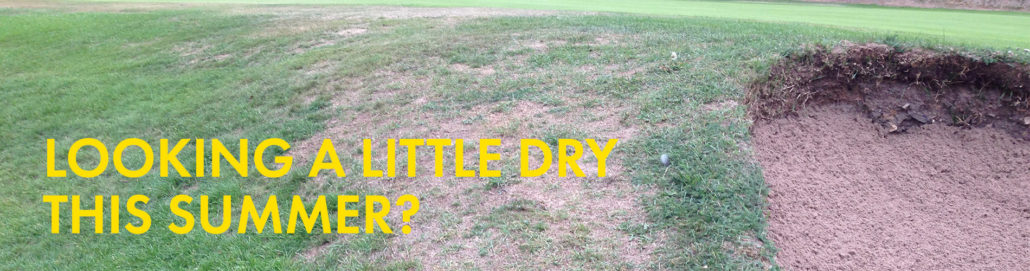
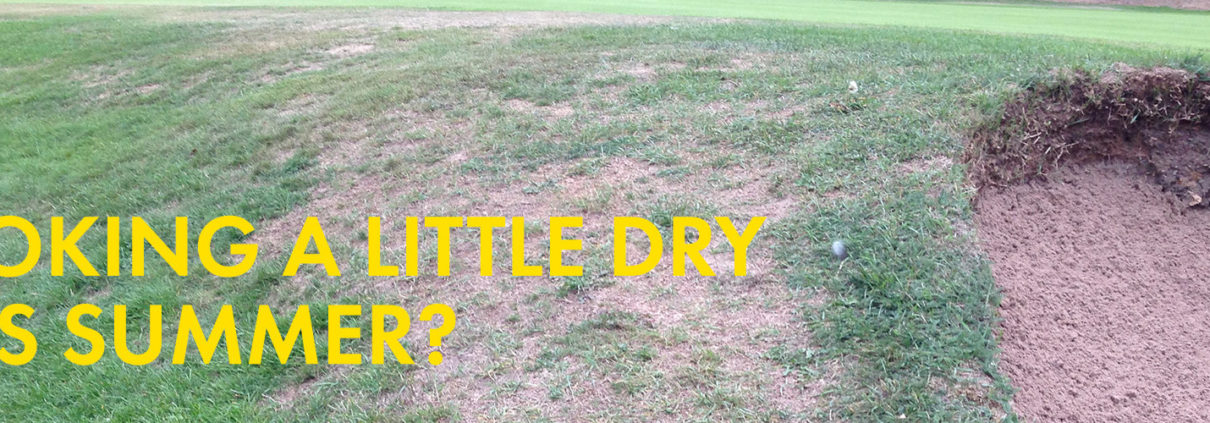
After a smattering of rainfall, lower-lying areas and perennial grasses (fescues, bents and ryegrass) are now greening up and demanding mowing once more.  However, high spots and areas colonised with the shallow-rooted weed-grass Poa annua are mostly dead.

Barenbrug's Drought Advice

After several wet summers, these bare areas in many courses are extensive, as conditions have been conducive for Poa annua to thrive.  The recent weather has redressed the balance and created a perfect opportunity to exploit.

If left alone, the bare areas will become green again, but do not mistake this for “recovery”.  The new vegetation will most likely arise from new wind-blown Poa annua seeds, or worse, moss and other weeds.  This is only a short-term fix and one that compromises playability and aesthetics.

2)    What to do about it (and the hidden opportunity)

In dead areas, now is the time to act. Use this as an opportunity to establish drought-tolerant perennial turfgrasses, to prevent problems from happening again.  Scarify and remove dead material as quickly as possible and overseed with a specialist mixture.

Do not sit back and wait for weeds to colonise; this is a race against time to get seedlings established before winter. Overseeding with so much space for seedlings to grow (versus a wet summer with a tight sward), is going to be a lot easier for healthy, robust grass to establish.

3)    Convincing greens committees to invest

Course managers understand this is an obvious course of action, but convincing committees that overseeding large areas can be challenging.

If budgets are prohibitive, target one or two really bad fairways and overseed these at an appropriate rate. This is a better strategy than spreading your efforts too thinly. Document the project and use it to your advantage the next time the issue arises.

Under a range of stress factors, these areas will demonstrate what can be achieved with investment. For example, ryegrass on tees and fairways will offer improved drainage in wet conditions over Poa thanks to increased root structure and less thatch build-up. On Poa-dominant greens, more bentgrass will improve year-round playability, aesthetics and disease tolerance.

4)    Save now, pay later

If annual meadowgrass establishes between now and autumn, and we get another harsh cold winter, it will undoubtedly quickly die back again. Re-turfing before next playing season may be your only solution in this case.  Overseeding now with a hardy mixture may well save your club having to pay for more expensive repairs later.

5)    Another drought doesn’t have to mean disaster

This summer we’ve seen lots of customers seeing the benefits of previous overseeding investment. That’s because bents, fescues and ryegrass are far more tolerant than annual meadowgrass and will recover quickly after drought. With so many courses struggling to maintain playability in this heat, and talk of an Indian summer to come, now is the time to act.

Download Barenbrug’s Drought Guide here.

For the latest industry news visit turfmatters.co.uk/news

Get all of the big headlines, pictures, opinions and videos on stories that matter to you.

Follow us on Twitter for fun, fresh and engaging content.

You can also find us on Facebook for more of your must-see news, features, videos and pictures from Turf Matters.

FA Take Advice From City Groundsmen

FA Take Advice From City Groundsmen: Sports bodies across the UK are taking advice from Gloucester.

More than 18 months after the city council agreed to commit to improve pitches across Gloucester, council bosses say there has been a major improvement.

And there has been input from some of the nation’s greatest groundsmen at the most high-profile grounds.

The RFU, FA, and England and Wales Cricket Board have held pitch improvement workshops with clubs and groundsmen here in Gloucester, including an event at Kingsholm Stadium, which was led by the head groundsman of Twickenham stadium, Keith Kent.

In January 2016, the council agreed to undertake a new playing pitch strategy to turn their pitches around.

Since then they claim they have seen a 40 per cent improvement.

The report added that with commitment from city council officers, and representation with sporting interest groups such as Sport England, Active Gloucestershire and Aspire Sport and Cultural Trust, now the Football Association is developing a national case study based on Gloucester’s approach.

Gloucester City Council’s cabinet recently approved a report which stated that more people in the county are getting involved in playing sport.

Councillor Lise Noakes (C, Barnwood) said: “It’s exciting the progress that we’re making.”

Adam Gooch, principal planning officer at Gloucester City Council, said in a report: “The delivery of the playing pitch strategy is having a positive effect on sustainability in Gloucester, providing a framework for the protection, enhancement and provision on playing pitches and ancillary facilities in the city over the next 10 years.

“It will also set a good foundation for the ongoing consideration of playing pitches through future updates to the strategies.”

Terry Haines is a member of the Gloucestershire Playing Fields Association.

He said: “My impression is that things have improved but there’s a challenge to maintain them when the [council’s] resources have been reduced to almost nothing.”

He added the future of the pitches depends on “people doing something” to make sure the pitches are suitable for playing on.

But Martin Townsend, who is director of rugby for Old Centralians RFC at Saintbridge Road – which is maintained by White Horse Federation on behalf of Gloucestershire County Council – said his pitch needs improvement.

He said the pitch gets flooded when it rains, and if the team is playing when that happens, the pitch is out of use for four weeks.

“The standard of the pitch is terrible. When the school got moved here the White Horse Federation were supposed to have provided us with a decent playing facility,” he said.

Click here to read the original article

For the latest industry news visit turfnews.co.uk

Get all of the big headlines, pictures, opinions and videos on stories that matter to you.

Follow us on Twitter for fun, fresh and engaging content.

You can also find us on Facebook for more of your must-see news, features, videos and pictures from Turf Matters.
© Copyright - Turf Matters 2026