Tag Archive for: Aeration

Deep aeration cures waterlogging

Deep aeration cures waterlogging:  Stratford Town Football Club moved in the 2007/8 season to Knights Lane Ground, Tiddington where they built a new stadium and pitch. The summer of 2007 had seen large areas of flooding and when work began in the July heavy machinery moved straight in, crushing and compacting the ground during construction. It created a problem that would not go away until the end of 2020.

“The pitch has never properly drained.” Says Club Director, Mark Bickley. “The club has spent many thousands of pounds treating the top of the pitch, which does let water through but two areas around the 18-yard box flooded badly enough to stop play, especially when the water table was up. Several schemes were done over the years, at some expense, but none solved the problem and over the last two seasons with excessive winter rainfall the problem escalated.”
Deep aeration cures waterlogging

Deep aeration cures waterlogging

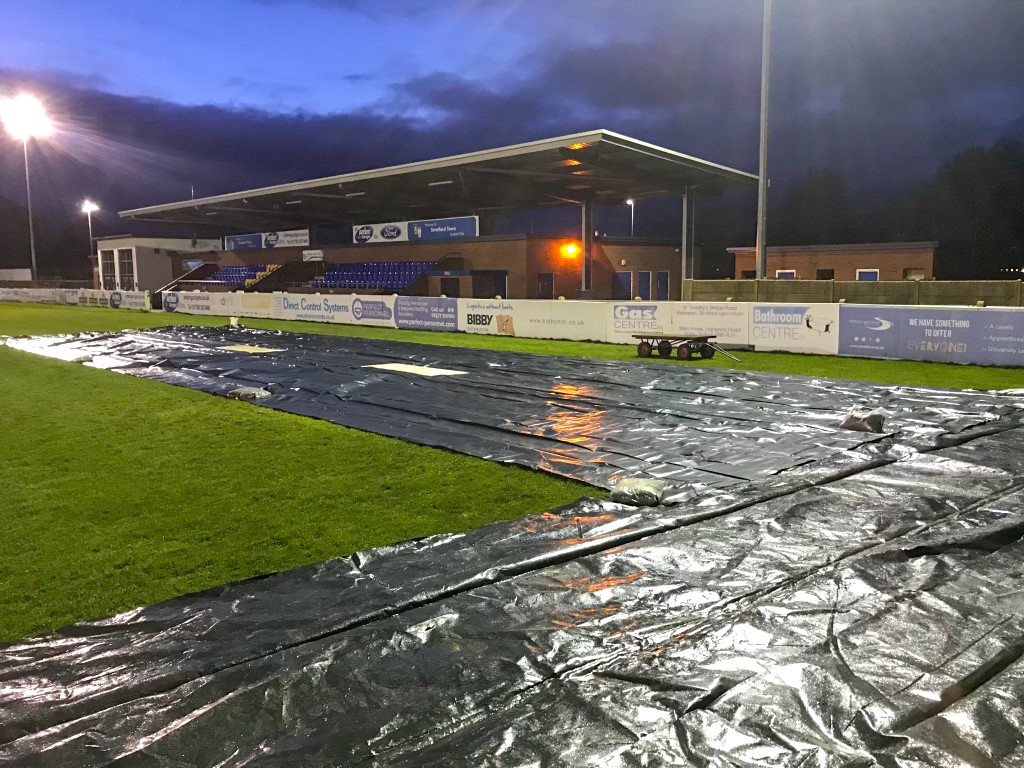
The groundsmen kept to a regime of slitting, aerating, Verti-Draining, scarifying and top dressing, says Mark, and in August and September the pitch looked like Wembley. But as soon as the heavier rains came the problem was back. What was odd was the junior pitch, which is only two hundred yards away, had very little done to it and the drainage was fine. Similarly, the nearby golf course had no drainage problems. A Robin Dagger was brought in for two hours of drilling and backfilling and the fact this helped for a period led to suspicions about what was going on deeper under the surface. Even a week after rain the pitch remained soggy and they relied on the wind to dry it. Two of wettest winters in a row prompted the investment in a tarpaulin to cover 125 sq m. of the worst affected areas.

“It takes six people to put out and is a problem in high winds, having to be weighed down, causing more compaction.” Says Mark. “We ran a test with a boat post hammer, the sort of thing they use on the river moorings in Stratford-upon-Avon and managed to drive it down 18 inches. It was like concrete. I talked it over with an ex Villa Park Head Groundsman and he suggested bringing in Terrain Aeration, the deep aeration specialists. In October 2020 they did a test at the back of the ground with their Terralift machine. It took just fifteen seconds for their JCB road breaker probe to go down to a metre. Moving onto the pitch it took at least a minute to drive through to the same depth.”

The Terralift went on to treat the worst affected parts of the pitch, two strips about forty metres long. The hammer is used because the ground is usually so compact at depth it is needed to break through. Once the probe reaches one metre deep compressed air up to a maximum of 20Bar/280psi is released to fracture and fissure the soil. The Terralift is the only machine using such necessary high pressure. The probe is withdrawn, and the process repeated at two-metre centre spacings on a staggered grid. This means each shot interconnects. On the tail end of the blast, dried seaweed is injected which sticks to the fissure and expands and contracts with the soil’s moisture content, allowing drainage and aeration. The probe holes are backfilled with Lytag aggregate.

“We were able to play games immediately, up to the second lockdown due to Covid-19. Over Christmas there were storms and heavy rains, but the result is unbelievable after so many years. We would certainly have been able to play the local Derby with Banbury on Boxing Day if the league hadn’t been suspended.” Says Marks “This was money well spent and we will have Terrain Aeration back as soon as possible to treat the rest of the pitch. If anyone is having drainage problems on their pitch, I would recommend they do the same.”

Terrain Aeration 01449 673783 www.terrainaeration.co.uk

For the latest industry news visit turfmatters.co.uk/news

Get all of the big headlines, pictures, opinions and videos on stories that matter to you.

Follow us on Twitter and Instagram for fun, fresh and engaging content.

You can also find us on Facebook for more of your must-see news, features, videos and pictures from Turf Matters.

Terrain deep penetration aeration for trees

Terrain deep penetration aeration for trees: We tend to take trees for granted, in our parks, estates and gardens, as a natural part of the landscape.

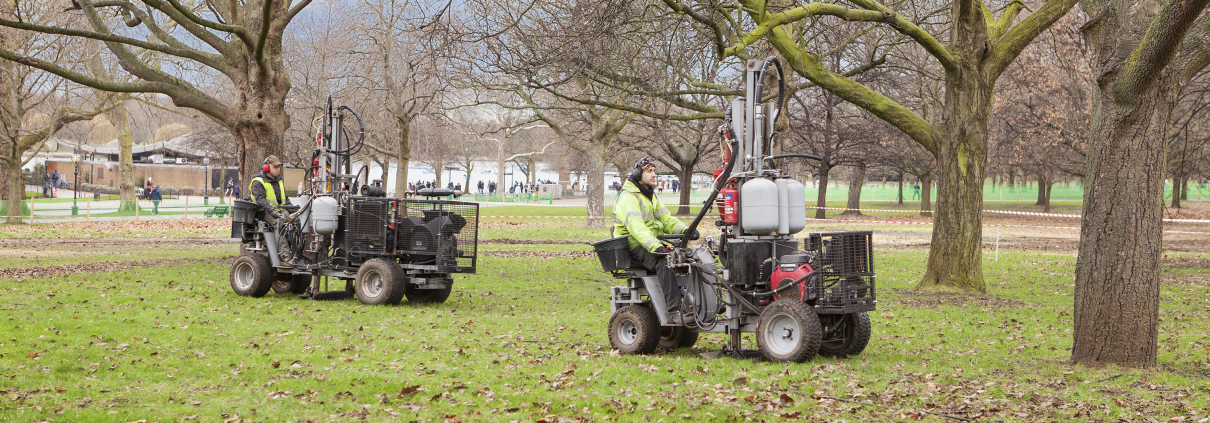
All too often they are subjected to stress as a result of a number of factors such as nutrient shortages in the soil, surface compaction due to foot traffic and waterlogging where water drains off hard surface pathways. Armed with a number of solutions, Terrain Aeration have been treating trees in all types of situation for over twenty-five years, from back gardens to large estates right through to Royal Parks.

Terrain deep penetration aeration for trees

Terrain deep penetration aeration for trees

The Terrain Aeration Terralift machines comprise a probe which reaches one metre depth, deeper than the roots of trees (other than the major tap roots which grow straight down).  Breaking up the soil around the roots, and beyond, means that excess water will drain away from the roots to help stop anaerobic conditions and rotting of the root system.  The probe is then used to inject dried seaweed which helps keep the fissures open and backfilling the probe holes with aggregate provides a semi permanent aeration/ventilation shaft.  Terrain Aeration aerate around the roots using two-metre spacings – on most occasions one-metre inside and one-metre outside the canopy drip line, as this is where the growing roots lie.  Decompacting around the roots and injecting air into the soil increases the percentage of uptake of oxygen into the root system.

In one particular situation it was found there was a magnesium deficiency coupled with low overall soil fertility around trees in a park. This was determined using new technology to measure light transmission through the leaves on the trees to gain a reading of chlorophyll levels. The likely cause of the problem was that leaf litter is always removed and had been for a century, taking with it the natural nutrients from decaying leaves. There was also severe compaction of the surface around the tree. A tree feed mix containing slow release general nutrients and magnesium was injected, using the Terralift’s ability to inject granular material via its seaweed carrier, forcing it upwards into the root zone of the trees. This also avoids losing the nutrients to the grass which would occur with surface treatment. Two Terralift machines were used to carry out the process.

There are some products in the market place which advertise to be of help for trees with Phytophthora. There is a product which is applied around the tree roots via a watering can.  If the tree roots have been aerated by the Terralift machine, the product has a far better chance of reaching affected roots due to the soil being decompacted.  There are machines that will go shallower, but this does not have such an effective treatment as you would still need to get excess water away from laying stagnant around the roots. Terrain Aeration also recommend that root samples from good and affected trees, as well as tip samples be sent for full analysis from the Forestry Commission or any other Arboricultural advisor.  The samples should be labelled as well as being placed in separate plastic bags.  Photos of the location of the trees would also help, just in case there is a huge wall on three sides of the tree or something which could affect its well being. It’s best to give a complete “story” surrounding the tree. For more details on deep penetration aeration treatment for trees, sports pitches, golf courses and gardens:

Terrain Aeration 01449 673783
www.terrainaeration.com

For the latest industry news visit turfmatters.co.uk/news

Get all of the big headlines, pictures, opinions and videos on stories that matter to you.

Follow us on Twitter and Instagram for fun, fresh and engaging content.

You can also find us on Facebook for more of your must-see news, features, videos and pictures from Turf Matters.

Terrain Aeration At Cambridge Uni

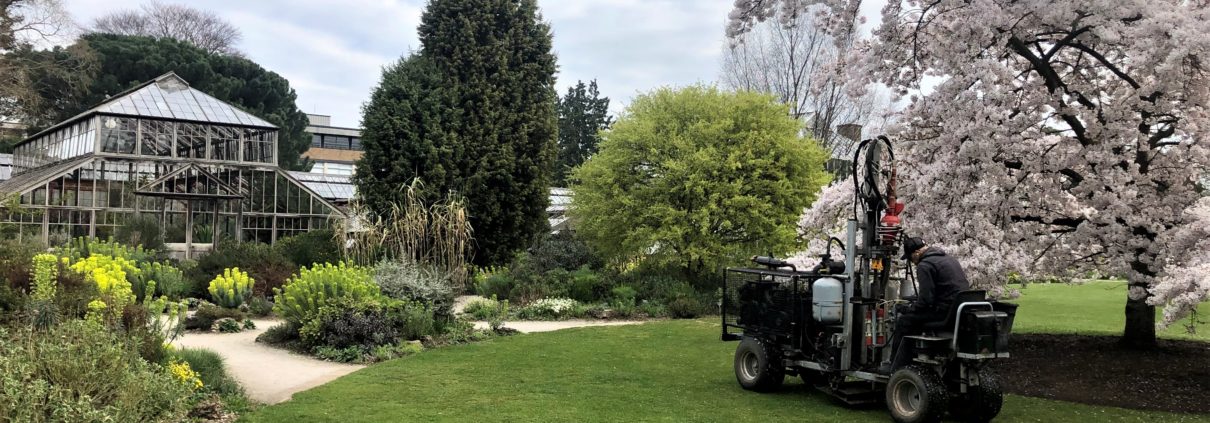
Terrain Aeration At Cambridge Uni: Cambridge University Botanic Garden welcomes 300,000 visitors a year, making it the most visited university botanic garden in the UK. Situated in the centre of Cambridge, the Grade II listed Heritage Garden covers 40 acres and is home to a collection of over 8,000 plant species to facilitate teaching and research.

Equally, since its foundation it has provided a beautiful and tranquil place for everyone to enjoy. The Garden boasts four show lawns and the combination of foot traffic, marquee trucks and ride-on mowers leads to compaction. The Garden has been using Terrain Aeration’s decompaction services since as far back as 2013 and chose the deep aeration treatment for the high-profile area of the Main Lawn in front of the majestic glasshouses.

Terrain Aeration Visit Cambridge University

“We know Terrain Aeration’s work from years ago when development had been done at the Station Road Entrance and the lawn at the back of Cory Lodge,” says Adrian Holmes, Landscape and Machinery Supervisor at the Garden. “The lawns had been re-built after the work but were found to be compacted and the soil was not good. We had a waterlogging issue for a couple of years. The Terrain Aeration treatment rectified the problem and we know from experience it’s a long-term solution.”

This year, the Garden’s Main Lawn area was cordoned off, the machine operation creating considerable interest amongst students and visitors, and Terrain Aeration’s Terralift set to work. The weather was very good and dry, and the ground was worked easily without the need to use the Terralift’s JCB hammer drill. The machine’s probe is driven down a metre deep and highly compressed air released up to a maximum of 20Bar (280psi) to fracture the soil, opening it up for aeration, drainage and to get oxygen to the roots of the plant. On the tail end of the air blast, dried seaweed is incorporated which sticks to the walls of the fractures and fissures created by the main air blast. As pressure drops, the seaweed is mixed in the hopper unit where it swirls around with the remaining air and is then released. The seaweed swells in wet weather and keeps the fissures open. On the Main Lawn the same process was repeated in two-metre spacings, so the underground fracturing is thoroughly linked. In some extreme cases this is demonstrated by water fountains appearing from previous probe holes. In this instance the ground was found to be not as compacted as expected and the 2,500sq metre area was completed in two days, not the original three as had been expected.

“The Terrain Aeration guys were very good, prompt and efficient and quite knowledgeable,” says Adrian, “they backfilled the probe holes with Lytag, lightweight aggregate and it was as if they had never been there. It was great to have everything back to normal so quickly.” The aeration treatment completed, the lawn area was immediately open for unrestricted access to the fountains, glasshouses and horticultural and National Plant Collections.

Terrain Aeration www.terrainaeration.co.uk  01449 673783

For the latest industry news visit turfmatters.co.uk/news

Get all of the big headlines, pictures, opinions and videos on stories that matter to you.

Follow us on Twitter and Instagram for fun, fresh and engaging content.

You can also find us on Facebook for more of your must-see news, features, videos and pictures from Turf Matters.

Deep Aeration Cures Waterlogging

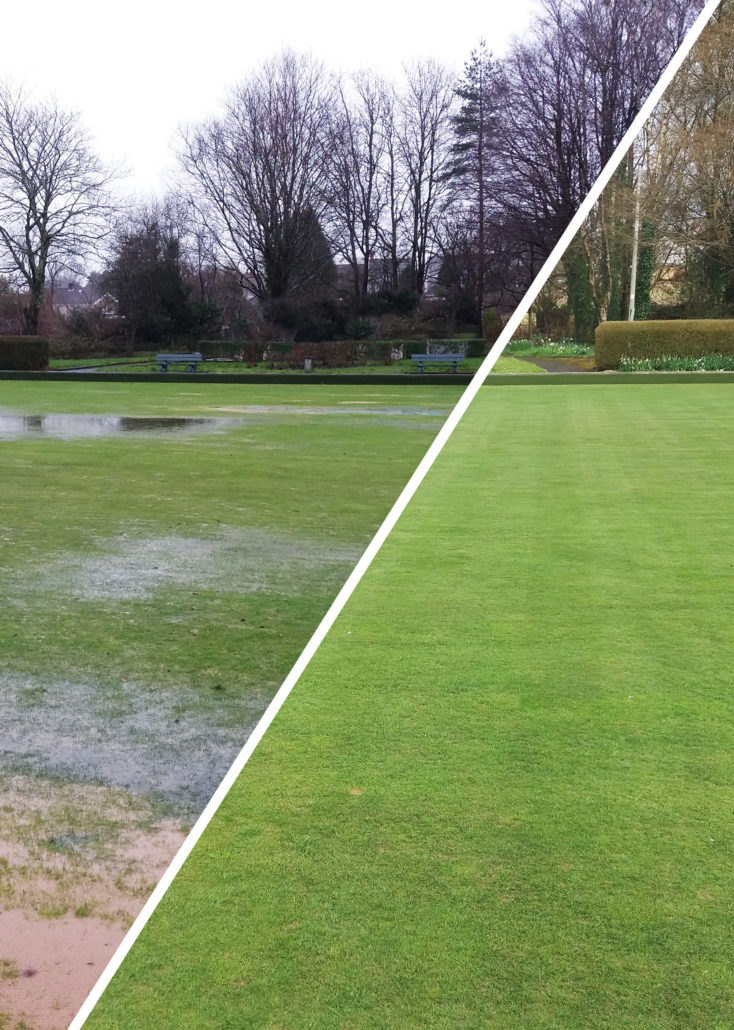
Deep Aeration Cures Waterlogging: Heavy downpours of rain on compacted grass areas on sports pitches, bowling greens, golf courses and amenity areas can leave standing water, rendering them unusable and stopping play. The action of normal aeration, use of machines and foot traffic over time can leave areas compacted and panning occurs, causing poor drainage and depriving grass roots of oxygen and nutrients. Sports turf specialists Terrain Aeration have been providing a long-term solution to this for over twenty five years, using one- metre deep penetration of the playing surface.

The Terrain Aeration Terralift machine not only solves the immediate compaction problem, the process has a beneficial effect that lasts many years. It works like this. The Terralift hammers a hollow probe one metre into the soil using a JCB road breaker gun (this is because the ground is usually so compact at depth that it needs this hammer to break through).  Once the probe has reached one metre depth, compressed air is released up to a maximum of 20Bar (280psi), the Terralift being the only machine using such high air pressure, which is needed to fracture and fissure the soil. The probe is withdrawn and the process repeated using two-metre centre spacings on a staggered grid pattern – this means that each shot interconnects with the previous ones.

Deep Aeration Cures Waterlogging

On the tail end of the air blast, dried seaweed is injected which sticks to the walls of the fractures and fissures and, over time, expands and contracts with the moisture content in the soil – similar to “breathing” underground.   The 1½” probe holes created by the Terralift machine are backfilled with aggregate to provide a semi permanent aeration/ventilation shaft, helping to keep the whole aeration process working.  The top 1″ should be topped with the usual top dressing to encourage grass growth over the probe holes.  The Terrain Aeration process is ecologically sound, there is no mess and once the pitch or green has been given a light mow it’s ready for play to resume.

For the latest industry news visit turfmatters.co.uk/news

Get all of the big headlines, pictures, opinions and videos on stories that matter to you.

Follow us on Twitter for fun, fresh and engaging content.

You can also find us on Facebook for more of your must-see news, features, videos and pictures from Turf Matters.
The Power Of Deep Aeration

The Power Of Deep Aeration: The concept of one metre deep aeration, to relieve compaction and improve drainage, really needs to be seen in action to appreciate the long-term benefits. A long and very hot summer with little amounts of rain will, without doubt, lead to compaction and drainage problems on the sports pitch, the golf course and bowling green and inevitably in amenity areas and gardens. Terrain Aeration have produced a new video that shows precisely how to alleviate the problem, using the proven Terralift system that has been in operation for over twenty-five years. As soon as the heavy rains come areas of turf compaction and panning become self-evident with large stretches of standing water.

Normal aeration and scarifying are of course essential to promoting a healthy sward but the penetration isn’t deep enough to get to where the real problem lies. Go down a metre with a hollow probe, using a JCB breaker gun to penetrate the hard compaction in the soil, and release compressed air up to a maximum of 20Bar (280psi). This fractures the soil, creating and opening up the fissures that will allow the water to drain. Repeat the process on a staggered grid pattern at two metre spacings and you ensure each air blast interconnects the underground labyrinth of cracks and fissures.

The Power Of Deep Aeration

As you can see on the Terrain Aeration video, that is how the Terrain Aeration system works but it doesn’t stop there. Dried seaweed is injected on the tail end of the blast and this sticks to the walls of the probe hole and cracks. Over time it expands and contracts with the moisture content and maintains the drainage when the heavier rains fall. Water storing polymers can also be added at this stage as an extra insurance with water retention. The interconnecting system created also allows oxygen and nutrients to get to the roots, while the grass pushes them down to reach the deeper water supply and help promote top growth. The probe holes are back filled with porous Lytag aggregate and finished with the usual top dressing to encourage grass growth over the probe holes. In the case of the golf green, tee or sports pitch play can resume immediately.

Once treated, the area will benefit for many years to come as has been demonstrated by Terrain Aeration over the years for thousands of sports venues, golf courses, parks and amenity areas. The deep penetration process is used to great effect around trees, especially where the ground has become very compacted due to foot traffic. The Terralift system has treated such notable areas as the Royal Parks, Sir Harold Hillier Gardens and many National Trust properties. But it is equally beneficial in relieving compaction and creating drainage on formal lawns and even small gardens as well as sports pitches and golf greens. You can see the video at: https://youtu.be/uw9k35PA5kM

For the latest industry news visit turfmatters.co.uk/news

Get all of the big headlines, pictures, opinions and videos on stories that matter to you.

Follow us on Twitter for fun, fresh and engaging content.

You can also find us on Facebook for more of your must-see news, features, videos and pictures from Turf Matters.