Tag Archive for: come

Come and see the amazing slope capabilities of Ventrac

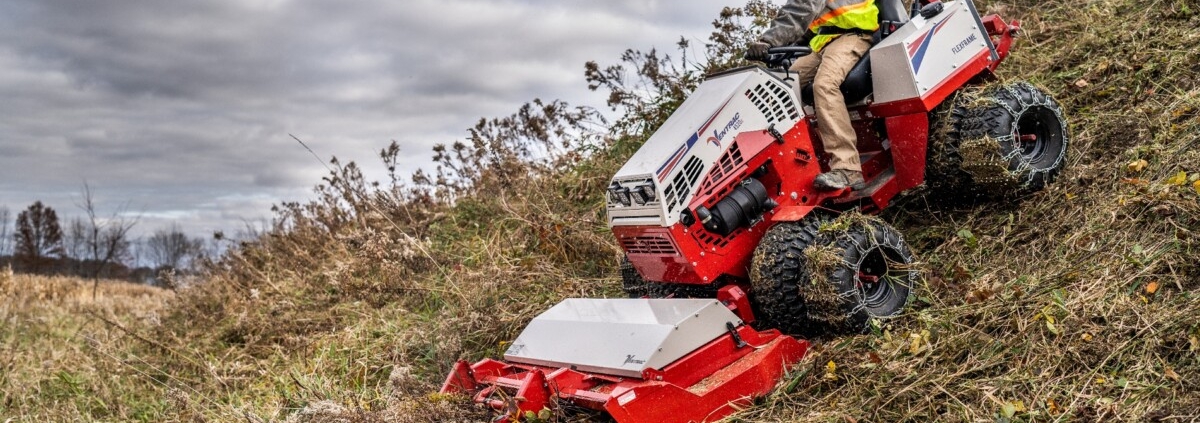
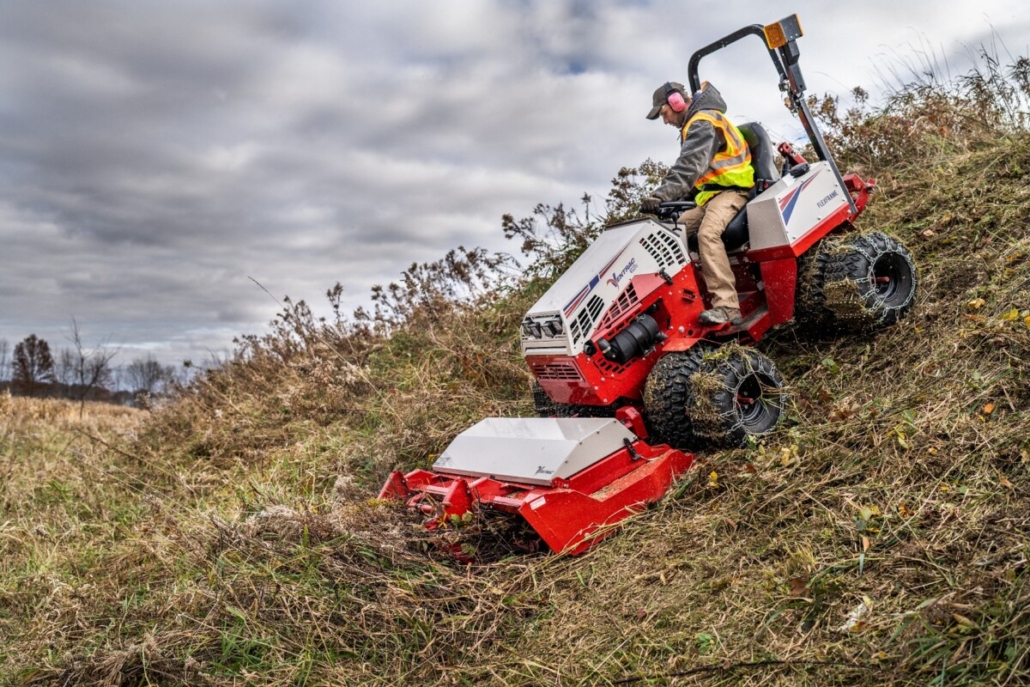
Come and see the amazing slope capabilities of Ventrac: At Grounds Fest 2025 Price Turfcare, Ventrac distributor for the UK & Ireland will be demonstrating, live, the amazing 30 degree slope capabilities of the Ventrac 4520 compact tractor. Their specifically designed exhibition vehicle has multiple slopes so you can see for yourself what the Ventrac can do.

According to Price Turfcare’s Rupert Price, since Ventrac’s introduction into the UK, hundreds of customers have adopted it to solve labour intensive vegetation management on steep slopes. Additionally some are rethinking turf area maintenance by replacing mower only machinery with this multi season workhorse. Once adopted, the Ventrac 4520 can then complete other grounds maintenance tasks that would usually necessitate the purchase of hire of specialist machines. Tasks such as gravel and hard surface pathway maintenance, stump grinding, trenching, seeding and materials handling to name but a few.

Come and see the amazing slope capabilities of Ventrac

Come and see the amazing slope capabilities of Ventrac

Price Turfcare encourage you to visit them on stand RB50 to see our live demonstrations

www.priceturfcare.com

For the latest industry news visit turfmatters.co.uk/news

Get all of the big headlines, pictures, opinions and videos on stories that matter to you.

Follow us on Twitter and Instagram for fun, fresh and engaging content.

You can also find us on Facebook for more of your must-see news, features, videos and pictures from Turf Matters.

Good GKB deliveries come in three’s

Good GKB deliveries come in three’s: A trio of GKB Machines have been installed at SCHLOSS Roxburghe Championship Golf Course, as part of major ongoing investment into the club and wider estate.

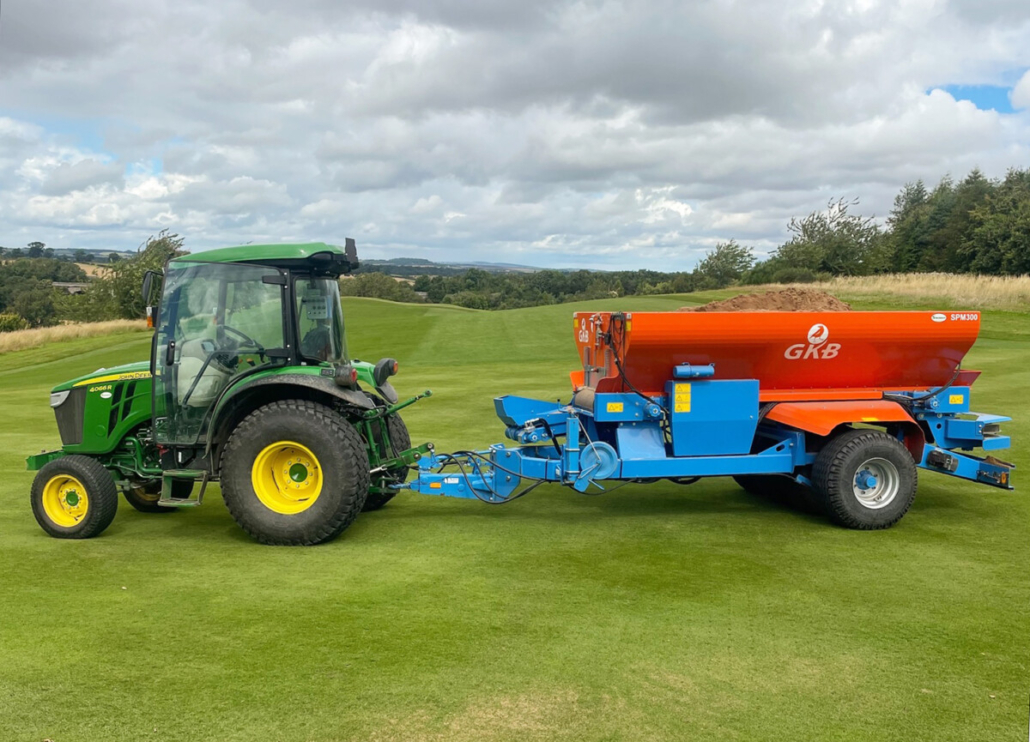
After being delivered by dealer Thomas Sherriff & Co in the summer of 2024, the SP100, SPM300 and GKB Combiseeder were put straight to task by Golf Course Manager Ross Ovens, as he and his team of 13 completed autumn renovations on greens, tees and approaches.

Good GKB deliveries come in three’s

Good GKB deliveries come in three’s

The Roxburghe is nestled in the heart of the Scottish Borders and is consistently ranked within the Top 10 Inland Courses in Scotland. Designed by the internationally renowned golf course architect Dave Thomas, the Par-72 parkland course and wider complex was sold in 2018 – with the new owners investing heavily in the on-site hotel, spa, lodges and golf course. “The property has changed massively, meaning we needed to invest in our greenkeeping equipment to produce the quality needed” comments Ross.

“In speaking with Dougie Archibald at Thomas Sherriff’s and GKB’s Tom Shinkins we really liked the fact that GKB is a family-owned business, and this feeds down into the level of care and detail put into their robust range of equipment.” Part of the fleet package, and replacing existing topdressers, was an SP100 and SPM300 from the GKB Sandspreader range. “These two machines work hand in hand brilliantly, giving us the versatility to dress greens as well as using the larger machine on the fairways. The SPM300 with material handler we’ve found particularly useful for topping up bunkers or loading material into the SP100 quickly and easily.”

He continues, “Our SP100 is mounted onto our John Deere Gator, and we have retrofitted this with a GPS system which has dramatically improved the accuracy and efficiency of topdressing operations. It gives us both the spread and quality we are looking for.”

Also delivered was a CS160. “With fewer chemicals available, and a desire to improve our sustainability credentials, it is more important than ever that we have a good overseeding programme in place. We didn’t have a seeder previously, so we demonstrated various models and opted for the GKB Combiseeder because – as a dimple seeder – we found it gave us better germination. This will be pivotal in our programme moving forwards as we try to introduce better cultivars into our surfaces, making us more resistant to disease and thereby lowering our reliance on chemicals.”

“The trio have recently played a big part in our autumn renovation works. We put down a good application and even distribution of sand, followed by overseeding as we pursue the ongoing improvement of our sward on the high wear areas of the course.” Ross concludes, “We’ve been delighted with the results we’ve achieved and the support we’ve had from Tom and from Thomas Sherriff’s before, during and after the purchase process.”

For the latest industry news visit turfmatters.co.uk/news

Get all of the big headlines, pictures, opinions and videos on stories that matter to you.

Follow us on Twitter and Instagram for fun, fresh and engaging content.

You can also find us on Facebook for more of your must-see news, features, videos and pictures from Turf Matters.

Worth Park’s Wildflower Meadows Come to Life

Worth Park’s Wildflower Meadows Come to Life: In 2022, Euroflor Flower Seed from Origin Amenity Solutions (OAS) transformed three meadow areas within Worth Park as part of a wider conservation project underway by Crawley Borough Council.

Worth Park sits within 8.5 hectares of green space, which has undergone a complete restoration over the last few years, making it an important community and destination venue for residents and visitors to Crawley. This experimental meadow has now been turned into works of art by a nonagenarian painter Beryl Hovell. Beryl has tracked the development of the park’s meadow area over the past three years. She created her first artwork in 2022, at the age of 90, and has recently completed her third painting. All three paintings are on display in the Community Room at Worth Park.

Beryl explains, “I saw the newly seeded wildflower meadow at Worth Park in 2022. What a lovely, colourful sight. As an artist, it inspired me, and once that vision was in my head, I had to paint it on canvas. A year later, I painted it again. It was interesting to see the differences and variations in growth, flowers, and colours. In 2024, I saw it for the third time. Now, there were more grasses and fewer flowers. When the wind caught the grasses, I loved the movement and tried to capture it in the painting with small dots of colour emerging. A photograph can capture one view, but an artist can condense a number of views into one and inject a feeling of movement that a camera cannot.”

Councillor Chris Mullins, Cabinet member for Leisure and Wellbeing at Crawley Borough Council adds, “Worth Park is a wonderful place, and Beryl’s paintings really capture the beauty of the wildflower meadow. I’m grateful to Beryl for allowing us to display her artwork in the park for visitors to enjoy.”

Head Gardener and Curator at Worth Park Stephen Peters first introduced the wildflowers to increase plant diversity and provide an essential habitat and food for pollinators. He used OAS’s biodegradable matting, FloraFleece, which helped deliver maximum visual and ecological benefit with minimal environmental impact.

Stephen concludes, “It has been a real pleasure seeing Beryl’s works of art that have followed the progress of our wildflower meadow using FloraFleece in the last three years. These paintings now hang proudly for all to see and admire. Not only do they demonstrate the evolution of the meadow but also the brilliance of the artist who captured it. At the same time, it reminds us of the beauty of meadows and how important they are for the environment and its biodiversity.”

For more information on Euroflor Flower Seed and FloraFleece, call the OAS team on 0800 138 7222 or email sales@originamenity.com

For the latest industry news visit turfmatters.co.uk/news

Get all of the big headlines, pictures, opinions and videos on stories that matter to you.

Follow us on Twitter and Instagram for fun, fresh and engaging content.

You can also find us on Facebook for more of your must-see news, features, videos and pictures from Turf Matters.

Come on Ian!

Come on Ian!

Come on Ian!: Ian Darler’s extraordinary challenge of walking the distance from London to Qatar in time for the start of the World Cup is on track with the goal finally coming into view.

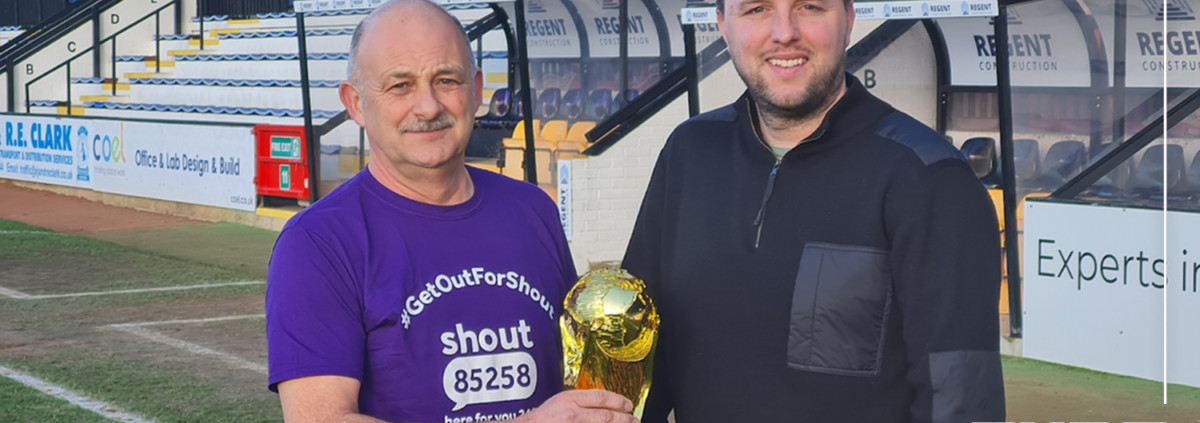
The Cambridge United Head Groundsman set himself the target of walking the 3228 miles to Qatar in aid of mental health charity SHOUT 85258 back in March and since then Ian has been clocking up the miles on a daily basis – many swallowed up cutting the Abbey Stadium pitch.

Come on Ian!

Come on Ian!

“It looks like I am still on schedule to complete the walk and Cambridge United are arranging for me to walk from Parkers Piece football monument in the centre of Cambridge to the Abbey Stadium on Saturday 19th November when we play Accrington Stanley,” explained Ian, who will have taken approximately eight million steps by the time he completes his walk.


Anyone wishing to support Ian in his fundraising can visit www.cambridgecharityfundraisers.com to make a donation.

For the latest industry news visit turfmatters.co.uk/news

Get all of the big headlines, pictures, opinions and videos on stories that matter to you.

Follow us on Twitter and Instagram for fun, fresh and engaging content.

You can also find us on Facebook for more of your must-see news, features, videos and pictures from Turf Matters.

Good things come to those who wait…

Good things come to those who wait…: Scott MacCallum catches up with the most patient man in greenkeeping – Paul Larsen, who has had to wait an additional 12 months to prepare an Open Championship course.

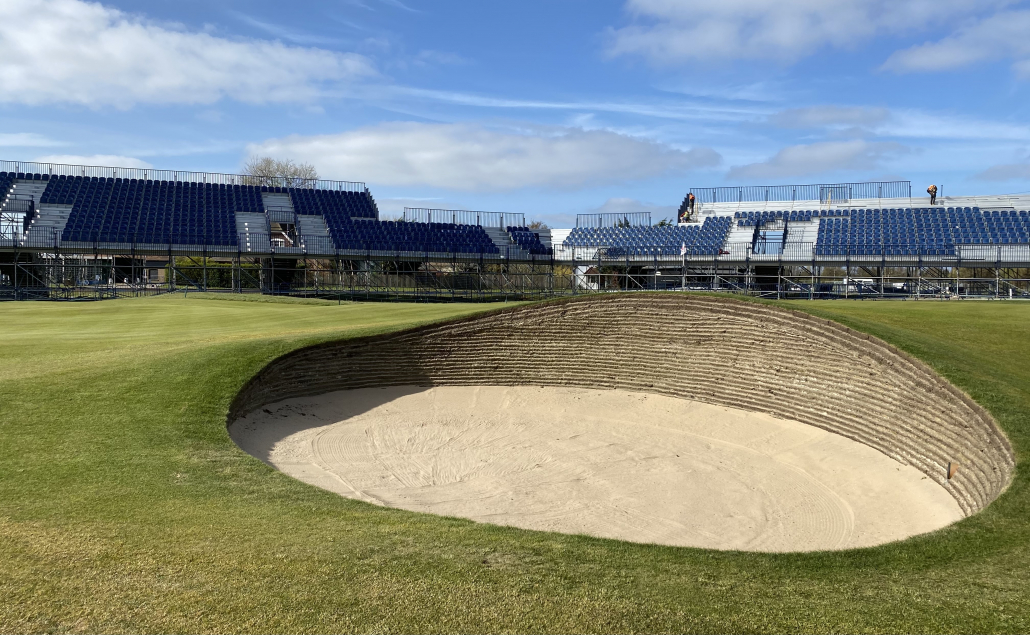
The Open Championship at Royal St George’s Golf Club is going to be a wonderful event.
Good things come to those who wait…

Good things come to those who wait…

The course, one of the best on the Open rota, will be in immaculate condition, the weather will be superb and the golf will be exciting, irrespective of how many spectators are there to create the galleries.

How can I be so sure? Well, I’m merely following the old adage “Good things come to those who wait”, and oh how the club, and, in particular, Head Greenkeeper Paul Larsen and his team have had to wait.

At the beginning of last year everything was on track for The Open, in July. The long and medium term planning had gone well and Paul and his team were hoping for a good spell of weather in the months ahead so that the course would be fast and running, just how the R&A like it.

And then…

The decision was taken to postpone the Championship for a year on April 6, and immediately the date, which had been penned into the diary since 2017, when Royal St George’s hosting was announced, disappeared over the horizon.

“To be honest when the news about the postponement came through my mind wasn’t really on The Open. It was on the virus,” recalled Paul.

“I only had five people in, including myself, everyone else was on furlough, and we were just doing the bare essentials on the course to keep it going, as we were instructed to do. We also had the heatwave at the same time so we were hand watering everywhere and not really cutting.

“To be fair the fescue was thriving but The Open was suddenly in the background,” said Paul, who admitted that he was one of the first to take the virus seriously.

“Without going OTT we were doing all the cleaning of hands and equipment, which eventually was official advice, from the very beginning.”

With the US Open being moved from June to September, The Masters moving to November and some European Tour events being played before the original Open date, there were thoughts that a slightly shorter delay may be possible but Paul was pleased that the ultimate outcome was the end result.

“They have considered holding it later in the year but had they moved it to September there would have been light issues and it would have had to have been a reduced field, but around that time we were going into quite a severe lockdown.

“I personally think they made the right decision. There was no messing about, and everyone’s health came first,” said Paul.

The postponement was announcement before any of the huge stands or marquees had been erected but most of the underground infrastructure, TV cabling etc, was in place.

“In a way it has meant that they had a head start for this year,” reasoned Paul.

The club took the greenkeeping staff off furlough when it was deemed safe to do so and they took the opportunity to carry out work that was possible with the course devoid of golfers.

“It was great by the club that they took everyone off furlough and it meant we could get a lot of work done. We’ve done a lot of path reshaping which would have been difficult with golfers on the course and we’ve cleaned out a sand dune behind the 4th green, an area which might be in play.”

Ironically, the original Open week was an exceptionally busy one at Royal St George’s.

“We held an Open tournament for the members which was open to everyone and people could play off the Championship tees if they wanted to. We were getting 120 people playing each day and the weather was great and the course looked and played really well.

“So it would have been great for The Open if it was played.”

In fact, the week before history was made with the first ever professional ladies’ event held over the old links. The Justin Rose Series, a wonderful initiative to give ladies playing opportunities in these strange times, was played with a strong field of professional lady golfers. Gemma Dryburgh, of Scotland, was the first to have a Royal St George’s victory on her record, with a one under par round of 69.

With everything planned for, and geared up for, a particular week in the diary, having that date move by 12 months could have been deflating for Paul and his team. But not so.

“Keeping motivated, a problem?

Good things come to those who wait…

Good things come to those who wait…

Good question but ‘No’, in a word. The story goes back to when we lost a lot of grass in the drought of 2018. We hadn’t really recovered from that so when we were moved back a year we had great fairways and great playing surfaces in general, but our semi rough was quite hard to get back and contained quite a bit of soft broom.

“So the motivation has been to get that up to scratch . The guys have been hand-dressing the semi. I didn’t want top dressers over it, so we’ve done it in the old-fashioned manner.

The motivation was always there, but the extra 12 months has given us extra motivation to get it better.”

It actually made the very next question a little redundant, but being a stubborn so-and-so, I asked it anyway.

“Was there a date in the calendar that you went back into Championship mode?”

Not too bad eh? But an obvious answer…

But I did get a little more.

“At the end of the day, without the team I’ve got here the results wouldn’t be possible. They’ve been out hand shoveling top dressing day after day, over and over.

They’ve got on with it. It’s not just the hours they’ve put in, it’s the physical energy required to do it.

“I’ve worked on many golf courses and a lot of people think that you just sit on machines in the summer and that it’s easy. We do a lot of hand cutting here and it is physically demanding. They are very fi t from it and they have been absolutely brilliant for me,” said Paul.

Like all Head men Paul is rarely happy with the weather which is dished up to him – a Greenkeeper’s Rain Dance should be up there with the likes of the Argentine Tango and Charleston as a Strictly standard – and sure enough spring didn’t cut the mustard.

“We wanted a good spring, but we didn’t get it. However, this month (May) we’ve had 68mil so that’s rejuvenated everything. Had we had gone from a dry spring to a dry hot summer we’d have got no germination and all our work would have been done and we’d have had no dividend from it. But with all this rain you can see it coming up.”

Elsewhere the delay has meant that the bunkers will be a year older than they would have been.

“We didn’t build any the year before as we didn’t want them to look brand new but with quite a hard winter with a lot of snow we are finding cracks in some of them so we will be finding a way of freshening them up. I’ve got a few techniques to get them right, but they are at the end of their five year cycle.”

For the week itself Paul has had to tweak his original plan and call on his neighbouring golf clubs for help.

Good things come to those who wait…

Good things come to those who wait…

“It will be an unusual Open because normal the team and volunteers stay on site in Bunkabins for the 10 days before and during the Championship. Now everyone has to leave the site and go home at the end of each day and I have had to get 25 local volunteers to help. Normally we have guys for the other Open rota courses but that’s not happening either.”

So 25 local greenkeepers will have the opportunity of experiencing an Open.

“We’ve got to plan what each one will be doing, and we are hoping that they will come for a day’s training beforehand.

There will always be one of my guys with them. It’s going to be interesting. I’ll let you know how it goes after The Open.”

Thinking back to the last Royal St George’s Open – Darren Clarke’s popular win in 2011 – Paul, Deputy at the time had a job he is very pleased to be relinquishing.

“I was painting the holes and I couldn’t relax until the final hole was cut and white painted. I’m glad I’m not doing it this time!”

Despite having been the greenkeeper who has had to show more patience than any other in modern times for his Open to arrive, Paul hasn’t let his mind wander to the week itself.

“I don’t live for the future. I always have a plan, but I don’t particularly think about how I’m going to be feeling. I just accept it on the day. It is what it is, otherwise you are just worrying about what it is going to be like.”

But I really don’t think Paul and his team should be worrying. As I say “Good things come to those who wait”