Tag Archive for: Course

Bunkers ensure success at Marco Simone course

Bunkers ensure success at Marco Simone course: Although the Covid-19 pandemic means it will have to wait another year until it hosts the Ryder Cup, preparation of the Marco Simone course in Rome continue apace.

All eighteen holes of the new-look course, designed by European Golf Design, opened for member and guest play earlier this month. And Dave Sampson, of European Golf Design, says the course’s bunkers, which have been built using the Capillary Bunkers lining system, are performing particularly well.

Bunkers ensure success at Marco Simone course

Bunkers ensure success at Marco Simone course

“The first nine holes – actually the back nine of the course – started construction in August 2018, and were all grassed by the end of summer 2019,” says Sampson. “A couple of major storm events set those holes back a little, but they were all in play last summer. The second phase construction started in autumn 2019 and finished during summer 2020. Phase three, the practice greens, is currently being finished, though architect Sampson, prevented from visiting the site by the pandemic, has been approving the works via drone footage. The course is planned to make its public bow this September when it plays host to the European Tour’s Italian Open.

Sampson says: “We have been in daily contact with the guys from contractor SOL Golf who have been on site, so finishing the final greens remotely has been OK. Nothing of the original course has been retained – every hole except for the sixth plays in a new corridor.”

He adds that the choice of Capillary Bunkers as a liner was an easy one. “I have had really good success with Capillary on previous projects, including the Evian resort in France and Crans-sur-Sierre in Switzerland,” he explains. “Evian and Marco Simone have quite a lot in common, in terms of weather patterns, so it was a pretty good model. The amount of maintenance time post storms is minimal compared to what it was before.”

Designing a course for a Ryder Cup is rather different to building a normal course, Sampson says: “On a normal project, you’d be looking for the best eighteen holes, pure and simple. Here, you’re looking for the best eighteen holes that can deal with 50,000 spectators. So the routing is quite challenging, but that said, there are not long walks between greens and tees. This is a 27-hole project, so the extra nine gives us space for the range, the spectator village and the like. And you need to build the course to be extra resilient in terms of weather – there isn’t a lot of extra daylight to play with given the time of year a Ryder Cup is played, so the course needs to be playable quickly even in the event of severe weather. That’s one of the benefits of using a liner like Capillary Bunkers.”

For the latest industry news visit turfmatters.co.uk/news

Get all of the big headlines, pictures, opinions and videos on stories that matter to you.

Follow us on Twitter and Instagram for fun, fresh and engaging content.

You can also find us on Facebook for more of your must-see news, features, videos and pictures from Turf Matters.

Sentosa’s new state-of-the-art course

Sentosa’s new state-of-the-art course: Sentosa Golf Club has today officially reopened its world-class state-of-the-art championship course, The Serapong, after it underwent an extensive renovation to maintain its immaculate conditioning and playing standards.

The renovations are headlined by a new bunkering style with creative, artistic serrated edges to enhance The Serapong’s character and overall strategy, whilst elevating the course to a new level on the world stage. The club used 6,000 tonnes of new sand during the renovations to reinstate consistency, texture and tournament ready compaction for improved playability.

Sentosa's new state-of-the-art course

Sentosa’s new state-of-the-art course

Modifications have also helped to enhance and preserve the personality of many of The Serapong’s iconic holes, including the signature 5th hole, which overlooks metropolitan Singapore and its bustling port.

Masterminded by Andrew Johnston, the club’s General Manager, Director of Agronomy and resident Golf Course Designer, The Serapong has been closed since March and, alongside the new bunkering, a number of other key course upgrades were implemented during that time.

These included the re-grassing of fairways, rejuvenating them with minor grading adjustments and improved drainage strategies, as well as modifying the greens soil profile by introducing new carbon technology to boost soil chemistry and profile structure.

Enhancements to the greens are set to make The Serapong’s putting surfaces even better, which is hard to believe given the wide acclaim they already receive from its members, guests and visiting Tour Professionals.

Finally, the renovations also paid close attention to the re-levelling of all tee boxes, reinstating them with the historic tabletop flat finish The Serapong is renowned for. It will enable the club to continue to maintain the tees at a super low mowing height of 3mm, improving the quality of the playing experience for members and guests.

Speaking ahead of The Serapong’s reopening, which is a soft launch ahead of a grand reopening next March, Andrew Johnston said: “The last time The Serapong was renovated was nearly 14 years ago and since then the course has grown to become one of the world’s best, picking up multiple accolades in the process. Despite the challenges presented by the worldwide pandemic, we have found a way to pull the Sentosa family together within the safe working restrictions to complete the works. This has been a very exciting project that was well overdue, and we are confident the changes implemented will only enhance the golfing experience for our members and guests.

“Being located in a sub-tropical climate means the golf course ages faster than an ordinary one, and these renovations are crucial to maintaining the quality of the playing surfaces, as well as the conditions and high-standards that we pride ourselves on here at Sentosa, 365 days of the year.”

Dominic Wall – Director – Asia-Pacific at The R&A, commented: “The newly renovated Serapong looks great, and continues to showcase why Sentosa Golf Club is one of the world’s leading golfing venues. It is fantastic to see that, throughout the entire process of the renovations, the project continued to align with the club’s ground-breaking sustainability agenda. With our Asia-Pacific headquarters located at the club, we look forward to seeing Sentosa’s members and guests back out on the fairways taking on The Serapong’s unique challenge.”

Cho Minn Thant, Commissioner & Chief Executive Offer at The Asian Tour, added: “The renovations undertaken on The Serapong by the team at Sentosa have been nothing short of breath-taking. The renovations have enabled The Serapong to retain its unique personality and characteristics that made it one of the world’s top golf courses, as well as the best golf course in Singapore. With the course now reopening to members, we are looking forward to welcoming back Asia’s best players next year to battle it out at the SMBC Singapore Open.”

The Serapong was originally designed by the world-famous golf course design firm Golf Plan and Ronald Fream, opening in 1982. The course was further renovated in 2006 by the Bates Golf Design Group, who were led at the time by their VP of Design and Construction, Andrew Johnston, and whose designs have seen the course’s trademark contours, extended stone-lined lakes and breath-taking Singapore harbour backdrop become renowned across the world.

It was recently voted ‘Singapore’s Best Golf Course’ for the second year in a row at the World Golf Awards back in October and finds itself regularly listed as one of the world’s greatest golf courses.

The Serapong has played host to the Singapore Open since 2005 (initially Barclays Singapore Open, then SMBC Singapore Open from 2015), welcoming some of the world’s finest players such as 2005, 2006 and 2010 winner Adam Scott, 2018 winner Sergio Garcia and rising Asian star Jazz Janewattananond, who captured the title in 2019.

The 2020 edition was one of the most memorable in history with all three of Rio’s 2016 Olympic medallists, Justin Rose, Henrik Stenson and Matt Kuchar in attendance. Kuchar eventually took the title finishing on 18 under par to beat Justin Rose by three.

For the latest industry news visit turfmatters.co.uk/news

Get all of the big headlines, pictures, opinions and videos on stories that matter to you.

Follow us on Twitter and Instagram for fun, fresh and engaging content.

You can also find us on Facebook for more of your must-see news, features, videos and pictures from Turf Matters.

Ffos Las stay on course

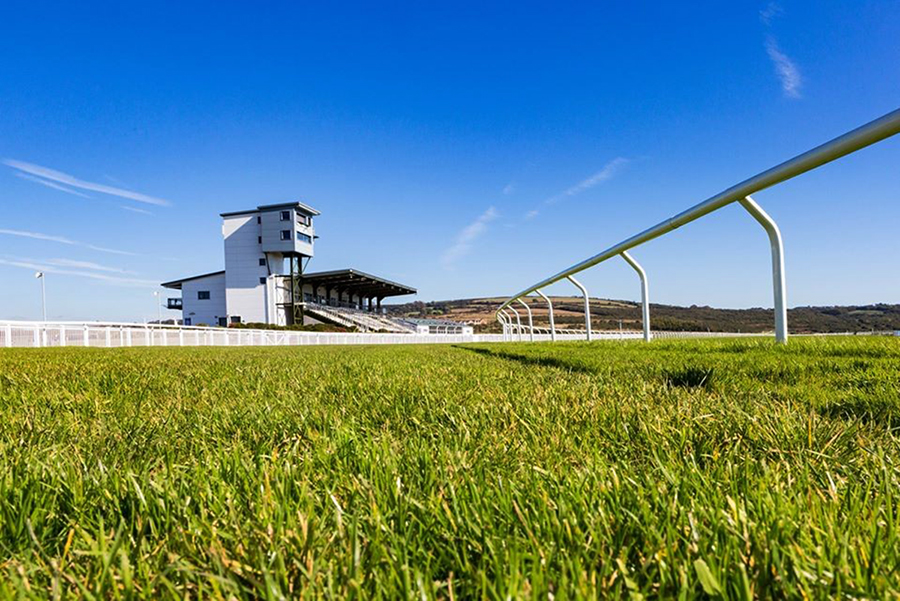
Ffos Las stay on course: The dual-purpose track at Ffos Las Racecourse in Carmarthenshire stages Flat meetings throughout the summer months and National Hunt meetings for the rest of the year.

The challenge of keeping the track fit for the year-round schedule falls to Estate Manager and Clerk of the Course, Dai Jones. For Dai, the combination of Masterline PM79 and Johnson’s J Nitro 4Turf is the odds-on favourite for delivering hard-wearing, quick-recovery surfaces even under the most challenging of conditions.

Ffos Las stay on course

Ffos Las stay on course

Formally the site of an open cast coal mine, the location of the Ffos Las course leaves them exposed to strong south-westerly sea winds which, when combined with multiple years of heavy rainfall on the trot, causes challenging ground and growing conditions. “DLF worked in close counsel with the contractors throughout the construction process” explains Dai, who has been at the venue for two years. “They recommended the ProMaster 79 mixture from Masterline which was used to get the course ready for opening in 2009 and has continued to work well for us ever since.”

“With over 65 inches of rain falling here last year, I sat down with our local DLF Regional Technical Manager Ian Barnett to look at some alternative mixtures that would help to give some additional strength to some of the hardest hit areas.” They opted for ProNitro coated J Nitro 4Turf from Johnsons Sports Seed. 4Turf tetraploid rye ensures exceptional disease resistance and very rapid germination even at soil temperatures as low as 3oC. Its deep-rooted quality makes it ideal for the high wear requirements associated with equestrian use.

The J Nitro 4Turf gives Dai and the team a mixture for divot repair and overseeding that delivers reliable results for racing throughout the challenging winter months. “We used this on the take-off and landing sides of the fences, the hurdles and the bends through the winter months and found it to establish well even in the cold and wet. The root growth is tremendous giving us great hardiness and wear tolerance.”

He concludes, “We’ve now got a combination that is really well suited to our conditions. Through the summer we get strong recovery, great colour and healthy surfaces for racing with the PM79 mix. We can now sustain this when the ground softens, with J Nitro 4Turf giving us that extra boost.”

For the latest industry news visit turfmatters.co.uk/news

Get all of the big headlines, pictures, opinions and videos on stories that matter to you.

Follow us on Twitter and Instagram for fun, fresh and engaging content.

You can also find us on Facebook for more of your must-see news, features, videos and pictures from Turf Matters.

COVID-19 advice for course maintenance

COVID-19 advice for course maintenance: What is classed as ‘essential maintenance’ during the Covid-19 outbreak? The R&A and BIGGA have had their say.

How much maintenance does a golf course really need during the coronavirus pandemic?

After the Government put new curbs on personal movement as the outbreak intensified, greenkeeping teams were advised by the Department for Culture, Media and Sport they could still attend work for “security and essential maintenance purposes”.

That led the body that represents greenkeepers, the British and International Golf Greenkeepers Association, to urgently seek clarification on what ‘essential’ actually meant. Now the R&A, in conjunction with BIGGA, have given their view. Here is the statement in full…

Essential Maintenance Statement for Golf Courses during COVID-19 Outbreak

The following industry statement sets out a reduced, essential maintenance regime for greenkeeping that protects workers, jobs and secures golfing facilities for the physical and mental wellbeing of millions of golfers who will resume play when social distancing rules are ended. The UK’s £2bn GVA golf industry is only sustainable if greenkeepers continue to work, safely and securely.

Our industry statement outlines those treatments considered essential for the safe maintenance a golf course during the current government restrictions. It is accepted that golf courses exist in many different forms, on many different soil types and in differing landscapes and that this guidance may require adaptation.

Working practices

The primary consideration must be the health and wellbeing of greenkeeping staff. All golf facilities should implement stringent measures to ensure staff members are not at risk. The amount of time that greenkeeping staff are at work should be kept to a minimum and be tailored to fit with the agreed essential maintenance programme.

Measures should include but are not limited to:

  • Focus on hygiene and social distancing
  • Ensure staff members work separately
  • Allocate individual machinery to one worker only
  • If multiple staff on site, then stagger working hours and break times
  • Limit or prohibit use of communal areas
  • Regularly disinfect any surface that is contacted e.g. door handles, fuel pumps, communal machinery
  • Ensure there is a robust lone working policy

Mowing

Greens should be mown according to the rate of growth to a maximum of three times per week. Dew removal should be considered on non-mowing days as required to prevent disease spread.

Tees and green surrounds should be mown according to the rate of growth to a maximum of once per week.

Fairways should be mown according to the rate of growth to a maximum of once per week.

Managed roughs and grass paths should be mown according to need to a maximum of once every two weeks (fortnightly). Only roughs considered to be in direct play should be mown allowing for naturalisation to areas largely out of play.

The height of cut adopted for all these areas is site specific but the elevation of the cutting height on fine turf areas is advised to minimise unnecessary stress on the turf. The aim of the above operations is to maintain uniformity, density, texture and health to allow surfaces to be quickly brought back to an appropriate playing standard once play resumes.

Irrigation and Nutrition

Irrigation and nutrition should be carried out as necessary but with the objectives of keeping the turf alive, maintaining a full sward and preventing turf thinning. Avoid excesses of either input which will only serve to promote unnecessary growth and necessitate more maintenance.

Machinery and Equipment Maintenance

This should be carried out as required to ensure that essential equipment is kept safe and operational.

Operations such as maintaining bunkers, penalty areas, wider practice facilities (other than greens and tees), aeration, top dressing and spraying are not considered essential at this time. However, it is conceivable that occasional spraying to control an acute pest, weed or disease problem may be considered essential at times and in some circumstances.

Updates

Given the fluidity of the current situation there may be a requirement to update and re-issue this guidance in respect of future government advice.

Click here to read the original article

For the latest industry news visit turfmatters.co.uk/news

Get all of the big headlines, pictures, opinions and videos on stories that matter to you.

Follow us on Twitter and Instagram for fun, fresh and engaging content.

You can also find us on Facebook for more of your must-see news, features, videos and pictures from Turf Matters.

Greenkeepers keen to maintain course

Greenkeepers keen to maintain course: Parkview Golf Club’s green-keeping team has completed a five-day project to mow about three kilometres of the verges along the golf course perimeter.

The project, at an estimated cost of R15 000 is part of the club’s embracing programme to secure the environmental integrity of the course, according to club director, James Searson.

“We are proud to contribute to the enhancement of Parkview, Greenside and Emmarentia where we can,” he said, “and work hard to ensure that the club is kept in top condition not just for golfers’ enjoyment but to add value to the surrounding neighbourhood.”

Searson said the club employs a cleaner whose sole task is to continually remove litter, especially plastic, from the ‘sluit’ through the course, to prevent as much as possible of the litter fouling the watercourse downstream. The process removes tonnes of rubbish each year.

To assist municipal engineers to combat the erosion of the sides of the sluit, the club has opened the property to them and their contractors to set up a site office to store their equipment and gain easier access to affected areas. To limit water usage on the course, the club draws non-potable ‘grey’ water (unfit for human use) directly from the Braamfontein Spruit in terms of its riparian rites, pumps into a dam and then filters and sprays it onto the course. To combat invasive polyphagous shot-hole-borer (PSHB) that has infected some trees and threatens many trees throughout South Africa, the club has engaged an arborist to assist it to control the pest through spraying.

Searson added, “Because we see our club as an integral part of the local community, we offer residents walking and social memberships and welcome casual visitors to a round of golf or a drink or meal on our ever-popular balcony.”

Click here to read the original article

For the latest industry news visit turfmatters.co.uk/news

Get all of the big headlines, pictures, opinions and videos on stories that matter to you.

Follow us on Twitter and Instagram for fun, fresh and engaging content.

You can also find us on Facebook for more of your must-see news, features, videos and pictures from Turf Matters.