
Tag Archive for: Glyphosate

Glyphosate: no change proposed to hazard classification

Glyphosate: no change proposed to hazard classification: RAC has concluded that the existing classifications for glyphosate as a substance that causes serious eye damage and is toxic to aquatic life with long lasting effects should be retained.

The committee found that the available scientific evidence did not meet the criteria to classify glyphosate for specific target organ toxicity, or as a carcinogenic, mutagenic or reprotoxic substance.

Glyphosate: no change proposed to hazard classification

Glyphosate: no change proposed to hazard classification

The committee assessed glyphosate’s hazardous properties against criteria in the Classification, Labelling and Packaging (CLP) Regulation. They considered an extensive volume of scientific data and many hundreds of comments received during consultations when forming their opinion.

The new RAC opinion is consistent with the proposal of the four Member States currently assessing glyphosate: Sweden, France, Hungary and The Netherlands as well as with RAC’s 2017 opinion.

The adopted opinion will be published on ECHA’s website and sent to the European Commission and European Food Safety Authority (EFSA) by mid-August. EFSA will carry out its risk assessment of glyphosate, with this expected to be ready in July 2023.

The European Commission will analyse EFSA’s conclusions and the renewal assessment report that was prepared by Sweden, France, Hungary and The Netherlands. The Commission will then put forward a renewal report and a draft regulation to Member States on whether the approval of glyphosate can be renewed or not.

Background

Harmonised classification and labelling

Together with the Commission and the Member States, ECHA implements the harmonised classification and labelling (CLH) process for hazardous substances. The aim is to protect people’s health and the environment from those hazards that matter the most.

Harmonised classification and labelling focuses only on the hazardous properties of the substance: its potential to cause harm. It does not assess the exposure of people or the environment to glyphosate. This will be part of the peer review of the risk assessment done by EFSA.

Committee for Risk Assessment, RAC

The Committee for Risk Assessment is made up of scientists nominated by EU Member States and appointed by ECHA’s Management Board in their personal capacity. The committee has observers from different EU organisations representing civil society, academia and industry. Together, they are responsible for making scientific opinions that are then used by the European Commission and EU Member States when deciding how chemical risks need to be controlled.

For the latest industry news visit turfmatters.co.uk/news

Get all of the big headlines, pictures, opinions and videos on stories that matter to you.

Follow us on Twitter and Instagram for fun, fresh and engaging content.

You can also find us on Facebook for more of your must-see news, features, videos and pictures from Turf Matters.
Bayer launch new ‘Glyphosate Hub’

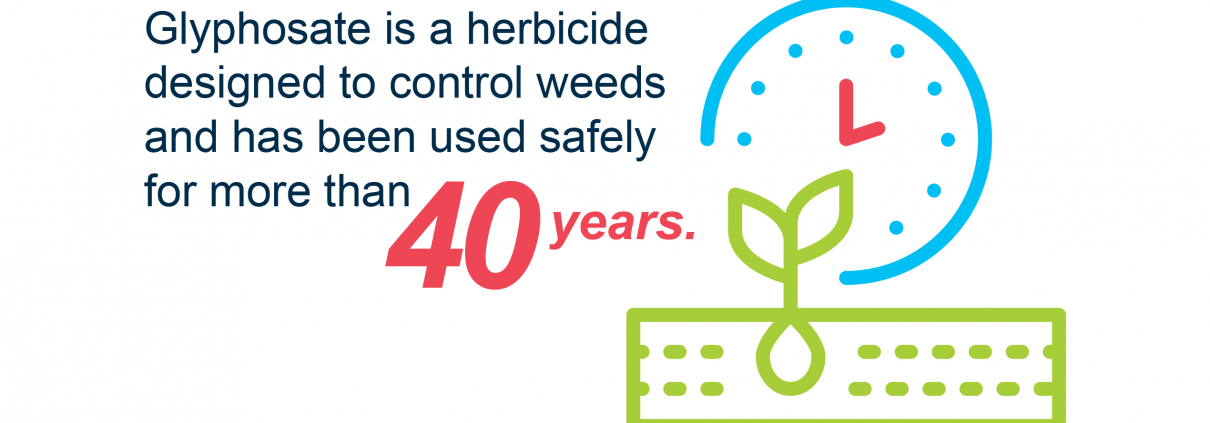
Bayer launch new ‘Glyphosate Hub’: To support the use of glyphosate in the amenity sector, Bayer has launched a new amenity specific ‘Glyphosate Hub’ to empower contractors by providing them with relevant information about this vital active ingredient.

Freddie Bendall-Brown, digital marketing specialist at Bayer Environmental Science, explains that after surveying amenity professionals last year, the company believed it was important to help amenity professionals sort fact from fiction when it comes to glyphosate.

Bayer launch new ‘Glyphosate Hub’

Bayer launch new ‘Glyphosate Hub’

“This is why Bayer has developed the ‘Glyphosate Hub’. It provides amenity contractors with the references and information they need to respond to queries from the public and colleagues alike,” he says.

“The hub also emphasises that there’s few alternative tools out there to control such a broad spectrum of weeds, especially with such a good safety profile backed by years of research and scientific study. Something many people outside of the amenity sector are not aware of.”

Freddie adds that historically, the focus on glyphosate has been centred around agriculture.

“This is why we’ve developed this bespoke amenity hub, so relevant factual information for amenity contractors is in one place..”

“The hub also provides glyphosate specific information on UK and EU regulations, best practice guidance and independent research and resources from organisations such as CRD, the glyphosate renewal group and DEFRA,” he adds.

To visit the ‘Glyphosate Hub’ click on the link below: https://www.environmentalscience.bayer.co.uk/turf-management/glyphosate-hub

[Box-out] Have your say…

With your help the ‘Glyphosate Hub’ will continue to evolve and grow over time, so that it provides up-to-date and relevant information to support amenity contractors in their role. Have your say on what you need to justify your weed control programme and provide feedback by emailing amenity@bayer.com.

For the latest industry news visit turfmatters.co.uk/news

Get all of the big headlines, pictures, opinions and videos on stories that matter to you.

Follow us on Twitter and Instagram for fun, fresh and engaging content.

You can also find us on Facebook for more of your must-see news, features, videos and pictures from Turf Matters.

The move away from Glyphosate

The move away from Glyphosate: Many UK grounds maintenance companies and county councils are re-examining the use of glyphosate herbicides and seeking non-chemical weed removal.

This is happening amid the continuing debates on the effects of glyphosate on our health and manufacturers’ claims that abandoning glyphosate weedkiller in favour of alternatives will cost grounds care businesses and councils more. Finding a commercially viable alternative to its use in urban settings is the first stage for authorities looking to phase out the use of pesticides and herbicidal weedkillers. The problem is a majority of ground care and landscape maintenance professionals have become reliant on glyphosate in their weed control programmes and many consider the substitute options are limited and, in most cases, more costly.

The move away from Glyphosate

The move away from Glyphosate

Manual removal will most likely always be a part of weed control, but it is labour intensive and therefore expensive. The use of post-emergent herbicides such as pelargonic acid will control small broadleaf weeds but can only partially damage perennial and large annual weeds. Other naturally occurring broad-spectrum herbicides including glufosinate and diquat are similarly only contact active and don’t translocate to the roots of the treated weeds. Acetic acid–vinegar is effective in burning weed leaves but again has no residual activity and overall, the repeated use of herbicides has led to resistance in many species of weed. So where next do you look for the holy grail alternative to the use of glyphosate? Heat kills seedling broadleaf weeds and flame weeding is effective in hardscapes but not practical where flammable materials may be present; and it only causes foliar damage, meaning grasses, perennial broadleaf weeds and sedges rapidly re-grow after treatment. Which brings us to the use of hot water and insulating, biodegradable foam.

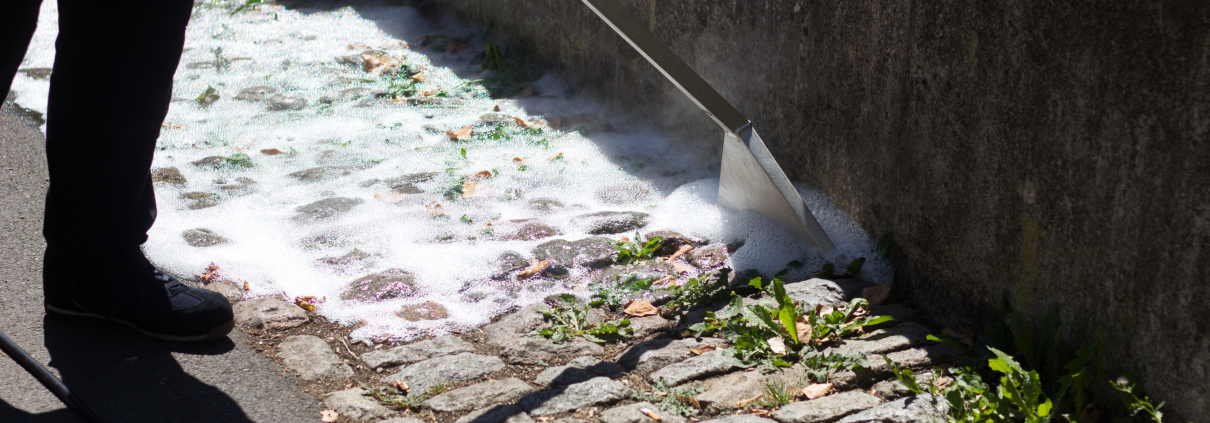
Foamstream is a process many UK local authorities, greenspace contractors and municipalities around the world are using daily. It is, in fact, the leading herbicide-free alternative for weed, moss and algae control.  Those in the know will be aware the process was developed to help organisations navigate the change to reduce or remove herbicides from their weed control programmes, and they have been seeing the benefits for a number of years. Notably, these include the London Boroughs of Hammersmith and Fulham, Southwark and Bromley, Glastonbury, the Vale of Glamorgan and Lewes, together with contractors such as idverde and Burleys, and utility companies like Thames Water, South West Water and Welsh Water. For anyone not familiar with Foamstream, it is a proven method now used extensively across four continents. To put it simply, Foamstream works by cooking the weeds it covers. The foam and hot water solution is a 99.5% water and 0.5% foam blend of natural plant oils and sugars which insulate the hot water, allowing effective heat transfer from leaf to root, killing the plant and stopping heat being wasted to the atmosphere.

Quite apart from being a naturally environmentally friendly method of treatment, there are many other associated benefits. Foamstream can be used in all weathers, which is favourable among contractors and municipalities needing to plan their labour force effectively and minimise downtime which, with other methods, may occur as a result of undesirable weather.

The process works to reduce total weed growth in an area by not only killing the weed, but also sterilising surrounding seeds and spores. It can be used on all surfaces, hard, soft, porous artificial and historical. It’s safe and hazard-free for the operator and safe for use around people, animals, delicate ecosystems and waterways. Spray chemical weedkillers in even a light breeze and you risk over spraying and resultant off-target damage.

“Since using Foamstream my health is better. The benefits are for me, for the environment, for everyone.” Says Jason Tomlin, Foamstream operator at idverde. “I’ve never been told I can’t use it – I’ve always been allowed to use it wherever I want because of what it does and its non-chemical environmentally friendly credentials.”

There’s no on-going operator certification, training or protective clothing required, which represents a saving against other methods. Chemical treatments are toxins and as such drive up health and safety requirements and the associated costs. What then are the costs associated with Foamstream?

“There is the initial outlay, as with any system,” says Thomas Hamilton, Foamstream/Weedingtech Commercial Director. “There is the capital cost of machinery to be taken into account. Most operators adopt a phased, integrated approach to their weed management programmes and as an outline Foamstream can be introduced for as little as £395.00 a month. The strategy over time is to be rid of glyphosate with a cost-effective alternative and Foamstream fits the brief perfectly.”

Foamstream also has a multi-function use – it can be used across all departments as a cleaning solution for gum removal, power washing and sanitisation. Depending on the type of paint and surface it can even be used for removing graffiti. The company has just introduced a new entry-level system, the Foamstream L12, with additional functionality for street cleaning, with a water-only rinse mode and high-pressure features.

You can find out more about Foamstream technology by contacting Weedingtech +44 203 09 0050 or visit www.weedingtech.com

For the latest industry news visit turfmatters.co.uk/news

Get all of the big headlines, pictures, opinions and videos on stories that matter to you.

Follow us on Twitter and Instagram for fun, fresh and engaging content.

You can also find us on Facebook for more of your must-see news, features, videos and pictures from Turf Matters.
Bayer To Appeal Glyphosate Ruling

Bayer To Appeal Glyphosate Ruling: Bayer shares continued to fall on Tuesday after a California jury on Monday awarded more than $2 billion in damages to a couple who alleged that the company’s glyphosate-based weed killer Roundup caused their cancers.

The third successive loss by Bayer in US courts and highest award to date by a jury after finding glyphosate to be carcinogenic highlights the legal risks and mounting cost to the company of the burgeoning litigation it faces over its widely-used herbicide.

Bayer To Appeal Glyphosate Ruling

Bayer, which acquired Roundup maker Monsanto for $63 billion last year, denies the allegations, saying decades of studies and regulatory approvals have shown glyphosate and Roundup to be safe for human use.

But the company faces more than 13,400 similar US lawsuits and shareholders have rebuked Bayer’s top management over its handling of the Monsanto acquisition and the litigation it inherited. Adverse jury verdicts have wiped more than 40% from Bayer’s market value since August.

Bayer on Tuesday said the litigation will take some time to conclude as no case has been subject to appellate review to assess key legal rulings in the trials. The company has vowed to appeal or already has appealed the verdicts.

The following is a summary of upcoming dates in the US glyphosate litigation:

– The first Roundup jury verdict, a $289 million award in San Francisco state court last August, later reduced to $78 million, is currently on appeal before California’s Court of Appeals, First Appellate District. Bayer in late April asked the appeals court to throw out the judgment, saying there was “no evidence” glyphosate could cause cancer.

Plaintiffs and Bayer will file additional briefs over the next few months and oral arguments in the case are unlikely before the second half of 2019, with a decision likely in the fourth quarter at the earliest.

– Bayer is still waiting for US District Judge Vince Chhabria in San Francisco, who oversaw the first federal Roundup trial, to enter final judgment of an $80 million verdict in March. Following that formal legal step, the company has 28 days to ask the judge in post-trial motions to reverse the verdict or order a new trial.

The case before Chhabria was unique for its structure, limiting the amount of evidence the plaintiff could present in a first trial phase. Bayer had hoped the trial structure would focus jurors on the strong scientific evidence showing Roundup to be safe rather than on company actions or behavior. The jury decision against Bayer upended that strategy.

– Bayer said it will appeal Monday’s $2 billion jury verdict in Alameda County state court in Oakland, California. In a first step, the company is expected to ask Superior Court Judge Winifred Smith, who oversaw the trial, to reverse the verdict or order a new trial.

Smith is likely to reduce the massive award as rulings by the US Supreme Court limit the ratio of punitive to compensatory damages to 9:1. The jury awarded a total of $2 billion in punitive damages and $55 million in compensatory damages.

– The next glyphosate trial is scheduled in Missouri state court on Aug. 19, the first such trial outside of California. The trial, involving a single plaintiff, will take place in St. Louis County, where Monsanto’s former headquarters and research facilities are located.

– Another federal trial could take place before US District Judge Chhabria in August or September. Chhabria currently oversees some 900 federal cases consolidated before him. The trial would mark the second bellwether, or test trial, to help determine the range of damages and define settlement options for federal cases.

Chhabria in April ordered Bayer to pursue mediation with the plaintiffs and said he will determine which cases should be dismissed or sent to other courts for further proceedings. He scheduled a status conference for May 22.

Click here to read the original article

For the latest industry news visit turfmatters.co.uk/news

Get all of the big headlines, pictures, opinions and videos on stories that matter to you.

Follow us on Twitter and Instagram for fun, fresh and engaging content.

You can also find us on Facebook for more of your must-see news, features, videos and pictures from Turf Matters.

Glyphosate Roadshow A Success

Glyphosate Roadshow A Success: Complete Weed Control’s glyphosate roadshow has been hailed as a huge success after the series of seminars offered vital guidance on the application of glyphosate to over 150 delegates throughout four UK locations.

Glyphosate is the world’s most widely used herbicide and has been proven to be effective in controlling unwanted vegetation in public spaces, gardens and in agriculture. However, over recent years it has been exposed to an abundance of scrutiny and debate which has left more unanswered questions and created further confusion.

Glyphosate Roadshow A Success

In this series of seminars, which took place in York, Bristol, London and Stirling, Complete Weed Control aimed to provide a greater clarity on glyphosate, as managing director Ian Graham explained in his introduction at each venue.

“As an organisation we felt it was time to put together a series of seminars to deal with the issues surrounding glyphosate and its use in the amenity sector. There has been a considerable and sustained volume bad press and a much negativity surrounding this product – so we felt it was essential that we explore the reality and present the data that exists from numerous agencies around the world that have all declared this product to be safe.

“As contractors we are very happy that our using it is entirely appropriate as it delivers a safe, environmentally sound and cost-effective means of dealing with weeds.”

Following Ian’s introduction, Bayer’s Roundup Technical Development Manager Barrie Hunt shared his wealth of knowledge and offered a fantastic insight into the history and development of glyphosate.  Barrie also discussed how and why glyphosate was re-approved for use in the EU back in 2017 and provided best practice information to help delegates plan ahead for their 2019 weed control programmes.

Commenting on his participation in the roadshow, Barrie said: “I got involved because I believe the stewardship of glyphosate and our Roundup brand is incredibly important – it is not something that can be left to chance.

“These seminars have been a great opportunity to engage with so many local authorities and contractors and to present the facts about glyphosate, present the science about glyphosate, and to address everybody’s questions which have ranged from glyphosate safety through to the specifics of controlling Japanese Knotweed.

“Without doubt this amenity usage is the place where pesticides meet the public so we have a responsibility to ensure that they have a good clear stewardship message and that they understand the safety of glyphosate.”

Delegates also got the chance to see a live demonstration of the Weed-IT machine and discovered the environmental and productivity benefits that this unique technology offers the industry. Developed specifically for the control of weeds on public footpaths and similar hard surface areas in urban situations, the WeedIT technology allows for spot treatment, which is a label requirement for glyphosate.

Complete Weed Control’s Technical Director Alan Abel then went on to further discuss spot treatment options and provide greater clarity on glyphosate label legislation.  Alan also talked about the relative costs of alternative treatments such as acid, heat and hand weeding, concluding that the WeedIT machine is both financially and environmentally economical.

To conclude Ian Graham presented information regarding the ongoing Japanese Knotweed trials currently taking place in Cardiff in partnership with Swansea University– which have demonstrated that glyphosate is the product that best controls Japanese Knotweed making it more important still that this valuable active ingredient is not lost through lack of knowledge and understanding.

Each seminar concluded with a Q&A session before lunch, and Ian Graham was pleased to see each event so well attended.

“Over the four venues we have seen in excess of 150 delegates, which we consider to be a success. These delegates are keen to learn the truth about glyphosate – they are the ones dealing with the public and are being asked the difficult questions. They want to make sure they have the answers at their disposal for when they are asked and I think these seminars have provided them with the knowledge they need.

“As an industry, I think it is very important that we collectively put our weight behind supporting glyphosate. It is important to us and it is important to be able to deal with weeds effectively and in an environmentally sound fashion.

“We are looking to reach out and gain more support from other organisations within our industry and hopefully that will continue to have positive results in representing the product.

As a consequence of the shows we are now developing an online product that will be launched in January that will serve as an information resource for clients and the public alike.”

For more information, please contact Complete Weed Control’s national office on 01325 324 277 or visit www.completeweedcontrol.co.uk

For the latest industry news visit turfmatters.co.uk/news

Get all of the big headlines, pictures, opinions and videos on stories that matter to you.

Follow us on Twitter for fun, fresh and engaging content.

You can also find us on Facebook for more of your must-see news, features, videos and pictures from Turf Matters.