Tag Archive for: golf

Vandals Damage 16 Golf Greens

Vandals Damage 16 Golf Greens: Within the next few days, test results should reveal the chemical that vandals used to damage 16 greens at a popular golf course in Skagit County.

A swear word was also spelled out in the grass on one of the holes at Swinomish Golf Links.

Employees believe the vandal or vandals picked their targets here carefully. The greens closest to the clubhouse are covered by surveillance cameras and were not hit.

“It’s stupid. I don’t why people vandalize. It doesn’t make sense to me,” said golfer Walt Matye.

“Very disgusting. Just like graffiti and that, there’s no point. It doesn’t accomplish anything except make matters worse,” added his cousin, Marshall.

Sometime within the past week, the vandals trespassed on the 100-acre course overnight and sprayed some type of grass-killing chemical on most of the greens, investigators told KOMO News. A swear word was also left behind on hole 11.

“It had to be a very involved process. One that was thought out. And for them to have access to the course by either driving or bringing this stuff with them is something that was well planned out,” said Chairman Brian Cladoosby, Swinomish Indian Tribal Community.

Tests are now being performed on the damaged grass and soil to try to figure out what chemical the vandal or vandals used.

If the chemical damaged the soil, it’s possible the course may have to temporarily close until expensive repairs can be made, employees said.

A temporary closure would be a huge hit considering the time of year.

“These individuals knew what they were doing. They know golf. They know the peak season. They know that the majority of the income produced by golf courses in the northwest is right around Memorial Day to Labor Day,” Cladoosby said.

Right now, this course is still playable.

Employees have drastically reduced rates for players because of the damage left behind.

“It just takes a few people to ruin it for the majority of the people to have a good time,” said Marshall Matye. “I guess the only thing they think about is themselves.”

The course does have insurance, employees said. But it’s possible the damage could climb to more than $500,000, they added.

The Swinomish Indian Tribal Community is offering a reward of up to $10,000 for information that leads to an arrest in the case.

Click here to read the original article

For the latest industry news visit turfmatters.co.uk/news

Get all of the big headlines, pictures, opinions and videos on stories that matter to you.

Follow us on Twitter for fun, fresh and engaging content.

You can also find us on Facebook for more of your must-see news, features, videos and pictures from Turf Matters.

OARS PS Used At Le Golf National

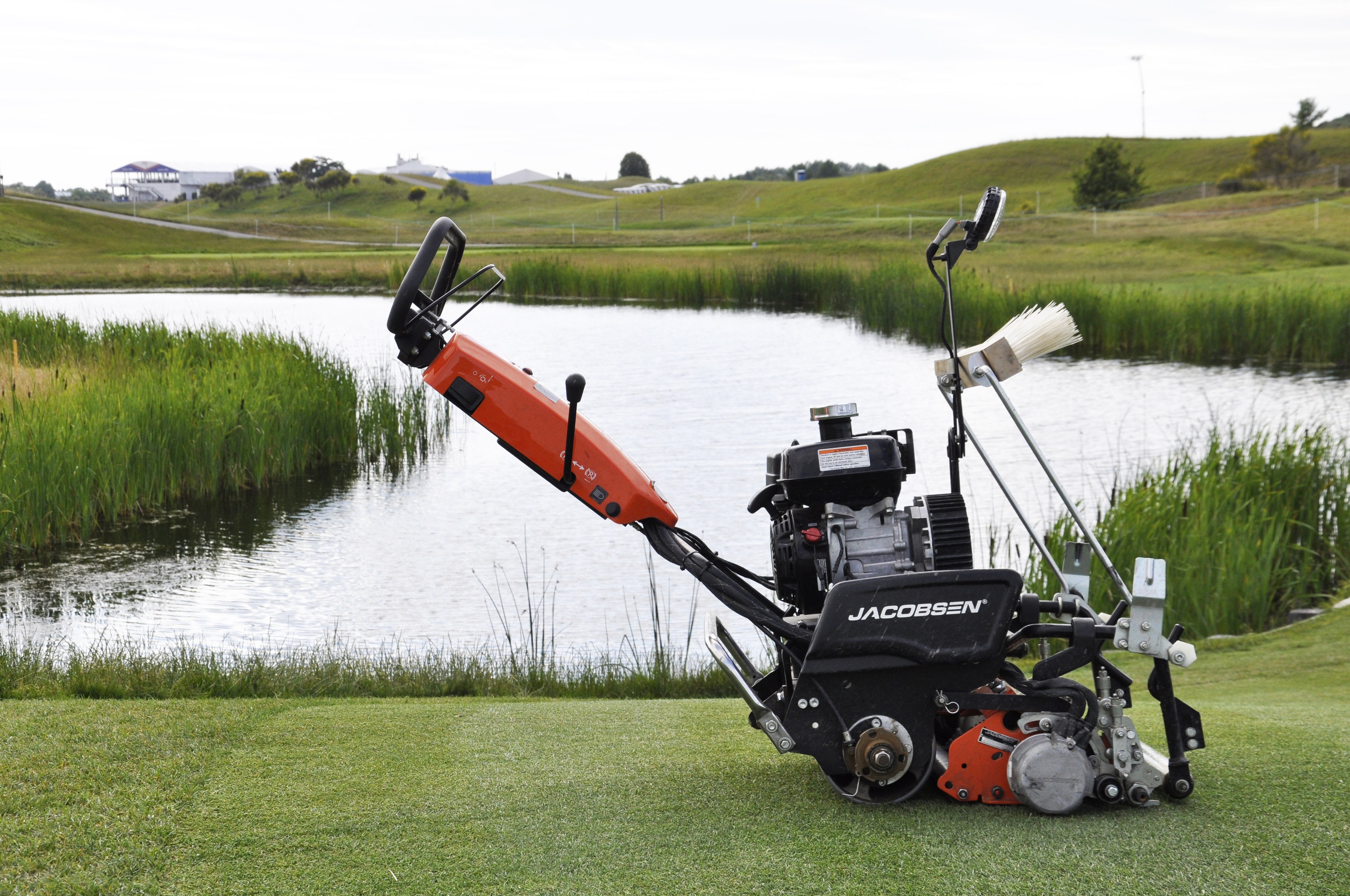
OARS PS Used At Le Golf National: AQUA-AID EU’s OARS Penetrating Surfactant (OARS PS) has been extensively used at Le Golf National as the club in Paris gets ready for the 2018 HNA Open de France and the 2018 Ryder Cup.

Golf courses and estates manager, Alejandro Reyes, was appointed to his position in 2013 and was tasked with creating a Ryder Cup landscape using the 7,331 yards of The Albatros course, and extensive product testing was carried out to find the best programme possible.

OARS PS Used At Le Golf National

Following recommendations from those within the industry Alejandro was supplied by his local dealer Jacques Laborier of Celtic France and tested the OARS PS for himself and has been using it ever since as part of a programme that had the course in spectacular championship condition through 2017.

“I first heard about OARS PS in Spain, but I didn’t use it until I came to Le Golf National,” Alejandro said. “I’d had good feedback about OARS PS from different colleagues and had quite few telling me to test it because it was working very well for them.

“With OARS PS we saw a reduction in dry patches and what I really liked the most was that I had the feeling, and still have the feeling, that it works and the water moves better throughout the profile, and for me, that’s the key.

“We use it every other week all around the course. We have two kinds of tank mix with a pure foliar, so we have all the package we need to give to the plant. Then on the alternate weeks to that, we are spraying an irrigated mix where we are using bio stimulants that we are mixing with the OARS PS.

“We have very little issues with dry spot on the course now but if we do we’ll use OARS Pellets for hand watering to fix local dry spots.

“We’ve been testing many different products and 2017 was the last year for us to test anything, and it was a very good year for us when it came to maintaining the golf course. We were very happy with the condition, and how it was looking at the end of September was awesome. I have the confidence that we had found the winning formula and we need to stay with it, to maintain continuity of the condition of the course. We had a great 2017 HNA Open de France and really within this year it’s just about replicating those standards.”

OARS PS is a combination of the university researched, field proven and patented organic acid redistribution system, OARS, and multi-branched penetrant chemistry. OARS PS controls soil water repellency while providing uniform soil moisture for a longer period of time, providing a firm, fast surface.

The OARS pellets used at Le Golf National to combat localised dry spots work as a corrective approach and remove the build-up of organic acids that coat the surface of sand particles, which cause water repellence and localised dry spot conditions.

For AQUA-AID EU managing director Hans de Kort, having the opportunity to work with Alejandro alongside distributors Celtic France is a fantastic chance to see OARS PS in use.

“It is great to have professionals like Alejandro in the industry,” he said. “When it comes to products like surfactants you have to be able to judge it on its functionality, and Alejandro has done that with great success.

“We are very proud to support the green-keeping staff at Le Golf National in the lead up to this year’s golf events and like all golf fans we look forward to watching the 2018 Ryder Cup in September.”

Whilst Le Golf National, owned by the French Golf Federation, is no stranger to hosting major tournaments with 25 French Opens already played on the course since 1991, the scale of the Ryder Cup challenge is massive. The regular team of 30 increases to 80 for a French Open but for the Ryder Cup it will grow to 180 with the full support of Official Ryder Cup Supplier Ransomes Jacobson.

For the latest industry news visit turfmatters.co.uk/news

Get all of the big headlines, pictures, opinions and videos on stories that matter to you.

Follow us on Twitter for fun, fresh and engaging content.

You can also find us on Facebook for more of your must-see news, features, videos and pictures from Turf Matters.
Drainage Key For Golf Protection

Drainage Key For Golf Protection: With the UK’s increasingly erratic weather having a detrimental impact on golf, Aggregates Industries’ has stated that effective drainage is now more important than ever before when it comes to the successful design and management of golf courses.

According to a recent report, golf is facing an increase in unplayable holes, winter course closures and disruption to professional tournaments due to increased rainfall, all of which are a growing concern for the sport.

Drainage Key For Golf Protection

Extreme weather including wetter winters are also causing waterlogging and disease to grass and greens, the report added. As a result, the Greater Glasgow area alone has seen a 20% reduction in playing time on golf courses over the last decade.

Steve Curley, general manager for Lytag at Aggregate Industries, a leading supplier of building materials, comments: “The UK has seen six of the seven wettest years on record since 2000 and record-breaking wet winters in 2014 and 2015 which is clearly having a damaging impact on golf and a growing concern for golf courses up and down the country.

“For golf clubs looking to – literally – weather the storm, having an effective drainage system in place is now considered paramount for protecting a green and ensuring playability in all weather conditions.”

According to Aggregate Industries, core to a superior drainage system is the use of secondary aggregates such as Sportag®, an innovative lightweight solution made from Lytag featuring a unique rounded shape and material properties that makes it ideal for land drainage applications.

Reducing the risk of flooding, Sportag is able to transmit water up to 10 times faster than gravel, which means it is particularly suited to golf courses, including slit trenches, gravel banding and Shelton Systems as well as fairways where firm dry surfaces are critical. What’s more, the incredibly sustainable solution’s 40% void ratio helps aid longevity, improving aeration and allowing roots to penetrate further.

Proving its credentials during recent works at Woburn Golf Club, Sportag was installed within trenches 25mm wide, spaced 2m apart and at a depth of 300mm. A quick and simple installation process, the course was immediately available for use, damage to the course was minimal, therefore keeping disruption to a minimum.

Steve Curley adds: “Due to its super absorbent properties, Sportag has been proven to aid with effective drainage and high moisture retention as demonstrated in the recent case of Woburn Golf Club. For golf clubs looking to provide first class playing surfaces year round, this revolutionary solutions will not disappoint.”

For the latest industry news visit turfmatters.co.uk/news

Get all of the big headlines, pictures, opinions and videos on stories that matter to you.

Follow us on Twitter for fun, fresh and engaging content.

You can also find us on Facebook for more of your must-see news, features, videos and pictures from Turf Matters.

Golf Greens Damaged

Golf Greens Damaged: Two greens at the Beverley Park Golf Course suffered from a case of vandalism over the Easter weekend.

Between the close of play on Easter Saturday evening and Easter Sunday morning vandals  damaged the 5th and 12th greens near the Targo Road boundary.

“It looks like the greens have been raked with a metal or wooden stake,” Mr Bates said.

The damage has been estimated at around $1800. St George Police have been informed.

“The additional repair work is yet another burden for the overworked five-member course staff, their budget and hectic work schedule,” Mr Bates said.

The club has lodged a development application to erect a 2.1-metre railing fence around the perimeter of the golf course which is being opposed by Beverley Park residents.

The club has said the fence is necessary to stop vandalism, anti-social behaviour and golfers using the course without paying which has caused the club to lose $55,000 a year in green fees.

The residents say the fence will see the removal of about 156 trees and bar access to the golf course which as Crown Land should be accessible to the public.

They say CCTV and extra security could be used to stop any vandalism.

The club said there is a small parcel of land that is Crown Land and the council owns the rest with the lease saying the club will not give right of way across the premises.

The development application is before Georges River Council for a decision.

“The club has had enough of the ongoing damage to the course, losing over $100,000 per annum due to people hopping over the old dilapidated wooden logs at the back end of the course and playing for nothing, as well as the ongoing damage and anti-social behaviour,” Mr Bates said.

“All other courses in the St George district and the shire have security fences erected for obvious reasons and we want to bring Beverley Park into line with them.

“Like any business which services more than 50,000 games a year and costs more than $900,000 to maintain, we need to ensure it is locked up and kept safe during the night.”

Click here to read the original article

For the latest industry news visit turfmatters.co.uk/news

Get all of the big headlines, pictures, opinions and videos on stories that matter to you.

Follow us on Twitter for fun, fresh and engaging content.

You can also find us on Facebook for more of your must-see news, features, videos and pictures from Turf Matters.

Battle Of The Golf Car Batteries

Battle Of The Golf Car Batteries: The discussion about golf car batteries and the benefits of the different types has been taking place for some time now. E-Z-GO is the first major golf car manufacturer to introduce a lithium-ion (li-ion) golf car and experts in the field of battery power share the consensus that li-ion batteries improve the performance and longevity of golf cars compared to traditional lead acid batteries. Consumers have also been quick to adopt the new technology with golf club managers and purse string holders realising that the benefits of li-ion golf cars ultimately outweigh the initial up-front costs.

A recent report by Technavio forecasts that the global golf cart battery market will grow at a compound annual growth rate (CAGR) of nearly 5% between 2017-2021. Another report by the market research firm Genpact said the global golf car demand will reach 214,000 units this year and that their installation rate for li-ion batteries will jump drastically from 1 percent last year to 14 percent this year. The li-ion battery installation rate on Korean golf cars has already surpassed 90 percent, according to the same report.

Battle Of The Golf Car Batteries

As aforementioned, E-Z-GO has capitalised on the trend in the market and has taken the lead in this field: “Vendors are expanding their current production capacities for lead-acid batteries. Samsung SDI has a contract with golf car manufacturer, E-Z-GO to supply its cylindrical battery, which is based on the li-ion battery technology.” says Thanikachalam Chandrasekaran, a lead analyst at Technavio for energy storage research.

This collaboration has resulted in the E-Z-GO ELiTE golf car series where the vehicles are powered by hundreds of Samsung SDI lithium cells that are loaded into a single battery pack. The battery pack is controlled by an advanced Battery Management System that monitors efficiency, temperature, state of charge and the health of the batteries.

“The golf course industry is witnessing a transformation, owing to the use of latest technologies. To enhance a golfer’s experience and attract new customers, golf clubs are integrating the latest models of golf cars…” Chandrasekaran says. It is no surprise that clubs are looking to enhance the golfing experience, given the competitive nature of the industry. A golfer will spend approximately 85-90 percent of their time in a golf car in many cases, so it seems that investing in golf cars is key.

Since the introduction of the ELiTE Series in 2017, it has been widely adopted by a range of clubs with vastly differing budgets including Princes Golf Club in Kent, U.K., and Real Club Valderrama in Spain, to name but a few. While clubs are realising the benefits of li-ion technology, there are still obstacles to overcome, and a big one is budget.

The cost of an E-Z-GO ELiTE golf car is approximately 20% dearer than the cost of an equivalent vehicle with a lead acid battery. This may seem like a hefty difference in price, but if you study the long-term financial savings as well as the time saved on maintenance and charging, the former soon becomes the more appealing option.

The benefits of li-ion technology have been broken down in the categories below to fully understand the myriad of benefits and the areas that have the most potential for making significant cost savings.

Weight

A golf car with a li-ion battery has a significantly enhanced power-to-weight ratio. Li-ion batteries are half the size of lead acid batteries and a fraction of the weight. To put a figure on this, a standard li-ion battery in an E-Z-GO ELiTE golf car weighs 23kg, compared to a standard lead-acid battery which weighs around 150kg. This dramatic reduction in weight and size of the battery means that the golf car can reach higher speeds with less effort and carry more weight without the power fading and the performance diminishing.

This huge weight saving allows the lithium-powered car to carry the equivalent of an additional two average-sized adults and their equipment before reaching capacity. This is made possible because lithium batteries maintain the same voltage outputs regardless of the battery’s charge. As a result, the golf car continues to perform after its lead-acid counterpart has shown signs of fatigue. In comparison, lead acid batteries lose voltage output and performance after 70-75 percent of the rated battery capacity is used, which has a negative impact on carrying capacity and the issue is highlighted as the day progresses.

Maintenance

One of the major benefits of li-ion batteries is that they require no maintenance whatsoever as opposed to lead-acid batteries which need regular checks and maintenance. This ultimately results in saved man hours and the extra costs of maintenance tools and products. The lack of lead-acid means that chemical spills are avoided and the chance of downtime on your golf cars is drastically reduced.

However, it is still important to take care of any vehicle or machinery to protect it for years of use. One of the biggest factors when it comes to the wear and tear of golf cars is the weight of them; a heavy vehicle is more of a challenge to drive uphill or on uneven terrain, and can damage turf especially in wet conditions. The reduction in weight when using li-ion batteries protects turf and removes unnecessary stress on brakes and other components on the golf car.

Charging

This is an inevitable part of owning any vehicle powered by electricity. Regardless of the type of battery, electric vehicles still need to be charged. This can be an inconvenience if you do not have a fleet of golf cars or a schedule that allows time for charging in between uses.

Golf cars need to be able to maintain consistent power and speed on a range of terrains. Studies have proven that li-ion batteries are able to provide this consistency, but lead-acid batteries will have a negative impact on the performance of the golf car as the voltage dips.

On average, it takes eight hours to fully recharge a lead-acid battery. However, a li-ion battery can be recharged up to 80 percent its capacity in just one hour, and 100 percent in less than four hours. Another contrast between the two types of battery is that partially charge lead-acid batteries are susceptible to sulfation damage, meaning that if the golf car is charged to less than 100 percent, the life of the battery is significantly reduced. Conversely, li-ion batteries show no adverse effects of being charged less than capacity, meaning that users can “opportunity charge,” plugging vehicles in for quick charging sessions that can rapidly restore significant levels of energy to the battery system, as opposed to the lengthy recharge cycles required by lead-acid batteries.

Golfers will often pay good money to enjoy a round of golf, and in this day and age, it is unacceptable for a golf car to run out of juice half way through a round. Not only can it potentially ruin the golfer’s overall experience, but it drives much needed business away. For this reason, the importance of efficient and long-lasting battery life in golf cars cannot be understated.

Eco-Friendly

The E-Z-GO website states, “Driven by a zero-emissions, greener battery technology, ELiTE vehicles protect the Earth by using less energy.” This statement is supported by the fact that li-ion batteries take significantly less time to fully charge, and the life span of lithium-powered batteries is longer than lead-acid counterparts.

Li-ion batteries do not contain hazardous material, whereas lead-acid batteries, as the name suggests, contain lead which is harmful to the environment. However, both are recyclable which is only a positive thing for the environment.

Many golf clubs now have environmental policies in place, some of which are overseen by the Golf Environment Organisation (GEO) and other official bodies. The introduction of li-ion golf cars has given clubs another avenue to enhance environmental sustainability on the golf course in an industry that is always striving to reduce its carbon footprint.

To Conclude

The longevity and performance enhancing capabilities of li-ion batteries somewhat outweighs the initial up-front cost that consumers are faced with. If golf clubs and private users can see beyond this, not only does the investment pay for itself over time, but big savings can be made in the way of reduced energy bills, maintenance costs, and possible repairs that would otherwise need to be made to heavy lead-acid golf cars and any damage to turf that they cause.

Furthermore, in a spate of recent lead-acid battery thefts at a number of golf clubs in the U.K., a li-ion battery is not valuable to thieves in terms of its content or the material it is made from. While it does not combat the underlying issue of criminal activity, it does at least reduce the chances of theft and the financial and legal impact associated with it.

In a market where the trend leans towards lithium technology being the way forward, there will no doubt be more and more manufacturers following in the footsteps of E-Z-GO and its introduction of the ELiTE series.

For more information, visit: ezgo.txtsv.com

For the latest industry news visit turfmatters.co.uk/news

Get all of the big headlines, pictures, opinions and videos on stories that matter to you.

Follow us on Twitter for fun, fresh and engaging content.

You can also find us on Facebook for more of your must-see news, features, videos and pictures from Turf Matters.