Tag Archive for: Heart

Development at the heart of GMA Strategy

Development at the heart of GMA Strategy: The Grounds Management Association (GMA) has, after the impact of the pandemic and following the impact of global events, combined with the cost-of-living crisis, focused on tackling the key issues highlighted by volunteers and professionals as priority areas to address in the grounds care industry. 

Published alongside the GMA’s 2022 Workforce Survey, the reset of the GMA’s Five-Year Strategy first launched in 2021, outlines six key priority areas that will inform and influence the association’s work to help achieve three long-term goals:

Development at the heart of GMA Strategy

Development at the heart of GMA Strategy

  • To attract new talent and accelerate the growth of a diverse workforce
  • To support sustainable business growth and protect the sector’s interests
  • To build industry reputation and promote the sector’s contribution to society and the economy

The six strategic priority areas are:

  • Workforce development
  • People and culture
  • Services and support
  • Industry representation
  • Data and digitisation
  • Funding and investment

GMA Chief Executive, Geoff Webb said: “We know the challenges that those working in the grounds care industry face and the findings from our Annual Workforce Survey echo those issues year after year. Whilst we have made progress since revealing the results of “Groundsmanship Sports Vital Profession” in 2019, the trends first identified remain.”

“The issues are far-reaching and to make a positive difference at pace, working together as a sector, we need a shift in mindset and outlook. Working collaboratively is key to success. Members and others working in grounds care, those employing grounds staff, industry partners and suppliers, national governing bodies, professional leagues, the media, local authorities, and the education sector all have a role to play. It’s a team effort.”

The GMA’s latest report estimates that over 3,200 professional grounds managers are due to retire in the next three years and over a third of all grounds professionals are over the age of 55. The lack of young people joining the profession is evident with only 3% being under 25. A clear indication that the industry is facing a recruitment crisis and must act now to attract the next generation.

A lack of diversity also continues to be an issue in grounds management with white men still being the most dominant demographic working in the industry. 96% of professional grounds staff are male and only 3% are non-white, which is far from representative of the communities across the UK.

The report also highlights an issue with underinvestment in grounds management, both in terms of procuring the necessary equipment, and the salary levels paid to grounds staff. The association believes that there is a widespread lack of understanding of what skills, technical expertise, and equipment are required to maintain sports grounds to a satisfactory standard. An issue that will be addressed by proactively promoting the work of grounds people and reiterating the message that with no ground, there’s no game.

GMA Chief Executive, Geoff Webb continues: “When Covid hit, like many, we focused resources on adapting to the ever-changing working environment, moving to remote working and facilitating longstanding face-to-face training and events online. Likewise, many worked with limited capacity and resources during this period, this impacted on many skilled ground staff and impacted on the ability of volunteers to spend the time attending to their clubs and facilities. We have to recognise that we are still in recovery and today are met with fresh challenges such as the cost of living, the impact on the supply chain and recruitment issues.

“We have reset having to contend with a delayed SALTEX which was a fantastic success last Autumn and have spent 2022 reviewing and resetting our strategy as well as building an expanded team. This year has been about getting the right people and resources in place and 2023 will see us move from capability building to implementation as we focus on the strategic priorities and long-term goals outlined in our Strategy.

“This reset of our Strategy puts us on a path to deliver and with the continued support of our Chair and Board, we will continue to invest in building on the six key priority areas identified to meet the needs of members and the wider grounds care sector.”

For the latest industry news visit turfmatters.co.uk/news

Get all of the big headlines, pictures, opinions and videos on stories that matter to you.

Follow us on Twitter and Instagram for fun, fresh and engaging content.

You can also find us on Facebook for more of your must-see news, features, videos and pictures from Turf Matters.

Sustainability issues at the heart of Learning LIVE

Sustainability issues at the heart of Learning LIVE: In the month that saw the UK climate reach unprecedented levels of 40°C for the first time on record, the Grounds Management Association (GMA) is highlighting the need to place sustainability and environmental issues at the heart of the grounds maintenance sector’s thinking – and at the heart of SALTEX’s Learning LIVE sessions. 

GMA Chief Executive, Geoff Webb said: “Those managing and maintaining sports turf and green spaces are already having to deal with the impact of climate change and industry suppliers are doing their best to innovate and help grounds people to minimise the impact of droughts and floods.

Sustainability issues at the heart of Learning LIVE

Sustainability issues at the heart of Learning LIVE

“Extreme weather conditions are becoming more frequent, and we need to continue to educate grounds staff and plan now to ensure that as a sector, we are equipped to deal with what lies ahead.”

Announcing speakers for Europe’s leading sports turf, amenities, and landscaping trade exhibition, SALTEX, which is free to attend and organised by the GMA, Geoff Webb explains the value of attending the show’s Learning LIVE sessions.

“Learning LIVE has been designed to provide support, insight, and real solutions to key industry issues, including those relating to sustainability and the environment and we are delighted to be confirming a growing line-up of impressive expert speakers.”

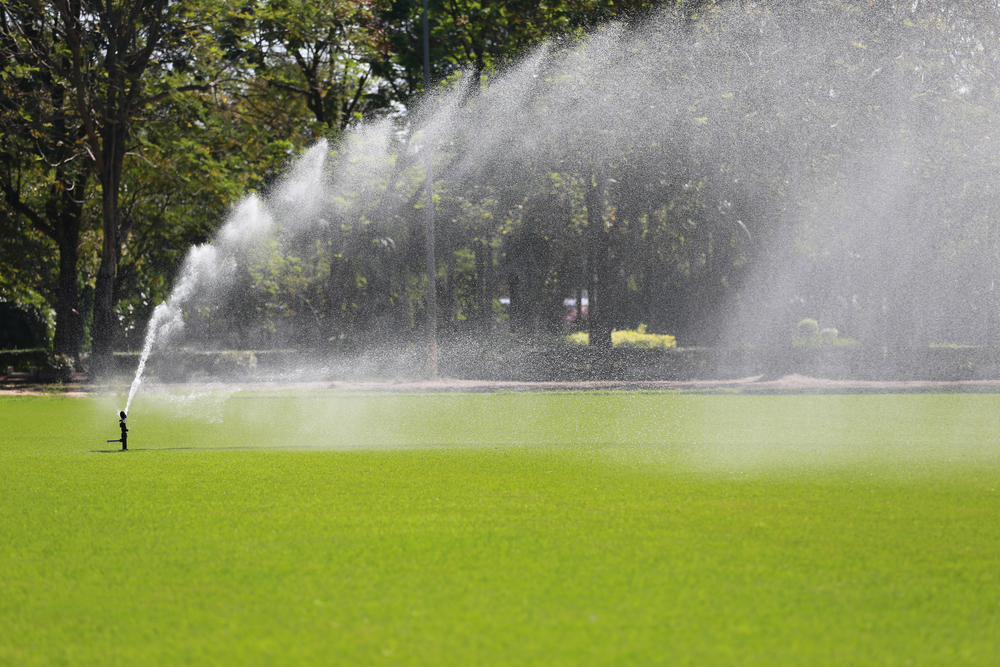
A presentation not to missed will be one from Tony Hanson managing director, Environmental Solutions International and Robin Price, director of quality and environment at Anglian Water. Geoff says: “Their paper on ‘Reducing the impact of future water restrictions on golf and sports turf’ is a timely subject as we deal with the results of climate change and approach drought restrictions in this country. Tony and Robin will look at the implications of temporary use bans and changes in water abstraction rulings, and how this will prevent turf irrigation in 2023 and the ways to implement water resilience practices.”

Tony Hanson explains the importance of this subject to the industry: “Due to climate change, population growth, and historically high personal consumption, there is simply not enough water available in the UK without action – the water sector will have to use demand management to ensure public supply. Turf irrigation must simply become less dependent on mains or direct irrigation abstraction.

“The Water Resilience Plan has been designed to guide users on what they

need to do and keep them informed of water industry funded seminars and workshops. If you irrigate turf you will need to review alternative water sources for irrigation, create water storage on site – water you control and can use in a drought to cover at least 21 days and review and assess your irrigation management and system.  I look forward to discussing all these elements at SALTEX.”

The SALTEX 2022 Learning LIVE schedule this year has been extended to over 30 sessions, with additional papers attacking the key issues for the grounds care industry of pay, career development, how to negotiate in the workplace and how to find out about the millions of pounds of grant funding available from sports clubs.

More information about the SALTEX 2022 Learning LIVE programme can be found on the event’s website at www.saltex.org.uk/learning-live. Free visitor registration is now open. Visit saltex.org.uk or register here.

Alongside the Learning LIVE programme visitors to SALTEX 2022 will be able to see over 400 industry brands in one place – all lining up the best products on offer for today’s growing needs. It also provides visitors with a great opportunity to network with industry colleagues and build new business relationships.

The show takes place at the conveniently central Birmingham NEC on 2-3 November.

For the latest industry news visit turfmatters.co.uk/news

Get all of the big headlines, pictures, opinions and videos on stories that matter to you.

Follow us on Twitter and Instagram for fun, fresh and engaging content.

You can also find us on Facebook for more of your must-see news, features, videos and pictures from Turf Matters.
A compact tractor with a big heart

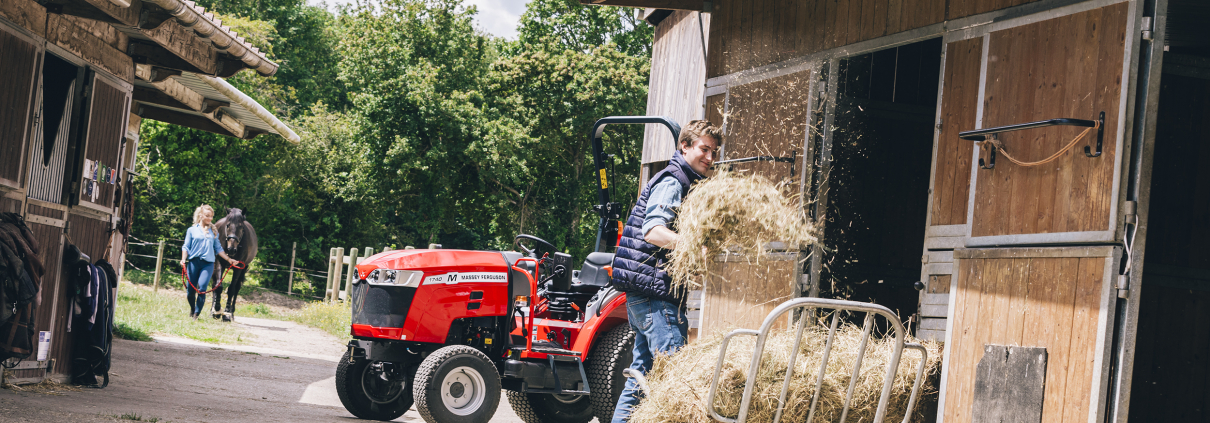
A compact tractor with a big heart: Massey Ferguson’s reputation for attention to detail, build quality and reliability is evident across its comprehensive line-up of agricultural tractors. Exactly the same approach has also been rigorously applied to its latest range of compact machines in the six-model MF 1700 S series – two of which are new introductions.

Powered by a range engine capacities of between 35hp and 67hp, with either three or four cylinders. the MF 1700 M is likely to appeal to a variety of users – farmers, smallholders, groundscare professionals, contractors and others.

A compact tractor with a big heart

A compact tractor with a big heart

One of the most important factors from an environmental angle is that each model in this new range is powered one of the latest Stage V-compliant engines, reducing still further their carbon footprint.

Versatility is the first word that springs to mind when describing the MF 1700 M range. Not far behind in the list of must-have qualities is the new HST transmission, which delivers precision control and a higher maximum speed, together with the new factory-fitted cab option.

The transmission uses a shuttle lever to control the tractor’s progress – as you would find on a normal agricultural tractor – simplifying the operating experience

Operator comfort and ease of operation were factors high on the list of design priorities for both the cab and platform versions – a tiltable steering column, easy access, air conditioning, heated rear window – and with ergonomically and logically-arranged controls, for example.

In addition, each model comes with a mechanically-suspended seat as standard, with pneumatic suspension available as an option. The operator’s working day can be enhanced considerably with the radio-ready pack – consisting of antenna and speaker – together with two USB sockets and storage space for a mobile phone.

All-round visibility has been maximised to enhance machine control in confined spaces and buildings with restricted headroom.

Like many of its bigger brothers, the MF 1700 M has an array of logically positioned controls, including the joystick – standard on cab models, but  available as an option on platform versions. This incorporates two levers to control rear spool valves, while the joystick itself controls the mid-mounted spool valves and the front loader, where specified.

First-time users have commented on the model’s smoothly efficient operation and it’s ability to access confined or restricted spaces. By the same token, they have been impressed by how readily it takes to field work when coupled with a range of implements – and, indeed, when in road transport mode. The sheer versatility is really underlined when specialist users take to the golf course for the intricacies of green mowing and maintenance.

The control procedure for the independent PTO is a new feature that further enhances the machine’s field of operation by allowing the operator to set different operating modes – normal, soft or automatic – to take account of which implement is being used and what the actual ground conditions dictate. There’s also an external PTO switch, located on the rear fender, for additional convenience of operation.

A pair of rear spool valves is included as standard specification, each of which is available with single- or double-acting operation, while activation can be locked using levers to ‘free-flow’ mode for ease of operation and enhanced efficiency.

Automatic four-wheel drive introduces a significant increase in the machine’s overall productivity – and, indeed, it’s safety. How it works is that as soon as the brake pedal is depressed, the system simultaneously switches from two-wheel drive to four, so applying the brake to all four wheels.

A hydrostatic speed control lever enables the operator to adjust the cruising speed while on the move. When engaged, the tractor works more efficiently while enhancing operator comfort.

Another simple, but highly-effective safety feature is PTO automatic mode. When engaged, the rear- or mid-PTO rotates while moving forward and stops when travelling in reverse – or when the tractor stops.

Other options on the MF 1700 M include front weights and air-suspension seats, together with a comprehensive choice of agricultural and larger turf tyres.

The MF 1735 M and MF 1740 M models can be ordered with new factory-fitted mower deck. Easy to mount, the deck is specified with three blades and is 60in wide, proving cutting heights of between 20mm and 115mm. The desired height can be set from the operator’s seat and is adjustable in eight steps. The new, larger tyres provide a ground clearance of 150mm.

Platform models benefit from foldable ROPS protection as standard and have the same operator controls as those versions fitted with cabs.

Massey Ferguson makes the point that the higher specifications found on its latest 1700 M tractors are part of the company’s on-going strategy of overall enhancement across its range of machines. This, the company states, means more models to suit the wider requirements and greater demands of more farmers and contractors.

For the latest industry news visit turfmatters.co.uk/news

Get all of the big headlines, pictures, opinions and videos on stories that matter to you.

Follow us on Twitter and Instagram for fun, fresh and engaging content.

You can also find us on Facebook for more of your must-see news, features, videos and pictures from Turf Matters.
A Heart To Hart With David

A Heart To Hart With David: Turf Matters spoke exclusively with David Hart, Managing Director of Kubota UK and covered everything from demo lorries, structural changes, Brexit and calamatics…

When David Hart took over as Managing Director of Kubota UK just over a year ago there were two things at the top of his “To Do” list. One he wanted to get his feet under his new desk and two he wanted to make sure he got to know his new charge inside out.

A Heart To Hart With David

“I probably looked under every stone I possibly could, and spoke with everyone, so that I could get to know all aspects of the business,” said David who had previously enjoyed a stellar 28 year career at John Deere.

“It’s been a good year. It’s a cliché but a change is as good as a rest and while it is an industry which I know well there are elements of the Kubota business which have been new to me,” said David, referring to the engine and construction side of the Kubota business.

It was just in the summer of last year that David took up his new role but already he has a new job title to add to that of Managing Director – the impressive sounding Vice President for Business Transformation for Europe.

“It’s not a promotion. It’s an addition,” he explained.

“It’s on top of what I was already doing. Until a couple of years ago each country operated in a different manner.

Here in the UK we did certain things in a certain way; Germany did the same; France the same; Poland the same and so on. My new role is to bring some common structures in and processes to those different sales and marketing units.”

Having carried out structural changes in his pre-Kubota days it is a role ideally suited to him, as is steering his new staff through the changes which are inherent in a business which has grown from a staff of 88 ten years ago, based out of the headquarters at Thame in Oxfordshire. to over 140 now.

Asked about any significant changes which he has implemented since he joined David points to something which, in addition to its primary aim, has eased congestion on the UK’s motorway network as well as reducing the company’s carbon footprint.

“We’ve changed how we managed our demo operation. We used to have three articulated lorries which the demonstrators drove to their destinations. I thought we could used our time better and have those guys focusing on the demonstration rather than driving the trucks. So the trucks have gone giving us a £600,000 saving.

That’s among a few things which I have streamlined since I got here.”

Another area where David has aided the environment is in a significant reduction in his own airmiles.

“The nice thing for me is that I do less travelling because for 28 years I spent 26 weeks on the year travelling and taking around 52 flights a year,” explained David, who has only been to Kubota’s worldwide headquarters in Osaka, Japan, once since he took up his new role.

“We’ve had two of our senior management over to visit us and we showed them how we operated the business here in the UK but I think the nice thing is if our Japanese bosses are comfortable with what is going on they leave you to it.”

Looking forward David is concerned with how Brexit is going to impact upon the various areas in the Kubota business portfolio.

“My biggest concern is that, with or without a deal, it isn’t going to be good. We have already seen the construction market go soft because there has been no houses built in the last three months. Groundcare has also gone soft but that is partly because last year’s dry summer meant that dealers were left with a lot of stock.

“I’d say that one of the biggestconcerns is that we are no clearer today about what will happen than we were two and a half years ago. Let’s hope that the pessimists are wrong and the optimists are right and it’s just a blimp or turns out to be something like the Millennium Bug,” said David, in a pragmatic rather than negative tone.

Another area which has been impacted by Brexit uncertainty is recruitment.

“People keeping their powder dry at the moment. If they get the offer of a lifetime they might jump ship but otherwise they are going to stay were they are until they know what the future holds. We have got seven or eight vacancies at the moment and some of them we’ve had for more than a year.”

From the customer’s perspective they can look forward to a bolstering of some of the groundcare product with some additional lines in the near future.

“Hopefully, we’ll have a bit more product offering. Not of a big scale but complementary to what we already do. We have a few irons in the fire.”

Kubota have dipped their toe in the automomous mowing, with a product range currently available in France and on its way to these shores while calamatics is another area that will be becoming more prevalent in the next few years.

“Remote diagnostics mean that we are able to connect to customers equipment and make repairs or updates from a central point which means we will be able to react to customers’ needs much more quickly become even more efficient as a company.”

David has got much further down that original “To Do” list than even he had hoped and it augers well for not just the next 12 months but many more after that.