Tag Archive for: How

Get the mow how

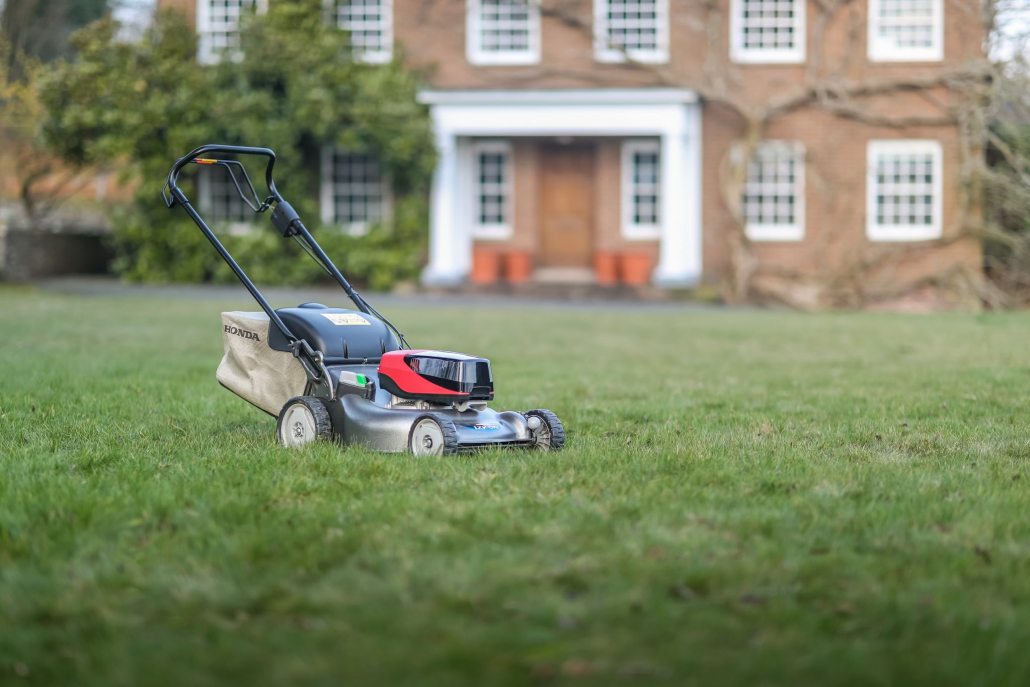
Get the mow how: Honda knows gardens are as important to our homes as any room in the house, more so than ever before. In a single day, the lawn is a running track for the dog, a football pitch for the kids and a dinner spot for the family. To withstand all this, we need to look after our lawn and gardens, and to do so successfully, we need to understand the significant role the weather plays.

To investigate and explore this intrinsic relationship between weather and gardening, Honda has teamed up with TV’s Broadcast Meteorologist, Laura Tobin, for the season ahead. A self-confessed weather fanatic, Laura’s career in meteorology started at the Met Office, before she moved to the RAF to provide mission-critical, aeronautical meteorology reports and briefings to flight crews. Since then, Laura has become one of the nation’s top weather forecasters, appearing regularly one some of the most-viewed national programmes hosted by leading broadcasters.

Get the mow how

Get the mow how

Over the course of the gardening season, Laura will feature in five episodes in which she will visit and speak to lawn and garden experts to uncover hints, tips and guidance that you can apply in your own garden, taking into account the influential effects of weather and climate change.  Along the way, we will also be bringing you some handy information on how our range of Honda mowers can help you keep your lawn in optimum condition.

Our first video sees Laura visit Tamsin Westhorpe in the stunning, frost-kissed Stockton Bury Gardens, Herefordshire. The pair talk about what to expect from the weather in the first month of spring and what your care routine for the “backbone” of your garden, the lawn, should be, starting with the season’s first cut; looking at when, why and how to perform it.

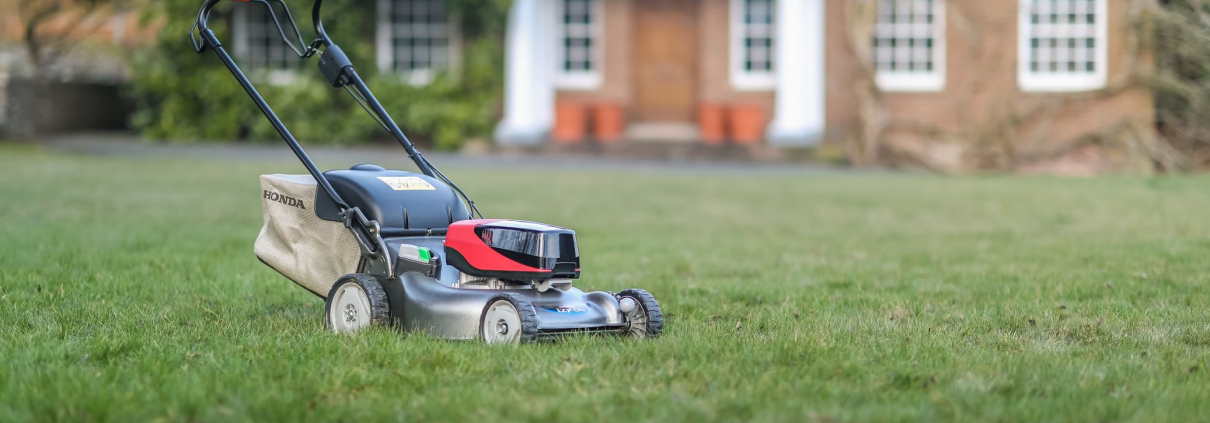
We look at the constantly evolving climate patterns that have and are continuing to change mowing habits in your garden for good. This all means you may be mowing earlier in the season and for longer – demanding a durable, reliable and high quality lanwmower, such as the izy-ON HRG 466 XB, to live up to the task ahead.

In the video, Tamsin shares her experience of using the Izy and how she’s found Honda’s all-electric, Cordless mower to be a revelation thanks its clean and quiet operation as well as it’s user-centric features such as the Versamow Variable, single-speed propulsion and Universal Battery system.

Watch the video at https://www.youtube.com/watch?v=P2Ipp5kuA7U&t=1s

For the latest industry news visit turfmatters.co.uk/news

Get all of the big headlines, pictures, opinions and videos on stories that matter to you.

Follow us on Twitter and Instagram for fun, fresh and engaging content.

You can also find us on Facebook for more of your must-see news, features, videos and pictures from Turf Matters.

How to help rainfall rescue project

How to help rainfall rescue project: If you’ve some time on your hands, here’s a UK rainfall project that’s caught our eye at Rain Bird Golf.

The weather is always a topic of conversation for Brits.  Can you, your staff or family members take part in the Rainfall Rescue project and add to our UK rainfall know-how?

How to help rainfall rescue project

How to help rainfall rescue project

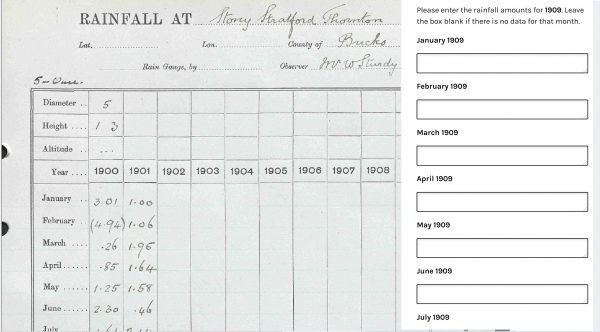
The UK has rainfall records dating back 200 years or so, but the vast majority of these are in handwritten form and can’t easily be used to analyse past periods of flooding and drought. Professor Ed Hawkins is a Reading University scientist who has run a number of “weather rescue” projects but this is the biggest yet.

The Rainfall Rescue Project is seeking volunteers to transfer hand-written data to online spreadsheets.

The project is looking to fill the yawning gap in UK digital rain gauge records between the 1820s and 1950s.

Each of the 65,000 scanned sheets contains monthly rainfall totals for a particular decade at a particular station, approximately three to five million data points in all. If Prof Hawkins’ team can convert this information to a digital format, it could lead to a much better understanding of the frequency and scale of big droughts and floods. And, that will assist with planning for future flood and water-resource infrastructure.

For example, many across the country had a sodden start to the year because of heavy rainfall. Meteorologists suspect October 1903 was just as bad, if not worse, but unfortunately, because all the rainfall data from that time was hand-written, it’s not possible to analyse this data. Likewise, there were some very dry springs and winters in the 1880s and 1890s. Britain had six or seven very dry winters and springs on the trot. If that happened today, it would probably cause serious problems for water companies because they rely on wet winters and wet springs to recharge reservoirs.

Prof Ed Hawkins explains, “Water companies have to plan for a one-in-100 or one-in-500-year drought but we’ve only got 60 years of very dense digital data, and so it’s very hard for them to come up with reliable estimates. We know there are periods in the past that, if they happened again, would probably break the system. The same is true for very heavy rainfall and floods.

You’re not required to rummage through old bound volumes; the Met Office has already scanned the necessary documents – all 65,000 sheets. You simply have to visit a website, read the scribbled rainfall amounts and enter the numbers into a series of boxes. If you do just a couple of minutes every now and then – that’s great,” said Prof Ed Hawkins. “If you want to spend an hour doing 30 or 40 columns – then that’ll be amazing. But any amount of time, it will all add up and be a tremendous help.”

This can literally take 5 minutes – why not use your tea-break?
Take part in the Rainfall Rescue project here.

If you choose a particular year to work on, why that year? Is it the year your golf course opened or the year you held your most memorable tournament? Share your story on Twitter with #rainfallrescueUK. Tag@rainbirdgolfuk and we’ll share your story too!

Jimmy Sandison – Regional Golf Sales Manager – UK, Ireland, Iceland and Scandinavia

For the latest industry news visit turfmatters.co.uk/news

Get all of the big headlines, pictures, opinions and videos on stories that matter to you.

Follow us on Twitter and Instagram for fun, fresh and engaging content.

You can also find us on Facebook for more of your must-see news, features, videos and pictures from Turf Matters.

How Turf Changed Tennis

How Turf Changed Tennis: The STRI’s Mark Ferguson explains how an improvement in the grass deployed on tennis courts changed the way in which the game was played, writes Scott MacCallum.

Remember back to the Wimbledons of the 70s and 80s. There was little British involvement beyond the second round; in the second week the courts looked like a yellow massive “T” surrounded by varying shades of green; and, for the men at least, a rally of over five shots was something of a novelty.

How Turf Changed Tennis

It was the days of Ilie Nastase, Bjorn Borg, Jimmy Connors, Roscoe Tanner, and the man with the best name in the sport – Vitas Gerulaitis. It was all white balls and wooden racquets. It was also the days of the “You cannot be serious!” and “Chalk dust blew up!” moments, and the bad bounce.

To a significant degree it was the bad bounces which forced players to adopt a serve and volley approach, rather than remain at the back of the court trying to work openings but risk a low bounce ruining all the great lead up work. Racquet technology improved dramatically in the 80s and led to the grass court game becoming dominated by big servers. This meant that the game was dominated by short rallies and became predictable.

That was all to change in the 90s.

The STRI had always been involved with Wimbledon on an advisory basis, but it was in the early 90s that they became more heavily involved with the All England Club and The Championships.

As part of that a whole raft of research, surveys and botanical assessments of the courts were carried out – a programme which continues to this day.

“The most important trial was the ‘Grasses for Tennis’ trial which was set up in 1993,” explained Mark Ferguson, the STRI’s Research Manager.

“What quickly became apparent was that there were better grasses out there which could be used on the courts.

That wasn’t the fault of anyone as no research had been done prior to that and new breeding technology had only recently brought in new varieties.”

The new cultivars of perennial ryegrass provided a much better surface. More consistent than the old seed mixtures that had been based on golf course grasses such as bent and fescues, which quickly became invaded with annual meadow-grass.

“At the start of The Championships, the surface had a low bounce due to the cushioning effect of the poa, but as it wore down (to avoid using out twice?) whole plants kicked out, leaving bare patches which led to unusually high bounces. This encouraged players to keep rallies short.
How Turf Changed Tennis

With the arrival of the new rye grasses the game changed, the courts became much more consistent and players were confident enough to play from the back of courts which performed a bit more like hard courts, albeit the ball came through much more quickly.” explained Mark, who has been STRI’s Mr Wimbledon for 13 years.

“The work that has been done on grasses has played a big part in the way the game has been played.”

The current Wimbledon mixture is supplied by Limagrain and has been used for the last 10 years. It comes from three cultivars – Melbourne, Malibu and Venice.

“Breeding has hit a bit of a ceiling, improvements are now more marginal. Ryegrasses have become so good now that it is difficult to genetically engineer something which is better. There are some coming through and there are some excellent companies out there which have had great success in trials and they are tested at Wimbledon as part of the trial work.”

As part of Mark’s wider role, he is involved with the Lawn Tennis Association, ensuring that all the venues used by the LTA receive support and advice.

This is important as a few years ago the future of grass court tennis was in some doubt particularly with the US Open moving away from grass courts in 1975 and the Australian Open following in 1988.

“Funnily enough I’ve just finished writing an article called the ‘The Rise and Fall and Rise Again of Grass Courts’.

When tennis became a sport everyone played on grass. Clay became an alternative in Europe and then in the 70s and 80s we got the hard courts as the game became much more fashionable. These courts were much more maintenance friendly, although I only recently learned that the US Open courts are resurfaced every year,” explained Mark, adding that the ITF now recognise 10 official surfaces but there are hundreds of variants within them.

Mark spends time visiting lawn tennis clubs up and down the country offering advice and support at places which don’t have large budgets – perhaps a one-man band looking after the courts. It is part of the LTA’s use of the revenue – £40 million a year is the latest quoted figure – which comes from The Championships.

“They can’t afford to do everything they would like, but they are doing their best to prepare a good surface and we can really help these people.

“There has to be a grass court legacy within the UK for Wimbledon to survive as a grass court tournament. There has to be a grass court season so that players can become accustomed to the grass each year and that Wimbledon doesn’t become a grass court tournament in isolation,” explained Mark.

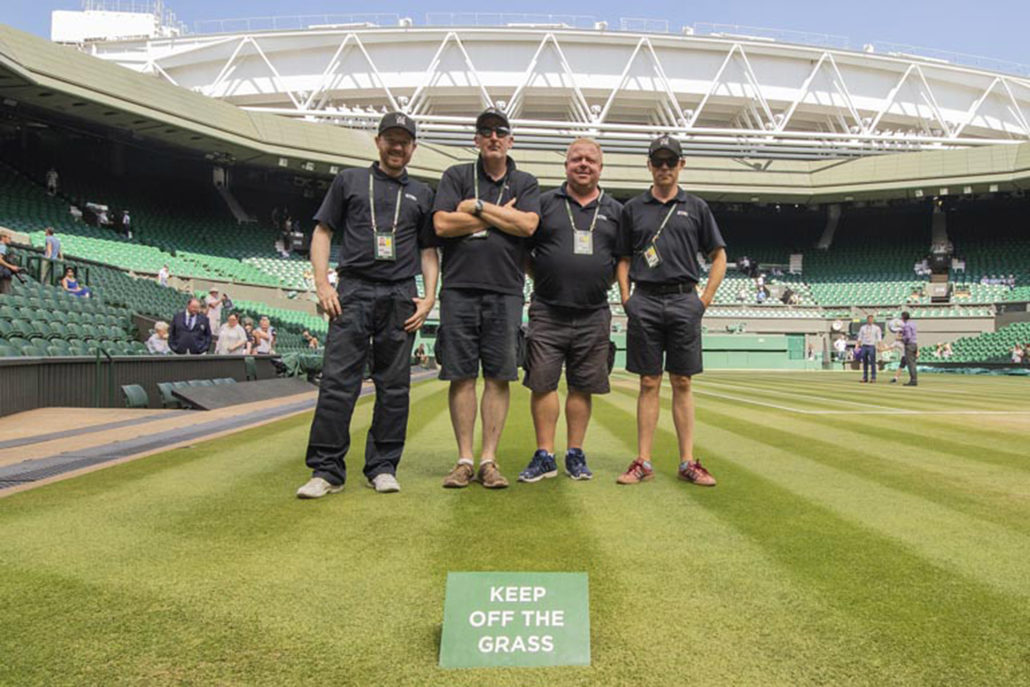
Today’s Wimbledon is a massive sporting event – Mark believes that it is the biggest annual sporting event in the world – and Mark and his four strong team attend from the week in advance of The Championships each year.
How Turf Changed Tennis

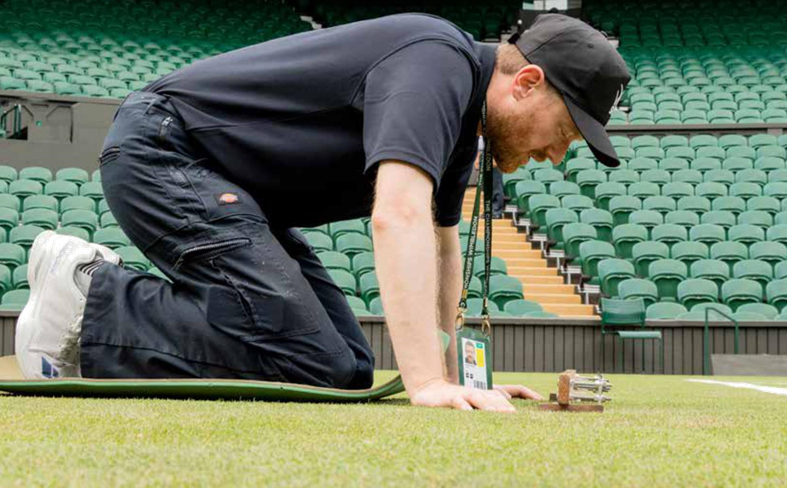
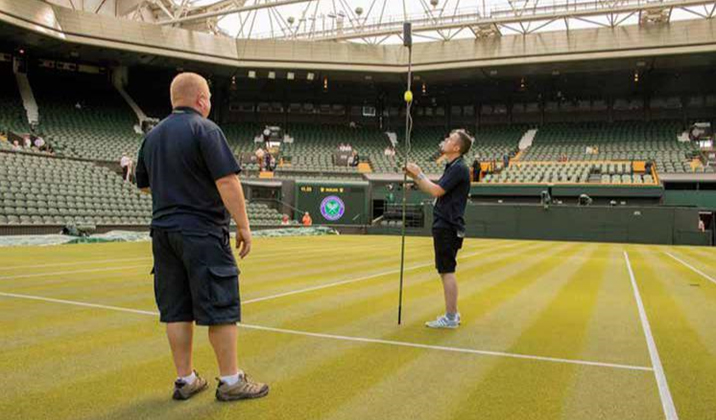
They take daily measurements on each court, including practice courts and the qualifying courts at the Bank of England Sports Club, using the famous old Clegg impact hammer, to measure surface hardness. Soil moisture readings, ball bounce, chlorophyll index and live grass cover is also measured.

“To measure live grass cover we go to the same eight areas on each court, every day and take a count of live grass, that’s 800 spot identifications per court, per day.”

All measurements are processed and made available to Neil Stubley to direct specific management on Championships and practice courts. If, for example, a player questions the playing quality of a court, the measurements can prove that surface characteristics are consistent with other courts and other Championships.

“We have readings for every court going back to the 1990s so we can demonstrate objectively how a court is performing compared to previous years.”

Mark is a friendly, interesting and open interviewee, but there was one question which elicited a more cautious response than the others.

“Can we say now that the courts are measurably better than they were a number of years ago?” That was the question.

“I hate to use the phrase ‘better than ever’ as it is a real hostage to fortune and can become a stick to beat you with. We aim for surface characteristics to fall within certain parameters, but there are a number of factors that can influence how courts play, the weather is an obvious one, also hours of play, type of play etc”.

“Last year for example the two men’s semi-finals went to five hours 15 minutes (Djokavic-Nadal) and six hours 36 minutes (Anderson-Isner) and that put so much wear into Centre Court for the final two days. A year before there were much shorter semis and the wear would have been much less. However, Centre Court still played great for the final weekend.”

By the same token the Centre Court roof has not had a real impact on the day-to-day condition of the surface, but in another way, it does make a difference.
How Turf Changed Tennis

“The roof on Centre Court is at the north end so it doesn’t impact in terms of shade but what the roof does bring is continuous play when the rain comes. Live TV want play all the time so there is a temptation to overuse the court, and it needs to still be in good condition on day 13. Other courts are brought out of play as the fortnight progresses and there are fewer matches to play.”

With the No.1 Court roof coming into use at this year’s Championships the Centre Court workload can be managed a little more easily.

Mark is seen very much as part of the Wimbledon team, travelling down from his base in Bingley once a month throughout the year and more regularly as The Championships approach and he works very closely with Neil and his team.

Mark is immersed in tennis and doing what he can to ensure that the traditions and beauty of the grass court game are maintained, but he certainly doesn’t see it as a chore.

“For me it’s not just another job. It is an absolute pleasure and a privilege to be involved with Wimbledon. It’s an honour to be down there each year and to have an input in a positive way on what goes on.”

It’s fair to say that with Mark’s expertise and the talents of Neil Stubley and his team the future of Wimbledon is secure for the long, long term.

How To Choose A Waterer

How To Choose A Waterer: Plants and trees can be expensive to replace, and keeping them healthy is the passion and expertise of SCH Supplies. As manufacturers of waterers, no one understands the importance of adequate hydration better.

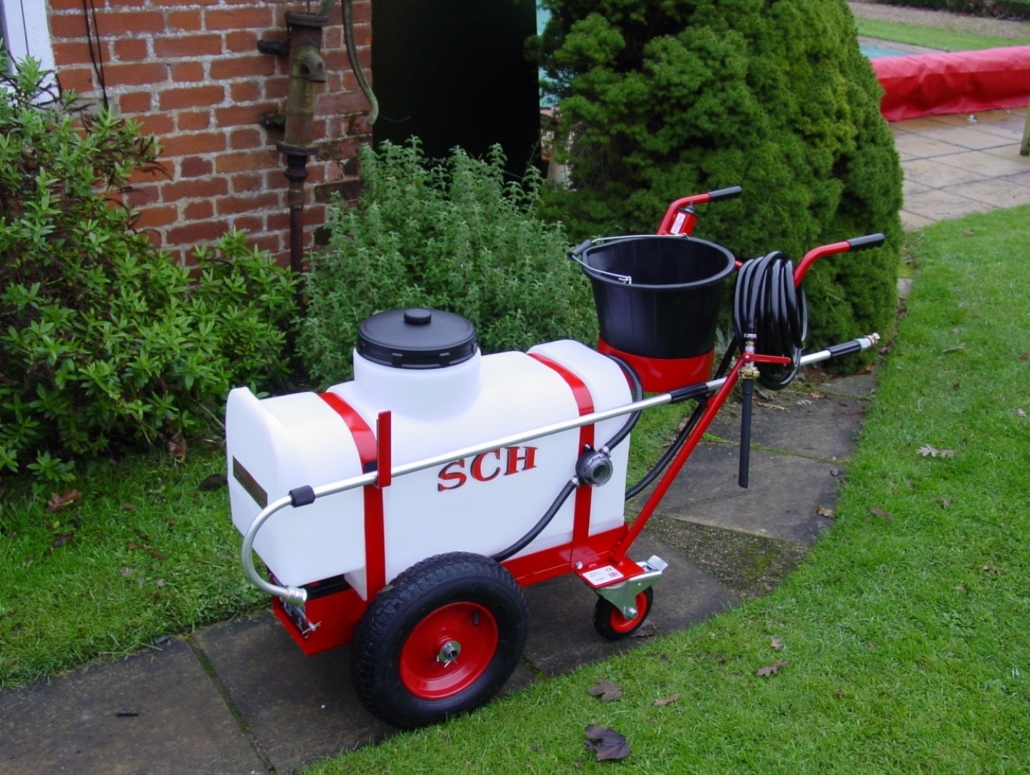
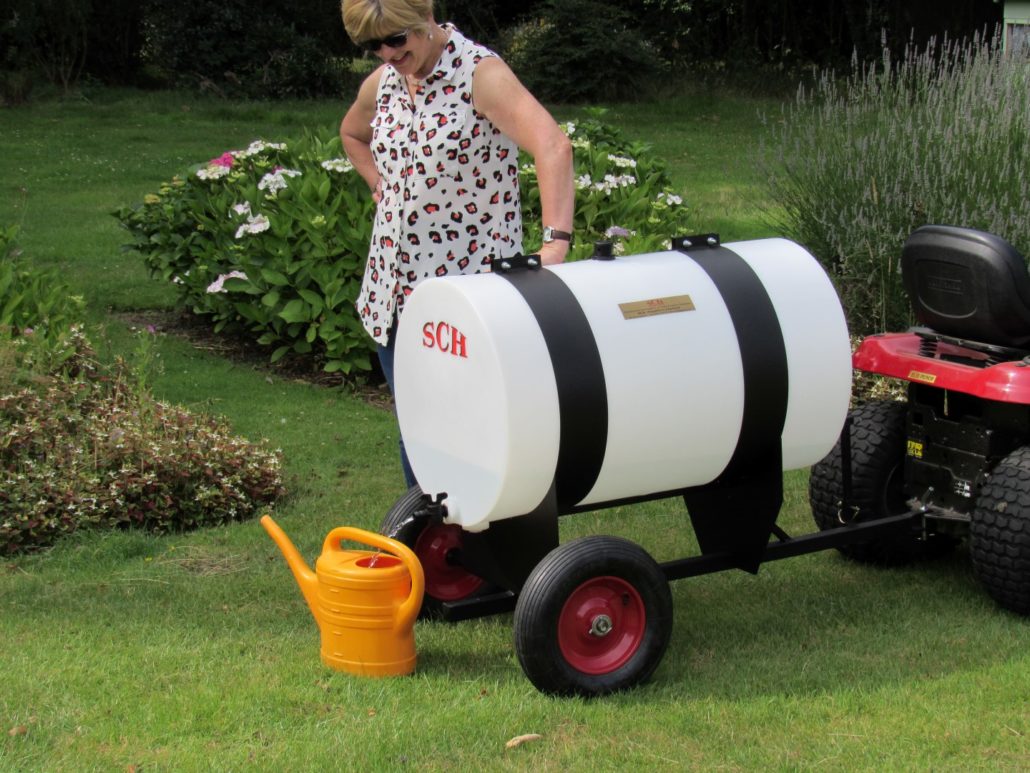
SCH manufacture essential plant saving watering units, with capacities from 50 to 2000 litres. These watering units are typically towed behind a ride on lawnmower or a small tractor, but some can be pulled along by hand.

How To Choose A Waterer

An unpowered waterer is typically used to refill watering cans. They are also suitable for flood watering as the valve can be opened and left until the vegetation is sufficiently hydrated. If the waterer is fitted with a water bowl and float valve, it is ideal for livestock that are far from a fixed water source. However, if you need to get your watering done without delay, a powered waterer is for you. A powered waterer lets you spray huge quantities over vast distances, and flood watering can be done in a fraction of the time.

How To Choose A Waterer

The next decision to be made is between a petrol engine and electric motor. There are many different sizes of both, however petrol will typically outperform an electric motor of similar size when it comes to flow rate. A petrol engine is best suited for the groundsman that needs to go all day; as long as you keep a container of fuel with you, the waterer can be used with continuously, whereas a battery powered waterer will need recharging. With some waterers, it is possible to attach your electric motor straight to your towing vehicles battery, and if your vehicles alternator is sufficient, it can power your electric motor for a significant time. The benefits of an electric motor include its low noise output, which is essential for those that enjoy peace and quiet.

How To Choose A Waterer

The style of wheel is very important on a waterer. Large low ground pressure flotation wheels help reduce track marks in the grass, and give the trailer stability and cushioning when on rough unfriendly ground. Two sets of wheels are required on some of the larger bowsers which allow them to stay upright and stable when detached from the towing vehicle. Fast tow wheels, paired with a road legal chassis is required when the tank is to be taken on the road. A baffled tank is essential for on road use, as it prevents the water from causing dangerous imbalances during turning and acceleration.

Skid mounted waterers are perfect if you already own a trailer or have a vehicle with a flat bed. These waterers can be easily stored when not in use, and most can be maneuvered on and off the vehicle unassisted.

Many powered waterers are designed to be used with a telescopic lance which can reach up to 6 meters. These are ideal to water hanging baskets. These are available in any combination of the above styles, and are popular with zoos, stadiums and leisure parks.

How To Choose A Waterer

Contact SCH for a free brochure featuring over 200 British products on 01473 328272, email sales@schsupplies.co.uk, or visit their website to find out more www.schsupplies.co.uk

For the latest industry news visit turfmatters.co.uk/news

Get all of the big headlines, pictures, opinions and videos on stories that matter to you.

Follow us on Twitter and Instagram for fun, fresh and engaging content.

You can also find us on Facebook for more of your must-see news, features, videos and pictures from Turf Matters.