Tag Archive for: May

No Mow May? Or mix up the monocrop lawn?

No Mow May? Or mix up the monocrop lawn?: The popularity of the environmental movement ‘No Mow May’ is growing like a damp lawn in the summer sun.

According to organisers Plantlife, the annual movement is aimed at providing a feast for pollinators, tackling pollution, reducing urban heat extremes, and sequestering atmospheric carbon in the soil.

No Mow May? Or mix up the monocrop lawn?

No Mow May? Or mix up the monocrop lawn?

As well as those vital pollinators, the campaign attracts its fair share of supporters, celebrity and otherwise.

Chris Packham recently took to social media to encourage his followers to buy his No Mow May t-shirts, and councils the length and breadth of Britain are clamouring to highlight their involvement with the initiative to bolster their environmental credentials with an easy win.

But does the annual campaign actually do any good for the environment and encourage an increase in pollinator numbers? Or is it just another example of greenwashing, something that makes people think they are doing good but in reality, has little real impact?

What’s in a lawn?

As someone who has specialised in growing turf for almost 40 years, grass is something of an obsession for me.

What I have learned in that time is that just letting a lawn grow out for a few weeks in spring rarely, if ever, leads to the ‘wildflower’ effect Plantlife seems to suggest in the images on its website.

So, what actually happens if you don’t cut your grass during May? The answer to this depends largely on what’s in your lawn to begin with.

If it’s been there a very long time and has not been treated to remove ‘weeds’, there is a chance that other species will emerge as a result of reduced mowing, leading to an increase in biodiversity in your lawn.

This, in turn, may well increase the number of insects that visit your garden during May, including those all-important pollinators.

However, even if this is the case, do not expect the emergence of a bright, multi-coloured, wildflower meadow effect, as so much of the marketing material appears to imply.

A few dandelions and daisies might come through, adding a welcome splash of colour, as well as some clovers, but anything beyond this is unlikely to materialise simply by leaving your grass alone.

This scenario also doesn’t represent the majority of lawns in the UK. Most are established by laying a modern cultivated turf that contains a dense mixture of dwarf perennial ryegrasses and fescues. Left to grow out, they simply get longer and stragglier while trying to put up seed heads.

Not a pretty sight and no biodiversity increase at all. After all, these turf mixtures are designed to be mown regularly and look neat and pristine with perfect stripes, not to increase insect numbers.

Raising awareness?

Of course, many might argue that despite creating few tangible benefits for wildlife, No Mow May drives awareness of biodiversity loss and that has to be a good thing.

Well, perhaps, but by positioning it as the solution, it may well do the opposite of what it is trying to achieve.

After all, those taking part will get to the end of May thinking they have done their bit for wildlife when in fact nothing significant has been achieved. Worse still, they then cut the lawn, immediately undoing any benefits that were achieved.

Improve biodiversity by improving biodiversity

So, if it’s time to say no to No Mow May, what can people do to improve biodiversity in their gardens and provide a home for wildlife?

The answer is in the question. If you want to increase the variety of creatures attracted to your garden, start by increasing the variety of plants in your garden.

Use the margins of your lawn to produce a full wildflower effect, which can be achieved via a wildflower turf or by sowing wildflower seeds. Or, for those who want to go a step further, replacing your lawn with a species-rich turf that includes a blend of hardy grasses and wildflowers to create a truly biodiverse area.

Not only will this be great for pollinators, but it will still stand up to the daily rigours of being walked on and having children ride bikes and play on it.

Time to mix up the monocrop lawn?

So, while no more No Mow May might be a good first step, perhaps a better one would be to mix up the monocrop lawn and replace parts of it with a richer variety of species. You can still have your strips, but giving over part of your garden to an area rich in plants will attract pollinators throughout the whole of the summer.

If everyone with a garden were to do this, perhaps we might truly start to reverse the worsening biodiversity crisis and turn our outdoor spaces into the wildlife havens they have every potential to be.

But that will never be achieved within the tight confines of a single month.

For the latest industry news visit turfmatters.co.uk/news

Get all of the big headlines, pictures, opinions and videos on stories that matter to you.

Follow us on Twitter and Instagram for fun, fresh and engaging content.

You can also find us on Facebook for more of your must-see news, features, videos and pictures from Turf Matters.

If you mowed in May – that’s ok

If you mowed in May – that’s ok: If you didn’t follow the no-mow May advice don’t be alarmed.  One of Britain’s foremost lawn experts confirms that regular mowing is good for both the lawn and the environment. 

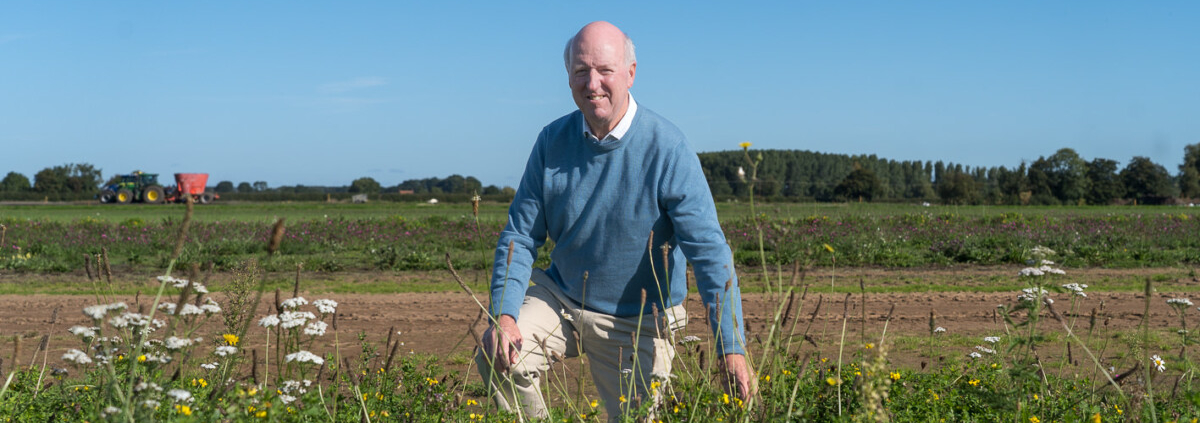
Richard Salmon (photographed below), the founder of ProLawnCareUK, is adamant that simply adjusting the mower and using it more frequently is good for both nature and the grass.

If you mowed in May - that's ok

If you mowed in May – that’s ok

“We have 20 million plus domestic lawns in the UK.  The vast majority are in inner city and urban areas where they are a vital green lung.   Anything we can do to keep them healthy is good for nature and humans, and regular mowing is key to this,” says Richard.

“I have no idea how many people continued to mow in May but they were doing no harm at all to the environment and really benefitting their lawns,” he added.

“Some wildlife feeding on lawns eat insects or seed, others prefer worms and other invertebrates.   Regular mowing will still allow clover and other flowering weeds to prosper but leave the grass longer and don’t scalp it.  Weekly mowing encourages the grass to tiller or thicken out.  This produces a greater green leaf area per m2 which, in turn, absorbs more Co2 during photosynthesis, keeping lawns green and releasing more oxygen to atmosphere.  The more dense the lawn the better for all food sources.”

“Not cutting the grass and simply leaving it to nature is not good for lawns or wildlife.  Leaving it is of value only to seed eating birds, although it takes several months of growth for the seeds to mature and, in any case, seed can be supplemented at the bird table.  As the uncut grass grows it discolours, significantly reducing photosynthesis which, in turn, results in less oxygen being produced.”

Richard promotes more regular cutting but not too short.  He also supports, where possible, instead of not mowing your lawn, why not dedicate an area for wildlife that benefits the insects and wildlife for 12 months of the year rather than a vain effort for 1 month ? Try leaving a small area of the garden to sow a wild flower mix which is bee friendly and can be left all year to provide a more valuable haven for a greater variety of fauna.

Richard Salmon has spent his entire career involved in lawncare and is one of the country’s leading authorities on the subject.  He is also a leading expert on the environmental value of grassland and is on record as confirming that: “Lawns lock-in carbon from the atmosphere, much like trees, and play a vital role in cleaning and cooling our environment.”

For the latest industry news visit turfmatters.co.uk/news

Get all of the big headlines, pictures, opinions and videos on stories that matter to you.

Follow us on Twitter and Instagram for fun, fresh and engaging content.

You can also find us on Facebook for more of your must-see news, features, videos and pictures from Turf Matters.

John May Elected By Deere & Company

John May Elected By Deere & Company: The Deere & Company board of directors has elected John C May as a member of the board, effective immediately, and to the position of chief executive officer, effective November 4, 2019. May has served as Deere’s president and chief operating officer since April 2019.

“John’s record of success and proven leadership skills make him highly qualified to lead Deere and guide its success in the years ahead,” said Samuel R Allen, chairman and chief executive officer. “His experience in precision agriculture, information technology and overseas operations will be instrumental in driving the company’s digitalisation journey and extending its success in agricultural and construction equipment.”

John May Elected By Deere & Company

Allen will continue as chairman of the board of directors after he steps down from the CEO position. May becomes the 10th chief executive in the company’s 182-year history.

The 50-year-old May joined Deere in 1997 and became part of the senior management team in 2012 as president, agricultural solutions and chief information officer. Last year he was named president, worldwide agriculture & turf division, with responsibility for the Americas and Australia, the global harvesting, turf & utility and crop care platforms, and the intelligent solutions group.

Earlier in his career, May headed the company’s China operations, served as factory manager at the Dubuque (Iowa) Works, and was vice-president of the turf and utility platform.

A native of Maine, May holds a bachelor’s degree in health information management from the University of New Hampshire and a master’s degree in business administration from the University of Maine.

For the latest industry news visit turfmatters.co.uk/news

Get all of the big headlines, pictures, opinions and videos on stories that matter to you.

Follow us on Twitter and Instagram for fun, fresh and engaging content.

You can also find us on Facebook for more of your must-see news, features, videos and pictures from Turf Matters.

Deere & Company Elect John May

Deere & Company Elect John May: Deere & Company has announced that its Board of Directors elected John C May, 49, as President, Chief Operating Officer, effective from 1st April 2019. May will be responsible for leading Deere’s efforts to maximise operational excellence throughout the company.

May has been with Deere for 22 years and joined the senior management team in 2012 as President, Agricultural Solutions and Chief Information Officer. Last year he was named President, Worldwide Agriculture & Turf Division, with responsibility for the Americas and Australia, the Global Harvesting, Turf & Utility and Crop Care Platforms, and the Intelligent Solutions Group. Earlier in his career, John headed the company’s China operations, served as factory manager at the Dubuque Works in Iowa, and was Vice President of the Turf & Utility Platform.

Deere & Company Elect John May

“John’s record of success and proven leadership skills make him highly qualified for this broader role,” said Samuel R Allen, Chairman and Chief Executive Officer. “In addition, his leadership of the company’s precision agriculture initiative and experience as chief information officer will serve him well as Deere moves ahead on its digitalisation journey.”

Deere also announced the election of three other leaders to new positions, effective from 1st April. These include:

  • Cory J Reed, 48, to the position of President, Worldwide Agriculture & Turf Division, Americas and Australia, Global Harvesting and Turf Platforms, and Ag Solutions. Reed joined the company in 1998 and most recently has been President, John Deere Financial.
  • Rajesh Kalathur, 50, to the position of President, John Deere Financial and Chief Information Officer. Since joining Deere in 1996, Kalathur has held positions in finance, business development, logistics, operations and marketing. Since 2012, he has been a member of the senior leadership team as Senior Vice President and Chief Financial Officer. He assumed the added responsibilities of Chief Information Officer in 2018.
  • Ryan D Campbell, 44, to the position of Senior Vice President, Chief Financial Officer. Campbell joined John Deere in 2007 and has held a number of management positions within the finance function. He became Vice President and Comptroller in 2016 and last year was named Deputy Financial Officer.

For more information, visit: www.JohnDeere.co.uk

For the latest industry news visit turfmatters.co.uk/news

Get all of the big headlines, pictures, opinions and videos on stories that matter to you.

Follow us on Twitter for fun, fresh and engaging content.

You can also find us on Facebook for more of your must-see news, features, videos and pictures from Turf Matters.

New H&S Guidelines May Save Lives

New H&S Guidelines May Save Lives: An updated set of health and safety guidelines aimed at turf professionals ‘could save lives’ in the wake of a major review.

The Greenkeepers Training Committee (GTC) has launched a free-to-use web-based platform created by the Xact Group that aims to ensure golf club employers un­derstand their roles and responsibilities towards health and safety with regard to golf course maintenance.

New H&S Guidelines May Save Lives

In 2017, the GTC’s Board of Directors commissioned a review of the highly-acclaimed Health and Safety Guidance Notes and the committee is pleased to announce the release of the updated guidelines.

The GTC first worked together with the Health and Safety Executive (HSE) in 1994 to produce the first edition of the Health and Safety in Golf Course Management and Maintenance booklet. By 2000, the health and safety consultants to the GTC, Jon Allbutt and John Davies, were commissioned to review the materials, in line with the many changes in legislation that were happening at that time.

While much of the guidance and best practice was still relevant, the GTC felt it appropriate to review and update and refresh the look and accessibility of the guidance notes.

The GTC consulted with Chris Hammond, health and safety director at The Xact Group, to build on what has been produced before and help to design and implement a web-based platform. The Xact Group work with BIGGA, England Golf, Scottish Golf and Wales Golf in the build and support of their health and safety online systems and provision of additional onsite health and safety and human resources services to member clubs.

GTC Chairman Alistair Booth said: “The aim of the newly-published guidance notes has been to give anyone at a golf club, or associated with a golf club, an overview of their roles and responsibilities towards health and safety and best practice. They have been moved to a web-based platform, making them easier for everyone to access.

“With increasingly-complex machinery and other tools being used on golf courses, these guidelines are hugely important in ensuring all involved in the management of a golf club understand their specific responsibility in keeping staff and golfers safe. As such, if these new guidelines are followed correctly, they could save lives or at least reduce the risk of serious incidents taking place around the golf course environment.”

The web-based platform is packed full of information and guidance on all aspects of golf course management and maintenance, covering areas such as: roles and responsibilities; legislation; greenkeeping safety; events; clubhouse management; establishing a health and safety management system.

The new website can be accessed by visiting the GTC’s website and clicking on the Health & Safety link. Visitors who require further guidance, such as risk assessments and template documentation, can consult their relevant full guidance Health & Safety website, such as BIGGA, England Golf, Scottish Golf or Wales Golf.

The GTC Work Equipment – Record of Training and Competencies wallchart has been a feature in greenkeeping facilities for a number of years. The wallchart is used to aid with the recording of staff training and competence and will continue to be a useful tool. The wallchart can be purchased from the GTC shop online.

For the latest industry news visit turfmatters.co.uk/news

Get all of the big headlines, pictures, opinions and videos on stories that matter to you.

Follow us on Twitter for fun, fresh and engaging content.

You can also find us on Facebook for more of your must-see news, features, videos and pictures from Turf Matters.