Tag Archive for: Of

Wilson Top Of The Turf League

Wilson Top Of The Turf League: Eric Wilson from Whitby Town has been named as the best groundsmen in the Northern Premier League, along with Non-League’s national runner-up at the Football Association’s 2018 Groundsmen of the Year Awards.

Pictured last season after being highly commended by the judges of the annual contest to honour Non-League’s top turf stars for his work at the Turnbull Ground, Wilson easily outstripped that this time around to collect the EVO-STIK League’s top honour and take second spot nationally at Steps 3 to 4 of the National League System behind Tonbridge Angels.

Like the groundsmen and women at the number one clubs in the Isthmian League, Southern League and National League, Wilson and the Seasiders are also looking forward to banking cheques for £12,500 to spend on ground maintenance from Budweiser, the new sponsor of the annual accolades.

The EVO-STIK League Premier Division club and Wilson are no strangers to honours after being named in June alongside Trafford and Loughborough Dynamo at the NPL’s end of season awards as one of the inaugural winners of the GreenFields Pitch of the Year accolades.

Matlock Town’s Richard Lomas left the FA’s St George’s Park on Thursday with plenty to shout about too, second place behind Wilson, both in the NPL and nationally. Elfyn Jones at Colwyn Bay will have an extra spring in his step around Llanelian Road as he prepares for the new season after taking third spot in the EVO-STIK League and being highly commended nationally.

Regular finalists Mick Grimmer at Stocksbridge Park Steels and Witton Albion’s Peter Robinson, along with last season’s NPL number one, Belper Town’s Phil Varney, all left the event with high commendations from the the FA’s judging panel of expert professional groundsman from the English Football League and Premier League.

The league’s representatives were honoured after a series of on-site assessments at nominated grounds last season that not only looked at the quality of the pitches but also took into consideration the skills and knowledge of the finalists, their ambitions for the pitch, the resources available, pitch use and the amount of time they were able to work on their surfaces during one of the worst winters and toughest seasons in years.

More than a 100 groundsmen from all levels of the game were rewarded for their work at this season’s ceremony in front of their peers. EVO-STIK League representative Paul Hatt, along with Brent Clayton from the NPL’s sponsors at the Frank Whittle Partnership, were also at the prestigious state-of-the-art venue near Burton to congratulate the 2018 winners.

Guests at the 17th running of the annual awards also got the chance to quiz a panel of professional groundsmen at a Q&A session and enjoy a presentation from Mark Pover, the FA’s head of facilities and investment, before lunch and the awards ceremony.

* Official pitch partners GreenFields agreed a new three year deal with the EVO-STIK League in June after honouring their inaugural Pitch of the Year winners at Blackpool’s Hilton Hotel. Appointed last summer as the NPL’s official pitch partners for the historic 2017-18 50th anniversary campaign, the sports turf specialists are looking forward to working with clubs until at least the end of the 2020-21 season.

Click here to read the original article

For the latest industry news visit turfmatters.co.uk/news

Get all of the big headlines, pictures, opinions and videos on stories that matter to you.

Follow us on Twitter for fun, fresh and engaging content.

You can also find us on Facebook for more of your must-see news, features, videos and pictures from Turf Matters.

Benefits Of Germinal’s New Ryegrass

Benefits Of Germinal’s New Ryegrass: On Thursday 6th September, Germinal will be attending the FutureScape Scotland show, incorporating ScotHort, at the Royal Highland Centre, Edinburgh, with a focus on its upgraded range of landscaping mixtures, with a particular emphasis on the inclusion of new-for-2018 creeping perennial ryegrass cultivar, Zurich, which offers increased wear tolerance and fast sward recovery.

Zurich scores 6.5 for live ground cover and 6.3 for visual merit, making it one of the best-performing creeping perennial ryegrasses on Table S1 of the BSPB’s Turfgrass Seed 2018 booklet.  It is a fine-leaved variety that also exhibits high resistance to insects and nematode attack due to naturally high endophyte levels, as well as good persistence and a creeping growth habit which aids sward recovery.

Benefits Of Germinal's New Ryegrass

Zurich now features as standard in three of Germinal’s landscaping seed mixtures; A3 Embankments and Drought, A18 Road Verge & Embankments and A19 All Purpose Landscaping (see below for full specifications).

“A3 has traditionally been the industry’s go-to seed mixture for stabilising embankments due to its high percentage of creeping fescues and bentgrasses which bind the soil together,” explains Richard Brown, Amenity Sales Manager for Germinal.  “The addition of Zurich gives this popular seed mixture the added benefits associated with a perennial ryegrass: speed of establishment, the ability to germinate in colder temperatures, and the ability to rapidly recover from damage caused by excessive wear.  For A18 and A19, the addition of Zurich further enhances the ability of these mixtures to recover from wear with minimal intervention.

“Zurich exhibits an excellent creeping habit, which binds manufactured soils together quickly and effectively thereby preventing gully erosion and loss of soil.  It’s ability to self-regenerate gives added protection during the winter and slowly helps damaged swards to repair themselves with minimal additional physical intervention.  It also makes the improved seed mixtures more effective in cooler temperatures at the beginning and end of the growing season.”

Germinal’s landscaping seed mixtures can be ordered online from the company’s new website (www.germinalamenity.com) which also contains all the information landscape architects need to optimise the performance of their amenity facilities: the website includes complete specifications and usage guides for Germinal’s Grade ‘A’ range of landscaping grass seed and wildflower mixtures for everything from low maintenance reclaimed land to saline road verges, shaded habitats, fine lawns and an array of natural habitats.  All product details can be easily cut and pasted into external documents, making it simple for landscape architects to insert them directly into the appropriate project specification.

“As well as constantly investing in research and development to bring first class grass and wildflower seeds and turf care products to the landscaping sector, we are also conscious of the constant need to provide the industry with the latest news and advice,” Richard Brown adds.

Benefits Of Germinal's New Ryegrass

“The new website has therefore been developed to make it easier for new and existing customers to keep abreast of our developing range of products and to enable them to specify the most appropriate products to suit each site’s individual requirements.

“We’ve populated the new website with a collection of advice guides and video resources covering a range of useful topics from simple over-seeding and sowing ‘how-to’ guides, to more detailed explanations of the importance of key success factors such as soil pH, the use and application of macro and micro nutrients and how to physically manage recently renovated and established swards and amenity landscapes.”

The website also contains a selection of standardised fertiliser plans – written and designed by Germinal’s FACTS (Fertiliser Advisers Certification and Training Scheme) qualified experts – to enable everyone from novice gardeners to professional turf growers to get the best results from their amenity facilities.

The new www.germinalamenity.com website also features a ‘Product Selector’ tool which has been designed to make it as easy and simple as possible for landscape architects to find the most appropriate grass or wildflower products for each project’s specific needs.

A range of CPD resources and seminar details has also been added: landscape architects can contact their local Germinal technical specialist who will be happy to visit them to provide more detail on a range of topics such as how to establish and maintain wildflowers and understanding the latest plant nutrition protocols.

For the latest industry news visit turfmatters.co.uk/news

Get all of the big headlines, pictures, opinions and videos on stories that matter to you.

Follow us on Twitter for fun, fresh and engaging content.

You can also find us on Facebook for more of your must-see news, features, videos and pictures from Turf Matters.


The Power Of Deep Aeration

The Power Of Deep Aeration: The concept of one metre deep aeration, to relieve compaction and improve drainage, really needs to be seen in action to appreciate the long-term benefits. A long and very hot summer with little amounts of rain will, without doubt, lead to compaction and drainage problems on the sports pitch, the golf course and bowling green and inevitably in amenity areas and gardens. Terrain Aeration have produced a new video that shows precisely how to alleviate the problem, using the proven Terralift system that has been in operation for over twenty-five years. As soon as the heavy rains come areas of turf compaction and panning become self-evident with large stretches of standing water.

Normal aeration and scarifying are of course essential to promoting a healthy sward but the penetration isn’t deep enough to get to where the real problem lies. Go down a metre with a hollow probe, using a JCB breaker gun to penetrate the hard compaction in the soil, and release compressed air up to a maximum of 20Bar (280psi). This fractures the soil, creating and opening up the fissures that will allow the water to drain. Repeat the process on a staggered grid pattern at two metre spacings and you ensure each air blast interconnects the underground labyrinth of cracks and fissures.

The Power Of Deep Aeration

As you can see on the Terrain Aeration video, that is how the Terrain Aeration system works but it doesn’t stop there. Dried seaweed is injected on the tail end of the blast and this sticks to the walls of the probe hole and cracks. Over time it expands and contracts with the moisture content and maintains the drainage when the heavier rains fall. Water storing polymers can also be added at this stage as an extra insurance with water retention. The interconnecting system created also allows oxygen and nutrients to get to the roots, while the grass pushes them down to reach the deeper water supply and help promote top growth. The probe holes are back filled with porous Lytag aggregate and finished with the usual top dressing to encourage grass growth over the probe holes. In the case of the golf green, tee or sports pitch play can resume immediately.

Once treated, the area will benefit for many years to come as has been demonstrated by Terrain Aeration over the years for thousands of sports venues, golf courses, parks and amenity areas. The deep penetration process is used to great effect around trees, especially where the ground has become very compacted due to foot traffic. The Terralift system has treated such notable areas as the Royal Parks, Sir Harold Hillier Gardens and many National Trust properties. But it is equally beneficial in relieving compaction and creating drainage on formal lawns and even small gardens as well as sports pitches and golf greens. You can see the video at: https://youtu.be/uw9k35PA5kM

For the latest industry news visit turfmatters.co.uk/news

Get all of the big headlines, pictures, opinions and videos on stories that matter to you.

Follow us on Twitter for fun, fresh and engaging content.

You can also find us on Facebook for more of your must-see news, features, videos and pictures from Turf Matters.


The Value Of Irrigation Technology

The Value Of Irrigation Technology: When the Madejski Stadium, home to Reading Football Club and London Irish Rugby Club, underwent its first major pitch reconstruction for ten years, contractors, MJ Abbott and Premier Pitches, worked closely together during the time-critical close season over a six-week period. The venue became the first to have a dual-use pitch with the added durability of the SISGrass hybrid system turf technology.

After removing around 15 miles of existing pipework, MJ Abbott completely reconstructed the pitch, taking the old one out and starting from the bottom up, reshaped all the sub-base levels, reinstalled the drainage, undersoil heating and rootzone layers. Premier Pitches took responsibility for pitch cultivation and seeding. The company also maintains their involvement by way of annual pitch renovation.

The Value Of Irrigation Technology

During the later stages of construction employing effective irrigation to the grass root zone was critical to enable the final pitch levels to be accurately graded and to allow for successful cultivation and seeding of the new surface. Nathan George, Contracts Manager at MJ Abbott was confident that selecting Rain Bird products for the new pitch’s irrigation requirements was the way forward: “The irrigation cycle is determined by both the weather in general as well as the effects of sun and shade caused by the inherent design of the stadium. We had a high level of confidence in Rain Bird irrigation technology for the project because of the overall quality, performance and versatility of the company’s products,” he says.

Rain Bird’s highly durable 8005 rotors were specified for the central area of the pitch and with their easily adjustable arc from 50° to 330°and 12 to 24.7 metre radius were well suited to the application. Featuring Rain Curtain™ nozzles, the 8005 rotors ensure optimum distribution and close-in watering resulting in superior irrigation uniformity.

Rain Bird’s 950E rotors were selected for the pitch perimeter as they are specifically designed to withstand the rigours of sports field irrigation applications, including hybrid grass. They offer full or part circle and irrigation up to 345° and feature a top adjustable pressure regulator, factory preset at 5.5 bar.

Rain Bird’s Site Control System, used by Adam Grantham Reading Football Club’s Grounds Manager and his team, can be controlled both through a PC and remotely through an iPad. It gives complete control over the irrigation and the flexibility to set up and match the irrigation cycles precisely to the prevailing and predicted weather.  The software provides a quick and easy way to build irrigation schedules and programmes based on set parameters. The system’s many advanced features include an interactive map interface that displays the position and operation of individual rotors, displaying real-time irrigation activity and for close monitoring of the system.

The Value Of Irrigation Technology

Adam Grantham commented: “The Rain Bird system is great and very user friendly, and can be as complex as you would like it to be. I have found it very easy to monitor moisture levels with the sprinkler system coverage being very consistent. The pitch is holding together well and receiving good feedback from the coaching staff and players”. From MJ Abbott’s viewpoint the success of the Madejski project was reflected by the fact that the company has gone on to secure further contracts from Reading FC for new training ground pitches.

Meanwhile when the decision was made to install a new playing surface and irrigation system before the start of the 2017-8 Premier League season at Newcastle United, a fast response and close cooperation between pitch contractors MJ Abbott and Premier Pitches was essential. As part of the project the club had to select a new fully automatic pitch irrigation system.

After removing the existing vegetation and old fibre root zone, MJ Abbott removed the existing lower sand layer to a suitable depth to expose the existing slits within the drainage system that was to be retained. An imported rootzone was laid to re-establish the original pitch levels, followed by cultivation and seeding carried out by Premier Pitches. The new pitch was then stitched with the SISGrass hybrid pitch system. The St James’ Park project was successfully delivered a week ahead of schedule.

For the new irrigation system, MJ Abbott had to take into account the particular conditions created by the configuration of the pitch within the stadium. Nathan George, Contracts Manager, explains:  “ The stadium design means that at certain times of the day, the southern end of the pitch is in full shade with the remainder in full sun. Complete control over individual sprinkler application rates was therefore essential. We knew from experience that Rain Bird offers high quality products for stadia applications in terms of rotors, sprinklers and automatic irrigation control systems so would be an excellent partner for this project.“ Rain Bird 950E valve-in-head sprinklers were selected for the perimeter and the corners of the pitch whilst 8005 pop up rotors were chosen for the central areas.

The Value Of Irrigation Technology

Integral to the new pitch is the SISGrass Hydrobox system which was developed specifically for use with pop-up irrigation systems, including Rain Bird. Nathan explains ” Hydrboxes are installed to all central pitch sprinklers. The box is filled with rootzone and stitched in the same configuration as the main pitch. To access the sprinkler for maintenance purposes, the Hydrobox is simply lifted out, leaving the sprinkler clear of any pitch construction. To reinstate the pitch surface around the head the Hydrobox is lifted back over the sprinkler and replaced into the hole.” The system not only makes maintenance much easier but also allows grass to grow right around the sprinkler head for an optimum playing surface.

Rain Bird’s IQ Cloud Platform, used in conjunction with an ESP-LXD controller fitted with a network communication cartridge, was selected to give the groundstaff a real time fully automatic remote irrigation control system. The installation can be managed remotely by a web enabled computer, tablet or smartphone connected to the internet.

The ESP-LXD controller enables employment of IQ-Cloud’s full suite of remote water management tools. Groundstaff know in real time which zones and irrigation systems are operating and can access information on flow rates and performance. Reports can be automatically created and shared, saving time and providing information on irrigation times, total water usage and other significant data. Automated e-mail alerts and alarms can be set up to help manage potential problems.

The overall result has delighted Eddie Rutherford, Stadium Manager, who says it is probably the best the pitch that the club has had since he has been there. The quick planning required and success of the project was helped by Premier Pitches’ long term experience at St James Park and Director Russell Latham also recognised the experience and expertise of MJ Abbott.  “ We have worked with MJ Abbott on pitch construction projects for over five years now. Their efficient and meticulous way of approaching a project from design and planning to delivery is everything that our key clients want to see.”

For more information, visit: www.rainbird.com

For the latest industry news visit turfmatters.co.uk/news

Get all of the big headlines, pictures, opinions and videos on stories that matter to you.

Follow us on Twitter for fun, fresh and engaging content.

You can also find us on Facebook for more of your must-see news, features, videos and pictures from Turf Matters.
The Impact Of A Heatwave

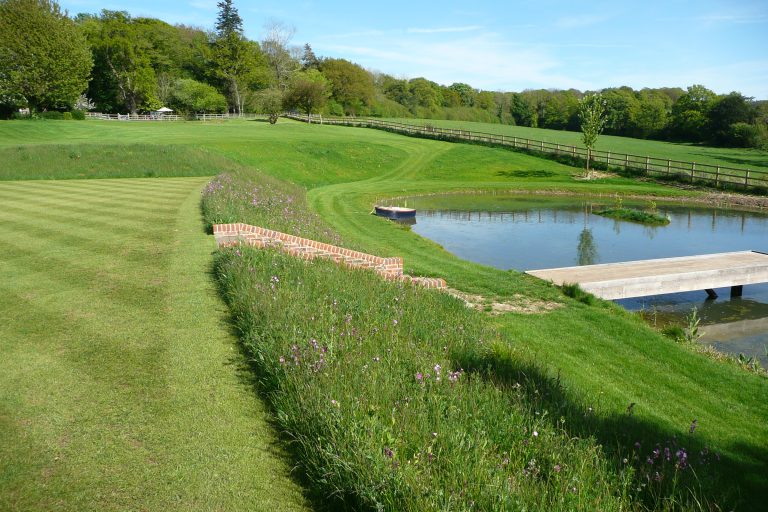
The Impact Of A Heatwave: Ten weeks of drought has posed a major challenge to Irish golf courses. Kevin Markham interviewed two greenkeepers to assess how course conditions have been impacted.

Listening to Met Éireann tell us we haven’t had weather like this since 1976 makes you realise how much we miss hot, dry summers.

Golf courses that were under three feet of snow in March are now burned brown by the long days of sun. If you’ve been on social media, you’ll have seen an unforgettable image of Ballybunion, which looks more like the Sahara than a golf course.

The heatwave may have cooled but the trouble is, 10 weeks passed without significant rainfall and greenkeepers have had their work cut out to maintain their courses.

Here are the views of two head greenkeepers: Paul Coleman (PC), Golf Course Superintendent at Dromoland Castle; and Dave Edmondson (DE), Links Superintendent at The Island.

What are the key challenges facing golf courses in a heatwave?

PC: “The main challenges facing parkland courses are trying to provide good quality playing surfaces in the face of intense and prolonged drought. The golfer’s expectation is still the same no matter the weather and we need to at least offer a product worth the money.

“As the majority of playing areas are comprised of sand for the purpose of better drainage, they obviously dry much faster and consequently wilt. Also, having staff working in this heat is not ideal as there is prolonged exposure to the sun.”

DE: “Dormant turfgrass is not growing or recovering from daily wear and tear, such as traffic patterns. Areas of The Island are also becoming hydrophobic (water repellent) due to lack of precipitation.”

Have you experienced anything like this in your career?

PC: “The last time I can remember a similar prolonged period of hot and dry weather was in the summer of ’95. I was working as a seasonal greenkeeper at Woodstock Golf Club, and there was no irrigation on the course. The only method of applying water was through a bulk tanker which drew from a nearby river.”

DE: “In my six years at The Island, 2013 was similar with prolonged dry conditions. I have also experienced similar low rainfall years in France and Belgium, although these were slightly easier to deal with due to lower traffic.”

How do you tackle these issues?

PC: “Irrigation. We have an automated system on tees and greens but it’s not as simple as just turning them on and forgetting about it. Moisture levels need to be constantly monitored as too much is worse than too little. Some members are amused when they see us out with hoses, knowing we have sprinklers.Without getting technical some areas on the greens become water repellent and will not wet with just water. They need to be treated with wetting agents.

“Unfortunately, it’s a logistics game and we do not have the capacity to water the entire golf course.”

DE: “We are targeting our water onto key areas: greens, tees, greens surrounds, and heavily divot-prone landing zones. As a classic links, based on sand, The Island is prone to drying quickly and we are utilising wetting agents for moisture retention and to avoid water repellancy issues.

We are also using traditional watering methods, i.e. hand-watering on putting surfaces, as much as possible. This allows us to target water onto the high parts of greens (slopes) and leave lower lying areas. This method has allowed us more uniformity of moisture throughout our putting surfaces with an improvement in playing characteristics.

“With all of our watering practices we utilise soil moisture probes daily to determine the needs of specific areas. This is deemed to be good practice, allows us to micromanage our greens and conserves water.

“The club recently purchased a pogo moisture meter that allows us to test moisture content in a given GPS location, sends the information to a cloud network, and creates a map which helps the greenkeeper handwatering for the next day to target dry areas or hotspots.”

How much time is spent dealing with the current challenges?

PC: “We have two guys each watering for approximately 50 hours per week. Mowing has decreased and so we can tackle other jobs we normally wouldn’t be able to get done.”

DE: “As turfgrass is presently mainly dormant, our mowing has reduced drastically so I have three guys hand-watering during the day. One of these will be collecting moisture content data to help us make key decisions regarding the next day’s watering.”

Are the grasses able to cope with these conditions?

PC: “Typically we go by transpiration rates of the grass plant and this can mean approximately 5mm to 10mm of water is required per night (in or around 8,000 to 12,000 litres).”

DE: “Native links grasses are Fescue and Browntop bent, and both species are native to links sites and are extremely drought resistant. They can withstand periods of stress. In many areas these species are predominantly dormant at present but will bounce back once the rain returns. From a sustainability perspective, these grasses require little to no pesticides, and limited fertiliser or water inputs.”

How serious a threat is a prolonged drought to the golf course?

PC: “It is serious as 90% of the course is burned out and in great water deficit. It will take a few weeks of rainfall to recover. No water means dead grass on greens and tees. This can make the course unplayable. There will also be a cost down the road in regressing some turf areas lost.”

DE: “I don’t see it as a major problem as long-term forecasts predict a break in the current weather. If we do get any thinning of turf coming out of the dry weather, we are due to overseed again in August with fescue throughout.”

What can golfers do to help the course and greens staff during these periods?

PC: “Members and guests can help by not driving golf buggies carelessly on fairways and where they don’t need to be. The wheel lines are being burned into the grass.”

DE: “Golfers should understand that greens teams throughout the country are doing there utmost to produce quality products for their members and guests. Patience is required through these challenging periods until we all return to normal weather conditions.”

Click here to read the original article

For the latest industry news visit turfmatters.co.uk/news

Get all of the big headlines, pictures, opinions and videos on stories that matter to you.

Follow us on Twitter for fun, fresh and engaging content.

You can also find us on Facebook for more of your must-see news, features, videos and pictures from Turf Matters.