Tag Archive for: Prevention

Prevention is better than cure

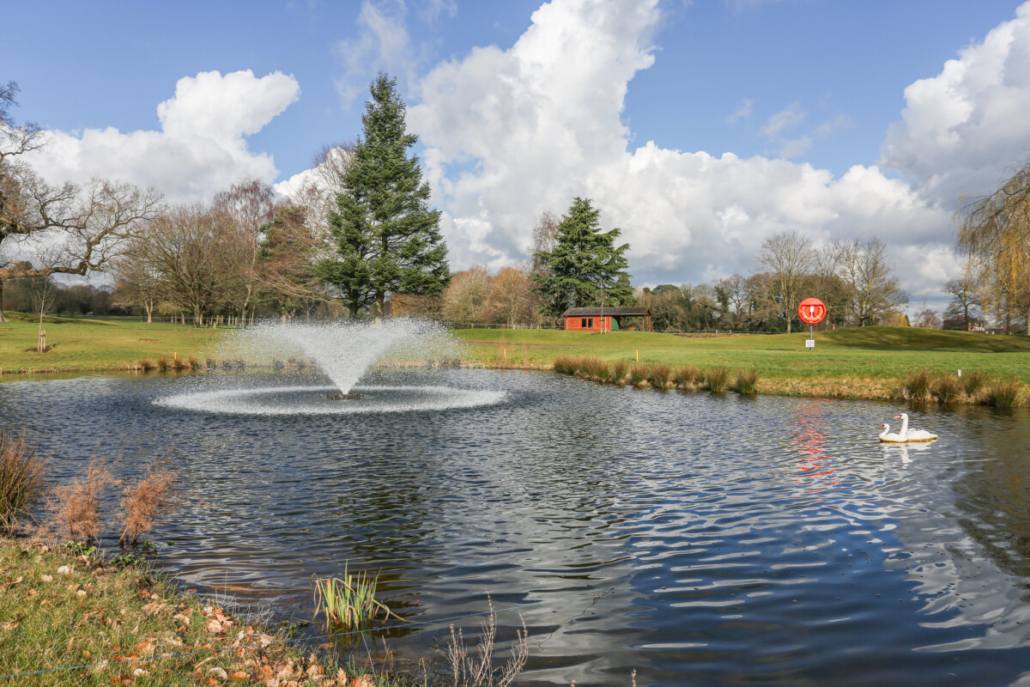
Prevention is better than cure: As the weather warms up all potential water issues multiply, but there is a natural, environmentally-friendly, safe and cost-effective way to prevent problems before they occur with Otterbine’s range of surface and subsurface aerators.

Otterbine aerators have been successfully used as an algae control strategy to improve water clarity and quality the world over, simply by adding air and circulating oxygen in the water. This simple process stops the water from stagnating, keeps algae and aquatic weeds under control, eliminates odours, prolongs the life of the water and attracts wildlife.

Prevention is better than cure

Prevention is better than cure

The main difference between the two options of surface and sub surface aeration is where the aerator sits in the water: surface spray aerators, as the name suggests, sit on top of the water and throw water droplets through the air, while sub surface – or diffused air – aerators work by compressing oxygen and pumping it into the water from the bottom through specially manufactured air domes. Deciding which to go for depends on surface area, depth, quality of incoming water and available power.

Otterbine aerators are built to last, and limit the use of chemicals providing a tick to the sustainability box of every venue. They have some of the highest oxygen transfer and pumping rates in the industry – adding as much as 3.3lbs or 1.5kg of oxygen per horsepower hour into the water and pumping over 920GPM or 199m3/hr per horsepower – with independent testing from the University of Minnesota and GSEE proving it.

Robert Jackson, Division Manager for Reesink Hydro-Scapes, Otterbine’s UK distributor, says:  “Otterbine aeration systems are designed to be as close to a natural solution for water aeration as possible, protecting water clarity without using excessive amounts of chemical treatments. The aim is to keep water healthy and not leave things to chance, especially as the weather is generally warming up, not just as spring and summer approach.

“Rectifying problems is always more expensive and time consuming than preventing them and Otterbine aerators are straightforward and easy to install and last for years meaning they are the perfect long-term solution.”

In a world of ever-changing weather patterns, Otterbine provides an element of control. With a comprehensive range of quality products and warranties from three to five years, Otterbine presents a long-term water management solution to a significant potential problem with very little disruption or outlay.

Discuss with the experts in water management at Reesink Hydro-Scapes how an Otterbine aerator can deliver clean, clear, healthy water naturally and prevent having to fix avoidable and costly problems, call 01480 226800 or visit reesink-hydroscapes.co.uk.

For the latest industry news visit turfmatters.co.uk/news

Get all of the big headlines, pictures, opinions and videos on stories that matter to you.

Follow us on Twitter and Instagram for fun, fresh and engaging content.

You can also find us on Facebook for more of your must-see news, features, videos and pictures from Turf Matters.

Prevention is better than cure

Prevention is better than cure: There will be enough to do this summer with El Niño on its way, so don’t let water quality be another problem to deal with, especially when prevention is so much easier than cure, says Otterbine, a leading water management specialist.

Thanks to the warming effects of the climate phenomenon El Niño, when temperatures in the Pacific Ocean rise or fall beyond the norm and influence weather patterns across the globe, the UK can expect the summer of 2023 to exceed that of 2022 and turn out to be the fifth or sixth hottest on record.

Prevention is better than cure

Prevention is better than cure

And with the sun comes dangers for lakes and ponds. Left unattended, water can quickly deteriorate creating problems such as algae, aquatic weeds and odours, and while the repercussions are laborious and costly to fix, preventing them isn’t.

It all comes down to aeration, as Simon Powell, Otterbine business development manager at Reesink Hydro-Scapes explains: “Higher levels of sunlight and heat, generated by summer sun, can lead to excess nutrients in water bodies. When combined with low oxygen levels and limited circulation, the natural ecosystem tips out of balance, causing algae, weeds, odours and sludge to build up, which can even kill off aquatic life.

“Once a water body reaches this point the costs of trying to restore it increase dramatically. As well as often being more expensive to implement, reactive solutions tend to be less friendly to the environment too.”

The easy, sustainable solution is to add air with a surface and subsurface aerating system and Otterbine has some of the best in the business, confirms Simon: “Otterbine’s range of products has some of the highest oxygen transfer and pumping rates in the industry, adding as much as 3.3lbs or 1.5kg of oxygen per horsepower hour into the water and pumping over 920GPM or 199m3/hr per horsepower.”

With that kind of power and efficiency behind them, plus an average lifespan of 15 years, acting now in preparation for an El Niño summer means no more water worries whatever the weather for the foreseeable future.

Simon concludes: “In a world of ever-changing weather patterns, Otterbine provides an element of control. Being able to combine Otterbine’s range of quality products which are built to last and keep water clean, clear and healthy, with Reesink Hydro-Scapes’s warranties ranging from three to five years, means a water management solution that’s guaranteed to last, removing a significant potential problem from the to-do list for years to come.”

To learn more about the Otterbine range of aerators and fountains, contact Reesink Hydro-Scapes on 01480 226800, email info@reesinkturfcare.co.uk or visit reesinkturfcare.co.uk

For the latest industry news visit turfmatters.co.uk/news

Get all of the big headlines, pictures, opinions and videos on stories that matter to you.

Follow us on Twitter and Instagram for fun, fresh and engaging content.

You can also find us on Facebook for more of your must-see news, features, videos and pictures from Turf Matters.

Prevention is better than cure

Prevention is better than cure: At a recent meeting of the Amenity Forum, Chris Faulkner of Kersten (UK) Limited spoke about the need for all involved in weed management in the sector to further increase the focus on weed prevention.

He said ‘’A common theme of the conversations we have with customers centre around removing, killing or controlling a weed that already exists. Prevention requires us to think about the causes of weeds on a particular surface and how we can make the environment as inhospitable for weeds as possible’’

Prevention is better than cure

Prevention is better than cure

In a recent presentation at a conference in Wales, the Independent Forum Chairman John Moverley, said ‘’prevention certainly on hard surfaces begins with the design of our environment. For example, designing the corner of a kerb with a nice wide radius, rather than a sharp corner allows a sweeper to easily follow the edge of the kerb and collect any detritus trapped there’’

Also at the conference, a representative from Newport Council commented about their success with improved preventative maintenance work. He said ‘’we have been using mechanical weed removal to minimise the soil build-up over winter and the team has seen a big reduction in the amount of weeds coming up in the spring. This has resulted in the diminished use of plant protection products around Newport’’

The amenity sector has been at the fore front of the development of integrated weed management and produces comprehensive guidance notes for the sector. It is important to recognise that integrated means choosing the right approach and choice of methods for weed management including plant protection products. The increased emphasis on moving to carbon zero also will significant impact on future approaches.

A new guidance note on weed prevention will shortly be available on the Amenity Forum website www.amenityforum.co.uk  and it will be just one of the topics to be addressed in Updating events across the UK organised by the Forum in early 2022. For more information contact admin@amenityforum.net

For the latest industry news visit turfmatters.co.uk/news

Get all of the big headlines, pictures, opinions and videos on stories that matter to you.

Follow us on Twitter and Instagram for fun, fresh and engaging content.

You can also find us on Facebook for more of your must-see news, features, videos and pictures from Turf Matters.

Prevention better than cure

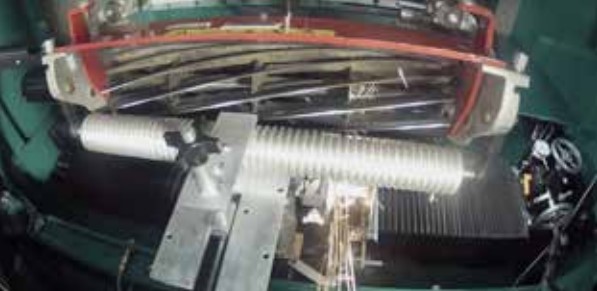
Prevention better than cure: Ian Robson Prosport UK & Ireland Importer/Distributor for Foley United, explains why relief grinding maximises the performance of reels by giving a factory finish every time.

Firstly, why is having sharp cylinders (reels) that are the correct shape so important anyway? The answer is obvious – unhealthy turf brings a whole host of other issues which are costly to correct. Therefore, prevention is a far more economic approach than a cure.

Prevention better than cure

A huge amount of research and development has gone into designing a cutting unit to produce the cleanest cut possible with the least amount of fraying and tissue damage to the plant.

The result is that all manufacturers of grass cutting equipment supply new units with relief ground edges.

Why Relief Grind?

Tests carried out by leading manufacturers have established that relief ground cylinders stay on cut up to three times longer than spun ground ones and require less horse power to drive the unit, resulting in greater fuel efficiency and less stress on the hydraulic power systems. In addition, a relief ground cylinder will withstand the abrasive effects of top dressing far better than one spun ground because the relief edge on both the bedknife and the cylinder allows the top dressing to clear the cutting blades easily, helping to prevent the dulling effect seen on spun only units.

Continual relief grinding also decreases the squeezing and tearing of the grass as the units get dull, and most importantly it allows the cylinder to be returned to a factory specification perfect cylinder as quickly as possible.

The overall cleaner cut achieved by relief grinding gives a better after-cut appearance, increased recovery rate due to the clean cut of the grass and reduces the stress on components because less horsepower is needed to drive the cylinder.

Horse Power Study

As a reel wears flat and loses shape (becomes coned), more stress and strain is put on the cutting systems.

Using the figures from the above study a 5-gang cutting unit with relief can require up to 4.5 HP (5 x 0.88HP = 4.5HP) to drive the cutting units therefore a 35HP engine has 30.5HP remaining to drive the rest of the traction system. A 5-gang unit which has been spun ground only, can require up to 13Hp (5 x 2.59HP = 13HP) leaving only 22HP to drive the rest of the traction system.

So, it has been established that relief grinding your cutting units saves you money not only by reducing workshop maintenance time with far fewer grinds but also through a reduction in fuel costs and replacement parts.

It is also important to acknowledge what relief grinding does for a reel. By removing metal from the trailing edge of the blade it forms a relief angle, which reduces the contact area of the cutting edges, resulting in less friction, longer wear life. Typically, when a new mower is delivered the reels will be a perfect cylindrical shape. Over time the blade naturally loses shape, and the sharp edge it arrives with becomes flat and dull, often meaning the reel is no longer a perfect cylinder from end to end. This is referred to as ‘coning’ and a natural point for grinding to take place.

The decision then sits between touch-up and spin grinding, or relief grinding. If there is sufficient relief still on the reel then a quick touch-up is fine but once more than 50% of the relief has gone my advice would be to relief grind again and remove any coning. Failure to remove the coning will eventually be seen in an uneven cut appearance of your turf.

But, the main question mentioned at the beginning comes back; how to get the most out of your workshop resources by choosing the most effective method to sharpen your cutting units. The answer is to trust the manufacturers judgement and return the reels as close to the original factory standard as possible, and for that, relief grinding is the best option. The bonus is this method also maximises performance and gives the best cut.

Sustainability And Pollution Prevention

Sustainability And Pollution Prevention: Much has been said over recent years about the merits of water recycling wash systems to prevent pollution and conserve water. Here Bill Whittingham reports on recent developments.

Having visited many golf and sports facilities I’ve learned and seen how machinery wash-off is handled. I’ve also heard the thoughts of those responsible for wash-off. It is quite clear that virtually all know of the legislation relating to pollution prevention and the fines that can be imposed; much of which is regularly regurgitated in the trade press. All those I met are also aware of the growing need for water conservation and many have taken action to address both matters. What is apparent, and somewhat surprising however, is that despite this knowledge and concern, there are many establishments still with wash-off facilities that are, quite frankly illegal, causing pollution and wasting vast quantities of water.

Sustainability And Pollution Prevention

The Groundwater (England and Wales) Regulations 2009 and The Water Environment (Groundwater and Priority Substances) (Scotland) Regulations 2009 were enshrined in law in 2009 (10 years ago!) and, more recently the EU Water Framework Directive has been implemented. (Incidentally, whether or not Brexit is achieved matters not, as the requirements have been made law in the UK). So why the complacency and inaction? The ideal way to achieve legislative compliance and save water is to install an approved water recycling system. (i.e. WTL certified). Despite the best endeavours of the leading manufacturers, such a system is not considered cheap and, apart from the water savings, does not contribute to “the bottom line”! So, some take the attitude that they’ll take their chances and hope they are not inspected. To my mind this is not sensible thinking. Articles have appeared in the golf / turf maintenance press reporting just that; a golf club being visited by the EA and told they suspected pollution from the club’s washpad. The club in question responded rapidly, recognising its environmental responsibilities, and installed a below ground washpad water recycling system, satisfying all requirements.

If cost is an issue, there are options offered by the main suppliers of recycling wash systems to help; Spreading payments, retro-fitting or, in the case of ClearWater, carrying out a self-install with each and every UK made system delivered new, direct to site from the factory. One company, not offering self-install, does offer above ground refurbished units however.

So, which way do you go; above ground or below ground? The choice is yours but there are distinct differences between, what most consider to be, the two leading contenders. Both do the same job: treat contaminated water by biological treatment producing clean recycled water. One system offers simple, effective engineering with few moving parts (less to go wrong!) and gravity feed to the system. The other system relies on more elaborate engineering and the pumping of washwater into the system.

Press coverage of late appears to have focused on an above ground system, so it seems only reasonable, to redress the balance and look at the merits of a below ground one. One point that is raised frequently and that some, including myself, have difficulty understanding is the statement regarding a certain above ground system: “…..you can see what’s going on” The inference supposedly being that below ground is not to be preferred. Now, unless I’ve been missing something for many years, I understood that, in the main, waste water treatment is carried out below ground and is in surely the safest location? How many separators, septic tanks and sewage plants do you see above ground? However, if you really want to see “what’s going on” you can in a ClearWater system; simply open the turret covers and take a look. You can actually witness exactly what’s going on; effective treatment!

So what advantages does this particular system have? Being below ground means that it is unobtrusive; away from prying eyes and vandalism. It is also safe being encased in concrete (no worries about leaks!) and operating at a temperature of 14.5 – 16.5 °C. This is important as a stable operating environment means that the unique micro-organisms perform better and also allays fears of Legionella and other harmful bacteria forming. (The threshold for Legionella to form and survive is stated as 20°C. Above ground systems can endure much higher internal temperatures than this in the sun!). Below ground means water flows into the system by gravity via a simple grass trap, so no complicated sumps, pumps and chutes. Valuable washpad space is not required either to site a ClearWater system and a key decision maker seems to be that it’s not unsightly but looks good; with just four modest green turret tops sited at ground level, that’s all anyone sees; impressive!

Self-install certainly does seem to be popular (over 70% of ClearWater’s customers take this cost-effective route). Full and detailed installation instructions are issued and I’ve seen some splendid installations that installers are justifiably proud of. Take a recent installation of a ClearWater system at Brookmans Park Golf Club for example. Asset & Equipment Manager Nick Billington, not happy with the above ground system and repeated maintenance issues, removed that system and used the concrete plinth to good effect; he installed his diesel tank on it and created a pollution prevention area! Installing the ClearWater system was easy and straightforward he says and further cost savings were made by modifications to the existing washpad. Nick is pleased with the team’s work and the ClearWater system.

Buying a washpad water recycling system is a worthwhile investment and will ensure that the costly kit you have invested in will be washed so much more effectively. (A ClearWater system would cost less than 20% of the price of a typical fairway mower by the way!) However, to ensure you spend wisely, do research the systems thoroughly, see them in action and talk to users. To help you to make comparisons and reach an informed decision, here are a few questions to ask prospective suppliers:

  1. Is what is being offered a WTL approved full biological system as not all washpad solutions actually recycle and/or have biological treatment? (Incidentally, a WTL approved system means tax savings on the ECA scheme!)
  2. What is the cost of the system and installation? (Is the system brand new or refurbished?)
  3. What is the water capacity? (The larger the capacity, the greater the time for treatment)
  4. How much is a year’s supply of micro-organisms and are they general purpose or designed to treat turf machinery wash water and capable of handling small grass clippings? (ClearWater’s micro-organisms are bespoke; designed specifically for the job)
  5. What time do I need to spend on daily / weekly maintenance and what are maintenance costs?
  6. Does the system have an oil warning alarm and an auto shut-off valve to prevent an oil spill contaminating already treated water?
  7. Are there separate pumps for each hose and is a proper trigger wash gun provided with each?
  8. What pressure do the water hose pumps produce?
  9. What moving parts are fitted that may need replacing? Is this something I can do or is an engineer’s visit necessary? (Swapping the small compressor and water pumps of a ClearWater system can be carried out by users in minutes, saving costly call out fees and down time!)
  10. Would the system be exposed to the elements and, if so, not be affected by high temperatures and UV rays?

So, below ground or above? The choice is yours; make it an informed one!

We all need to take our environmental responsibilities seriously and ensure sustainability. Preserving valuable water by recycling on the washpad and preventing groundwater pollution is one definite way we can contribute.

For the latest industry news visit turfmatters.co.uk/news

Get all of the big headlines, pictures, opinions and videos on stories that matter to you.

Follow us on Twitter and Instagram for fun, fresh and engaging content.

You can also find us on Facebook for more of your must-see news, features, videos and pictures from Turf Matters.