Tag Archive for: The

The Polaris RANGER Story

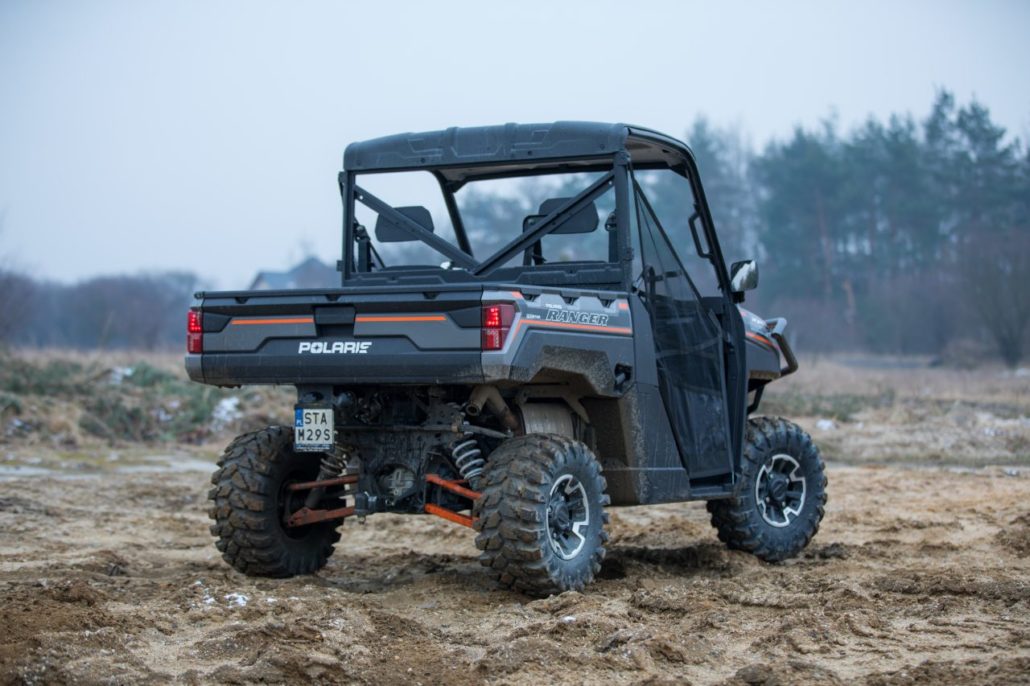
The Polaris RANGER Story: It’s been two decades since the RANGER® 6×6 vehicle was introduced and revolutionised the side-by-side category back in 1998. Mitchell Johnson, son of David Johnson – one of the founders of Polaris in the 1950s – was vital to the conception of the iconic machine and discusses how the RANGER® rode to market…

“When discussing the beginning of the RANGER®, we first have to think about the vehicle in the context of what Polaris was doing at that time. In the 1990s, the Sportsman ATVs were Polaris’ only Off-Road Vehicle and was selling well.”

The Polaris RANGER Story

Polaris’ reputation for being one of the fastest developing companies in the powersport industry held true, RANGER® went from initial development to production line in just two years.

“We had talked from time-to-time about making a side by side ATV for a driver and passenger. Every Friday we had a staff meeting in the morning and then in the afternoon, we’d go out and ride ORVs. We always took at least one 6×6 ATV to carry everything. We would try and ride around with one person sitting on each fender to see what it was like. One day, Edgar Hetteen [one of our founders] came to my office and said we should make a 6×6 in a side-by-side configuration, he loved the machine but wanted to ride beside his wife Hannah.”

Major decisions about the new model were all made as ‘gut calls’.

“Edgar mocked up side-by-side seating on a 6×6 in his workshop, we spent an hour or so sitting in it to see what it was like – should it have handlebars or a steering wheel? Should it be ride-on or ride-in? These are all things that are gut calls and we made using our experience. With brand new products like the RANGER®, you never know if you’re going to hit the bullseye with customers – the customers themselves don’t envision how the product will or can be used. Take the microwave for example, it hasn’t replaced the oven like the developers thought it would, but has instead created a new market.”

The key in developing the RANGER® in Mitchell’s opinion was to keep the team and investment small.

“I’m not sitting here saying that we knew it was going to be a success but we knew we had to get something out there. If we had identified a need, then we needed to find out. I worked with Edgar, Chuck Baxter – who was the VP of engineering – and James Bergman at BEAMCO in Alvardo, MN, to see if he would do the initial concept work. The idea was to keep investment small, so that if we didn’t hit the bulls eye, we could adjust the sights easily to get on closer to the target centre.”

During early conversations, the main characteristics that the new machine had to have were fairly clear.

“Good speed, great ride and handling with excellent off-road capability, plus a greater payload than any of the utility haulers on the market were all attributes we wanted the vehicle to have. Most of all, it had to be a lot of fun to drive and ride like the already popular Sportsman line.”

“The initial prototype was received well by management. And the first production made a small profit in the first year. We also achieved ‘off-road’ status for the vehicle – which was essential.”

The RANGER® is testament to the Polaris culture – innovation and development, moving with the times and trusting staff to make decisions. Even the name of the new model was helped decided by employees.

“We’d been playing around with names. One of the early Polaris products was a RANGER® snowmobile, when this model was discontinued, so was the name – which I always thought was a shame and I wanted to bring it back. We went out to the employees to ask them to think of a name and said we’d give $100 if their name was chosen. Mike Trihey and Donny Whiteman submitted RANGER® name and were given $100 each.

“The RANGER® name represents the category – it’s fun to ride and that’s one of the most important elements for us. That’s the history of Polaris throughout the years, people realise how much fun they are to ride and the volume grows, plus the RANGER® does a lot of work.

“The RANGER® was a team effort. This stuff doesn’t happen without the people on the team – contributing, listening and pushing, we don’t know for sure what is wrong or right – that’s what has made this successful. The culture at Polaris is one full of passion and an overwhelming desire for the products and people to succeed.”

Polaris celebrated rolling the one-millionth RANGER® machine off the production line in 2017 and 2018 marks two decades since the utility vehicle was introduced to the Polaris line-up. Forming a key part of the Polaris product line, the RANGER® is used all over the globe for a variety of tasks – with the RANGER® Diesel and RANGER® 570 variants being international best sellers.

The RANGER® legacy gets stronger every year, with the RANGER® XP 1000, the latest addition 2018, setting a new industry standard and boasting over one hundred user-inspired improvements. The model has class-leading power (82hp) and torque (61lb-ft), industry-leading towing (over 1100 Kg) and ground clearance (330mm) – making it the hardest working, smoothest riding SXS built.
For the latest industry news visit turfmatters.co.uk/news

Get all of the big headlines, pictures, opinions and videos on stories that matter to you.

Follow us on Twitter for fun, fresh and engaging content.

You can also find us on Facebook for more of your must-see news, features, videos and pictures from Turf Matters.

Arb150 Ticks All The Boxes

Arb150 Ticks All The Boxes: Wiltshire Countryside Services have become the latest company to purchase an Arb 150p from GreenMech. For Owner Adam Lonsdale, his decision was made easier not only by the build quality and back-up service that GreenMech provides compared to the alternatives available in the current market, but also by the superior performance of this petrol version.

Founded in 2014, Wiltshire Countryside Services provide a variety of arboricultural and forestry services to domestic and commercial customers alike. “We were getting more and more problems with our previous chipper and ended up spending out more than what the machine was worth!” explains Adam. When his local dealer GA Groundcare took on the GreenMech franchise last year, Adam went with his wish-list and was excited to see what was available. “I told Ashley at GA Groundcare what I wanted, and the budget, and was pleased to see that the GreenMech machines satisfied more of my needs and wants than other manufacturers could.”

Arb150 Ticks All The Boxes

“We’d had a demo of both the diesel and petrol Arborist 130 machines, when Ashley mentioned that a 38hp petrol model was then about to launch. After seeing the Arborist 150p at the Arb Show I knew that was the one I wanted and bought it without even having a demo.” In addition to the significant cost saving over the diesel equivalent, Adam was particularly impressed with the output performance achieved whilst still keeping the unit under 750kg. “The sub 750kg weight means my colleague or anyone else can tow it without a special license. Also, because the majority of our work is domestic tree surgery, it can be towed by a Land Rover, quadbike or alternative right to the spot where it’s required, leaving a minimal footprint on lawns and gardens.”

The superior build quality was another box ticked for Adam. “Some chippers we’ve looked at have fibreglass bonnets – in this industry things get bumped and dropped and a fibreglass bonnet is asking for trouble. The GreenMech machines seem to consist of more strong, hardwearing metal components. It’s easy to use, simple to maintain and all backed up with reliable back up support from GreenMech and their dealer network.”

For the latest industry news visit turfmatters.co.uk/news

Get all of the big headlines, pictures, opinions and videos on stories that matter to you.

Follow us on Twitter for fun, fresh and engaging content.

You can also find us on Facebook for more of your must-see news, features, videos and pictures from Turf Matters.
Beating The Stresses Of Sports

Beating The Stresses Of Sports: Natural turf for sports is enjoyable to play on when effectively looked after but this relies on the health of the grass being well maintained to prevent ‘stressed grass’. This occurs when the growing conditions become difficult and results in poor sports turf with ‘bottom’ in the grass and sparse ‘thin’ grass with lots of earth on show. Grass, like most plants require light and heat from the sun, carbon dioxide and oxygen from the atmosphere and structure, water and nutrients from the soil. If any of these components is compromised, the grass plant will suffer and may not recover from the stress of play.

It is helpful if managing sports turf to understand the science behind the design and maintenance of natural sports turf which requires some specialist knowledge of soils, drainage and agronomy.

Beating The Stresses Of Sports

Amino acids are the foundational building blocks for plant growth. Even though plants have the capacity to biosynthesize all the amino acids that they require from nitrogen, carbon oxygen and hydrogen, the process is quite complex and energy consuming. Application of amino acids contained in Sward-booster allows the plant to save energy on this process during critical growth stages. Sward-booster takes plant nutrition beyond conventional fertilisers by combining a unique, powerful package of 19 essential amino-acids, humic acid complex, seaweed and major and minor nutrients from organic and inorganic sources. Sward-booster facilitates maximum utilisation of nutrients, water, CO2 and light to maximise growth efficiently. Sward-booster is ideal for feeding or aiding stressed grass on sports pitches, racecourses, lawns & other grassed areas.

A full sports turf maintenance plan produced by a competent agronomist consultant is essential & they need to consider the following points; frequency of mowing, aeration, irrigation, seeding, use of fertiliser and weed/pest control.

Regular mowing is fundamental to the maintenance of surface quality. Frequency of mowing will depend on the time of year and will vary according to the location of the site. Irrigation may be required to aid grass growth during dry periods & the use of a wetting agent may also be beneficial.

Fertilisation is important to aid growth and recovery, as well as to maintain good presentation. It must be applied at the optimum rate and at appropriate times. It’s best to determine this with a detailed soil analysis and expert advice on this from a qualified agronomist.

Full grass cover is essential to prevent weed invasion so regular seeding is necessary to repair damaged and weakened areas of turf. Ongoing preventive measures are required to protect the playing surface from pest damage and weeds.

Performance Quality Standards (PQS) provide a benchmark for assessing the efficacy of maintenance operations in terms of achieving and maintaining the quality and performance of natural turf sports surfaces. If you would like any more information or a free appraisal please contact Agrigem.

For more information, visit: www.agrigem.co.uk

For the latest industry news visit turfmatters.co.uk/news

Get all of the big headlines, pictures, opinions and videos on stories that matter to you.

Follow us on Twitter for fun, fresh and engaging content.

You can also find us on Facebook for more of your must-see news, features, videos and pictures from Turf Matters.

STIHL’s Chainsaw Of The Future

STIHL’s Chainsaw Of The Future: The new STIHL MS 500i is the first chainsaw in the world with electronic fuel injection and a never-before achieved power-to-weight ratio.

With the MS 500i, STIHL presents the world’s first standard chainsaw with electronically controlled fuel injection, consolidating its position as a technology leader.

STIHL's Chainsaw Of The Future

The STIHL injection technology (i) not only provides the chainsaw of the future with incredible torque, but also ensures rapid acceleration of the saw chain from 0 to 100 km/h in just 0.25 seconds.

Thanks to the intelligent lightweight design, the MS 500i is also outstanding with the best ever power-to-weight ratio – 1.24 kilograms per kilowatt, an exemplarily low value never achieved before by series-manufactured chainsaws.

Together with the many additional design optimisations, there is a substantial increase in operator comfort. The reduction of gyroscopic forces provides the 80 cm³-class high-performance professional saw with dynamic manoeuvrability, which is a particular advantage during limbing. This makes the professional big timber harvester easy to handle in all disciplines – from felling to cutting to length.

The MS 500i has exceptional starting behavior and provides optimum engine power right from startup. The engine does not need a carburetor, since the fuel metering is done using a sensor, and automatically adapts to the different operating conditions, no matter what the altitude and ambient temperature.

A preview of the new MS 500i will be given at the Arb Show, Westonbirt Arboretum from 11 to 12 May 2018. It will be available to forestry professionals worldwide from the beginning of 2019.

Due to the exceptional level of interest, the machine will already be available in selected markets, including Germany, in limited quantities in time for the 2018/19 season.

 The details at a glance:

  • First chainsaw with STIHL Injection
    Huge advancement in engine development. The MS 500i is the first ever series-manufactured chainsaw with an electronically controlled fuel injection system. The high-torque machine provides optimum engine power right from startup. It provides powerful performance and the saw chain accelerates extremely rapidly – from 0 to 100 km/h in just 0.25 seconds.
  • Best power-to-weight ratio of all classes
    The STIHL MS 500i is a lightweight within the ranks of professional saws. Thanks to intelligent lightweight design, as well as an extremely high engine power, it excels with an exemplarily low power-to-weight ratio at 1.24 kg/kW. This value is unique within all displacement categories.
  • Easy starting and sensor-controlled fuel mixing
    The MS 500i is very easy to start in all operating conditions, and automatically adapts to different locations of use. The sensor-controlled fuel mixing ensures that the mixture is adjusted optimally for the oxygen content in the air right from the first ignition.
  • Improved ergonomics and practical details make work easier
    The innovative flywheel with a reduced installation height and lower weight reduces the gyroscopic forces that arise during operation. Together with the low overall weight, the resulting dynamic swiveling behavior of the machine, which is a particular advantage for limbing, makes the ideal guidance of the tool along the trunk easy.
    This is also supported by the new bumper spike geometry. The raised plunge bar on the fan housing – parallel to the axis of symmetry of the guide bar – makes directional control and tool guidance easier when plunge cutting. Captive nuts on the chain sprocket cover make changing the chain straightforward. Professional big timber harvesting – from felling through cutting to length to limbing – is a simple task with the new professional saw.

For more information, visit: www.stihl.co.uk

For the latest industry news visit turfmatters.co.uk/news

Get all of the big headlines, pictures, opinions and videos on stories that matter to you.

Follow us on Twitter for fun, fresh and engaging content.

You can also find us on Facebook for more of your must-see news, features, videos and pictures from Turf Matters.

Can The MLS Be World-Class On 3G?

Can The MLS Be World-Class On 3G?: Reliably unconventional, Zlatan Ibrahimovic spurned a $100m offer from China in order to take a $1.5m-per-year offer from the Los Angeles Galaxy, according to Sports Illustrated. But will the striker be eccentric enough to turn up for an away game against the New England Revolution?

After his matchwinning debut in last Saturday’s Los Angeles derby – the most deranged 90 minutes in MLS history – everyone wants to see the Swede play.
Still, the 36-year-old has recently returned from a serious knee injury, so Ibrahimovic and the Galaxy’s coaching staff will have judgment calls to make later in the season as the league’s most famous name tries to stay healthy. The Galaxy have four MLS fixtures on artificial turf scheduled between June and October (though Ibrahimovic may yet  play at this summer’s World Cup). Fearing injury, some veteran stars have skipped games on artificial surfaces over the years, dealing blows to MLS’s reputation.

The only time Thierry Henry played on the widely-reviled artificial turf of Gillette Stadium, the home of the Revolution, was a play-off game in 2014 that turned out to be the last match of his career. Didier Drogba also sought to avoid fake grass. David Beckham, usually so emollient in interviews, was an anti-turf absolutist: “Every game, every team should have grass, without a doubt,” he told reporters in 2007.

We wait to see whether a man who once slammed France merely because he thought a referee had a bad game will have any thoughts to share on a subject that tends to provoke strong emotions.

The league added to its synthetic collection last year when Atlanta and Minnesota  – who face off last Saturday – joined Vancouver, Seattle, Portland and New England. (Minnesota’s permanent home, set to open next year, will have grass).

This clearly matters to the players. An ESPN anonymous survey of current MLS members published last month asked whether an artificial surface would influence a player’s decision to join a team: 63% said yes. Perhaps not unrelated, another question asked them to name the toughest place to play in MLS and four of the top eight answers were teams with artificial turf.

Turf wars are commonplace in North America. Earlier this month the cost of laying temporary grass at BC Place was reportedly among the factors that caused Vancouver to withdraw from contention as a host city for the 2026 World Cup bid, while the use of artificial fields at the 2015 Women’s World Cup in Canada was the subject of failed legal action.

True or not, artificial fields are perceived to increase injury risk and enhance home advantage in a league in which road results are notoriously poor. They are freighted with memories of the North American Soccer League’s dire surfaces, and away from Portland, where complex factors influence the choice, are a sign of MLS’s subservience to American football in shared venues.

Pitch variations invite us to define what counts as “authentic”: a perennial concern for MLS, which is adolescent and distinctive yet obsessed with tradition and how it stacks up against more established leagues. In a quest for instant credibility, newborn franchises such as Atlanta and Minnesota drape themselves in Anglicized affectations such as “United” and “Football Club”. The branding glances towards England where, as the Premier League’s rules tersely state: “No League Match shall be played on an Artificial Surface”. It’s an homage to the kind of Euro superclubs who insist on temporary grass pitches being installed over artificial surfaces when they visit the US on summer tours.

Like shoppers at an urban farmers market, fans instinctively prefer organic to genetically-modified ingredients. Still, turf versus grass is habitually presented as a binary opposition when the reality is more nuanced. Enhanced hybrid surfaces where artificial fibres act to strengthen the natural grass are ubiquitous in England’s top-flight. The expectation of competitive imbalance on turf, one 2016 study found, does not reflect the truth.

A good artificial surface may play truer than a lousy natural one and technology is far advanced from the “Astroturf burn” eras, when players who attempted sliding tackles in shorts often looked like they’d just spent 90 minutes in the company of an arsonist. As the Portland Timbers owner, Merritt Paulson, told FourFourTwo last year: “There is a massive difference between the quality of turf fields that you can host a soccer game on, just like there is a very big difference on the quality of a grass pitch for a game.”

And the argument that artificial turf is only for unserious soccer nations is hard to sustain given its presence in Mexico and France in recent years, while in 2016-17, one-third of the Eredivisie’s teams had it (which prompted a revolt from the Dutch players’ union).

For Wilmer Cabrera, the Houston Dynamo head coach, artifice is just another hill to climb in MLS’ undulating landscape. “Here in MLS you have to play on turf and you have to play on grass, you have to travel 5,000 miles back and forth, you have to play in humidity or cold weather, snow or wind,” he said. “Pounding on [an artificial] surface it’s gonna get you more tired, the muscles are going to suffer a little bit more and the joints, but we don’t make any kind of excuses.” Cabrera’s team beat the Timbers 2-1 at Providence Park in last year’s playoffs before losing 3-0 to the Seattle Sounders at CenturyLink Field in the Western Conference finals.

Houston is arguably the cradle of fake grass, since the Astros baseball team popularised it by using AstroTurf in the Astrodome in the 1960s. Despite the city’s brutal summer weather and the multiple teams that use BBVA Compass Stadium, the Dynamo play on grass that, by last year’s postseason, was so badly cut up that it looked like the field had hosted a tunneling contest for moles.

No stranger to the treatment room, Philippe Senderos would have felt wary about joining Houston if their pitch was plastic. “I think knowing that the Houston Dynamo play on grass was definitely a factor [in me joining the club]. If it would had been on turf I would have had to think about it a little bit more,” he said.

Standing on the Dynamo’s verdant practice field, Andrew Wenger took a pragmatic view. “There’s a lot of aspects that goes into making, or considering, a league the best in the world and that’s probably a very small, minute effect,” the veteran attacker said. “Would you rather have everything be on grass? Yes. But is playing in the climate of North America different from other places in the world? That’s also true. So how do you balance all these balls in the air, and making it the best but also dealing with what we’re presented? That’s a big question.”

Looking to the medium- and long-term, extreme weather from climate change may complicate the use of grass pitches in some parts of the continent, while it’s logical to expect that artificial surfaces will continue to improve, blurring the distinction between synthetic and natural. MLS may never be all-grass, and one day, long after Ibrahimovic is gone, maybe that won’t matter.

Click here to read the original article

For the latest industry news visit turfmatters.co.uk/news

Get all of the big headlines, pictures, opinions and videos on stories that matter to you.

Follow us on Twitter for fun, fresh and engaging content.

You can also find us on Facebook for more of your must-see news, features, videos and pictures from Turf Matters.