Tag Archive for: The

The Drift renews with Toro

The Drift renews with Toro: Over the last five years, The Drift in Surrey has invested over £2 million to bring in new facilities and improve the course in preparation for its 50th anniversary in 2025 and a key element of that process was the signing of a fleet lease deal with Toro and Reesink Turfcare.

Tom Parrish, General Manager at The Drift, provides an update on the works and what’s next for the impressive 18-hole championship course, as the club signs for another five years, in a dual deal with its sister club, Badgemore Park in Oxfordshire,

The Drift renews with Toro

The Drift renews with Toro

“The Drift and Badgemore Park have been in very similar situations in the last five years,” explains Tom. “We’ve both had 50th anniversaries that have been commemorated with extensive improvement and investment plans to the course. While the focus of the work has been different, the requirements for executing them to the best of our ability have been largely down to having the right turfcare equipment.”

When The Drift renewed with Toro last time, the success and results were so immediate and noticeable that its sister club Badgemore Park followed quickly into its own similar deal with Reesink. When renewal time came and with neither club wanting to change the set-up, a dual deal was brokered by Paul Bell at Reesink Turfcare.

“Working with partners who would ensure we had the best possible resources to do the work and complete the projects on time was vital and that’s why we chose Toro and Reesink as our preferred turfcare partners,” confirms Tom.

“It was the right decision. The course presentation continues to improve year on year, and we have more plans to ensure we continue to improve the quality of the golfing experience here at The Drift. We feel that with the improvements we have already seen, having Toro on side once again was the obvious choice.”

Investment at The Drift focused on making improvements to enhance the enjoyment, challenge and conditions for members and guests, Tom says: “In the last five years we’ve re-designed holes five, six and nine, making nine a new signature hole, as well as a complete bunker redevelopment project and the opening of our Top of the Range Academy and Driving Range powered by TrackMan.”

Having made the right machinery selection five years ago, little was changed as the club renewed. Tom says: “The core fleet remains the same, the quality of cut for the greens machines was so good we didn’t need to tweak this, but we have brought in additional equipment to support their good work – the GreensPro roller for example will further push the quality and speed of the putting surfaces, exactly what we’re aiming for.”

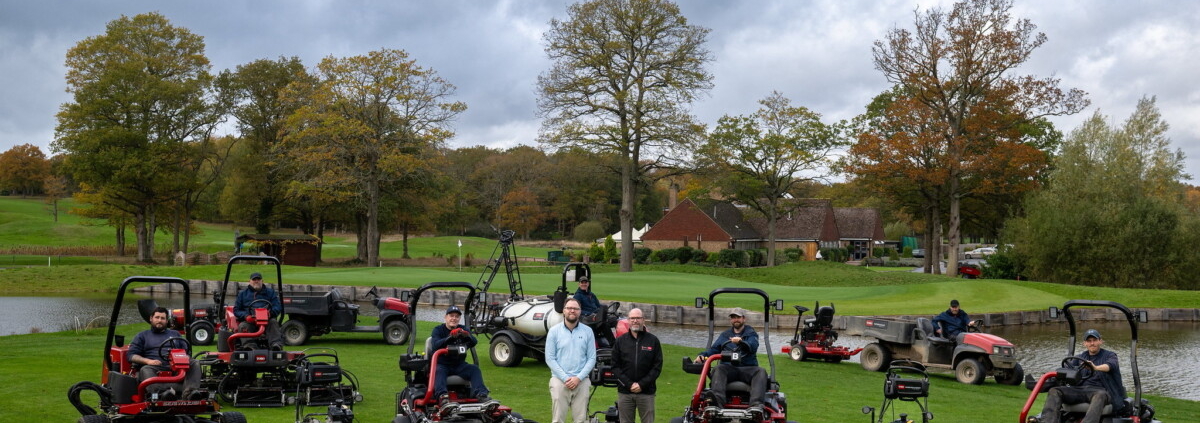
The fleet is led by three Toro Greensmaster TriFlex 3400 mowers famed for a precision finish, the lightweight Reelmaster 3575 for the fairways, and the Groundsmaster 3500 triplex rotary mower. There’s a new sprayer – the Multi Pro 1750 – as well as an update to the utility vehicle fleet with the Workman MDX-D. Tom adds: “We took the opportunity to bring on board an AgriMetal blower from Reesink too.”

With the 50-year celebrations underway what’s next for the club? “We feel we’re exactly where we wanted to be,” says Tom. “The clubhouse renovation and expansion are next on our list to ensure the improvements in the golf course are matched with the off-course experience as well. We continue to ensure we’re providing our members with a golf offering befitting a club with our history.”

Discover how choosing Toro could benefit your course by calling distributor Reesink UK on 01480 226800, emailing info@reesinkturfcare.co.uk or visiting reesinkturfcare.co.uk.

For the latest industry news visit turfmatters.co.uk/news

Get all of the big headlines, pictures, opinions and videos on stories that matter to you.

Follow us on Twitter and Instagram for fun, fresh and engaging content.

You can also find us on Facebook for more of your must-see news, features, videos and pictures from Turf Matters.

The Grass People’s Expert Tips for a Greener Winter Lawn

The Grass People’s Expert Tips for a Greener Winter Lawn: As temperatures drop and frost sets in, many UK homeowners assume their lawns must go dormant until spring. But according to Chris McIlroy, Lawn Expert at The Grass People, “winter is not the end it’s the preparation stage”.

Their winter lawn-care products gives gardeners the right tools to keep lawns nourished, moss-free, and healthy all season long ensuring a strong, vibrant return in spring.

The Grass People’s Expert Tips for a Greener Winter Lawn

The Grass People’s Expert Tips for a Greener Winter Lawn

Step 1: Spread precisely don’t waste your effort

Even the best fertiliser underperforms if it’s applied unevenly. The Grass People’s range of professional-grade lawn spreaders ensures consistent, controlled application across lawns of any size. From lightweight handheld spreaders for smaller gardens to broadcast options for larger areas, even coverage means better results and no patchy regrowth.

“A spreader may seem simple, but it’s the secret to consistency,” says Chris McIlroy, Lawn Expert at The Grass People. “Every handful applied evenly saves you from patchy growth and wasted product.”

Step 2: Feed for the season, not the week

Winter lawncare is about slow, steady nourishment not quick fixes. The Grass People’s SLOW RELEASE: Autumn/Winter Fertiliser provides up to four months of feeding in a single treatment. With an NPK of 8-0-6 plus added magnesium and iron, it strengthens grass against frost and disease, helping roots stay active through the colder months.

Apply in late autumn while the soil is still workable to lock in nutrients before growth slows.“Our slow-release formulas mean fewer applications and less waste, ideal for time-poor gardeners who still want results,” says Chris McIlroy.

Step 3: Control moss while you feed

Moss thrives in damp, shaded lawns when grass weakens during winter. The SLOW RELEASE: Winter Feed & Moss Control takes a dual-action approach, feeding the grass while discouraging moss growth.
With an NPK of 5-0-8 and 9 % iron, it delivers colour, strength, and up to eight weeks of moss protection.

“Winter can be tough on lawns, but it doesn’t have to be the season of damage,” adds Chris McIlroy. “By feeding your lawn and keeping moss in check now, you’re setting yourself up for a healthier, greener spring.”

When to act

  • October – December: Apply Autumn/Winter Fertiliser to strengthen before frost.
  • January – March: Use Winter Feed & Moss Control to protect and maintain colour.
  • Year-round: Use spreaders for precision, for fertiliser, seed, or even grit salt in icy conditions.

Why it matters

A strong, nourished lawn over winter:

  • Prevents bare patches and moss invasion
  • Reduces disease risk and frost stress

Requires less renovation in spring

For the latest industry news visit turfmatters.co.uk/news

Get all of the big headlines, pictures, opinions and videos on stories that matter to you.

Follow us on Twitter and Instagram for fun, fresh and engaging content.

You can also find us on Facebook for more of your must-see news, features, videos and pictures from Turf Matters.

Unlocking the carbon storage potential beneath our feet

Unlocking the carbon storage potential beneath our feet: Climate change is the defining challenge of our age, but the real battleground may be under our feet. Soil, the planet’s second-largest carbon store after the oceans, holds more than all the world’s forests combined.

Mismanaged, it leaks vast amounts of greenhouse gases. Managed well, it locks carbon away (as part of the carbon cycle) for generations, confirmation that how we treat the ground beneath us, could mean that the difference between climate success and failure – and it is about time that we started paying attention – argues Robert Wilkins, operations director at Ruskins, the soil and tree specialists.

Unlocking the carbon storage potential beneath our feet

Unlocking the carbon storage potential beneath our feet

Soil is a complex mix of minerals, organic matter, microbes, air and water. Within that mix lies one of the planet’s largest carbon stores. Globally, soils are estimated to contain about three times more carbon than the atmosphere. Every time we disturb or degrade  soils, whether through construction, farming or careless landscaping, we risk releasing some of that carbon back into the air or reducing its ability to store carbon. But when we manage soils well, we can protect existing carbon stocks and even increase them, turning the ground beneath us into a powerful ally for climate action.

Yet everyone was blinded by the increasing expensive and impossible route to Zero Carbon, that consigned anything with a whiff of offsetting to the naughty cupboard. Where as improving soil health is the easiest, cheapest and most effective way to reach net zero (perhaps excluding the low hanging fruit of closing coal powered power stations).

Net zero means balancing the carbon we emit with the carbon we remove or offset. While reducing emissions is rightly the top priority, there will always be some activities that release greenhouse gases. To compensate, societies must find ways to capture and store carbon. Forests and peatlands are often mentioned in this context, but soils cover far more ground and offer enormous untapped potential.

A hectare of healthy soil can store many tonnes of carbon, locked up in organic matter from plant roots, decayed vegetation and microbial activity. Practices that build soil organic matter not only store carbon, but improve fertility, water retention and resilience to erosion. This is why builders and developers need to understand soils, to either avoid degrading them or to enhance them in the final landscape. This will help to support new soft landscapes as nature intended, with the added advantage of better drainage and storing more carbon (and boosting biodiversity).

Soil carbon under threat

The problem is, that much of our soil is already degraded. Centuries of intensive farming, widespread sealing of land under tarmac and concrete and repeated disturbances from construction have left soils depleted.

In the UK, it is estimated that whilst UK soils hold around 9.8 billion tons of carbon, so much of it is now degraded, that it now holds only 50 per cent of what could be possible according to a report by House of Lords Science and technology Select Committee.  The UK Construction sector also destroys 10 times the amount of soil lost in the UK through erosion, every year claimed the Soils in Planning and Construction Task Force in September 2022.

Every time topsoil is stripped away or compacted by heavy machinery, stored carbon is lost. Drainage of peat soils in particular have released huge amounts of carbon, turning natural sinks into sources of the material.

As  we are only beginning to understand soils, their ability to store carbon is just one of their functions that is not widely appreciated. In addition, the focus on zero Carbon and the widespread lack of understanding about soils, has largely ignored the fact that soil, when treated properly, has the ability to reverse climate change.

This matters because degraded soils cannot perform their climate function. Instead of acting as a carbon bank, they become a liability. That is why soil protection is increasingly recognised in climate strategies and why land managers of every type – from farmers to developers – are being asked to rethink how they treat the ground.

Construction, in particular, may not be the first industry people associate with soil health, yet its impact is enormous. Large projects involve excavation, compaction and movement of soil, all of which affect carbon storage. Traditionally, soil has been treated as waste material to be shifted, dumped or simply ignored, but thankfully that attitude is changing.

Forward-thinking contractors are now incorporating soil management plans that retain the health of soils into their environmental strategies. By minimising disturbance, segregating soil types on site and ensuring that stripped topsoil is reused rather than discarded, they are reducing carbon loss.  However, the storing of soils in soil heaps, degrades the Soil Biology within them and their ability to store carbon.  More innovative approaches such as applying Soil Biology when planting final landscapes, creating green roofs, living landscapes and biodiversity-friendly planting that enhance soil function and capture carbon over the long term, are also helping to change things.

For developers and property owners, soil stewardship should be considered not as a regulatory burden, but as a climate opportunity. Every project that conserves or restores soil carbon, makes a measurable contribution to net zero. The cumulative effect across thousands of sites could be significant.  The change in ability to store carbon can be measured. Ruskins achieve on average a 75% increase in carbon storage within 6 months, when caring for soils.

Another reason soil deserves more attention is its link to biodiversity. Healthy soils teem with life such as bacteria, fungi, insects and small mammals. This underground community plays a direct role in storing carbon. Fungi, for instance, form networks that lock carbon in stable forms. When soil is alive and well, it is far more effective as a carbon sink, it supports all life above it.

This is important because climate policy is increasingly tied to biodiversity targets. In the UK, developers must deliver measurable biodiversity net gain on projects. Currently the BNG targets exclude soils, even though they hold 58% of all the species on the planet according to a recent BBC news item. Managing soils to encourage life is therefore not just good climate practice, but a way of meeting planning requirements. In effect, soil becomes the bridge between carbon targets and ecological obligations.

Measuring the invisible

However, the main challenge for developers is that soil carbon is invisible. Unlike a new solar panel or an electric bus, you cannot point to a soil profile and see the tonnes of carbon stored there. Measurement is complex, involving sampling and laboratory analysis. That makes it harder to incorporate soil into carbon accounting frameworks.

But this is changing. Advances in remote sensing, digital mapping and on-site testing are making it easier to assess soil carbon. Government bodies are funding research to establish baselines and monitoring methods. In time, soil carbon could be traded on markets much like forestry offsets, giving landowners and developers a financial incentive to manage soils responsibly. For now, the business case rests on reputation, regulatory compliance and the wider sustainability message.

However, what is particularly encouraging, is that government policy is slowly catching up. In England, the Environment Act requires biodiversity net gain, without realising this is underpinned by soil health. Flood management strategies increasingly reference soil’s role in water retention, without realising this is also underpinned by healthy soils. As healthy soils drain  upto 10 times better than unhealthy soils, into the ground water and not urban drainage systems. Net zero roadmaps further acknowledge natural carbon sinks, though soils often remain the poor relation to trees and wetlands, as it is not realised it is the health of the soil that governs its ability to store carbon.

For banks and investors, soil carbon is a risk and an opportunity. Poor soil management can lead to erosion, flooding and reduced asset value. Conversely, projects that enhance soil function may become more attractive to funders seeking sustainable investments. If soil carbon accounting matures, it could even become a tradable asset. For now, lenders are watching closely how environmental, social and governance (ESG) criteria evolve.

For us at Ruskins, soil is not a generic substance, but a living material that responds to how it is handled and its health can be improved by decompaction and applying Soil Biology. Getting it right requires expertise in soil science, hydrology and ecology. Unlocking the carbon potential of soil is less about technology than mindset. It requires planners, builders and managers to see soil not as inert ground, but as an active partner in climate goals. This cultural movement is underway, encouraged by policy and demanded by public opinion, but it needs champions in every sector to keep momentum.

All this means that if we are really to achieve net zero, the message is clear – we cannot afford to ignore the carbon beneath our feet. Soil is a giant reservoir, but like any bank account, it can be drawn down recklessly or invested wisely. The choice is ours.

For the latest industry news visit turfmatters.co.uk/news

Get all of the big headlines, pictures, opinions and videos on stories that matter to you.

Follow us on Twitter and Instagram for fun, fresh and engaging content.

You can also find us on Facebook for more of your must-see news, features, videos and pictures from Turf Matters.

A Day in the Life of a Female Arborist

A Day in the Life of a Female Arborist: The day starts early, often before the sun has even tipped above the horizon.

Tree work is not a nine-to-five desk job. It’s physical, unpredictable, and enriching.

A Day in the Life of a Female Arborist

A Day in the Life of a Female Arborist

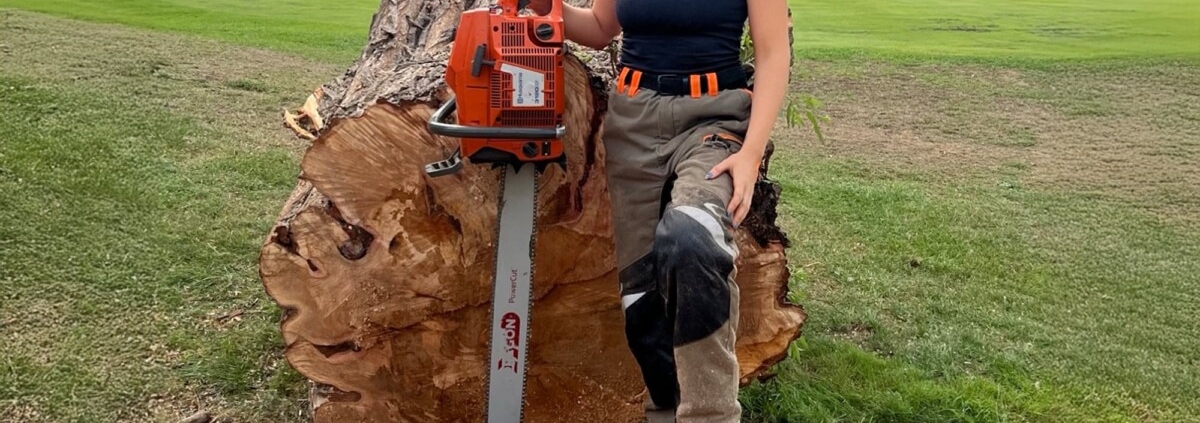
It is also a male-dominated industry, which gives young female arborists, such as Jess Riches, a chance to carve themselves a trailblazing role, breaking down stereotypes and paving the way for others.

From Farm Work to Tree Work

Jess’s path to arboriculture wasn’t a straight line.

She’s worked on banana farms, driven buses, and spent years in the tough FIFO construction industry in Australia.

“I’ve always preferred manual labour roles,” she explains. “When I came back from Australia, I knew I wanted to continue doing a manual job.”

When she returned to the UK, she remembered her brother’s positive experience with Blake Tree Care. “It seemed perfect. I could learn new skills while using my previous experience in operating machinery.”

No Two Days the Same

Ask her what a typical day looks like, and she laughs… because there isn’t one.

If she’s with the ‘willows’ team, she might spend the day operating machines, using chainsaws, and handling large-scale clean-up. On domestic jobs, she could be hedge cutting in the morning, chipping in the afternoon, and chainsawing in between.

Her favourite part? “Definitely domestic work. It’s like being a kid again climbing trees, but this time you don’t get in trouble!”

The Best & The Toughest Parts

The joy of the job lies in the variety. Every tree is different, and every site is unique. Climbing and chainsawing bring an adrenaline rush and a childlike sense of freedom. And working outdoors in the Essex and Suffolk countryside is a privilege in itself.

But tree work isn’t always sunshine and fresh air. “The toughest part can be working in all weathers,” she admits. “There have been days in torrential rain that are mentally challenging. But it’s never been too bad, you just push through.”

Teamwork and Support

Tree surgery is rarely a solo job. The work is demanding, and safety relies on teamwork. For her, that’s one of the highlights: “The team all get on well and support me. As I’m new to the industry, they’ve been keen to teach me anything I don’t know.”

Being the only woman in the crew could feel daunting, but she’s never let it hold her back. “From day one, I’ve never said no to anything. I wanted to do everything the men can do – and I believe I have.”

Breaking Misconceptions

People are often surprised to see a woman in tree surgery. It’s still rare in the UK, but her experience has been overwhelmingly positive.

“Everyone has been very welcoming. The only challenge is the need to ‘prove yourself’ as a woman. Men are expected to be able to lift heavy equipment and logs. But with women, there’s sometimes doubt. I just got on with it.”

Her advice to other women? Simple: “Absolutely try it. It’s an amazing industry with so many skills to learn. Don’t be put off by it being male-dominated. If you put the work in, you’ll be just as valued as anyone else.”

And as for the public’s view of arborists: “One misconception is that we just cut down trees and ruin the environment. That couldn’t be further from the truth. Blake Tree Care plants thousands of trees to replace those that have to be removed. Arborists love trees more than most.”

Learning on the Job

A recent standout moment came when she was called to a golf course project. The task required her to operate 8- and 14-tonne diggers, which are much bigger than the ones she’d used in Australia.

“It was a great experience. I learned how to adapt my previous skills to tree work. I even got to drive two different types of tractors, which was a lot of fun.”

It’s a reminder that arboriculture isn’t just about climbing. It’s technical, it involves big machinery, and it demands constant learning.

Jess isn’t stopping here. She’s working towards gaining formal qualifications in tree climbing and felling. These skills will not only expand her role but also cement her long-term career in arboriculture.

Why She Loves the Work

At the heart of it all, simple things keep her going.

One of the things that stands out most for Jess is the culture at Blake Tree Care itself. “Everyone wants to help each other and watch each other gain skills. It’s something I haven’t experienced too much before.”

That sense of encouragement and teamwork is what makes the hard days in the rain worth it and the good days in the sunshine even better.

Working in the British countryside also comes with its quirks, according to Jess. “I love working in the amazing scenery that Essex and Suffolk have to offer. I never got to see it much in my previous jobs. But now I work in it every day, and it makes everything easier.”

As one of the few women in the field, she’s proving that anyone can find their place with resilience, curiosity, and passion.

What We Can All Learn from Jess

Jess’s story proves that arboriculture is about passion, grit, and teamwork. Not gender.

At Blake Tree Care, we’re proud to have a team that supports one another and values growth. If Jess’s journey has inspired you, why not learn more about what we do, or even explore a career in arboriculture with us?

If you’ve ever thought about a career in tree care, follow Jess’s lead. The industry needs more people who love trees and want to protect them for the future.

For the latest industry news visit turfmatters.co.uk/news

Get all of the big headlines, pictures, opinions and videos on stories that matter to you.

Follow us on Twitter and Instagram for fun, fresh and engaging content.

You can also find us on Facebook for more of your must-see news, features, videos and pictures from Turf Matters.
The Landmark 200th VGR TopChanger Sale at Whitecraigs

The Landmark 200th VGR TopChanger Sale at Whitecraigs: Whitecraigs Golf Club, a spectacular 27 hole golf course in Newton Mearns, Scotland has marked a significant milestone as the recipient of the 200th VGR TopChanger.

Andy Wilson Course Manager at Whitecraigs, shared his enthusiasm for the new arrival: “We’re delighted to have the 200th TopChanger here at Whitecraigs. The XP has made a noticeable difference to our greens, allowing us to improve soil health with minimal disruption to play. It’s an invaluable addition to our maintenance program.”

The Landmark 200th VGR TopChanger Sale at Whitecraigs

The Landmark 200th VGR TopChanger Sale at Whitecraigs

The story of the VGR TopChanger began fifteen years ago, when VGR Equipment first set out to revolutionise soil care for sports turf. Based in Almkerk, the Netherlands, VGR has developed, produced, and assembled modular machinery used worldwide. Their commitment to ingenious design and sustainability has positioned VGR as a leader in efficient and eco-friendly turf maintenance solutions.

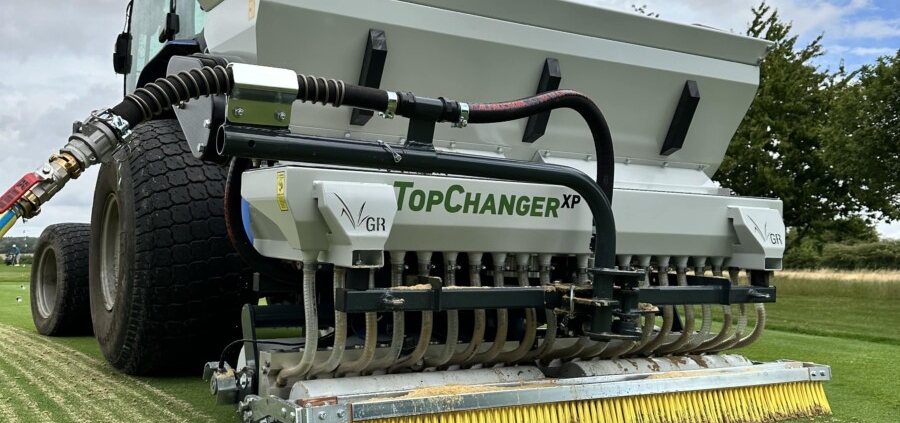
Since the launch of the XP model in 2023, sales have taken off, with over 60 units operating across the UK alone. The TopChanger XP stands out for its reliability, ease of operation, and ability to enhance soil quality while keeping golf play undisturbed. Its water-based aeration technology injects holes into the soil at high pressure, allowing the incorporation of soil-improving products, fertilizers, and sand, all in a single pass. This efficiency ensures sustainable soil conditions and stable, even playing surfaces for golfers.

“VGR’s ongoing dedication to healthy soil and better turf is reflected in their partnerships and comprehensive product range, with the goal of delivering the best possible playing experience for sports enthusiasts.” Said VGR Managing Director Ruud de Deugd. “The 200th TopChanger at Whitecraigs is not just a milestone, it’s a testament to VGR’s legacy of innovation and the trust placed in their solutions by leading clubs across the world.”

For more information please visit: www.vgrequipment.com

For the latest industry news visit turfmatters.co.uk/news

Get all of the big headlines, pictures, opinions and videos on stories that matter to you.

Follow us on Twitter and Instagram for fun, fresh and engaging content.

You can also find us on Facebook for more of your must-see news, features, videos and pictures from Turf Matters.