Tag Archive for: The

Future proof the UK’s green spaces

Future proof the UK’s green spaces: There is an urgent need to recruit young volunteers to care for and maintain UK parks if they are to meet the needs of current and future generations, according to Future Proof Parks – a partnership between Groundwork, Fields in Trust and National Youth Agency.

They say it is vital that we act now to recruit the next generation of volunteers, representative of the communities that enjoy and benefit from the UK’s parks and green spaces. A new series of free How-To guides have been published supporting friends of parks groups to recruit more young volunteers.

Future proof the UK’s green spaces

Future proof the UK’s green spaces

Our parks are amazing places. Across the country, volunteers work tirelessly to care for and protect their local green spaces, improving our towns and cities. They have been crucial as places to exercise, meet friends and relax during the Coronavirus pandemic. As council funding becomes further stretched, more work maintaining and improving our precious parks is being picked-up by friends of parks groups. However, these volunteers are not always representative of the whole local community that use the park – and they could benefit from a wider range of volunteers to support their growing workload.

Future Proof Parks is a National Lottery Heritage Fund programme – part of the £10m ‘Kick the Dust’ initiative –which aims to get more young people involved in preserving their local park and green space heritage. Throughout the programme young people have learned about their local historic parks and have been encouraged to join their local ‘friends of’ groups, volunteering to preserve the local spaces that matter to the communities they live in.

The project is also working with friends’ groups to give them the tools, encouragement, and support to get more local young people involved in their work and benefit from cross-generational working. To support volunteers inexperienced at involving young people, a series of How-To guides has been published introducing Friends of Parks working with young people in green spaces. The in-depth How-To-Guides which look at key areas including Recruiting young volunteers, safeguarding young people and how to fundraise with young people.

Fields in Trust Chief Executive Helen Griffiths said: “We are all thankful to the volunteers who helped maintain our parks throughout lockdown and now, coming out of the pandemic, we can all play our part to make sure local green spaces will remain a healthy part of the local environment contributing to our wellbeing, our community connections and mitigating the impact of climate change. Local parks have been vital over the last year, we must make sure they will always be there for the whole community and for future generations – helping to restore the natural world and providing safe places to meet friends and neighbours. To make that happen we have to ensure the next generation of volunteers are included and empowered to get involved now and become future leaders”

The wellbeing value associated with frequent use of parks and green spaces is worth £34.2 billion per year to the UK adult population and is estimated to save the NHS around £111 million per year through a reduction in GP visits. Parks are one of the most universal of our public services used by all members of our communities and multiple generations – so it is important that they deliver something for all the groups that use them.

Earlier this year, a report published by Groundwork drawing on contributions from 23 organisations recognising the need to reimagine parks for the 21st century, found major inequalities in people’s ability to access parks and other open spaces.

The ‘Out of Bounds’ report demonstrated the extent to which certain groups are not getting the benefit of regularly accessing ‘urban nature’ – citing evidence that girls and young women feel unsafe in public spaces, some disabled people feel uncomfortable in parks and young people from minority ethnic backgrounds have fewer opportunities to connect with green spaces.

The How-To Guides are available for free download www.fieldsintrust.org/future-proof-parks

For the latest industry news visit turfmatters.co.uk/news

Get all of the big headlines, pictures, opinions and videos on stories that matter to you.

Follow us on Twitter and Instagram for fun, fresh and engaging content.

You can also find us on Facebook for more of your must-see news, features, videos and pictures from Turf Matters.

Dunblane New replaces the old

Dunblane New replaces the old: Dunblane New Golf Club’s course is located in the centre of the cathedral city of Dunblane in one of the most picturesque areas of Perthshire. The course’s elevated position provides beautiful panoramic views over the Forth Valley, the Campsie Fells and beyond, including Stirling Castle, the Southern Highlands and the peaks of Ben Lomond and Ben Ledi.

The ‘New’ name came about because until 1922 golf was played on a small nine-hole course adjoining the River Allan on what is now a public park. History states that play started on the new course in April 1923, after a horse, cart and harness with a roller box and two mowers were bought and Mr J C Ross was appointed as greenkeeper at £3 10s a week.

Dunblane New replaces the old

Dunblane New replaces the old

Almost 100 years on, course manager Wes Saunders has taken delivery of 11 new machines from local dealer Double A, the club’s first John Deere fleet deal, as part of an ongoing landscaping and maintenance programme designed to continue the enduring quality and appeal of the course to members and visitors.

The latest fleet comprises two 2750E triplex and three 220E walk-behind hybrid electric greens mowers, two 7700A PrecisionCut fairway mowers, 9009A and 7400A utility TerrainCut rotary mowers, plus a Tru-Turf RB70 greens roller and a Campey Turf Care Air2g2 air injection machine.

These were bought using a tailored John Deere Financial agreement with six-year PowerGard Protection plans for full maintenance and servicing, allowing the club to have a fixed machinery budget with no extra costs. This is the first part of a replacement programme that Wes and Double A’s golf key accounts manager John Bateson are working through together, with tractors and utility vehicles being looked at this year to complete the fleet.

Originally hailing from Sydney, Australia where he did his greenkeeping apprenticeship at Elanora Country Club north of the city, Wes Saunders has 27 years’ experience working on golf courses across the world. After leaving his home country, he spent several years in the US and Canada before joining Dunblane New Golf Club six years ago as course manager.

“I first put a proposal to the club two years ago to update the equipment fleet, but the timing wasn’t quite right for the finance so the idea was postponed for a year,” says Wes. “The board then agreed what we could spend on a monthly basis and we held a competitive tender with the main manufacturers, bringing in various machines for demonstrations and assessment by the greenkeeping team.

“We made the decision based on whether the kit was fit for purpose, our likes and dislikes, serviceability and previous history with the suppliers. We chose John Deere, not just on price – although that was a prime consideration – but also on the key aspects of quality and reliability of the equipment and, most importantly, the strong relationship with the Double A dealership and their parts and service backup. The terms from John Deere Financial were also very flexible, which enabled us to get what we needed to meet the club’s budget.

“All the machines were in place by the end of April this year, and everything’s working out a treat now. We use the 2750E hybrid electric triplex mowers to cut the greens for most of the year, and the 220E walk-behinds for special tournaments when we need a little more refinement in the finish, then these are used on the greens throughout the winter.

“The new A Model mower technology is also proving particularly useful – even though we’re still experimenting a little with its capabilities, the use of the programmable TechControl system to achieve the desired results consistently across the course is proving to be a game-changer.

“Overall I am very pleased with the performance of the new machines. We have quickly seen improvements to the course as well as labour savings with the extra control provided by the new mowers’ advanced technology features.”

For the latest industry news visit turfmatters.co.uk/news

Get all of the big headlines, pictures, opinions and videos on stories that matter to you.

Follow us on Twitter and Instagram for fun, fresh and engaging content.

You can also find us on Facebook for more of your must-see news, features, videos and pictures from Turf Matters.
A pitch fit for the Premiership

A pitch fit for the Premiership: Formartine United Football Club boasts a pitch to match its ambitions thanks to an experienced groundsman and two Dennis mowers. 

The club from Pitmedden, Aberdeenshire is currently playing in the Highland Football League but has its sights set higher.

A pitch fit for the Premiership

A pitch fit for the Premiership

“It is a success story so far, but we’re not finished yet,” said Head Groundsman Paul Fiske.

“We were in the amateurs, then progressed through to juniors and are now in the Highland League. The ambition is to reach the Scottish Professional Football Leagues and I don’t think we are far off.”

It is safe to say that Paul already knows how to prepare a pitch worthy of the professional leagues after spending 22 years as the Head Groundsman at Aberdeen FC. His work at Formartine has already been widely recognised and most recently by another Scottish Premiership team.

“We played Motherwell FC in the Scottish Cup and they were really impressed with how good the surface was – the manager and a lot of the players were saying that the pitch was as good as anything they have played on in the Premier League.”

Aside from his groundsmanship skills, Paul also believes the success of the pitch is down to Atholl Cadger, the chairman and Sandy Sinclair vice-chairman, who he says are “key to the club’s ambition” and “backs me to the hilt” when it comes to pitch maintenance.

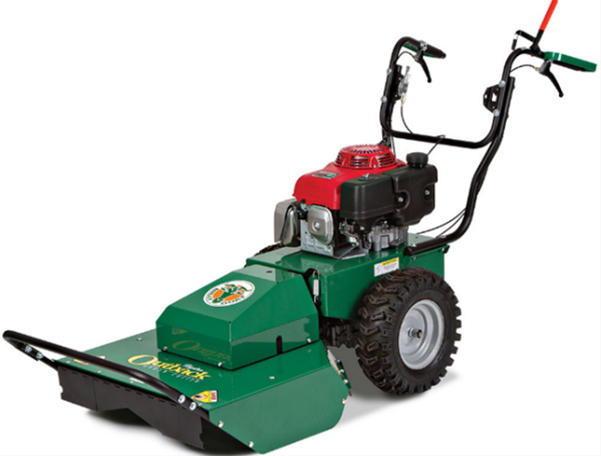
This certainly rings true when you consider that the club has recently invested in a new Dennis PRO 34R. This innovative rotary mower is ideal for sports pitches and lawns producing the enviable ‘Dennis Stripes’ whilst a powerful vacuum flow collects debris quickly and efficiently.

Paul claims that the PRO 34R has been an absolute “gamechanger” and has saved him an incredible amount of time.

“I previously had a 26-inch rotary mower and to clean-up after a game it would take me six hours,” he said. “When I found out Dennis had brought out a 34-inch rotary I just knew that it would be ideal, plus it has the brush on the front of it as well which is brilliant.

“I would say that the PRO 34R has cut those six hours in half – and therefore it allows me more time to get on with other jobs.”

To accompany his new PRO 34R, Paul also relies on his trusty Dennis G860 cylinder mower – which he was pleased to see was already in the shed when he first arrived.

“I’d used the G860 a lot at Aberdeen FC, so I was over the moon to see that machine already here,” he said. “It is so light yet powerful and, in my opinion, is the best cylinder mower out there.”

As Paul says, the G860 is lightweight at just 166kg and it is also easy to manoeuvre and comfortable to operate. The handlebar console houses the controls for the throttle, parking brake, roller drive and cutting cylinder drive.

The mower features a large diameter front roller with an adjustable scraper which has been designed for a precise height of cut control, giving an excellent finish on every occasion. The Dennis G860 also features an interchangeable cassette system to assist with a wide range of tasks such as including scarifying, verticutting, brushing, spiking, and slitting.

“We have pretty much all the cassettes which help with a wide range of tasks,” said Paul. “The Sorrel Roller cassette is fantastic to use in the winter as it helps to get some much-needed air into the surface.

“We cut to a height of somewhere between 26-28mm in the height of the summer, and then taking that up to maybe 30-32mm in winter. I’ll cut everyday with the G860 including a double cut on a Friday and then a final cut on the morning of a matchday.

“The 8-bladed cylinder provides the perfect finish,” he continued. “It is a great machine and ticks every box for the club.

“I would not hesitate to recommend both the G860 and the PRO 34R to anyone.”

For further information or a no obligation demonstration, please contact Dennis 01332 824 777 or visit www.dennisuk.com

For more news, reviews and insightful views, you can follow Dennis on Twitter and Instagram @DennisMowers and like the company’s Facebook page – www.facebook.com/DennisMowersUK You can also view the latest Dennis videos by visiting www.youtube.com/DennisMowers

For the latest industry news visit turfmatters.co.uk/news

Get all of the big headlines, pictures, opinions and videos on stories that matter to you.

Follow us on Twitter and Instagram for fun, fresh and engaging content.

You can also find us on Facebook for more of your must-see news, features, videos and pictures from Turf Matters.

Redexim proves the perfect partner

Redexim proves the perfect partner: A vast and varied fleet of equipment from Redexim has been fundamental to the team at Sheringham Golf Club, as they continue to undertake a number of large-scale construction and renovation projects around the Norfolk clifftop course.

After taking over as Course Manager 12 months ago, Rick Goodman has overseen the majority of the works, including a species exchange on some of the courses high-footfall areas – for which he has praised their Overseeder 3D 1275.

Redexim proves the perfect partner

Redexim proves the perfect partner

Rick and his team of nine utilised some of the breaks in play caused by COVID to carry out some major renovations to the bunkers and introduce some more tolerant species into both the fairways and greens. “Our Overseeder has been ideal for the work on the fairways, on which we’ve been drilling in fescue and ultra-fine ryes which work well together and provide us with improved wear tolerance” Rick explains. “Conversely, on our greens we were finding the fescues were being outcompeted here, so we hired a Redexim SpeedSeed dimple seeder to incorporate more bent which is native in some areas around the course. This has been showing excellent results.”

“We’ve also been introducing more finer fescues and bents into our roughs, as we move towards the establishment of ‘eco-roughs’ to frame the holes.” For this, the team have been utilising the Redexim Turf Tidy 3000. Offering versatile cut and collect in a productive 1.8m wide unit, the Turf Tidy has been used twice a year to thin out Sheringham’s native coarse grasses to create a more favourable environment for finer species. “The Turf Tidy is a fantastic piece of kit. Because it does both jobs in one pass, it’s made the task simple and straightforward and has been fundamental to the improvements we’ve seen in these areas.”

The Overseeder and Turf Tidy sit in the shed, alongside a number of other Redexim units including two widths of Verti-Drain, a Rink DS800 topdresser and a Speed-Brush. The newest addition to Rick’s fleet is the 6m wide Top-Brush, installed by local dealers Ben Burgess in April 2020. “This was purchased purely on the back of problems we’d experienced with worm casts, however as soon as we used it, the quality of presentation and finish amazed myself and the team. When the growth slows down we can cover all of the fairways with the Top-Brush in less than two hours, and achieve a two-tone finish that looks like we’ve cut the grass. It’s a real winner in our books!”

For the latest industry news visit turfmatters.co.uk/news

Get all of the big headlines, pictures, opinions and videos on stories that matter to you.

Follow us on Twitter and Instagram for fun, fresh and engaging content.

You can also find us on Facebook for more of your must-see news, features, videos and pictures from Turf Matters.

Getting to the roots of sustainability

Getting to the roots of sustainability: Back in April, users of ‘turf Twitter’ bore witness to the effect extreme weather has on the sports turf industry.

A combination of 22 days of ground frost, record levels of sunshine and the fourth driest April on record made the preparing playing surfaces exceptionally challenging. Predictably, May was a washout with relentless heavy rain falling across most of the country.

Getting to the roots of sustainability

Getting to the roots of sustainability

Weather extremes add additional pressures and keep sustainability and climate change issues high on the industry’s agenda. The most commonly described approach to sustainability in turfgrass management is a reduction in inputs, such as fertiliser, fungicides and water, but grass breeders at Barenbrug have given turf managers the ability to underpin their sustainability strategy with Sustainable Grass Technology.

The result of years of specialist breeding, significant investment from the global leader in turfgrass seed production, and numerous independent and in-house trials, grasses in SGT blends have been bred to excel in one or more of four key areas of research;

  • nitrogen use efficiency to reduce fertiliser use and cost
  • drought tolerance to increase survival and reduce the need for irrigation in stress periods
  • increased disease tolerance to reduce fungicide use
  • lower clippings yield to reduce mowing frequency, labour and fuel consumption

“Our breeders had the foresight to anticipate the industry’s needs. These grasses have, in some instances, been decades in the making,” explained Dr David Greenshields, Barenbrug UK’s Amenity Commercial Manager.

“Our aim is to give turf managers all the desirable characteristics that help them meet the demands of the modern game, with minimal inputs, and for surfaces to retain their health, vibrancy and resilience under extreme conditions, such as drought or heavy wear. For turf managers looking to reduce their inputs and all the associated costs without compromising turf quality, using grasses specifically bred for that purpose and proven through independent testing is the ideal starting point.”

SGT’s breeding objectives led to the development of Barprium, a perennial ryegrass cultivar that has set a new benchmark for nitrogen efficiency.

Trials conducted at the STRI from 2016 to 2018 focused on identifying which perennial ryegrass varieties use lower levels of nitrogen most efficiently to deliver acceptable turf quality.

It compared the performance of seven of Barenbrug’s existing high performing perennial ryegrass cultivars against the new cultivar.

When low levels of nitrogen were applied to all cultivars, all performed to a good standard throughout the trials, but Barprium showed greater quality and coverage, even with a 50% nitrogen input. The other seven cultivars all ranked highly in the BSPB Turfgrass Seed Listings, making Barprium’s performance even more impressive.

Strong summer colour in Barprium has also proved an asset to the blend for low input golf fairways.

“SGT Rye Fairway is a great example of our global breeding and trials resource delivering excellent regional solutions. The fi ne fescue cultivars in the mix were selected for their sustainable performance characteristics,” explained David.

“Hardtop hard fescue and Barjessica strong creeping red fescue performed particularly well in periods of heat and drought.

Data from fi ne fescue performance trials conducted in 2018 showed that turf quality of hard fescue was unrivalled during the intense heat and drought of a memorable summer, and the recovery capacity of Barjessica was exceptional. The selected cultivars also provide excellent resistance to Red Thread – perfect for low nutrition fairways.”

David is urging Course Managers to consider the significant benefits of hard fescue on fairways.

“The summer of 2018 bought into sharp focus the situation turf managers face during lengthy periods without rainfall. Hard fescue has been used successfully on the continent, in the US and in Australia where summers are hotter and drier than ‘typical’ ones in the UK.

“It is the default species where there is no irrigation, which demonstrates its natural drought tolerance. It is also resilient and more nitrogen efficient than red fescue, and modern cultivars produce high quality turf.

“It currently makes up 50% and 20% of our two SGT mixtures, and I believe it will play a greater role in the long-term management of medium-fi ne turf with low maintenance requirements.

For new constructions and full renovations, sustainability starts with sowing the right cultivars. For established turf, overseeding with these new cultivars can enable the sward to adapt over time to provide additional resilience when and where it’s needed most.”