Tag Archive for: The

Get the most from your machine

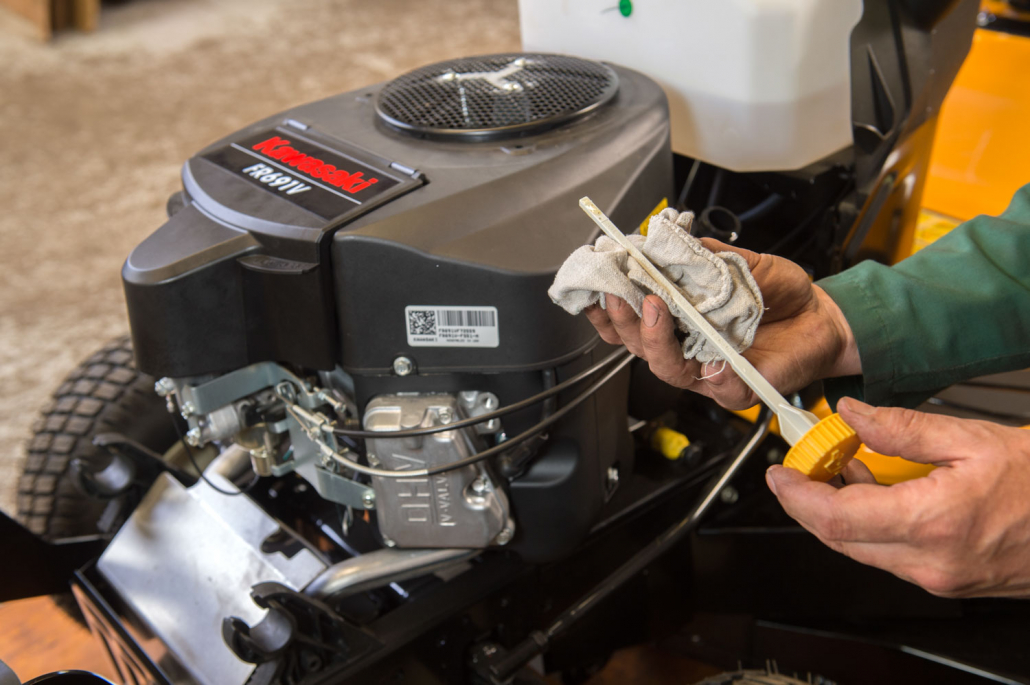
Get the most from your machine: Nothing is more important than keeping machines running, which is why the role of servicing and maintenance is key to the success of every business. From the correct way to tilt the mower, to the wrong way to clean spark plugs, Kawasaki Engines looks at how to get the most from your machine.

Martin Cook, parts and technical manager and Dave Dunwoody, technical and after sales specialist, both from Kawasaki Engines have decades of engineering experience and provide advice on common mistakes, tips and ideas for keeping your machinery, and your business, running.
Get the most from your machine

Get the most from your machine

No one knows a mower better than the person using it, so trust your instincts, says Dave: “We’ve been called out to a premiership football club to service a pedestrian mower because the operator could sense a change in the precision of the cutting through the vibrations of the machine. The mower was hesitating and the blade slightly slowing down. We found an issue with the carburettor and while it didn’t affect the mowing quality as such, it did affect cutting the pattern into the pitch.

“So, while it sounds simple, maybe even obvious, it’s important to use your senses to detect changes in the machine. Is there a new or unusual smell, noise or feeling such as vibrations? In the case of two-stroke engines, it could be that the fuel to oil ratio isn’t right. The ratio should be 50 to 1 (50 parts fuel to 1 part oil), so, for example, five litres of petrol will need 100ml of the correct two-stroke oil adding to it. We recommend using a two-stroke mixing bottle. Too little oil lubricating the engine, and it will dry and seize. Too much and there will be smoke, soot and fumes. It doesn’t take long for either to happen!

“We’ve seen cases where the fuel for a two-stroke engine was put in a four-stroke engine, and vice versa, an easy mistake to make when the job is busy and the day is long. Therefore, we strongly recommend marking up the cans and putting them in separate places to reduce the chances of this happening.”

When it comes to servicing we’ve seen some common mistakes. For example, it’s important not to delay routine servicing or skip the daily oil and air checks. Definitely don’t clean spark plugs with a steel wire brush as it leaves metal traces and will cause the plug to short out.

When it comes to maintenance these simple things will make sure you don’t incur problems later says Martin: “Check liquid levels on a flat surface, an incline will show more/less depending on which way it’s tilting. During normal deck inspection, tilting the mower the wrong way will lead to a flooding of fuel! The carburettor should always be uppermost. When jet-washing the machines after a hard day’s work, make sure to dry off excess water as pooling can easily damage the electricals. Using WD-40 is great post-wash as it displaces moisture and protects against electrical short circuits.

“Always consider where you put things – if you take off a jacket and pop it on the back of a zero-turn machine, make sure you don’t cover the engine fan as that will lead to overheating and can cause the engine to seize.

“Fuel has changed over the last few years, ethanol is now added to all petrol up to 10 percent, the reason for this is to decrease CO2 emissions. But ethanol is highly corrosive and hygroscopic (absorbs water), that’s why we are constantly telling people to drain and purge equipment for the winter months. Many people argue that they have a 40-year-old chainsaw and they have never had to drain it so why now? This is where we remind them about the ethanol content of fuel and due to recent RoHS directives, we are restricted to the materials we use in the carburettors. Older machines made use of chromium cadmium and lead, thankfully we no longer have these hazardous substances in our equipment, but it is now more important to drain and purge equipment before the winter shut down.”

The importance of genuine quality parts can never be underestimated, continues Martin: “It never pays to shop for the lowest cost parts to save money. We’ve seen an engine destroyed because an oil filter from a motorcycle was fitted. The filter looked the same, but because the fit wasn’t exact, the oil pressure built up and blew the filter apart, taking half the engine casing with it! All that damage, all for the sake of a few pence.”

Following these simple guidelines will not only ensure the utmost productivity from machines but will go a long way to increasing the life of the machine, giving you the most from your investment now and in the future.

To find out more about Kawasaki’s technical support or to learn more about their full engine range, visit https://www.kawasaki-engines.eu/en/

For the latest industry news visit turfmatters.co.uk/news

Get all of the big headlines, pictures, opinions and videos on stories that matter to you.

Follow us on Twitter and Instagram for fun, fresh and engaging content.

You can also find us on Facebook for more of your must-see news, features, videos and pictures from Turf Matters.

Suståne provides the organic solution

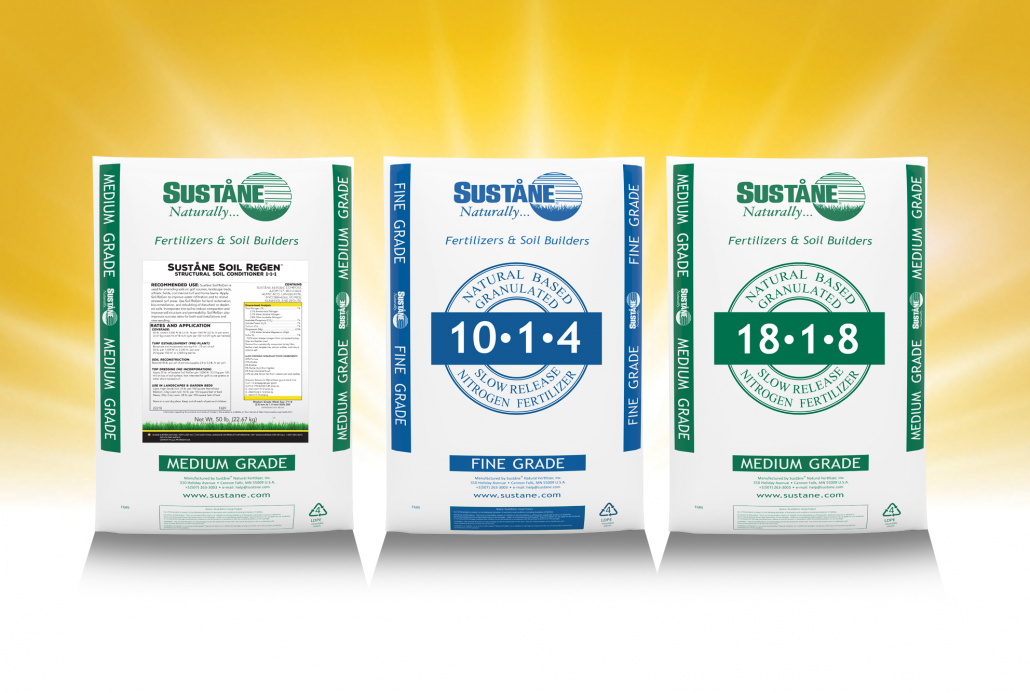
Suståne provides the organic solution: Organic solutions to plant nutrition and soil management are becoming an ever-increasing choice at leading sports facilities around the globe, as attention turns to both the impacts of more traditional chemicals and the benefits to the environment of more natural approaches.

Built on over 40 years of research, Suståne Natural Fertiliser has one of the largest ranges of organic-based fertilisers and soil builders developed for all landscape and turf applications.

Suståne provides the organic solution

Suståne provides the organic solution

Suståne is the most comprehensively researched organic fertiliser brand available in today’s market. Over 800 independent studies have been conducted in areas including turf establishment, disease suppression, environmental impact, effects on wildlife and soil improvement – the result of this research is a biologically-active, organic product range built for agronomic performance. Suståne’s aerobic, thermophilic composting process is the most environmentally sound method for recycling of agricultural residue, generating no methane and fewer greenhouse gases than other organic stabilisation processes. With the manufacturing impact on the environment low, the benefits of Suståne to the landscape are many.

Through the unique process, the organic feedstock is concentrated into a nutrient rich humus – rich in microbial diversity yet low in biological oxygen demand. Suståne’s microbial diversity index of 4.5 is critical to many soil and plant functions, providing optimal microbiology for plants to thrive. The release of nitrogen is slow, predictable and efficient, reducing loss to the environment through volatilisation, leaching or immobilisation and provides a long-lasting, sustainable source of plant nutrition and soil improvements.

There are formulations within the Suståne range suitable for every turf type and agronomic application, from 100% organic to higher nitrogen natural-base formulations, each with unique release rates and nutrient profiles. New to the range in 2021 is Suståne Soil Regen® – a soil amendment product formulated to improve soil structure by increasing infiltration rates and the profiles’ ability to hold nutrients and moisture.

The Suståne range is available through a network of approved distributors globally, with dedicated Regional Managers on hand to provide tailored, technical advice.

For the latest industry news visit turfmatters.co.uk/news

Get all of the big headlines, pictures, opinions and videos on stories that matter to you.

Follow us on Twitter and Instagram for fun, fresh and engaging content.

You can also find us on Facebook for more of your must-see news, features, videos and pictures from Turf Matters.
Greenkeepers to the fore

Greenkeepers to the fore: Episode three of Syngenta Golf’s new docuseries Changing the Business of Golf is streaming now – and follows the greenkeeping team as they transform Stanedge Golf Club.

‘On Course for Change’ features Head Greenkeeper Christian ‘CJ’ Johnson as he oversees a major course upgrade while coping with new parenthood; Greenkeeper David Morgan renovates an overgrown par-three; and we meet new recruit James Wyatt, a pilot grounded by the pandemic, as he swaps runways for fairways.

Greenkeepers to the fore

Greenkeepers to the fore

Watch now: syngentagolf.com/changing-business-golf

“Nobody really notices the role of the greenkeeper,” says James, who is seeing golf from the greenkeeper’s perspective for the first time. “Everybody comes along, they play their golf, they expect the greens to be tidy, they expect the grass to be in good condition, but you don’t tend to see all of this as a player.”

But it’s not just customers who have high expectations. New course owner and PGA Professional Fame Tate believes course conditions are critically important to the customer experience – and the long-term success of her business.

“The golf course was my number one priority for change,” explains Fame. “If we were going to get people back, it was the golf course that was going to have to change.

“I want it to look absolutely immaculate. And as much as I wanted to wave my magic wand, make grass grow and make the greens perfect and do all these things instantly, I very quickly realised things take time.”

Join Fame, CJ, James and David as the turf team transform the Stanedge course to meet the demands of a growing membership.

And catch previous episodes following Fame’s remarkable one-woman mission to change golf, transform the customer experience and make her club a friendly and inclusive community venue.

Watch all episodes, streaming now, on Syngenta Golf: syngentagolf.com/changing-business-golf

For the latest industry news visit turfmatters.co.uk/news

Get all of the big headlines, pictures, opinions and videos on stories that matter to you.

Follow us on Twitter and Instagram for fun, fresh and engaging content.

You can also find us on Facebook for more of your must-see news, features, videos and pictures from Turf Matters.

BAGMA sold to the AEA

BAGMA sold to the AEA: The British Independent Retailers Association (Bira), has transferred the ownership of BAGMA, the British Agricultural and Garden Machinery Association, to the Agricultural Engineers Association (AEA) with effect from the July 1, 2021.

After a long relationship between Bira and BAGMA, this has been a difficult decision. However, it is in the best interests of both BAGMA and Bira. The AEA is more aligned to the industry sector BAGMA operates in and this will enable BAGMA to offer more support relevant to its members’ business needs.

BAGMA sold to the AEA

BAGMA sold to the AEA

Bira will maintain a working relationship with BAGMA and the AEA for at least the next 12 months, with members of BAGMA still having access to the services available from Bira, including legal advice and Bira Direct.

BAGMA Director Keith Christian and his team, Kari Hearn and Richard Jenkins, will be transferring with BAGMA, ensuring the all-important continuity in the running and operations of BAGMA.

Andrew Goodacre, CEO of Bira, said: “I, and my colleagues in Bira, are very proud to have worked closely with the BAGMA team and BAGMA members over the past 25 years. There is a strong identity among BAGMA members that is to be admired.”

Ruth Bailey, CEO of the AEA, said: “The AEA is absolutely delighted to have the opportunity to be working with BAGMA and feel extremely positive about future developments and advantages that could be brought by the two organisations joining forces.

“For many years, there has been a clear working relationship between the two Associations but in more recent times the links and directional cooperation have become closer and closer and more aligned. As a collaborative voice to government and business, there is huge potential in adding impact and in bringing a difference to the sector.

“While the AEA sees a great amount of synergy between the two organisations, it fully respects the need, however, for the continuity of membership services from BAGMA to its members and to recognise the inherent strength that the BAGMA membership brings. It is for this reason that it is very important that the highly valued and distinct identity of BAGMA is maintained and supported independently.

“We look forward to providing a clear voice to industry yet maintaining the rich heritage of each of the Associations and the value of services to their respective members.

Peter Arrand, BAGMA President, said: “The BAGMA Council of Representatives unanimously supported the purchase of BAGMA by the AEA. “The acquisition will secure a future home within industry and allow the heritage and strong brand built up over 100 years as a dealer trade association to continue. There are many synergies between the two organisations which will enable a stronger representation for the industry we operate in whilst not losing sight of the individual needs of BAGMA members.

“The advantages of being a BAGMA member have been retained and we can look forward to a bright and collaborative future.”

Keith Christian, Director of BAGMA, added: “Having been a part of the former British Hardware Federation (BHF) now the British Independent Retailers Association (Bira) for the past 25 years It may be a surprise to some for BAGMA to be moving to new home.

“BAGMA’s 103-year history has always been intertwined with the AEA and whilst we represent different factions within the industry, we share a common goal in supporting the industry through both dealerships, suppliers and manufacturers.

“Whilst BAGMA will remain as an independent dealer’s association within its new home, it is expected that there will be new working relationships that will benefit BAGMA members in the future to come.”

For the latest industry news visit turfmatters.co.uk/news

Get all of the big headlines, pictures, opinions and videos on stories that matter to you.

Follow us on Twitter and Instagram for fun, fresh and engaging content.

You can also find us on Facebook for more of your must-see news, features, videos and pictures from Turf Matters.

Wet Sand no issue with the Dakota 412

Wet Sand no issue with the Dakota 412: As the most northern links golf course on the United Kingdom mainland, having a top dresser that can spread wet sand like the Dakota 412 from Campey Turf Care Systems is a must at Scotland’s Reay Golf Club. 

The James Braid designed course is positioned on the edge of Sandside Bay with views of the Pentland Firth and the North Atlantic from every hole. The course and its stunning views have been under the control of Head Greenkeeper Jason Norwood, since March 2021, with the new man aiming to put his stamp on the course, starting with the greens.

Wet Sand no issue with the Dakota 412

Wet Sand no issue with the Dakota 412

As the sole full-time member of staff for the main 18-hole course and junior three-hole, Jason’s priority is the greens, with volunteers giving up two days a week to assist with the fairways and roughs. The limited time available to Jason needs to be spent working, and with the Dakota 412, he’s able to top-dress as and when he needs to regardless of the sand moisture.

“I’ve tried to put my own stamp on things here with different types of machinery and different ways of working, and the club has really been on board with that, and one of those things has been buying the new Dakota top dresser,” Jason explains.

“The equipment we originally had couldn’t cope well with wet sand; it was more of a large-scale fertiliser spreader. As you can imagine at the top of Scotland, there’s a lot of rain about so any sand that we do have is normally quite wet, so that was one of the main features of the Dakota for us because it can deal with that quite easily and we still get a good even spread with it.

“We really want to push forward and make use of the North Coast 500 tourist route, which is literally on our doorstep; it passes directly in front of us, so we get a lot of passing visitors now, and I think all year-round performing greens are the main thing golfers are after on a golf course so it’s making sure that we can provide that for them.

“We’ve had the machine since the middle of April, but because of the weather chances to get it out have been limited. I’ve trialled different settings on our junior course greens to get what we want for the main course, and it’s been good so far.

“With it having four wheels the weight is distributed incredibly well, so it doesn’t leave a mark on the greens, and the first time I used it you’d have no idea that anything had been done or any heavy equipment had been over the greens it because the footprint was minimal.”

The Dakota 412 features accurate and easy to operate calibration with no manual adjustment and has four Ultra-Trac turf tyres on independent floating beam axels for maximum weight distribution, allowing Jason to work without causing viable disruption to the surface.

As part of Campey’s installation, and to help Jason get the most out of the machine, Campey Product Specialist, Richard Heywood, walked him through the various settings and features, which Jason views as an invaluable experience.

Jason explains: “Because we are so far north, there is a lot more to consider when ordering machinery. Something that was great for me was being supplied through my machinery dealer Double A with support from Campey by sending Richard to demonstrate how to use the top dresser to the best of its abilities. This proved invaluable to me not having used one before.

“He went through it all, explained what all the different settings were, how to adjust it all, and that was vital. Having someone who knows how to operate it fully really maximises its performance and helps us get the best out of the machine.”

For the latest industry news visit turfmatters.co.uk/news

Get all of the big headlines, pictures, opinions and videos on stories that matter to you.

Follow us on Twitter and Instagram for fun, fresh and engaging content.

You can also find us on Facebook for more of your must-see news, features, videos and pictures from Turf Matters.