
Tag Archive for: To

Groundsmen Look To The Heavens

Groundsmen Look To The Heavens: It was around this time in the long, hot summer of 1976 that things were getting really desperate for the nation’s greenkeepers and groundsmen. It remains the hottest, driest summer on record, though one that this year is threatening to outdo, and it forced those in search of water to keep their well-tended turf alive to get creative.

Exeter City drew up a plan to pour 10,000 gallons of treated sewage effluent on to the pitch. Torquay United trucked in waste water from a sewage works in Heathfield, and Brentford brought in 30,000 gallons from their local treatment plant. The only way the rugby league club New Hunslet could render the ground at their Elland Road Greyhound Stadium soft enough for a cup tie against Keighley to go ahead was to use a tanker full of water collected from a nearby car factory, which was contaminated with oil and “other waste materials”. “Tests on it show that it does not constitute a hazard to health,” wrote the Times, reassuringly.

David Oxley, secretary of the Rugby League, said that though “this is traditionally a hard game for hard men”, playing it on hard ground would be one hard too many. “When it becomes parched and cracks open, that’s the danger point,” he said. “We have suggested that clubs might use purified sewage water, or any similar method. It is very much a local affair. Each club will have to decide for itself but having watched a game last Sunday when it looked more like a battlefield, I think the time is not far off when we shall be forced to call games off.”

The Rugby Football Union and its Welsh equivalent both suggested that clubs should consider cancelling games if pitches remained parched. “We are leaving it to the common sense of the clubs,” a Welsh Rugby Union spokesman said, “but if they did come to us for advice I think we would have to say don’t play unless it rains.”

The Guardian’s Frank Keating spoke to the director of the Sports Turf Research Institute, John Escritt, whose advice to groundsmen was simple: “The first advice is to trust in the power of prayer – and if that doesn’t work, which it won’t, leave the grass long because it can then collect what bit of moisture there might be around at dawn.”

At Cardiff Arms Park there was no need for prayer. Workmen had been laying the foundations of a new stand when the desperate groundsman, Bill Hardiman, pleaded with them to dig at the river end of the pitch to see if they found water. They did, just nine feet down, and again at the opposite end. From then on Hardiman sprayed his pitch for 12 hours a day. “I have had the water analysed and it is quite drinkable,” he said. “I drink it every day.”

Tony Bell, now Middlesbrough’s head groundsman, was just a child in 1976. “I remember thinking it was fantastic,” he recalls. This year Bell and his team, named the best in the Championship last season, have had to cope with similar challenges. “We’ve had dry times before, but not as long as this, day after day after day,” he says. “Irrigation’s OK, but it doesn’t go on the same as rain. It’s never as even. You only need a breath of wind and it blows about. Some parts of the pitch are getting double what they need, others nothing at all.”

Bell has several advantages over 1970s-era groundskeepers, including automatic irrigation sprinklers, moisture meters, consultant agronomists, and four decades’ worth of advances in turf science. Half the seed he laid this summer was tetraploid grass, a new, hardier, stronger kind of rye. He also has a borehole that provides plentiful water to the training ground. Yet still he has struggled. “Temperature has been the biggest challenge,” he says. “The heat basically forces us to put water on during the day just to keep the grass alive, but that also creates disease. We’ve had pythium blight, which is a warm-weather disease you very rarely get in this country. It’s devastating, it just makes the grass go strawlike. We had a lot of pitches that were severely knocked back, and they’re only just recovering now. Down south it’s been 30-odd degrees, which is far more challenging. Up here 21-22 is a normal summer, but 25-plus is a different ball game.”

Christian Spring is UK research operations manager at the Sports Turf Research Institute, and was recently at Carnoustie to monitor playing conditions at the Open. “They’ve not had a huge amount of rain, certainly a lot less than they’re used to,” he says. “It’s been about managing the water reserves that they’ve got and trying to keep everything ticking over so it looks authentic, feels authentic but still plays well as a golf course. This year was an opportunity to hold an Open Championship in true summer conditions. It’s a different challenge. Overwatering can be just as bad as underwatering. As with all things in life, finding the right balance is difficult. The art of a groundsman is knowing when to back off and not be tempted to turn on the tap.”

As this summer continues along its arid path, although this weekend’s rain has brought some relief, it is also about looking beseechingly at the heavens and hoping that at some point nature will take care of that job for you, and ideally before the borehole runs dry, the hosepipe bans kick in and you’re forced to put in a call to the sewage plant.

Click here to read the original article

For the latest industry news visit turfmatters.co.uk/news

Get all of the big headlines, pictures, opinions and videos on stories that matter to you.

Follow us on Twitter for fun, fresh and engaging content.

You can also find us on Facebook for more of your must-see news, features, videos and pictures from Turf Matters.

Tributes Paid To Simon Tullett

Tributes Paid To Simon Tullett: It’s sad to report that Simon Tullett, founder of STM Co Ltd of Warwickshire – a supplier of SCAG equipment, and a well-known member of the industry, died in hospital recently.

He had health problems for a couple of years and was awaiting heart surgery, but sadly succumbed to kidney failure.

Simon’s family have thanked the hospital where Simon was patient after it helped with arrangements for a wedding blessing to take place at his bedside for the marriage of his daughter Olivia so that he could give her away. It is a testament to the man that, despite his weak condition, he still managed to come out with “and I’m not having her back, either”.

Simon had always been involved in the outdoor machinery industry and spent a number years in Sales with Tony Turner at Turner International, then worked for Agria before taking the decision to set up on his own.

A successful trial venture with SCAG machinery led to a thirty year association, still thriving today under the ownership of the Dominic Mason, who originally came to the company as a young lad working on Saturday mornings, subsequently to be trained by Simon in Sales.

He made a mark in the industry and is greatly respected for the company he developed and his involvement in the groundcare industry.

For the latest industry news visit turfmatters.co.uk/news

Get all of the big headlines, pictures, opinions and videos on stories that matter to you.

Follow us on Twitter for fun, fresh and engaging content.

You can also find us on Facebook for more of your must-see news, features, videos and pictures from Turf Matters.

STIHL To Showcase New Chainsaws

STIHL To Showcase New Chainsaws: STIHL will be exhibiting its latest developments in professional chainsaws and forestry equipment at this year’s APF Exhibition, where visitors will have the opportunity to see the products in action at the manufacturers demo area based on the woodland demo circuit.

In addition to its own demo area, STIHL will have a large range of of high performance tools for professionals on display within the main arena on the static circuit, including the latest MSA 161 T cordless top-handled chainsaw and the lightweight MS 462 C-M petrol chainsaw.  STIHL will also be giving visitors a look at the new MS 500i – the world’s first lightweight petrol chainsaw with electronically controlled fuel injection.

STIHL To Showcase New Chainsaws

Rounding off its offering, professionals will also be able to discover more about STIHL’s range of PPE including the new VENT & X-VENT helmets and range of breathable and weather resistant ADVANCE chainsaw clothing.

Ahead of this year’s Stihl TIMBERSPORTS® World Championship at The Echo Arena in Liverpool in October, guests will be able to see the extreme sport in action as some of Europe’s top lumberjacks will take to the TIMBERSPORTS® Roadshow stage to compete in the six events.

Simon Hewitt, Head of Marketing at STIHL GB, said: “It’s a pleasure to be present at APF this year, and the exhibition is a great opportunity to showcase our ever expanding range of high quality tools for professionals.  Having a demo area on site is the perfect way to demonstrate the capability of our products, and we look forward to welcoming visitors to find out more about STIHL.”

For the latest industry news visit turfmatters.co.uk/news

Get all of the big headlines, pictures, opinions and videos on stories that matter to you.

Follow us on Twitter for fun, fresh and engaging content.

You can also find us on Facebook for more of your must-see news, features, videos and pictures from Turf Matters.

Scarify Your Lawn To Good Health

Scarify Your Lawn To Good Health: The simplest way to ensure that your garden lawn is sufficiently healthy to withstand the rigours of winter and be in good condition for the 2019 growing season, is to scarify the surface this autumn.

Mechanical scarifying using either a mains electric or petrol machine will remove the ‘thatch’ from the roots of the grass plants.  Thatch is dead material or rubbish and moss which builds up forming a spongy surface that prevents air, light, nutrients and, most importantly, moisture from reaching the roots to generate healthy new growth. It is amazing just how much thatch can be lifted from even a small lawn!

Scarify Your Lawn To Good Health

Cobra is the UK’s largest range of powered garden machinery and has four specialist scarifiers; two mains electric and two petrol powered machines.  All four have all been expertly designed in the UK to cater specifically for the changing conditions of the British lawn.

“With our rapidly changing weather, the need to scarify regularly is more important than ever,” says Peter Chaloner, managing director of Cobra.  “As we seem to swing from virtual drought to almost flood conditions throughout the year, the need for lawns to absorb rain and slowly release it to the sub-ground water courses helps reduce the risk of flash flooding.  Lawns that are not regularly scarified tend to hold water, forming more moss and further slowing down this vital role of absorbing rain and slowly releasing it back to nature.”

The two electric options are the SA32E and the S36E. The SA32E has a 1300W motor with a 13” working width, and can work depths from -9mm to +4mm. The S36E is slightly wider at 14” and has a 1800W motor, it offers 2mm more depth too. Both electric models have a 40-litre grass bag capacity.

There are also two petrol models, both with a 15” working width, 16 steel blades and 45 litre grass bag capacity. These models have the choice of a 127cc Briggs & Stratton 550 series engine (the S390B), or a 135 cc Honda GP160 engine (the S390H).

The recommended retail prices for the Cobra scarifiers are £119.99 (SA32E), £159.99 (S36E), £529.99 (S390B) and £579.99 (S390H).

For the latest industry news visit turfmatters.co.uk/news

Get all of the big headlines, pictures, opinions and videos on stories that matter to you.

Follow us on Twitter for fun, fresh and engaging content.

You can also find us on Facebook for more of your must-see news, features, videos and pictures from Turf Matters.

Council Looks To Rigby Taylor

Council Looks To Rigby Taylor: A revolutionary vertical drainage system is set to assist with reducing Wandsworth Council’s perennial misery of cancelled football games due to waterlogged playing surfaces on its Wandsworth Common pitches.

The non-obtrusive Groundwater Dynamics’ system – based on the use of vertical plastic pipes (EGRP) which draw in excess water horizontally – is being trialled on three of most troublesome of the council’s seven winter pitches and, depending on their success, the system could be extended across more of the 96 winter pitches that are under the borough’s care.

Council Looks To Rigby Taylor

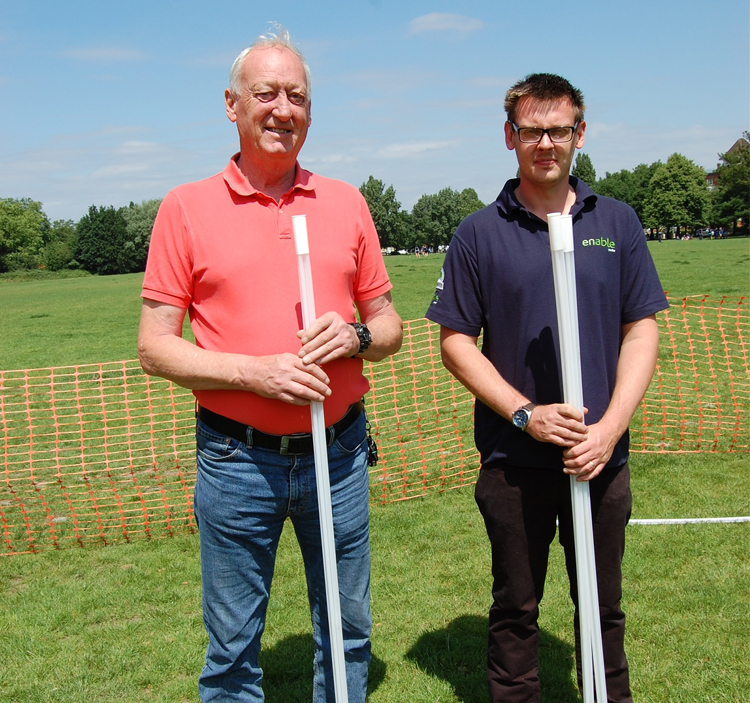
As Principal Parks Officer – Operations for Enable Leisure and Sport, the operation that delivers Wandsworth Council’s leisure services, Steve Green explains:

“Being on a clay base, these pitches are forever flooding whenever we have excess rain and while the installation of traditional drainage would have been cheaper by up to around 20 per cent, we wouldn’t be allowed by Thames Water to link the new drains to surface water outlets (storm drains and sewers, for example).

“This alternative system not only means the water can be dealt with ‘at source’, but also that current infiltration rates can be increased by at least seven times [in some cases far higher].

“And the installation hardly impacts surface appearance – indeed, looking at the work, I reckon we could easily play on the pitches within hours of installation. In addition, the system will last over 25 years with regular vertidraining and earthquaking (twice per annum for each operation).”

Council Looks To Rigby Taylor

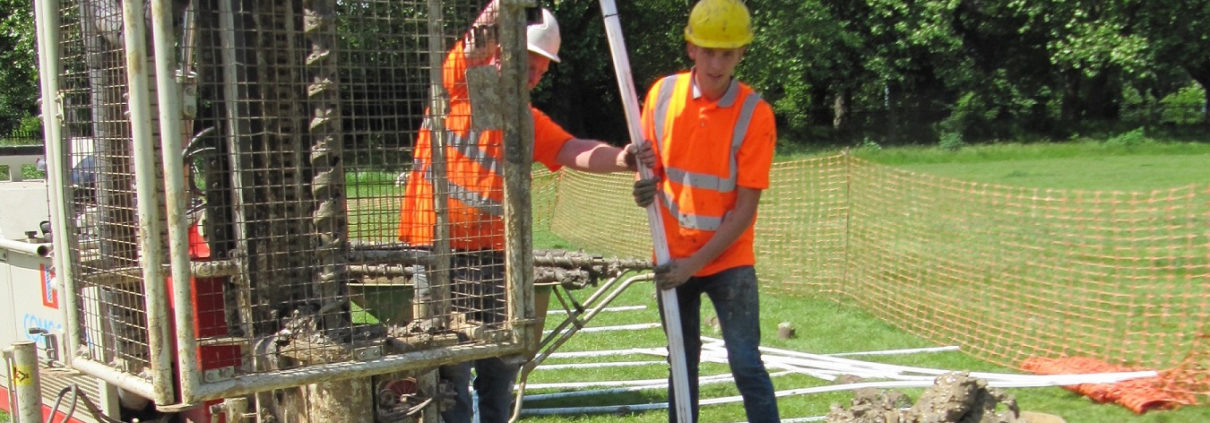
The system – which is suitable for all soil types and is in use on a number of sports surfaces, including at Edgbaston Cricket Club – was installed on the Wandsworth Common pitches by drilling a series of bore holes in a grid pattern across the playing surfaces.

Central rows of 3 m deep holes (of 89 mm diameter) are flanked by 1.5 m deep holes of 62 mm diameter, at 1.5 m spacings. The sequence was repeated at every 5 m along the length of each pitch. There are also adjacent bores to depths of 6 m and 12 m.

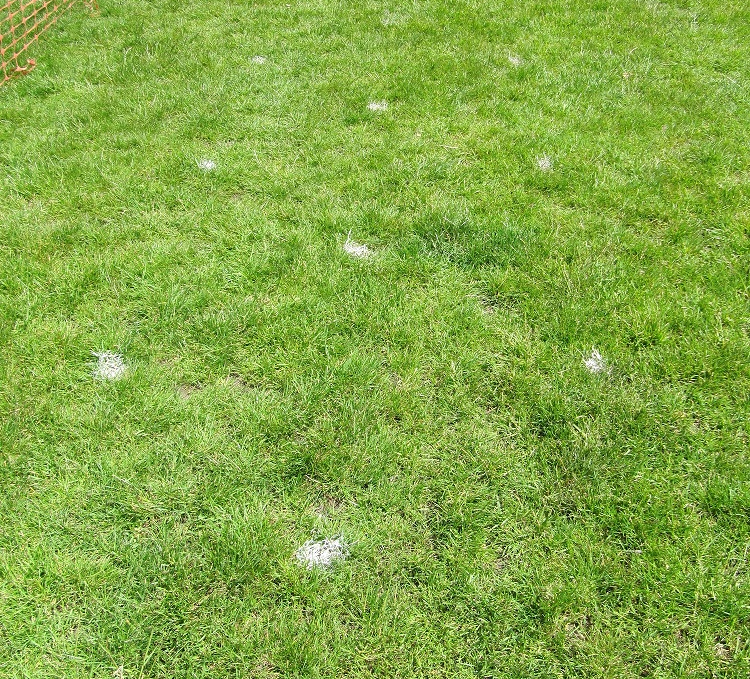
Each borehole accommodates an Energy-passive Ground water Recharge Pump (EGRP) pipe, the top of which sits 300 mm below the surface. The hole is then simply ‘plugged’ and top-dressed.

The innovative five-chamber EGRP design with its mild vacuum draws in water horizontally (to the deeper, 89 mm diameter EGRP pipe) and this then drains away into the lower unsaturated strata/water table.

“We have a myriad of users including private schools, academy squads as well as local teams using these pitches which are among the 1,600 acres of open space we maintain,” adds Steve. “The winter pitches are booked for seven days each week, so any cancellations always create headaches – and disappointed players!

“We started to investigate possible solutions and having such a good relationship with Rigby Taylor – from which we source (via idverde) a lot of products, including R14 perennial rye grass seed which we use across all the pitches, as well as selective herbicides, fertilisers, aggregates and topdressings – the Groundwater Dynamics’ system was presented.

Council Looks To Rigby Taylor

“We looked at the system in use at a football training ground (Fulham FC’s) and on a rugby pitch (in Bushy Park, Hampton Court) and spoke to the groundsmen there before going ahead with the trial.”

Steve has been with the council for 38 years and includes cemeteries, litter clearance and buildings maintenance in his remit, which embraces the management of three direct staff and around 100 indirect. He and colleague Andrew Green, who oversees and manages the council’s wide range sports surfaces, both agree that the former methods of earthquaking and vertidraining couldn’t cope with the waterlogging caused by severe rainfall.

“Nowadays,” says Andrew, “extremes of weather are becoming more common, but we’re totally confident that this new system of drainage will go a long way in reducing a problem we’ve had for years on these pitches.”

For more information, visit: www.rigbytaylor.com

For the latest industry news visit turfmatters.co.uk/news

Get all of the big headlines, pictures, opinions and videos on stories that matter to you.

Follow us on Twitter for fun, fresh and engaging content.

You can also find us on Facebook for more of your must-see news, features, videos and pictures from Turf Matters.