Tag Archive for: To

DLF want to hear from you

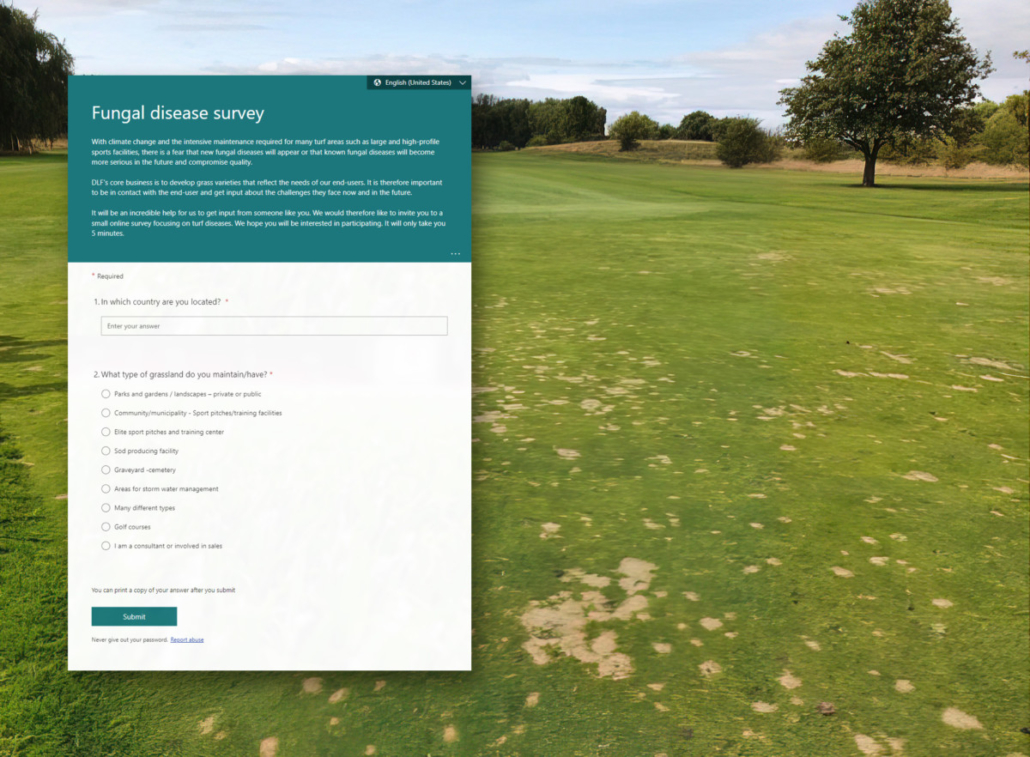
DLF want to hear from you: As part of their extensive research and sustainable seed programme, DLF are inviting Turf Managers around the country to participate in a short survey to identify the variety and prevalence of fungal turf disease activity.

Input is required from all areas of fine and sports turf management, with the results helping to shape future developments of more tolerant seed varieties.
DLF want to hear from you

DLF want to hear from you

With the altering climate and changes to maintenance practices, there is a fear that new fungal diseases could appear or that known ones could become a more serious threat to turf quality. Therefore, to fully understand the current situation and provide solutions to the new challenges on the horizon, DLF would like to hear from you on your experience of recent disease activity. Feedback is sought from golf courses, winter sports facilities, schools/community surfaces, racecourses, polo grounds, amenity spaces and turf producers.

The link to the survey can be accessed here and should take no more than five minutes to complete: https://forms.office.com/r/XCHEfvmxT3

The fungal disease survey is just one of several research programmes currently underway across DLF’s global network, looking to create high performance, sustainable seed mixtures. Thanks to the incorporation of cultivars that improve turf quality and are kinder to budgets and the environment, without reliance on water and chemical inputs, DLF are providing solutions that deliver a sustainable surface without a compromise in visual merit or performance.

Findings from previous DLF trials are already proving pivotal in the field, including the identification of 4turf® and diploid perennial ryegrass varieties with enhanced tolerance to Brown Patch.

Incorporated into the Johnsons J Premier 4Turf 25 mixture, Head Groundsman at Reading Football Club Chris Last said, “July through to the end of September is our main disease pressure season and I could not be happier with how J Premier 4Turf 25 dealt with both Brown Patch and Grey Leaf Spot. We applied only one fungicide throughout the summer, when the GLS started to gain some momentum in early September, and while we unfortunately lost some diploids in the affected areas, the tetraploids held on and meant that to the untrained eye it was difficult to see where we had the fatal disease. Throughout the rest of the window, the enhanced plant health and strength meant I could treat disease with biologically friendly and cost-effective measures such as citric acid, phosphite’s and turf hardening fertilisers instead of using fungicide.”

For the latest industry news visit turfmatters.co.uk/news

Get all of the big headlines, pictures, opinions and videos on stories that matter to you.

Follow us on Twitter and Instagram for fun, fresh and engaging content.

You can also find us on Facebook for more of your must-see news, features, videos and pictures from Turf Matters.
Turf grower challenges industry to become truly green

Turf grower challenges industry to become truly green: A leading UK turf grower is calling for the end of the use of plastic netting in turf – something he says is causing unseen environmental damage.

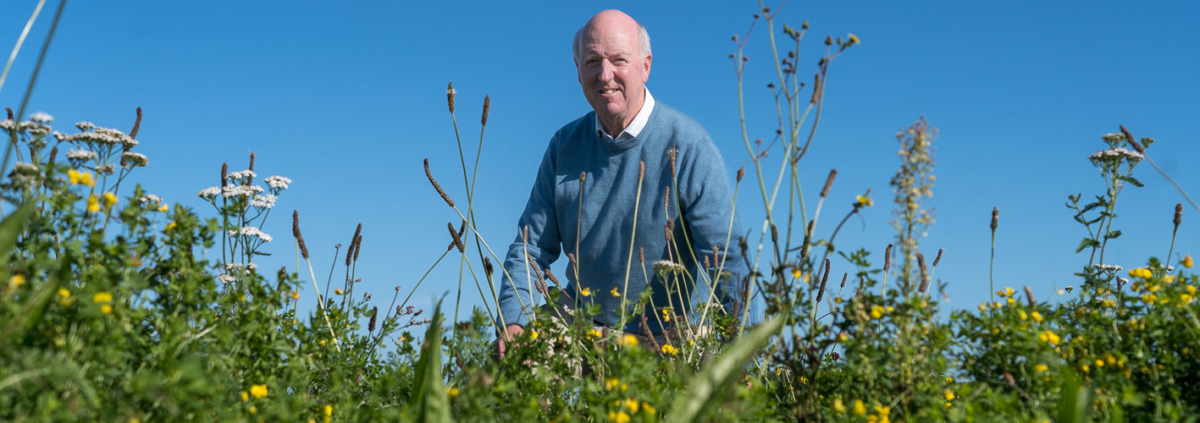
Stephen Fell, who owns Yorkshire-based business Lindum Turf, describes the plastic netting – which is in the majority of turf sold in the UK – as a completely avoidable source of pollution, adding few British consumers even know that most turf sold in the UK contains plastic.

Turf grower challenges industry to become truly green

The call is being supported by industry body the Turf Growers Association, which is encouraging its members to go plastic free by 2025.

Stephen made the call after Lindum Turf reported a threefold increase in sales of its plastic-free wildflower turf product over the past two years as the trend for replacing manicured lawns with wildflower meadows has gathered pace.

People buy wildflower turf to increase biodiversity and attract pollinators to their gardens, Stephen said, but are often appalled when they discover the product they are laying could cause significant damage to the environment.

“The trouble is, over time the plastic netting breaks down into microplastics and pollutes the soil and can leach off into watercourses,” Stephen said.

“But because the net is hidden within the turf and people can’t see it, they don’t know it is there. So, despite people having the best intentions of doing the right thing for the environment, they often don’t realise the damage choosing the wrong product can cause.

“It’s a throwback to earlier production methods the industry likes to keep quiet about. But technology has moved on. We have worked hard for many years to eliminate plastic from our turf, including our wildflower turf, and we believe it is now time for the rest of the industry to catch up.”

According to industry figures, around 70m sqm of turf are laid each year in the UK.

One argument employed by some turf growers to provide reassurance to consumers about the environmental credentials of their product is to describe the plastic ‘degradable’.

But this term often confuses consumers into thinking the plastic mesh used is biodegradable and therefore harmless to the environment.

Sadly, the opposite is true. Whereas ‘degradable’ plastic does degrade in the ground, it does so into harmful, polluting microplastics, and not harmless organic matter.

This can cause major issues in soil and water, and for wildlife.

Stephen added: “Wildflower turf is becoming incredibly fashionable. It is the only quick, easy, and reliable way to create a wildflower meadow which not only provides a beautiful spectacle to look at, it increases biodiversity and attracts vital pollinators.

“So, to create a product with that intention, only to line it with damaging single-use plastic seems perverse to me, especially when it is possible to create sturdy, plastic-free wildflower turf. The industry needs to address this issue and pledge to remove plastic from turf by 2030 at the latest.”

According to the TGA, the vast majority of UK turf growers use some kind of plastic turf netting in some or all of their products, meaning thousands of tons of single use plastics are being buried in the ground every year.

Not only does this cause issues with microplastics getting into the environment, farmers who let their land out to turf growers are being left with bits of plastic in their fields which cause problems when growing root crops like carrots and potatoes.

Birds, hedgehogs and other wildlife often suffocate or starve to death after getting trapped in the plastic debris.

Richard Owen, Chairman of the TGA, described the use of plastic turf netting as a major environmental problem.

He said: “It is very difficult to quantify exactly how much turf is laid in the UK, but it is likely that a significant amount of plastic turf netting is being put into the ground each year.

“This causes a problems for wildlife, for farmers on whose land the turf is grown, and most seriously, it decays into polluting microplastics that can leach into watercourses and get into the food chain.

“It is for this reason we are encouraging our members to stop using single use plastic mesh in their turf by 2025 and support calls for an industry-wide cessation.”

The view that single use plastics should not be in wildflower turf, or other types of turf, is also shared by Chelsea Flower Show organiser the RHS.

The organisation’s sustainability policy is working to reduce the use of three materials at its shows: concrete, virgin timber and plastics. Having already banned plastic bags and floral foam across the shows, they are aiming for the complete removal of single use plastics by 2025.

The nature of Lindum’s plastic free turf allows the RHS and the exhibitors who use it, to throw away less organic material after the shows as the RHS allows turf that is not reinforced or meshed to be left for reinstatement or composted.

Lindum Turf has not only exhibited their turf at RHS Chelsea for the past three shows, they are a supplier to the shows team and many garden designers. As more organisations like the RHS launch ambitious sustainability policies, companies like Lindum will be well placed to have the monopoly on the wildflower turf market.

For the latest industry news visit turfmatters.co.uk/news

Get all of the big headlines, pictures, opinions and videos on stories that matter to you.

Follow us on Twitter and Instagram for fun, fresh and engaging content.

You can also find us on Facebook for more of your must-see news, features, videos and pictures from Turf Matters.

Vanmac to showcase quality contour cutting

Vanmac to showcase quality contour cutting: As restrictions on curative chemistries continue to pose a challenge to course managers, it is now more critical than ever that every operation conducted above ground has plant health at its core.

As the most regular task, mowing can have either a positive or negative impact on the plant depending on whether the correct cutting performance can be attained. This will be the focus for Vanmac as they return to BTME in 2023, showcasing a range of rotary and multi-deck mowers from Progressive that offer industry-leading cut quality and contour-following ability.

Vanmac to showcase quality contour cutting

Vanmac to showcase quality contour cutting

The Progressive TDR-X features three independently floating decks which promise to closely follow undulations without the risk of scalping – thereby reducing the risk of creating entry points for pathogens to take hold. A 3.2m cutting width and easily adjustable cutting height range of between 10mm and 85mm gives complete versatility for use on both fine and sports turf surfaces, with full width rollers on both the front and rear of each deck leaving a first-class finish.

Along with other machines in the Progressive range, the TDR-X features Pro Lift-N-Turn™ technology, which enables the operator to temporarily lift the decks with the PTO still engaged, increasing manoeuvrability and overall productivity.

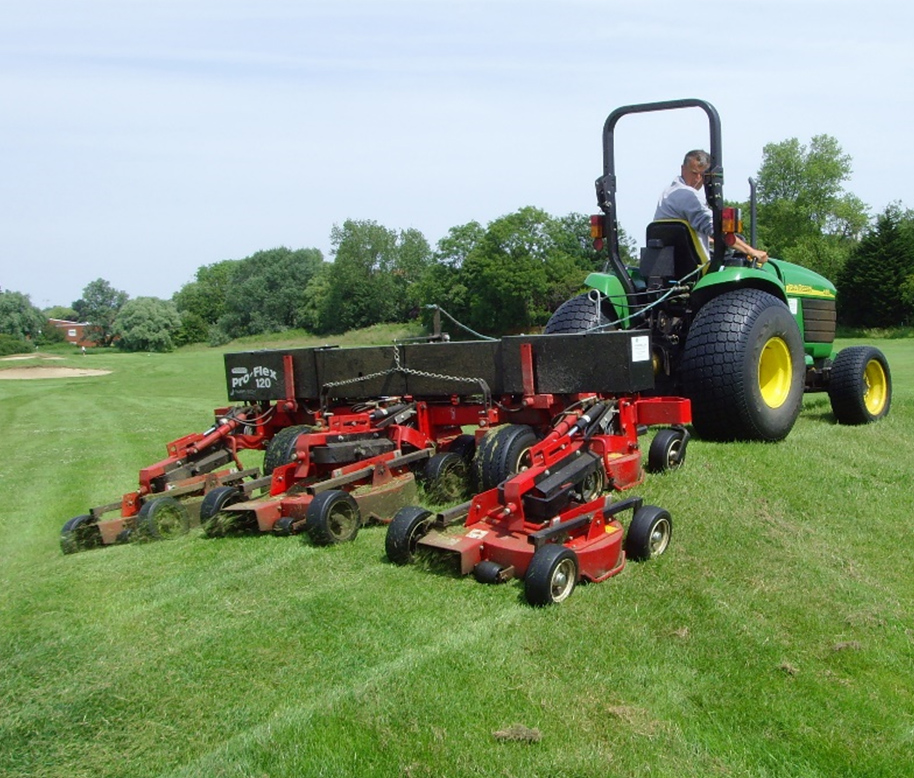
The TDR-X will be on show on stand 526 alongside the Pro-Flex 120 – the most widely used trailed contour finishing mower. The Pro-Flex is ideal for producing a fine finish on fairways and surrounds, featuring a high blade tip speed and graduated cut height options down to 25mm for uniformity of cut and unbeatable versatility. Totalling 3m in width, each of the three decks is equipped with a shock absorber to tackle cutting tasks on even the toughest, uneven ground.

If it’s cut and collect on the agenda, then Vanmac have that covered too with the Trilo range of multi-purpose collector units. The Trilo M4 can be configured with a variety of shaft options – including a choice of flail rotor styles – and features a powerful fan to lift the mown material up into the 4m3 hopper, leaving a clean finish after a single pass. Scarifier and brush shafts are also available for the M-Series to complete tasks across the full maintenance calendar.

For the latest industry news visit turfmatters.co.uk/news

Get all of the big headlines, pictures, opinions and videos on stories that matter to you.

Follow us on Twitter and Instagram for fun, fresh and engaging content.

You can also find us on Facebook for more of your must-see news, features, videos and pictures from Turf Matters.

Appointment to Greenkeeping Trailblazer Group

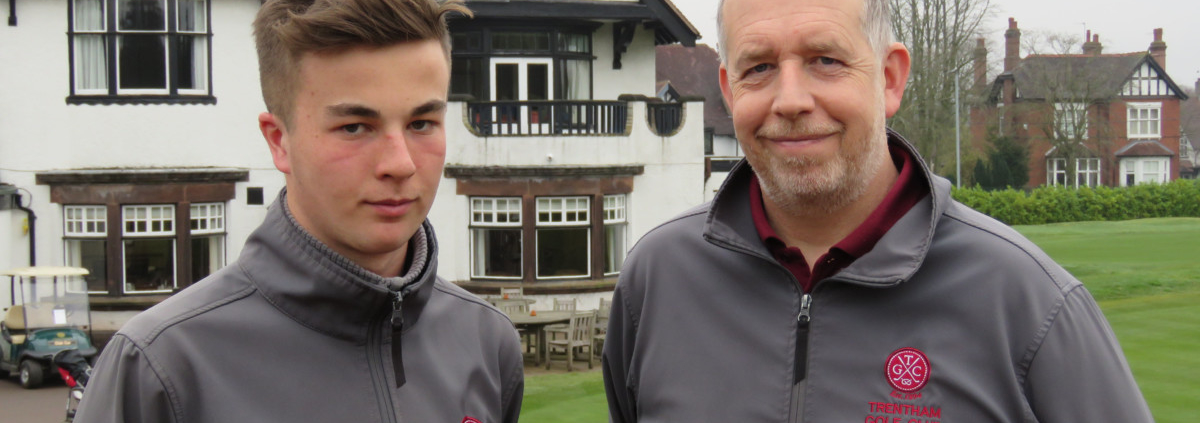
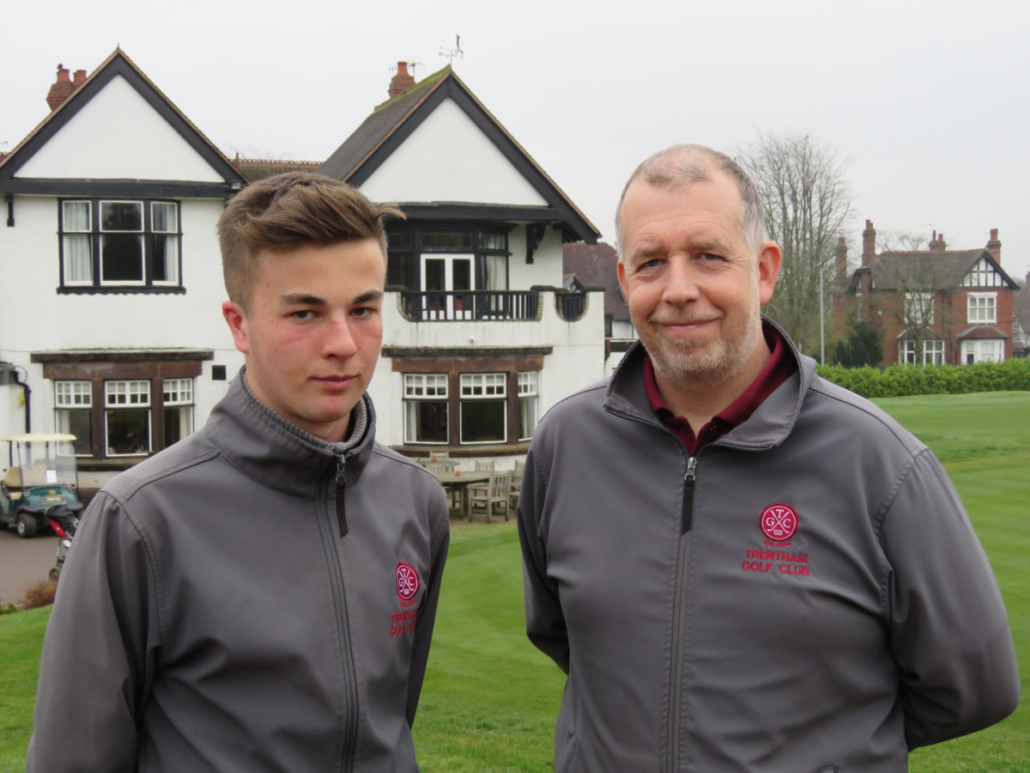
Appointment to Greenkeeping Trailblazer Group: The Greenkeepers Training Committee (GTC) has revealed that Trentham Golf Club’s course manager, Ed Stant, has been appointed chairperson of the group that works to produce and administer formal educational opportunities for greenkeepers in the UK.

The appointment was made following The Richmond Golf Club Course Manager Les Howkins MG’s decision to step down as chairperson of the Greenkeeping Trailblazer Group following an incredibly-successful tenure.

Appointment to Greenkeeping Trailblazer Group

Appointment to Greenkeeping Trailblazer Group

Trailblazer groups are responsible for developing a new apprenticeship for an occupation and then revising the apprenticeship as needed. Since becoming chairperson in 2021, Les has steered the group expertly, navigating the collaboration with the Sports Turf Trailblazer Group to develop the Level 3 Advanced Sports Turf Technician apprenticeship, which was approved by the Institute for Apprenticeships and Technical Education (IfATE) in October 2022.

No sooner had the new Level 3 apprenticeship been approved than Les began leading the group to review the Level 2 Golf Greenkeeper apprenticeship. Great strides have been made so far and this work will continue under the leadership of Ed, who will step up from the vice chairperson role. Gavin Sowden, environment and health & safety officer at Woburn Golf Club, will become vice chairperson. Both will move into office at The GTC-BIGGA standardisation meeting for training providers, being held in Harrogate during BTME in January.

Les Howkins MG, outgoing chairperson of the Golf Greenkeeping Trailblazer Group, said: “After two years as the Trailblazer chairperson, I am pleased to announce that Ed Stant will be taking over as chairperson in January 2023. Ed has been an excellent deputy for several years and has proved to have a very strong understanding of the role and the apprenticeship scheme. I am sure Ed will fulfil the role with honour and pride and ensure the greenkeeping apprenticeships remain world leading and fit for purpose for many years to come.

“Stepping into the deputy role is Gavin Sowden. With the full support and backing of Woburn Golf Club, I have no doubt Gavin will form a strong partnership with Ed and together the greenkeeping apprenticeship will go from strength to strength.

“I have enjoyed my years as Trailblazer chairperson and I must thank The GTC’s Fiona Lyttle for all her hard work and dedication to the scheme. Without Fiona, none of what we have achieved would have been possible.”

Ed Stant said: “I am delighted to accept the position of Trailblazer chairperson, taking over from Les Howkins MG, who has done a fantastic job over the past few years. Apprenticeships are such a vital route into our profession and often the building blocks for many young people entering the world of greenkeeping. I hope I can do the position proud and offer BIGGA and The GTC the support and encouragement they need. Special thanks goes to Fiona Lyttle at The GTC, who works so tirelessly for greenkeeping.”

Gavin Sowden said: “It is an honour to accept this appointment and be involved with the Greenkeeping Trailblazer Group. Having been in the industry for over 30 years and working closely with numerous apprentices starting their working lives as greenkeepers, I understand the importance of ensuring we have the correct education programme in place for our future golf course greenkeepers and course managers.”

Fiona Lyttle, BIGGA learning & development executive (The GTC), said: “It has been a honour and a privilege to work with Les over the last few years. His wealth of knowledge and determination to ensure greenkeeping apprentices are at the forefront of greenkeeper education is second to none. He has taught me a lot and hopefully I can now impart some of that knowledge further to continue the work of the Trailblazer group.

“We are delighted to appoint Ed and Gavin as the new Trailblazer chairperson and vice chairperson respectively. Being active employers and advocates for greenkeeping education, the Trailblazer group and I are looking forward to working with them to maintain the level of apprenticeships our employers have become accustomed to and to ensure they have quality golf facilities for their members to enjoy.”

The Greenkeeping Trailblazer Group and Trailblazer Apprenticeship programme is supported by golf facilities and governing bodies including England Golf, BIGGA, The Richmond Golf Club, Trentham Golf Club, Woburn Golf Club, Frilford Heath Golf Club, Gaudet Luce Golf Club, Leyland Golf Club, Portmore Golf Park, Royal Birkdale Golf Club, Sunningdale Golf Club, The London Golf Club.

For more information on the Greenkeeping Trailblazer Group, contact The GTC’s Fiona Lyttle on (01347) 838 640 or fiona@the-gtc.co.uk

For the latest industry news visit turfmatters.co.uk/news

Get all of the big headlines, pictures, opinions and videos on stories that matter to you.

Follow us on Twitter and Instagram for fun, fresh and engaging content.

You can also find us on Facebook for more of your must-see news, features, videos and pictures from Turf Matters.
Terra Spike GXi8 HD gives boost to College grounds

Terra Spike GXi8 HD gives boost to College grounds: Myreside Stadium in Edinburgh is home to George Watson’s College and Watsonian rugby club. Regular fixtures held there include Tennent’s National League Division 1, FOSROC Super Six Championship and Tennent’s Women’s Premier League matches.

Beside the main pitch, Head of Grounds, Craig Eccleston, and his team of five, have eight other full size rugby pitches, two large training areas and three cricket squares to maintain, as well as the school’s estate.

Terra Spike GXi8 HD gives boost to College grounds

Terra Spike GXi8 HD gives boost to College grounds

In September, they took delivery of a Wiedenmann Terra Spike GXi8 HD deep aerator from Wiedenmann UK’s Scottish dealer, Fairways GM.

Craig Eccleston said: “Aeration is a massive part of pitch playability and it’s important that we give all our surfaces best care. In summer I went to a demo at Dollar Academy, where the Wiedenmann team answered my questions. I thought the GXi 8 pricewise would be out my range, and we’d go for a smaller one, but I was pleasantly surprised when it came in under my budget.

“The long life of the Wiedenmann was a big consideration. The school plays so much rugby, and if you factor the FPs’ activity too, all pitches are busy right through until the summer term, when focus switches to athletics and cricket.

“We’ve relied on contractors to come in on a pre-booked day which can bring limitations. Sometimes the conditions don’t suit, or fixtures change, and it doesn’t get done. I made a financial case that if we owned our own machine, we could go out as often as necessary, making use of any windows of opportunity, especially as a full pitch can be done in just over 2.5 hrs. Having as many pitches, the numbers stacked up.

Craig, who took up his position almost three years ago had previous experience of working with Terra Spikes when he was head groundsman at Giggleswick School, North Yorkshire.

“This is a newer model to what I had before and I like that there are minimal grease points, so it is easy to maintain. This one is so quick and so smooth. When we look at the weather forecast for the week ahead, I say to the team, ’let’s get the machine on and we’ll pick a couple of pitches off each day and get around everything’. It makes such a difference.

“As soon as the GXi8 arrived in September we did all, rugby pitches with 20 mm tines at once. A few had a second aeration in November. During January or February, we will go again once, leaving them until renovations time, which for us is the end of July.

“Our cricket wickets only need to be done annually so ours were aerated at the end of October with 8 mm tines.

“I’m happy with its progress. Ultimately, we invested in the machine to improve the overall playability of the pitches to enhance their durability and performance. This enhances the enjoyment for the pupils, letting them play fast expansive rugby. The school has been particularly good investing in what we need.”

George Watson’s College is a single campus co-educational independent day school in the heart of Edinburgh, for young people from 3-18 years.

For the latest industry news visit turfmatters.co.uk/news

Get all of the big headlines, pictures, opinions and videos on stories that matter to you.

Follow us on Twitter and Instagram for fun, fresh and engaging content.

You can also find us on Facebook for more of your must-see news, features, videos and pictures from Turf Matters.