Tag Archive for: Turf

The Picasso of St Paul’s

The Picasso of St Paul’s: Scott MacCallum meets Dene Hey, who has made his mark since arriving in the UK from South Africa.

When it comes to rugby union there is no-one around at the moment to touch South Africa. They have won the last two World Cups and some of their players are the very best to be found anywhere.

The Picasso of St Paul’s

The Picasso of St Paul’s

It might come as more of a surprise to learn that there are some top operators from among the Boks when it comes to being a Grounds Manager too.

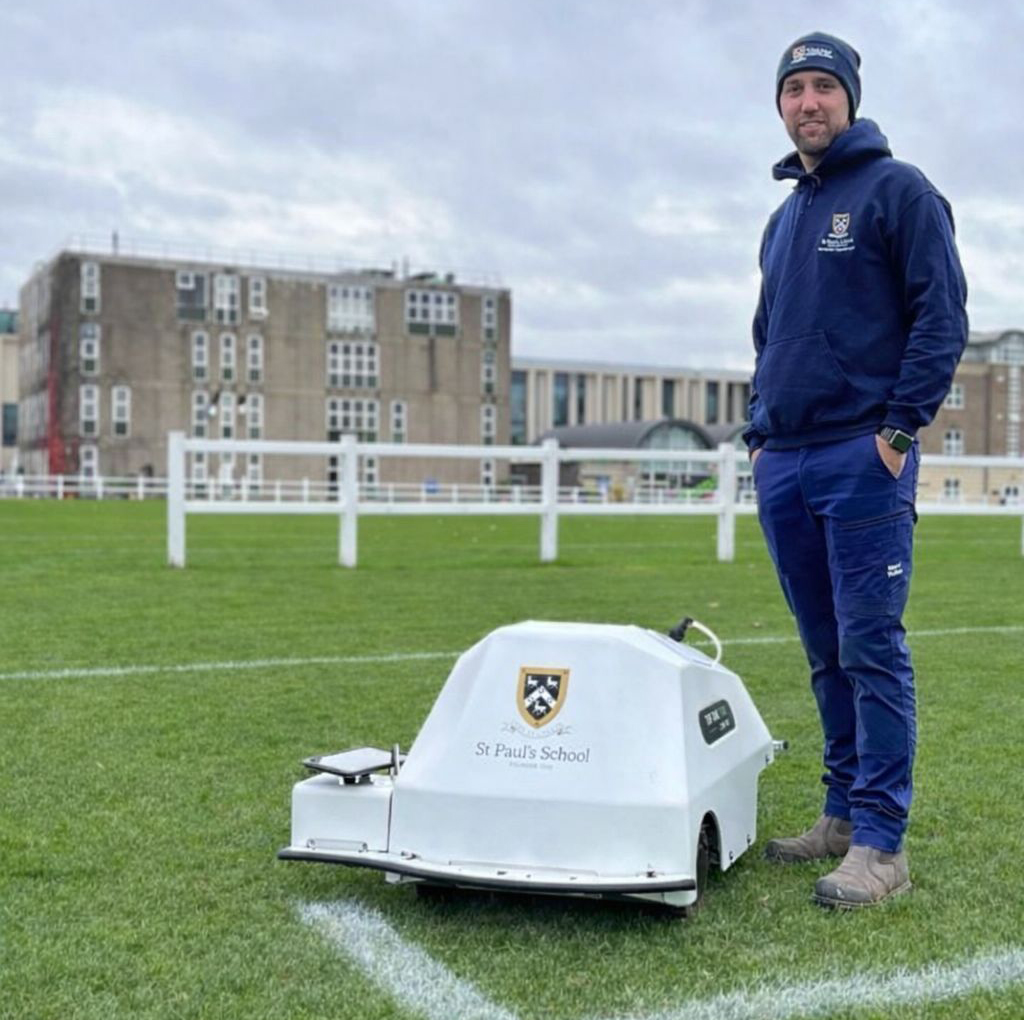
Dene Hey, pictured, is the man who proves the rule. Dene is Grounds Manager at St Paul’s School, in Central London. He took up the post two-and a-half years ago and has since been working hard with his cosmopolitan team to ensure the pupils and staff at the school have the very best sports surfaces and surroundings.

He is also a man who treats his grounds is the same manner as an artist treats a canvas. More on that later.

“As groundsmen we are always focused on the rugby or football pitches and want them to be as fantastic as possible. But at a school there is more to it than that – the rest of the site has to match up,” explained Dene.

“That was a big thing for me. I’ve worked with people in the past where they are so focused on the pitches.

But they are actually the last thing that anyone sees when they come to visit. What parents and pupils, and potential parents and pupils, see first is the entrance and the drive up to the school.”

To make the point Dene references his own first visit to the school.

“The first thing I noticed when I walked on site was the lack of colour variety. Everything in the grounds was green,” said Dene.

“That is nothing not a reflection on anyone who has worked previously, but more of a personal observation.”

Showing that he is a man of action as well as talk, that driveway into the school has been transformed over the last couple of years, making the most of the mantra that you only have one chance to make a first impression.

“As you drive in, the entrance is now bordered by playing fields on the left and a parking area on the right and we now have a flower bed separating the road from the parking spaces,” described Dene.

The Picasso of St Paul’s

The Picasso of St Paul’s

“We replicated this by installing raised beds along the entire length of the driveway which created a divide between the sports pitches and the main access road.”

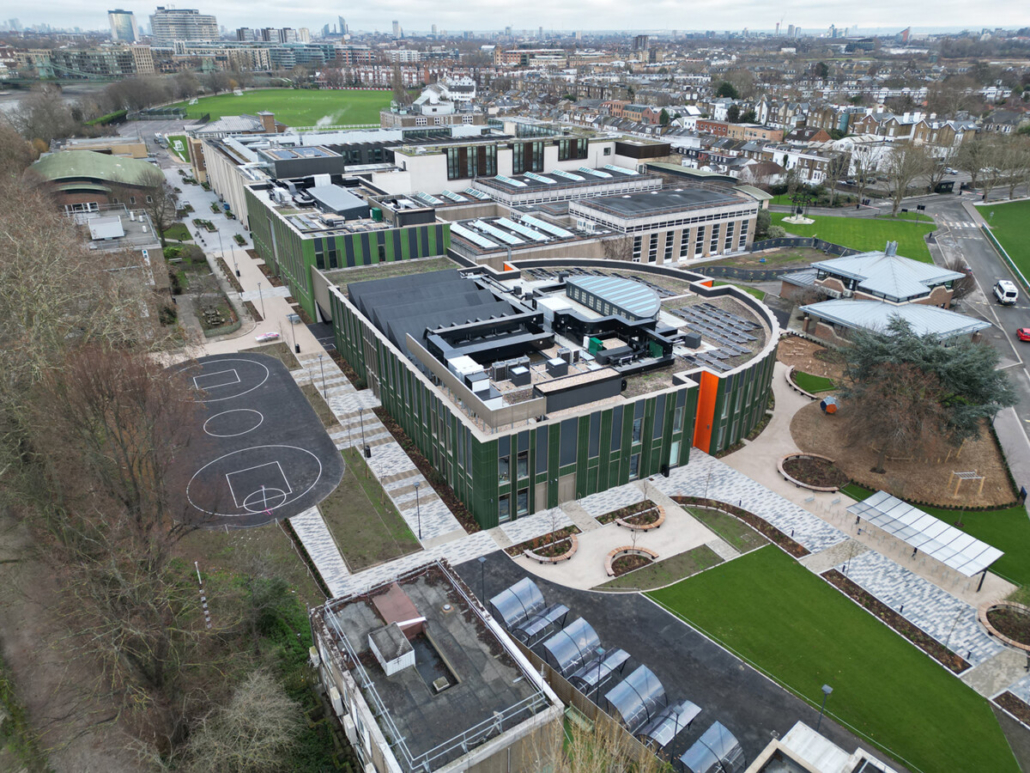
Added to this, the team has built four new flower beds, developed new walkways, established wildflower meadows, and redesigned an entire section of raised beds to complement the landscaping around the new prep school building.

“Beyond these projects, we have also refreshed nearly every flower bed across the site, adding more seasonal colour to brighten the grounds.”

A man with a genuine attention to detail, Dene also noticed something else on his first visit.

“It was little things. The pitches were being watered, but the surrounds weren’t getting much water, or much attention,” he said admitting that he is a perfectionist with high OCD levels!

St Paul’s School was founded in 1509 and takes its name from St Paul’s Cathedral. It’s on a 43-acre site on the banks of the Thames, in Barnes. The list of alumni includes writers, John Milton and Samuel Pepys; Edmund Halley, of Comet fame, and more recently, scientist, Magnus Pyke; Nicholas Parsons; Chancellor of the Exchequer, George Osborne; historian, Dan Snow; actor, Rory Kinnear and comedian, Hal Cruttenden.

The site that Dene inherited is not the easiest to manage, as half of the grounds are leased from Thames Water, meaning that, under the terms of the agreement, there’s certain work that cannot be undertaken.

“There are weight restrictions, we can’t put down any fertiliser, or any chemicals. The fields actually sit on top of a reservoir, so we have to deal with a lot.”

It does means that these fields are not where Dene and the team want them to be, but they do what they can to make them work.

“We’ve started with a rye and micro clover mix to help get nitrogen back into the soil. We use Agrovista for a lot of our products,” revealed Dene, who added that they don’t have drainage and irrigation across the site, but only on some parts of the school-owned pitches.

“Our fields are split into two. We’ve got four pitches on the one side of the school, which is on our land, then on the Thames Water side, we’ve got another six pitches.

Rugby runs from September to the end of December. January until March is football and then from March until July, the pitches transform into the outfield for the cricket, for which there is an astro turf strip, laid two metres to the side of the main pitch.

One of Dene’s aims has been to work with the coaching staff and Heads of Sport to get them more understanding of what can happen if you play on pitch which is borderline playable. It is a part of the job with which Grounds Managers up and down the country have to deal but Dene has built a good relationship and understanding with his colleagues.

“You can easily damage the pitch for the next month, and the next few matches, if you were to take a chance on a pitch. They now understand that it’s sometimes best to sacrifice one game for the benefit of the next four games.”

Dene has made a positive impact everywhere he has gone since arriving on these shores with his wife in September 2018, initially as a Workshop Manager for the Chelsea Motorcycle Group.

The Picasso of St Paul’s

The Picasso of St Paul’s

While a skilled mechanic, and champion motorcyclist himself, he had always hankered for an outside role, having worked briefly as a groundsman at the Durban Sharks Stadium, in South Africa, prior to leaving for the UK.

Of course that was prior to experiencing the delights of the UK weather!

Getting back to groundsmanship, he took an apprenticeship at The Spencer Club, a sports club in South West London, before gaining a position as a groundsman at King’s College School, in Wimbledon, where he stayed for just under two years.

From there it was to The Lensbury Resort, initially as a Senior Groundsman, before being promoted to Head Groundsman a year and a half later.

Ten months after that he was of to his current position at St Paul’s meaning he’d gone from Apprentice to Grounds Manager in less than five years – impressive by any standards!

“When the position became available for The Lensbury, it was perfect as we’d just moved to Teddington and it was a mile from my front door. SoI would either cycle or take my electric scooter to work.”

“It was a big change from King’s college and, because The Lensbury is close to Twickenham, they are often chosen to host international teams which are playing there. They stay at the hotel and use the facilities.

“There is a heavy weights gym, a full size swimming pool, two rugby/ football pitches – one full size, one 90 metres long, and then they’ve got grass tennis courts, clay tennis courts, and the hotel grounds themselves.

During the autumn internationals Dene could catch up with his compatriots in the South African team, as each of England’s opponents would stay at the hotel for a week before moving on to be replaced by the following week’s opposition.

“It was a really cool experience and it taught me a lot about dealing with coaches and how to handle certain situations.

“I got to meet some really great people in the industry including Jim (Buttar) from Twickenham, who has been a massive help in my career – a nice guy to have in my corner,” he said.

“Working with international teams there’s also no room for error. You know they want the best and they’re paying top money, so you’ve got to give them international sport quality. Anything less isn’t going to be accepted,” said Dene, who also threw in the fact that he’d also hosted Manchester United who visited twice before the 2023 FA Cup final.

His time at The Lensbury was also key to his professional development as it gave him an appreciation of working in the multi-sport environment which he now has at St Paul’s.

He has worked hard to bring his ideas and working practices into his new role and to bring his team along with him.

“It has meant changes from how they operated previously, when standards and expectations were perhaps not quite so high.

“Since I came on board I have changed or tweaked quite a few of the working practices. I think any manager who comes into a new role will want to do things their way as they know they work. It’s then the challenge to bring the rest of the team on board, but I’ve got a really good team behind me that works hard,” said Dene.

“Since I started we’ve managed to get an extra member of staff while we are currently looking to recruit another gardener.” The team is from all across the globe – and London!

“We’ve got Marcin Szczupak, who is from Poland; Blake McKay, from Australia; Miguel Bosman, who is another South African, and Dave Green, who is local. We also have Abigail Woodford, our Head Gardener.”

The Picasso of St Paul’s

The Picasso of St Paul’s

Their boss has certainly come a long way since he first started work at the Sharks ground in Durban, not long before he and his wife decided to relocate to the UK.

“If I’m 100% honest with you, when I started this job there, I didn’t realise just how much went into it. I knew absolutely nothing about turf and I knew absolutely nothing about sports pitches.

“I actually thought that somebody rocked up on a Friday, cut the grass and marked the pitch. Then everyone arrived on the Saturday, watched the match then everyone went home and the stadium would shut for the rest of the week. That’s honestly what I thought.

“So, it was nice to stumble upon an industry which I had no idea about, but which I now absolutely love.” That passion and love for the job shines through from Dene and he has an interesting way of thinking about the job.

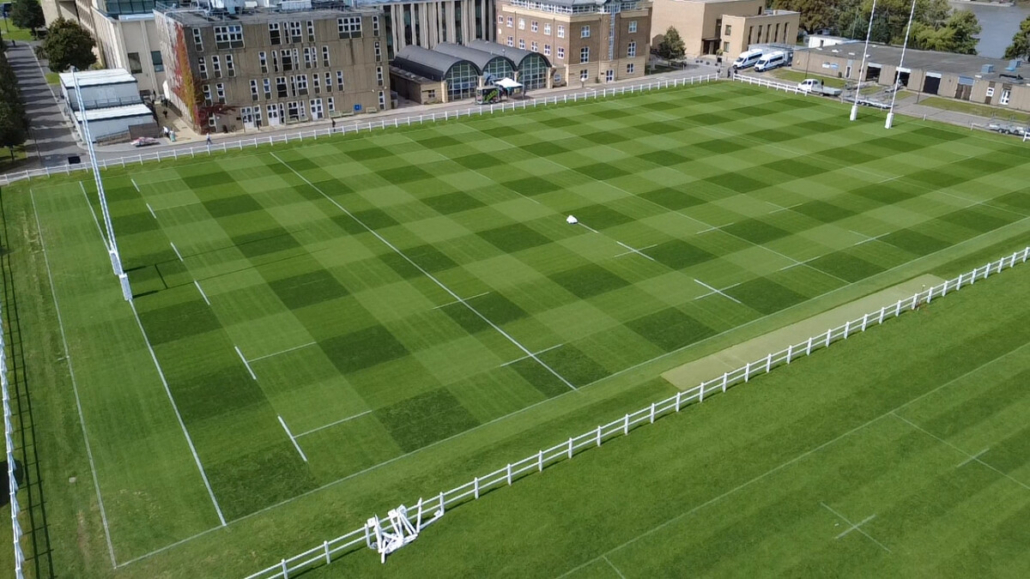
“I believe that we’re almost like artists in a way and the pitch is our canvas. It gives us a way to express ourselves. It’s that feeling you get when you’ve cut a pitch and you’ve put in perfect stripes and you’ve got nice bright white lines.

“It’s just the satisfaction for me. Little things like hedge cutting when you get that perfect cut and it just looks incredible.

“To me, it’s all art. Our way of expressing ourselves. I don’t have a pencil and a canvas, but I’ve got a mower and some grass.”

Could anyone put it any finer?

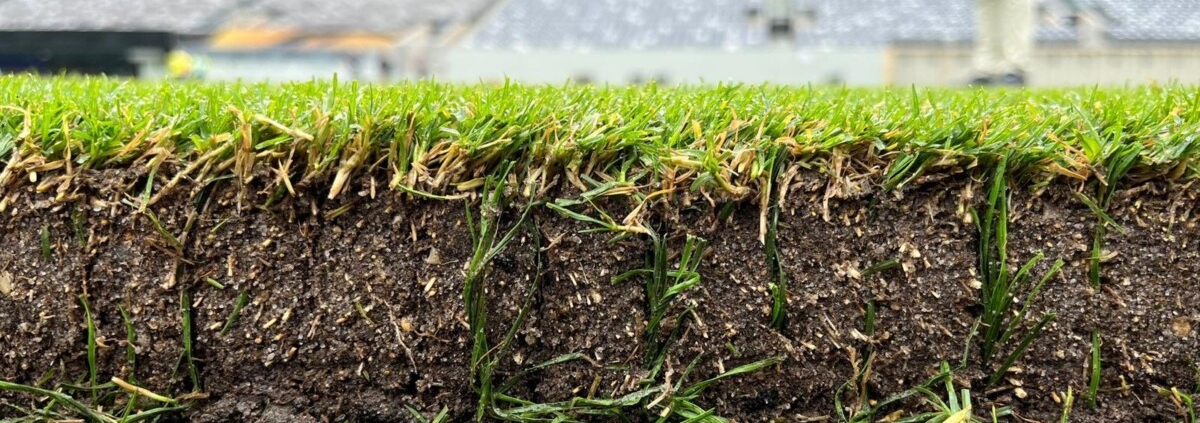
Why Seed Innovation is the New Frontier for Turf Professionals

Why Seed Innovation is the New Frontier for Turf Professionals: In the world of professional turf management, the ground beneath our feet is shifting. What once seemed like a predictable seasonal cycle has been replaced by a volatile cocktail of environmental and operational pressures. From the scorching droughts of record-breaking summers to the relentless intensity of equally record-breaking rainfall, the demands placed on a sward have never been higher.

At DSV Eurograss, they recognise that the “business as usual” approach to seed selection is no longer an option. As we navigate 2026, the research into seed and turf development has transcended simple aesthetics; it is now the critical foundation for the industry’s survival and sustainability.

Why Seed Innovation is the New Frontier for Turf Professionals

Why Seed Innovation is the New Frontier for Turf Professionals

The Climate Challenge: Breeding for the “New Normal”

Climate change is no longer a distant threat – it is an everyday operational hurdle. For turf managers, this manifests as extreme temperature fluctuations and increasingly restrictive water usage regulations. The traditional “cool-season” grasses that have long been the backbone of UK and European sports turf are being pushed to their physiological limits.

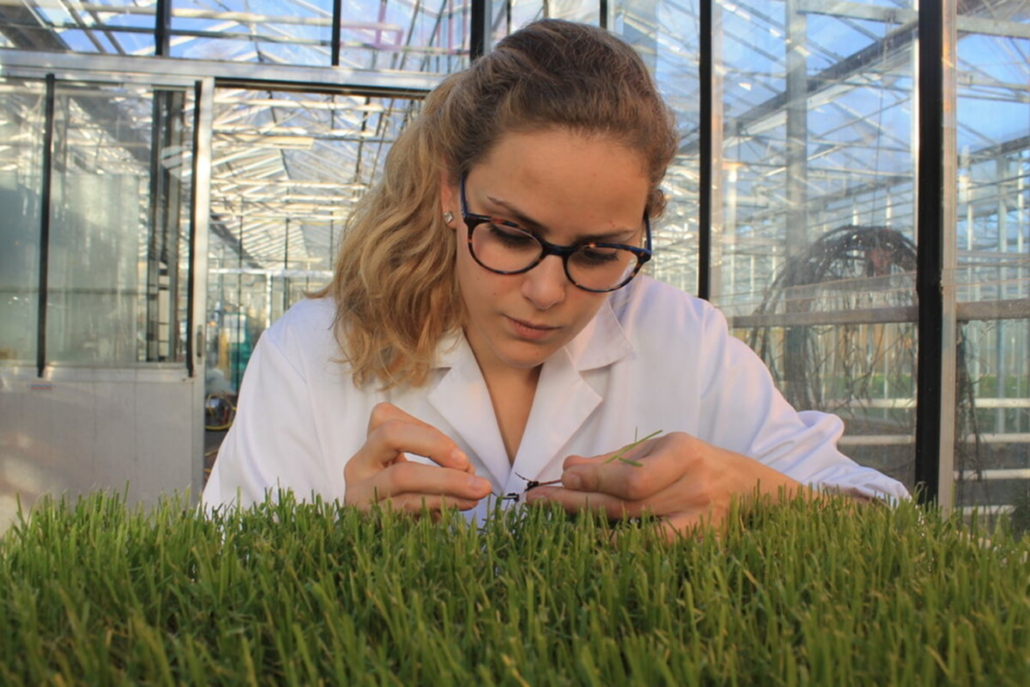
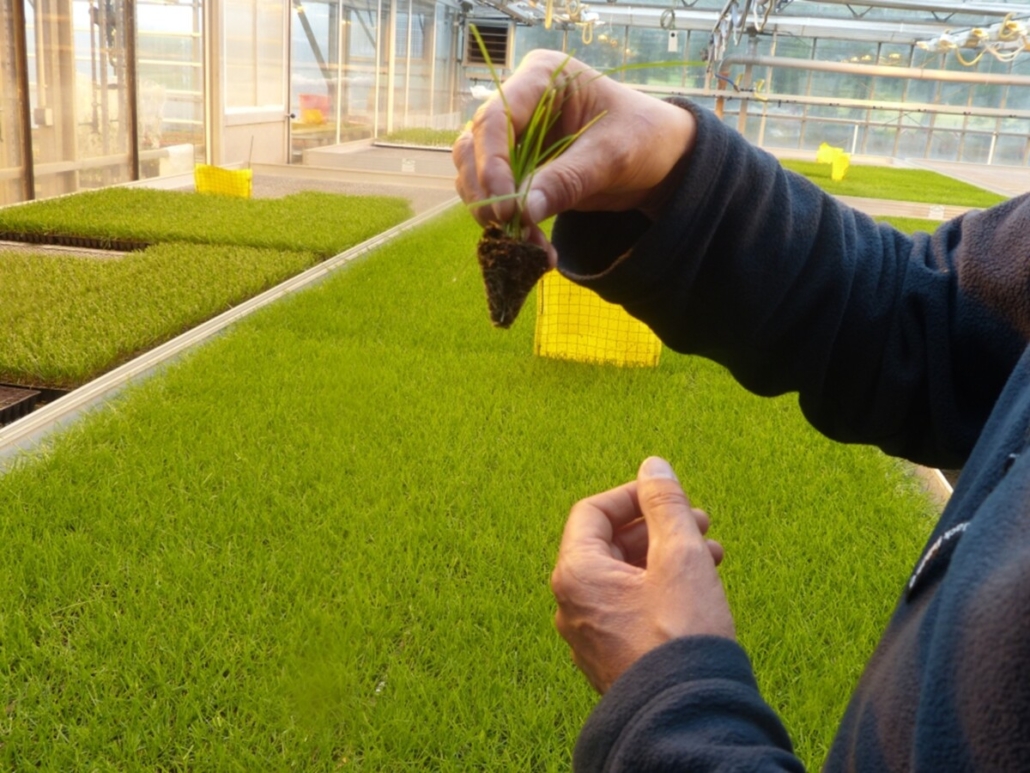
The research at DSV focuses on genotypic variation – the genetic “blueprint” that allows certain cultivars to thrive where others fail. Their breeding programs are specifically targeting drought tolerance, not just through surface-level survival, but through deep-rooting characteristics. By selecting for “smart roots”, plants that can strategically adjust their water uptake from deeper soil profiles during dry spells, they are helping groundstaff maintain high-quality surfaces with significantly fewer irrigation inputs.

Why Seed Innovation is the New Frontier for Turf Professionals

Why Seed Innovation is the New Frontier for Turf Professionals

Resilience Against Emerging Diseases

Warmer, more humid autumns and winters have invited a new guest list of pathogens to our pitches and fairways. Diseases like Dollar Spot and Gray Leaf Spot, once considered “continental” problems, are now common in more temperate climates.

The traditional reliance on chemical interventions is under pressure from both a regulatory and environmental standpoint. The DSV development pipeline prioritises genetic disease resistance.

Varieties like the newly ranked Flanell and Euromagic aren’t just chosen for their wear tolerance; they are bred to be naturally robust against the fungi that thrive in these changing weather patterns. By building resistance directly into the seed’s DNA, DSV provide the first line of defence, reducing the need for costly and carbon-heavy fungicide applications.

Performance Under Pressure: The Usage Factor

While the climate changes, the expectations of players and spectators remain at an all-time high. Modern multi-use stadia and academic facilities require turf that can withstand “increased usage” from the relentless pounding of feet and equipment, often under low-light conditions or beneath retractable roofs.

DSV’s PRO range is a testament to this research. It features diploid perennial ryegrasses that offer:

  • Rapid Germination: Vital for the tight windows of summer renovations.
  • Exceptional Sward Density: Providing the stability required for high-speed play.
  • Genetic Colour: Cultivars like Flanell and Eurogala provide a naturally deep green hue that looks exceptional on camera without the need for excessive nitrogen fertilization.

A Data-Driven Future

The importance of independent testing has never been greater. DSV are proud that their varieties now occupy top positions on the BSPB Turfgrass Seed rankings. However, their work doesn’t stop at the trial plots. The company is moving toward a more predictive framework in breeding, using genomic selection to identify the next generation of resilient varieties years faster than traditional methods.

Why Seed Innovation is the New Frontier for Turf Professionals

Why Seed Innovation is the New Frontier for Turf Professionals

“The rankings table is the one everyone wants to top. Our recent results prove that our breeding material is now the best in these trials, but the real victory is seeing these grasses perform in the face of a changing environment,” commented Sam Horner, DSV Seeds.

Conclusion: The Seed is the Solution

As water becomes more precious and the weather more unpredictable, the turfcare industry must look to the science of the seed. At DSV Eurograss, they are committed to providing the professional community with the tools to stay ahead of the curve. Investing in advanced seed technology is not just about a better-looking pitch today; it’s about ensuring we have a surface to play on tomorrow.

Please visit www.dsv-uk.co.uk/products/amenity for more information and follow on social media @EuroGrassUKSeed.

For the latest industry news visit turfmatters.co.uk/news

Get all of the big headlines, pictures, opinions and videos on stories that matter to you.

Follow us on Twitter and Instagram for fun, fresh and engaging content.

You can also find us on Facebook for more of your must-see news, features, videos and pictures from Turf Matters
Bionema Launches NemaGen® to Support Turf Industry

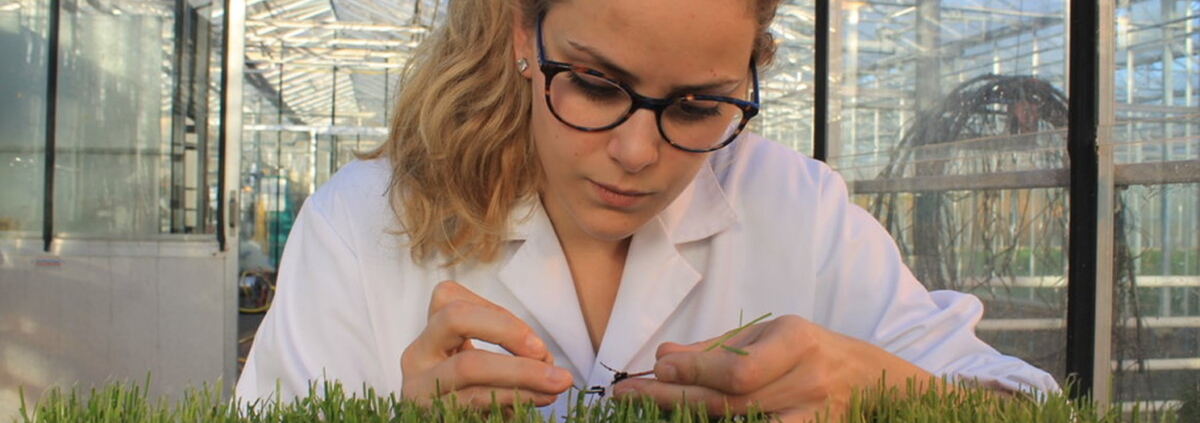
Bionema Launches NemaGen® to Support Turf Industry: The UK natural turf sector, valued at approximately USD 501 million in 2024 and projected to continue growing, is facing sustained pressure from crane fly and chafer larvae, following the withdrawal of chlorpyrifos and imidacloprid from amenity use.

The amenity turf sector includes golf courses, sports pitches, racecourses, and airfields, where soil insect damage directly affects surface quality, safety, and renovation costs.

Bionema Launches NemaGen® to Support Turf Industry

Bionema Launches NemaGen® to Support Turf Industry

Industry observations across multiple UK golf courses and sports facilities indicate leatherjacket populations have increased from historic levels of approximately 30 larvae per m² to peaks of 100–600 larvae per m² at affected sites. Turf managers report increased renovation, labour and surface repair requirements as a result.

In response, Bionema has launched NemaGen® Hd, a cold-tolerant entomopathogenic nematode platform active from soil temperatures of 8°C. UK field trials have demonstrated 60–70% control of leatherjackets and chafer grubs under defined soil temperature and moisture conditions.

NemaGen® Hd offers:

  • Extended seasonal application from early spring through autumn.
    • Structured temperature-timed deployment guidance.
    • Compatibility with wetting agents to optimise dispersal.
    • Direct technical support from Dr Minshad Ansari, specialist in entomopathogenic nematodes.

In addition, the improved formulation enhances product stability, delivering a shelf life of up to 10 weeks under recommended storage conditions, with encapsulated formats offering extended stability for specialist applications.

“With regulatory changes reducing curative insecticide options, the sector requires reliable biological alternatives that are correctly timed and technically supported,” said Dr Ansari. “NemaGen® Hd is designed as a deployable biological solution within integrated pest management programmes, restoring confidence in biological turf insect control.”

Commercial supply for the 2026 season is now open.

NemaGen® Hd is suitable for golf courses, sports pitches, racecourses, airfields and managed lawns.

Bionema is currently selecting one to two UK and EU distribution partners for the 2026 season.

For the latest industry news visit turfmatters.co.uk/news

Get all of the big headlines, pictures, opinions and videos on stories that matter to you.

Follow us on Twitter and Instagram for fun, fresh and engaging content.

You can also find us on Facebook for more of your must-see news, features, videos and pictures from Turf Matters
ICL and Syngenta reopen Turf Rewards for 2026

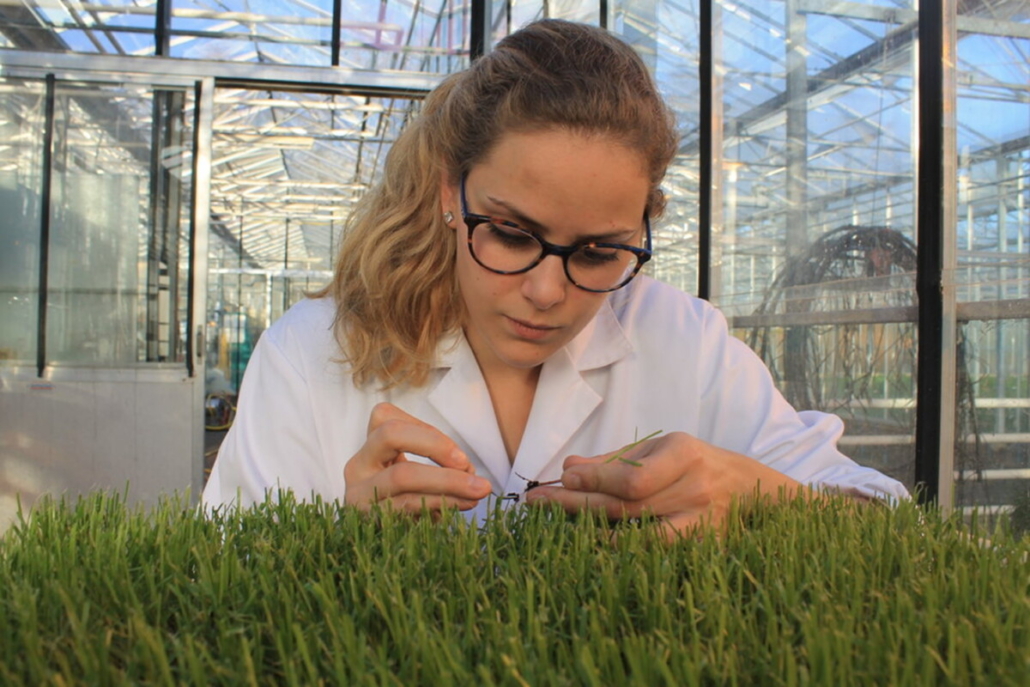
ICL and Syngenta reopen Turf Rewards for 2026: ICL and Syngenta have confirmed the reopening of the Turf Rewards Scheme for 2026, continuing their joint support for turf professionals across the UK and Ireland through a structured rewards scheme designed to add value to everyday purchasing decisions.

The Turf Rewards Scheme allows clubs and contracting businesses to earn reward points when purchasing selected ICL and Syngenta turf products. These points can then be redeemed against a wide range of rewards that support day-to-day operations, help improve efficiency, and add value to planned purchasing throughout the year.

ICL and Syngenta reopen Turf Rewards for 2026

ICL and Syngenta reopen Turf Rewards for 2026

New rewards for 2026 include the LightScout Quantum (PAR) Meter, a professional tool that allows turf managers to measure usable light for photosynthesis, rather than relying on visual assessments. This provides clearer insight when managing turf in shaded, low-light, or restricted environments.

For 2026, the scheme has been expanded to include Greenmaster Liquid Advance. Designed for professional turf managers, the range combines proven liquid nutrition with a biostimulant package containing MTU®, a patented molecule now available in turf for the first time. The inclusion reflects the growing role of liquid nutrition in modern turf management, particularly where flexibility, precision, and response under pressure are critical.

Two new Syngenta products, Comprevo and Vyplenza will also be added to the scheme in the coming weeks, further expanding the range of qualifying products available to turf professionals.

Turf managers across golf, sports, and amenity sectors are encouraged to sign up or resume using Turf Rewards in 2026 and make the most of the benefits available.

For full details and to register, visit www.turfrewards.com for the UK scheme or www.turfrewards.ie for the Republic of Ireland scheme.

For the latest industry news visit turfmatters.co.uk/news

Get all of the big headlines, pictures, opinions and videos on stories that matter to you.

Follow us on Twitter and Instagram for fun, fresh and engaging content.

You can also find us on Facebook for more of your must-see news, features, videos and pictures from Turf Matters
Kress Mega 600 redefines sports turf maintenance

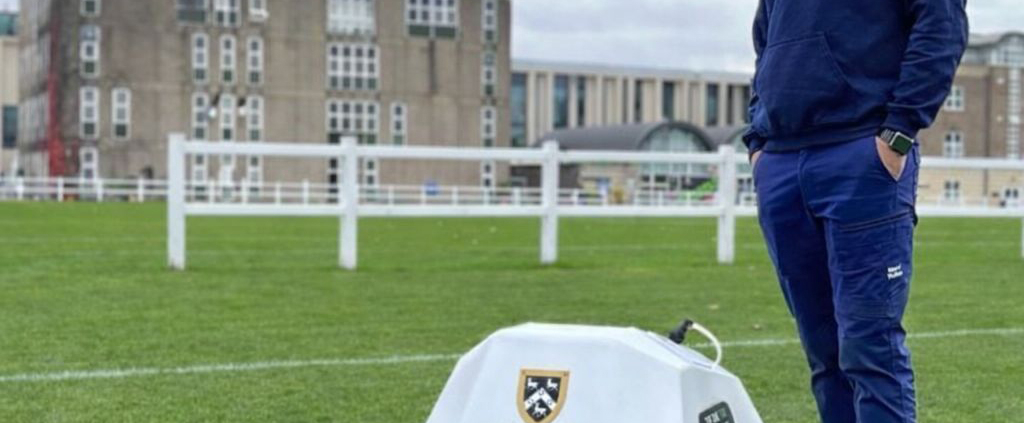
Kress Mega 600 redefines sports turf maintenance: The arrival of the new Kress Mega 600 robot mower marks a pivotal moment for sports turf management.

The KR238E Kress Master series Mega 600 has been developed for continuous, overnight operation across large and demanding turf areas autonomous mowing system delivers tournament-quality results while addressing the persistent challenges of labour costs, environmental impact, and consistency that have long plagued groundskeepers.

Kress Mega 600 redefines sports turf maintenance

Kress Mega 600 redefines sports turf maintenance

What sets the Mega 600 apart is its precision engineering tailored specifically for sports surfaces. The 620mm deck with on-board roller paired with high-speed blades operates at 3,800 rpm, creating professional striping patterns between three and six meters wide that rival traditional mowers. But unlike conventional equipment, this robotic solution maintains these standards autonomously, completing 22,000 square meters in just twelve hours with remarkable consistency.

The technology behind this efficiency is equally impressive. Centimetre-level RTK satellite positioning eliminates the need for boundary wires while ensuring systematic coverage in parallel lines. Terrain-adaptive dual floating decks adjust automatically to undulating surfaces, preventing scalping and delivering an even cut regardless of ground contours. The system achieves an industry-low 10mm cutting height with millimetre precision, crucial for sports fields where playing surface quality directly impacts athlete performance and safety.

Perhaps most significant for facilities managers is the operational flexibility. Fast 30-minute charging cycles with nearest-dock return functionality maximise working time, while the quiet electric operation allows nighttime mowing without disturbing neighbouring communities. This scheduling freedom means sports fields can be maintained during off-peak hours, eliminating conflicts with practice schedules and events.

The environmental benefits are substantial. Zero emissions, reduced noise pollution, and elimination of fuel costs align with growing sustainability mandates facing the industry. For sports turf professionals seeking to elevate surface quality while controlling costs, the Kress Mega 600 represents not just an equipment upgrade, but a fundamental reimagining of what’s possible in field maintenance.

For the latest industry news visit turfmatters.co.uk/news

Get all of the big headlines, pictures, opinions and videos on stories that matter to you.

Follow us on Twitter and Instagram for fun, fresh and engaging content.

You can also find us on Facebook for more of your must-see news, features, videos and pictures from Turf Matters