Tag Archive for: Turf

How Turf Changed Tennis

How Turf Changed Tennis: The STRI’s Mark Ferguson explains how an improvement in the grass deployed on tennis courts changed the way in which the game was played, writes Scott MacCallum.

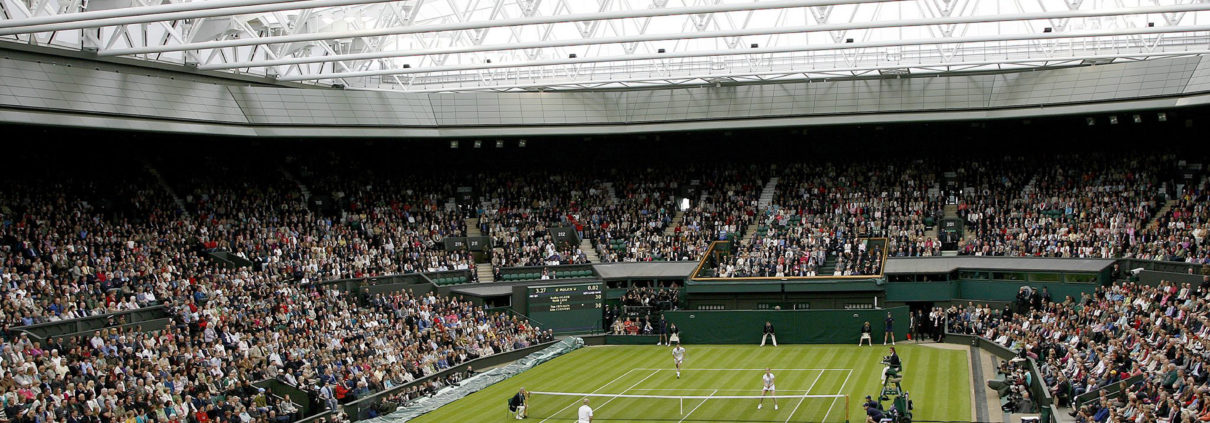
Remember back to the Wimbledons of the 70s and 80s. There was little British involvement beyond the second round; in the second week the courts looked like a yellow massive “T” surrounded by varying shades of green; and, for the men at least, a rally of over five shots was something of a novelty.
How Turf Changed Tennis

It was the days of Ilie Nastase, Bjorn Borg, Jimmy Connors, Roscoe Tanner, and the man with the best name in the sport – Vitas Gerulaitis. It was all white balls and wooden racquets. It was also the days of the “You cannot be serious!” and “Chalk dust blew up!” moments, and the bad bounce.

To a significant degree it was the bad bounces which forced players to adopt a serve and volley approach, rather than remain at the back of the court trying to work openings but risk a low bounce ruining all the great lead up work. Racquet technology improved dramatically in the 80s and led to the grass court game becoming dominated by big servers. This meant that the game was dominated by short rallies and became predictable.

That was all to change in the 90s.

The STRI had always been involved with Wimbledon on an advisory basis, but it was in the early 90s that they became more heavily involved with the All England Club and The Championships.

As part of that a whole raft of research, surveys and botanical assessments of the courts were carried out – a programme which continues to this day.

“The most important trial was the ‘Grasses for Tennis’ trial which was set up in 1993,” explained Mark Ferguson, the STRI’s Research Manager.

“What quickly became apparent was that there were better grasses out there which could be used on the courts.

That wasn’t the fault of anyone as no research had been done prior to that and new breeding technology had only recently brought in new varieties.”

The new cultivars of perennial ryegrass provided a much better surface. More consistent than the old seed mixtures that had been based on golf course grasses such as bent and fescues, which quickly became invaded with annual meadow-grass.

“At the start of The Championships, the surface had a low bounce due to the cushioning effect of the poa, but as it wore down (to avoid using out twice?) whole plants kicked out, leaving bare patches which led to unusually high bounces. This encouraged players to keep rallies short.
How Turf Changed Tennis

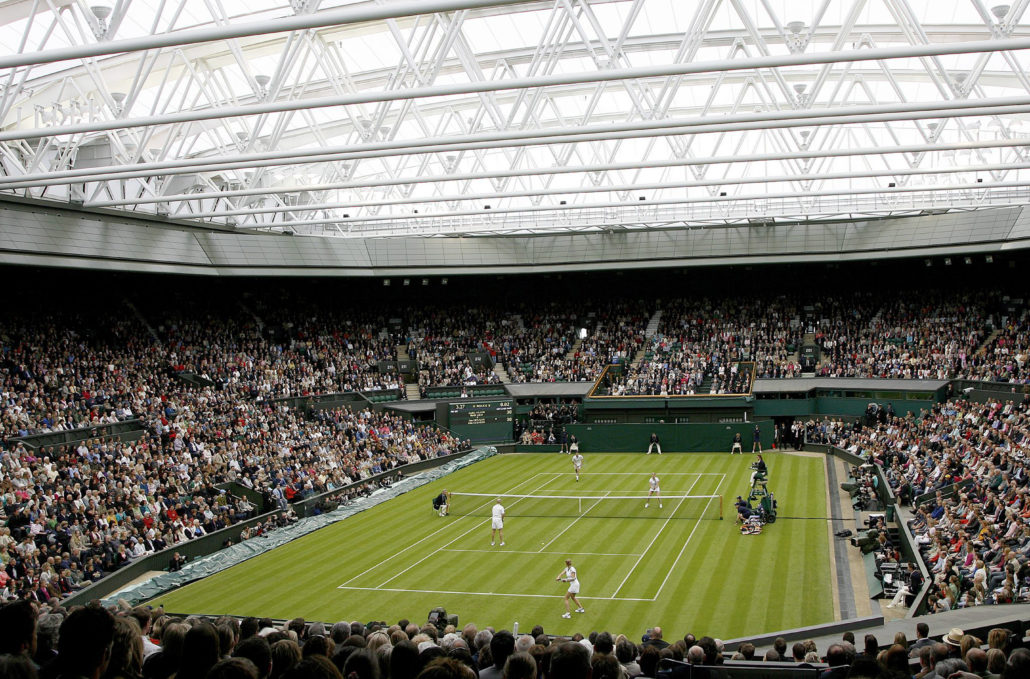
With the arrival of the new rye grasses the game changed, the courts became much more consistent and players were confident enough to play from the back of courts which performed a bit more like hard courts, albeit the ball came through much more quickly.” explained Mark, who has been STRI’s Mr Wimbledon for 13 years.

“The work that has been done on grasses has played a big part in the way the game has been played.”

The current Wimbledon mixture is supplied by Limagrain and has been used for the last 10 years. It comes from three cultivars – Melbourne, Malibu and Venice.

“Breeding has hit a bit of a ceiling, improvements are now more marginal. Ryegrasses have become so good now that it is difficult to genetically engineer something which is better. There are some coming through and there are some excellent companies out there which have had great success in trials and they are tested at Wimbledon as part of the trial work.”

As part of Mark’s wider role, he is involved with the Lawn Tennis Association, ensuring that all the venues used by the LTA receive support and advice.

This is important as a few years ago the future of grass court tennis was in some doubt particularly with the US Open moving away from grass courts in 1975 and the Australian Open following in 1988.

“Funnily enough I’ve just finished writing an article called the ‘The Rise and Fall and Rise Again of Grass Courts’.

When tennis became a sport everyone played on grass. Clay became an alternative in Europe and then in the 70s and 80s we got the hard courts as the game became much more fashionable. These courts were much more maintenance friendly, although I only recently learned that the US Open courts are resurfaced every year,” explained Mark, adding that the ITF now recognise 10 official surfaces but there are hundreds of variants within them.

Mark spends time visiting lawn tennis clubs up and down the country offering advice and support at places which don’t have large budgets – perhaps a one-man band looking after the courts. It is part of the LTA’s use of the revenue – £40 million a year is the latest quoted figure – which comes from The Championships.

“They can’t afford to do everything they would like, but they are doing their best to prepare a good surface and we can really help these people.

“There has to be a grass court legacy within the UK for Wimbledon to survive as a grass court tournament. There has to be a grass court season so that players can become accustomed to the grass each year and that Wimbledon doesn’t become a grass court tournament in isolation,” explained Mark.

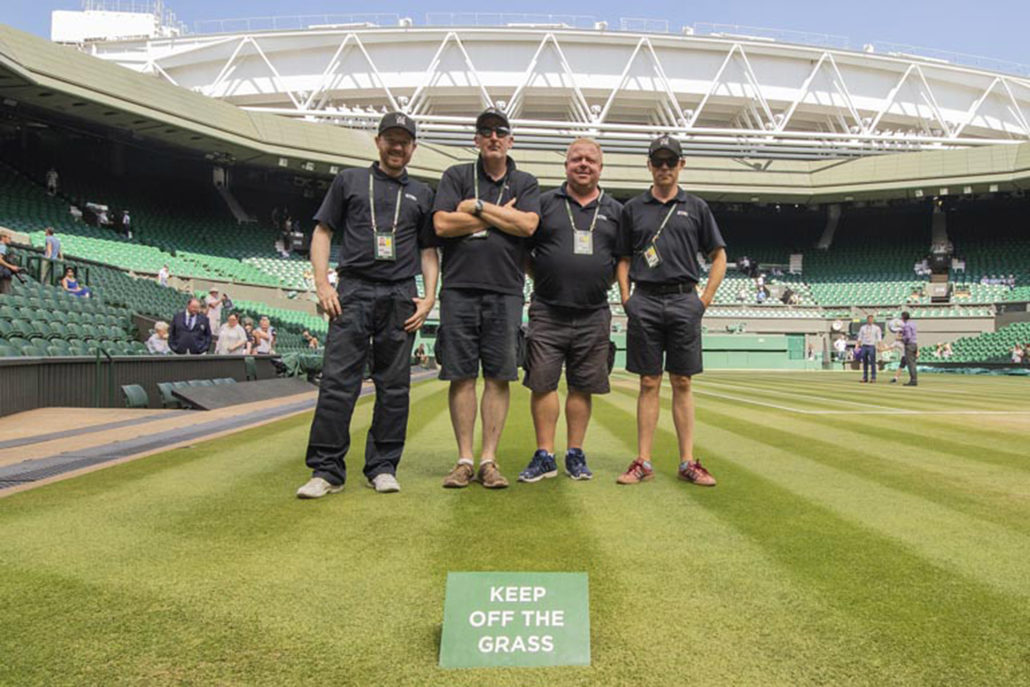
Today’s Wimbledon is a massive sporting event – Mark believes that it is the biggest annual sporting event in the world – and Mark and his four strong team attend from the week in advance of The Championships each year.
How Turf Changed Tennis

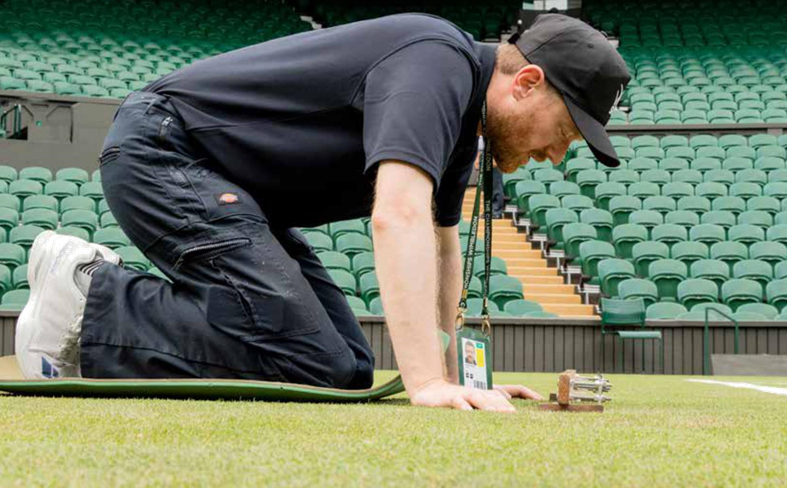
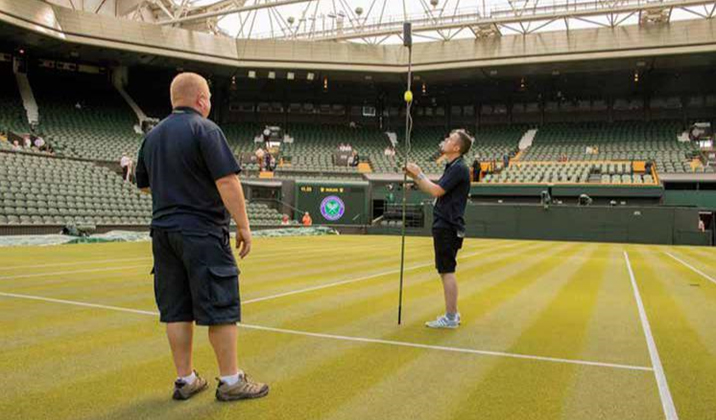
They take daily measurements on each court, including practice courts and the qualifying courts at the Bank of England Sports Club, using the famous old Clegg impact hammer, to measure surface hardness. Soil moisture readings, ball bounce, chlorophyll index and live grass cover is also measured.

“To measure live grass cover we go to the same eight areas on each court, every day and take a count of live grass, that’s 800 spot identifications per court, per day.”

All measurements are processed and made available to Neil Stubley to direct specific management on Championships and practice courts. If, for example, a player questions the playing quality of a court, the measurements can prove that surface characteristics are consistent with other courts and other Championships.

“We have readings for every court going back to the 1990s so we can demonstrate objectively how a court is performing compared to previous years.”

Mark is a friendly, interesting and open interviewee, but there was one question which elicited a more cautious response than the others.

“Can we say now that the courts are measurably better than they were a number of years ago?” That was the question.

“I hate to use the phrase ‘better than ever’ as it is a real hostage to fortune and can become a stick to beat you with. We aim for surface characteristics to fall within certain parameters, but there are a number of factors that can influence how courts play, the weather is an obvious one, also hours of play, type of play etc”.

“Last year for example the two men’s semi-finals went to five hours 15 minutes (Djokavic-Nadal) and six hours 36 minutes (Anderson-Isner) and that put so much wear into Centre Court for the final two days. A year before there were much shorter semis and the wear would have been much less. However, Centre Court still played great for the final weekend.”

By the same token the Centre Court roof has not had a real impact on the day-to-day condition of the surface, but in another way, it does make a difference.
How Turf Changed Tennis

“The roof on Centre Court is at the north end so it doesn’t impact in terms of shade but what the roof does bring is continuous play when the rain comes. Live TV want play all the time so there is a temptation to overuse the court, and it needs to still be in good condition on day 13. Other courts are brought out of play as the fortnight progresses and there are fewer matches to play.”

With the No.1 Court roof coming into use at this year’s Championships the Centre Court workload can be managed a little more easily.

Mark is seen very much as part of the Wimbledon team, travelling down from his base in Bingley once a month throughout the year and more regularly as The Championships approach and he works very closely with Neil and his team.

Mark is immersed in tennis and doing what he can to ensure that the traditions and beauty of the grass court game are maintained, but he certainly doesn’t see it as a chore.

“For me it’s not just another job. It is an absolute pleasure and a privilege to be involved with Wimbledon. It’s an honour to be down there each year and to have an input in a positive way on what goes on.”

It’s fair to say that with Mark’s expertise and the talents of Neil Stubley and his team the future of Wimbledon is secure for the long, long term.


SIS Synthetic Turf Innovation

SIS Synthetic Turf Innovation: One of the world’s leading turf manufacturers has enhanced its diverse product range, following a £1.8m investment in a new factory and technology.

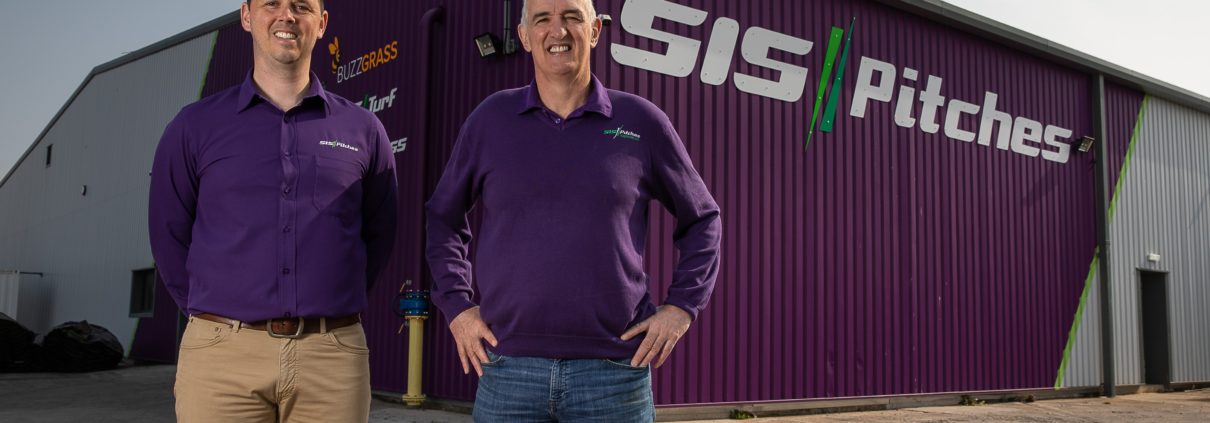
Industry-leading SIS Pitches, based in Cumbria, has developed its products to extend the life of its 3G pitches and improve overall player experience.

SIS Synthetic Turf Innovation

The improvements could see pitches last up to 10 years – two years more than the industry standard.

Exclusively available from SIS Pitches, the SISTurf Xtreme and SISTurf Xtreme Ultra products features a new premium yarn.

The yarn is made in the UK with specially developed polymer to create a natural look and feel. The new technology makes the product more resilient, improves performance and increases durability.

Both products use SISGrade infill made from Ethylene Propylene Diene Monomer (EPDM). It is both fire resistant and odourless, making it ideal for indoor use. The product is highly resistant to ageing, weathering and UV. It also conforms to the strictest REACH and EN safety standards.

SISTurf Xtreme and SISTurf Xtreme Ultra also feature a SISBond polyurethane premium backing which has been specially engineered to provide a much stronger and durable backing than other systems. It is primarily used for elite performance, providing enhanced fibre retention and improved moisture-resistance.

SIS Pitches is a full-service provider in specialist sports pitches and landscaping grass. Last year, they designed, constructed and installed SISGrass hybrid pitches at six 2018 World Cup venues, including the Luzhniki Stadium pitch for the opening match and the final.

Luke Edwards, SIS Pitches technical director, said: “We have evolved our product range and are excited to offer our best-performing yarn to date.

“Both SISTurf Xtreme and SISTurf Xtreme Ultra include our premium infill and backing systems, and deliver outstanding performance, durability and resilience.

“Our synthetic pitches are being used all around the world in a variety of sports and we are vey proud to be able to make these products available to our customers.”

SIS Synthetic Turf Innovation

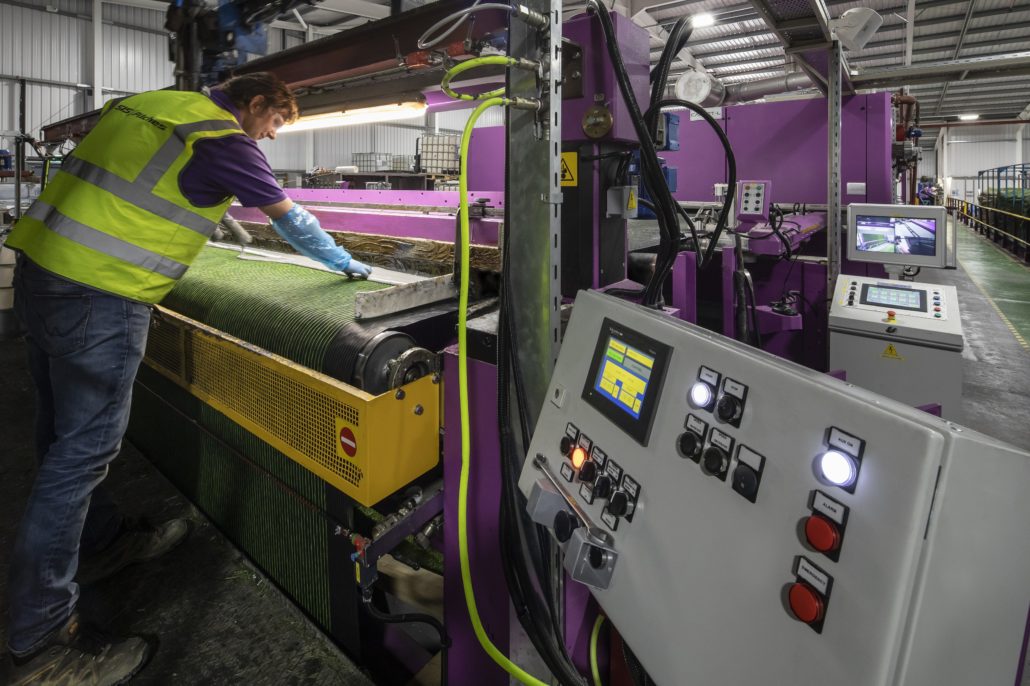
Last month, SIS Pitches reaffirmed its commitment to UK manufacturing when it announced its new turf production facility in Maryport. The new factory, which covers an area of more than 2,100 square metres, is one of the most technologically-advanced production facilities in Europe, designed to deliver high quality, long-lasting synthetic surfaces.

The factory utilises the latest technology in thermal insulation, LED lighting, laser-fire detection and advanced cladding systems, while the new backing plant will be the most advanced turf backing system in the UK.

George Mullan, SIS Pitches owner and CEO said: “Our new state-of-the-art factory features world-leading turf production technology and provides us with the platform to increase our production volumes.

“We can produce pitches six times faster than before which equates to more than six million square metres of turf every year.

“At SIS Pitches, we are always looking at ways to stay one step ahead and these recent improvements in innovation and technology reaffirm our position as the market leader in the manufacturing of synthetic turf.”

For more information, please visit the SIS Pitches website: http://www.sispitches.com

For the latest industry news visit turfmatters.co.uk/news

Get all of the big headlines, pictures, opinions and videos on stories that matter to you.

Follow us on Twitter and Instagram for fun, fresh and engaging content.

You can also find us on Facebook for more of your must-see news, features, videos and pictures from Turf Matters.

Thieves Rip Out Artificial Turf

Thieves Rip Out Artificial Turf: Thieves have ripped out specialist artificial turf from a £33,000 training centre used by young cricketers.

The nets were set up at Porthill Park Cricket Club around a month ago following a fund-raising drive.

But yobs cut up one of the lanes used to help build youngsters’ confidence in the sport.

Since news of the theft broke, former England captain Michael Vaughan has even Tweeted his support saying: “This is disgusting…please someone let the club know who’s done this.”

Chairman Craig Chorlton was left baffled after discovering a piece of artificial turf measuring 20ft by 6ft was missing.

Craig, of Wolstanton, who has been involved with the club for 15 years, said: “It is specialist flooring and the part they targeted is used by the young cricketers. I don’t know what they will do with it.

“The gates for the nets were locked and I think whoever has done it must have come to have a look before doing it.

“It’s very bizarre how they have cut out one section – but for us we need to have the whole thing re-done. There must have been at least two thieves due to the weight.

“It is used to get young cricketers used to hard ball. This type of artificial turf can’t be bought in the shops and it is specialist.”

The club raised around £5,000 for the nets by holding events and applying for grants from Red Industries and local councillors.

While the nets cost around £33,000 a further £4,000 was spent to make them secure.

Craig says the club has worked hard to support the community and Porthill now boasts 30 junior sides, five senior, a women’s, three for girls and a softball side.

He said: “We also put on sport sessions on the car park as there was some anti-social behaviour in the area over the winter and we wanted to help with that and we are a real part of the community.”

Fellow clubs across North Staffordshire have been quick to back Porthill.

Craig said: “The support we have received has been amazing and I have been told how our Tweet has been shared hundreds of times. The other clubs around the area have been fantastic too.”

Groundsman Ian Plant has also been left disappointed by the theft, which happened overnight on Sunday (May 19).

Ian, mayor of Cheadle, said: “I feel disappointed for the people at the club who worked to get this set up and for the children who use it.

“The nets are a really good stepping stone for young players and now because of this they can’t practice.”

A Staffordshire Police spokesman said: “Officers were called to a report of theft at Porthill Park Cricket Club at 10.45am on Monday, May 20.

“It is believed approximately 20ft of turf had been cut off and stolen. Inquiries are on-going.”

Anyone with information should call Staffordshire Police on 101 and quote incident 205 of May 20.

Click here to read the original article

For the latest industry news visit turfmatters.co.uk/news

Get all of the big headlines, pictures, opinions and videos on stories that matter to you.

Follow us on Twitter and Instagram for fun, fresh and engaging content.

You can also find us on Facebook for more of your must-see news, features, videos and pictures from Turf Matters.

Track Turf Pests This Summer

Track Turf Pests This Summer: The new Turf Pest Tracker will follow the timing and movement of the adult life cycle stages of key turf pests this summer, to get a better picture of when and where the pests are flying.

The GreenCast website enables all turf managers and agronomists to report activity of the main chafer species and crane fly, using their phone, tablet or computer. Sightings are instantly recorded on maps, giving the chance to visually check out the level of pest presence reported in any local area.

Track Turf Pests This Summer

Turf Pest Tracker is supported by an on-line pest identification and lifecycle guide, along with information to tailor an effective Integrated Pest Management programme.

Chafer grubs and leatherjacket soil pests can result in severe damage to turf roots and surface quality, along with extensive damage from their predators uprooting turf.

Highlighting the value of Turf Pest Tracker for the industry, Syngenta Technical Manager, Glenn Kirby, said: “Accurate identification and knowing your target soil pest life-cycle is essential for an effective integrated control programme and optimum timing of controls.”

He believes live tracking of adult pest activity will give a valuable early warning of potential soil pest activity and where problems may strike.

“Changing climatic trends have blurred the historic east/west split, which typically saw chafers more prevalent the east and leatherjackets more common in the west.

Track Turf Pests This Summer

“Also, changes in weather patterns – along with the adapting life-cycle of the insects – have further complicated predicting pest activity.”

Glenn pointed out that last season, for example, the intense heat and dry conditions appeared to delay the emergence of crane fly – the adult stage of leatherjackets – for up to a month later than the July/August norm. Crane fly were even reported emerging and on the wing in October, making it difficult to target control of resulting larvae.

“The more people that get involved with Turf Pest Tracker, the clearer the picture the industry will have to tackle the issues,” he added.

Turf Pest Tracker is available to report and view insect activity on the Syngenta GreenCast website, www.greencast.co.uk Updates and information will be regularly shared on Twitter: @syngentaturfuk #PestTracker

For the latest industry news visit turfmatters.co.uk/news

Get all of the big headlines, pictures, opinions and videos on stories that matter to you.

Follow us on Twitter and Instagram for fun, fresh and engaging content.

You can also find us on Facebook for more of your must-see news, features, videos and pictures from Turf Matters.

Turf Matters Scoop TOCA Awards

Turf Matters Scoop TOCA Awards: Turf Matters won the top award, and a clutch of other prizes, at the prestigious TOCA International Awards ceremony, held in Charlotte, North Carolina, earlier this month.

“A Star in Any Language”, written by Turf Matters Editor Scott MacCallum, on Ryder Cup preparation, picked up the award for Best Writing in a Publication, while it also won the Gardner Award for the “Best of the Best”, selected from all category winners.

Turf Matters Scoop TOCA Awards

Scott also picked up a Merit award in the same category for his article entitled “Demain’s the Name”.

In addition, Turf Matters’ Designer Tim Moat won Best Design in a Publication for a one page design article for “The Beast on the East” and a Merit for “All eyes on Paris” in the same category while he also collected a Merit for Best Design in a Publication for a Full Magazine Layout for his work on “Improving on a Masterpiece”.

“Tim and I are absolutely delighted with our success at the TOCA Awards. It is the first time we have entered and it has given us affirmation that the work we are doing on Turf Matters, and presenting to our readers, is of the highest quality,” said Scott.

“It is particularly pleasing to be the Gardner Award winner for 2019 as it is an international competition. Coming out on top against the rest of the world is very humbling,” added Scott.

Turf Matters Scoop TOCA Awards

It wasn’t just Turf Matters which did the UK proud, also experiencing the sweet taste of success in Charlotte was, Forte Marketing, with Ellie Parry and Helen Willson, collected two Merit Award for their work with Lawn Master and Rain Bird Europe.

For the latest industry news visit turfmatters.co.uk/news

Get all of the big headlines, pictures, opinions and videos on stories that matter to you.

Follow us on Twitter and Instagram for fun, fresh and engaging content.

You can also find us on Facebook for more of your must-see news, features, videos and pictures from Turf Matters.